


This is the second part of a two-part series on architecture at 16th and Mission streets. Read the first part here.
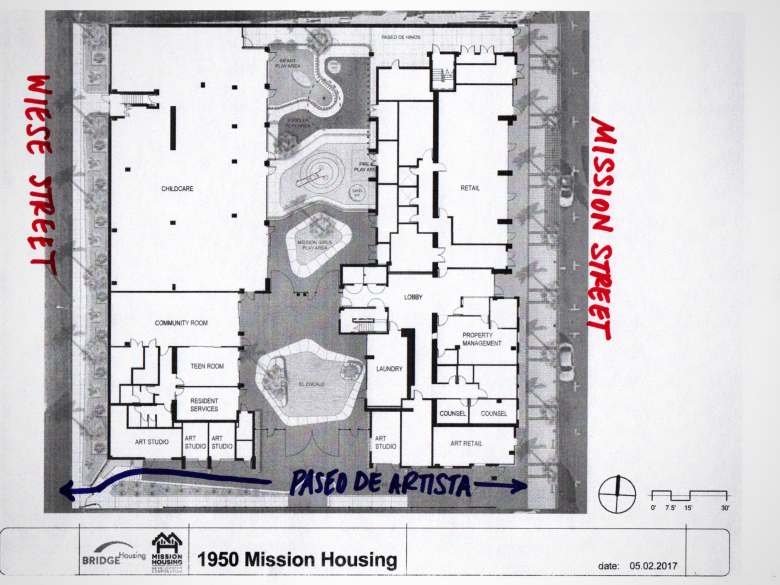
When David Baker Architects and Cervantes Design Associates designed La Fénix at 1950 Mission St. in 2016, they envisioned an open walkway — a paseo de artistas — cutting through the southern edge of the development from Mission and Wiese streets.

Want the latest on the Mission and San Francisco? Sign up for our free daily newsletter below.Sign up
Large gates on Mission Street would be open during the day, inviting pedestrians to traverse the interior of the complex and exit onto Wiese Street. They would walk along the pathway, past artists’ studios, murals, and maybe food stands or occasional celebrations with music.
“We propose to create a lively village that reinterprets the diverse texture of the neighborhood, by combining supportive housing and resident amenities with community and public space,” the planning documents state.
That was before the pandemic, before encampments and before the chaotic, unpermitted vending and unchecked drug use on Mission Street that Mayor Daniel Lurie is now trying to tame. But, even then, the idea of an open art paseo was both daring and aspirational, because Wiese Street was already a hangout for homeless residents and drug users.
The idea never met reality. The large gates at both ends have never been open to pedestrian traffic. A plan to make the commercial space lining the paseo into low-cost artist studios was shelved and the space was rented out to three nonprofits instead of the active retail that Anne Cervantes, the founder of Cervantes Design Associates, had proposed after community outreach.
The only remnants of that vision are three colorful murals on the wall along the paseo and a setback on the Mission Street side, now often occupied by unpermitted vending and an open-air drug market.
Nowadays, people defecate against the gates at either end. On at least two occasions, someone jumped the Wiese Street gate and used a crowbar to break into the Youth Art Exchange on the ground floor. The gate’s height has been increased.
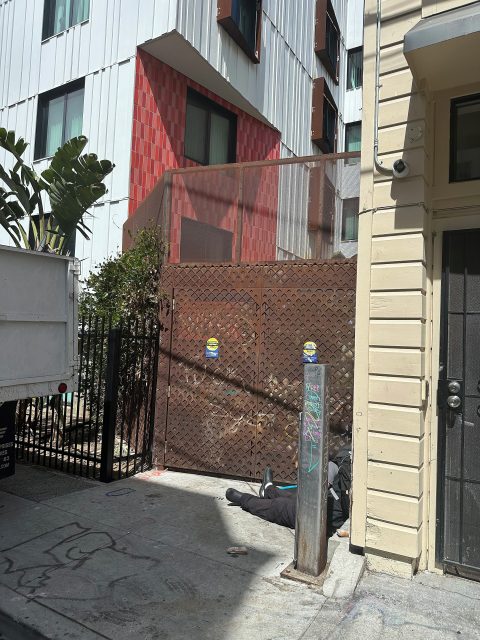 The back gate on Wiese Street creates its own nook for those who hang out on the alley. Photo by Lydia Chávez.
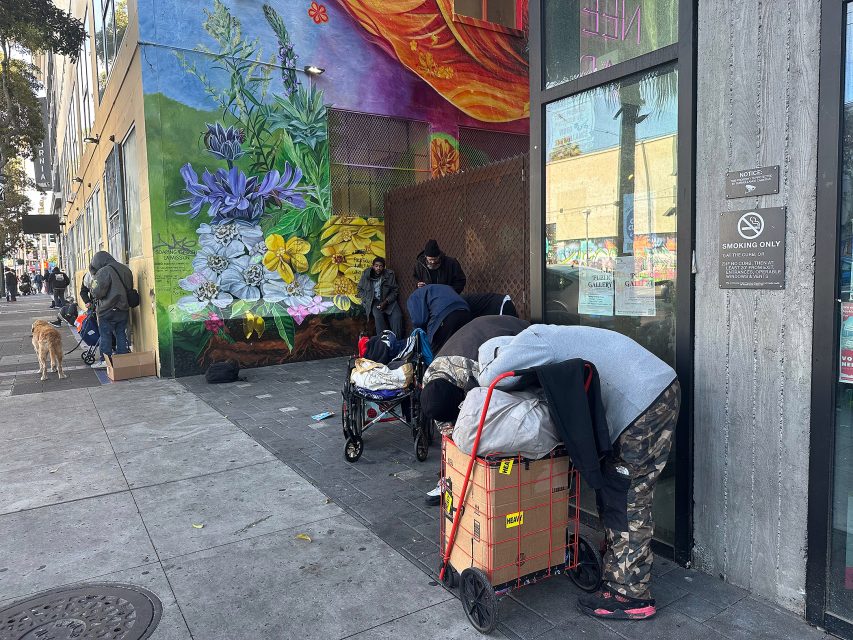 The west side of Mission Street at 6:10 p.m. on June 11, 2025. The mural is the beginning of a wall of murals that runs along the east/west passageway to Wiese Street. Photo by Lydia Chávez.
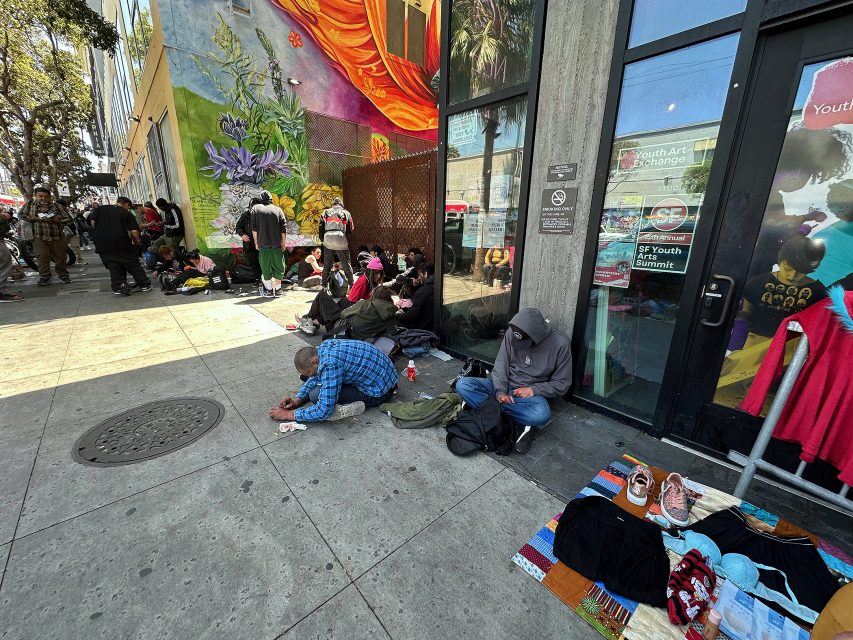 The west side of Mission Street at 2:30 p.m on June 1, 2025. Photo by Lydia Chávez.
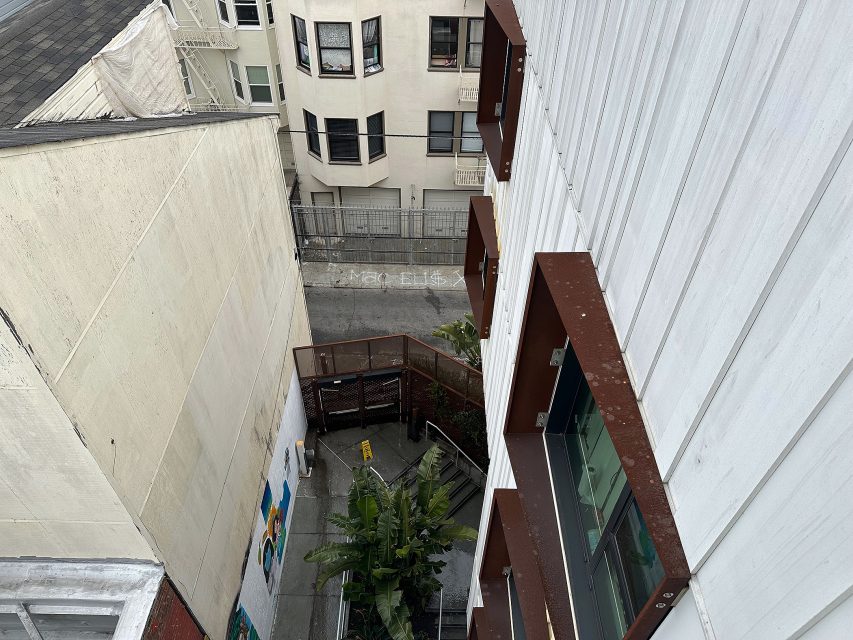 The back gate to Wiese Street, photographed at 10:35 a.m. on June 24, 2025, had to be increased in size. Photo by Lydia Chávez.
- The back gate on Wiese Street creates its own nook for those who hang out on the alley. Photo by Lydia Chávez.
- The west side of Mission Street at 6:10 p.m. on June 11, 2025. The mural is the beginning of a wall of murals that runs along the east/west passageway to Wiese Street. Photo by Lydia Chávez.
The west side of Mission Street at 6:10 p.m. on June 11, 2025. The mural is the beginning of a wall of murals that runs along the east/west passageway to Wiese Street. Photo by Lydia Chávez.
As former police captain Al Casciato noted, the setback designed to open Mission Street has instead become a convenient nook for users, dealers and unpermitted vendors.
I’ve visited dozens of times and can count on one hand the times I didn’t observe overt drug use in the setback. And one of those times, a dealer and buyer ducked in to quickly exchange cash for a small packet containing a white substance.
In Part 1 of this series, the architect David Baker and the three nonprofits on the ground floor of Le Fénix were enthusiastic about the possible benefits of making the tinted windows on Mission Street clear.
The change would signal the vibrant activity happening inside: Teen art programs, a bicycle repair shop and immigrant organizing. That, in turn, might make those on the street less likely to use the sidewalk as an open-air drug and unpermitted vending market.
The change would, as the urbanist Jane Jacobs wrote in 1961, put “eyes on the street,” a principle that continues to influence urban architecture. “It took the Jane Jacobs generation to rescue the ground floor from insignificance, and to reassert the value of social, civic and economic encounter at street level, “ wrote Benjamin Grant, director of planning and resilience for SiteLabStudios, in a 2014 post for SPUR.
If the gates can’t be opened to a paseo, the setback they create on Mission Street is a more challenging problem than removing tinted windows.
Raffaella Falchi, the executive director of the Youth Art Exchange, which has an entrance near the nook, would love to see the setback disappear by making the entrance flush with the building. Baker, the architect, points out that doing so would cost “a bunch of money” and wonders if that is not a red herring for other, more systemic, problems of drug use, homelessness and “the breakdown of civility.”
In the short term, however, minor architectural interventions could help. On a recent Saturday, for example, someone had erected a low metal barricade in front of the setback. It only partially covered the nook, but its impact was remarkable.
The drug users and vendors loitered in front of the barricade. They did not bother walking to the other side, where they would have been more comfortably out of the pedestrian path. The simple barrier sent a message of a no-go zone.

What would happen if there were planters instead of a barricade? Or if planters filled the nook? Or, Falchi suggested, the space could be used for exhibiting art or other projects?
Conversations with the urban landscape can work
To get an idea of how architecture might affect life at Mission and 16th, I stopped five blocks east at Casa Adelante. There, at 2060 Folsom St., the architects at Mithun and Y.A. Studios designed a pedestrian walkway similar to the one that has so far failed to work at La Fénix.
In the planning documents, they promised a public promenade “providing a ‘front porch’ and allowing the building to engage the community.”
It runs west from Folsom to Shotwell streets, in an area where encampments appeared during the pandemic and where homeless residents are often seen. But there is no loitering or open drug use on the promenade.
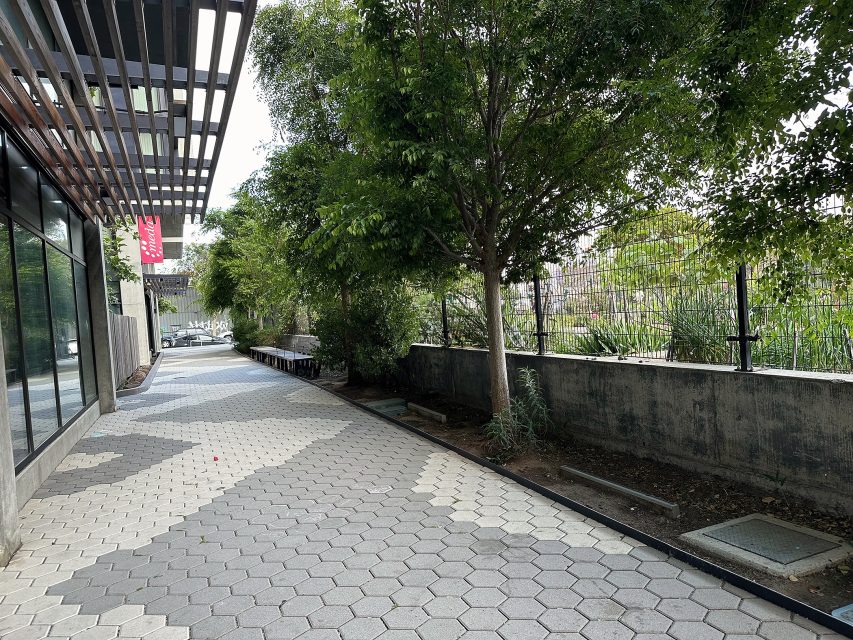
In Jane Jacobs’ parlance, there are eyes on the promenade. The ground floor of the 127-unit affordable housing complex looking onto the promenade has floor-to-ceiling windows, but none are tinted.
Pedestrians can look in and see offices, bookshelves and meeting rooms. Those inside can see anyone on the pedestrian path. The large gates at either end of the walkway are open during the day, and closed at 6 p.m.
Erik Auerbach, executive director of the nonprofit First Exposures, which introduces young people to photography, said that people hang out on the benches during the day, but they’ve never had problems and everyone is respectful.
He might have security for a big event, but it doesn’t seem needed during the day, he said.
What accounts for the difference between Folsom and Mission? It’s unclear whether the ground floor’s engagement with the pathway at Folsom discouraged trouble from ever developing, or if the immediate area simply doesn’t have the overwhelming problems that Mission does.
It’s not immediately outside a major transit hub, after all, and does not have the reputation that 16th and Mission has had for years. On the other hand, Mission Street’s natural foot traffic with transit riders heading to BART or Muni gives it the potential to discourage loitering.
Yakuh Askew, the founding principal at Y.A. Studios, said the Folsom development had an advantage because the windows look out onto a park. “It feels open and inviting and secure and there’s plenty of visibility,” he said.
Making La Félix’s windows open to Mission Street, an idea the three nonprofits expressed enthusiasm for, would increase the conversation with the street, he said.
“It would also help if the nonprofits on the ground floor increased their programming and felt active, he added. Faith in Action already gathers in its space daily, but the other two have less frequent programming, in part because of the daily scene in front of their offices.
Can Wiese Street be activated?
The Mission to Wiese corridor near the BART plaza is tricky, Askew said, because there is no reason to go to Wiese Street. It is an alley with no shops, and the path doesn’t make one’s trip to BART faster. The garages and residences on Wiese mean you can’t block it off and activate it as a park.
But the Mission also has a history of activating difficult alleyways. Take Balmy Alley, off of 24th Street. In the early 1970s, the alleyway leading to 24th Street was littered with discarded liquor bottles.
Artists like Mia Galaviz de Gonzalez, one of the founders of Balmy Alley, sought a better environment for the girls who attended a nonprofit on 24th Street, where the artists worked. To make Balmy safer and more appealing, they cleaned up the alley and asked homeowners’ permission to paint murals on their garage doors. Now, some 50 years later, the alley remains a destination for tourists visiting San Francisco.
“I think it could happen,” on Wiese Street, said the architect Cervantes, and pointed out that the murals on Balmy Alley were connected to the politics of the day, including local Latinx artists being left out of the mainstream art scene and the wars in Central America that many Mission residents had fled. Those on Wiese Street, she suggested, could be connected to this moment, like the threat of ICE and deportation.
And the residents living inside La Fénix would likely have stories to tell.
Security
To change the dynamic at 16th and Mission streets, nearly everyone involved in 1950 Mission St. agreed that any architectural changes to activate the nook, make the windows clear, put out planters or add sidewalk designs would need to be accompanied by increased security.
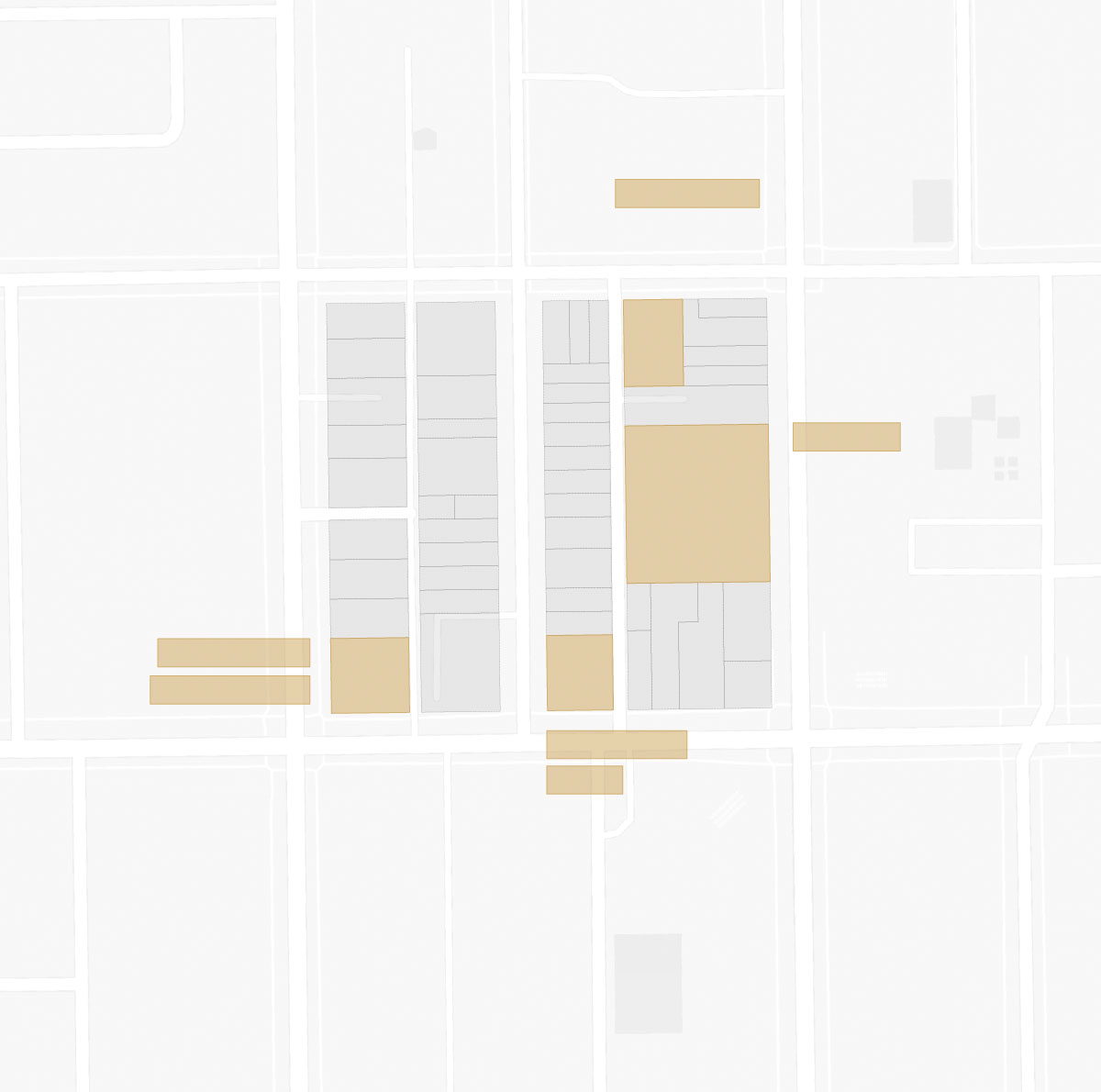
The question, said Sam Moss of Mission Housing, which co-developed La Fénix with Bridge Housing, is who will pay for it. No one has a bigger interest in the immediate area than Mission Housing. It counts four buildings in its portfolio in the 16th and Mission Street area.
Valencia Street
Small sites
16 units
1637 15th St.
15th Street
La Felix
157 units
3 commercial spaces
1950 Mission St.
Maria Alicia
Apartments
20 units
2 commercial spaces
3090 16th St.
16th Street
Altamount
Hotel
88 units
2 commercial spaces
3048 16th St.
Mission Street
Source: Mission Housing. Map by Junyao Yang.
Already, Mission Housing pays for a guard at its building on Caledonia Street, but Moss says that, despite the “amount of tragic awfulness,” there is no money for a guard on Mission Street.
“We don’t control the state of the street,” said Moss. “We have no jurisdiction on public ground.” Police, he offers, could park a car in front of La Fénix 24 hours a day.
Sounding like any property owner, Moss worries about crossing a Rubicon if he pays for full-time security. “We will never be able to stop it, and we set a precedent for the police not doing their job,” he said.
The way affordable housing is funded, he said, security is not included. However, with a new mayor who is intent on expediting solutions, perhaps there is some room for negotiation.
Mission Housing’s co-developer, Bridge Housing, is the property manager. After Bridge declined an interview request, Randy James, a spokesperson who works with Bridge on communications, sent an email Monday evening, detailing all that had been done: Increased security at the front desk, new security cameras, meetings with all the concerned parties and increasing the height of the back fence were among the items in the email.
James said the increased security will be working with an ambassador’s program and police to keep the sidewalk in front of the building clear. A new manager was hired and started June 24th, he added in a subsequent email.
In recent days, the mayor’s office has added an eight-member team from Ahsing, a community safety and engagement organization. In addition to the existing assistance from the Department of Public Works and the San Francisco Police Department, Ahsing began Saturday to patrol Mission and the surrounding streets.
The impact was notable. The crew, all of whom are transitioning from jail or in recovery, kept the west side of Mission Street clear of illegal activity and free of debris for two consecutive weekend days, a first in months.
Sustaining that change will take months, but Baker, the architect who lives on Shotwell Street, said a police and city operation on Shotwell to control cruising by sex workers and their clients succeeded after about six months.
Falchi from Youth Exchange understands the need for security. When she opened her space for the art exhibit, “I literally had to follow people around, because they were clearly, like, trying to scope things out,” she said.
She won’t have another open event without a guard, but does not seem inclined to get in a standoff over who will pay for it. Already, she’s making estimates and plans.
Falchi has received multiple complaints about the scene outside her door from parents whose teens participate in her art programs, to the extent that Mission Housing suggested she could terminate her lease, but Falchi is committed.
“That’s not a solution,” she said. Like others who lease there, she’s determined to make her space at La Fénix work. She applied for, and recently received, a grant to improve the outside signage.
And she’s looking into changes in the architecture. She plans to hold a design competition on Oct. 25 that will ask students to “reimagine Wiese Alley and the segment of Mission Street between 15th and 16th streets through a youth-centered lens.”
Proposed interventions “may include physical improvements — such as lighting, seating, street furniture designs, greenery, and traffic calming — as well as programmatic strategies that support creativity, safety, and social connection.”
Jane Jacobs couldn’t have said it better.
LYDIA CHÁVEZ
Founder/Executive Editor. I’ve been a Mission resident since 1998 and a professor emeritus at Berkeley’s J-school since 2019 when I retired. I got my start in newspapers at the Albuquerque Tribune in the city where I was born and raised. Like many local news outlets, The Tribune no longer exists. I left daily newspapers after working at The New York Times for the business, foreign and city desks. Lucky for all of us, it is still there.
As an old friend once pointed out, local has long been in my bones. My Master’s Project at Columbia, later published in New York Magazine, was on New York City’s experiment in community boards.
Right now I’m trying to figure out how you make that long-held interest in local news sustainable. The answer continues to elude me.More by Lydia Chávez


