


By Megan Fan Munce, Alyce McFadden, Staff Writer July 19, 2026
Gift Article (SFChronicle.com)
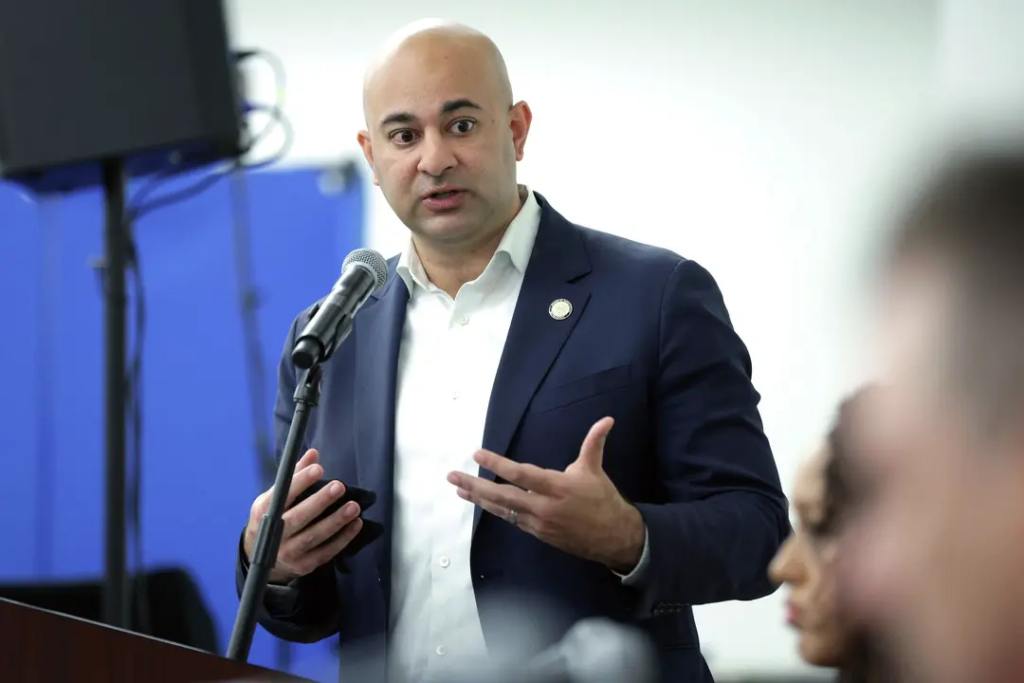
Supervisor Bilal Mahmood said Sunday he’ll drop a controversial proposal to tax vacant chain grocery stores, shifting his focus to an ordinance to support smaller grocery stores.Scott Strazzante/S.F. Chronicle
San Francisco lawmakers killed a package of ballot measures Monday aimed at lowering grocery prices and penalizing shuttered supermarkets during a committee hearing Monday after the proposals met pushback from business interests and Mayor Daniel Lurie.
Supervisor Bilal Mahmood’s original “Affordable Groceries Act,” as introduced last month, sought to place two separate measures on the November ballot: a city-run fund to convert corner stores into grocery stores and a tax on existing vacant grocery chain locations. But after the tax drew opposition from fellow city leaders and members of the business community, Mahmood said he’s reversing course
Instead, the District 5 supervisor says he’ll focus on pushing a new ordinance that would devote funds toward helping convenience stores stock fresh produce and support new grocery stores with incentives and zoning reforms. The new legislation would be decided at the Board of Supervisors rather than by voters, who would have decided the fate of the original proposals.
Tensions over the measure spilled into public view earlier this month as Mahmood pushed back against mounting criticism from business groups, developers and elected officials. The measures’ demise signals the political might of the mayor, who has enjoyed tremendous popularity during his first term in City Hall.
At a Rules committee meeting Monday, Mahmood said he did not have the votes necessary to move either of his original proposals to a vote at the full Board of Supervisors after Supervisors Shamann Walton and Stephen Sherrill withdrew as co-sponsors last week.
Mahmood previously told the Chronicle the measures were inspired in part by New York City Mayor Zohran Mamdani’s plan to open city-run grocery stores to combat rising grocery costs. Over the past few years, San Francisco has faced several high-profile grocery store shutdowns — including a Safeway in the Fillmore, a Whole Foods in Mid-Market and a Lucky in the Bayview, the neighborhood’s only major supermarket prior to its closure last year.
While Mahmood’s proposal would not have put the city in charge of running the grocery stores, it would have allowed it to use donations from nonprofits or money from the tax to support more grocery stores. Mahmood had said he hoped the tax would also incentivize bigger chains to remain open.
Mayor Daniel Lurie opposed the vacancy tax. A spokesperson for the mayor told the Chronicle that Lurie was working to get more grocery stores in San Francisco but believed a tax wasn’t the way to do it.
The Chamber of Commerce and Align Real Estate, the developer seeking to turn the shuttered Safeway in the Fillmore into a housing complex, also spoke out against it, arguing it would make it harder to fill that site with a new tenant. Mahmood told the Chronicle that Amazon, owner of the empty former Mid-Market Whole Foods, was “actively lobbying” against the tax.
Supervisor Connie Chan, the chair of the board’s budget committee, declined to bring the vacancy tax to a vote and expressed reservations about the policy earlier this month. E
On Friday, Board of Supervisors President Rafael Mandelman told the Chronicle he questioned whether the vacant grocery store tax might have “unintended consequences” as the city tries to lure businesses back after the pandemic. Mandelman said he is “concerned that measures like this send a different message that is a little more adversarial and that imagines that San Francisco can tax and regulate our way to recovery.”
Mandelman said representatives from the mayor’s office including Lurie shared concerns including that putting the measures to voters in November could distract from “extremely high-priority” measures headed to the ballot already, including funding for public transit and a slate of charter reform efforts.
“There’s a strong argument to be made that we really want to try to limit how much stuff we’re throwing at the voters and how much opposition we might be summoning,” Mandelman said.
Walton said in a statement Monday that he changed his mind after a report from the controller found that the vacancy tax would yield little money for city coffers.
In light of the opposition, Mahmood said he would pivot his efforts from twin ballot measures.
“I recognize that while there is not consensus in City Hall on how to address this issue today, … I know and believe that there is will in our city to still address the underlying issues of food insecurity,” Mahmood told the committee Monday.
Instead, Mahmood announced that he would ask the city attorney to draft new legislation that would expand existing city programs to help combat rising grocery costs and food deserts in the city. It would revive an expired city initiative that helped convenience stores sell fresh produce and exempt new grocery stores from building and permitting fees in food deserts.
It would also provide incentives to developers who build new housing with grocery stores on the ground floor. Mahmood said that idea came out of conversations with Mamdani administration staffers about a similar New York City program that launched in 2009.
“We’re seeing these large scale developers coming in and removing grocery stores, so we need to make sure that when housing is built we’re maintaining neighborhood benefits,” Mahmood told the Chronicle on Monday.
Mahmood said he believes his colleagues had changed their minds about supporting the measures “due to pressure.” It’s not clear whether the new proposal will be met with similar opposition.
“I remain committed to working with anyone and everyone to advance the solutions we agree on today, while continuing to push for the bigger changes our city needs,” Mahmood told the committee.
July 19, 2026
Reporter
Megan Fan Munce is a reporter on the climate team covering California’s home insurance crisis. She writes about rate changes, state policy initiatives, the growth of the California FAIR Plan, and how homeowners are navigating challenges in the insurance market. Her awards include the 2026 Pulitzer Prize in Explanatory Reporting for “Burned,” a series that explored how insurance industry practices left many wildfires survivors unable to rebuild and recover. Munce joined the Chronicle as part of the two-year Hearst Journalism Fellowship, spending her first year at the Houston Chronicle. She grew up in the Bay Area before attending Northwestern University’s Medill School of Journalism.
How to reach Megan
Email megan.munce@sfchronicle.com or reach her on Signal at meganmunce.88 to share tips or tell Megan about your experience with home insurance in California.
City Hall reporter
Alyce McFadden is a City Hall reporter at the San Francisco Chronicle covering the Board of Supervisors. McFadden previously worked at the New York Times, where she was a news assistant and reporting fellow. She covered Andrew Cuomo’s history of sexual harassment, the trial of the man accused of attacking Salman Rushdie, the Los Angeles wildfires and the reaction to the killing of Charlie Kirk. McFadden has also written for Law360, OpenSecrets and the Maine Beacon. She’s a graduate of Bowdoin College, where she studied government and legal studies and was editor in chief of the student paper.
How to reach Alyce
To provide story tips or feedback or to obtain her Signal number, email alyce.mcfadden@sfchronicle.com.