


- By James Salazar | Examiner staff writer
- Jul 21, 2026 (SFExaminer.com)
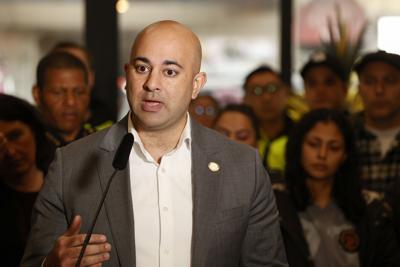
Following pushback from local lawmakers and other leaders, District 5 Supervisor Bilal Mahmood said he will introduce new legislation aimed at improving residents’ access to groceries.
The Board of Supervisors Rules Committee on Monday tabled Mahmood’s Affordable Groceries Act, which would have placed on the November ballot a pair of measures meant to address citywide closures of supermarkets in recent years while also expanding residents’ ability to buy fresh foods.
The first, the Abandoned Pharmacy and Grocery Stimulus, would have offered tax credits and permitting assistance to grocery stores and pharmacies bringing business back to vacant lots. It also would have taxed corporations that left their spaces intentionally empty.
The second, the Affordable Grocery Fund, would have established a fund to help convert corner stores into fresh-food markets.
Mahmood said earlier this month that Supervisor Connie Chan, who chairs the Budget and Finance Committee, told him she would not be scheduling a hearing at the request of Mayor Daniel Lurie, arguing that the proposals needed more work before going to a vote.
Mahmood said his new legislative proposals, which will be introduced at Tuesday’s Board of Supervisors meeting, take key components from his originally proposed measures.
“San Franciscans are hungry for bold ideas to tackle affordability,” Mahmood said Monday.
“I remain committed to working with anyone and everyone to advance the solutions we agree on today, while continuing to push for the bigger changes our city needs,” he said.
Mahmood’s new package will entail three efforts. The first would restore funding to Healthy Retail San Francisco, a citywide program that focuses on turning convenience stores in low-income neighborhoods into retailers selling healthy foods.
His second endeavor would aim to expand The City’s First Year Free program by exempting grocery stores from building and planning permit fees. Mahmood said he would also propose expanding the Storefront Opportunity Grant Program by funding the construction of new grocery stores in parts of San Francisco with limited food-market options.
The last piece of Mahmood’s proposed package would legislate new density bonuses for any housing development that would incorporate a ground-floor grocery store in its construction plans. Mahmood said the proposal is modeled on New York’s Food Retail Expansion to Support Health program, which was established in 2009.
The program provides zoning incentives that allow property owners to construct slightly larger buildings in mixed residential-and-commercial districts if their plans include supermarkets. Mahmood said he would also propose reforming how The City subdivides existing vacant parcels to make it easier for new grocery stores to open locally.
“The price of groceries is growing exponentially year-over-year,” Mahmood said.
“This is a national problem, but one that other cities are boldly tackling,” he said.
Ex // Top Stories
‘Public space is not neutral’: City project reimagines its monuments and memorials
For columnist Max Blue, Shaping Legacy exemplifies public art done right, maintaining its most important principle — an emphasis on the public
SF office market starting to rebound, thanks to AI boom
Artificial-intelligence security startup C1 recently leased a new headquarters space in SoMa — and it’s just one of many companies in the sector that are expanding in The City
Women-owned bars in San Francisco capture a special camaraderie
While the industry is still male-dominated, The City’s female publicans support each other while finding new ways to innovate
Mahmood’s proposal was initially scheduled to be heard at last week’s Board of Supervisors Budget and Finance Committee meeting, before Mahmood said it was denied a hearing by Chan.
In a statement, Chan said she was “disappointed“ in Mahmood’s “continued misrepresentation of our communications and his apparent lack of knowledge of the legislative process.”
Chan said she supported the intent behind Mahmood’s ballot measures, but that his proposed legislation had fallen short in being presented as “sound economic and revenue policy for San Francisco.”
“As supervisors, it is our job to do the work, to make the hard decisions daily,” Chan said.
“We are elected to create sound policy to present to voters, not rush through any piece of legislation, let alone a ballot initiative that is not ready for prime time and would not provide its intended impact,” she said.
Though Mahmood noted that his ballot measure failed to drum up support among colleagues, the District 5 supervisor said conversations with multiple city departments, community organizations and residents over the past two months showed him that there is a strong shared interest in addressing food insecurity and expanding people’s access to grocery stores through creative approaches.

District 10 Supervisor Shamann Walton, who chairs the Rules Committee, said Mahmood could look into additional funding sources, such as the Food Empowerment Market Fund established in 2021.
A $1.5 million allocation from that fund helped create the District 10 Community Market, a 4,000-square-foot market that gives residents in The City’s southeast corridor the chance to shop from a free selection of groceries. Customers can also be connected with social services.
Walton said the program’s success was something that Mahmood “could possibly build off.”
Mahmood said at Monday’s committee meeting that he still believes “there is a will in our city to still address the underlying issues of food insecurity.”
“The people deserve immediate relief,” he said.
Examiner staff writer Patrick Hoge contributed reporting to this story.

James Salazar
Neighborhoods & Culture Correspondent