Europe’s record heatwave in the month of June would have been “virtually impossible” 50 years ago, scientists said Friday, proof that human-caused climate change is “unequivocally” responsible for the intensity of the latest scorcher. Half-a-century ago, a similar heatwave would have been 3.5°C cooler, the study found.
Human-caused climate change is “unequivocally” responsible for the intensity of a record-breaking heatwave scorching Europe, scientists said Friday.
It would have been “virtually impossible” for such exceptional temperatures to occur in June fifty years ago, the World Weather Attribution group of scientists said.
A similar heatwave would have been 3.5°C cooler during the day in June 1976, concluded the study by scientists from Europe, the United States and the United Kingdom.
But the world is hotter today and “the chance of a heatwave like this has changed immensely”, said the study’s lead author Theodore Keeping from Imperial College London.
“This event would not have been possible in June without climate change,” Keeping told reporters.
The planet has warmed about 1.4°C above pre-industrial times, driven by the burning of coal, oil and gas.
Scientists agree this is making extreme weather events like heatwaves more frequent and intense, and that limiting warming is vital to avoiding the worst impacts of climate change.
Europe is the world’s fastest-warming continent and tens of millions of people have sweltered this week in temperatures that broke records in some countries.
“The weather pattern itself is not particularly unusual, but the temperatures are – or at least they used to be, without human-induced climate change,” Friederike Otto, the co-founder of World Weather Attribution from Imperial College London, told reporters.
‘Unpleasant and dangerous’
As the heatwave is still unfolding, scientists used observed and forecast temperatures to compare this heatwave against how it might have behaved in the cooler climates of 2003 and 1976.
Even compared to 2003 – when tens of thousands of people died in a major European heatwave – the current episode was notably extreme, the authors said.
A similar heatwave in June 2003 would have been about 2°C cooler, the study said.
“In 2003… daytime heat like this would still have been very rare”, while overnight temperatures would have been more than a hundred times less likely.
“Our analysis here shows that intense heat is increasing rapidly even in living memory, with such events tens to hundreds of times more likely since only 2003 and virtually impossible just 50 years ago,” said the study.
The El Nino weather pattern – a natural warming climate phase – had “no role in driving the heat”, the authors said.
Otto also singled out the threat of “heat stress” posed by the combination of high temperatures and humidity.
Heat stress occurs when the body’s natural cooling systems are overwhelmed, causing symptoms ranging from dizziness and headaches to organ failure and death.
Of the nearly 850 cities in Europe analysed in the study, some 45 percent had broken – or were expected to break – their all-time heat stress records in June, the study said.
This made the heatwave “particularly unpleasant and dangerous”, Otto said.
This episode is the second of the year for Europe after an early-season heatwave in May brought temperatures more typical of high summer to central and western parts of the continent.
World Weather Attribution said the rapid phase out of fossil fuels was “critical if we are to avoid even higher temperatures and their consequences in the future”.
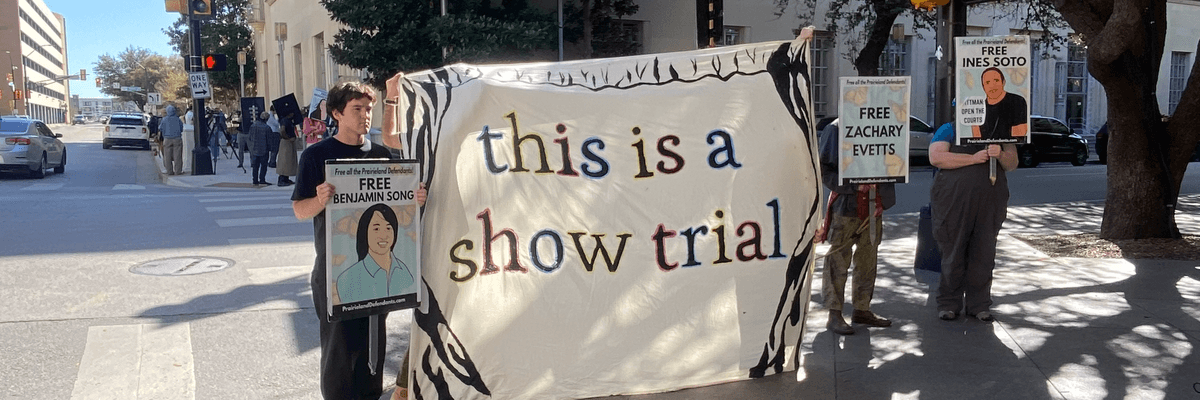
People show support for protesters facing trial for allegedly being part of a nonexistent “North Texas Antifa Cell,” outside the Eldon B. Mahon United States Courthouse in Fort Worth on March 13, 2026.
(Photo: Kevin Krause/The Dallas Morning News via Getty Images
“Now anyone engaged in basic protests with the wrong political beliefs can be labeled a domestic terrorist, when they have no intention of violence,” said one attorney.
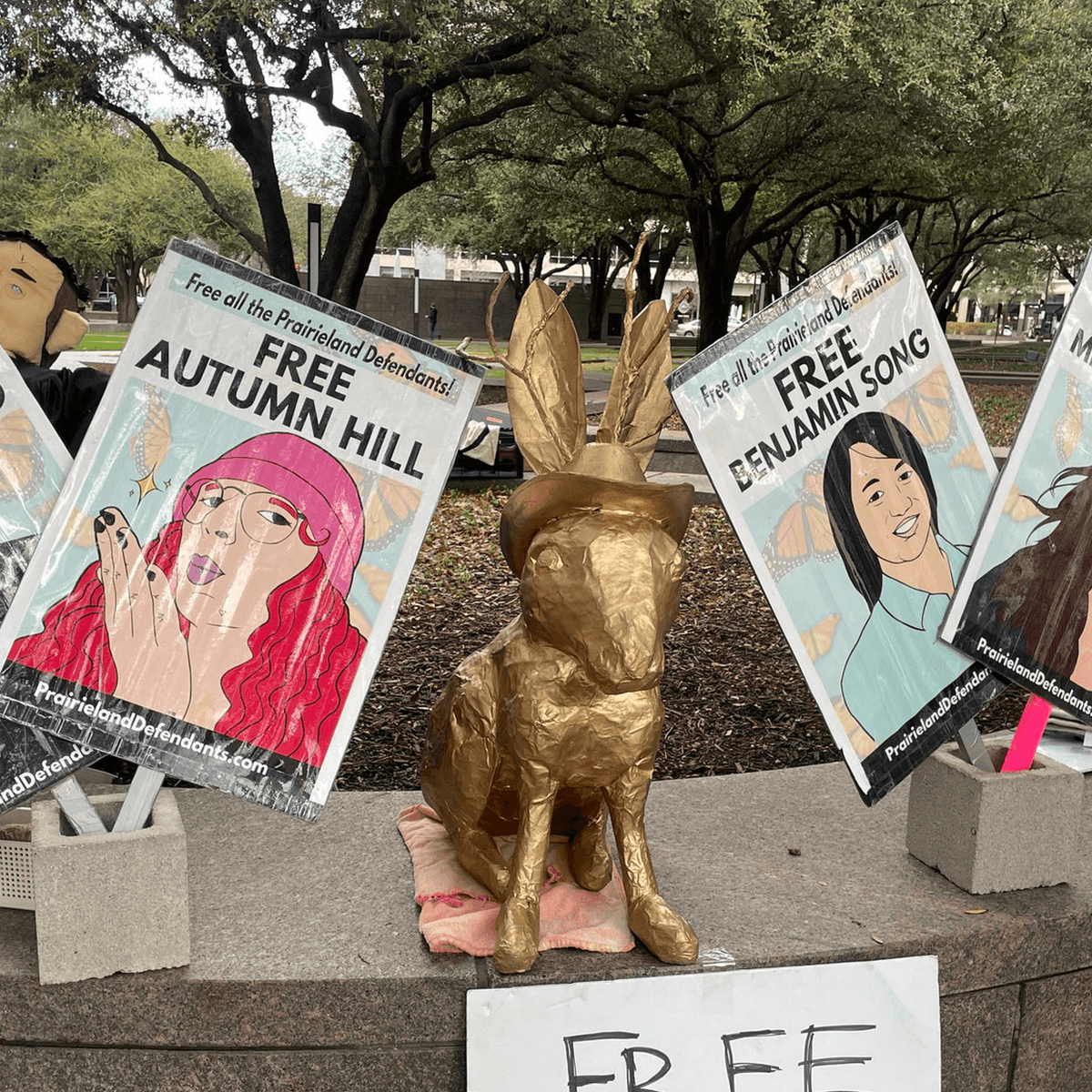
Alarm and outrage mounted this week following a federal judge’s lengthy prison sentences for a group of activists falsely accused by the Trump administration of being members of a nonexistent “North Texas Antifa Cell,” with some observers calling the extreme punishments—including 30 years for moving a box of constitutionally protected pamphlets—a test case for criminalizing dissent.
Eight members of the “Prairieview Nine”—part of a larger group of activists who staged a July 4, 2025 protest outside a US Immigration and Customs Enforcement (ICE) detention center in Alvarado, Texas—were sentenced Tuesday in the US District Court for the Northern District of Texas in Fort Worth to between 30-100 years imprisonment.
Benjamin Song, who was convicted of shooting Alvarado Police Lt. Thomas Gross, was sentenced to 100 years for attempted murder of a law enforcement officer and lesser offenses, including discharging a firearm during a violent crime, conspiracy to use and using an explosive, and rioting. Song, a former US Marine, contends that he shot Gross in self-defense after the officer drew his gun first.
The “explosives” in question were fireworks brought to the July 4 protest to show solidarity with people detained by ICE.
Savanna Batten, Zachary Evetts, Autumn Hill, Bradford Morris, and Elizabeth Soto got 50 years each for rioting, providing material support to terrorists, and conspiracy to use and using an explosive.
No paywall. No ads. No billionaire owner. Just you.
Common Dreams is funded exclusively by readers tired of news beholden to corporate interests. Our monthly supporters are the backbone of what makes that possible. Help us reach our Mid-Year Campaign goal of 450 new monthly supporters by July 1.
Maricela Rueda was sentenced to 70 years for rioting, providing material support to terrorists, conspiracy to use and using an explosive, and conspiracy to conceal documents. Those documents were leftist pamphlets protected by the First Amendment.
Rueda’s husband, Daniel “Des” Rolando Sanchez Estrada, was hit with a 30-year prison sentence for conspiracy to conceal documents for moving a box full of the pamphlets after speaking with his wife. He did not attend the protest.
Judge Reed O’Connor, an appointee of former President George W. Bush and a favorite of right-wing judge shoppers, told the court that the lengthy sentences are meant to “send a message to anyone who shares a similar ideology” with the defendants, according to one observer of Tuesday’s proceedings.
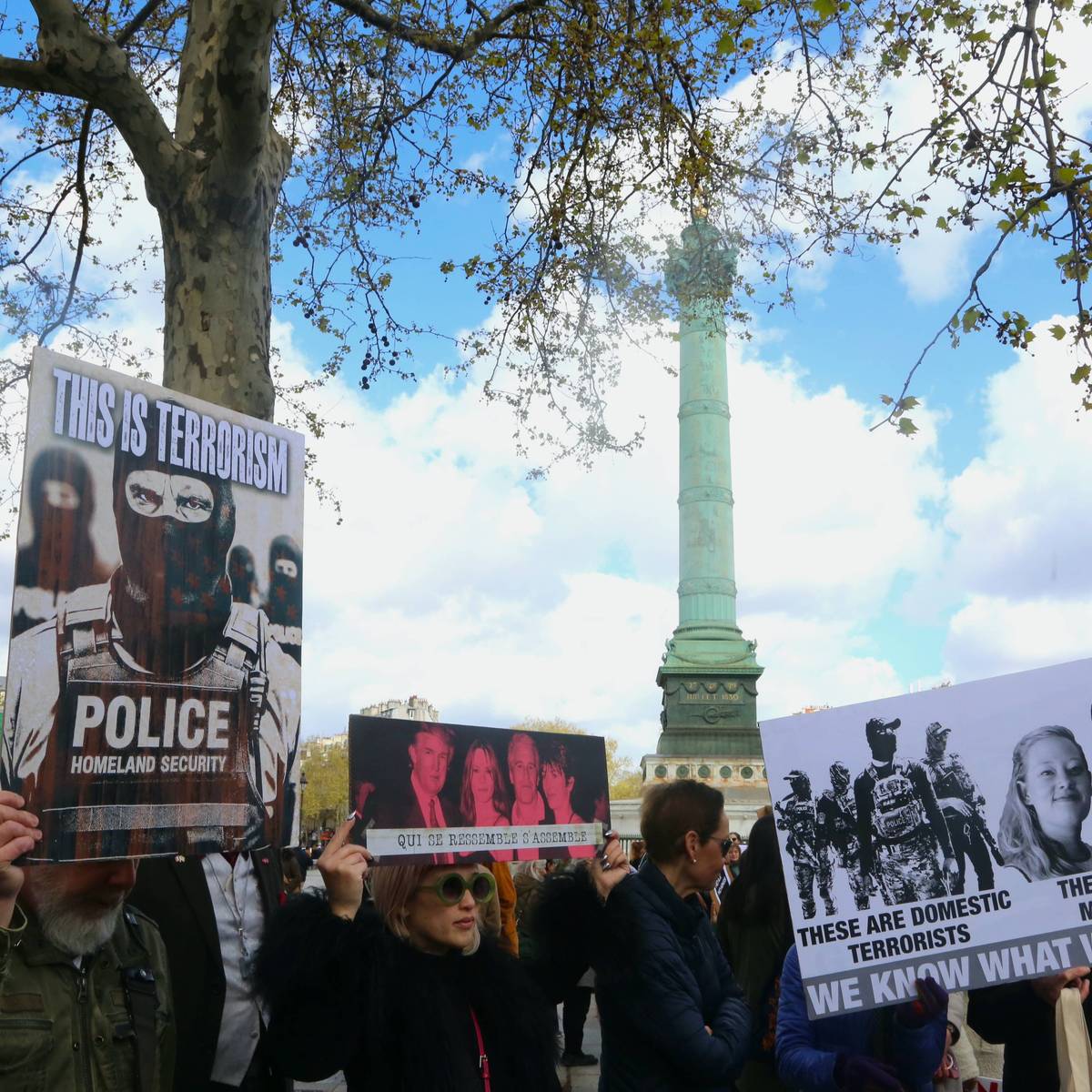
The Prairieland sentences were more severe than the longest prison term for the average US murderer or rapist, as well as for the January 6, 2021 Capitol insurrectionists—all of whom were later pardoned by President Donald Trump—as well as for convicted child sex trafficker and Jeffrey Epstein co-conspirator Ghislaine Maxwell.
“What happened on Tuesday, it’s shocking to all of us, devastating to the families, 50- to 100-year sentences,” Sufia Khalid, deputy director of the National Security Criminal Defense Center at the Muslim Legal Fund of America and lawyer to one of the Prairieland defendants, toldDemocracy Now! on Thursday. “Those are essentially life sentences for all of the young people in this case, largely of whom were engaged in nonviolent protest at an ICE detention facility.”
A group of anti-ICE protesters in Texas were sentenced to 30 to 100 years in jail on Tuesday, after federal prosecutors accused them of being an "antifa terror cell."
The activists attended a protest and noise demonstration outside the Prairieland ICE jail in Alvarado, Texas.… pic.twitter.com/QxFMPaGsvj
Khalid noted that the Department of Justice (DOJ) invoked a rarely used “material support for terrorism” statute that “does not require any connection to a domestic terrorist organization or any kind.”
“Any American can be targeted that way now. It does not require ties to antifa or to any domestic terrorist organization,” she said. “That’s a dangerous precedent, and what allowed them to stack these charges so high on Tuesday.”
The DOJ hailed “the first sentencing of defendants affiliated with antifa following… Trump’s executive order designating the group as a domestic terrorist organization in September 2025” in the wake of the assassination of white supremacist influencer Charlie Kirk—which had nothing to do with antifa, a decentralized and leaderless international ideology opposing fascism that’s more of a mindset than a movement.
Later that month, Trump also signed National Security Presidential Memorandum 7 (NSPM-7), a directive titled “Countering Domestic Terrorism and Organized Political Violence,” that focuses exclusively on left-wing activities and mandates a “national strategy to investigate and disrupt networks, entities, and organizations that foment political violence so that law enforcement can intervene in criminal conspiracies before they result in violent political acts.”
Khalid pointed to the pardoned January 6 insurrectionists, who “were involved in rioting, carrying massive arsenals of weapons, lots of discussions ahead of time—that didn’t exist in this case—about targeting law enforcement, wanting to kill members of Congress, [and] actually storming the Capitol.”
“So, we have a massive, unwarranted sentencing disparity here,” she said. “What happened in the court in Fort Worth was unconstitutional and should concern everybody in this country in the direction that it is taking us.”
Mark Osler, a law professor and sentencing expert at the University of St. Thomas in Minneapolis, told The Guardian on Friday that “the 30-year sentence for Estrada is probably the one that for most people will come closest to shocking the conscience, simply because this is an activity that took place after the harm occurred.”
“What happened in the court in Fort Worth was unconstitutional and should concern everybody in this country in the direction that it is taking us.”
Seth Stern, chief of advocacy at the Freedom of the Press Foundation, underscored during a Friday interview in an episode of Fairness and Accuracy in Reporting’s Counterspin podcast titled “Criminalizing Dissent” that Estrada “wasn’t even at the protest.”
“He’s somebody who allegedly transported a box of pamphlets because his wife was at the protest,” Stern said. “And he believed, according to prosecutors, that the box of pamphlets might implicate his wife… so he was concealing evidence.”
“Evidence of what?” he continued. “This wasn’t a how-to manual… They were zines. They said nothing about this protest, about the Prairieland detention facility, about shooting this police officer… So when they say that he concealed evidence by moving these zines, evidence of what? It’s evidence of an ideology. It’s evidence of somebody’s reading habits.”
“And now they’re on the same plane as terrorists, as [Islamic State], according to this administration,” Stern added. “It’s all pretty absurd. But at the end of the day, we have a Constitution that prohibits people from being locked up for what they think, write, or read, as long as they are not inciting imminent violence. So hopefully the appellate courts will reverse these convictions. But the law is only as good as the people who enforce it.”
Jeremy Busby, an incarcerated journalist, wrote on the eve of Estrada’s trial that the “homespun zines at issue contain no plans for any shooting, and under normal circumstances, they would clearly be deemed constitutionally protected speech under the First Amendment.”
“But the government’s concealment theory only makes sense if it views merely having the literature as criminal,” he argued. “Criminalizing possession of literature is a miscarriage of justice, whether in prison or at a protester’s husband’s parents’ house. If the Trump administration is allowed to send Estrada to prison for the crime of possessing literature, members of society at large can be subjected to the same pernicious rules as the incarcerated.”
Amber Lowrey, the sister of Prairieland defendant Savanna Batten—who was sentenced to 50 years behind bars for material support for terrorism and conspiracy to use and using “explosives” (fireworks)—told The Guardian before Batten’s trial that the Trump administration just wants “to make an example of people and silence anyone who… opposes the government.”
“They want to silence dissent, criminalize dissent,” she added.
Trump administration prosecutors have also invoked NSPM-7 in the case of 15 organizers with the groups Direct Action Minnesota and Black Cat Workers, who are accused of impeding the Department of Homeland Security’s anti-immigrant crackdown in Minneapolis, where US citizens Renee Good and Alex Pretti were separately killed earlier this year by ICE and Border Patrol officers.
“We live under a fascist state where ICE agents can murder us with impunity, yet we can go to prison for 50 years for protesting,” socialist commentator and journalist Ryan Knight said Thursday on X. “The unjust sentences of the Prairieland protesters violate the First Amendment and infringe on our rights to fight back against a tyrannical government.”
Our work is licensed under Creative Commons (CC BY-NC-ND 3.0). Feel free to republish and share widely.
“If I have the gift of prophecy and can fathom all mysteries and all knowledge, and if I have a faith that can move mountains, but do not have love, I am nothing.” [1]
–I Corinthians 13:2
“If a country has the largest population in the world and the largest economy in the world and the largest high-speed rail network in the world, but has not democracy, it is nothing.”
From June 28 through July 4, organizers from across the country will gather in the nation’s capital for Seven Days in D.C. — a weeklong series of civic engagement activities, public demonstrations, and cultural events designed to encourage direct participation in the democratic process during the lead-up to Independence Day.
The event will bring together activists, organizers, artists, comedians, musicians, and citizens for a coordinated week of lobbying, voter outreach, protest education, conversations with congressional candidates, and nightly performances across Washington D.C.Full Program
Come as you are. Meet your fellow travelers: organizers, activists, journalists, veterans, voters, and troublemakers from across all 50 states who came here to make noise and make history. Live music sets the tone for the week ahead. This is the gathering before the storm — come early, stay late, and introduce yourself to the person next to you.
Featuring music from Yaddiya, The Honest Politix and TOB.
Direct meetings with congressional offices, coordinated through FLARE — For Liberation And Resistance Everywhere.
Voter Outreach
On-the-ground voter outreach and registration drives across Washington throughout the week.
Protest Education
Workshops on organizing strategy, Know Your Rights, and civic action — skills that outlast the week.
Cultural Programming
Nightly performances — comedy, live music, guest speakers. Free and ticketed events all week.
Public Demonstrations
Sustained visibility actions throughout the city during one of Washington’s most watched weeks.
Community Building
Conversations with candidates and fellow organizers — strengthening the networks that make change possible.
“This is about showing up. Not just watching politics from a distance, but participating in it — meeting representatives, getting involved in voter outreach efforts, learning how organizing works, and being part of a larger civic community.”
Get full-access to all of our paid events for the entire week with the All Week Antifa Gold Card All Access Pass.
ANTIFA Gold Card Benefits Include:
1. Daily access to the Antifa Gold Card lounge at the Black Cat 2. ANTIFA Gold Card early access and/or special seating when available for all night time events at the Black Cat 3. Two complimentary drink tickets for each day from the Black Cat 4. Limited edition Antifa Gold Card 5. Knowing that you helped to support this event with money and fun
One of Washington’s most storied independent venues — thirty years of music, culture, and nights that don’t get forgotten.
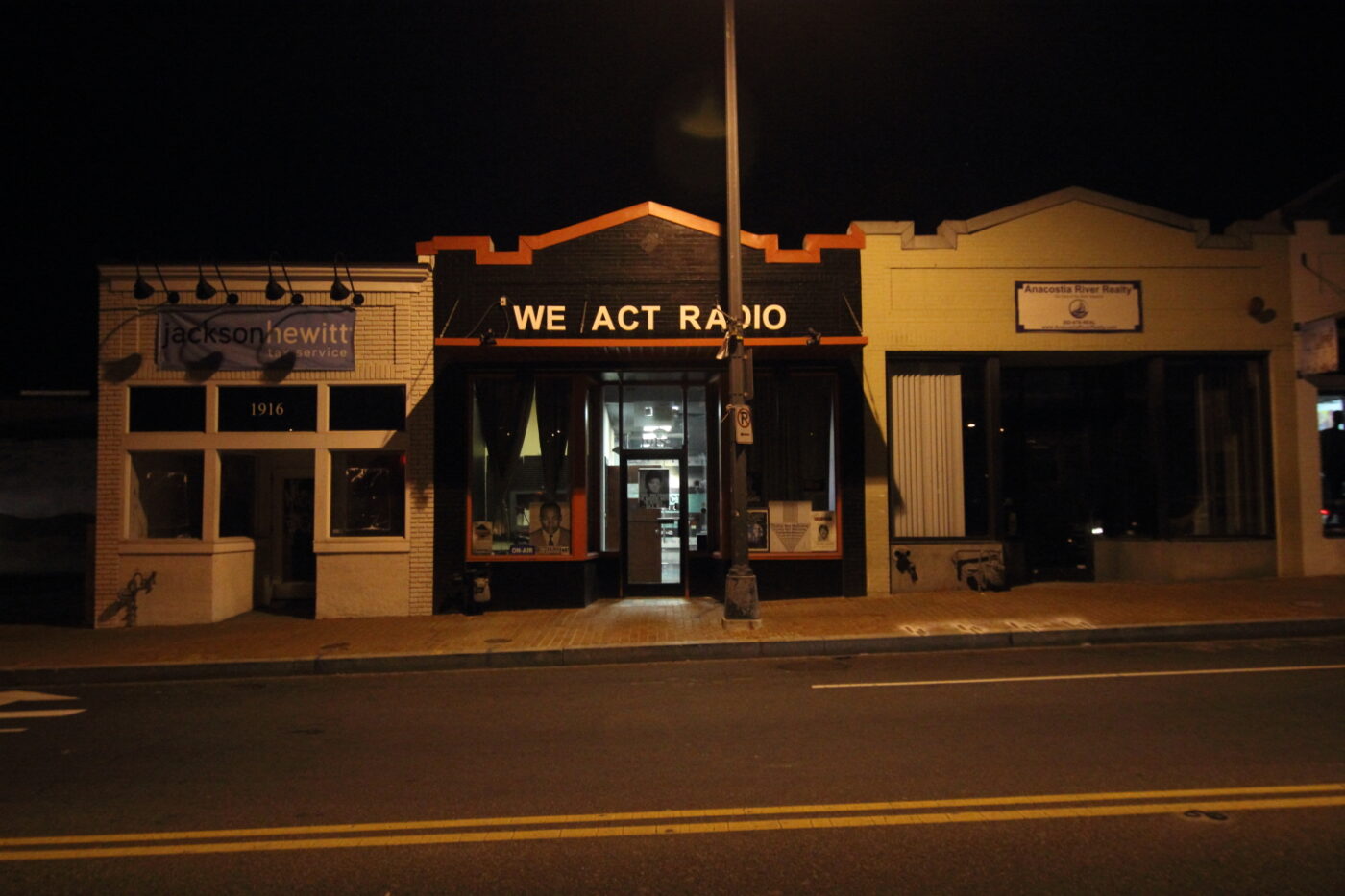
We Act Radio 1918 Martin Luther King Jr Ave SE · Washington, D.C.
We Act Radio is an independent, progressive radio station and media production studio based in the historic Anacostia neighborhood of Washington, D.C. Founded in 2011 by local activist and playwright Kymone Freeman, it serves as a grassroots platform to amplify voices, stories, and political perspectives that are frequently ignored or marginalized by corporate media.Organizers
Want to Get Involved?
Seven Days in D.C. aims to increase voter engagement, strengthen organizing networks, and bring national attention to civic participation during a historic moment. If you are an organizer, artist, or group who would like to participate, reach out.
Seven Days in D.C. is a grassroots civic engagement initiative bringing together organizers, artists, and citizens for a week of democratic participation, cultural programming, and public action in Washington, D.C. Organized in partnership with FLARE — For Liberation And Resistance Everywhere.
The 18th century was a wealth of knowledge, exploration and rapidly growing technology and expanding record-keeping made possible by advances in the printing press. In its determination to preserve the century of revolution, Gale initiated a revolution of its digitization of epic proportions to preserve these invaluable works in the largest archive of its kind. Now for the first time these high-quality digital copies of original 18th century manuscripts are available in print, making them highly accessible to libraries, undergraduate students, and independent scholars. Delve into what it was like to live during the eighteenth century by reading the first-hand accounts of everyday people, including city dwellers and farmers, businessmen and bankers, artisans and merchants, artists and their patrons, politicians and their constituents. Original texts make the American, French, and Industrial revolutions vividly contemporary.
[London] : printed by W. Adlard. re-printed and sold by the booksellers of London and Westminster, [1797?] 24p. ; 8°
Thomas Paine was an English-American political activist, author, political theorist and revolutionary. As the author of two highly influential pamphlets at the start of the American Revolution, he inspired the Patriots in 1776 to declare independence from Britain. His ideas reflected Enlightenment-era rhetoric of transnational human rights. He has been called “a corset maker by trade, a journalist by profession, and a propagandist by inclination”.
Born in Thetford, England, in the county of Norfolk, Paine emigrated to the British American colonies in 1774 with the help of Benjamin Franklin, arriving just in time to participate in the American Revolution. His principal contributions were the powerful, widely read pamphlet Common Sense (1776), the all-time best-selling American book that advocated colonial America’s independence from the Kingdom of Great Britain, and The American Crisis (1776–83), a pro-revolutionary pamphlet series. Common Sense was so influential that John Adams said, “Without the pen of the author of Common Sense, the sword of Washington would have been raised in vain.”
Paine lived in France for most of the 1790s, becoming deeply involved in the French Revolution. He wrote the Rights of Man (1791), in part a defence of the French Revolution against its critics. His attacks on British writer Edmund Burke led to a trial and conviction in absentia in 1792 for the crime of seditious libel. In 1792, despite not being able to speak French, he was elected to the French National Convention. The Girondists regarded him as an ally. Consequently, the Montagnards, especially Robespierre, regarded him as an enemy.
In December 1793, he was arrested and imprisoned in Paris, then released in 1794. He became notorious because of his pamphlet The Age of Reason (1793–94), in which he advocated deism, promoted reason and freethinking, and argued against institutionalized religion in general and Christian doctrine in particular. He also wrote the pamphlet Agrarian Justice (1795), discussing the origins of property, and introduced the concept of a guaranteed minimum income. In 1802, he returned to America where he died on June 8, 1809. Only six people attended his funeral as he had been ostracized for his ridicule of Christianity.
This is an accessible book that delineates how progressives and the progressive movement have created the American idea and ideals and forged the kind of country in which we want to live. It creates a platform from which to argue how progressives today are fighting to improve America, in contrast to how conservatives have always worked to defend the interests of elites. Each chapter will tell the reader a story focusing on different subjects, such as efforts to enact civil rights laws, social security, the middle class, how the idea of America changed the world, and why most of us can vote. Lux points out what he feels the Democrats have done wrong during the last decades and how the lessons of history can point to making positives changes. Lux shows how the progressives have been instrumental in creating big positive change moments, and argues that as a new administration takes office in 2009 the time will be ripe for a new big change moment,. He outlines how he believes progressive policies can be channeled to solves the big problems facing us today.
A man protests outside the Capitol in Washington, March 18, 2026, following a rally and press conference against the SAVE America Act. Credit: Bryan Dozier/NurPhoto via AP
Donald Trump has found a way to soothe Democratic fears that Republicans in Congress will continue to savage the poor, funnel money to the rich, and make the nation safe for corporate dominion. He’s effectively shut down Congress until it passes an unpassable bill.
Trump is demanding that the SAVE America Act—a voter suppression bill he thinks will save his hide in the midterms—reach his desk first before he’ll take care of any other congressional business. First it was Section 702 of the Foreign Intelligence Surveillance Act, the warrantless spying program that the intelligence hawks were poised to ram through again until Trump said SAVE had to be attached. Then a signing ceremony for the ROAD to Housing Act, a bipartisan agreement that passed with over 90 percent of Congress in both chambers, was abruptly canceled Wednesday because Trump asked for SAVE first. (That will likely become law anyway, as I’ll explain.)
Now this controlled burn is going to set fire to the last chance for Republicans to do anything else meaningful before the midterms. The SAVE Act has poisoned this process entirely, and there’s really no path for it to happen.
Remarkably enough, there are other potentially worthy bipartisan deals under discussion, for a $35 monthly co-pay for all insulin prescriptions and for child online safety rules, to name two. None of them will get done as long as this SAVE thing hangs over the proceedings.
Why is Trump destroying a Republican Congress’s ability to affirm his priorities? First, he really does think he can rig the elections in his favor and avoid accountability. But second and perhaps more important, Trump and his loyal sentry Russ Vought are running the government to their satisfaction without congressional input, defying legislative spending prerogatives and unilaterally budgeting government operations. So who cares if Congress can’t pass a law? Laws are not being followed anyway. The core of the constitutional system, Congress’s control of federal spending, has been effectively suspended.
WHAT IS THE SAVE AMERICA ACT? Its supporters claim it would simply make sure that only American citizens vote in federal elections. But that’s what the law already says now, and there are no reports of more than a tiny handful of violations in the last 30 years since it became a federal crime, and many of those were accidents. Stealing an election by convincing thousands of people to commit a felony in person is a highly implausible strategy.
Under the bill, all voter registration would have to be done in person with documentation like a passport, certified birth certificate with photo ID, or a naturalization certificate. A driver’s license alone wouldn’t count. This would be mandatory for any voter registration update, like after a move. Any married woman would have to certify their name change in order to register. Any rural voter would have to drive to their election office, which could be hundreds of miles. Low-income, minority, and student voters—plus even military members stationed overseas—would have trouble accessing the ballot. It would be a total mess.
And it isn’t going to become law. There aren’t anything close to 60 votes for it in the Senate, and there aren’t anything close to 50 Republican votes to overturn the filibuster that would lower that threshold. There may not even be 50 votes for SAVE if there were no filibuster; there were exactly 50 during a procedural vote earlier this month, and several of those votes are shaky if they actually meant the bill would pass. Senate Majority Leader John Thune (R-SD) has said that Trump is living in an “alternative universe” on the matter.
But some congressional Republicans populate the same universe, like Sen. Mike Lee (R-UT) and members of the House Freedom Caucus. They believe they can shut Congress down until it acts on SAVE. Rep. Anna Paulina Luna (R-FL) led a rebellion to sink the House’s work for the week, and the leadership had to cancel a vote yesterday. It was Luna’s idea to stop the housing bill signing until SAVE passes, and Trump dutifully agreed.
(Incidentally, there’s now a claim that House Speaker Mike Johnson didn’t present the bill to the president, so he can’t sign it. This is a bullshit cover story; the signing ceremony was abruptly killed—of course everything was put in place for that signing. Johnson is now pretending he didn’t present it—or just staying mum about it—to spare Trump the embarrassment from the Constitutional mandate that any unsigned bill becomes law after ten days. Nothing can be done in Washington if Trump doesn’t agree to it, therefore the lie.)
The effort inside Congress to mirror Trump’s demands will close the House; just like when the House closed for weeks because Johnson didn’t want to allow a vote to release the Epstein files, it’s closed again because of SAVE. Johnson is attempting to bargain with the alternate-universe crowd by saying he will put SAVE in a third reconciliation bill, which has been in the planning stages for weeks.
The idea was to add $350 billion for the Pentagon—much of it to cover the disastrous war in Iran—to match Trump’s target of $1.5 trillion in military funding, and to add so-called “anti-fraud” measures to offset the cost. Tax cuts are likely too, you know, because it’s a Republican bill.
But House moderates are wary of agreeing to even more heavy cuts, doubling down on the unpopular Big Beautiful Bill approach that has devastated the poor so billionaires can get richer. The Senate doesn’t want to deal with a third reconciliation bill at all, because it would require another “vote-a-rama” opportunity where Democrats can force tough votes on issues that matter to the election. And the SAVE Act, which has no primary budgetary component, wouldn’t survive the reconciliation process anyway.
Trump’s demand for SAVE, then, dooms the only party-line vehicle available, and could doom his Pentagon budget plan. The White House has asked for an emergency $87 billion supplemental to cover war costs and agricultural aid , but that comes on the heels of bipartisan majorities in both houses voting to end the Iran war; its unpopularity means a spending bill effectively approving it is a heavy lift. And even though Trump’s administration asked for the supplemental, his zeal for SAVE, the subject of a contentious Senate Republican caucus lunch with the president on Wednesday, would surely get in the way of signing that bill into law as well, if it can even get through.
YET PART OF ME WONDERS whether Russ Vought is quietly whispering in Trump’s ear about the SAVE Act so he can continue his work of commandeering the budget process from the branch of government that’s supposed to have the constitutional authority for it.
Just this week, ProPublica reported that the Trump administration is violating specific appropriations guidelines for foreign aid. Despite clearly stating where money was supposed to go and for what purpose, Vought, the director of the Office of Management and Budget, just isn’t doing it. Vought and Trump have also asserted the power to cancel any grant that doesn’t meet with the president’s agenda.
Last week, at a confirmation hearing for Hal Duncan to become Vought’s top deputy, the nominee refused to commit to avoiding “pocket rescissions” at the end of this fiscal year. Last year, Trump canceled $4.9 billion in foreign aid through a rescission message less than 45 days before the end of the fiscal year. There are rules in place for Congress to deal with rescissions, but if the fiscal year ends before the 45-day window they have to do that, Vought has decreed that they can just cancel the funding unilaterally. The Supreme Court blessed that last year, and Duncan was signaling that the administration will just keep doing it.
Federal judges keep telling Trump that he’s unlawfully canceling programs and violating Congress’s power of the purse. But that hasn’t stopped Trump and Vought from unilaterally dictating spending decisions, sometimes with the Supreme Court assisting down the road, in a way that simply transfers the power of the purse by extra-constitutional means.
Congress has the tools to fight back; they’ve threatened to freeze Pete Hegseth’s travel budget if he doesn’t give them more details about the Caribbean boat strikes. But if Congress is functionally inert, they won’t have much say in the matter. So shutting down Congress has a dual purpose: It gives Trump room to yell about the SAVE Act, but it also makes it easier to defy Congress’s wishes on appropriations and take over the budget process.
Trump can be a doddering, conspiracy-addled fool and still have people burrowed in his deep state who are strategic. That’s what’s going on.
Before you go.
I hope that you found this article interesting and thought-provoking. The reason we’re able to publish stories like this — free of programmatic ads and never behind a paywall — is because readers like you step up to support our work.
The Prospect doesn’t answer to advertisers or billionaire owners. We answer to you and to our commitment to pursuing the truth, wherever that leads us.
Independent, reader-supported journalism is critical at a time when the free press is under assault.
If you believe this kind of reporting should exist and remain free to read, we hope you’ll consider chipping in. Every contribution, however modest, makes a real difference.
David Dayen is the executive editor of The American Prospect. He is the author of Monopolized: Life in the Age of Corporate Power and Chain of Title: How Three Ordinary Americans Uncovered Wall Street’s Great Foreclosure Fraud. He co-hosts the podcast Organized Money with Matt Stoller. He can be reached on Signal at ddayen.90. More by David Dayen
The conservatives in San Francisco used to blame Chesa Boudin for pretty much everything that went wrong in the city. Boudin, of course, was the district attorney who took a reform approach to criminal justice—and just happened to take office in the midst of a global pandemic. Then-Mayor London Breed blamed Boudin for creating a lawless city. The newspapers and TV stations blamed him for every single crime that anyone ever committed.
Most of it was nonsense; crime patterns shifted in the pandemic, and the cops basically stopped making arrests because they wanted Boudin, who dared to charge killer cops with murder, to fail and lose office.
Dean Preston did more to create affordable housing than all of the free-market champions.
But the mythology took over the media narrative, and spread nationwide.
Now some of the same groups, led by the Chron, have a new target for everything that’s going wrong in the city: Former Sup. Dean Preston and the Democratic Socialists of America.
In a remarkably inaccurate editorial June 20, the Chron insisted that “progressives,” Preston, and DSA are destroying the middle class by pushing for more affordable housing, not just high-end housing, at a time when tech IPOs are about to create thousands more very rich people in the city.
We need aggressive housing production at every income level, including luxury housing.
A lot of people don’t like this argument; many progressives, for example, push 100% affordable or nothing. But where exactly do they think these Anthropic guys are going to live?
When a company goes public, employees cash out. Bidding wars for homes accelerate. Neighborhoods once considered merely expensive become unreachable. Landlords see opportunity. Longtime residents feel the ground shift beneath them.
The failure to recognize the importance of building housing supply at multiple price points has gotten us into the mess we’re in now.
As UC Davis professor and housing law expert Chris Elmendorf told us, the economic gains of previous tech booms were unequally distributed in part because more people couldn’t afford to live in San Francisco to participate in the boom.
“That was the traditional pattern of how things worked from 1776 to 1975,” he said. “There would be an economic boom, people would move there, there was a general trend toward wage convergence … that’s not happening anymore.”
In fact, the opposite is clearly true: The tax laws that allow such great wealth are the main cause of the housing crisis.
The Chron never mentions income taxes, but insists that repealing Prop. I, the increase in transfer taxes on very high end properties, which Sup. Bilal Mahmood has proposed, would get more new projects going:
Elmendorf agreed. “Any developer will tell you that the transfer tax is the single most important problem in the city.” Of all the things the city is doing to incentivize new housing, he argued, this would have been the most helpful.
This is just silly. I have heard many developers discuss the housing crisis in numerous public hearings, and they all say the same thing: No new projects make economic sense right now for three reasons: The cost of building materials, which have more than doubled since the pandemic; the cost of labor (in a city where all this tech money forces higher prices for skilled workers to survive) and the demands of investors for high returns in an era of high interest rates.
The transfer tax has not stopped some 50,000 units that are already approved, shovel ready, and already owned by the developer (no new transfer taxes, they bought the land years ago, in most cases before Prop. I) from moving forward.
From the Chron:
Yet Mahmood’s proposal has been shelved — at least for now. Critics on the left saw it as an unnecessary concession to developers, with former Democratic Socialist Supervisor Dean Preston proposing a countermeasure to sandbag the effort. The Democratic Socialists claim they “will fight to protect the interests of San Francisco’s working class,” but it’s unclear how killing a proposal that was projected to decrease housing costs is going to do that. Instead, the politicization of housing will simply hurt those at the bottom of the economic ladder the most.
The transfer-tax increase initiated by Prop. I only affects those who sell property for $10 million or more: corporate landlords, billionaires, and, increasingly, private-equity firms. The same billionaires and corporations that have benefited from tax reductions under the federal One Big Beautiful Bill Act would get a further tax sweetener if Prop. I were repealed.
But this isn’t just knee-jerk tax avoidance. It’s an attempt to nullify a competing vision of the city before it gains momentum. If San Francisco successfully builds social housing at scale, rents will finally come down as a result. That would be good news for everyone — except this tiny group of extremely wealthy investors, who much prefer the current situation in which they alone dictate how much new housing is built and what it costs to live there.
On social media, I keep seeing the same old line: The “left,” people like Preston, have blocked all new housing, creating this crisis. That’s just factually wrong: Preston did more to create housing—non-market housing—than any private developers did in his time on the board. He and his progressive colleagues rarely voted against market-rate housing.
(The most famous example of progressives “blocking” housing was the project at 469 Stevenson, which would have been a gentrification time bomb in a low-income Soma neighborhood. The supes didn’t “block” the project, they asked for a more detailed environmental impact report. The project was never going to go forward anyway; the developer didn’t even own the land, and admitted that there was no financing in place to acquire it. That vote was 8-3, with moderates like Myrna Melgar joining the progressives in demanding a better EIR. Two years later, the project was approved again; it remains an empty parking lot).
More important, the progressives weren’t running the city; London Breed, a moderate who loved developers, was in charge. It’s not her fault that she was in office during a global pandemic, but it’s not the progressives’ fault that housing construction stalled.
I don’t know where the “guys” (yeah, the Chron seems to admit that most of these new rich folks will be young men) are going to live. I do know that I didn’t ask to have the new AI hub in my city, and neither did most San Franciscans. Pegging the city’s “recovery” on a handful of speculative ventures creating what Jane Jacobs called “cataclysmic money” might not have been such a great idea.
(Jacobs, from The Death and Life of Great American Cities: “The forms in which money is used must be converted to instruments of regeneration—from instruments buying violent cataclysms to instruments buying continued, gradual, complex and gradual change.”)
If the IPOs go the way SpaceX seems to be going, maybe they’ll do what the first wave of dot-com boomers did: Leave the city with their companies in ruins, and move back into their parents’ basements.
That will not be Dean Preston’s fault.
48 Hills welcomes comments in the form of letters to the editor, which you can submit here. We also invite you to join the conversation on our Facebook, Twitter, and Instagram.
Tim Redmond has been a political and investigative reporter in San Francisco for more than 30 years. He spent much of that time as executive editor of the Bay Guardian. He is the founder of 48hills.




 Washington, D.C.








 by
by