By Tony Bravo,Arts & Culture Columnist Aug 25, 2026
Gift Article (SFChronicle.com)
Jennifer Steinkamp’s “It’s a nice day for a white wedding.” is projected on the Humboldt Bank Building in San Francisco.Brennan Smart/For the S.F. Chronicle
A 95-foot animated artwork is about to transform a historic Market Street building into one of downtown San Francisco’s largest canvases, launching a new public art partnership among three museums.
The Yerba Buena Illuminated initiative will debut on Tuesday, Aug. 25, with Los Angeles artist Jennifer Steinkamp’s “It’s a nice day for a white wedding.” at 785 Market St. The digital art work’s title is inspired by Billy Idol’s 1982 hit song “White Wedding” and will project a cascade of animated red, white and yellow wedding flowers on the Beaux Arts-style Humboldt Bank Building.
It comes from the collection of the San Francisco Museum of Modern Art, one of the three cultural institutions collaborating with Yerba Buena Partnership, a neighborhood community benefit district.
The installation can be experienced nightly from twilight until 10 p.m. and will be on view for approximately 90 days.
“We feel strongly that beautiful artwork makes something special for the neighborhood, and we’re able to present it here on such a scale, such an amazing canvas,” said Scott Rowitz, executive director of Yerba Buena Partnership. “To work with and partner with three world-class museums, to bring their curatorial expertise to this is really a true gift to the community and the neighborhood. It was designed to be a gateway into the Yerba Buena Arts District.”
Installations curated by the Museum of the African Diaspora and Yerba Buena Center for the Arts will debut later as part of the program.
Rowitz said that while the neighborhood museums are mostly open during the day, Yerba Buena Illuminated would offer a chance to experience artwork during evening hours when people come to the area for performances, movies or festivals. He also pointed out the number of hotels and restaurants that keep people in the area, as well as residents who may see the work coming home at night.
Rowitz called the program an opportunity to demonstrate “what a 24/7 downtown neighborhood really can be.”
Yerba Buena Illuminated is presented with support from the mayor’s office and the Office of Economic and Workforce Development.
“Arts and culture are helping to drive our recovery, and public art can be a major draw for downtown,” said Mayor Daniel Lurie in a statement. “This installation will be a powerful symbol of the vibrancy and creativity that defines San Francisco and yet another reason for San Franciscans and visitors to enjoy the public spaces, cultural institutions, and all the Yerba Buena area has to offer.”
Public projections and light art have become a regular part of the civic landscape in the 21st century.
The nonprofit arts group Illuminate helped normalize such installations with Leo Villareal’s project “The Bay Lights,” which sets nearly 2 miles of the Bay Bridge’s western span aglow. In 2013, the same year that project debuted, the group’s founder Ben Davis created the Illuminate SF, an annual festival that features temporary light works downtown from Thanksgiving through New Year’s Day.
Jim Campbell’s LED installation “Day for Night” on the Salesforce Tower has also become a staple of the city since its debut in 2018.
“Great cities invest in beauty, and Yerba Buena Illuminated is a beautiful example of San Francisco doing just that,” said Matthew Goudeau, executive director of arts and culture for the city. “Bringing a piece like Jennifer Steinkamp’s out of the museum and onto Market Street is exactly the kind of bold, public-facing art the city needs and wants right now. It meets people where they are, making extraordinary art accessible to everyone.”
Tony Bravo is the Chronicle’s arts and culture columnist. His beats include visual art, the LGBTQ community, style, pop culture and hyper-local “Total SF” stories. He joined the Chronicle in 2015 as a reporter for the Style section and wrote the relationship column “Connectivity.” Bravo is also a frequent live interviewer, hosted the Show & Tell event series at Four One Nine, and is an adjunct instructor at the City College of San Francisco Fashion Department, where he teaches journalism.
How to reach Tony
To provide story tips or feedback or to obtain his Signal number, email tbravo@sfchronicle.com.
The Solano County Board of Supervisors has dealt a blow, albeit possibly a temporary one, to the group known as California Forever and its fast-tracked legislation that would pave the way for a new shipbuilding facility on the Delta.
Weeks after California Forever got some bad news in the form of a lost contract for a $3.2 billion automated shipbuilding facility, they’ve gotten some further bad news from the Solano County Board of Supervisors. The board voted 3-2 on Tuesday to table, essentially, an endorsement vote for some fast-tracked legislation that the group has been pushing, which would have allowed them to bypass environmental review for a potential shipyard.
As CalMatters explains, the proposed Solano Maritime and Manufacturing Act would exempt 1,350 acres along the Sacramento-San Joaquin River Delta in the unincorporated area of Collinsville from new, project-specific CEQA review — something that has the support of Governor Gavin Newsom — and instead rely on an 18-year-old environmental report. The draft legislation also allows for streamlined construction permitting and other concessions that California Forever says will help them bring 10,000 new jobs to the area and a new source of revenue to the county.
The shipyard is only one piece of the broader, highly controversial plan, which was hatched in secret with the financial support of a group of Silicon Valley billionaires about seven or eight years ago, to construct a new city of 400,000 residents on farmland in eastern Solano County. An earlier ballot-measure effort that would have allowed California Forever to bypass a 1984 county growth initiative — which prohibits new development outside the existing incorporated areas of the county — was aborted two years ago after pushback from county leaders and residents.
The group has so far used grand promises and AI-generated illustrations to sell local residents on the idea of a new, utopian community full of affordable housing and walkable, European-style neighborhoods — a plan that seems to have its roots in the belief that the Bay Area’s existing cities are broken and beyond fixing, and wouldn’t it be cool to just start from scratch and build a new one.
A group that goes by the name Solano Together, which has organized in opposition to California Forever, reportedly turned out with about 200 of its supporters to the Board of Supervisors meeting on Tuesday, seeking to offer public comment on the shipyard legislation, per CalMatters. And the issue of having billionaires from elsewhere trying to push legislation and new development in the county has been a sensitive one.
“The only thing unique about this is the deep pockets of the people that are promoting it and the methods they’re going about it,” said Vallejo resident Jeff Deis during the public comment session, per CalMatters.
Another county resident, Jasmine Westbrook, added, speaking to the supervisors, “Do not put billionaires over your community, your constituents, the environment, and the future of Solano County and the state. Do not set this precedent.”
As CalMatters reports, about two dozen speakers voiced support for the legislation, especially because of the job-creation potential of a shipyard.
As KPIX reports, Supervisor Wanda Williams, who voted to table the legislation, said, “Do I support shipbuilding? Yes. Do I support good-paying jobs? I definitely do… we have lost a lot of jobs in this county, and there is a serious need for jobs. Yet, I am still responsible to make sure there are protections and guardrails in.”
Jim Wunderman, head of public affairs for California Forever, tells CalMatters that the supervisors “punted.”
“There was an opportunity to move something forward that would have mattered for generations, and could really move this county forward in this region,” Wunderman said.
And as Wunderman said during the meeting, per KPIX, time is of the essence — basically because Donald Trump is in office. “The United States is investing heavily in restoring the Navy and the vessels that support the Navy,” he said. “A lot of money is in the defense department to support this. There is a chance to bring that legacy industry back, so many jobs lost, in this county and the Bay Area. There is only a small window of time here to get a bill done this year or else companies won’t come.”
Making the case for impeaching members of the Supreme Court: why the conduct is impeachable, and why penalizing it now matters even without a conviction.
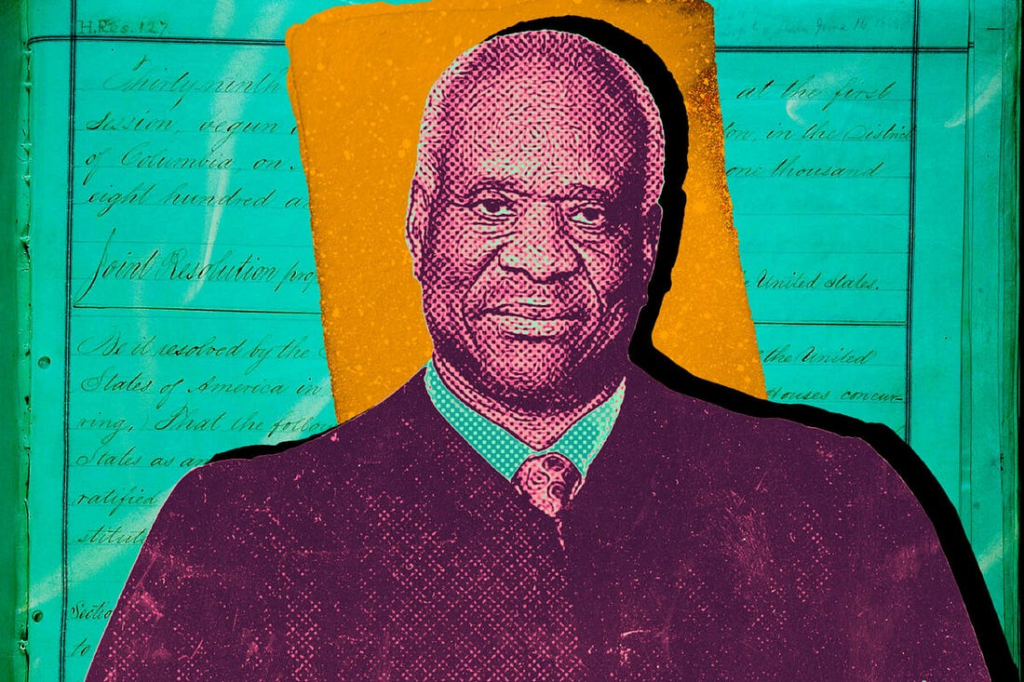
Thomas’ approach of originalism for thee but not for me is catching up to him. Cage Rivera/Rewire News Group/Wikipedia
A note from the author:Following this article, you’ll find the full articles of impeachment we drafted, for anyone who wants to send them to their U.S. House representative and request that they be endorsed and filed.
The U.S. Constitution says a Supreme Court Justice can be impeached for “high crimes and misdemeanors.” That phrase isn’t defined in the Constitution. The Constitution grants the interpretation of high crimes and misdemeanors to the U.S. House of Representatives. Not to SCOTUS. The Court has said as much itself, ruling that impeachment is a political question, rather than a judicial one. To the people’s house. The way that mechanism is assembled feels intentional, and worth note.
We elect the members of that house. We send them there to represent us, and by extension to represent our reading of the Constitution. So the question of whether a Justice’s conduct is a high crime or misdemeanor was never handed to lawyers, or to the Court itself. It comes back to us, through the people we elect.
I learned in the military that if you’re going to raise a problem or ask someone to do something, you should come with the solution. So I learned what the impeachment standard actually is, reviewed his conduct against that standard, and then drafted articles of impeachment against Justice Clarence Thomas for the conduct that met it.
The argument for drafting the articles concerns the conditions every Justice serves under, not just removing him from office. Right now a Justice who takes this kind of money runs little risk of being brought before Congress, put under investigation, and made to answer in public. Impeach Thomas, or open an inquiry into him, and things start changing. And for those concerned that a successful impeachment would just mean his retirement and a Trump-appointed successor: the next appointee, and every Justice currently seated, learns that misconduct will no longer be ignored. We need to create an environment where these justices don’t feel above the law or above consequences.
Articles of impeachment are charging counts, the House’s equivalent of an indictment, and a simple majority of the House can adopt them. The Senate then sits as a court, hears the evidence, and votes on each article separately, with a two-thirds vote required to convict and remove. A separate majority vote can disqualify the person from ever holding federal office again. The Constitution’s standard, treason, bribery, or other high crimes and misdemeanors, has no statutory definition, and the House has never adopted one. Representative Gerald Ford, leading the 1970 attempt to impeach Justice William O. Douglas, gave the definition that has governed in practice ever since: “An impeachable offense is whatever a majority of the House of Representatives considers it to be at a given moment in history.”
Frank Bowman, the University of Missouri law professor whose book is considered the standard modern history of impeachment, traces “high crimes and misdemeanors” to an English phrase that never meant indictable offenses at all, but the kind of serious bad conduct that warranted removal from office. Essentially, the standard for impeachment is not inherently criminal conduct. This is because the House of Representatives alone decides what the conduct is within that phrase, and that’s never been limited to what a prosecutor could charge. Further, the Congressional Research Service states plainly that impeachable conduct reaches serious violations of the public trust that are not necessarily indictable offenses.
In regards to the undisclosed gifts, and before most of the rest of this record was public, Jeremy Paul, former dean of Northeastern University School of Law, said: “What he did was just so clearly out of bounds that I don’t think there’s any defense of it.”
These are not the first articles drafted against Justice Thomas. Representative Alexandria Ocasio-Cortez introduced a three-article resolution on July 10, 2024, charging one count of failure to disclose gifts, income, and transactions and two counts of refusal to recuse from matters involving his wife’s interests. Hers was the first to put the conduct into articles of impeachment introduced in the House, and the articles here build on it, adding the benefactor-interest count, the false-statements count, the loan forgiveness, the Koch charter flight, and the Senate Judiciary Committee’s December 2024 findings.
So what do we get out of impeachment without conviction? Opening an inquiry gives the House the ability to investigate, with subpoena power. From there:
The investigation can yield legitimate evidence, some of which could be referred to states that may be interested parties in prosecutions, or to a future administration.
His conduct goes public, and he testifies under oath, where dishonesty can be prosecuted.
It pulls him away from his duties and his free time, a material cost.
It potentially causes reputational harm, where the conduct merits it.
It changes what a search of his name returns.
It puts a stink on him that follows him into everything else, and makes other groups less willing to work with him.
A House majority can start it the day it decides to.
The party that holds power now already knows this. The Benghazi committee ran for more than two years, brought no charges, and surfaced Hillary Clinton’s private email server. The 2023 Biden impeachment inquiry produced no articles and kept the President’s family finances in the news for a year.
And in 2024, Republicans impeached Biden’s border chief, a cabinet secretary named Alejandro Mayorkas, over immigration policy. There was no crime; the charge was essentially that he ran the border badly. The House impeached him by one vote. The Senate threw it out immediately, no trial. And Republicans considered it a win anyway, because the goal was never removal, it was a year of border hearings, headlines, and a recorded vote to campaign on. That is the tool working as designed, for the party willing to use it.
Everyone has a job in this fight, and the people we send to the House are no exception. Their power is reduced, not gone, and there is work to do every day of the week. This is one piece of it. We wrote the articles and made the case for aggressively impeaching every corrupt member of this Court because that is the baseline of what a House representative is for.
Want to learn more? Check out the free library of resources at the bottom of this article. But just so you know, it’s 10 people like yourself, 10 activists per article who subscribe by clicking the button below, that fund all of this. All 3 free books, all 12 booklets, the model legislation, and the 20–40 articles per month.
Don’t let this be the reason you miss a meal or are late on rent.
But if this helps you and you can become a subscriber, you’re one of the 10 that makes it all possible.
Will the Republican justices OK Trump’s efforts to winnow the midterm electorate?Yesterday’s ruling doesn’t foretell where they’ll go, but their Republican bias is an established fact.Yesterday, the six Republican justices on the Supreme Court—those mischievous scamps!—opened the door just a crack to President Trump’s efforts to winnow the electorate so it’s more to his liking. That opening is far from wide enough to enable Trump to wallow through so he can begin hacking Democrats from the voter rolls, but it does enable Trump’s underlings to move his winnowing project a few steps forward. The justices’ ruling stayed an injunction from a lower court that had forbidden the administration from compiling “state citizenship lists” that could be used to bounce those omitted from the lists from receiving mail ballots—assuming that the administration’s plan went on to clear other constitutional and procedural hurdles that yesterday’s decision did not address. Indeed, yesterday’s ruling merely said that the 23 states and the District of Columbia that had sought the injunction lacked standing to do so, because the list compilation project had yet to be rolled out and, accordingly, the states could not yet claim any harm from the project. Rather, the Six ruled, it was the administration that was “likely to suffer irreparable harm” if the injunction wasn’t lifted. There’s no doubt that Trump fears suffering irreparable harm if his lieutenants can’t winnow the rolls. That harm would not be administered by a mere injunction, however. His fear is that it will be administered by the American people if they are permitted to vote in a free and fair election when this year’s midterms roll around. It may be, of course, that when the Court considers the larger issues that Trump’s winnowing project raises, it will slam that door shut. After all, the Constitution’s Tenth Amendment forbids the federal government from the right to undertake projects not specifically enumerated in the Constitution, reserving those rights to the states. As election administration (which certainly includes deciding on voter eligibility) is not therein enumerated, it has been the project of the individual states since the Constitution was first ratified—actually, before the Constitution was ratified, and even before it was drafted. Of course, that the Constitution is perfectly clear on a question that may come before the Court is no guarantee that that will mean anything to those mischievous scamps on the bench. Despite the 14th Amendment’s affirmation of birthright citizenship, four of the six Republicans somehow failed to recognize it.
Still, the Republican Six will have to fail to recognize even more than that if they are to rule in the next few weeks that Trump’s plan can move forward. They will have to ignore the inconvenient fact that the basis for the administration’s intervention—that masses of noncitizens vote illegally in American elections—is devoid of any factual substantiation, despite repeated Republican investigations in fruitless search of voter fraud that have been ongoing for decades.
They will have to dismiss the equally inconvenient fact that the project’s first step—the Department of Homeland Security and the post office amassing a state citizen list of every current American citizen age 18 or older—depends on entrusting that rather large task to one department that has erroneously deported citizens and two departments with no experience at all in gathering the kind of census data aggregated decennially, after years of preparation, by a bureau of different department (Commerce). As they did in their ruling granting President Trump immunity for any misdeeds committed in an official capacity, they would doubtless declare that a ruling enabling the administration to decide who can vote and who cannot applies to any current and future administration. But it wouldn’t be just any federal administration to which they would be entrusting the winnowing of election rolls, of course. It would be the administration of Donald Trump, who still falsely claims that he actually won the 2020 presidential election, who still falsely claims that illegal voting by millions of immigrant noncitizens is the only reason why Democrats can ever claim electoral victory, who summoned several thousand goons to the Capitol on January 6, 2021, to help his efforts to violently overturn and steal a presidential election, and who pardoned and still hails as heroes those goons who were tried and sentenced to prison for their violent disruptions. There are, in short, a whole lot of hurdles the Six would have to jump were they to go beyond yesterday’s narrow ruling to one that would enable Trump to take over the upcoming election. What we know, unfortunately, is that when it comes to questions of party politics, the Court, very much led by Chief Justice John Roberts, has a long if undistinguished history of favoring Republicans. It has permitted partisan gerrymandering in a way and context that chiefly helped Republicans. It has effectively revoked the Voting Rights Act in a way that helps only the Republicans, culminating a personal crusade that Roberts embarked upon 45 years ago. It has obliterated the limits on the political contributions of corporations, which has provided the Republicans with a massive cash advantage even when the larger electorate has turned against them. It is no exaggeration to say that the most effective Republican political operatives, by far, are those who sit on the nation’s highest court. That still doesn’t mean that they will allow Trump to run amok in reshaping the electorate between now and November. Roberts in particular has a valid concern for the Court’s reputation, which these days is roughly at the same level as some particularly viral bacteria. If he doesn’t want to go down in history as the 21st-century Roger Taney—author of the Dred Scott ruling, with its unmistakable assault on the legitimacy and existence of American democracy—he’d do well not to author or support a Dred Scott ruling for our time.
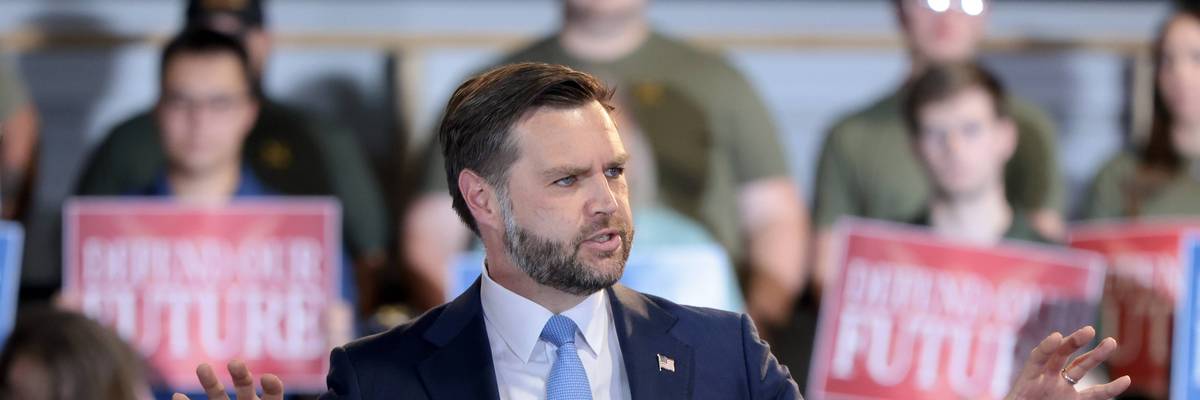
Troy Jackson, the Democratic US Senate nominee for a critical seat in Maine, denounced Vice President JD Vance on Monday for downplaying the killing of Johan Sebastián Durán Guerrero, a 25-year-old Colombian national who was killed by a federal immigration agent last month in Biddeford.
During a visit to Maine on Monday, Vance told residents who are “so worried about that situation” to “have a little bit of perspective.” Vance added that “we can absolutely investigate every shooting and we will, but we can also secure our border and ensure that that poison stops coming into our country.” (The legal representative for Durán Guerrero’s family said no federal agencies have reached out as part of any investigation into the killing.)
Jackson, the former president of Maine’s Senate who is running to unseat Republican US Sen. Susan Collins, responded to the vice president in a video message posted to social media.
“JD Vance is a dirtbag,” said Jackson. “There was a young man who had a Social Security number, he had a job, I mean, he had a life. He had a family. To come here and say, ‘Have some perspective’? You ought to have some damn perspective. I mean, you don’t even know what the hell’s goin’ on. You got a rogue agency that’s going around, pulling people out of homes.”
Jackson then turned his attention to Collins, who recently voted for legislation that included around $70 billion in funding for US immigration agencies, including nearly $40 billion for Immigration and Customs Enforcement (ICE). After an ICE agent killed Durán Guerrero last month, Collins refused to say she regretted her vote to boost the agency’s funding.
“I want to know: What are you doing about it, Susan?” Jackson asked. “She gave them an additional $70 billion to pull this shit off. We lost a person that JD Vance seems to not give a shit about. And that should piss us all off. So I want to know: Do you agree with JD Vance dismissing the killing of this young man? Because I tell you what, ‘concerns’ and all that does nothing for all of us, does nothing for that family, and I’m sick of your ‘concerns.’”
During his remarks in Brewer, Maine on Monday, Vance said Collins is “doing an amazing job” and characterized her as “the most independent member of the United States Senate,” even though she votes with President Donald Trump around 96% of the time.
Misha Linnehan, a spokesperson for the Maine Democratic Party, said in response to the vice president’s remarks that “Susan Collins voted to give Donald Trump and JD Vance $70 billion to send armed ICE agents into Maine with no guardrails.”
“Now that a man has been killed,” said Linnehan, “JD Vance thinks Mainers need to ‘have a little bit of perspective’ about children losing their father and a wife losing her husband—does Susan Collins agree?”
Our work is licensed under Creative Commons (CC BY-NC-ND 3.0). Feel free to republish and share widely.
On November 22, 1994, then-U.S. Labor Secretary Robert Reich delivered a famously prescient speech titled “A New Middle Class” to the Democratic Leadership Council (DLC). Coming just two weeks after the Democrats lost control of Congress in the 1994 midterm elections, Reich used the platform to warn that growing economic inequality was actively threatening American democracy. [1, 2, 3, 4]
Watch Robert Reich’s address to the Democratic Leadership Council analyzing the economic frustrations of the American middle class:
The “Two-Tiered Society”: Reich explicitly warned that the United States was transitioning into a “two-tiered society”. This structure was sharply divided between a few wealthy winners and a vast majority of left-behind working-class Americans. [1, 2]
Rise of Demagoguery and Populist Rage: He accurately predicted that an eroding middle class would harbor deep disillusionment and anger. He warned that this mass resentment would be easily manipulated by political demagogues. This would divert blame away from structural economic issues and target marginalized groups. [1, 2]
Critique of “Corporate Welfare”: Reich urged the Clinton administration and Democratic leadership to cut government subsidies for corporations. He argued that taxpayer money should instead be reallocated toward public worker retraining programs and education. [1]
The Broken Economic Bargain: He emphasized that the “old American bargain”—which promised that hard work would lead to economic security—was fundamentally broken. This occurred because the economic recovery of the 1990s was bypassing average workers. [1, 2]
Historical Legacy and Backlash
The speech was highly controversial at the time and caused significant friction within the Clinton administration. By directly challenging corporate subsidies and urging the party to aggressively protect the working class, Reich clashed with the DLC’s business-friendly, “Third Way” centrist philosophy. [1, 2]
Decades later, the address is widely viewed by political scientists as remarkably prophetic. It anticipated the exact economic anxieties, intense political polarization, and right-wing populist movements that shaped modern American politics. [1]
The U.S. Central Command at MacDill Air Force Base in Tampa, Fla., on Feb. 6, 2017. Photo: Susan Walsh/AP File
U.S. Central Command maintains a secret directory of journalists who have been blacklisted by the press office, according to an official with CENTCOM public affairs. The disclosure comes amid a failed war in Iran, a “cover-up” of U.S. casualties from that conflict, and repeated refusals by CENTCOM to address questions about civilian deaths in Iran, including the killing of a family recently disclosed by The Intercept.
The CENTCOM official who revealed the existence of the list threatened that this reporter could be added to it for calling the command too often.
“You’ll be put on a list of people to disregard,” Richard Allee, an executive assistant with CENTCOM public affairs told this reporter. When asked for clarification — “You have a list of people to disregard?” — he confirmed it with an emphatic: “Yes.” When asked which reporters or outlets were currently on the list, he replied: “I’m not privy to give you that information.”
Under self-styled War Secretary Pete Hegseth, the U.S. military has mounted the most aggressive assault on press freedom in memory, from an effort to outlaw “unauthorized” questions from reporters to imposing unconstitutional restrictions on journalists’ access to the Pentagon. Hegseth has compared reporters to “Pharisees,” who in the Bible call Jesus’s teachings into question, while the secretary’s minions regularly hurl insults at reporters. This is part of a broader war on press freedoms by the Trump administration, that includes demonizing journalists; filing so-called strategic lawsuits against public participation, or SLAPPs, to intimidate and silence criticism through expensive legal proceedings; and employing grand jury subpoenas and search warrants to intimidate reporters.
“Threatening journalists with placement on a blacklist in retaliation for reporting the government doesn’t like is as unconstitutional as it gets,” said Seth Stern, the director of advocacy for Freedom of the Press Foundation. “This should put to rest the Pentagon’s prior claims that it’s anti-press policies — like its infamous requirement that reporters sign pledges to only print authorized information — are somehow content neutral.”
Allee revealed the existence of the blacklist after this reporter was left on hold for more than two hours and complained about a long-standing lack of transparency by the command. In calls earlier that morning, Maj. Emma Thompson, CENTCOM’s media operations chief, repeatedly refused to answer questions about Iranian attacks on U.S. bases across the Middle East, disparate U.S. casualty counts, and medical evacuation flights: “Nothing for you,” “Don’t have anything for you,” “No comment.” Thompson then hung up on this reporter mid-question.
The Intercept called back multiple times until Allee picked up the phone. “They’re not going to answer your call if you just keep calling and calling,” he told this reporter.
Allee chastised this reporter to be more respectful. He said a “less accusatory attitude towards the personnel here would go a lot further than badgering them when you don’t get something you want, when you want it.”
Allee then revealed the existence of the blacklist. He declined to provide additional details about the list but said, “It’s not a list that we publicize.” He also hung up on this reporter.
The command’s press office responded in an email to additional questions about the journalists who have run afoul of the command. “CENTCOM does not have a ‘blacklist,’” the agency wrote.
A U.S. official who spoke on the condition of anonymity said that Hegseth’s office had a standing order not to engage with this reporter and would deny it if challenged.
“None of it has anything to do with security, all of it has everything to do with censorship and intimidation,” Stern told The Intercept. “CENTCOM needs to stop blacklisting journalists and tell the public who is on the blacklist and why they were placed there. Whoever was behind the blacklist should be blacklisted from government employment.”
“None of it has anything to do with security, all of it has everything to do with censorship and intimidation.”
Under Hegseth, the Pentagon has mounted an unrelenting assault on press freedom despite the fact that the secretary began his tenure by sharing secret information on airstrikes in Yemen, hours before the actual attacks occurred, on a Signal group chat that inadvertently included Jeffrey Goldberg, the editor-in-chief of The Atlantic.
As part of his war on the press, Hegseth evicted the New York Times, NPR, and other outlets from their long-held desks in the Pentagon and replaced them with sycophantic fellow-travelers like the One America News Network, the New York Post, and Breitbart.
In May 2025, Hegseth issued a memo barring credentialed reporters from most of the Pentagon without an escort. (Last month, a federal appeals court said that the Pentagon can continue doing so.) The Pentagon later introduced a policy requiring journalists to pledge not to even gather, at the risk of their credentials, unclassified information unless the government authorized its release. (This drove nearly the entire Pentagon press corps to surrender their badges.) After the Times sued and a federal judge struck the policy down in March 2026 as unconstitutional, Hegseth shuttered a decades-old Pentagon pressroom and began conducting polygraph tests to prevent leaks.
Trump also filed a $10 billion defamation lawsuit after the Wall Street Journal reported on a letter sent from him to convicted sex offender Jeffery Epstein; he also banned WSJ reporters from flying aboard Air Force One. This year, Trump also told journalists to give up a source “or go to jail,” threatened the press with “Charges for TREASON for the dissemination of false information,” and praised FCC chief Brendan Carr for threatening “the licenses of some of these Corrupt and Highly Unpatriotic ‘News’ Organizations.” (The Intercept is currently suing Trump for restricting First Amendment-protected information in a scheme to enrich himself.)
We’re independent of corporate interests — and powered by members. Join us.
While Trump and Hegseth have waged a pitched campaign to dismantle the free press, they are merely building upon decades of efforts by the government to curtail accountability journalism.
Military commands have regularly led this reporter on with promises of information only to renege months later; ignored calls and emails; feigned failing phone lines to end calls; hung up, lost Freedom of Information Act requests; and once even burned documents in lieu of releasing them.
This reporter was blacklisted in 2018 by U.S. Africa Command after exposing the torture of prisoners at a remote military base in Cameroon for The Intercept. “Nick, we’re not going to respond to any of your questions” then-Lt. Cmdr. Anthony Falvo, the head of U.S. Africa Command’s Public Affairs Branch, told me by phone. Asked if he believed AFRICOM didn’t need to address questions from the press in general, or just this reporter in particular, Falvo replied: “No, just you. We don’t consider you a legitimate journalist, really.”
The anonymous U.S. official said that sentiment extends to this day across multiple commands, as well as Hegseth’s office.
This reporter has unanswered questions pending with CENTCOM that date back to at least 2013 and extend to this week. For example, in July 2015, a CENTCOM spokesperson responded to an inquiry with this statement: “We will provide you response as quickly as possible.” Eleven years later, this reporter is still waiting.
IT’S EVEN WORSE THAN WE THOUGHT.
What we’re seeing right now from Donald Trump is a full-on authoritarian takeover of the U.S. government.
This is not hyperbole.
Court orders are being ignored. MAGA loyalists have been put in charge of the military and federal law enforcement agencies. The Department of Government Efficiency has stripped Congress of its power of the purse. News outlets that challenge Trump have been banished or put under investigation.
Yet far too many are still covering Trump’s assault on democracy like politics as usual, with flattering headlines describing Trump as “unconventional,” “testing the boundaries,” and “aggressively flexing power.”
The Intercept has long covered authoritarian governments, billionaire oligarchs, and backsliding democracies around the world. We understand the challenge we face in Trump and the vital importance of press freedom in defending democracy.
We’re independent of corporate interests. Will you help us?
How healthy you are is dependent on where you live. Americans suffer more cancers, heart disease, mental illness, and other chronic diseases than those who live in other wealthy nations, despite having the most expensive healthcare system in the world. Why? Embark on a journey to unravel the profound impact of public policies on American health from before birth in Born Sick in the Improving the Health of a Nation. Delve into the intricate web where economic inequality weaves a tapestry of sickness stemming from a highly stressed society. This compelling read illuminates the need for transformative change in social safety nets and public policies to uplift national health and well-being. Through vivid storytelling, the book unveils the symptoms, diagnosis, and ‘medicine’ required to steer the nation toward a healthier future. Join the movement for a healthier America by embracing the insightful revelations and empowering calls to action presented within the pages of this eye-opening book.
Stephen Bezruchka began his journey as a Harvard mathematics graduate who fell in love with the mountains of Nepal. There, he wrote the country’s first trekking guidebook before returning to the U.S. to study medicine at Stanford University. In the mid-1970s, he went back to the Himalayas to establish a community health project in a remote valley, far from any roads. This experience shaped a unique career where he alternated between working as an emergency physician in the U.S. and teaching medicine to local doctors in the most isolated regions of Nepal.
Through his travels, Stephen noticed a puzzling gap between America’s vast wealth and its actual health outcomes. This realization led him to earn a Master of Public Health from Johns Hopkins University to study the social and political factors that drive health. Today, he views the country itself as a “patient” in need of treatment. He focuses on educating the public about the root causes of health through the Population Health Forum, which he founded in 1998, and his leadership roles with organizations like Washington Physicians for Social Responsibility.
Currently, Stephen is an Associate Teaching Professor Emeritus at the University of Washington, where he has received numerous awards for his teaching and community service. As an author, his works include popular titles such as A Guide to Trekking in Nepal, The Pocket Doctor, and Altitude Illness, many of which have been translated into multiple languages. When he isn’t busy as an academic or economic inequality activist, he continues to pursue his passion for mountaineering, having explored the highest peaks of North America, Pakistan, and China.
TODAY, Monday, August 24: With just over a week until his primary, phone bank for Indivisible-endorsed candidate Patrick Roath (MA-08) (5:30pm ET/2:30pm PT). Roath is facing thirteen-term incumbent Stephen Lynch, whose MAGA-aligned voting record (including voting to thank ICE for its service and for the Laken Riley Act, which turbocharged Trump’s detention and deportation machine) is wildly out of step with his constituents in MA-08. In sharp contrast to Lynch, Roath will bring his experience as a pro-democracy lawyer and advocate to Congress to fight for all working families. We need a strong showing of people power to get him across the finish line. Paid for by Indivisible Action. Not authorized by any candidate or candidate committee.
California and a group of other states have lost one skirmish with the Trump administration on the Supreme Court’s shadow docket regarding ballots by mail, with the court essentially saying the states can’t sue because they haven’t been harmed yet.
President Trump issued an executive order in March directing the Department of Homeland Security to compile a list for each state of who in that state is eligible to vote, and directing the Justice Department to prioritize the prosecution of state election officials who send mail-in ballots to ineligible individuals.
Trump was, of course, trying to fix a nonexistent problem and sow further distrust in US election ahead of what’s likely to be a midterm season that will be disastrous for Republicans. And a Boston-based federal judge, US Judge Indira Talwani, issued an injunction in June to stop Trump’s order from taking effect, saying that Trump had overstepped in infringing on the states’ constitutional powers to organize and administer elections.
Separately, Judge Talwani issued another injunction in August that blocks the US Postal Service from implementing the demands of Trump’s order, saying that with less than 90 days before the November election, the administration could not begin changing the rules for how elections are run.
On Monday, the Supreme Court issued an unsigned ruling responding only to the first injunction, and the Justice Department’s request that it be stayed. The court’s conservative majority said, essentially, that the states lack standing to prevent a subordinate agency to the president from carrying out his order, because they can not document harm — the harm they cite is merely theoretical until DHS actually begins issuing its own voter rolls, if, for instance, they don’t match states’ own records of eligible voting adults.
“The Executive Order makes no demand of the States, so staying the District Court’s injunction will not concretely harm them,” the majority says. “That is why this suit was not justiciable in the first place.”
The majority adds, “The court’s disposition of this application does not mean that any measure taken by the government to implement the order will necessarily be lawful. On that score, time will tell.”
Justices Kagan and Sotomayor joined in a dissent penned by Sotomayor, in which the justice says that “today’s decision merely postpones adjudication of those challenges” by the states, which are sure to come.
Justice Ketanji Brown Jackson, as has become her style, penned her own more vociferous dissent, saying today’s ruling “needlessly injects chaos and uncertainty into the upcoming midterm elections.” And, she adds that while the court has previously ruled against election challenges that come too late, “today’s revelation is that such claims can also come too early — never mind that an election is looming and related harms are presently occurring.”
A further challenge from the federal court in Massachusetts may arrive as soon as tomorrow, CNN reports.
“The ruling is a win for Trump for the moment, but it doesn’t fully clear the way for his effort to limit mail-in ballots to go into effect,” says CNN Supreme Court analyst Steve Vladeck.
Today’s win for Trump comes less than two months after a loss at the Supreme Court on this same issue. The court ruled 5-4 in June on the issue of late-arriving mail-in ballots, saying that they can and should be counted based on state rules regarding postmarks, so long as the ballots are cast by Election Day. Chief Justice John Roberts and Justice Amy Coney Barrett joined the three liberals in that majority, in a show of support for the legality of voting by mail.
Trump Regime Takedown: Every Saturday Saturday, March 7, 2026 12:00 PM 2:00 PM Tesla San Francisco999 Van Ness AvenueSan Francisco, CA, 94109United States (map) Google Calendar ICS Keep democracy alive every Saturday by showing up, taking a stand, and sticking together for the long haul. Standing together is better than standing alone. Let’s get together... Continue reading →
This Sunday’s Town Hall: Announcing This Week’s Progressive Town Hall: Every Sunday at 4pm ET/1pm PT RSVP HERE Join PDA activists online from across the country to discuss the importance of progressives reclaiming the American story from the MAGA right, an issue of heightened importance as we’re now within one... Continue reading →
We protest Heritage Foundation EVERY MONDAY (Join us!!!!) By admin | September 2, 2025 | Uncategorized Cliff Cash Comedy Premiered Jul 26, 2025 Every Monday at The Heritage Foundation 214 Massachusetts Ave. Washington D.C. 4pm protest 6pm pizza Every Friday at Fox News D.C. 400 N. Capitol St. Washington D.C. 4pm protest 6pm pizza We are... Continue reading →
September PAC Meeting *We will be voting on November Election endorsement recommendations for state propositions!* Date: Tuesday, 8 September, 2026 (second Tuesday of month) Time: 7-9 PM *NEW* In-person Location: Women’s Building (3543 18th St), Audre Lorde Room Remote: Via Zoom Link Here
One Million Rising: Strategic Non-Cooperation to Fight Authoritarianism Virtual Event · Hosted by No Kings Time Wednesdays 8 – 9:30pm EDT Location Virtual event Join from anywhere About this event Across the country, authoritarian forces are getting bolder and more dangerous. Trump and his allies are not hiding their agenda: mass deportations,... Continue reading →
THURSDAY, JUNE 29, 2023 AT 2 AM – 4 AM PDT How to create trust in a group? Details Event by Extinction Rebellion Empathy Circles online EMPATHY CAFE Duration: 2 hr Public · Anyone on or off Facebook How to create trust in a group? This is the question that arose in our... Continue reading →
The San Francisco Democratic Party presents The San Francisco Democratic Party 2026 Gala Thursday, September 10th 6:00 – 10:00 PM Bimbo’s 365 Club 1025 Columbus Ave San Francisco, CA 94133 TICKETS https://www.sfdems.org/gala2026
Public Banking Coalition monthly meetings Next call: Nov 11 Excitement is building for public banking and once a month, PBI hosts an hour-long Public Banking Coalition online meeting to share the excitement and successes. Find out the latest updates on the advances being made all across the country from local advocates themselves... Continue reading →
Trump Regime Takedown: Every Saturday Saturday, March 7, 2026 12:00 PM 2:00 PM Tesla San Francisco999 Van Ness AvenueSan Francisco, CA, 94109United States (map) Google Calendar ICS Keep democracy alive every Saturday by showing up, taking a stand, and sticking together for the long haul. Standing together is better than standing alone. Let’s get together... Continue reading →
This Sunday’s Town Hall: Announcing This Week’s Progressive Town Hall: Every Sunday at 4pm ET/1pm PT RSVP HERE Join PDA activists online from across the country to discuss the importance of progressives reclaiming the American story from the MAGA right, an issue of heightened importance as we’re now within one... Continue reading →




 Harold Meyerson