If you believe that presidents get to fire executive branch appointees, there is no logical way for that to only be inapplicable for the Federal Reserve.Much of what you need to know about who rules America can be found in two Supreme Court opinions released today. They reinforce how the law as interpreted by this Court is malleable depending on whom it’s applied to.
If you work in the executive branch, you can now be fired by the president for whatever reason or no reason at all, even if you were appointed to what was once called an independent agency with quasi-judicial and quasi-legislative functions like the Federal Trade Commission, even if the law creating the agency said you needed a reason. This new standard overturns 91 years of precedent and is now the law, in every case—except if the agency you work for is the Federal Reserve. That’s the effect of Trump v. Slaughter and Trump v. Cook, opinions that were released simultaneously this morning. That they were written by the same person, Chief Justice John Roberts, only adds to an absurdity that can only be reconciled by the truism that money rules the world.
Trump v. Slaughter overrules Humphrey’s Executor, a 1935 ruling that affirmed the FTC’s statute, which says that commissioners can only be fired for cause (specifically, “inefficiency, neglect of duty, or malfeasance in office”). Several independent agencies had similar for-cause provisions, but that’s all gone, deemed a violation of the separation of powers.
None of these independent agencies will ever operate the same way again. They historically have been set up as five-member panels, with at least two from the opposite party. But Trump has fired practically every Democrat in these agencies, and in his second term not a single Democrat has been nominated to fill those positions. That’s likely to be the new standard: If presidents can fire any member of the executive branch at will, why would anyone from the opposite party willing to criticize executive branch decisions be allowed to stay in the government?
You can make at least a colorable argument that a president should be allowed to have control over their subordinates, despite the damage it does to an agency structure set up by Congress. But when you add in the carve-out for the Federal Reserve, it quickly becomes totally ridiculous. There is no way to hold the two rulings together at once.
In Trump v. Cook, Roberts—the same guy who wrote the Slaughter ruling—extols America’s “long tradition of independent central banking” to justify allowing the statutory for-cause provision to stand for Fed governors. The Fed was literally established one year before the FTC, and both have substantially similar language around removal. Roberts justifies this by saying that there have been central banks since before the Constitution—but there was also a postal service before the Constitution, yet the precedent Roberts relied upon in Slaughter, a 1926 opinion called Myers, allowed the president to fire a local postmaster at will.
“Acceptance of the Government’s position would in effect transform the Federal Reserve’s for-cause protection into at-will employment—an interpretive leap out of step with the statute Congress enacted and our Nation’s tradition of central banking protected from political interference,” writes the chief justice in Cook, the same man who precisely transformed the FTC’s for-cause protection into at-will employment, out of step with the statute Congress enacted and 91 years of tradition, on the same day, in Slaughter.
This idea that monetary policy simply must be “politically independent,” but holding corporations accountable, adjudicating labor law, and other agency functions can be done at the sole discretion of the White House, tells you all you need to know about the role of the money power and of everything else in America. Roberts made a fictitious differentiation so bankers could breathe easier. Period, end of sentence. P.S.: On a more surprising note, the Court preserved a Mississippi law that allows ballots postmarked by Election Day but arriving to election offices afterward to be counted. Justice Amy Coney Barrett ruled that “nothing in the federal election-day statutes requires ballots to be received by election day.” The Postal Service is not necessarily postmarking ballots as they receive them, though a lower court struck down post office efforts to tie mail ballot delivery to handing over voter rolls to the White House.
The larger issue here is that there appear to be five votes on the Court affirming that election laws are reserved for the states. That’s an important indicator as Trump continues his attempts to meddle.
Seven activists, all with Berkeley ties, blocked the span in 2024, protesting genocide in Gaza. Jurors resume deliberations Monday in the nationally watched felony trial.
Rocky Chau and River Allen block the Golden Gate Bridge on April 15, 2024, to protest the war on Gaza. They and five other East Bay codefendants are now facing a felony trial in San Francisco. Credit: Courtesy of Fran de Sena
No one really disputes what happened on April 15, 2024, on the Golden Gate Bridge.
A small group of protesters, all with ties to Berkeley, met at the Ashby BART station in the early morning hours and drove to Marin, then onto the bridge, where just before 8 a.m. on a workday, they stopped in the middle of the span. A passenger in each of three cars got out and locked themselves through a tube to their driver. Together, the three cars and three protesters blocked rush hour traffic for four hours, as others hoisted banners and chanted, in what they have described as a desperate gambit to get elected officials to halt U.S. military support for Israel’s war in Gaza.
The war was entering its seventh month, with nearly 34,000 Palestinians dead, and the civil disobedience on the bridge was part of a global day of action timed for Tax Day, dubbed A15.
What a jury will debate in a San Francisco courthouse this week is whether the protesters’ actions constituted a serious crime.
San Francisco District Attorney Brooke Jenkins threw the book at them, charging eight participants with felony conspiracy as well as a stack of misdemeanors, from trespass to unlawful assembly to 38 counts of false imprisonment of the commuters whose trips were delayed.
Eighteen others, who Jenkins’ office charged with misdemeanors, later took diversion deals. (A pretrial judge eventually threw out all but five of the false imprisonment charges, Raye Kahn, a spokesperson for the defense team, said, and one of the eight felony defendants saw all of her charges dismissed.)
The charges facing the seven protesters still on trial could carry sentences of up to 15 years.
Protesters block the Golden Gate Bridge on April 15, 2024, to protest the war on Gaza. Credit: Courtesy of Fran de Sena
Tori Porell, a senior attorney with Palestine Legal, a nonprofit firm that defends the free speech rights of those speaking out on Palestine, said she sees the case as “a classic overprosecution of an act of civil disobedience that is meant to stifle dissent and scare people away from speaking out against the US war machine and its role in the Israeli genocide against Palestinians.”
The district attorney’s office declined to comment on this claim or on any aspect of the case, noting that “the jury is deliberating.”
But Jenkins explained her thinking in 2024 when she announced the charges. “While we must protect avenues for free speech, the exercise of free speech cannot compromise public safety,” she said. “Regardless of the message, blocking roadways is not only illegal but also dangerous for protesters, motorists, and first responders.”
The protesters hoped to offer a different explanation of the case to the jury: that the disruption they caused was necessary to prevent a genocide in Gaza. Their attorneys, in opening remarks, said the prosecution would never meet the burden of establishing criminal intent, required for a conspiracy charge, because the protesters were there to save lives.
‘We have the right to take action to save lives’
The trial opened on May 20, before Judge Teresa Caffese, in San Francisco Superior Court, against seven defendants: Sarah Ferrell, Conrad de Jesus, Em Tillotson, and Bhavika Anandpura, all of Oakland, and Rocky Chau, Sara Cantor, and River Allen of Richmond.
All seven have ties to Berkeley. Allen worked at Black Pine Circle School at the time of the protest and Cantor at the East Bay Community Law Center. Tillotson is a former resident who now works at a restaurant in the city, while Chau volunteered at the Berkeley Animal Rights Center for nearly a decade. Ferrell, de Jesus and Anandpura are all UC Berkeley graduates.
Each day at, dozens of supporters filed in, many of them clad in keffiyehs, the Palestinian scarves; some days, parents of the defendants would sit in the gallery. One day, a mother visibly dissolved in tears as her daughter testified.
The prosecution’s case, argued by assistant district attorney Angela Roze, played out over five days, leaning heavily on the testimony of California Highway Patrol officers who arrived to the scene, as well as half a dozen people stuck on the bridge that day, including, according to notes from one trial observer, a nurse who was delayed getting to her job at Kaiser Permanente, a mortgage broker who missed a big sales meeting, and a parent who was stuck in her car with her two young children.
A protester offers snacks to a bystander trapped on the Golden Gate Bridge on April 15, 2024. Credit: Courtesy of Saman Qadir
The testimony, at times, did not appear to go as planned. A CHP investigator who examined the protesters’ phones said that he’d found no evidence of communication between them, according to a Bay City News reporter who was present that day, which did little to support the conspiracy charges. A CHP captain testified that he’d never seriously considered opening up an emergency lane, which a bridge official said could have been accomplished by a zipper truck, which moves traffic dividers, in about half an hour.
And one of the trapped drivers — a man who’d been subpoenaed by prosecutors because he’d missed a medical appointment related to the removal of a tumor — unexpectedly broke down on the stand as he spoke about how the Palestinian people had been kicked around for so long, according to two observers.
Caffese ended up dropping this count of false imprisonment because the man said he was able to reschedule his appointment and never felt held against his will.
The defense case relied almost entirely on the testimony of the protesters themselves, who spoke in detail about their motivations. For a conspiracy charge, explained attorney Jeff Wozniak, who was an early member of the defense team, a prosecutor has to prove criminal intent. What the defense was hoping to show, he said, was “they weren’t there to impact the bridge finances or to stop these drivers — they were there to demand attention to the genocide.”
In fact, several defendants, including Ferrell, said they had assumed officials would use the zipper truck to open a fourth lane to let through anyone in need and would not have sought to prevent it; instead, CHP officers halted northbound traffic as well.
The protesters locked their arms together through tubes to delay their removal by law enforcement. Credit: Courtesy of Fran de Sena
When Oakland resident Conrad de Jesus took the stand on May 29, he looked every bit the architect that he is, in close-cropped hair and chunky glasses. Prompted by his defense attorney, Katherine Isa, he walked the jury through his biography — a child of immigrants from the Philippines, his father a Navy man — and his history of involvement in the animal rights movement. It was there, through his involvement in DxE, or Direct Action Everywhere, based in Berkeley, that he first learned about civil disobedience and the idea of the necessity defense, an argument that a defendant acted to prevent significant bodily harm to someone else.
“We believe we have the right to take action to save lives,” he said.
He became emotional as he spoke about the case of Hind Rajab, a 6-year-old girl whose January 2024 call to the Palestine Red Crescent Society after her family’s car was hit by a barrage of bullets had circulated online. “She coughed up blood and was afraid her mother would be angry because she spoiled her dress,” he said. “Ultimately, she was shot and killed by Israeli forces. And that affected me deeply, because I’m a father.”
In the weeks that followed, he said, he saw footage of an apartment building that had been turned to rubble, something he knew, as an architect, would require an extraordinary degree of force. De Jesus recalled seeing a father amid the building’s remains holding the dead body of what appeared to be a 4-year-old girl, and hearing him say, “Habibi,” an Arabic term of endearment that translates to “my darling” or “my love.”
For months, de Jesus said, he had been going to marches; reaching out to his members of Congress; and attending public hearings, including an Oakland City Council meeting where a ceasefire resolution was considered. “I’d done everything I could,” he told the court.
Isa then asked him about his decision to participate in the bridge blockade. “I believed that it was an emergency, that we needed to act very quickly. Just days before, the World Central Kitchen employees were killed by an attack by the Israeli military, so we knew they would stop at nothing,” he said. “We knew Palestinians were being pushed back south to Rafah, and there were plans by the Israeli military to attack Rafah.”
For much of the war, Gazans had been instructed to evacuate from areas in the north that were being heavily bombarded to points south. By the time Israeli Prime Minister Benjamin Netanyahu announced on April 8 that he had set a date to invade Rafah, the strip’s southernmost city, an estimated 1.5 million people were sheltered there.
Golden Gate Bridge defendants Conrad de Jesus, Rocky Chau, Sara Cantor, Em Tillotson, Bhavika Amandpura, River Allen, and Sarah Ferrell outside the Civic Center Courthouse in San Francisco. Credit: Courtesy of Manan Kocher
Another defendant, the public health worker Sarah Ferrell, was paired with de Jesus that day, and was behind the wheel in one of the vehicles that blocked traffic. She told the court that she had been inundated with images of the destruction in Gaza, and that she had been moving through her days in a state of grief, mourning and outrage. She too had tried everything to persuade Congress to stop arms shipments to Israel: a monthslong postcard campaign, daily calls to her senators, protest marches, testimony before the Oakland City Council.
“The executive branch was completely failing us,” Ferrell said. “The legislative branch was failing us. Civil society was failing us. There were no avenues left to stop the U.S. from sending the supplies to support the invasion of Rafah.”
The bridge action, she said, was a chance to be seen, to say, “You can’t ignore us anymore.”
While she and de Jesus were locked together, she recalled noticing at one point that he was crying. She said she looked out over the water, imagining Gaza far on the other side, and thought to herself, “We hear you. I’m so sorry.” And then, as the daughter of a minister, she prayed.
Prosecutors sought to document the disruption’s harm
San Francisco District Attorney Brooke Jenkins speaks during a news conference April 13, 2026, in San Francisco. Credit: AP Photo/Jeff Chiu
From the start, San Francisco’s district attorney seemed determined to prosecute the case aggressively. The day after the action, Jenkins held a press conference announcing that she would bring felony conspiracy charges. At that event, and then on social media, she called for “anyone who was falsely imprisoned on the Golden Gate Bridge” to come forward, saying they may be entitled to restitution. The California Highway Patrol also issued a callout for anyone stuck on the bridge that day.
“There are people that were inconvenienced by this protest and that’s been true of every protest going back to the Edmund Pettis Bridge,” said Wozniak, who has defended Bay Area protesters facing criminal charges over many years. “But soliciting people to come forward who were impacted by a protest, with the promise of monetary payment under the restitution laws, is something I’ve never seen before.”
When Jenkins’ office filed charges against 26 of the protesters that August, the affidavit described numerous drivers who missed work, medical appointments, and flights, including the man who’d missed his pre-op appointment, and two others who said they had to relieve themselves in their car. The DA also sought $162,554 in restitution to the Golden Gate Bridge District for lost toll revenue. Though the bridge district later dropped the restitution claim, it was cited by a judge in November as the reason he denied a motion to downgrade the felony charges.
“The April 15, 2024, protest was unprecedented in its duration. Protesters blocked all southbound traffic on the Golden Gate Bridge for over four hours,” bridge district spokesperson Paolo Cosulich-Schwartz said when asked if the district had ever previously filed a restitution claim over a protest. “The Bridge District has not previously sought restitution for other protest incidents because they were resolved quickly at the direction of law enforcement.”
The felony charges brought by Jenkins’ office were unusual for an act of protest in San Francisco — and stood out among the many disruptive protests that took place on A15. Protesters in Eugene, Oregon, for example, who blocked the I-5 that day, got charged with misdemeanor disorderly conduct. Chicago activists who blocked access to O’Hare Airport faced misdemeanor charges for obstructing traffic. And protesters who blocked a bridge on the I-84 in Beacon, N.Y., in the Hudson Valley, faced misdemeanor charges of trespassing and disorderly conduct.
Historically, participants in other Golden Gate Bridge protests that halted traffic have faced lesser charges as well. A famous AIDS protest in 1989, which blocked traffic for nearly an hour, and a “Save the Redwoods” protest in 1996, which press reports said caused an “all-day traffic snarl,” each resulted only in misdemeanor charges. A Black Lives Matter march that clogged bridge traffic in the summer of 2020 didn’t even result in arrests.
Demonstrators shut down the Bay Bridge, Nov. 16, 2023, in San Francisco to demand a cease-fire in Gaza; defendants in that case received only community service. Credit: AP Photo/Noah Berger
And in the wake of a protest on the Bay Bridge in November 2023, just five months before the A15 action, which shut down traffic for the same window of time, four hours, Jenkins’ office filed only misdemeanor charges — all of which were ultimately dismissed in exchange for community service.
“Jenkins has taken a much more draconian approach to charging across the board,” Wozniak, who was a defense attorney in that case, said. “But it’s also clear that she didn’t like the press that the Bay Bridge case brought,” when the protesters didn’t get jail time.
The defense team accuses Jenkins of bias
In an Aug. 20 letter, attorneys for the 26 original defendants requested that Jenkins recuse herself from the case, claiming that she had overcharged the protesters due to a “bias against Palestinians.” She had at least two meetings with the Israeli Consulate in 2023, they wrote, and had received gifts of wine from the consulate. The attorneys cited a remark she made in October 2023, calling an antiwar protest “pro-Hamas,” and emails from one of her assistant DAs, reported by the SF Standard, calling Palestinians “brutal Arab invaders” and “Nazis.”
The DA’s office said at the time that the ADA’s remarks “do not reflect the views of the District Attorney or the District Attorney’s Office,” and that the matter was under review. And the office dismissed the concerns raised in the lawyers’ letter, issuing statements to the press saying that meeting with consular staff was a routine part of the job for elected officials.
Yet those concerns were amplified as the case advanced and Jenkins’ office filed a pretrial motion asking a judge to bar the word “genocide” from being mentioned during trial.
It was a tactic that had been used in another high-profile Bay Area case against pro-Palestine protesters, this one over an office occupation at Stanford University in June 2024, part of a student-led campaign to get the university to divest from companies implicated in the Israeli offensive in Gaza. In that case, Santa Clara District Attorney Jeff Rosen, who charged a dozen protesters with felony vandalism and conspiracy charges, also sought to disallow the defense from introducing evidence of the protesters’ political motivations. A judge denied both motions last December, then recused Rosen and his office in May after the defense discovered that he’d mischaracterized the case as a fight against anti-Semitism in a fundraising appeal for his reelection campaign.
Protesters blocked traffic on the Golden Gate Bridge for four hours on April 15, 2024, to protest the war on Gaza. Credit: Courtesy of Fran de Sena
“Trying to keep out the word genocide is wanting the case to be content neutral,” said Tony Brass, a lawyer who represented one of the Stanford defendants, Hunter Taylor-Black. “There’s an argument here that you’re fighting for the greater good, that it’s a legal necessity — everything else I’m doing isn’t landing, isn’t saving lives, and I might be able to save lives if I do this.”
“Do we have a right to know what was in their mind when they did it?” he said. “If you strip out the meaning and necessity of what people are doing, they just look like a bunch of lunatics.”
A judge rejected a pretrial defense motion to recuse Jenkins from the Golden Gate Bridge case, and Caffese later rejected the prosecution’s motion to disallow the word “genocide” in court.
Still, Roze, the prosecutor, interjected repeatedly during the defendants’ testimony, asking Caffese to admonish the jury that the protesters were not testifying as experts on Gaza. The judge did so often, instructing the jury several times that when the protesters spoke about the destruction they had seen and read about in the news, it was evidence only of their own state of mind.
The jury will consider narrow questions of intent
On the morning of June 5, the day closing arguments were set to begin, the defendants and their supporters gathered on an expanse of lawn on McAllister Street, opposite the courthouse. De Jesus wore a dark brown suit and tie, a black keffiyeh around his neck. Ferrell wore a white jacket with a white and green keffiyeh, a bouquet of irises and dahlias in her hands. They held one side of a Palestinian flag; Allen held the other. None of the defendants offered remarks, on the advice of their attorneys, but several of their supporters did.
One of them was Taylor-Black, the Stanford defendant, who was free to speak because, several months after she graduated, her case ended in a mistrial. “I’ve honestly recently been thinking a lot about the term complicity,” she said. “They sought to ban the use of the word genocide. The reason they do this is because they know that the actions taken on that bridge on April 14 and on Stanford University’s campus on June 5 are not crimes. We are not the ones who have made ourselves complicit in genocide in our time.”
After the defendants filed through the metal detectors and into the upstairs courtroom, Caffese began her instructions to the jury, which took the better part of an hour. She never said the words the seven defendants, their families, and their attorneys were waiting for: She did not instruct the jury to consider a necessity defense, even though a California appellate court had recently allowed it in an unrelated case about an animal rights protest. That means that the jury isn’t supposed to consider the question of whether trying to halt a genocide justified the protesters’ actions.
Or at least, as Brass, Taylor-Black’s attorney, explained, the jurors are technically not supposed to. Still, he said, the defendants’ sense of urgency about trying to stop genocide might make jurors hesitate to convict, which might motivate them to look at all of the elements of the case with greater scrutiny.
Sarah Ferrell, Conrad de Jesus, left, and River Allen, right, hold at Palestinian flag outside the San Francisco Superior Court before closing arguments in their felony case, June 4, 2026. Credit: Esther Kaplan/The Oaklandside
Just as prosecutors have discretion over what charges to bring, jurors bring their own judgment when deciding verdicts. Nearly three years since Hamas’ Oct. 7 attack and Israel’s invasion of Gaza, U.S. public opinion has shifted dramatically, with many more Americans now sympathizing with Palestinians over Israelis, and a third believing that the U.S. provides Israel with too much military assistance.
There is another affirmative defense, known as a “mistake of law,” that was a throughline in the defense testimony. In a felony conspiracy charge, as Kahn explained, one of the key elements is intent — in this case, the intent to commit several alleged misdemeanor crimes, from trespass to false imprisonment. With this defense, what would matter is that the protesters thought their actions were legal, because they were justified, even if they didn’t properly understand the law. Caffese didn’t instruct the jury to consider that defense either.
“The defendants thought it was necessary to block traffic on that bridge to prevent a greater harm from happening, even if they were mistaken,” Kahn said.
“What was their intent that day? They were heartbroken. They wanted to do everything in their power to stop these atrocities.”
Berkeleyside staff contributed reporting to this story.
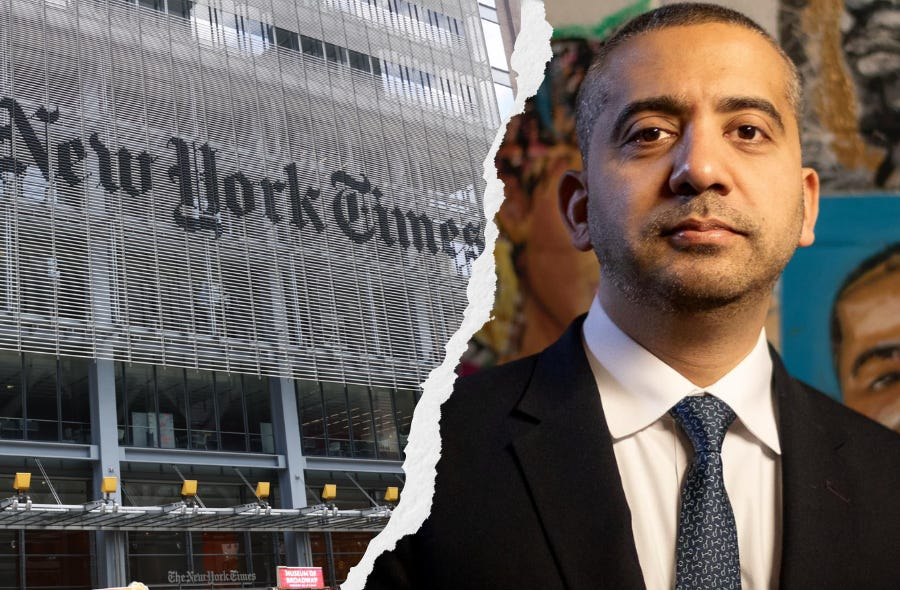
The Times called out our editor-in-chief for supposedly “misstating the facts” on its softball coverage of the GOP, versus its nonstop criticisms of progressives. But Mehdi came back with receipts.
Left: The New York Times building in New York City, United States on July 13, 2024. Photo by Jakub Porzycki/NurPhoto via Getty Images. Right: Mehdi Hasan
It’s not everyday that the most-subscribed newspaper in the U.S. comes after you.
The New York Times – notorious for whitewashing Israel’s genocide in Gaza – published a profile piece on Darializa Avila Chevalier, one of three Mamdani-backed progressives who shocked the Democratic establishment when they won their NYC primaries last week.
“Who is Darializa Avila Chevalier?” the headline asks. The piece features old social media posts from Chevalier that say things like “Fuck Kamala Harris” – quotes that Times chief White House correspondent Peter Baker amplified on Twitter:
Mehdi responded to Baker’s post, calling out the Times for scrutinizing progressives while giving right-wingers a pass, even though GOP politicians routinely traffic in much more extreme and racist rhetoric:
The New York Times PR team proceeded to tweet at Mehdi in response, implying that he was “misstating the facts”:
So, you can subscribe to the self-declared “both sides” journalism of the mainstream New York Times, where racists, Islamophobes, and literal Nazis get off easy.
Or, you can support a new kind of media that’s independent and unafraid – journalism that refuses to both-sides genocide, fascism, and white supremacy.
Paul McAllister and Johnny Desert Jun 28, 2026 San Francisco’s Barbary Coast ran for nearly seventy years on a three-block stretch of Pacific Street — longer than any red-light district in American history. It began in the chaos of the 1849 Gold Rush, when the city’s population exploded from under five hundred to over twenty-five thousand in two years and abandoned ships were sunk in Yerba Buena Cove to claim the mud beneath them as real estate. What followed was a neighborhood built entirely on extraction: gambling halls where half a million dollars sat on the tables, a shanghaiing trade that kidnapped men into forced labor at sea, and a vice economy so profitable that the city’s own politicians had no interest in shutting it down. The 1906 San Francisco earthquake and fire leveled every saloon and brothel on the Coast — and within a year, they were all rebuilt. In the district’s final act, African American musicians at clubs like Purcell’s So Different Café invented the dance crazes that swept the nation, from the Texas Tommy to the Turkey Trot, making Pacific Street one of the birthplaces of American jazz. The Barbary Coast survived vigilantes, earthquakes, and six major fires. It was finally killed by a newspaper editorial and a police commission resolution banning dancing. Today the same blocks are Jackson Square — San Francisco’s first historic district, home to Michelin-starred restaurants and tech firms paying tens of millions for the brick-and-iron buildings where crimps once dropped drugged sailors through trap doors. Sources Herbert Asbury, The Barbary Coast: An Informal History of the San Francisco Underworld (1933) Tom Stoddard, Jazz on the Barbary Coast (Heyday Books, 1982; rev. 1998) San Francisco Heritage, “Heritage in the Neighborhoods: Jackson Square” series (sfheritage.org, June 2025) Gary Kamiya, “Depravity of San Francisco’s Barbary Coast Was Legendary,” San Francisco Examiner (2023) FoundSF, “Barbary Coast” and “Shanghaiing” entries (foundsf.org) Sid LeProtti oral history recordings, Columbia Records / San Francisco Traditional Jazz Foundation Collection (1953; digitized at Stanford University)
They weren’t famous. They were not obviously brave. Otto Hampel was a factory worker who had fought in the First World War. Elise Hampel was a domestic servant who had, until a few years earlier, belonged to the National Socialist Women’s League. They lived in a working-class apartment in Wedding, a Berlin neighborhood, in a building ordinary enough that nothing about them caught the eye. They were, by every outward measure, precisely the kind of people whose lives do not appear in history books.
In 1940, Elise’s brother was killed in France. Something in her broke, and something in Otto broke alongside it. They did not have a platform. They did not belong to any resistance organization. They were not connected to the White Rose or to any underground network. What they had was a kitchen table, a stack of postcards, a pen, and a decision.
Starting in September of that year, and for the next two years, Otto and Elise Hampel hand-wrote more than two hundred postcards denouncing Hitler and the Nazi regime. The messages were plain. Refuse military service. Refuse to donate to the Winter Relief. Refuse to cooperate. One card, written across a stamp bearing Hitler’s face, read simply: worker murderer. Another read, Mother! The Führer has murdered my son. Mother! The Führer will murder your sons too.
They dropped the cards in mailboxes. They left them in stairwells. They walked their own city, an ordinary couple on an ordinary errand, and scattered the truth like seeds.
Here is the part that will break your heart. Nearly every postcard was turned in to the Gestapo immediately. The people who found them were terrified, to be caught with such a card was to be marked. So they handed them in. Card after card. The Gestapo, reading them, became convinced it was tracking a communist spy ring, a sophisticated underground network. The idea that two working-class people at a kitchen table were producing all of this, alone, for two years, did not occur to them.
For two years, Otto and Elise Hampel risked their lives every week. They believed that somewhere, somehow, someone was reading. They believed the seeds would find soil. They didn’t know that almost every card they wrote was going directly into a Gestapo file. They didn’t know their campaign, by any immediate measure, was failing.
They were arrested in October 1942. Otto told the police he was happy to have protested against Hitler. Roland Freisler’s People’s Court convicted them of preparing for high treason and demoralizing the troops. On April 8, 1943, Otto and Elise were guillotined at Plötzensee Prison within hours of each other.
Sit with the part of this story that feels like defeat. They didn’t overthrow Hitler. They didn’t start a movement. They did not, as far as they ever knew, move a single reader. They went to their deaths with no evidence that their two years of quiet, terrified, unglamorous work had mattered to anyone at all.
And yet.
After the war, the German novelist Hans Fallada was handed their Gestapo file. He wrote a novel based directly on what they did, published in English as Every Man Dies Alone, and in the UK as Alone in Berlin. The file itself survived. Their mug shots, their handwriting, their confessions, and several of the actual postcards were contained in it. Schoolchildren in Germany study them. A plaque now marks the place they lived. Emma Thompson and Brendan Gleeson played them in a 2016 film. Eighty years later, I am sitting down to write to you about them.
The regime they opposed is gone. The people who turned in their postcards are forgotten. The Hampels are not.
You will be told – I’m sure you have already been told – that you are too small to matter. That you are not famous enough, not positioned enough, not important enough for your refusal to make a difference. The Hampels were less positioned than you are. They had postcards. You have more than that. The question they answered at their kitchen table, and the question in front of you now, is not whether your witness will be measurable in your lifetime. It is whether you will stand witness anyway.
They didn’t know, when the guillotine fell, that we would be speaking their names. They acted anyway. That is the whole lesson. The meaning of a small refusal is not what it accomplishes in the week you make it. The meaning is that it enters the record of what human beings did when it was hard. Someone, later, will find it. Someone always does.
To read more: Hans Fallada, Every Man Dies Alone (Melville House, 2009). The U.S. edition includes an extraordinary appendix reproducing pages from the actual Gestapo file – the Hampels’ mug shots, their handwriting, several of the original postcards. In the UK the same novel was published as Alone in Berlin. The 2016 film Alone in Berlin, starring Emma Thompson and Brendan Gleeson, is faithful to the arc of the story and a fine ninety-minute introduction. For a concise historical account, the couple’s Wikipedia entry under “Otto and Elise Hampel” is solid and well-sourced.
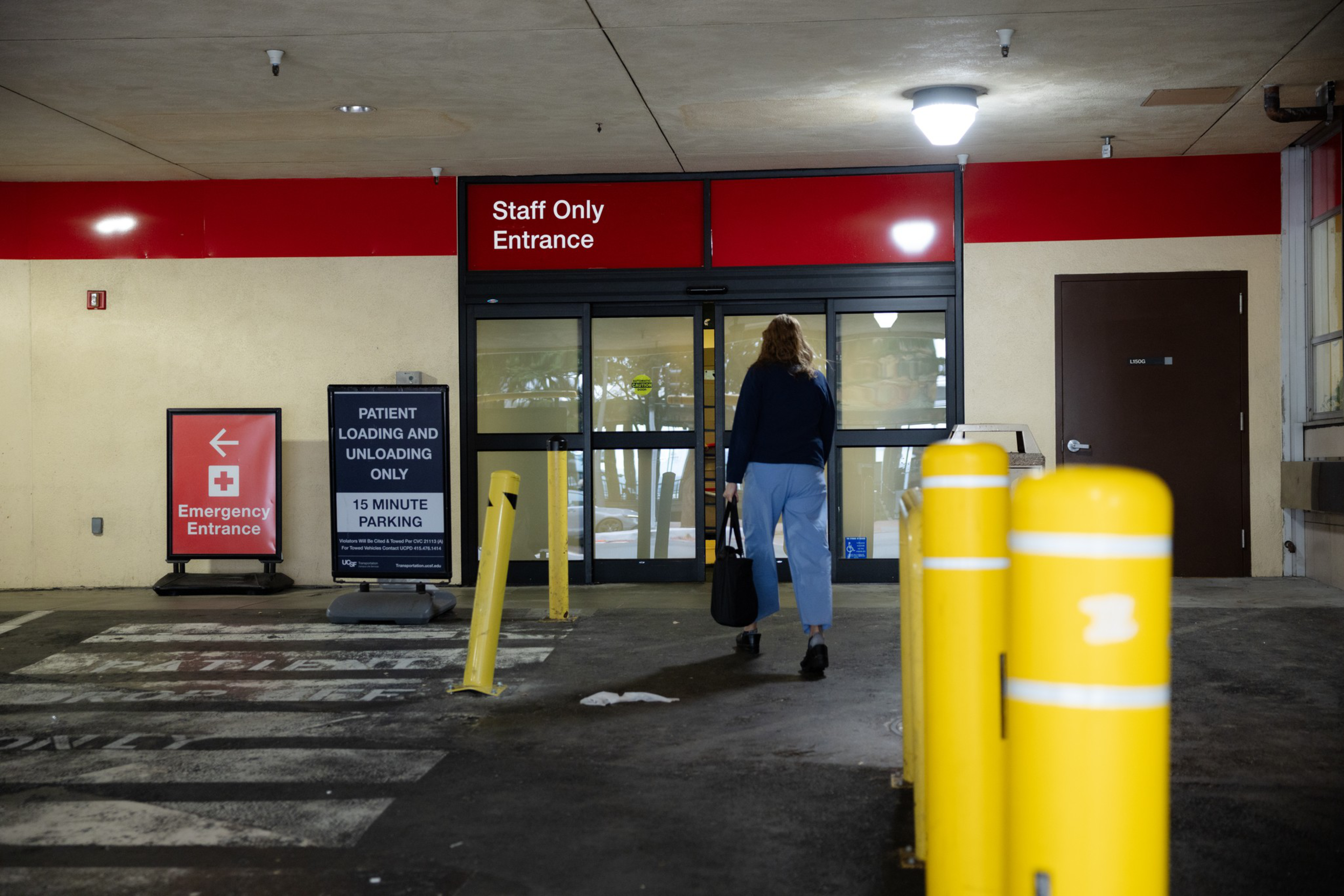
Staffing cuts, a boarding crisis, and an $809 million surplus. To employees, the question isn’t whether UCSF can fix its emergency department — it’s whether it wants to.
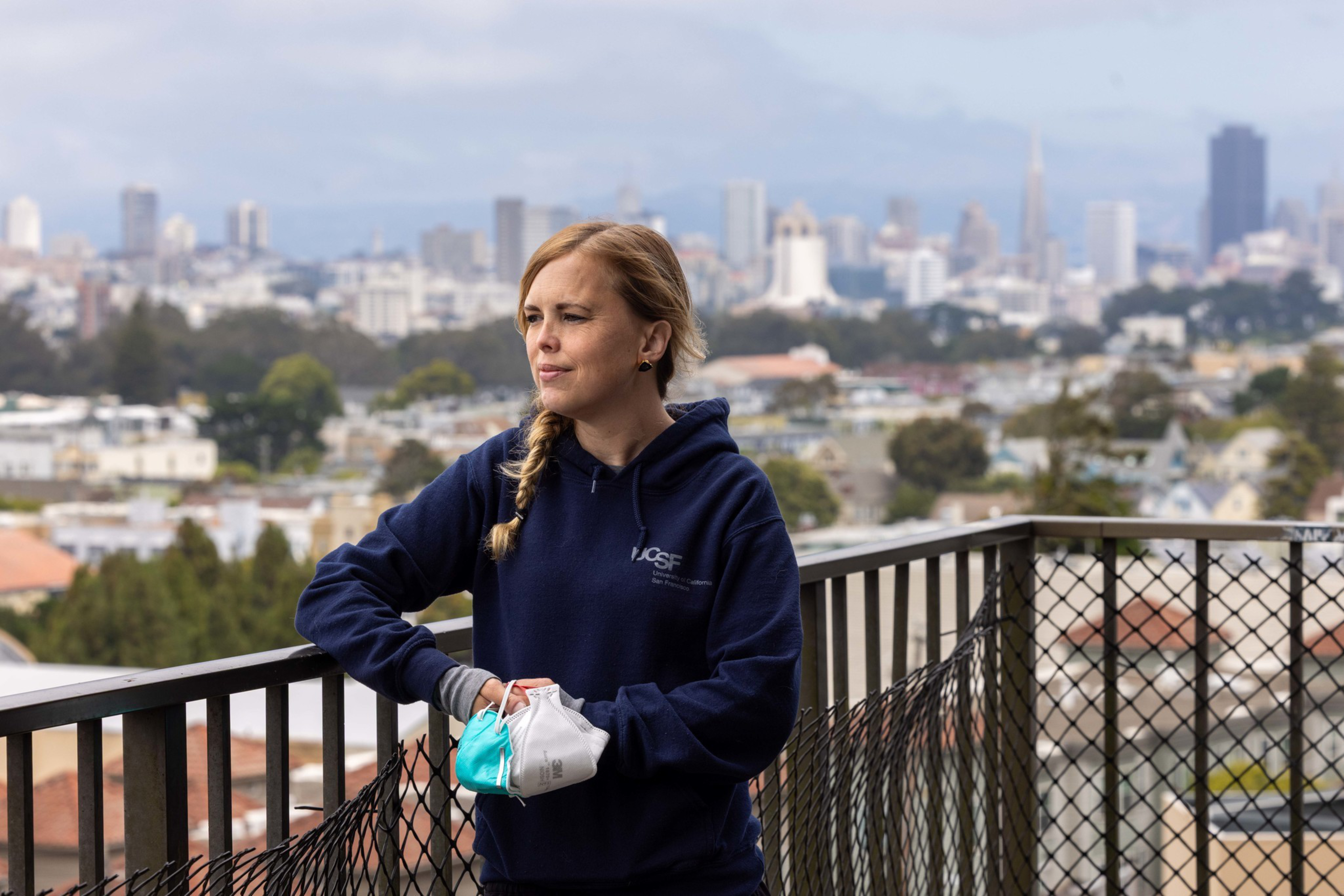
Liver transplant patient Kelsey M. walked out of the emergency department at UCSF Parnassus against medical advice because she was afraid that staying would lead to her death. | Source:Amanda Andrade-Rhoades/The Standard
As a lifelong liver transplant patient, Kelsey M. knows her body the way a navigator knows ocean currents.
Through frequent blood draws, she tracks a panel of enzymes to see whether the organ is functioning or close to failure. So when results came back in early December — each reading higher than any since she received the transplant as a baby 35 years ago — she knew she needed immediate care.
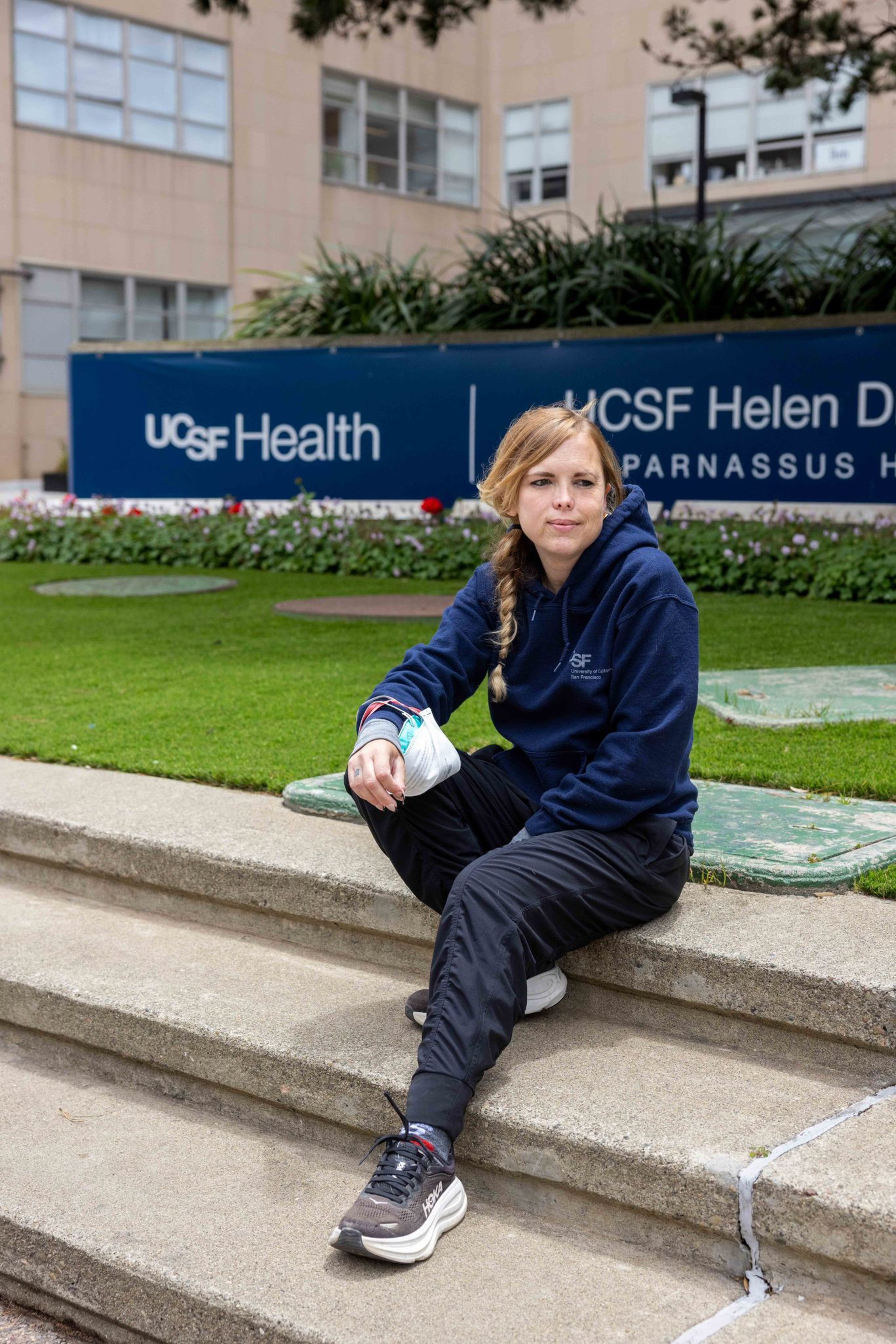
The symptoms were telling enough. She couldn’t keep food or water down. She was doubling over in pain. Someone on her UCSF transplant team told her to go to the emergency department at Parnassus. Her records were there, her specialists walked those floors.
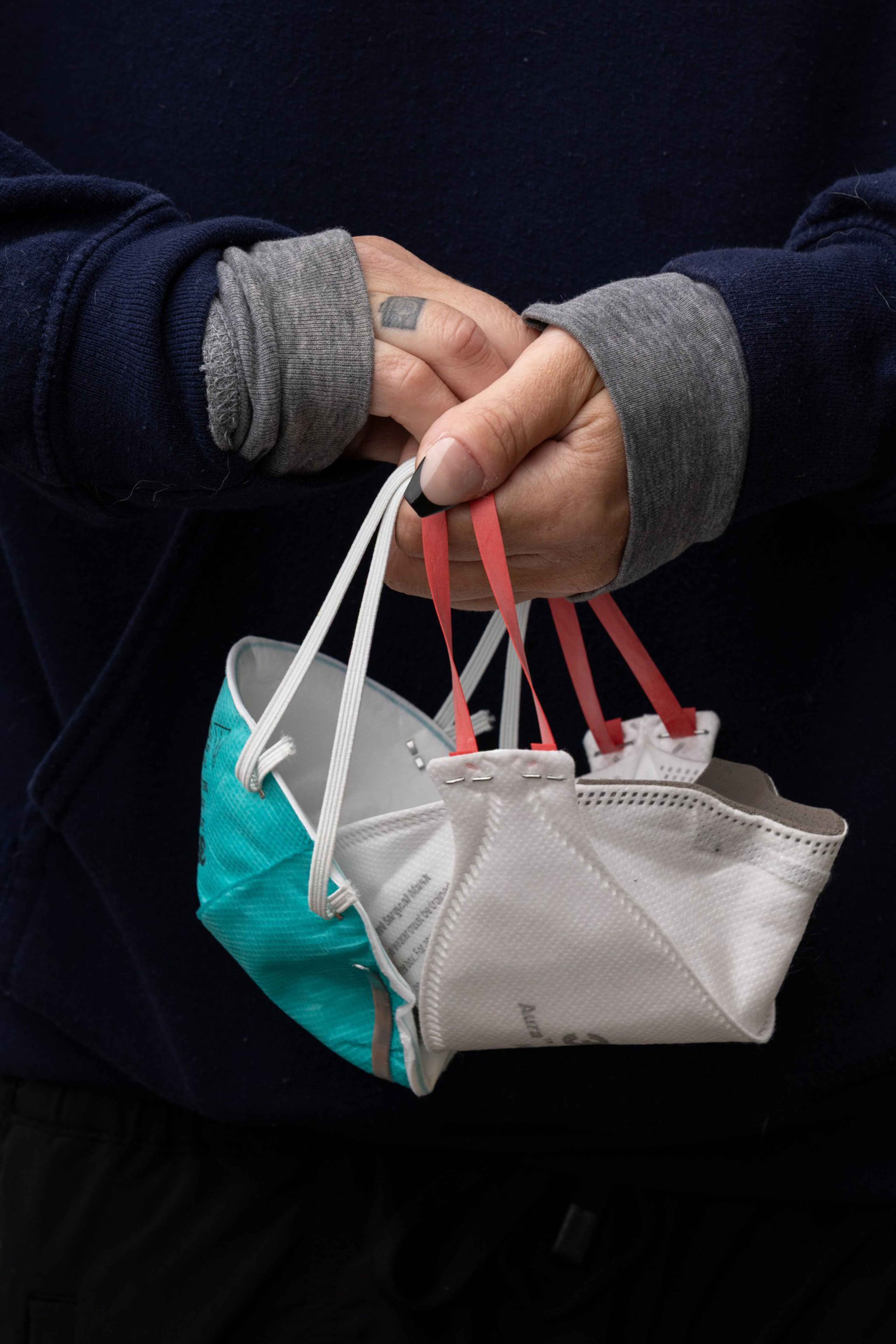
She packed the essentials: enzyme-replacement pills to help her eat, a phone charger, a change of clothes, an N95 mask.
Four hours later, she was in a bed and hospital gown, fluids flowing through a port in her chest. But she was in a shared room, with only a curtain separating her from someone on a breathing machine, battling an apparent respiratory illness.
What might have been uncomfortable to other patients posed a grave threat to Kelsey. Since she was only months old when she got a new liver, she was too young for live vaccines before the surgery and too immunocompromised after to ever receive them.
When the man on the other side of the curtain started coughing, she stepped out of the room.
“A nurse said, ‘You can’t be here in the hallway,’ and I said, ‘I can’t be in the room with this guy.’”
Kelsey wears a mask when she checks herself into the UCSF Parnassus ER. | Source:Amanda Andrade-Rhoades/The StandardSince receiving a transplant as a baby, Kelsey has been severely immunocompromised. | Source:Amanda Andrade-Rhoades/The Standard
The nurse brought her a chair, saying there were no beds and the hospital was full. A transfer to another facility was the only option. A doctor told her she could die if she left; she felt she could die if she didn’t.
“I was too scared to stay,” Kelsey said.
Against medical advice, she walked out.
Rare patient, common ordeal
Kelsey, who asked to withhold her surname, is a medical anomaly.
As an infant transplant patient who came off anti-rejection drugs at 16, she’s rare living proof that the immune system can accept a new organ without medication. That made her valuable to researchers. A UCSF-led clinical trial(opens in new tab) recruited her last year to try to understand why.
At the Parnassus emergency department, though, she’s one of thousands each year who walk out before being evaluated or treated by a licensed provider.
UCSF Health officials have maintained that the problems at its flagship emergency department aren’t unique to Parnassus. To a degree, that’s true(opens in new tab). A 2023 study in the Journal of the American Medical Association documented a decade of statewide deterioration: numbers of emergency visits rising, emergency rooms closing, severe cases surging.
Workers in the emergency department say the long wait times and high walkout rates are a result of understaffing and crowded conditions. | Source:Manuel Orbegozo for The Standard
Still, Parnassus stands apart on several measures. As a quaternary referral center(opens in new tab), the facility exists to treat patients too sick or complex for anywhere else, operating as the last stop for the rarest, most complicated cases.
However, publicly reported data show that emergency room patients in Parnassus are increasingly likely to wait longer for care, or to simply walk out without seeing a doctor, compared with other hospitals in San Francisco. Patient complaints at the hospital are five times higher than the state average.
State records analyzed by The Standard show that the Parnassus emergency department logged the highest walkout rate in San Francisco last year: 5.6% of patients left without seeing a licensed physician. In 2025, 2,243 people left, up 4.6% from 1,872 in 2024, while patient volume continued to hover around 40,000 annual visits.
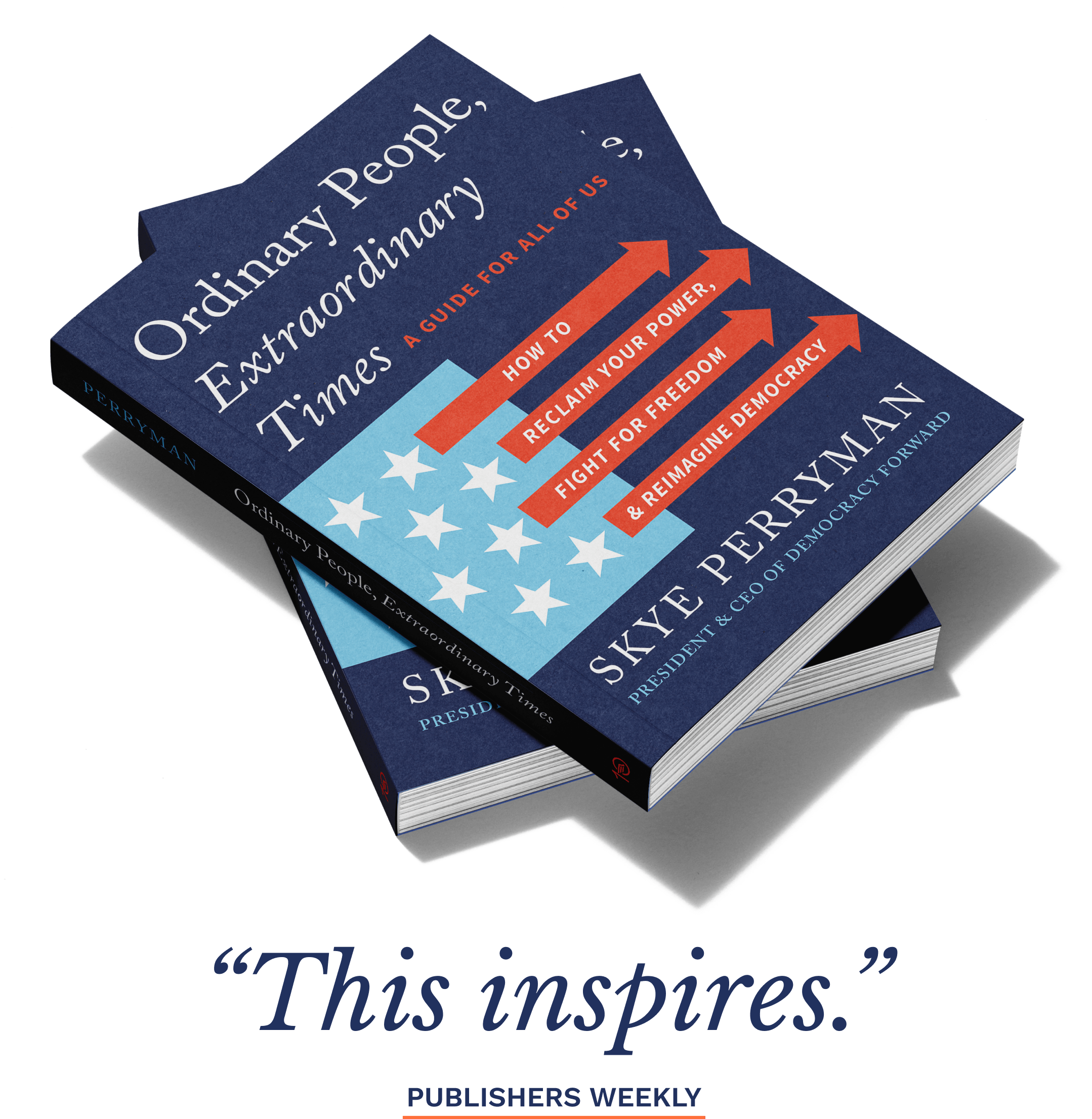
Skye Perryman — President & CEO of Democracy Forward and TIME 100 honoree — makes the case that defending democracy isn’t the job of lawyers or politicians alone — it’s a role for every one of us.
“This book is for all of us, regardless of your politics.” —Michael Steele★“Ordinary People, Extraordinary Times will help to restore the power of every reader.” —Gloria Steinem★“The rare book that captures why this moment is so urgent — and then hands you something to do about it.” —Reshma Saujani★“A must read and must do.” —Stacey Abrams★“Exactly the book this moment demands — and she’s written it for all of us.” —Dolores Huerta★“Skye Perryman offers not more angst and the obvious, but real direction.” —Annie & Willie Nelson★“An inspiring and empowering guide for every American.” —Governor JB Pritzker★“A manual for people who are tired of wringing their hands and are ready to roll up their sleeves.” —Hillary Clinton★
“This book is for all of us, regardless of your politics.” —Michael Steele★“Ordinary People, Extraordinary Times will help to restore the power of every reader.” —Gloria Steinem★“The rare book that captures why this moment is so urgent — and then hands you something to do about it.” —Reshma Saujani★“A must read and must do.” —Stacey Abrams★“Exactly the book this moment demands — and she’s written it for all of us.” —Dolores Huerta★“Skye Perryman offers not more angst and the obvious, but real direction.” —Annie & Willie Nelson★“An inspiring and empowering guide for every American.” —Governor JB Pritzker★“A manual for people who are tired of wringing their hands and are ready to roll up their sleeves.” —Hillary Clinton★
MORE THAN A BOOK
A Guide for All of Us
The future of our country lies in all of our hands. Drawing on her frontline experience challenging threats to democracy in courtrooms across the nation, Skye Perryman combines gripping personal stories with practical how-to guides that empower readers to take action in their own communities — from protecting voting rights and public schools to finding courage in the face of fear.
Accessible, hopeful, and deeply practical, Ordinary People, Extraordinary Times shows that the path forward begins not in the halls of power — but at our kitchen tables, in our neighborhoods, and through the everyday choices we make to speak up, build community, and protect our future.
INSIDE THE BOOK
Seven Actions Everyone Can Take
01: Stop Spiraling & Pick Up a Shovel
02: Achieve Information Sobriety
03: Begin at Your Front Door
04: Practice Tailgate Accountability
05: Get Serious About Fear, Courage, & Joy
06: Remember the Past, Fight for the Future
07: Keep Going, the Only Way Out Is Through
The Only Way Out is Through
When fear and confusion are the point, the most powerful thing any of us can do is refuse to look away — and to act.
This book is for anyone who wants to know where to start.
Skye Perryman is the President and CEO of Democracy Forward, a national legal organization that advances democracy and progress in the courts. Named one of TIME’s 100 Most Influential People in the World, she is a leader in the largest affirmative litigation effort against executive branch overreach in United States history.
Known for blending legal expertise with accessible, inspiring storytelling, she is a frequent commentator on NBC, MSNBC, CNN, and NPR, and her work has been featured in The New York Times, The Washington Post, The Atlantic, TIME, and Newsweek. A proud product of K–12 public schools in Waco, Texas, she holds degrees from Baylor University and Georgetown University Law Center.
Join the Movement
Join Skye once a month for a live conversation on what’s happening, what’s at stake, and what you can do.Email(required)Submit
I started writing this book when it became undeniably clear, as our history also teaches, that it is not our institutions that will save us—not the courts, not corporate generosity, not the universities, not the media—but it is the people.
Paramedics at the emergency room of the Medical University of Lausitz Carl Thiem are lifting a stretcher carrying a patient out of their ambulance in Southern Brandenburg, Germany on Sunday, June 28, 2026. There has been an increase in emergency calls due to heat-related illnesses.
(Photo by Frank Hammerschmidt/picture alliance via Getty Images)
“It’s time to turn the heat on the fossil fuel giants that caused this heatwave but are doing nothing to cover the costs.”
The head of the World Health Organization on Sunday said the deadly heat wave now boiling across Europe—which French authorities say caused more than 1,000 deaths last week alone—is the predicted and horrifying result that climate scientists and human rights advocates have been warning about for decades.
In a social post Sunday, WHO secretary-general Dr. Tedros Adhanom Ghebreyesus said, “Driven by climate change and global warming, the phenomenon of the ‘once-in-a-generation’ heatwave is now occurring nearly annual. We were warned.”
Citing over 1,300 excess deaths across Europe in the last week—as temperatures broke records in nation after nation—Tedros added that “heat stress is often called the ‘silent killer’—and European homes, workplaces and schools were not built for these temperatures.”
“Europe is the fastest-warming continent on Earth, heating at twice the global average,” he said. “Right now 150 million people are living under extreme heat, hundreds have died, schools are shut, grids are buckling.”
According to the Associated Press:
One Day Left and Our Mid-Year Campaign is Still Falling Short
The only way Common Dreams’ people-powered media model can survive is with the support of readers like you. Will you become a sustaining monthly donor today to keep our progressive, nonprofit journalism alive?
Germany marked a new record for the third day in a row with 41.7 degrees Celsius (107 degrees Fahrenheit) in Neißemünde, near the border with Poland. The Czech Republic also experienced its hottest day ever with 41.1 C (106.4 F).
A new study from the World Weather Attribution, a Europe-based collaboration of scientists, reported Friday that the record-breaking heat and humidity in Europe this past week would not have been possible without climate change.
The rapid study found that the heat would have been virtually impossible just five decades ago, and is 200 times more likely today than it would have been 20 years ago.
On Sunday, authorities in France said over 1,000 excess deaths attributable to the heat were recorded last week, with at least 100 or more over the previous 24 hours.
Just when you think you'll get a break from this intense heat, a 3rd major heatwave is on the way & forecasts suggest it may be even worse. #Spain could see temps of 46°C, #France 45°C & the #UK near 40°C again. This is the new climate & one we are dangerously underprepared for. pic.twitter.com/8MvXUjnbO7
The threat of extreme heat related to the climate crisis is not only in Europe.
In 2024, a peer-reviewed study in the Journal of the American Medical Associationshowed that heat-related deaths in the United States rose 117% between 1999 and 2023.
Last year, a joint analysis by The Guardian and Pro Publica estimated that the industry-friendly policies of US President Donald Trump could result in the otherwise preventable deaths of 1.3 million people worldwide over the next 80 years, most of them among poor people in nations that did very little to cause the planetary crisis driven by the consumption of fossil fuels.
In a comment last week, as the deadly heatwave made international headlines, Sen. Bernie Sanders (I-Vt.) was among those who pointed his finger directly at Trump for his vicious policies related to energy and climate.
“There is a record-breaking heat wave in Europe and hundreds are dying,” said Sanders. “There is drought all across America and farmers are going out of business. Yet, Trump thinks climate change is a ‘hoax’ and cuts funding for sustainable energy. Insane. He is threatening the very future of our planet.”
On Friday, the climate group 350.org said the polluting companies, namely those in the coal, oil, and gas industry, should be made to pay for the deaths and damage they have caused and continue to cause.
“It’s time to turn the heat on the fossil fuel giants that caused this heatwave but are doing nothing to cover the costs,” said Lisa Rose, a campaigner with the group. “Both science and the law are clear: polluters must answer for climate damage. Now it’s up to our leaders to make them pay.”
“Forcing fossil fuel companies to cut emissions and pay their fair share is the only effective lasting response,” she added. “Half-measures won’t cool this crisis, only a faster shift to renewables can.”
Our work is licensed under Creative Commons (CC BY-NC-ND 3.0). Feel free to republish and share widely.
As the disastrous saga surrounding President Donald Trump’s efforts to make the Reflecting Pool in Washington, DC more, uh, reflective—the democratic socialist New York City Mayor Zohran Mamdani brought more fresh joy to his city on Saturday by jumping into one of the city’s public pools—fully dressed in a suit and tie—with a smile on his face.
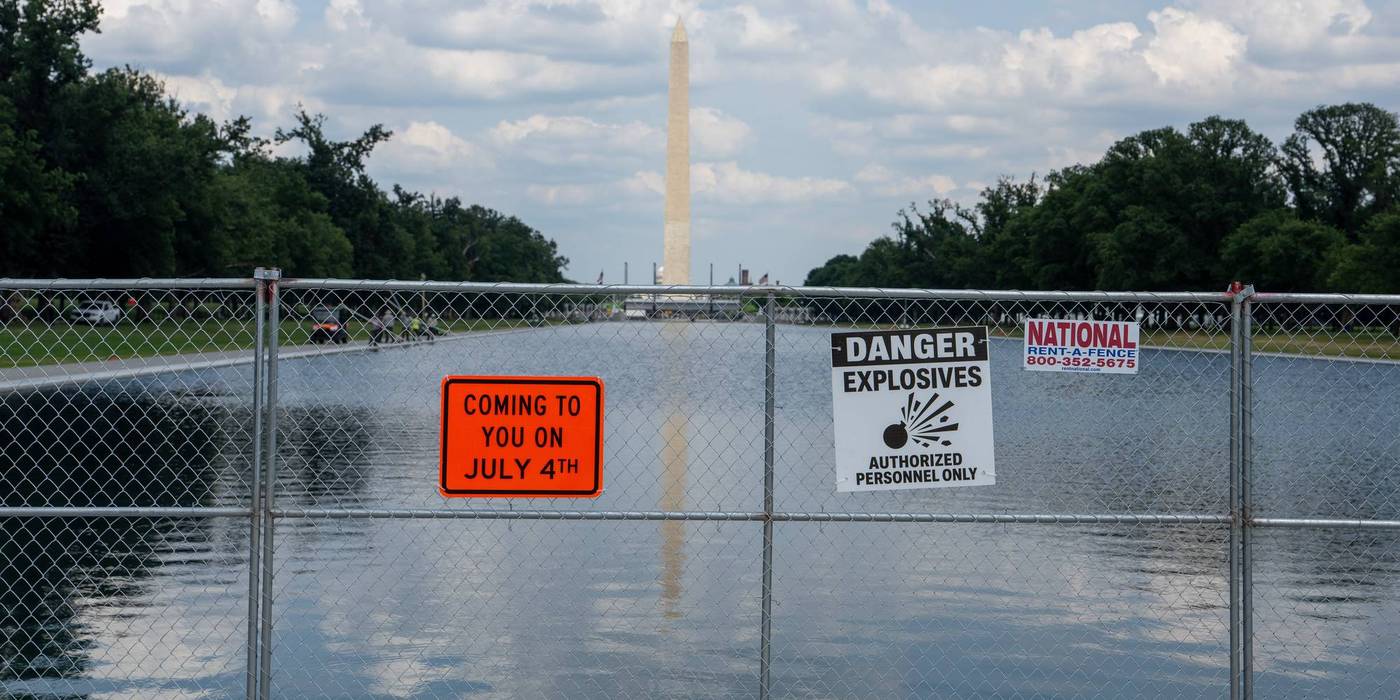
The scenes could not be more symbolically divergent as critics of the mess Trump has created in DC—where ducks are reportedly dying, a mysterious number of people have now been given criminal citations, fences have been erected, and an “Orwellian” recording telling people they are not allowed to “loiter” in one of the nation’s capital’s most iconic parks—reached new levels of absurdity over recent days.
Meanwhile, as Trump’s claims of arrests made amid unproven allegations of “vandalism” are being met with growing suspicion and derision, this was Mayor Mamdani as he joined with city residents to celebrate the beginning of the summer pool season:
https://twitter.com/i/status/2070885003047706857
“Mamdani kicked off NYC’s outdoor pool season today by jumping into the Thomas Jefferson Pool in East Harlem!” declared the photographer who took the video. “This year marks the 90th anniversary of New York City’s iconic WPA-era outdoor pools. Summer is officially here!”
One Day Left and Our Mid-Year Campaign is Still Falling Short
The only way Common Dreams’ people-powered media model can survive is with the support of readers like you. Will you become a sustaining monthly donor today to keep our progressive, nonprofit journalism alive?
The parks department is honoring the 90th anniversary of the summer of 1936, when then-Mayor Fiorello La Guardia and city Parks Commissioner Robert Moses opened 11 large pools across the five boroughs. They served as a place to cool off during the Great Depression — and were part of a wave of New York City public works projects funded by the New Deal’s Works Progress Administration.
Mamdani has been running on a political high in recent weeks. After leading joyful celebrations of the New York Knicks becoming NBA world champions after a 53-year drought, the democratic socialist mayor also claimed big political victories this week with a trifecta win for the congressional candidates he endorsed in the Democratic primary on Tuesday as well as a city council vote that delivered on his campaign promise to freeze rent for city residents.
“We’re so excited to be celebrating 90 years of public swimming in our city,” Mamdani told reporters after his fully-dressed dip. “This is a moment that New Yorkers are celebrating across the five boroughs.”
A fence surrounds the Lincoln Memorial Reflecting Pool on June 26, 2026 in Washington, DC. An increased law enforcement presence has been around the area after claims made by President Trump that vandalism was the cause of the damage. (Photo by Andrew Leyden/Getty Images)
Earlier this month, Mamdani and NYC Parks Commissioner Tricia Shimamura announced the opening of registration for an expanded number of free summer Learn to Swim classes at 18 outdoor pools across the city.
“Every child deserves to enjoy the water safely,” Mamdani said at the time. “That’s why we’re expanding free swim lessons across the five boroughs—giving more young New Yorkers access to an essential life skill, saving families money and making sure every child feels confident in the water.”
“He’s in the running as best mayor NYC has ever had,” said filmmaker Jesse Newman in response to Saturday’s footage from Harlem. “Look out LaGuardia.”
In the nation’s capital, however, “dystopian” scenes continued as National Guard troops continued to guard the Reflecting Pool at the foot of the Lincoln Memorial from anyone who might “touching the water” as a so-called “surveillance machine” told passersby that “Loitering is not permitted in this area. Please proceed to a designated location.”
https://twitter.com/i/status/2070637280721506429
“This is absolutely insane,” exclaimed Allegria Harpootlian, who works for the ACLU, in a social media post. “What is a park meant for if not for ‘loitering’?”
Our work is licensed under Creative Commons (CC BY-NC-ND 3.0). Feel free to republish and share widely.
The congresswoman has a strong track record of backing winners this cycle — but she’s emerging from controversy after sitting out key races in her home state.
Rep. Alexandria Ocasio-Cortez, D-N.Y., at the U.S. Capitol on March 25, 2026. Photo: Tom Williams/CQ-Roll Call, Inc via Getty Images
After rattling some observers by staying out of a slew of competitive congressional primaries in her home state this week, Rep. Alexandria Ocasio-Cortez, D-N.Y., endorsed a candidate in Tennessee on Thursday.
Ocasio-Cortez is backing Tennessee state Rep. Justin J. Pearson in the 9th Congressional District, which will be a tough win for Democrats after Republicans scrambled to gerrymander it earlier this year thanks to the Supreme Court’s gutting of a key portion of the Voting Rights Act. The district covering parts of Memphis and its suburbs is one of more than a dozen that Republicans have redrawn at President Donald Trump’s demand to ward off what many in the GOP see as the increasingly likely prospect that they lose both congressional chambers to Democrats in November.
An endorsement from democratic socialist Ocasio-Cortez is a coveted stamp of approval for progressive insurgents looking to challenge incumbents or capture open congressional seats. She has endorsed several Democratic primary candidates running for open seats in other states this cycle including Chris Rabb, who won his primary in Pennsylvania; Analilia Mejia, who won in New Jersey; and Junaid Ahmed, who lost his primary in Illinois. But critics raised eyebrows at her decision to stay out of key congressional primaries in New York; she opted instead to endorse a slate of democratic socialist candidates in the state Assembly.
The endorsement is a major boost to Pearson, who is also backed by Justice Democrats, the progressive group that first backed Ocasio-Cortez in 2018 against longtime incumbent Rep. Joe Crowley, and Sen. Bernie Sanders, I-Vt. Pearson originally launched his campaign with the intention of ousting two-decade incumbent Rep. Steve Cohen, the last remaining Democrat in Tennessee’s congressional delegation. Cohen dropped out of the race in May after state lawmakers split up his district into three neighboring districts, saying it was “drawn to beat” him.
Observers theorized that Ocasio-Cortez’s absence from New York’s congressional primaries reflected a desire not to butt heads with Democratic Party leaders who endorsed against leftist challengers, potentially signaling her plans to run for higher office in a future cycle. Others argued that she stayed out to split her efforts with New York City Mayor Zohran Mamdani to maximize the left’s political currency in a cycle with historic outside spending against their candidates. Mamdani emerged as a kingmaker in Tuesday’s elections, backing three congressional candidates who won their primaries on Tuesday: socialists Clare Valdez and Darializa Avila Chevalier, and progressive Brad Lander, and several — but not all — of the New York City DSA’s endorsed candidates.
On Wednesday, Ocasio-Cortez said the left’s wins in New York’s House primaries were part of both “a moment” and “a movement” of voters demanding more from the Democratic Party after major losses in 2024.
Endorsing in the races would have pitted Ocasio-Cortez against her congressional colleagues whose support she might need in a run for higher office, including House Minority Leader Hakeem Jeffries, poised to become House speaker if the Democrats retake the chamber in November. She’s made most of her other endorsements this cycle in open seats with no incumbent, including Rabb, Mejia, Ahmed, Adelita Grijalva in Arizona, Adam Hamawy in New Jersey, and Sam Forstag in Montana. She endorsed Democratic candidate Randy Villegas against the incumbent Republican, Rep. David Valadao, in California. Her former chief of staff, Saikat Chakrabarti, said her decision not to endorse him likely contributed to his loss in an open California primary to replace retiring Rep. Nancy Pelosi, D-Calif., by fueling attacks from his opponents.
We’re independent of corporate interests — and powered by members. Join us.
In New York City, Avila Chevalier and Lander ousted incumbents backed by Jeffries and Democratic leaders: Congressional Hispanic Caucus Chair Adriano Espaillat and Rep. Dan Goldman. Valdez won her primary in an open seat where retiring Rep. Nydia Velázquez had endorsed her preferred successor, Brooklyn Borough President Antonio Reynoso. Velázquez bemoaned Mamdani’s endorsement of Valdez against her pick in the months leading up to the race. And even after their candidates lost on Tuesday, Jeffries and other party leaders aired their disappointment in Mamdani’s decision to go against them.
But in Tennessee, Pearson emerged as the frontrunner when the incumbent dropped out. He’s hoping to tap into voters’ frustrations with both parties by campaigning on economic change for the working class — a message that boosted both Ocasio-Cortez and Sanders. Share
I’M BEN MUESSIG, The Intercept’s editor-in-chief. It’s been a devastating year for journalism — the worst in modern U.S. history.
We have a president with utter contempt for truth aggressively using the government’s full powers to dismantle the free press. Corporate news outlets have cowered, becoming accessories in Trump’s project to create a post-truth America. Right-wing billionaires have pounced, buying up media organizations and rebuilding the information environment to their liking.
In this most perilous moment for democracy, The Intercept is fighting back. But to do so effectively, we need to grow.
That’s where you come in. Will you help us expand our reporting capacity in time to hit the ground running in 2026?
We’re independent of corporate interests. Will you help us?
Trump Regime Takedown: Every Saturday Saturday, March 7, 2026 12:00 PM 2:00 PM Tesla San Francisco999 Van Ness AvenueSan Francisco, CA, 94109United States (map) Google Calendar ICS Keep democracy alive every Saturday by showing up, taking a stand, and sticking together for the long haul. Standing together is better than standing alone. Let’s get together... Continue reading →
This Sunday’s Town Hall: Announcing This Week’s Progressive Town Hall: Every Sunday at 4pm ET/1pm PT RSVP HERE Join PDA activists online from across the country to discuss the importance of progressives reclaiming the American story from the MAGA right, an issue of heightened importance as we’re now within one... Continue reading →
We protest Heritage Foundation EVERY MONDAY (Join us!!!!) By admin | September 2, 2025 | Uncategorized Cliff Cash Comedy Premiered Jul 26, 2025 Every Monday at The Heritage Foundation 214 Massachusetts Ave. Washington D.C. 4pm protest 6pm pizza Every Friday at Fox News D.C. 400 N. Capitol St. Washington D.C. 4pm protest 6pm pizza We are... Continue reading →
One Million Rising: Strategic Non-Cooperation to Fight Authoritarianism Virtual Event · Hosted by No Kings Time Wednesdays 8 – 9:30pm EDT Location Virtual event Join from anywhere About this event Across the country, authoritarian forces are getting bolder and more dangerous. Trump and his allies are not hiding their agenda: mass deportations,... Continue reading →
THURSDAY, JUNE 29, 2023 AT 2 AM – 4 AM PDT How to create trust in a group? Details Event by Extinction Rebellion Empathy Circles online EMPATHY CAFE Duration: 2 hr Public · Anyone on or off Facebook How to create trust in a group? This is the question that arose in our... Continue reading →
Trump Regime Takedown: Every Saturday Saturday, March 7, 2026 12:00 PM 2:00 PM Tesla San Francisco999 Van Ness AvenueSan Francisco, CA, 94109United States (map) Google Calendar ICS Keep democracy alive every Saturday by showing up, taking a stand, and sticking together for the long haul. Standing together is better than standing alone. Let’s get together... Continue reading →
This Sunday’s Town Hall: Announcing This Week’s Progressive Town Hall: Every Sunday at 4pm ET/1pm PT RSVP HERE Join PDA activists online from across the country to discuss the importance of progressives reclaiming the American story from the MAGA right, an issue of heightened importance as we’re now within one... Continue reading →
We protest Heritage Foundation EVERY MONDAY (Join us!!!!) By admin | September 2, 2025 | Uncategorized Cliff Cash Comedy Premiered Jul 26, 2025 Every Monday at The Heritage Foundation 214 Massachusetts Ave. Washington D.C. 4pm protest 6pm pizza Every Friday at Fox News D.C. 400 N. Capitol St. Washington D.C. 4pm protest 6pm pizza We are... Continue reading →
One Million Rising: Strategic Non-Cooperation to Fight Authoritarianism Virtual Event · Hosted by No Kings Time Wednesdays 8 – 9:30pm EDT Location Virtual event Join from anywhere About this event Across the country, authoritarian forces are getting bolder and more dangerous. Trump and his allies are not hiding their agenda: mass deportations,... Continue reading →
THURSDAY, JUNE 29, 2023 AT 2 AM – 4 AM PDT How to create trust in a group? Details Event by Extinction Rebellion Empathy Circles online EMPATHY CAFE Duration: 2 hr Public · Anyone on or off Facebook How to create trust in a group? This is the question that arose in our... Continue reading →


 David Dayen