- By Jessica Wolfrom | Examiner staff writer |
- Apr 7, 2023 Updated 16 hrs ago (SFExaminer.com)
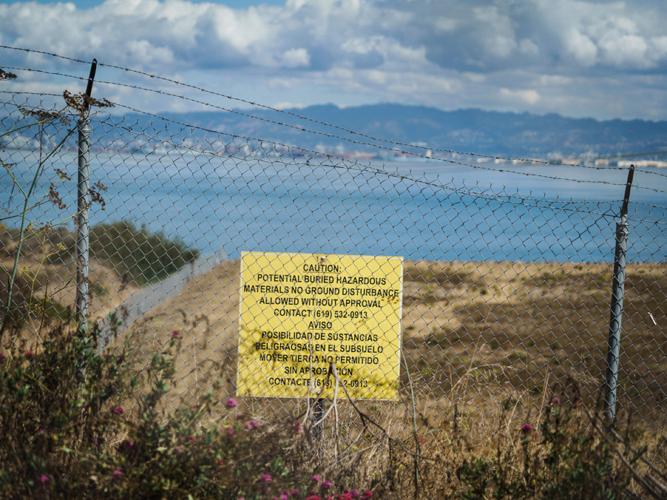
A sign warns of toxic landfill at a construction site near Hunters Point Naval Shipyard.
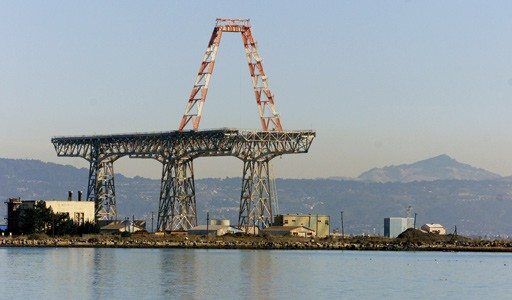
Public Employees for Environmental Responsibility, a Bay Area-based nonprofit, has filed a complaint to the Navy’s Inspector General demanding an investigation of the Navy’s analysis of radioactive waste found at Hunters Point.
An environmental group is applying fresh pressure on the agencies charged with the cleanup and oversight of the Hunters Point shipyard, a former naval base on the southeastern tip of San Francisco.
On Thursday, Public Employees for Environmental Responsibility, a Bay Area-based nonprofit, filed a complaint to the Navy’s Inspector General demanding an investigation of the Navy’s analysis of radioactive waste found at the site. PEER contends the Navy has consistently downplayed the risks posed by its findings and misled the public about potential harms.
PEER also filed a lawsuit against the United States Environmental Protection Agency this week after it claimed several public information requests about the Navy’s cleanup response have gone unanswered.
The shipyard, a 900-acre Superfund site that once hosted a radiological defense laboratory, has come under increasing scrutiny after the Navy reported that it found radioactive material on one of the parcels last October, with 10% of samples testing above EPA-approved screening levels. The material, strontium-90, is a radioactive isotope that causes cancer and other health hazards.
Though the Navy and Department of Public Health contended that the Navy’s soil analysis results did not pose an immediate public safety risk, the findings and subsequent response drew immediate condemnation from environmental groups.
“The very reason that the Hunters Point Naval Shipyard was placed on the Superfund National Priorities List is exactly because it poses a threat to public health and the environment,” said Bradley Angel, executive director of Greenaction, an environmental justice nonprofit, in a statement.
While strontium is a naturally occurring silvery metal that turns lemony yellow when exposed to air, strontium-90 is a byproduct of nuclear fission — a material that can take hundreds of years to decay.
Everyone on the planet is exposed to small amounts of strontium-90 given its wide dispersal into the environment, the EPA found, especially after the fallout from nuclear weapons testing in the 1950s and ’60s. But high levels of exposure have serious health outcomes. Once in the body, strontium-90 acts like calcium and is readily absorbed into bones and teeth, where it can cause cancer of the bone, marrow, and soft tissues.
The parcel where strontium-90 was uncovered, known as Parcel G, is poised to be soon transferred from the Navy to the City of San Francisco for redevelopment – a fact that PEER’s Pacific Director Jeff Ruch says raises serious red flags.
“The ultimate concern is that they will develop it and put people in harm’s way,” said Ruch. “One reason we’re particularly concerned about Parcel G is that it’s the next parcel slated to be turned over to the city. That’s the leading edge of this whole clean-up… But these strontium-90 findings are a big fly in the ointment, which is one of the reasons there have been such strenuous efforts to make it disappear.”
The Navy determined that the original lab method used to detect the strontium resulted in uncertainties. Interference in the initial testing was also cited due to the natural presence of lead-210, noted a spokesperson for the EPA, who said the Navy was retesting and reanalyzing the data.
But in emails obtained by PEER and reviewed by The Examiner, the EPA raised concerns last September about the Navy’s analysis of strontium-90 found on Parcel G.
“The Navy should not be making statements about background levels being established in agreement with federal agencies,” an EPA administrator said in an email exchange with the Navy. “A background threshold level for strontium-90 determined by the Navy has not been agreed to by the regulatory agencies.”
The EPA warned the Navy that if it failed to revise its previous statements regarding the findings, the agency may “feel compelled to issue our own clarifying statement.”
The EPA also cited concerns with the Navy’s plans to retest the samples using new protocols. “The previous strontium-90 results are valid data,” the EPA administrator said. “It’s inaccurate to suggest the data were not precise enough. EPA has been clear that in the absence of convincing evidence, we cannot support using new data to supersede existing results.”
The Navy, the EPA said, seemed to “be reaching for cover.”
A Navy spokesperson told the Examiner that it remains committed to cleaning up the Navy’s impacts on the environment — a claim echoed by the EPA.
“Ensuring a thorough cleanup of Hunters Point that’s protective of public health is a priority for EPA, and we remain committed to vigilant oversight of the Navy’s cleanup efforts,” John Senn, a spokesperson for the EPA, told The Examiner.
Regarding the lawsuit filed by PEER over the Freedom of Information Act requests, Senn said the agency does not comment on pending litigation. But the EPA did provide The Examiner a copy of its correspondence with PEER regarding the outstanding requests. In the letter to PEER, the EPA told PEER it needed more time to complete the nonprofit’s requests.
“EPA has already searched for and collected records potentially responsive to your above-referenced requests,” the EPA told PEER in a letter dated last December. “Responding to these three requests requires EPA to examine several thousand documents, and the same team of reviewers is conducting the review for all three requests, in addition to performing their normal duties of serving the public.”
Still, the recent strontium-90 revelations also come as the impacts of climate change are raising additional concerns over the site’s safety in a hotter, drier future. In December, a Civil Grand Jury report outlined new risks to the site posed by sea level rise, which could cause groundwater to push long-buried chemicals to the surface, unleashing a “toxic soup” of contaminants into the surrounding neighborhood.
That’s a problem for the future of one of The City’s most ambitious and desperately needed housing projects.
In response, District 10 Supervisor Shamann Walton demanded a full cleanup of the site and said The City should not accept any parcels that were not fully remediated.
“The No. 1 goal for the shipyard has to be and should be 100% complete cleanup,” Walton said at a December hearing. While the Navy is in charge of the cleanup, he said, “We do have a say in determining whether or not any land is transferred to the City and County of San Francisco. Without a 100% cleanup, that land transfer does not take place.”
Subscribe to Jessica Wolfrom’s new climate newsletter at sfexaminer.com/newsletter/
@jessica-wolfrom