 by Io Yeh Gilman May 4, 2026 (MissionLocal.org)
Voting in San Francisco’s June 2 election has begun! Voters started receiving mail-in ballots on May 1 and on Monday, May 4, San Francisco opened up ballot drop boxes across the city.
If the 15-plus items on your ballot are overwhelming and you still have no clue who you’re voting for, don’t fret, we’ve got your back — Mission Local has put together a handy explainer on each ballot item below.
Voting is open through June 2. You can register to receive a mail-in ballot up until May 18, 15 days before Election Day. After that deadline you can still vote in person at the City Hall Voting Center, which is in the basement of the building, or at a polling place on Election Day.
U.S. representative, District 11 primary
In November, after almost 40 years of service, Nancy Pelosi announced her retirement, setting off a scramble to succeed her.
Not all of San Francisco is in District 11, so if it is not on your ballot, you live in the Excelsior, Ingleside, Visitacion Valley, or the Portola, and you don’t have to worry about this race.
The top two vote-getters, regardless of party, will advance to the general election on November 3. Because this is a federal race and not a city one, there is no ranked-choice voting.

The top candidates are:
- Saikat Chakrabarti, a tech centimillionaire and former chief of staff to Representative Alexandria Ocasio-Cortez
- Connie Chan, District 1 supervisor
- Scott Wiener, San Francisco’s state senator and former District 8 supervisor
Read Mission Local’s coverage of the race here:
Whether you vote progressive, moderate or conservative, this might be helpful:
- Who’s the most progressive S.F. congressional candidate? Q&A presses issue.
Or maybe your interest is tech and AI?
- What do S.F. congressional candidates think about tech, AI, and crypto?
Foreign policy?

- How S.F. congressional hopefuls view Israel, China and foreign policy (part 1)
- How S.F. congressional hopefuls view Israel, China and foreign policy (part 2)
How the candidates perform in a debate ?
- At S.F. congressional debate, candidates go on the attack
Who’s funding the race and how it’s being spent?
- Saikat Chakrabarti spends $5M running for Congress. It’s just a down payment.
- Saikat Chakrabarti flooding the zone with canvassers, paying up to $45/hr for 250+ of them
San Francisco supervisor, District 4
Voters in the outer Sunset will be voting for a supervisor to represent them on the Board of Supervisors. Whoever is elected will finish out the term of Joel Engardio, who was recalled last September for turning the Great Highway into a permanent park.
If voters hate who wins in June, there is another chance to weigh in on Nov. 3, when voters will elect someone for the full four-year term.
This race uses ranked-choice voting, which means voters should rank however many candidates they like in order of preference. Click here for an explanation of how ranked choice voting works (featuring Mission Local reporter Abigail Vân Neely’s cat, Sally).
Cleaner Streets, Stronger Community
After 5 years of working to fix SF’s litter problem, Clean Streets – a Mission-based, community-funded, litter pickup workforce has funded 1,236 hours of living-wage work and cleaned 617 miles of neighborhood streets. As little as $5 makes a difference. Click here to help us clean the Mission.
You might want to start with our Meet the Candidates series where we ask one question and color code the answers so you can see if candidates answered yes, no, or dodged the question.
Here are some examples from that series:
- Do you support a tax to fund Muni?
- Should S.F. cut real-estate transfer tax?
- What would you do to make it safer and easier to bike in the Sunset?
You can read our other District 4 coverage here:
- Sunset Dunes park supporters face an election with no clear candidate
- S.F. supe says campaign rival sabotaged Great Highway measure. She says he didn’t do the work.
- District 4 shaping up to be San Francisco’s loudest and silliest race. As predicted.
- Supervisor Alan Wong has $540K backing District 4 campaign, much from Lurie’s wealthy allies
- With Supe Wong absent, District 4 candidates blast ‘big money’ and mayor’s influence
San Francisco supervisor, District 2
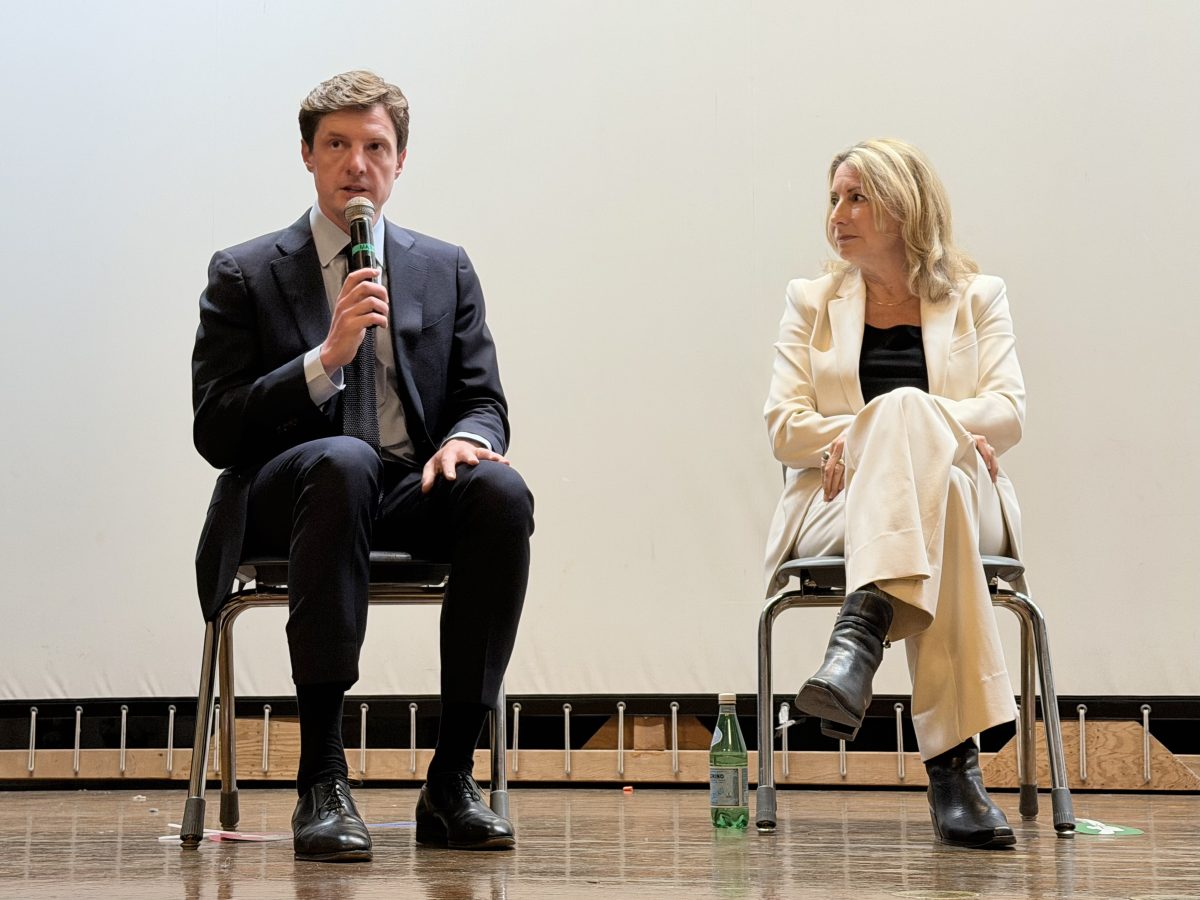
Voters in the Marina, Pacific Heights, the Presidio, and NoPa will be weighing in on who they want to represent them on San Francisco’s Board of Supervisors.
As in District 4, the winner will have to run again in the Nov. 3 election. At that time, another election will be held for a full four-year term.
This election is just to fill out the remainder of Catherine Stefani’s term because she left for State Assembly in December 2024.
This race uses ranked-choice voting, which means voters should rank however many candidates they like in order of preference. Click here for that feline-forward explanation of how ranked-choice voting works.
Start with our Meet the Candidate series where we ask one question and color-code answers to see if candidates answer yes, no, or dodged the question:
- Should more drug users be arrested?
- Should S.F. increase taxes to fund Muni?
- Should politicians oppose housing that blocks views?
You can read our other District 2 coverage here:
- S.F. D2 supervisor candidates knock on doors hoping for different answers
- Over $1M backing Supervisor Stephen Sherrill in District 2 race, much from PACs
- S.F. housing is hottest topic in first debate between District 2 supervisor candidates
- Troubling allegations were raised about Stephen Sherrill’s appointment. Do voters care?
School board
Three candidates are running to complete a term on the Board of Education, which sets policies and the budget for San Francisco’s public schools. Whoever wins will need to run again on Nov. 3.

Read Mission Local’s Meet the Candidates series, where we asked all three candidates the same question and color-coded their answers so you can see who answered yes, no or dodged the question.
Here are some of those:
- Should the lottery system be reformed?
- Should Algebra 1 be offered to all eighth-grade students?
- Do you support dipping into reserves to pay for ongoing expenses?
Proposition A
This proposition would allow the city of San Francisco to issue $535,000,000 worth of bonds to pay for earthquake safety-projects, including updating water infrastructure and seismic retrofitting of certain buildings.
More than two-thirds of voters must vote in favor for this proposition to pass.
Proponents say that the bond will allow the city to improve water infrastructure for firefighting, which could be crucial after an earthquake, when fires often break out.
Opponents say that the bond is unnecessary and that these projects should be paid for by cutting money from other areas of the city’s budget.
Proponents: Mayor Daniel Lurie, all members of the Board of Supervisors, Fire Chief Dean Crispen
Opponents: San Francisco Republican Party, Coalition for San Francisco Neighborhoods
Proposition B
This proposition would amend the term-limit rules for San Francisco’s mayor and supervisors so that they can only serve two four-year terms in that position over their lifetime. Currently, politicians can serve for two consecutive terms, not serve for four years, and then run for the same position again.
More than half of voters must vote in favor for this proposition to pass.
Proponents say that the change will bring new voices into elected offices, since long-serving politicians can build networks that make it hard for new candidates to compete.
Opponents say that having experienced hands in government with institutional knowledge is good and that restricting voter choice is anti-democratic.
Proponents: Mayor Daniel Lurie, Speaker Emerita Nancy Pelosi, S.F. Young Democrats, San Francisco Democratic Party, Supervisors Bilal Mahmood, Danny Sauter, Jackie Fielder, Myrna Melgar, Matt Dorsey, Stephen Sherrill, and Alan Wong
Opponents: former Mayor Willie Brown, former Mayor Art Agnos, Supervisors Rafael Mandelman, Chyanne Chen, Shamann Walton, and Connie Chan, former California Governor Jerry Brown
Read Mission Local’s coverage of the proposition here:
- Jerry Brown compares San Francisco’s Prop. B to Trump, Putin
Proposition C
The city is currently facing a huge budget deficit. So, city unions put Prop. D, an increase in business taxes on the ballot to stave off layoffs and cuts to city services.
But business leaders in the city became concerned that the tax would harm San Francisco’s economic recovery by driving businesses out of the city and discouraging new ones from opening up. They put their own measure, Prop. C, on the ballot.
It would decrease city revenue and, crucially, contains language that would nullify Prop. D if Prop. C gets more votes.
The choice is not just Prop. C or Prop. D, though: Mayor Daniel Lurie is opposing both measures, having originally called for unions and business leaders to work out the disagreement outside of the ballot box.
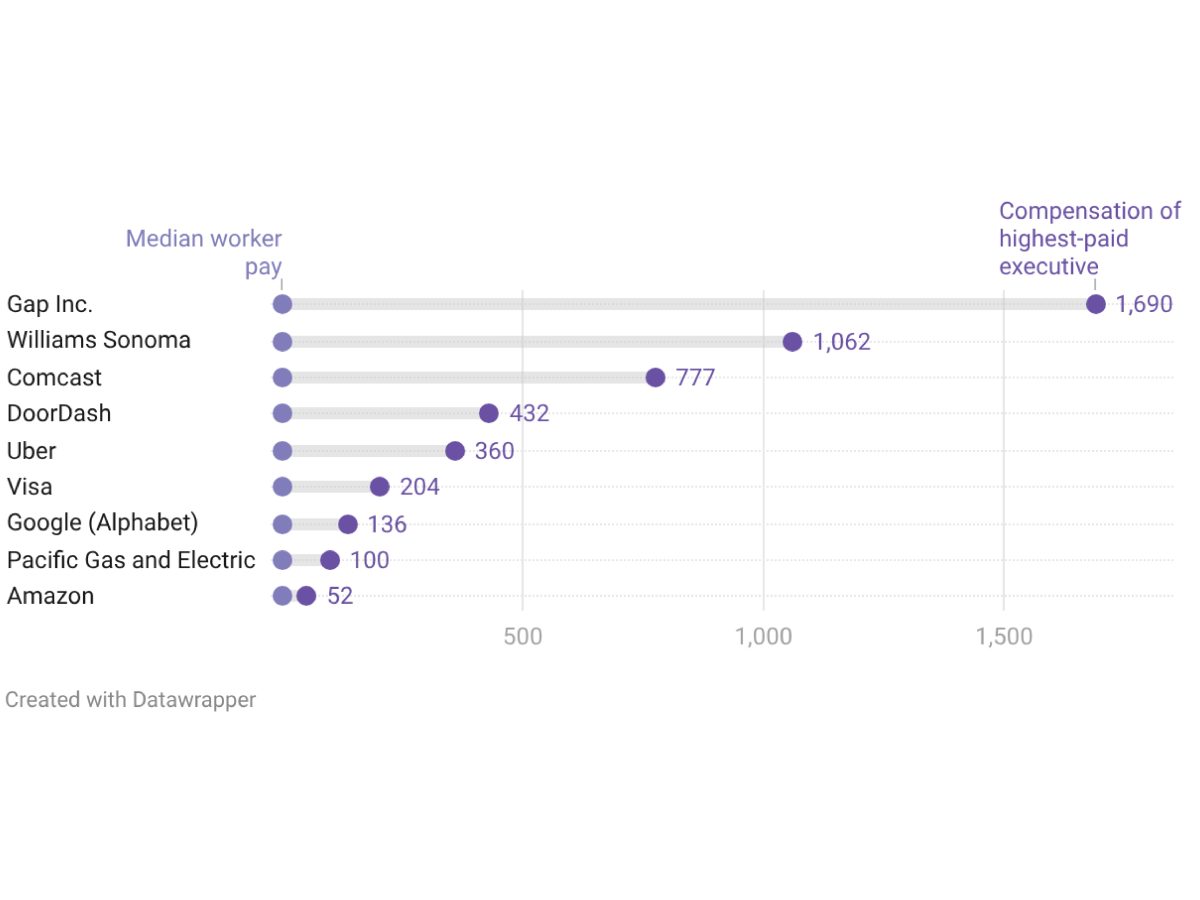
Here’s what Prop. C does: San Francisco currently has an additional business tax on businesses whose top executive makes 100 times more than their median employee. This proposition would raise the exemption threshold for that tax from $5 million to $7.5 million.
It would also move up a planned increase in the tax rate from 2028 to 2027. It’s predicted to decrease revenue to the city by $30 million to $40 million a year.
Proponents say this measure will help San Francisco’s economy because the new businesses that are exempted from the tax will be helped.
Opponents say that the revenue lost under this tax cut will require cutting city services and that they support Prop. D, which the passage of this measure would potentially kill.
Proponents: S.F. Chamber of Commerce, Neighbors for a Better San Francisco
Opponents: Mayor Daniel Lurie, San Francisco Labor Council
Read more of Mission Local’s coverage of the proposition here:
- Firms fighting S.F. CEO tax have huge pay gaps, analysis shows
- S.F. unions pledge to fight ‘every one’ of Mayor Lurie’s proposed layoffs
- S.F. Mayor Lurie doesn’t like the CEO tax. But his allies on the board do.
- S.F. Mayor Lurie opposes both competing business-tax measures
Proposition D
See above for some of the backstory, but Prop. D is being supported by San Francisco’s labor unions, a supermajority of its supervisors, and U.S. Senator Bernie Sanders.
But business leaders oppose it, and are spending big to tank it, saying it will derail the city’s recovery. Mayor Lurie opposes both D and Prop. C, the rival measure.
Here’s what Prop. D does: This proposition would raise taxes on businesses whose top executive makes 100 times more than their median employee. It’s predicted to increase revenue to the city by $200 million to $300 million a year.
More than half of voters must vote in favor for this proposition to pass. This measure is competing with Prop. C. If both measures pass, then whichever one gets more votes will go into effect.
Proponents say this measure will help address the city’s large budget deficit, preventing cuts to city services and layoffs.
Opponents of this measure say that it will hurt San Francisco’s economic recovery because businesses will increase prices, reduce hiring, or leave the city.
Proponents: San Francisco Labor Council, SEIU Local 1021, SEIU 2015, IFPTE Local 21, Speaker Emerita Nancy Pelosi, U.S. Senator Bernie Sanders, Supervisors Danny Sauter, Alan Wong, Bilal Mahmood, Jackie Fielder, Myrna Melgar, Shamann Walton, Connie Chan, and Chyanne Chen
Opponents: Mayor Daniel Lurie, S.F. Chamber of Commerce, Neighbors for a Better San Francisco, Supervisors Rafael Mandelman, Stephen Sherrill, and Matt Dorsey
If you want to know how every San Francisco politician feels about the tax, we asked them all.
Read Mission Local’s coverage of the proposition here:
- Firms fighting S.F. CEO tax have huge pay gaps, analysis shows
- S.F. unions pledge to fight ‘every one’ of Mayor Lurie’s proposed layoffs
- S.F. Mayor Lurie doesn’t like the CEO tax. But his allies on the board do.
- S.F. Mayor Lurie opposes both competing business-tax measures
Governor
California Governor Gavin Newsom is terming out, so Californians are now choosing his replacement. The governor is the state’s chief executive. They are in charge of implementing laws and managing the operation of state government services. The top two vote-getters, regardless of party, will advance to the general election on Nov. 5.
Read CalMatters’ governor voting guide here.
Read the Los Angeles Times’ governor voting guide here.
Lieutenant Governor Primary
The lieutenant governor sits on the boards of California’s higher education institutions: the University of California, the California State University system, and the California Community Colleges system. The lieutenant governor also serves on commissions involved in coastal protection, land use, and the environment.
Read CalMatters’ overview of the lieutenant governor candidates here.
Insurance Commissioner
The insurance commissioner oversees California’s Department of Insurance, which regulates the state’s insurance industry.
It investigates fraud and consumer complaints and makes sure that insurers don’t set rates that are too high, too low, or discriminatory. This election is the primary for a four-year term. The top two vote-getters, regardless of party, will advance to the general election on November 5.
Read the Los Angeles Times’ voter guide for insurance commissioner here.
Read CalMatters’ voter guide here.
Read the Capitol Weekly’s Q&As with the candidates here.
Secretary of State
The secretary of state runs an office that oversees the state’s elections and registers and authenticates the state’s businesses, among other functions. This election is the primary for a four-year term. The top two vote-getters, regardless of party, will advance to the general election on November 5.
Read the Los Angeles Times’ voter guide for secretary of state here.
Controller
The controller is the state’s chief fiscal officer. They keep track of how the state’s money is spent, audit state agencies, and sit on boards that make fiscal decisions. This election is the primary for a four-year term. The top two vote-getters, regardless of party, will advance to the general election on November 5.
Read the Los Angeles Times’ voter guide for controller here.
Treasurer
The treasurer manages the state’s money and acts as its banker. They invest California’s money, finance projects throughout the state, and sit on the boards of agencies that manage pension funds for state employees. This election is the primary for a four-year term. The top two vote-getters, regardless of party, will advance to the general election on November 5.
Read the Los Angeles Times’ voter guide for treasurer here.
Attorney General
The attorney general prosecutes violations of state laws, provides legal advice to state officials and agencies, and creates policies to protect Californians from illegal activities. This election is the primary for a four-year term. The top two vote-getters, regardless of party, will advance to the general election on November 5.
Read the Los Angeles Times’ voter guide for attorney general here.
State Superintendent
The state superintendent manages the California Department of Education, which implements education policy decisions and oversees local school districts.
The state legislature and Governor Gavin Newsom are considering transferring management of the Education Department to the governor and State Board of Education in response to concerns that the current system is too fragmented.
What the State Superintendent’s new role would be is still being negotiated, but current proposals include centering the role around advocacy and independent oversight.
In the unlikely scenario that one candidate gets over 50 percent of the vote, they will win the office. Otherwise, the top two vote-getters will advance to the general election on November 5.
Read the Los Angeles Times’ voter guide for State Superintendent here.
Judge of the Superior Court, Seat #16
Superior Court judges hear the court cases for San Francisco county. Whoever wins a majority of the votes in this election will serve for a six-year term ending in 2032.
Board of Equalization, District 2
The Board of Equalization oversees California’s property tax system as well as a few other taxes. This election is the primary for a four-year term. The top two vote-getters, regardless of party, will advance to the general election on November 5.
State Assembly Member, District 19 and District 17
Voters on the west side of San Francisco are part of District 19 and voters on the east side are part of District 17. This is a primary, so the top two candidates advance to the general election on Nov. 5.
There is only one candidate in District 17 — Matt Haney — and only two candidates in District 19 — Catherine Stefani and Philip Wing — so these primaries are not contested. Stefani and Wing will advance to the general, and Haney’s reelection is guaranteed.
3,300 readers keep Mission Local free. Will you join them?
There are no paywalls at Mission Local. We believe San Francisco deserves critical, high-impact reporting that belongs to all its residents, not just those who can afford it.
But free to read doesn’t mean free to produce. We’re a small, independent newsroom rooted in San Francisco’s communities that only exists because people like you invest in the reporting that our city relies on all year round.
Keep Mission Local free for all by becoming a donor today.
Latest election coverage
At debate, District 2 candidates part ways on housing
Saikat Chakrabarti went after Democrats as AOC’s chief of staff. Now, he wants another round.
Firms fighting S.F. CEO tax have huge pay gaps, analysis shows
Io Yeh GilmanStaff Reporter
Io is a staff reporter at Mission Local covering city hall and S.F. politics. She is a part of Report for America, which supports journalists in local newsrooms.
Io was born and raised in San Francisco and previously reported on the city while working for her high school newspaper, The Lowell. She studied the history of science at Harvard and wrote for The Harvard Crimson.
You can reach Io securely on Signal at ioyg.10 More by Io Yeh Gilman