By Jillian D’Onfro Nov 8, 2023 (SFGate.com)
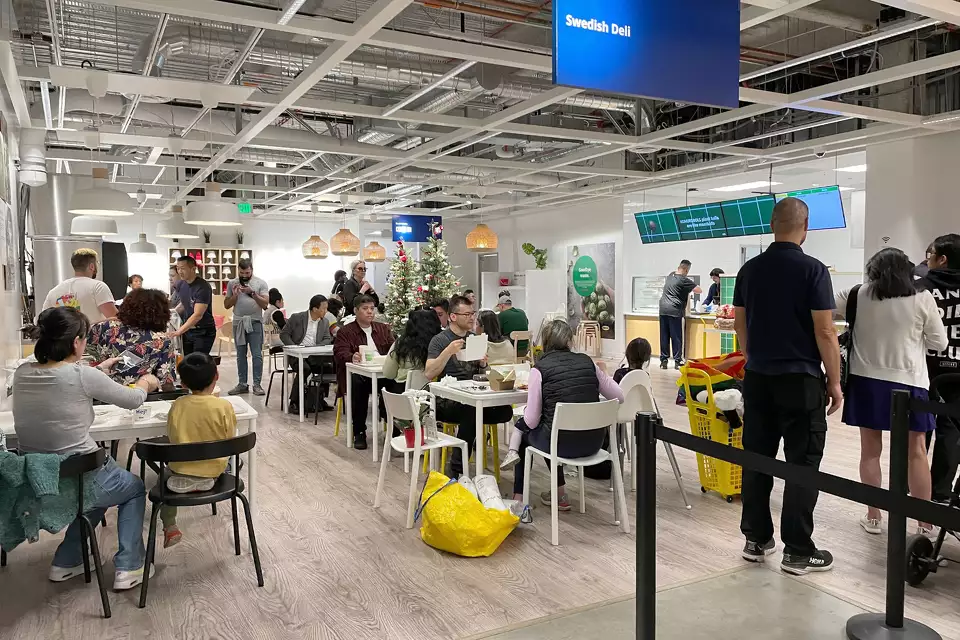

A line to order, some snacks already sold out by 1 p.m., and no seating available once my food was ready: The hottest restaurant in downtown SF on a Saturday afternoon is apparently the Swedish deli inside Ikea.
Such was my experience when I recently embarked on a trip to visit two of the furniture giant’s Bay Area locations — its traditional store in Emeryville and its newer outpost at 945 Market St. in SF — to see if I could either substantiate or disprove recent rumors that the San Francisco location is a ghost town.
My not-so-scientific experiment, which took place over the course of two hours on Saturday, left me definitively un-definitive: Yes, the SF location is much less crowded than the Emeryville one, but no, it didn’t feel nearly as dead as doom loopers on social media might have you believe.
My attempt to get a bit more scientific by asking Ikea about how its SF sales numbers and foot traffic compared to other stores yielded little in the way of concrete evidence (read: they wouldn’t give me the data, though they shared that the SF outpost welcomed 120,000 visitors in the first 30 days after it opened in late August).

A tale of two Ikeas
I started my journey at the massive Emeryville location at 4400 Shellmound St. Opened in 2000 and spanning 274,000 square feet (about 5 times the size of the SF location), the Emeryville Ikea contains the typical labyrinth of cookie-cutter household goods.
When I arrived around 11:30 a.m., the gigantic parking lot was already bustling, though far from full. By contrast, the Market Street store is steps from public transportation and 167 underground parking spaces owned by Ikea sister company, Ingka Centres.
Clocking in at 52,000 square feet, it’s a self-described “new kind of Ikea built for quick and easy trips.” You can’t actually walk out with a new Malm dresser or Gammalbyn armchair even if you wanted to: The store doesn’t stock the company’s larger furniture, so buyers must either have an item delivered or pick it up at another location. So, no, you won’t see someone hauling boxes filled with the parts for a new bunk bed on BART.
To get a sense of the relative busyness of the two stores, I initially tried to count how many fellow shoppers I walked past, but realized that that was a fools’ errand in the Emeryville store, as the layout has so many nooks and switchbacks that I’d be bound to miss people even if I tried. As I wound through the maze of domesticity, breezing past stroller-touting families and duos schlepping the iconic yellow and blue bags, the store buzzed with the energy (and vague anxiety) of hundreds of people furniture shopping on a beautiful Saturday afternoon.
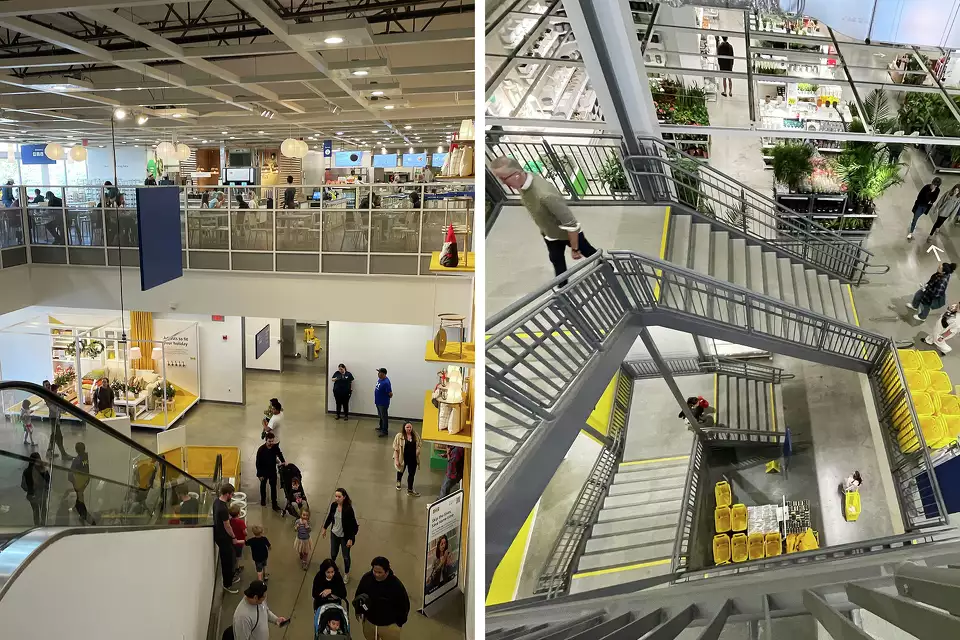

In the SF store, meanwhile, I probably could have counted the total number of people on each of the three floors, because of both the more open layout and the more manageable number of customers. I even found myself alone in several sections, able to contemplate the surrounding couches or swivel chairs in peace (in the Emeryville location, I was never the only one in a given section).
The oddest part of the SF location was that, at times, the number of workers within eyesight exceeded the shoppers. In addition to the employees with their cheery yellow “Hej!” shirts, the store crawled with private security guards clad in black. While it felt a little overkill, the gratuitous surveillance seems to align with Ikea’s pledge to face the “challenges” of the neighborhood head-on. (I didn’t notice any private security in Emeryville, though apparently the same company does provide it in both locations.)
One worker I spoke to in SF during a preliminary pass-by on Friday before my main visit said that weekends are by far the busiest times for the store. They added that Friday nights were the slowest (I guess no one wants to kick off their weekend perusing sensible dishware), though there were at least 20 people per floor when I stopped by that evening.
If the Emeryville store overall emanated frenetic energy, then perhaps the SF one felt “mysa” (the Swedish version of hygge). It certainly wasn’t tragically empty, but it did feel much calmer, with a slower but steady stream of shoppers.
The starkest contrast in the shopping experiences at the two stores may have been the music: Emeryville’s loudspeakers played soothing instrumentals (meant, I imagine, to help diffuse any blow-ups over which “easy” to assemble furniture to purchase), while the SF store pumped out pop music (so you could bop along to Blake Shelton while picking out throw pillows).
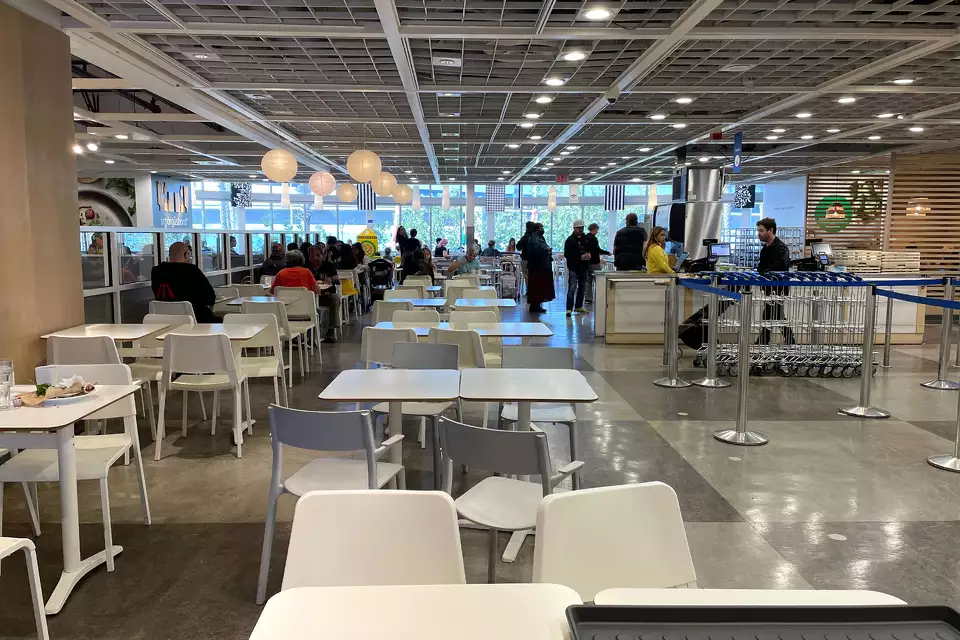

The one place I did conduct a quick survey of humans was within each of the respective delis. Both had about 60 people hanging out, which made the SF spot feel jammed, while the Emeryville restaurant still had plenty of tables left open. The food prices at Ikea are always startlingly low, but the cheapness of the food was even more jarring in downtown San Francisco, where it’s hard to find to-go lunch for under $20.
As I chomped on my veggie dog and cinnamon roll in the SF location (shout-out to the crispy onions and tangy slaw for elevating the meal — all for $2.88), I daydreamed about the other vegan and vegetarian eateries that will soon move into an adjacent food hall.
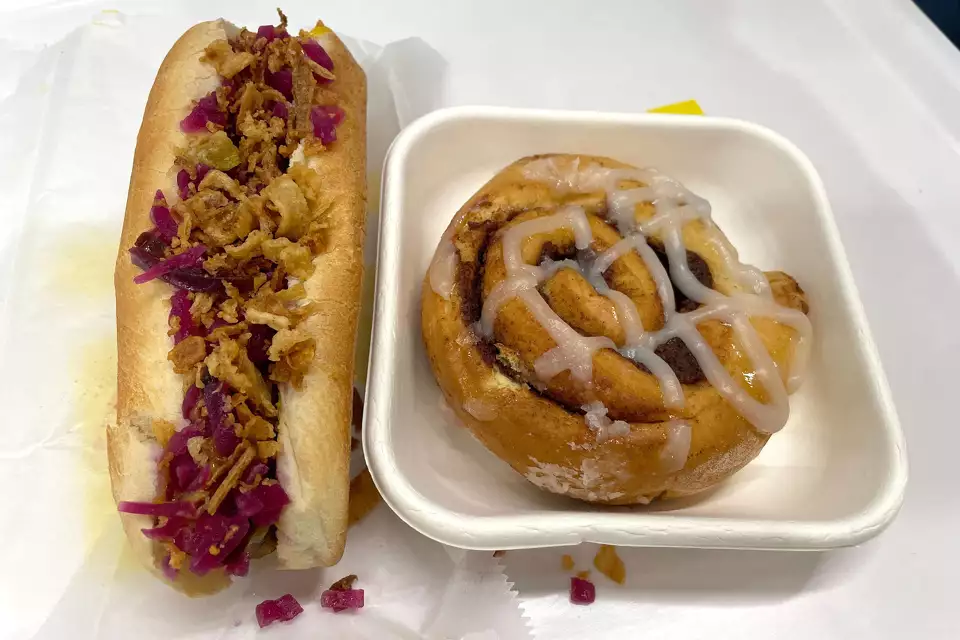

The downtown location may not have been packed, but its restaurant did feel like a gathering place (I didn’t see many families with kids shopping, but at least a dozen were tucking into cheap meals). And even before the completion of the impending co-working space and food hall, the store appears to have become something of a tourist attraction, based on the number of groups I spotted that seemed to be sightseeing rather than trying to outfit an apartment.
Can one Swedish retailer save downtown SF with affordable bedroom sets and miniature meatballs? Of course not. But my weekend adventure gave me hope that at least the store wasn’t as desolate or depressing as social media commentary might have you believe.
BEST OF SFGATE
Travel | This middle-of-nowhere Calif. diner was James Dean’s last stop
Food | ‘Corporate greed’ nearly killed San Francisco icon Swensen’s
Local | What happened to the haunted house on Fisherman’s Wharf?
History | The unbelievable true story of a body found in a Calif. funhouse
Nov 8, 2023
Jillian is a local editor. Before joining the team in late 2023, she covered technology, business, and Silicon Valley culture at publications including Insider, CNBC, and Forbes. You can reach her at jillian.donfro@sfgate.com.