- By Troy Wolverton | Examiner staff writer
- Feb 19, 2026 (SFExaminer.com)
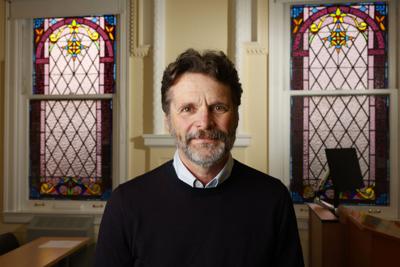
As California considers taxing the wealth of billionaires, one San Francisco academic said he believes it’s long past time to rethink and revamp what many consider to be the original wealth tax — the state’s property-tax system.
The system voters put in place through Proposition 13 in 1978 is costing the state about $45 billion per year — and possibly a lot more, according to an analysis by Patrick Murphy, a professor of political affairs at the University of San Francisco. The people who benefit from the system tend to be white in a minority-majority state and both wealthier and older than the average Californian, Murphy said.
In a kind of draft policy proposal, Murphy argues that California could have a much fairer system that helps out less-affluent home owners and first-time buyers if the state were to replace one of Prop. 13’s key provisions related to property valuations.
The revision he’s pitching would take “what’s easily the biggest tax subsidy that we have on the books and tries to use it towards what I would argue is a state goal,” Murphy told The Examiner.
A key piece of the so-called tax revolt of the 1970s and ’80s, Prop. 13 was sparked by concern that people were being priced out of their own homes because their property taxes were rising faster than their incomes.
At the time, California property values were rising rapidly. So too were residents’ property taxes, because those impositions were determined by the market values of the properties.
Prop. 13 made two key changes to the state’s property-tax system. It generally set the tax rate on properties to 1% of their worth, down from a statewide average of about 2.7% at the time it was passed. It also set a baseline for assessed value as the last purchase price, and it limited how much property values could appreciate to 2% annually.
That second provision generally means that the longer someone owns a home or other property, the greater the difference between its assessed worth for taxes and its actual market value. It also means, in effect, that the longer a person owns a home, the greater their Prop. 13 tax break.
In a report last year using data provided by online brokerage Redfin, the San Francisco Chronicle scrutinized the size of the gap between assessed and actual values and the resulting tax breaks in counties around the state.
In The City, the average home was assessed at $1.01 million but had an actual market value of $1.58 million, according to the Chronicle’s report. Thanks to that difference, typical homeowners were paying about $5,700 less in property tax each year than they would have if Prop. 13 wasn’t capping valuations.
While the gap between assessed and actual values — and thus the implied tax breaks — varies across the state, collectively it adds up to tens of billions of dollars in lost revenue.
Prop. 13’s provisions cover both residential and commercial properties. In 2018, researchers at the University of Southern California dug into how much the law benefited owners of commercial properties. They reported that if such properties were assessed at their market value, their owners would have been paying about $11.4 billion a year more in taxes on them.
Murphy and his collaborators have been trying to do a similarly thorough study of the effect of Prop. 13’s limit on valuations on residential property taxes, but haven’t yet been able to get access to the parcel-by-parcel data they’d need to do that.
But using the less fine-grained data from the Chronicle’s report, Murphy and his collaborators estimated that statewide, residential property owners were getting about a $35.8 billion annual tax break thanks to the Prop. 13 valuation limit.
Although commercial property values — and the value of the Prop. 13 benefit they receive — have declined a bit in the wake of the COVID-19 pandemic, Murphy estimated that the likely cost of the law’s valuation provision is in the neighborhood of at least $45 billion to $50 billion. And it could be as high as $70 billion, he said.
To put that in perspective, an expenditure of that size by the state government would be the third largest budget item after health and human services and K-12 education.
Although the exact number is uncertain, Murphy’s estimate looks to be a fair one, said Kirk Stark, a law professor and tax-policy expert at UCLA School of Law.
“It’s a lot of money,” Stark said. “It’s a major expenditure.”
From a public-policy perspective, that money isn’t well spent, Murphy and other tax experts argue. Instead of middle-class or lower-income people, Prop. 13’s tax breaks largely flow to the well-to-do. As of 2014, about half of all the benefits it provided went to homeowners who made at least $120,000 a year, according to a 2016 study by the state Legislative Analyst’s Office. At the time, the median household income in the state was about $60,000.
Prop. 13 is “the worst kind of tax expenditure along almost every dimension,” said Darien Shanske, a professor at UC Davis’ law school who focuses on state and local tax policies.
The law also has had its share of unintended consequences, policy experts say. It discourages people from selling their homes to buy new ones, because they could face major increases in their taxes. It has also prompted the state to rely much more heavily on income taxes, which can be notoriously volatile and can lead to major budget adjustments from year to year.
Because property taxes are largely local taxes, the caps Prop. 13 put on them stripped much of the power local governments had to control their own finances, Stark said. And because commercial properties tend to sell less frequently than residential ones — and thus are reassessed less often — the law has increasingly shifted the burden of property taxes in the aggregate onto homeowners, he said.
“I can’t really articulate a useful policy goal that I think Prop. 13 accomplishes,” said Brian Galle, a tax-law professor at UC Berkeley’s law school who, along with Shanske, is one of the co-authors of the proposed billionaire tax.

A representative of the Howard Jarvis Taxpayers Association — the anti-tax group named after the activist who successfully pushed through Prop. 13 — did not respond to a request for comment on Murphy’s critique.
But for his part, Murphy argues there’s a far better way to do property taxes.
He proposes getting rid of Prop. 13’s limit on valuation growth. To protect less-affluent homeowners from skyrocketing property taxes, he would instead greatly increase the state’s valuation exemption.
Under current law, homeowners get to deduct $7,000 from the assessed value of their home, which amounts to a $70 tax break. Murphy would increase that exemption to $500,000. That would mean someone in a $500,000 home wouldn’t pay any property taxes, and someone in a $1 million home would only pay tax on half that amount. Instead of owing $10,000 a year in property tax, they would pay $5,000.
Murphy would also limit that exemption to owner-occupied homes. Vacation homes wouldn’t qualify, and neither would residences owned by investment companies or people who don’t live in the state.
Murphy estimated that at $500,000, the exemption would deprive the state of about $26 billion, or about half the estimated total from Prop. 13’s valuation provision. The exemption could be larger or smaller, depending on policymakers’ preferences for redistributing the Prop. 13 tax break, he said. One possibility might be actually giving a tax refund to those whose homes are worth less than the exemption, he said.
“I like $500,000, because it’s super easy,” he said.
Although they quibbled about some of the details, other tax-law experts said Murphy’s proposal has merit.
“Overall, it’s a great idea,” Shanske said.
“In general, what he is proposing makes a lot more sense than an upside-down, arbitrary tax expenditure,” he said.
Even so, don’t expect a major revamp of Prop. 13 anytime soon. Murphy’s analysis and proposal is still in the formative stages; he said he’s still hoping to do a more thorough study of Prop. 13’s actual costs.
Murphy said that while he’s spoken with politicians and other policymakers about his ideas, he hasn’t gotten much traction with them yet. For decades, Prop. 13 has been considered the third rail of California politics — no one wants to touch it for fear of their political life.
Almost 50 years after its passage, Prop. 13 still enjoys broad support: 65% of California adults who responded to a 2024 Public Policy Institute of California survey — and 69% of likely voters — said they considered the proposition “mostly a good thing.”
The last major effort to reform the law came in the form of Proposition 15, a 2020 measure that would have lifted Prop. 13’s protections on commercial properties. Despite the backing of unions and being what policy experts thought of as an obvious and needed reform, that initiative failed on a 52% to 48% vote.
But Murphy said he has half a hope that one of the candidates in this year’s governor’s race might take up his ideas, if only to stand out from the crowded pack or to pitch as an alternative to the wealth tax, which would impose a one-time 5% tax on anyone with $1 billion or more in assets.
“You bill it as the O.G. of the wealth tax,” he said.
If you have a tip about tech, startups or the venture industry, contact Troy Wolverton at twolverton@sfexaminer.com or via text or Signal at (415) 515-5594.