


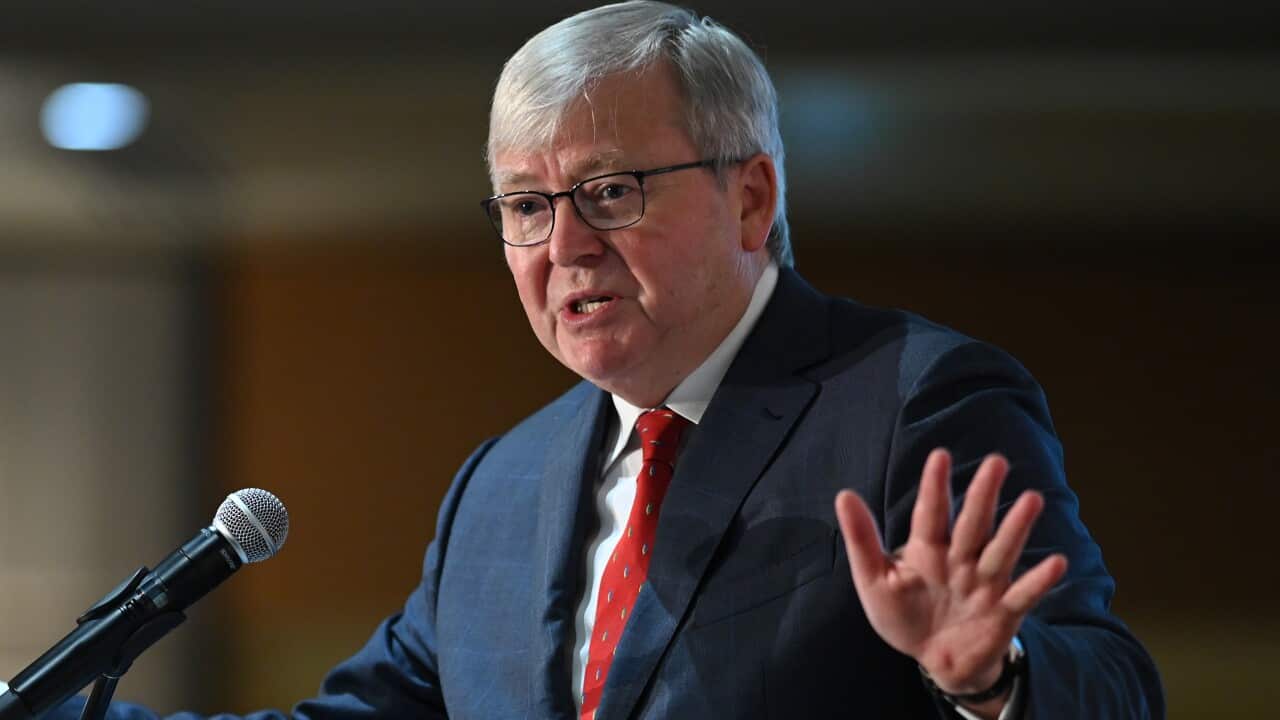
Kevin Rudd has launched a petition calling for a royal commission into Rupert Murdoch’s media empire.
12 October 2020 (sbs.com.au)
Former Australian prime minister Kevin Rudd has called for a major government inquiry into the tight ownership of Australian media by Rupert Murdoch’s News Corp, securing almost 140,000 signatures on a petition after just three days.
Mr Rudd, who was prime minister from 2007 to 2010 and briefly in 2013, filed a petition calling on parliament to set up a royal commission to investigate what he called the “abuse of media monopoly in Australia in particular by the Murdoch media”.
“The truth is Murdoch has become a cancer, an arrogant cancer on our democracy,” Mr Rudd said in a video posted on Twitter on Saturday, urging people to sign the petition, which also called for recommendations to boost media diversity.
The petition, due to be submitted to the House of Representatives on 5 November, had 86,115 signatures as of Monday morning, up from 46,000 on Sunday.
News that makes sense
Your trusted source for staying up-to-date with the world around you. Get free daily news updates and analysis, straight to your inbox.Enter email addressSubscribeMorning (Mon–Fri)Afternoon (Mon–Fri)WeekendInsight
By subscribing, you agree to SBS’s terms of service and privacy policy including receiving email updates from SBS.
By 8pm on Monday, it had jumped by about 50,000 to just over 138,000 signatures.
“What I picked up across the Australian community is growing levels of anger about the impact of the Murdoch media monopoly on people’s lives,” Mr Rudd told AAP on Sunday.
“This anger is finally bubbling over into a much more broadly based social movement. People are just fed up.”
READ MORE
According to Mr Rudd, 70 per cent of Australia’s print readership – and virtually every newspaper in Queensland – is owned by Mr Murdoch.
The newspapers owned by Murdoch’s News Corp include The Australian, the Daily Telegraph, the Herald Sun, and the Courier Mail.
Overseas, it owns publications such as The Wall Street Journal and the New York Post in the United States, and The Sun and The Times in Britain.
Mr Murdoch also controls Fox Corp.
‘Political protection racket’
Mr Rudd has accused Mr Murdoch of keeping his loss-making newspapers in Australia to maximise his political power, pursue his commercial interests, and bully anybody who has a different point of view.
“In 18 of the last 18 federal and state elections, we’ve seen the Murdoch media campaign viciously against the Labour Party and viciously in support of the Liberal and National parties.
“There’s no such thing as a level playing field any more.”
READ MORE
Mr Rudd said the issue had been swept under the rug for too long, because the Murdoch media and coalition government scratched each other’s backs.
He hopes the groundswell of support will mean the government will be forced to consider calling a royal commission.
“That is a political decision for Mr Morrison,” he told AAP.
“The Murdoch media act as a political protection racket for the Liberal and National parties, so they don’t want to change things.
“But the bottom line is, any political party will always be mindful of where there is a groundswell of community sentiment.”
READ MORE
Mr Rudd also brushed off concerns that calling for government intervention into the agenda of a media company could set a dangerous precedent.
“What a Royal Commissioner would determine based on open terms of reference will be a matter for whoever that Royal Commissioner is. I don’t prescribe a particular outcome here,” he told AAP.
“But what I am saying loud and clear is that we no longer have sufficient diversity.”
‘Hidden agendas’
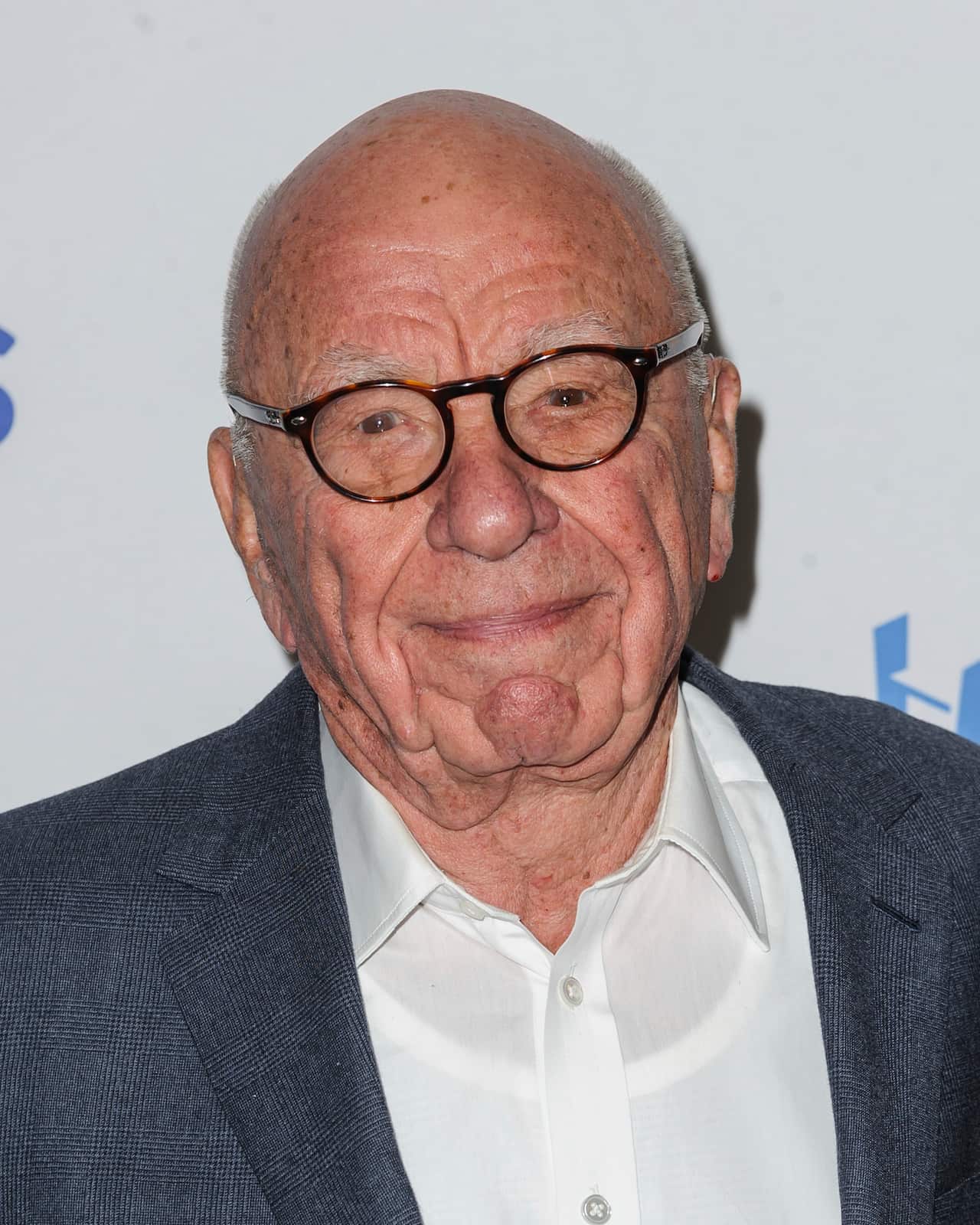
The petition appeared on the same weekend Mr Murdoch’s son, James Murdoch, spoke of his decision to leave his family’s publishing company in August over “disagreements over certain editorial content”.
In his first major public comments since, James Murdoch spoke to the The New York Times about his concerns the company’s newspapers were hiding agendas and endorsing disinformation.
“I reached the conclusion that you can venerate a contest of ideas, if you will, and we all do and that’s important,” he said. “But it shouldn’t be in a way that hides agendas. A contest of ideas shouldn’t be used to legitimise disinformation. And I think it’s often taken advantage of.
“And I think at great news organisations, the mission really should be to introduce fact to disperse doubt – not to sow doubt, to obscure fact, if you will.”
He said he decided he could be “much more effective outside” the company.
Opposition Leader Anthony Albanese on Sunday would not say whether he supports Mr Rudd’s call for a royal commission.
“Kevin is doing that as a private citizen, as a former prime minister. He’s entitled to put his views,” Mr Albanese told reporters in Adelaide.
Prime Minister Scott Morrison has been contacted for comment.
Australia’s parliament is not required to respond to petitions, unlike in Britain, where petitions that obtain more than 100,000 signatures are considered for debate in parliament. Petitions to the House of Representatives have rarely been acted upon, according to the parliament website.
Mr Rudd, who became leader of the Australian Labor Party in 2006 and left parliament in 2013 after the party lost an election, has previously blamed Murdoch for running a campaign to kill Labor’s plan for the national broadband network in 2013.
News Corp this year booked a $A1.29 billion writedown on its stake in Australian broadcast business Foxtel, which has been losing subscribers to streaming giants like Netflix, at the same time as its Australian newspapers have been ceding advertisers to Facebook and Google.
- Update from Google AI May 28, 2026:
Kevin Rudd’s official parliamentary petition calling for a Royal Commission into the Murdoch media empire is no longer active for signing. [1]
The original initiative and its subsequent impact progressed through several key stages:
The Parliamentary Petition (2020)
- Closure: The official electronic petition hosted on the Parliament of Australia website closed to new signatures on November 4, 2020. [1]
- Record Numbers: It set a historical record as the largest electronic petition ever submitted to the Australian Parliament, concluding with 501,766 signatures. [1, 2]
- Government Response: The Coalition government at the time formally rejected the petition’s demands. The Communications Minister stated that the government would not establish a Royal Commission. [1, 2]
Subsequent Senate Inquiry (2021)
While the petition itself was closed and rejected, the public swell of support forced political action. In November 2020, the Australian Senate referred the issue to the Environment and Communications References Committee. This triggered a formal Senate Inquiry into Media Diversity in Australia, where both Kevin Rudd and former Prime Minister Malcolm Turnbull provided testimony. The final committee report in late 2021 recommended a judicial inquiry, but no definitive legislative crackdown occurred. [, 2, 3, 4, 5]
Current Status of the Campaign
The campaign moved beyond parliamentary e-petitions into structured advocacy groups: [1]
- The Advocacy Group: To keep the momentum alive after the petition closed, the lobbying campaign was transferred to an independent body called Australians for a Murdoch Royal Commission (AFMRC). [1]
- Political Resistance: Despite a change to a Labor government under Anthony Albanese, the current administration has explicitly ruled out initiating a media Royal Commission. [1]
- Rudd’s Current Role: Kevin Rudd stepped back from active chair duties at the AFMRC following his appointment as the Australian Ambassador to the United States. [1]