By St. John Barned-Smith and Ko Lyn Cheang | April 9, 2026 (SFChronicle.com)
Ismael Ayala-Uribe was in agony.
The pain started soon after immigration agents seized the bespectacled 39-year-old man, who had lived in the United States since he was 5, at the Orange County car wash where he worked last August.
They took him to the Adelanto ICE Processing Center in San Bernardino County, where he developed an abscess under the skin on his left buttock. It filled with pus and bacteria, rotting muscle and fat as it pushed into his pelvis and abdomen, threatening to flood his bloodstream with toxins.
Ayala-Uribe complained to medical staff about rectal pain, rating it “10 out of 10,” Immigration and Customs Enforcement records show, but documents do not indicate he was ever physically examined by staff members at Adelanto. On Sept. 18, a nurse gave him over-the-counter painkillers and fiber supplements used to relieve digestion problems, then sent him back to his cell.
Three days later, sweating and trembling, Ayala-Uribe was finally taken to a hospital. While waiting for treatment, he suffered septic shock caused by the abscess, according to a coroner’s report, and his heart stopped.
“This case is just absolute medical malpractice,” said Dr. Barbara Ogur, an associate professor of medicine at Harvard Medical School who reviewed his treatment records at the Chronicle’s request.
Ayala-Uribe is one of at least 48 people who have died in ICE custody since President Donald Trump returned to office on Jan. 20, 2025, and launched an aggressive immigration crackdown. Last year’s death toll of people in ICE custody — 33 — was the highest since the agency’s creation in 2003, federal records show.
Annual deaths in ICE custody
https://datawrapper.dwcdn.net/hdgap
Data as of April 8, 2026.
Chart: Nami Sumida/S.F. Chronicle · Source: Immigration and Customs Enforcement and Chronicle research
Reporters spent six months obtaining detention data, ICE death reports, which record medical care a person received in custody, and, when available, autopsies, toxicology reports, coroner’s investigations and detailed medical records for all 48 cases.
The Chronicle analyzed 32 cases in which some revelatory documents were available, sending individual patient records to doctors with specialties related to the medical conditions cited in the detainees’ cause of death — including emergency room physicians, addiction specialists and psychiatrists. Reporters sent documents from each case to at least two doctors and relied on 14 doctors in total.
In all, at least 17 people in ICE custody died after medical staff delayed or failed to provide critical care that might have saved their lives, multiple doctors who reviewed their cases told the Chronicle. In some deaths, physicians’ opinions were not unanimous; some said they did not have enough information to make an evaluation.
In the 15 remaining cases, doctors either said that there was not enough information to comment or that the person was so medically frail that detention likely hastened their death. In one of these cases, a 75-year-old heart attack survivor, near-blind from cataracts, died from a heart attack weeks after being detained.
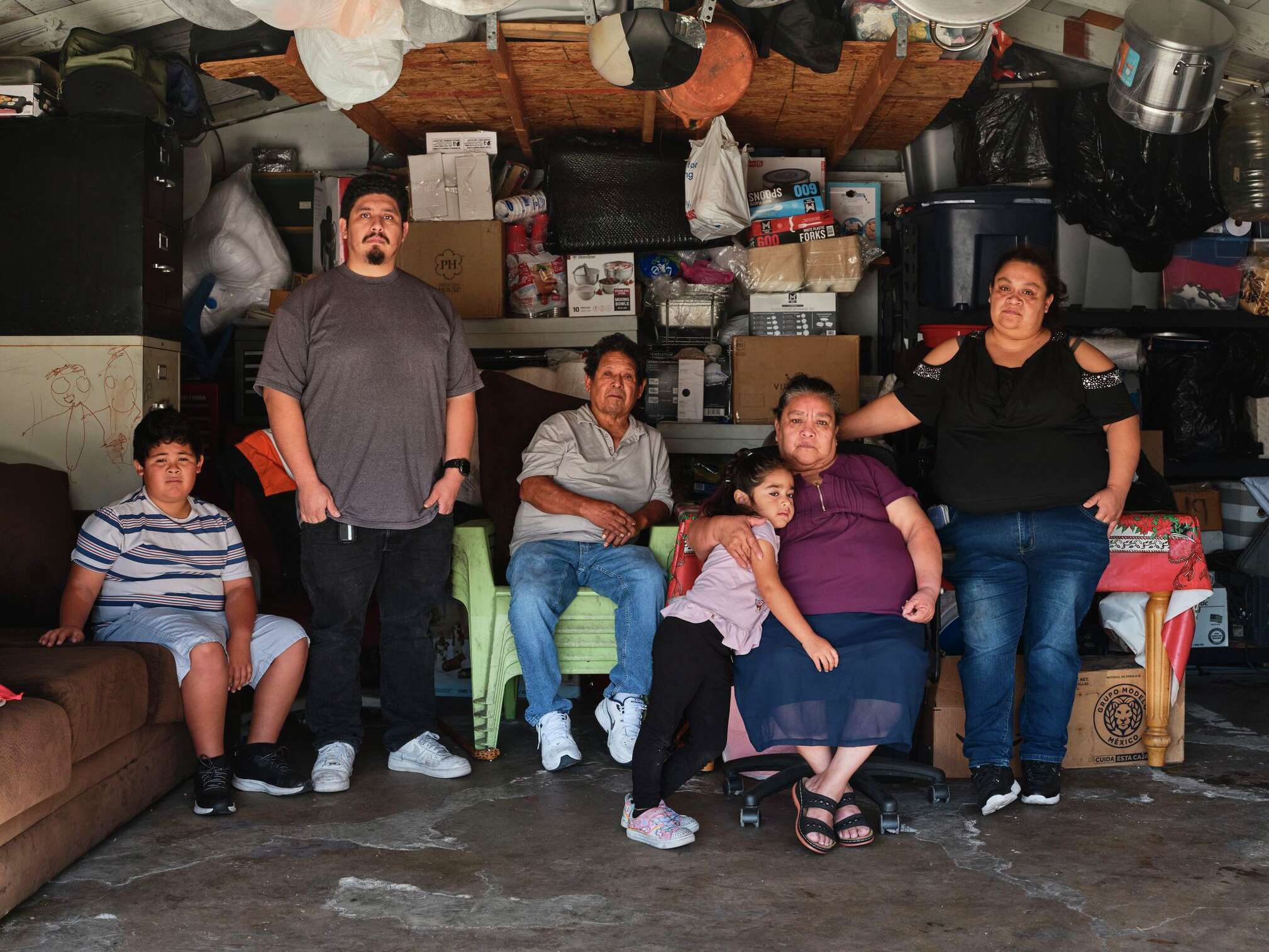
Ismael Ayala-Uribe loved his close-knit family, from left: nephew Anthony Ayala, 10, brother Jose Ayala, 31, father Eusebio Ayala, 68, niece Sophia Ayala, 4, mother, Lucia Ayala, 64, and sister Mayra Ayala, 37. Philip Cheung/For the S.F. Chronicle
People routinely died in custody without ever being seen by doctors, even as they begged for help while gasping for air or hallucinating. Their life-threatening symptoms were often evaluated only by lower-level nurses, who are not trained or authorized to make diagnoses.
ICE facilities’ medical staff repeatedly failed to diagnose critical illnesses, misdiagnosed patients and did not call 911 in time for people experiencing emergencies, according to the Chronicle’s review.
One 44-year-old man died after detention staff waited more than an hour to call emergency medical transportation after witnessing him suffer a series of seizures. A 45-year-old man died from complications of AIDS after not being tested or treated for HIV for months. Two people died in cells from drug and alcohol withdrawal, despite an ICE policy requiring staff to send detainees experiencing severe withdrawal to an emergency department.
Eight men died by suicide at the facilities, including one at Stewart Detention Center in Georgia, which had been faulted for failing to complete suicide prevention training, and another who detention staff witnessed having a psychotic breakdown.
Credits
Reporting and data by St. John Barned-Smith and Ko Lyn Cheang. Graphics and development by Nami Sumida. Photography by Santiago Mejia, Jenna Schoenefeld, Philip Cheung and Phobymo. Editing by Caleb Pershan, Dominic Fracassa, Demian Bulwa and Ryan Gabrielson. Data editing by Dan Kopf. Photo editing by Emily Jan. Copy editing by Linda Houser.