by JOE ESKENAZI MAY 23, 2022 (missionlocal.org)
Chesa Boudin is a man in desperate need of victories and, earlier this month, he got one. Incongruously, a U-Haul was involved.
The embattled District Attorney announced on May 10 that a long-running undercover sting operation had led to the arrest of a man named Quoc Le and the recovery of some 1,000 items allegedly filched from San Francisco cars. In a theatrical touch, the nexus of this alleged international fencing operation was a Quickly (a less-than-enviable product placement for the boba tea chain, once again, courtesy of San Francisco).
Just days before the planned arrest and seizure, Boudin says he received a “somewhat frantic” phone call from his lieutenant leading the operation. Detaining Le and moving a Best Buy’s worth of electronics from the Larkin Street Quickly would require logistical assistance and vehicles the District Attorney does not possess; namely, a car with a secure cage in the back. But, Boudin says, the San Francisco Police Department declined to participate.
“We can arrest somebody,” says the DA. “We can put handcuffs on them. How do we transport them to the county jail without a car? How do we seize the evidence without a truck to move evidence? Usually what we do is ask the police to come to assist at that stage of the process. And we did here. I was shocked they said ‘no’ … They were too busy.”
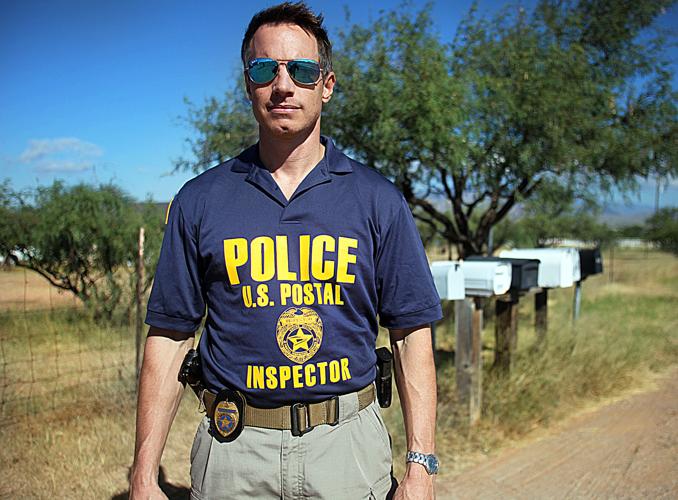
So, the DA’s office rented a U-Haul. It loaded 130 bankers’ boxes of electronics into the truck. Boudin says the transport of Le was handled by officials from the United States Postal Inspector and Homeland Security Investigations.
The notion of someone in the District Attorney’s office going through the process of renting a U-Haul — getting approval, charging it on a work credit card, perhaps struggling to operate an oversize truck and knocking a branch off a tree (surely it’s not just me who’s done this) — feels more like satire than real life. There’d be great comedic character actor roles for the federal officials, too, perhaps surly about the lack of name recognition for their obscure agencies, which were obviously not the DA’s first option. You could even give them gaudy uniforms and aviator sunglasses to dramatically remove.
But this is no satire. This is how things work in San Francisco. Or don’t.

The police have not yet returned an inquiry regarding the official SFPD line on how it all went down at the tea shop. But one more anecdote or one fewer, even one involving boba and a U-Haul, is hardly necessary to conclude that the relationship between the police and district attorney’s office is toxic and dysfunctional and San Franciscans are suffering for it.
The San Francisco Police Department’s clearance rate has dropped to its lowest level in a decade: 8.1 percent. That means that for every 12 crimes reported to the police, the SFPD only registers one arrest (on property crimes, it registers an arrest in roughly every 16th case). That serves as the backdrop for story after story about cops attempting to talk citizens out of reporting crimes (“The DA won’t prosecute!”); cops looking on while burglars clear out a business; or blowing off crime victims and eyewitnesses who are forced to take matters into their own hands.
Whether the police are engaging in a wildcat strike or simply underperforming would appear to be a difference without a distinction. Either way, Mayor London Breed’s response has been to push to give the department more money and more staffing. Whether this is simply good politics to address a constituency now far more concerned about public safety than in prior years, or something that feels a bit more like a protection racket, would also figure to be a difference without a distinction.
Allegations of ineptitude in the face of an alleged crime wave did not, however, get the DA’s office the promise of more money and more staffing. Rather the opposite: Boudin is now facing a recall. And, based upon abundant polling, it seems overwhelmingly likely that voters on June 7 will force him to once more rent a U-Haul — to clean out his office.
Boudin was vulnerable to a recall the moment he won his race, and highly likely to lose one the moment it qualified for the ballot. That’s just math: He won his contest in 2019 with 36 percent of first-place votes in an election with only 42-percent turnout. In an up-or-down competition, and with no opponent to counterbalance him, he’s at a structural disadvantage. Any winner of that election would be.
But, unlike his 2019 competitors, Boudin is a polarizing figure and reformist firebrand who has claimed his election signified San Franciscans’ endorsement of his ideas, and he has governed as if he received a mandate. As Mission Local wrote in 2019, it’s unclear if San Francisco voters were more enthralled by Boudin’s ideas or simply voted for the best-run campaign. And it is difficult to govern decisively and claim a mandate after a thin, ranked-choice victory in a low-turnout election. That’d be the case even if a recall funded by big money from shadowy PACs disseminated to a Russian Doll-like assortment of committees operated by the city’s little Roger Stones wasn’t in play. Clearly, it is.
Within days of Boudin assuming office in January, 2020, San Francisco elected officials were telling their disgruntled constituents that they only had to wait six months to begin signature-gathering for a recall. That happened.
Unlike other reformist DAs, Boudin was elected to serve a municipality with a rather low threshold for a recall: In Pennsylvania, for example, there are no recall elections. And, unlike other cities that voted in reformist DAs, and re-elected them, San Francisco does not have a large bloc of African American voters who can personally attest to the societal damage wrought by “tough-on-crime” prosecutors. Boudin, rather, was largely elected by people for whom criminal justice and criminal justice reform remain a concept rather than a lived experience. So this is not the most rock-solid base, especially when it was a plurality of a low-turnout election.
And finally, on too many occasions, Boudin has simply not proven to be politically adept when facing the slings and arrows of outrageous fortune.
So the recall is happening and the polling — it’s bad for the DA. It’s a bad sign when your own campaign releases polling showing you down just 10 percent only weeks prior to election day, as a counterbalance to even more brutal polls from others. It’s a bad sign to be doing poorly enough with likely voters that you need to begin reaching out to unlikely voters. And that makes it an even worse sign that, as of last week, only 6 percent of ballots had been returned for June’s election. The DA needs all the votes he can get. And those votes remain elusive.
Chesa Boudin is a man in desperate need of victories, and he can at least claim a Pyrrhic one in that, while his campaign’s polling shows him underwater, his policies are polling well.
Well, that makes you think.
It makes you think that, among other conclusions about Boudin’s likability or competence in executing his worldview, facts don’t much matter in this recall campaign. Data certainly doesn’t.
By any statistical measure, San Francisco is not going through a crime wave. Violent crime is at historic lows. Property crime is off the hook, of course. But it’s been off the hook for more than a decade, and SFPD clearance rates in property crimes are infinitesimal. Yes, especially with property crime, there is a high degree of underreporting. But that’s long been the case.
So, clearly, there’s a disconnect between what the statistics say and how people feel. It is not advisable for politicians to tell voters how they should feel, nor to whip out a graph and try to convince crime victims that they really don’t have it so bad. And Boudin failed here. He admits that now, albeit too late.
Especially during the early and middle sections of the pandemic, car break-ins tapered off and home burglaries skyrocketed. It is clear that Boudin did not adequately gauge how emotionally violated citizens would feel when their homes, or their neighbors’ homes, or the homes of people on Nextdoor were broken into, far more so than a vehicle break-in. So while it’s accurate to note that crime is down, it’s not necessarily useful. Not all crimes impact people the same way, and not all neighborhoods are being affected in the same way.
Boudin’s bedside manner, so to speak, has been poor. But that still doesn’t mean the diagnosis is whatever the patient feels it ought to be.
San Francisco’s crime rates remain lower than those in municipalities with traditional, law-and-order DAs, and lower than in similarly sized cities with Republican mayors, in states with Republican governors. And that’s the case regardless of how competently or incompetently Boudin is running his office. Meanwhile, the police arrest rate in San Francisco is rock bottom in California.
Further, the issues of paramount concern to San Franciscans, including horrific, scary street conditions and rampant homelessness, are either matters wholly under the aegis of the mayor, or ones in which the DA is not central.
Even the recall’s backers admit that “the DA obviously doesn’t have a direct effect on the increase in crime,” though that’s the message they’ve obviously been selling: That San Francisco is suffering through a crime wave, and that Boudin is the cause of it. It’s a double bank-shot of hokum.
Ideally, we would have a rational debate between Boudin and his aspiring successors regarding his policies and management style, with the competitors outlining what they would do differently. And we’d vote for the candidate we want: That’s how a regular election would work. Instead, Boudin has the unenviable task of running against himself while fending off a lavishly funded recall campaign, some $6 million to date, with voters having no say in whom the mayor will unilaterally appoint.
Crime is, by and large, down in San Francisco, but that doesn’t mean conditions are acceptable. Clearly they’re not, especially in a city with a yearly budget sizable enough to buy an aircraft carrier. Voters are ill at ease: In the face of perceived chaos on the streets, the appeal of retributive, cuff-’em-and-stuff-’em policies — the sort that led to California’s prisons being so crowded that the Supreme Court declared them to be cruel and unusual punishment — apparently remain alluring, even in “liberal” San Francisco.
San Francisco never defunded its police department. But, in the face of perceived chaos on the streets, politicians no longer even have to pretend that they ever intended to. Boudin did indeed make good on his campaign pledge to prosecute violent cops. But it netted him little success in the courtroom and, it seems, is no longer a pressing issue for this city’s voting demographic.
San Francisco’s problems, at long last, do seem to be catching up to it. It’s hard to argue that the most nuanced and well-thought-out solutions will be the ones we adopt. That would be out of character.
Regardless, those problems will still be here next month, and thereafter. Even if Boudin isn’t.