


- By Joel Engardio | Special to The Examiner
- Feb 8, 2023 Updated 23 hrs ago (SFExaminer.com)
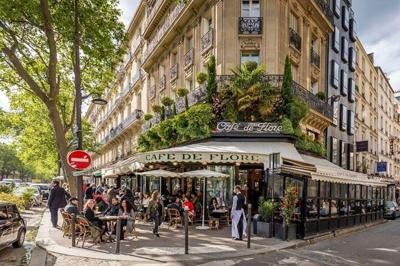
Think of Paris — a city famous for being beautiful and livable with its sidewalk cafes and tree-lined streets. We can bring the spirit of Paris to San Francisco, thanks to my colleagues on the Board of Supervisors unanimously passing our city’s housing element to create 82,000 residential units by 2030.
How so? It’s common to see six-story apartment buildings throughout Paris neighborhoods. Yet no one leaves Paris with the impression it’s a terrible place because of housing density. Visitors only remember the wonderful ground floor bistros, not the building height.
In San Francisco, long stretches of major transit corridors on the westside have only one story of retail and no housing above. This is a lost opportunity on streets served by train lines.
I don’t propose turning San Francisco into Paris. We will remain uniquely San Francisco. But the survival of our city — and our environment — depends on embracing the six-story apartment building.
We can’t continue relying on suburban sprawl to meet our housing needs. Climate change demands that we build housing near public transit and return to a focus on cities. It’s time for San Francisco and many other California cities to end a 50-year resistance to new housing that matches population and job growth.
New housing is often opposed because of genuine fears that it will displace current residents or impose faddish designs that won’t hold up over time. Consider the horrors and trauma of “urban renewal” along with the brutalist architecture of the 1960s that we do not want to repeat.
Today’s new housing should be created with the goal of solving the real needs of longtime residents:
- People want to stay close to their families, but adult children and grandchildren can’t afford to live in San Francisco. With an average home price of around $1.5 million, families of most income levels are finding it increasingly difficult to buy a home here. We are facing a “missing middle.”
- For today’s renters and owners who were fortunate to find housing, they have no options to relocate when they have kids and need more space.
- Seniors have no options to downsize when they become elderly and unable to navigate the stairs or maintain a large home. There is nowhere to safely age in place — such as an elevator building — without leaving their neighborhood or San Francisco entirely.
- Newcomers who wish to move to The City and bring their innovative talents and diversity are deprived of an inviting housing market.
We need to be open to 21st-century creative solutions that adapt to new realities and solve the actual housing problems families face in San Francisco. This starts with a concept called Dom-i-city (Domiciles in the City).
It’s ideal for San Francisco’s westside neighborhoods. Dom-i-city would fit on the footprint of one, two or three standard lots. On a single standard lot, it puts five stories of townhouse housing (one unit on each floor) above a ground floor with off-street parking, community space or retail.
To bridge the remote work desert, S.F. should cultivate life sciences industry
What makes life sciences companies like Gilead so attractive in our evolving economy is the degree to which they rely on in-person work to succeed
On a transit corridor, a larger Dom-i-city could hold 15 units of two- and three-bedroom family housing. All the units can face a courtyard below for kids to safely play or families to have a vegetable garden.
Imagine several Dom-i-city structures within a few blocks of each other. One can include a grocery on the ground floor that serves the entire neighborhood or even a senior center. Another might provide space for child daycare. Others could anchor bakeries or cafés.
Neighborhoods that are far from a commercial corridor would be transformed into vibrant communities where people can connect and enjoy amenities close to their homes.
Dom-i-city fills the need for “missing middle” housing — mid-rise buildings with at least two bedrooms per unit. The new residents will also create the foot traffic and become the customers to revitalize and sustain commercial corridors.
Dom-i-city doesn’t propose replacing all single-family homes. Westside areas like the Sunset will always be a majority of single-family homes. But Dom-i-city offers options that currently do not exist. If only 5% of Sunset homes were converted to Dom-i-city, it would create 6,000 new homes — much-needed housing for both middle-income families and seniors who want to age in place in the neighborhoods they love.
Dom-i-city returns areas of the westside to its original intention. Beautiful five- and six-story apartment buildings from the Art Deco era were built on West Portal Avenue and Irving Street a century ago. San Francisco built multi-family housing until the 1970s. But since then, we have implemented zoning laws that limited most areas to single-family units.
Dom-i-city goes back to the future to solve San Francisco’s housing needs. If we build concepts like Dom-i-city, we won’t need comparisons to Paris. We will have created our best San Francisco.