


- By Marcus White | Examiner staff writer |
- Apr 21, 2023 Updated 15 hrs ago (SFExaminer.com)
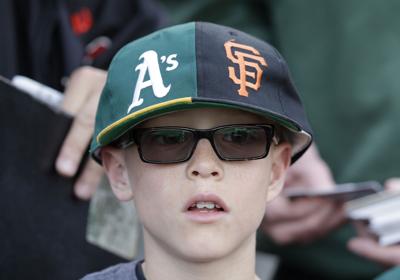
The A’s impending departure isn’t just Oakland’s loss, nor is it only the East Bay’s.
San Francisco, and the rest of the Bay Area, is losing something, too.
That’s not said to trivialize what Oaklanders are feeling this week, after the A’s announced they had agreed to purchase nearly 50 acres of Las Vegas land in order to build a new stadium, the construction of which hinges on Nevada lawmakers contributing $500 million in public financing.
After all, San Francisco still has its major men’s professional sports teams, cushioning the blow of the 49ers’ departure for Santa Clara in 2014 with the Golden State Warriors decamping from The Town to The City four years ago.
Plus, the Niners, Dubs and even the Giants haven’t subjected San Francisco fans to the same boom-or-bust cycles that A’s fans have experienced, with rebuild after rebuild ending in the same place: Foundational pieces traded are away, the cycle begins anew and there are fewer fans in the stands.
Oakland averaged lower attendance with Matt Chapman emerging as the game’s best defensive third baseman than when predecessor Josh Donaldson became an All-Star, which was also lower than when Eric Chavez won six straight Gold Gloves at the same position, and far lower than when fellow third baseman Carney Lansford won the 1989 World Series.
Nor has a piece of San Francisco infrastructure had to serve as the butt of more jokes than the aging Oakland Coliseum, let alone one that is located in a neighborhood as historically redlined, marginalized and neglected as East Oakland. Despite its ease of access through public and private transportation, MLB laid its priorities bare when it said the stadium site located in and near predominantly Black and Latino neighborhoods “is not a viable option for the future vision of baseball.”
Still, San Francisco and the whole Bay Area are losing something vital, and it’s far more important than the A’s serving as a San Francisco team’s last, local foil on the field or court, with all due respect to the Sacramento Kings.
San Francisco’s surrounding cities are simply too big, too dispersed and too unique, for the Bay Area to be a one-team region in every major men’s professional sport.
San Francisco, Oakland and San Jose are economically linked together, of course, forming what the U.S. Census Bureau has tabbed the nation’s fifth-largest combined statistical area. More importantly in the eyes of professional sports and TV executives, the three cities form a top 10 TV market in the U.S., incentivizing views of the region as a monolith.
But the differences between the cities are pronounced, with far more than bridges and highways separating them. A sports fan growing up in San Francisco is likely doing so under far different circumstances than one in San Jose, or one in Oakland. The cities are close geographically, sure, but their identities and sports cultures are wholly their own.
Look no further than Matt Mahan, the mayor of San Jose, not only promising that ”San Jose will not become San Francisco,” but doubling down upon it. If that’s how politicians feel, what do you think residents are saying?
The Bay Area’s heterogeneity is its strength, but the loss of Oakland’s sports teams serves only to further homogenize the region. The A’s, Raiders and Warriors all contributed to The Town’s rich civic history, and it’s a shame Oakland’s future will be written without them.

Marcus White
Marcus White is a senior digital writer and producer for the San Francisco Examiner.