


In 1945, San Francisco was the center of world affairs, and a rediscovered pack of photo negatives illustrate the event
June 23, 2020Updated: June 25, 2020 (SFChronicle.com)
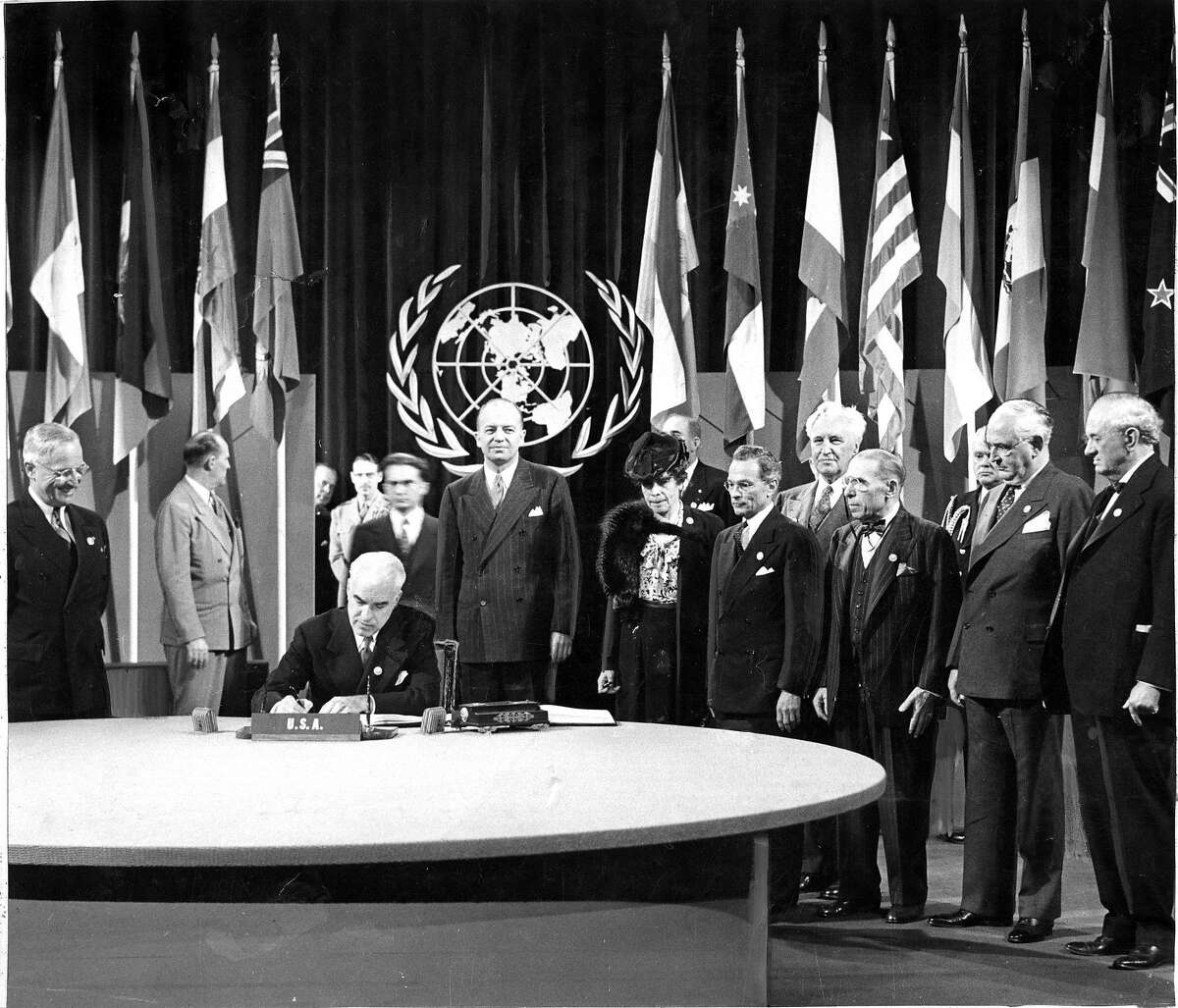
Seventy-five years ago, the Charter of the United Nations was signed, the first step in creating an organization to foster international peace, security and cooperation. The signing and lengthy conference leading up to it took place in San Francisco.
A search of The Chronicle’s archive revealed a small folder of photo prints from the conference but also dozens of photo negatives, including many candid arrival shots of dignitaries from abroad that show the excitement of the event.
Most of the negatives had little information on when the photos were taken or by whom, but a few had the photographer’s name etched into the negatives, including shots from staff photographers Virginia de Carvalho and Corwin Hansen.
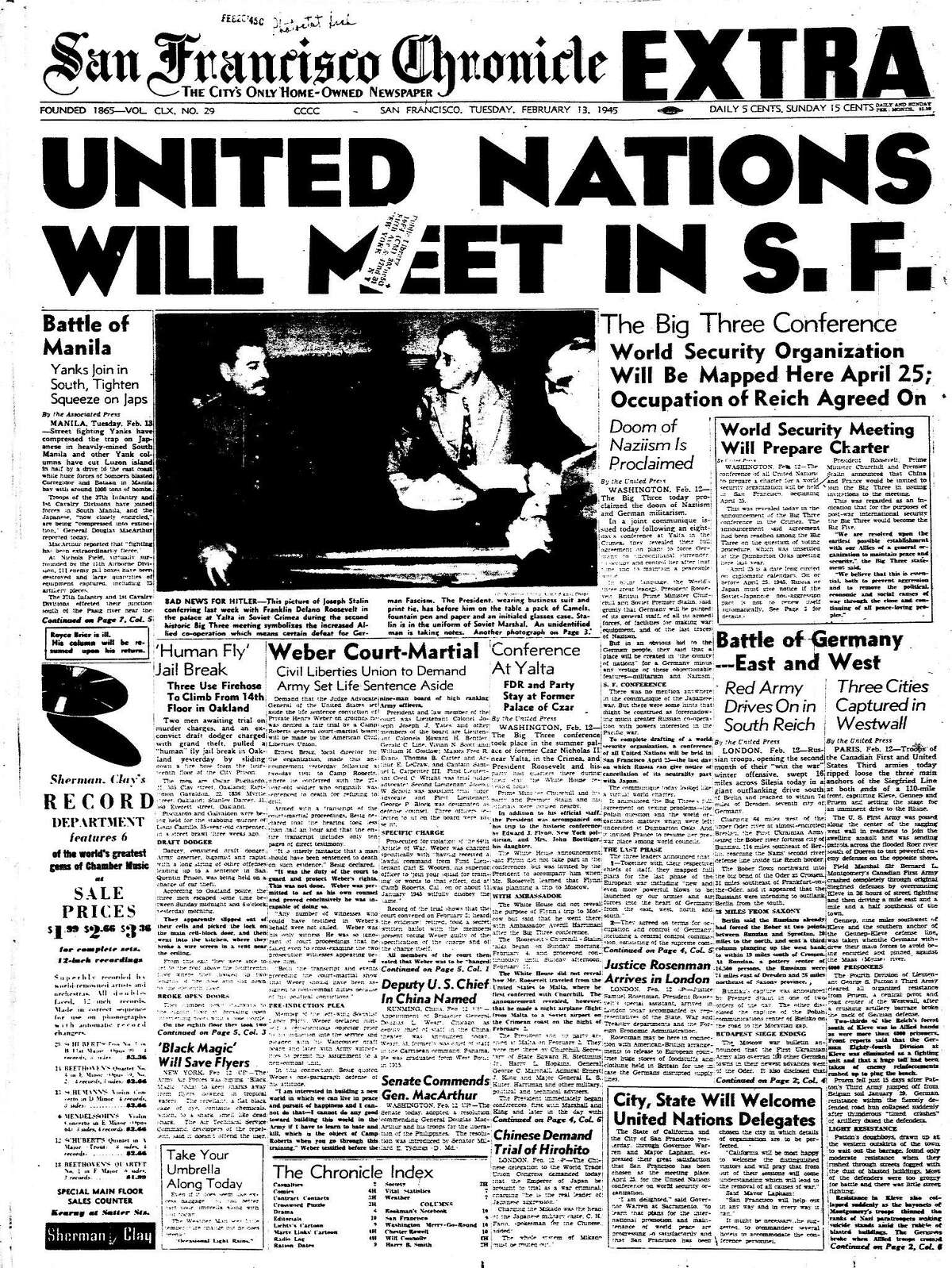
Months before at the Yalta Conference in early 1945, the “Big Three” allied powers announced San Francisco would be the host of the conference, with dozens of nations invited, to create a United Nations organization.
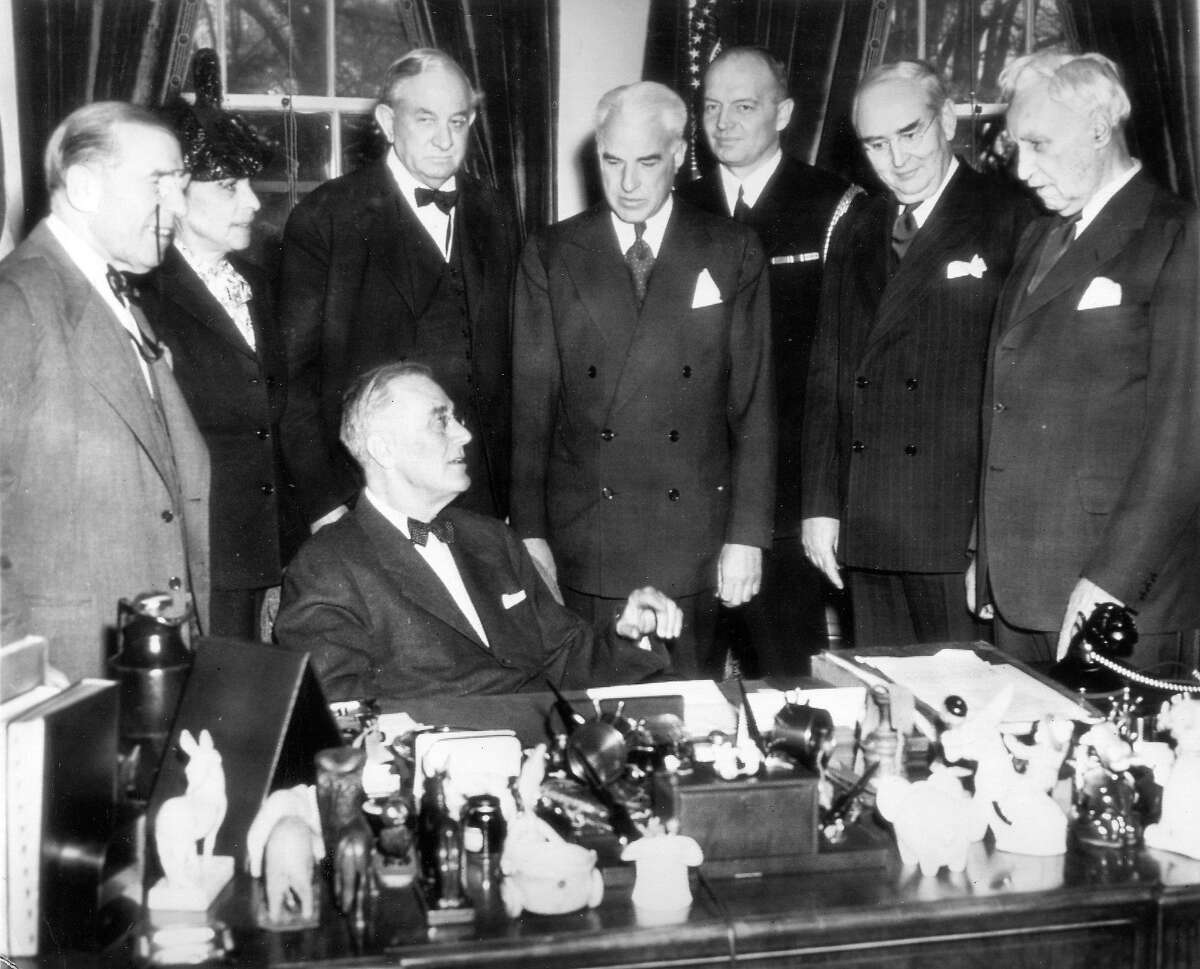
Some were already looking forward to the location change. “(Secretary of State Edward) Stettinius later said that as he lay in bed one cold night in January 1945 at the Yalta conference in the Crimea, he envisioned being in beautiful San Francisco and decided the city was the perfect spot to make a new start at a lasting peace after World War II,” Chronicle reporter Edward Epstein wrote on the 50th anniversary of the charter’s signing.
But one of the key participants at Yalta, President Franklin D. Roosevelt, would not see the conference, dying only two weeks before its opening.
“The curtain rises today in San Francisco on a crucial act of the greatest drama of our time,” Stanton Delaplane wrote in the April 25, 1945 Chronicle. “… a charter for the world will be drafted by men and women of 46 nations. In the dining rooms and hotel rooms and fireplaces of San Francisco today, the structure of our world is being formed for tomorrow.”
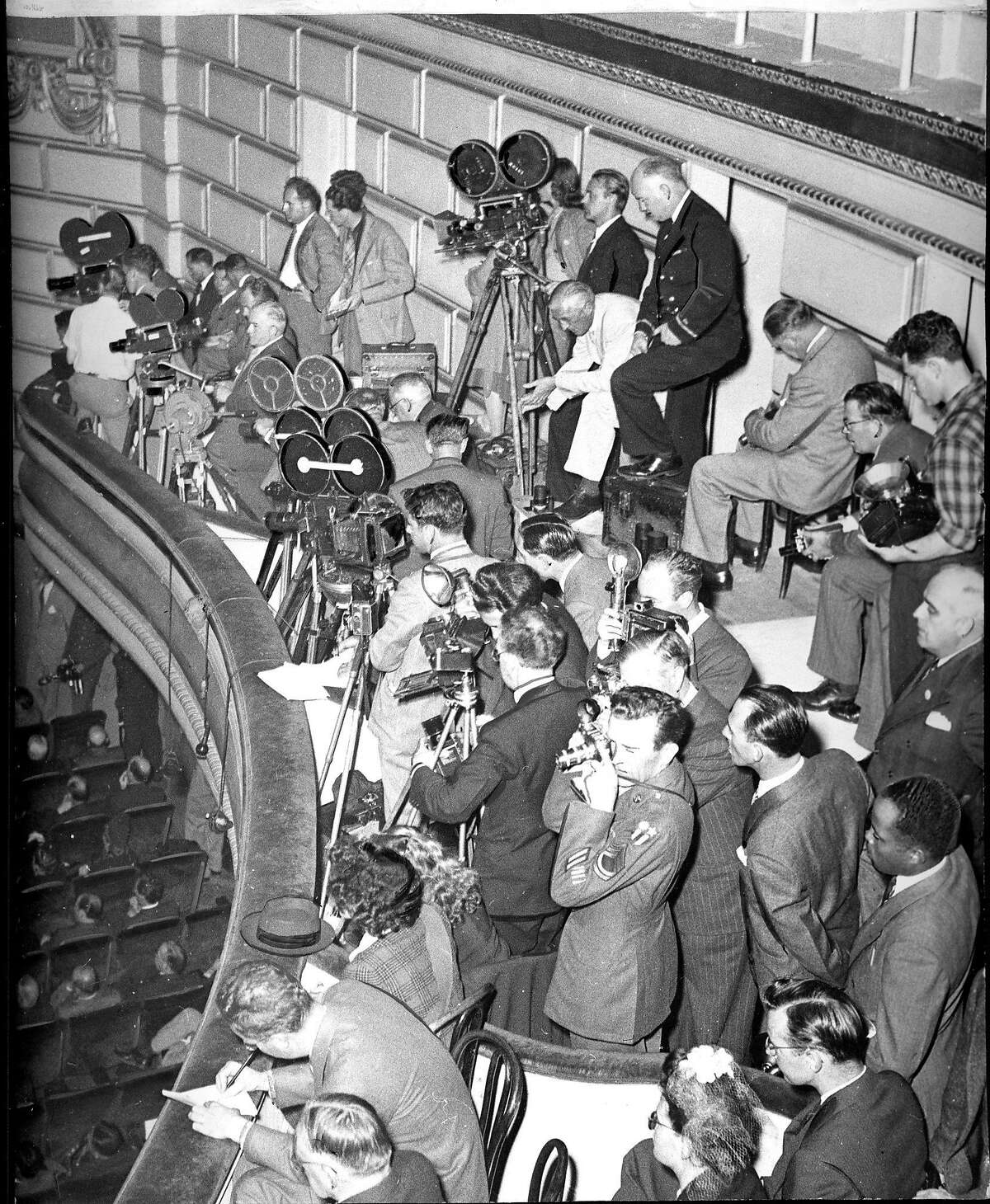
Delaplane contrasted the bright and sunny weather and the smartly dressed delegates with the memories they carried of war, starvation and destruction from different parts of the world. The opening session at the War Memorial Opera House was packed. There were 850 delegates. Advisers, staff and the conference secretariat brought the total attendees to 3,500. There were also more than 2,500 press, radio and newsreel representatives, plus observers from many societies and organizations.
More from Chronicle Vault
- When San Francisco’s Presidio almost became the ‘world capital’
- SF’s Cherry Blossom Festival: 50 years of signaling spring in Japantown
“I earnestly appeal to each and every one of you to rise above personal interests and adhere to the lofty principles which benefit all mankind,” President Harry Truman said.
But by the second day, it was apparent that the creation of a Charter acceptable to all participants was going to take weeks of grueling negotiations. The first showdown was over who would preside over the meetings, which turned an expected 90-minute meeting into a five-hour marathon.
It took nine weeks, but on June 26, the charter was done, ready to be signed by the 50 participating nations (four nations were added after the opening of the conference) in the Herbst Theatre.
Truman flew to San Francisco for the Charter signing, encouraging a quick ratification by all the participating nations.
“Let us, therefore, each in his own nation and according to its own way, see immediate approval of the Charter — and make it a living thing,” Truman said.
Written By Bill Van Niekerken
Bill Van Niekerken is the Library Director of the San Francisco Chronicle. He does research for reporters and editors and manages the photos, negatives and text archives. He has a weekly column “From the Archive”, that focuses on photo coverage of historic events. For this column Bill scans and publishes 20-30 images from photos and negatives that haven’t been seen in many years.
Bill started working at the Mercury News in 1980, when nothing in news libraries was digital. Research was done using paper clippings, and cameras shot film. He moved to the Chronicle in 1985, just as the library was beginning their digital text archive.

 ©2023 Hearst Communications, Inc.


