


- By Patrick Hoge | Examiner staff writer |
- Jun 5, 2025 (SFExaminer.com)
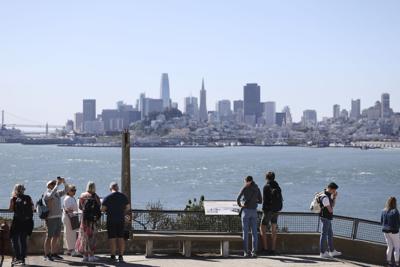
Despite years of talk and the adoption of policies aimed at spurring the conversion of underused offices into homes, San Francisco has no wave of such projects under construction, even as others are occuring in cities across the nation.
That could change as San Francisco officials are close to creating a downtown district in which tax money from conversions could be used to offset development costs. The initiative would be the third of three major policy levers that city officials will have pulled at the urging of numerous designers, architects, contractors and nonprofit urban planners who say the changes are needed to make such projects financially possible.
“You add those together, and you actually do get to feasibility,” said Marc Babsin, president of the Emerald Fund, a real-estate developer, concerning the addition of the financing-district proposal to earlier incentives adopted by The City.
The widespread hope is that such conversions will help produce badly needed housing and revive a downtown wounded since the COVID-19 pandemic by high office and retail vacancies.
City voters already approved a limited waiver of transfer taxes for conversions in March 2024 and elected officials recently approved a major waiver of other requirements, notably inclusionary housing fees.

Without the special financing district, though, Babsin said conversions simply haven’t made sense for the numerous buildings his firm has studied in recent years. Babsin’s company in 2015 completed the conversion of 100 Van Ness Ave. into 418 housing units, but construction costs have risen substantially since then, he said.
No big post-pandemic conversion projects have started construction, though one which would create 124 apartments in the historic Humboldt Bank building at 785 Market St. is in the design phase and reportedly getting close. Another project that would have converted offices to housing in the historic Warfield Building at 988 Market St. stalled and the building was sold.
Richard Hannum, founder partner at Forge Development Partners, which is converting the Humboldt Bank building, said the proposed financing district and other policy changes are making The City more attractive to investors
“It’s a great step. It’s on the path to getting us where we all need to go,” Hannum said.

The Board of Supervisors took a big step toward potentially breaking the deadlock Tuesday by giving initial approval to legislation that opens the door for creating a Downtown Revitalization and Economic Recovery Financing District, in which increased tax revenue from office properties converted to residences could be used to offset project costs for 30 years.
Once the legislation is approved, a detailed financing plan and regulations must still be adopted. Developers of conversion projects would have until 2032 to enroll.
The proposed district would cover The City’s core downtown office and commercial areas, including the Market Street corridor from the waterfront to Civic Center, the Financial District, Union Square and in the East Cut, Rincon and Yerba Buena areas south of Market Street.
A preliminary analysis identified 50 properties that could be suitable candidates for conversion, representing a potential 4,400 residential units, based on factors such as age, size, condition and current vacancy rate, according to Mayor Daniel Lurie’s office.
Lurie is a sponsor of the legislation, which he said in a statement provided to The Examiner would help create “a vibrant, 24/7 downtown.”
“Together, we’re working to revive our downtown economy and create housing to ensure the next generation of San Franciscans can afford to raise their kids here,” Lurie said.
The initiative is made possible by California Assembly Bill 2488, which former Assemblymember Phil Ting and the Bay Area Council, a business-supported public policy advocacy organization, sponsored. The law passed last year.
A similar, pioneering tax incentive in New York City led to the conversion of obsolete office space into more than 12,000 units in lower Manhattan over 10 years from the late 1990s to early 2000s, Lurie’s office said.
New York’s conversion program is credited by many with helping that city become a national leader in terms of post-COVID 19 economic recovery. By contrast, San Francisco, which has very little housing downtown, has among the least recovered downtowns.
The City had the highest office-vacancy rate in the nation in April, according to a recent report from CommercialEdge. The real-estate company CBRE put the office-vacancy rate at 35.8% in the first quarter, or about 32 million square feet.
Even after New York City’s initial tax program ended, thousands of conversions continued to happen, evidence that a desirable neighborhood had been created, said Kate Collignon, a managing partner at HR&A Advisors, an urban design consulting firm.

“It wasn’t just that it reduced costs. It created the visibility of lower Manhattan for residents and made it a great place to live, so that you no longer needed to have those abatements going forward,” Collignon said.
HR&A was one of several companies and nonprofits that in 2023 produced multiple reports about the viability of office-to-residential conversions in San Francisco and called for city code changes and a reduction of fees.
“The economics just weren’t there to make conversion feasible,” Collignon said. “The City has done a lot since then to try and chip away at that math problem.”
Collignon, who also credited The City with streamlining permitting requirements, went on to contribute to case studies of a half-dozen other cities sponsored by the U.S. Department of Housing and Urban Development and done with Gensler, the Brookings Institution and Eckholm Studios.
Holly Arnold, who leads the residential practice for the architecture firm Gensler’s northwest region, said she had heard from developers that the tax financing district could be what “tips the scale” to make conversions feasible.
“We’re really excited about it,” Arnold said. “We have studied office to residential conversion a great deal, and we see in the cities that are successful with the conversions, there’s a more direct incentive to developers.”
Arnold pointed to New York City, where Gensler helped convert an office tower in Manhattan’s Financial District into the 588-residence Pearl House, opened in late 2023, which involved creating a light well in the building’s center and adding five floors to the top.
“We think there’s an incredible potential for a lot of very cool [San Francisco] buildings to find new life,” Arnold said.
The advance of the downtown financing district legislation follows the Board of Supervisors’ approval of a Lurie-supported ordinance exempting up to 7 million square feet of residential conversions downtown from an assortment of fees and requirements, including The City’s inclusionary housing fee to fund affordable housing. City officials said those fees typically added $70,000 to $90,000 per residence.
Previously, voters in March 2024 approved Proposition C, which waived real-estate transfer taxes on first-time sales of up to 5 million square feet of commercial properties converted to residential use.
In addition, the board and former Mayor London Breed enacted an ordinance in July 2023 waiving certain planning code requirements for downtown residential conversions.
Since COVID-19, the Big Apple has also renewed efforts to promote office conversions, and other cities have eased regulations and offered incentives as well, with conversion projects playing a pivotal role in revitalizing downtowns and helping to reduce record-high availability of office space, according to a report released Tuesday by CBRE.
The total amount of U.S. office space planned for conversion or demolition this year in the rest of the country is on pace to far exceed the amount of new office space delivered this year, though not all of it will be residential, CBRE said.
The U.S. office-conversion pipeline reached 81 million square feet of planned and underway projects across 44 markets as of May 2025, accounting for 1.9% of total U.S. office inventory, up 0.2 percentage points from six months earlier, CBRE said.
Just over 70% of planned and active office conversion projects by square footage are for multifamily housing projects. Office-to-multifamily conversions have delivered more than 28,500 housing units nationally since 2018, with another 43,500 planned, according to CBRE.
Manhattan and Washington, D.C.currently lead the nation in total square footage of conversions underway or planned, with 10.3 million square feet and 9.2 million square feet, respectively, CBRE said.
Cleveland, which has longstanding experience with repurposing underperforming office buildings, had the highest share of its office inventory, (8.4%) either undergoing or planned for conversion, the company said.


