


From Wikipedia, the free encyclopedia
“Cyril James” redirects here. For the Canadian academic, see Frank Cyril James.
| C. L. R. James | |
|---|---|
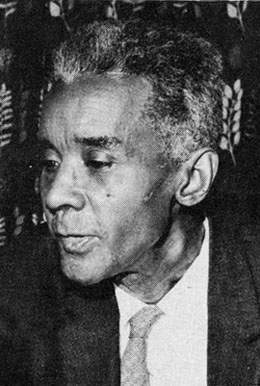
| James in 1974 | |
| Born | Cyril Lionel Robert James 4 January 1901 Tunapuna, Trinidad and Tobago |
| Died | 31 May 1989 (aged 88) Brixton, London, England |
| Other names | J. R. Johnson; Nello James |
| Occupation(s) | Historian, writer |
| Notable work | The Black Jacobins Beyond a Boundary Minty Alley Toussaint Louverture: The Story of the Only Successful Slave Revolt in History World Revolution |
| Movement | Johnson–Forest Tendency |
| Spouses | Juanita Young(m. 1929; div. 1932) Constance Webb(m. 1946; div. 1953) Selma Weinstein(m. 1956; div. 1980) |
| Children | 1 |
Cyril Lionel Robert James (4 January 1901 – 31 May 1989),[1] who sometimes wrote under the pen-name J. R. Johnson, was a Trinidadian historian, journalist, Trotskyist activist and Marxist writer. His works are influential in various theoretical, social, and historiographical contexts. His work is a staple of Marxism, and he figures as a pioneering and influential voice in postcolonial literature.[2] A tireless political activist, James is the author of the 1937 work World Revolution outlining the history of the Communist International, which stirred debate in Trotskyist circles, and in 1938 he wrote on the Haitian Revolution, The Black Jacobins.[3]
Characterised by Edward Said as an “anti-Stalinist dialectician“,[4] James was known for his autodidactism, for his occasional playwriting and fiction, and as an avid sportsman. The performance of his 1934 play Toussaint Louverture was the first time black professional actors featured in a production written by a black playwright in the UK. His 1936 book Minty Alley was the first novel by a black West Indian to be published in Britain.[5] He is also famed as a writer on cricket, and his 1963 book Beyond a Boundary, which he himself described as “neither cricket reminiscences nor autobiography”,[6] is commonly named as the best single book on cricket, and even the best book about sports ever written.[7]
Biography
Early life in Trinidad
Born in 1901 in Tunapuna, Trinidad and Tobago, then a British Crown colony, C. L. R. James was the first child of schoolteacher Robert Alexander James[8] and Ida Elizabeth, née Rudder.[9]
In 1910, James won a scholarship to Queen’s Royal College (QRC), the island’s oldest non-Catholic secondary school, in Port of Spain, where he became a club cricketer and distinguished himself as an athlete (he held the Trinidad high-jump record at 5 feet 9 inches (175 cm) from 1918 to 1922), and also began to write fiction.[10] After graduating in 1918 from QRC, he worked there as a teacher of English and History in the 1920s;[10] among those he taught was the young Eric Williams, who became the first Prime Minister of Trinidad and Tobago.
Together with Ralph de Boissière, Albert Gomes, and Alfred Mendes, James was a member of the anticolonialist Beacon Group, a circle of writers associated with The Beacon magazine, in which he published a series of short stories.[11] His short story “La Divina Pastora” was published in October 1927 in the Saturday Review of Literature,[12][13] and was widely reprinted.[14]
British years
In 1932, James left Trinidad for the small town of Nelson in Lancashire, England, at the invitation of his friend, West Indian cricketer Learie Constantine, who needed his help writing his autobiography Cricket and I (published in 1933).[15] James had brought with him to England the manuscript of his first full-length non-fiction work, partly based on his interviews with the Trinidad labour leader Arthur Andrew Cipriani, which was published with financial assistance from Constantine in 1932.[16][17]
During this time, James took a job as cricket correspondent with The Manchester Guardian.[15] In 1933, he moved to London. The following year, he joined a Trotskyist group that met to talk for hours in his rented room. Louise Cripps, one of its members, recalled: “We felt our work could contribute to the time when we would see Socialism spreading.”
James had begun to campaign for the independence of the West Indies while in Trinidad. An abridged version of his Life of Captain Cipriani was issued by Leonard and Virginia Woolf‘s Hogarth Press in 1933 as the pamphlet The Case for West-Indian Self Government.[18] He became a champion of Pan-Africanism, and was named Chair of the International African Friends of Abyssinia, later renamed the International African Friends of Ethiopia (IAFE)[19] – a group formed in 1935 in response to the Italian fascist invasion of Ethiopia (the Second Italo-Ethiopian War). Leading members included Amy Ashwood Garvey, Jomo Kenyatta and Chris Braithwaite.
When the IAFE was transformed into the International African Service Bureau in 1937, James edited its newsletter, Africa and the World, and its journal, International African Opinion. The Bureau was led by his childhood friend George Padmore, who became a driving force for socialist Pan-Africanism for several decades. Both Padmore and James wrote for the New Leader, published by the Independent Labour Party (ILP), which James had joined in 1934 (when Fenner Brockway was its General Secretary).[20]

In 1934, James wrote a three-act play about the Haitian revolutionary Toussaint Louverture (entitled Toussaint Louverture: The Story of the Only Successful Slave Revolt in History), which was staged in London’s West End in 1936 and starred Paul Robeson, Orlando Martins, Robert Adams and Harry Andrews.[21] [22] The play had been presumed lost until the rediscovery of a draft copy in 2005, the play has now gone on to be adapted into a graphic novel by Nic Watts and Sakina Karimjee.[23] In 1967, James went on to write a second play about the Haitian Revolution, The Black Jacobins, which became the first production from Talawa Theatre Company in 1986, coinciding with the overthrow of Jean-Claude Duvalier.[24] 1936 also saw Secker & Warburg in London publish James’s novel, Minty Alley, which he had brought with him in manuscript form from Trinidad.[15] (Fenner Brockway had introduced him to Fredric Warburg, co-owner of the press.)[25] It was the first novel to be published by a black Caribbean author in the UK.[26] In 1937, he wrote the foreword to Red Spanish Notebook: the first six months of revolution and the civil war, by Juan Ramón Breá and Mary Stanley Low.[27]
Amid his frenetic political activity, James wrote what are perhaps his best known works of non-fiction: World Revolution (1937), a history of the rise and fall of the Communist International, which was critically praised by Leon Trotsky, George Orwell, E. H. Carr and Fenner Brockway;[28] and The Black Jacobins: Toussaint L’Ouverture and the San Domingo Revolution (1938), a widely acclaimed history of the Haitian Revolution, which was later seen as a seminal text in the study of the African diaspora. James went to Paris to research this work, where he met Haitian military historian Alfred Auguste Nemours. In a new foreword to the 1980 Allison & Busby edition of The Black Jacobins, James recalled that “Nemours used coffee cups and books in Paris cafés to bring to life the military skills of revolutionary Haitians.”[29]
In 1936, James and his Trotskyist Marxist Group left the ILP to form an open party. In 1938, this new group took part in several mergers to form the Revolutionary Socialist League (RSL). The RSL was a highly factionalised organisation.
Speaking tour in the United States
At the urging of Trotsky and James P. Cannon, in October 1938, James was invited to tour the United States by the leadership of the Socialist Workers’ Party (SWP), then the US section of the Fourth International, to facilitate its work among black workers.[30] Following several meetings in New York, which garnered “enthusiastic praise for his oratorical ability and capacity for analysis of world events,” James kicked off his national speaking tour on 6 January 1939 in Philadelphia.[31] He gave lectures in cities including New Haven,[32] Youngstown, Rochester, and Boston,[33] before finishing the tour with two lectures in Los Angeles and another in Pasadena in March 1939.[34] He spoke on topics such as “Twilight of the British Empire” and “The Negro and World Imperialism”.[34]
Constance Webb, who later became James’ second wife, attended one of his 1939 lectures in Los Angeles and reflected on it in her memoir, writing: “I had already heard speeches by two great orators, Winston Churchill and Franklin Delano Roosevelt. Now I was hearing a third. The three men were masters of the English language, a skill that gave them extraordinary power.”[35]
James’s relationship with Louise Cripps Samoiloff had broken up after her second abortion, so that intimate tie no longer bound him to England.[36]


