


- By Keith Menconi | Examiner staff writer
- Jul 20, 2025 Updated Jul 20, 2025 (SFExamner.com)

Editor’s note: San Francisco’s elected leaders are getting ready to review a major rezoning proposal that would allow for larger and denser housing developments across much of the north and west of The City.
As with all housing debates in San Francisco, this one has raised a host of thorny questions, and many residents are looking for answers. To help them out, The Examiner will be tackling some of those questions in an occasional series over the coming months.
You can read other entries in the series here.
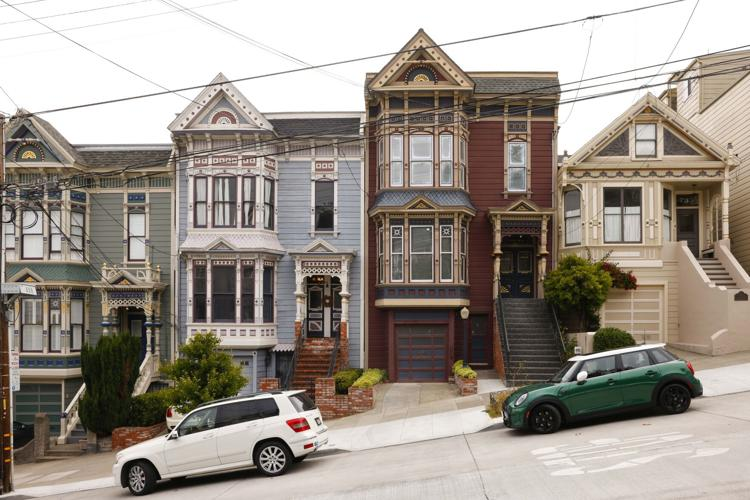
With rolling hills full of brightly colored Victorians, San Francisco is a city that is well known for its beautifully constructed homes.
But to hear some people tell it, it might sound as though The City’s architectural heyday has long since passed.
Even ten years ago, John King — the San Francisco Chronicle’s urban-design critic at the time — remarked in an interview that “a lot of what’s being built in S.F. right now really feels like product.”
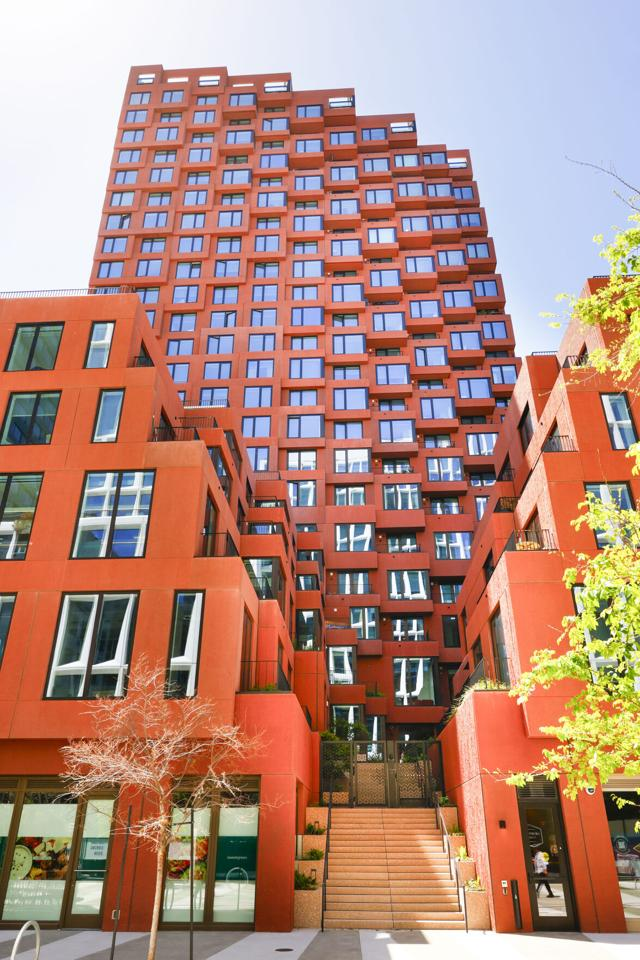
The detractors point to a flood of new mid-rise residential buildings that have proliferated in recently built-up neighborhoods such as Mission Bay and Dogpatch. The four-to-five story buildings often share strikingly similar designs: boxy frames; bright colors; sleek, simple exteriors.
For some lovers of The City’s Victorian-era buildings — constructed in oblong shapes, defined by jutting turrets and bay windows, and adorned with hand-carved ornamentation — these new arrivals strike a jarring and at times unappealing contrast.
Now, as San Francisco considers a proposal backed by Mayor Daniel Lurie to rezone The City’s northern and western neighborhoods, some are asking whether the loosened zoning rules will open the floodgates to a glut of modern developments that will supplant the historic charm of The City’s older buildings.
The Examiner put that question to a number of local housing experts. Some stuck up for the merits of The City’s modern residential constructions, while others said they want local government to steer builders onto a different aesthetic course entirely.
The stakes of beautiful buildings
Richard Kurylo is among those who has railed against modern residential designs, which he describes as “drab, soulless architecture.”
An urban geographer who has worked in both San Diego and San Francisco on neighborhood economic-development projects, he’s been speaking out at recent meetings of The City’s Planning Commission to make the case that well-designed buildings aren’t just nice because they’re pretty. Neighborhoods with high-quality architecture, he contends, are crucial for spurring the local economy.
“Good planning results in better design and more pedestrians and shoppers,” said Kurylo, who works for The City but spoke to The Examiner in a personal capacity. “People are drawn to the architectural qualities that are inherent in pre-World War II buildings: complexity, richness, and attention to detail.”
But in a city where neighborhood opposition has scuttled many proposed housing developments over the years, for some, any complaint based on aesthetic concerns immediately smacks of not-in-my-backyard obstructionism.
“Who’s to say they’re not beautiful?” said affordable-housing developer Sam Moss of modern homes. “I’ve always wondered who’s the arbiter of that decision.”
Furthermore, Moss, who leads the Mission Housing Development Corporation, said that in the face of an affordability crisis such as San Francisco’s, purely aesthetic concerns should carry far less weight than the more basic need to create housing developments that are affordable, livable and safe.
“I think that the grossest, most ugly thing we could possibly do is to not build as much high-quality housing for everyone” as possible, he said.
What’s changed?
However you might feel about San Francisco’s more modern buildings, it’s undeniable that they do look different from the Victorian, Edwardian and Spanish revival-style homes that came before.

Is there a lot of outrage and or a lot of loud outrage? Nobody knows for sure, but new data makes it clear where one key demographic stands
One reason for the shift in appearance is that they just don’t build ’em like they used to — and that’s because they can’t.
When it comes to classically constructed molding and wood-framed bay windows, “all of those things are custom made and handmade,” said Mary Comerio, a longtime San Francisco resident and a professor of architecture at UC Berkeley.
And, she said, whoever is manning the workstation to create such pieces has to have “some pretty serious skills to be able to do that. I don’t think there are many carpenters around that even know how anymore,” making the work now prohibitively expensive for most housing projects.
Further constraining the building choices available to developers, San Francisco began adding layer upon layer of new regulations to its planning and building codes over the second half of the 20th century. Now, the tangle of rules saddles projects with a long list of provisions — height and setback limits, window placement, safety requirements such as sprinkler installations among many others.
Add in other constraints, like spiraling construction costs — not to mention the laws of physics that dictate what is materially possible to build — and Comerio said “there are only so many floor plans and so many sizes and sites that make sense, if you want to have anything bigger than a three or four-unit building.”
As a result, a whole lot of residential buildings start looking really similar.
A firmer hand in building design?
While San Francisco does have a lengthy design-review process for new residential buildings, critics say it has no clear mechanism to weed out bad architectural designs.
“There’s a whole sort of checklist that people go after,” said Patrick Carney, an architect who serves on The City’s Arts Commission. Nevertheless, he said, “rarely does somebody say, ‘oh, it’s just ugly!”
But maybe residents should get that chance.
Kurylo notes that other cities make aesthetic considerations a central part of their planning procedures. In particular, he pointed to Vienna as one possible role model for San Francisco. Austria’s capital has institutionalized a public process that allows residents to play a role in selecting the designs for many of the city’s housing projects.
“The result is developments that enhance neighborhoods,” wrote one architectural nonprofit reviewing the Vienna model. “Residents see the new homes as a community asset, and possibly a future home for their children, or even themselves.”
Kurylo argues that if San Francisco were to adopt similar measures, the force of public pressure would push developers away from bland building-design choices driven by bottom-line financial considerations.
But adding another layer of oversight atop San Francisco’s building-entitlement process would cut hard against the grain of the current political moment. Right now, The City’s most prominent elected leaders are working to loosen regulations and cut cumbersome red tape that they say has held back housing development.
And Moss said that, already, the costs imposed by The City’s current regulations are actually contributing to the stunted design choices exhibited by some buildings.
“We are forcing developers to spend a ton of money on subjective, soft-cost design review — review of the design, review of the review of the review of the design,” he said. “How many lawyers did you get to review that? All of that chunks away from funds that could otherwise be spent on a beautiful facade.”

Will people warm to new buildings?
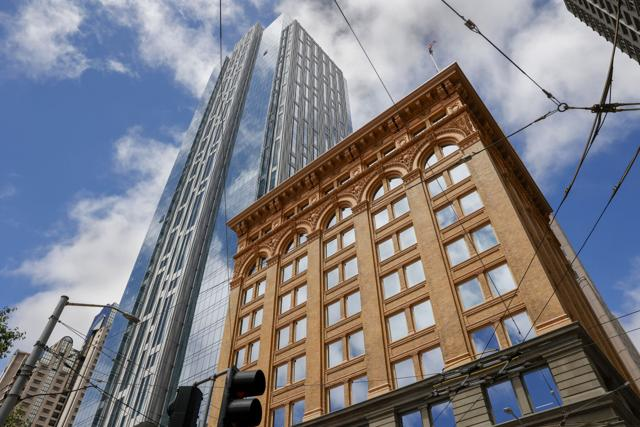
On matters of aesthetic taste, Comerio takes the long-term view. She noted that both the Transamerica Pyramid and — decades later — the housing developments in Mission Bay caught considerable flak when they were first constructed.
But now, the Transamerica Pyramid is a beloved landmark, and Mission Bay is “full of restaurants and cafes and trees, and it looks pretty good when you go for a walk around there.”
While new constructions often strike many as “bad” and “scary,” she said, eventually, “I just think people soften up.”


