The billionaire-backed coalition of ‘moderate’ politicians running San Francisco’s Democratic Party is in tatters. And Joel Engardio is out in the cold.
 by JOE ESKENAZI September 1, 2025 (MissionLocal.org)

Are you a regular Joe Eskenazi reader?
Mission Local is home to San Francisco’s premier political reporter, serving up analysis you can’t get elsewhere. If you agree, help feed the city’s news appetite — donate below.
It’s a hell of a thing to move heaven and earth — and meeting dates and meeting venues — to ensure you don’t have to do anything. It’s a hell of a thing for the San Francisco Democratic Party to go out of its way to make its brand and position statements even less relevant.
But that’s what happened last week.
Months ago, San Francisco Democratic Party chair Nancy Tung was already phoning up fellow party members and urging them to vote “no endorsement” in the pending recall of District 4 Supervisor Joel Engardio.

Want the latest on the Mission and San Francisco? Sign up for our free daily newsletter below.Sign up
Engardio’s pro-business, pro-law-enforcement, pro-building agenda has a constituency here in San Francisco. It certainly includes the billionaire tech and landlord donors who underwrote the ascendant leadership of the Democratic Party, and are underwriting Engardio’s anti-recall campaign.
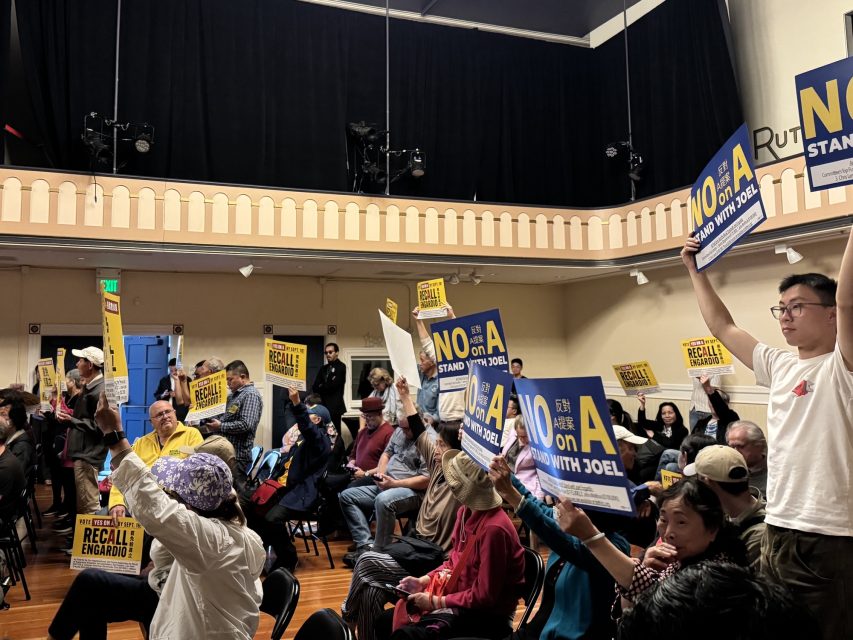
But Engardio’s championing of Prop. K, the measure to transform The Great Highway into a park, enraged a broad swath of the Westside — including thousands of Chinese San Franciscans.
Politicians being caught between their donors and the city’s angriest voters turns out to also be a hell of a thing.
In June, Democratic Party members were informed they’d be voting to endorse or spurn the recall at the July 25 regular meeting. If they rejected it, that would give Engardio all of August and half of September to inundate Sunset District voters with flyers and ads blasting an “Endorsed by the Democratic Party” message.
But Tung yanked the item from the July 25 meeting agenda. She moved it to a special meeting slated for July 30. And she then subsequently canceled that special meeting.
The endorsement vote on the recall ended up being delayed for a full month, until last week — nearly two weeks after mail voting had commenced.
At that belated Aug. 27 meeting, the party deadlocked between Tung’s preferred “no endorsement” and “no on the recall.” As a result, the San Francisco Democratic Party will officially have no position on the Sept. 16 election.
If the ardent campaign to keep the Democratic Party from taking a position in the District 4 recall was done to preserve the party’s reputation with heavily Chinese and conservative-leaning Sunset District voters, it has come at the potential expense of the party’s reputation with nearly anyone else.
The national Democratic Party’s brand is in tatters, despite existential threats to American democracy, because of its inability to articulate a coherent ethos and steadfast unwillingness to take strong positions.
The particulars here in San Francisco are far different — but, broadly, the same situation applies.
The coalition of moderates running the local party is also in tatters. In the past year and change, YIMBY urbanist moderates have gritted their teeth in the name of unity and supported measures pushed by get-off-my-lawn, law-and-order moderates.
They have now been definitively shown that there will be no reciprocity.
Tung, in an interview with Mission Local, denied intentionally driving the San Francisco Democratic Party into a ditch.
She said she moved the endorsement vote from the regular July meeting to a special meeting because the venue for the regular meeting, the Central Chinese High School in Chinatown, was potentially too small to accommodate the throngs that might show up and opine on the recall.
Tung denied moving the vote to specifically avoid the specter of holding an endorsement vote in Chinatown. The recall is an issue of fervent interest to many San Francisco Chinese voters — with a majority, and likely a firm majority, skewing pro-recall.
She also denied delaying the vote until late August — when it would be meaningless — because she hadn’t in July nailed down enough “no endorsement” votes to reach her desired outcome.
Rather, she said she canceled the July 30 special meeting because of bylaws indicating that special meeting votes would require a supermajority to pass, not a simple majority.
Tung did not deny calling her colleagues to push a “no endorsement” vote, however, because that happened. Mission Local spoke to numerous recipients of these calls.
When asked why she advocated this position, she said, “I want to say I think it’s important for the party to think about these sorts of elections, especially when they’re so localized. We need to be sensitive to the communities that have to make these decisions.”
This is confusing. The Democratic Party endorses in every election, be it federal, state, citywide or districtwide. It endorsed Prop. K, the Engardio-led ballot measure to close the Great Highway that rests at the core of the recall. It endorsed a slate of district supervisor candidates in November. It will do so again in 2026.
The ostensible power of these endorsements — and the supposed allure of the Democratic brand in a city where registered Dems outnumber Republicans by a factor of eight — was a major reason why tech executives and landlord interests invested heavily last year in their preferred candidates to oust the labor-backed politicos running the party.
So it’s confusing for the chair of the Democratic Party to now say that District 4 voters need to be given their space to decide the fate of their supervisor — a supervisor who, notably, was pushing Prop. K and other Democratic Party-endorsed positions.
No Democratic Party member I spoke with took seriously the claim that the vote was moved out of the Chinatown venue hosting the July 25 meeting because the hall was too tiny.
Nor was anyone particularly swayed by Tung’s argument about the rules carved onto the Stone Table of the county Democratic Party regarding endorsement votes at special meetings.
Tung countered that she sought the input of a “professional parliamentarian” on the matter, whose opinion compelled her to cancel the special meeting. But she declined to identify who this person was or disclose if they had been compensated.
The county Democratic Party, incidentally, has in-house parliamentarians, and it’s unclear why their opinions weren’t good enough. It also has veteran members who don’t recall this ever before being an issue over the course of many years and many special meetings.
If a two-thirds endorsement vote really is required at a special meeting, scheduling a special meeting for such a vote was extremely careless — at best.
In short, many of Tung’s colleagues, regardless of how they voted on Aug. 27, do not buy her explanation that the endorsement vote was repeatedly moved and repeatedly delayed purely through a series of unfortunate events.
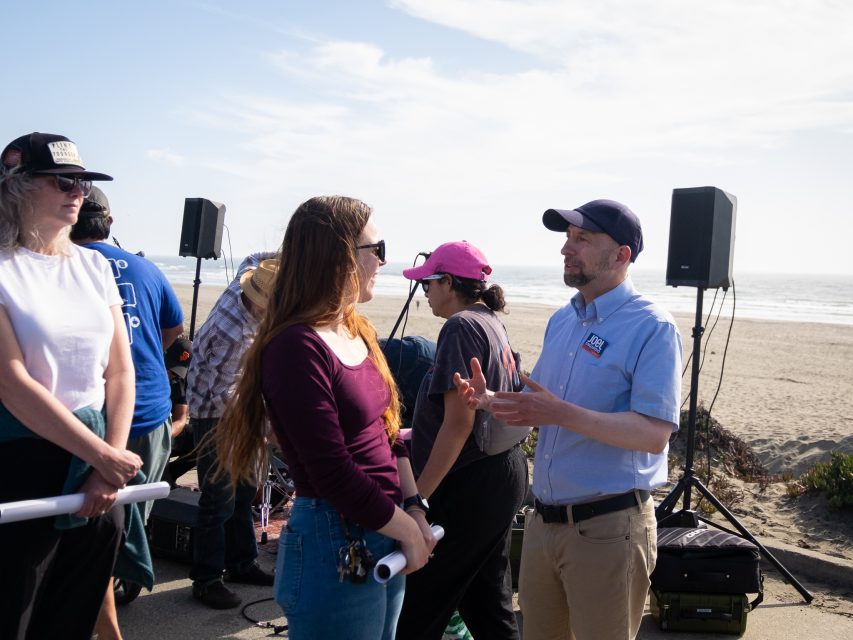
If Prop. K exposed the fissures in the moderates’ urbanist-old school coalition, the strange and terrible recall endorsement saga may have snapped them.
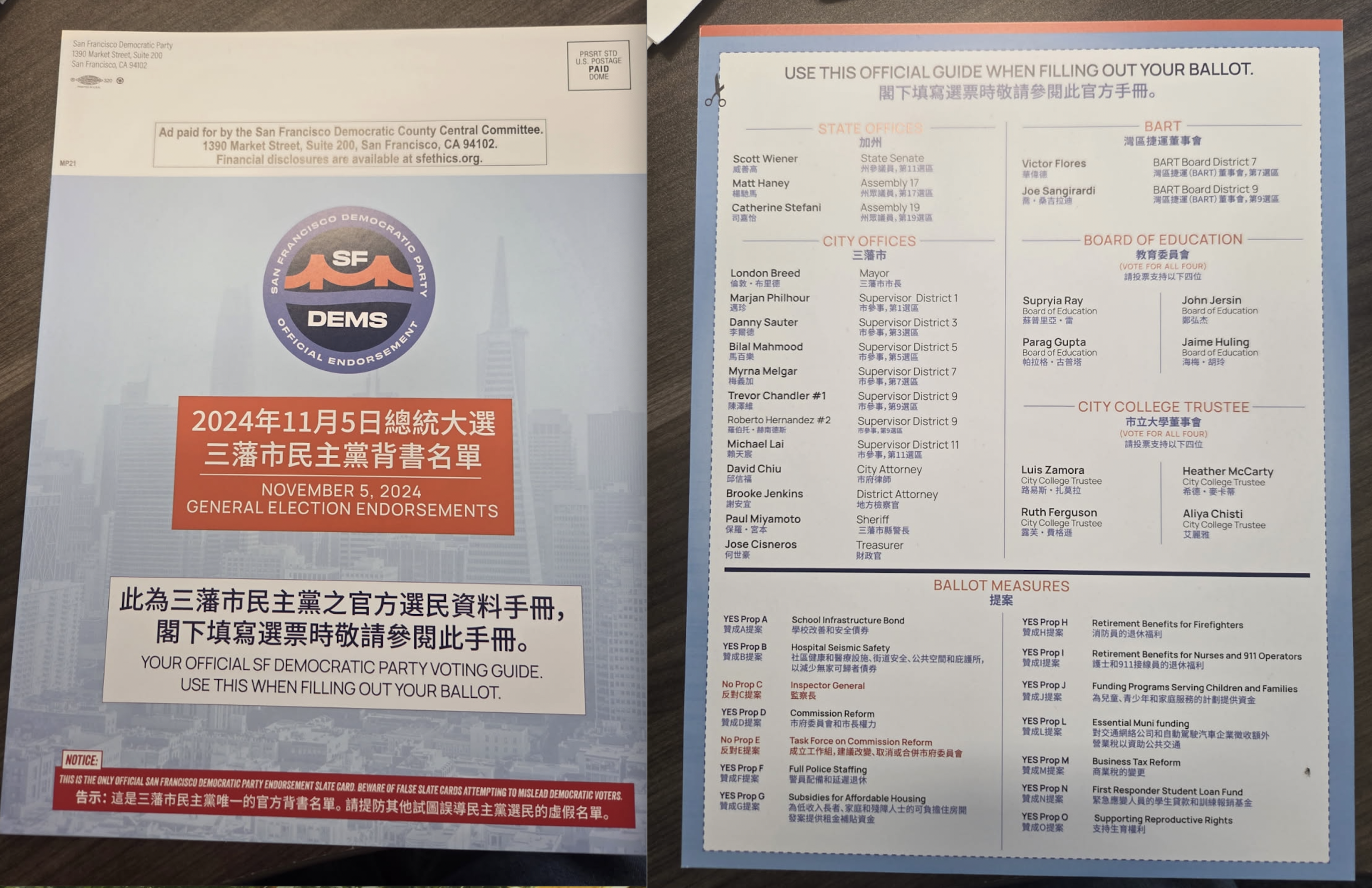
Urbanists were already deeply irritated by the San Francisco Democratic Party opting to simply drop Prop. K off of 2024 mailers sent to the Westside — party recommendations blithely skipped from Prop. J to Prop. L, like excising the 13th floor from a high-rise.
Following the endorsement debacle and the probable defeat of Engardio come Sept. 16 (anything could happen — but if you bet on Engardio, you should ask for odds), expect internecine conflict and further dysfunction within San Francisco’s Democratic Party: “Moderate cannibalism,” in the words of one observer.
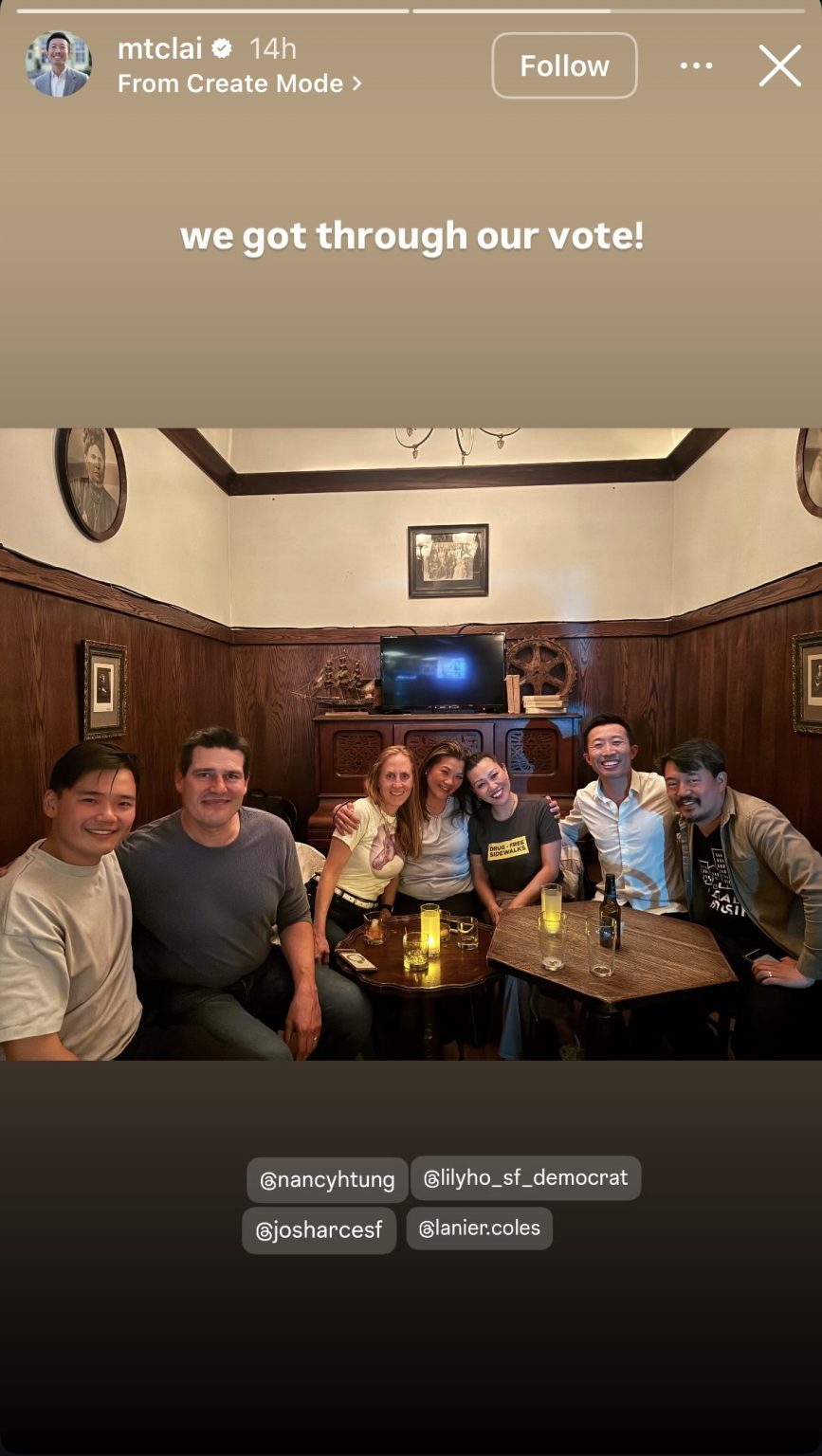
Following the Aug. 27 Democratic Party meeting, a number of the members who voted to not make a recall endorsement went out for drinks. A smiling group photo was, inexplicably, posted on social media. “We got through our vote!” was the gaudy caption.
It’s a hell of a thing to be caught between your billionaire donor base and the city’s most vehement and outspoken voters. A drink is understandable. But it doesn’t alleviate the problem.
After Sept. 16, this Democratic Party will have to move on to the next problem, and the one after that.
San Francisco, alas, is not wholly immune from our national condition: Whatever’s coming down the pike figures to be more consequential than the fate of a windswept highway and the elected official who, with our county Democratic Party’s blessing, moved to close it.
In the weeks and months to come, we may all need a drink.
LATEST NEWS
Diego Rivera’s ‘Mexican Mona Lisa’ hangs in an SF home. But not for long.
The Excelsior: Resisting change, or ready for a new business model?
Hundreds march in S.F. Labor Day rally to protest ‘billionaire takeover’
Support the Mission Local team

We’re a small, independent, nonprofit newsroom that works hard to bring you news you can’t get elsewhere.
In 2025, we have a lofty goal: 5,000 donors by the end of the year — more than double the number we had last year. We are 20 percent of the way there: Donate today and help us reach our goal!
JOE ESKENAZI
Managing Editor/Columnist. Joe was born in San Francisco, raised in the Bay Area, and attended U.C. Berkeley. He never left.
“Your humble narrator” was a writer and columnist for SF Weekly from 2007 to 2015, and a senior editor at San Francisco Magazine from 2015 to 2017. You may also have read his work in the Guardian (U.S. and U.K.); San Francisco Public Press; San Francisco Chronicle; San Francisco Examiner; Dallas Morning News; and elsewhere.
He resides in the Excelsior with his wife and three (!) kids, 4.3 miles from his birthplace and 5,474 from hers.
The Northern California branch of the Society of Professional Journalists named Eskenazi the 2019 Journalist of the Year.More by Joe Eskenazi