


Nobody wanted to buy the Port of San Francisco’s dilapidated, derelict drydocks. So it’s budgeting $61M to demolish them — lest they sink and triple the cost.
 by JOE ESKENAZI February 23, 2026 (MissionLocal.org)
San Francisco’s weather, of late, has resembled the opening credits of “Gilligan’s Island.” Yes, it’s getting rough.
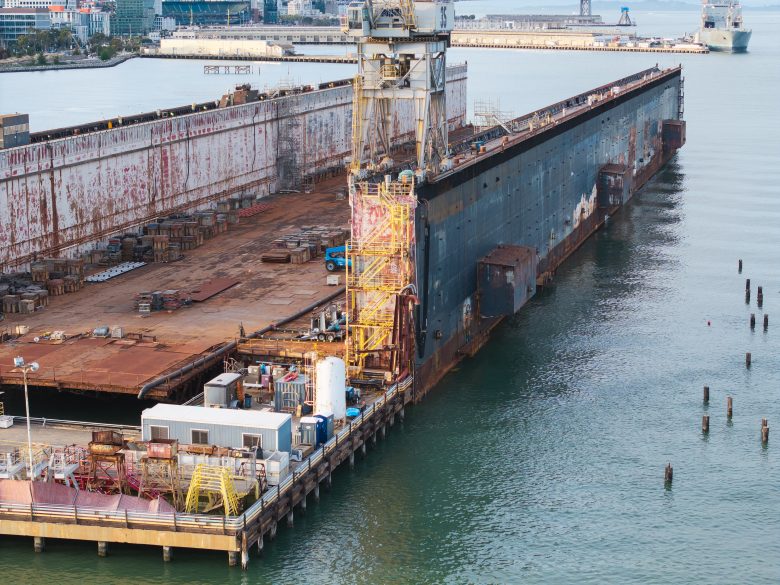
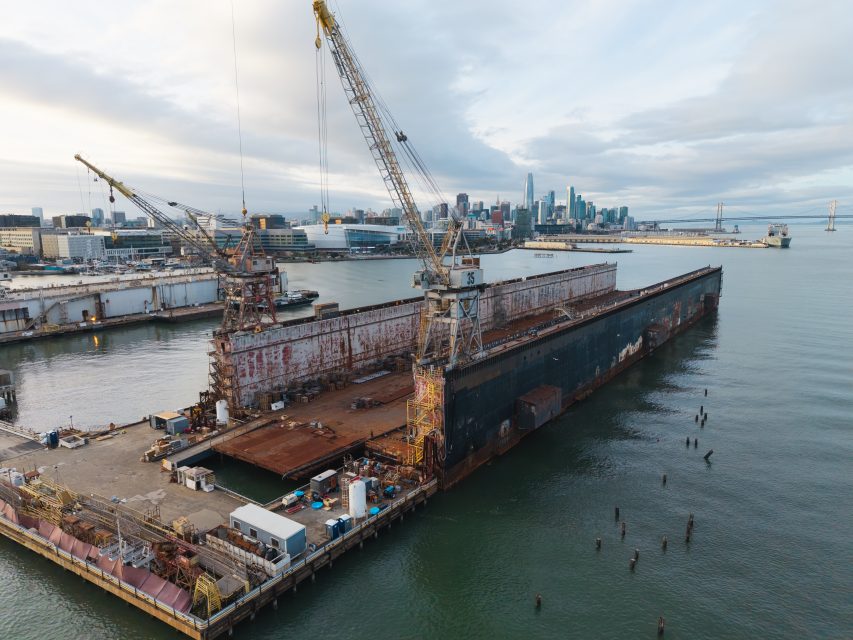
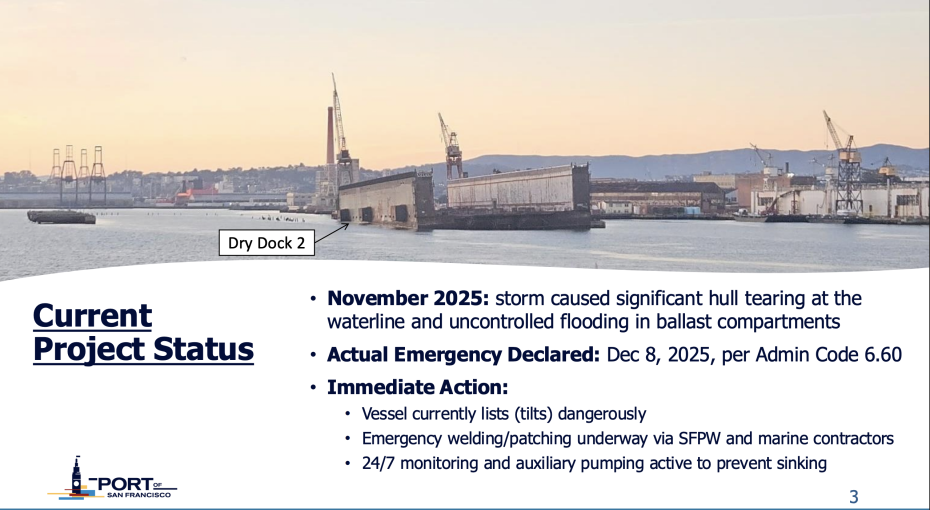
It’s also getting expensive: After the storms of November, the 900-foot Drydock No. 2 at the Port of San Francisco’s Piers 68-70 experienced “significant hull tearing at the waterline and uncontrolled flooding in ballast compartments.” This left the massive vessel dangerously listing to the side like the U.S.S. Yorktown after the Battle of Midway.
This city has had its fair share of experience with building-sized structures sinking and tilting. But it warrants mentioning that, at just 645 feet, Millennium Tower is dwarfed by Drydock No. 2. If things, quite literally, go sideways at the Port of San Francisco, it would be a catastrophe. Recovering a two-block-long structure from underwater would be costly — and the environmental consequences would be dire.

Want the latest on the Mission and San Francisco? Sign up for our free daily newsletter below.Sign up
The port declared an emergency in December. February’s ten thousand thundering typhoons have been more than a trifle anxiety-inducing.
A floating drydock is a large U-shaped vessel resembling a shoebox that is designed to be partially sunk and then raised with a ship within it. It is then drained, and repairs can be done to the ship.
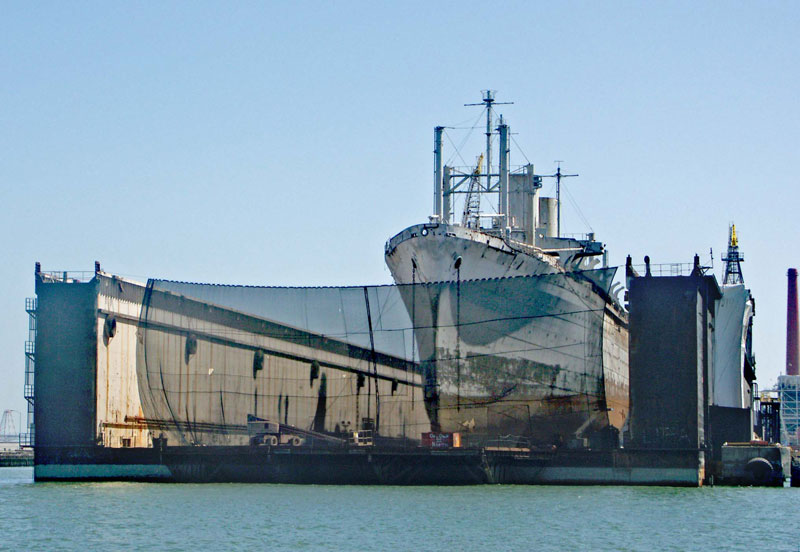
Drydock No. 2, which was built in 1970, once had the capacity to hoist a ship as large as 54,800 tons. The adjacent drydock Eureka, which was built in 1945, is 528 feet long and could lift up to 17,500 tons. As it has no bow or stern — and therefore no port nor starboard — Port of San Francisco officials simply say Drydock No. 2 is listing “to the east.”

In response, this month the port fast-tracked $18.5 million to keep the drydock above water. Contractors have been hired and there is now 24/7 video surveillance of the faltering Drydock No. 2; automated pumps kick into gear when its 40 hulking ballast tanks begin taking water.
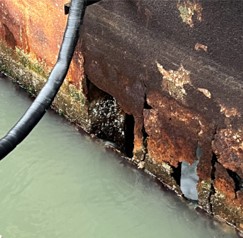
There is steel reinforcement being undertaken on metal that was once perhaps an inch thick. Mission Local is told the hull is now paper-thin in places. Photographs shared by the port reveal that, like the Dude’s car, the primary hue of the drydocks appears to be “brown rust coloration.”
Maritime staff at the port admit that the present weather is scary. They are candid that the drydocks’ alarming condition has necessitated an “all hands on deck operation.”
And that costs money: That emergency appropriation of $18.5 million from the port’s revenue is a mere down payment on an estimated $61.2 million to dispose of the aging drydocks.
Think of it as palliative care for elderly infrastructure: The steep upfront costs are merely a bridge payment to ensure the drydocks last long enough to be demolished later — in an orderly fashion rather than simply falling apart. If the drydocks were to sink, the port estimates the price tag could triple or even quadruple. It would also unleash an environmental disaster.
If the docks sink to the bottom of the bay, this will necessitate an expensive reclamation and release fuel into the water. And perhaps other toxins as well: While the port says it has found no indications of harmful material within the docks’ ballast tanks, shipyards are notoriously dirty sites. The sediment within those tanks would comprise the dregs from nearly 50 years of sucking in and pushing out the local waters.
The port is an “enterprise agency,” which generates its own revenue. So this is not city money, per se. But it’s still not fun to have to spend scores of millions of dollars to demolish assets that nobody wanted to lease or buy and have now become a liability. Yet there was little the city or its port could do to stave off this day.
This eventuality was inviolable the moment that the Hawaiian Merchant, the first containerized ship to visit San Francisco Bay, sailed beneath the Golden Gate Bridge in 1958. The monumental drydocks that helped fuel and maintain San Francisco’s status as a maritime powerhouse, now corroding in disuse and on the verge of slipping beneath the waves, serve as massive metaphors for the end of a San Francisco era.
https://videopress.com/embed/PnpiiNjB?cover=1&preloadContent=metadata&useAverageColor=1&hd=0The drydocks at Piers 68-70 today. Video by Vicent Woo.
“San Francisco has changed,” says Gavin Elster in the film “Vertigo.” “The things that spell San Francisco to me are disappearing fast.”
Of note, “Vertigo” also came out in 1958. Little did its scriptwriters know it, but the city was sitting atop the precipice of a roller coaster and getting ready for some real change. And nowhere changed more than the city’s waterfront. To start: A study from the mid-1960s estimated that close to 12 percent of all the city’s jobs — that’s around one job out of every seven or eight — “is supported by the activity directly and indirectly associated with the port.”



❮❯
Unleashing Creative Minds: SF S.T.E.A.M. Academy
At SF S.T.E.A.M. Academy, we empower young minds through immersive bilingual learning in English and Spanish. Our curriculum intertwines science, technology, engineering, arts, and math to foster innovation, curiosity, and a love for learning.Safe • Bilingual • InnovativeVisit us at our Open House!
Like crime stats in the 1970s or real-estate prices in the 1940s, this is a figure that is difficult for present-day San Franciscans to grasp.
What happened? A lot, but, in a word, containerization. It doomed this city’s port. The boats were too damn big. They required too much damn land. Heavy federal subsidies helped the Port of Oakland — which is sprawling and can accommodate giant ships — quickly catch and pass San Francisco in the 1970s.
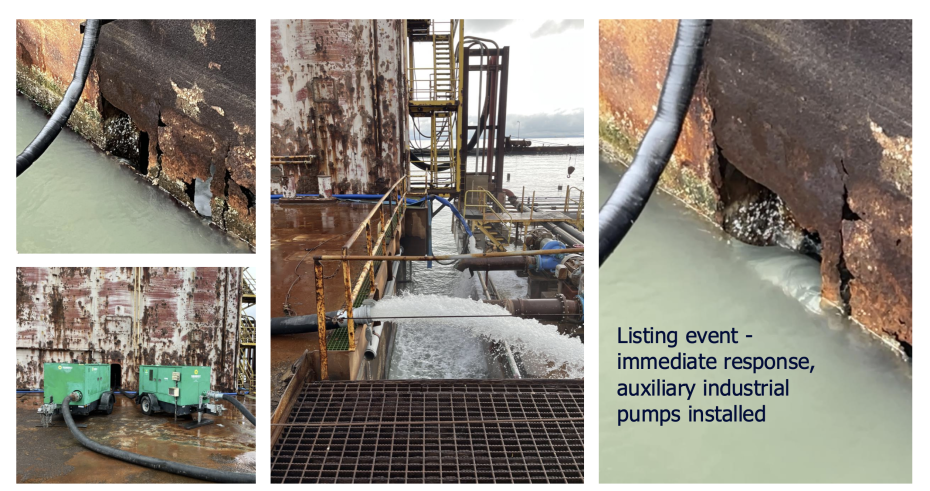
Troublesome images of the drydocks from a Port Commission presentation from this month.
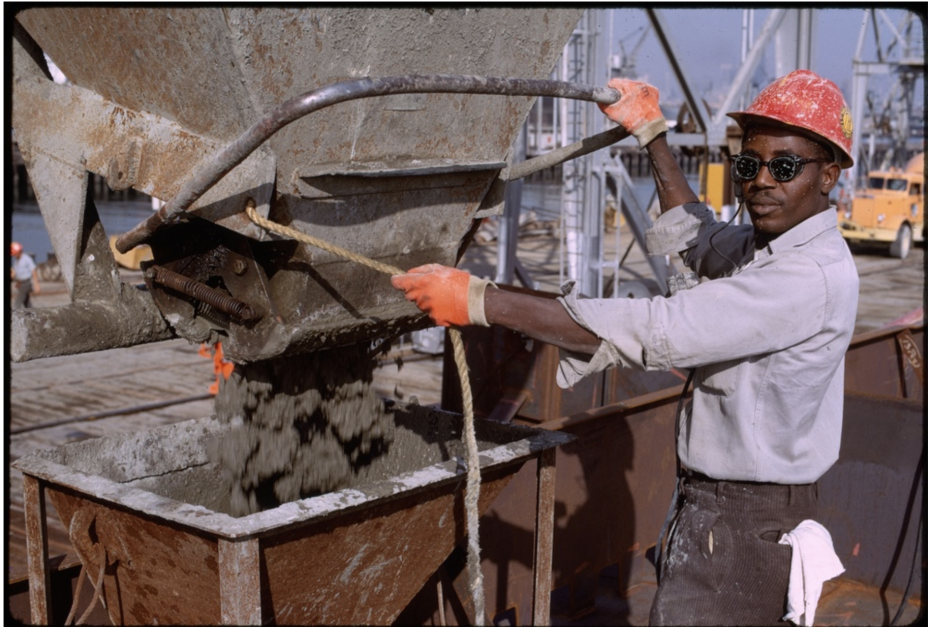
The loss of thousands of jobs on the docks, in warehouses and in transportation triggered a blue-collar diaspora from San Francisco. Black people made up 13 percent of San Franciscans in 1970; that number was 5.6 percent in 2020. The stevedores, warehousemen and drivers were replaced by white-collar workers, contributing to an explosion in the price of residential real estate. The city has replicated this cycle ever since, substituting wealthier and wealthier white-collar workers.
The Port of San Francisco is now — and long has been — a real-estate holding company. The rusting, listing drydocks jutting out of the water are holdovers from a different time.
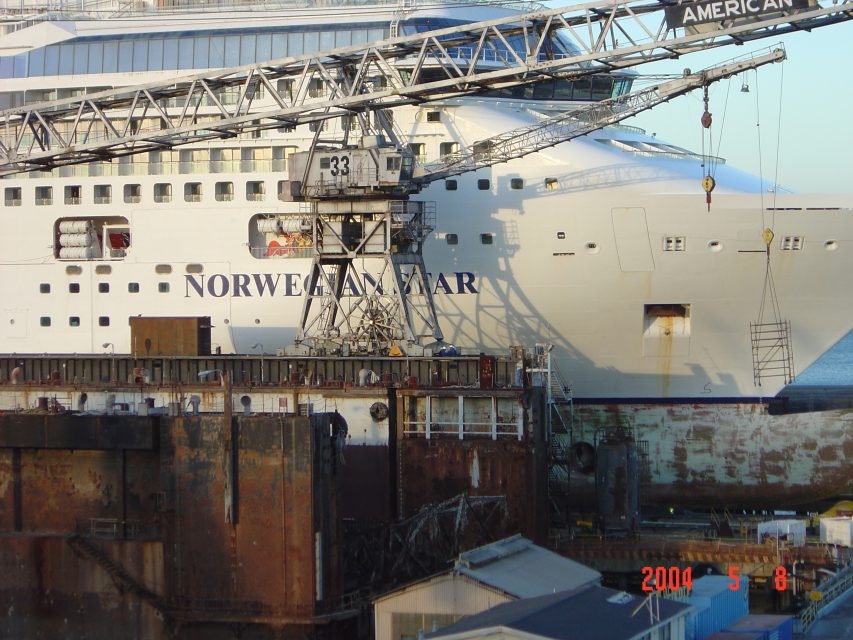
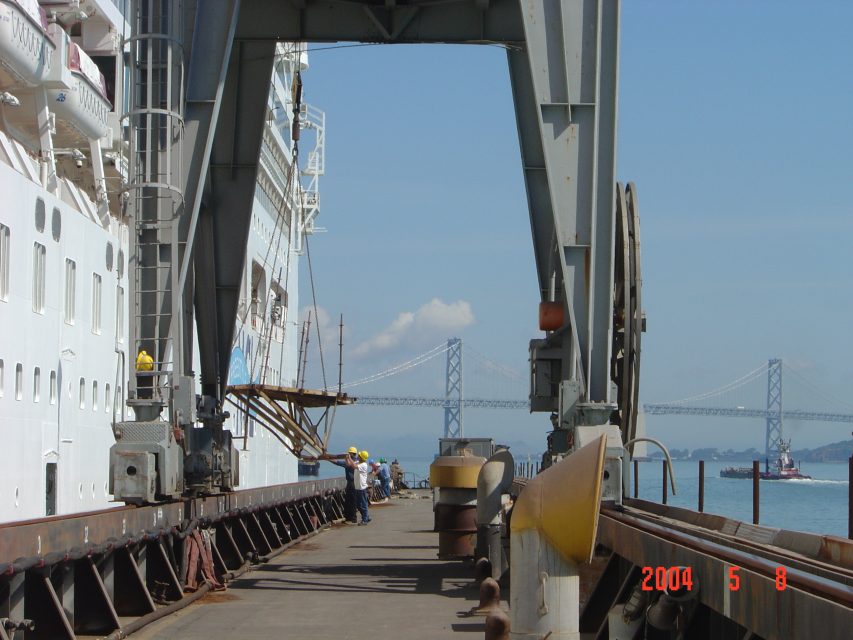
It’s amazing, in retrospect, that a working shipyard was operating at Piers 68-70 and employing hundreds of workers until a decade ago.

BAE Systems — the British aerospace, munitions, information security and Muni hybrid engine behemoth — abandoned the site in 2016, unloading it for a dollar (and a $38 million pension liability) to a smaller operator called Puglia Engineering.
Puglia sued BAE in 2017, alleging fraud — in large part based upon the ragged condition of the drydocks, which it claimed was concealed. That case dragged on for years and ultimately resulted in a settlement. Puglia declared bankruptcy and the port received a roughly $5 million settlement from BAE to maintain the shipyard, which has been deserted since 2017. As recently as 2022, port workers say that you could wander through and see jackets and helmets eerily hung up on pegs, as if it was a Friday before a Monday.
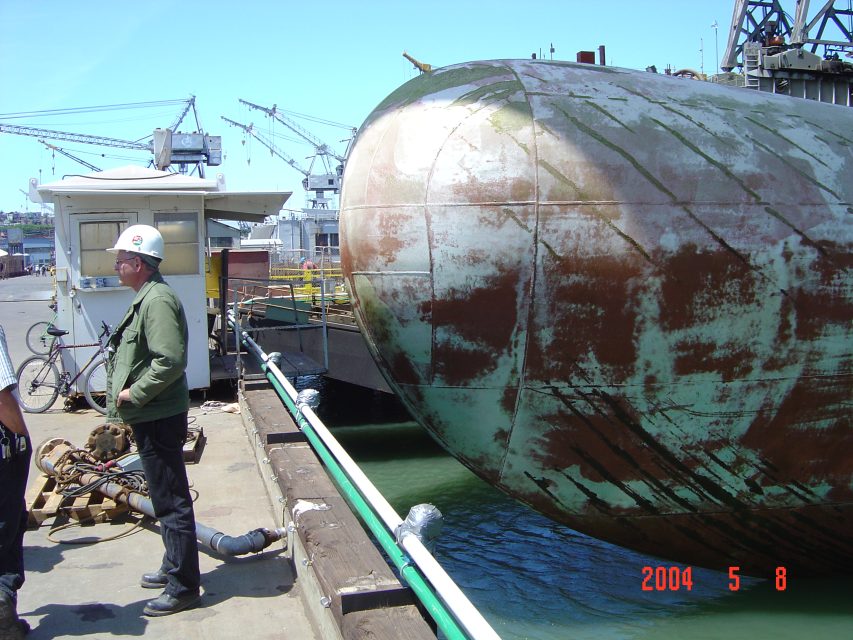
The port did not receive any takers to run the shipyard, and potential deals to sell the drydocks fell through. A Turkish outfit had thoughts of scooping them up, “but their inspectors came to assess the material condition,” says Dominic Moreno, the port’s assistant maritime director. “They deemed it non-viable.”
For the vast majority of San Franciscans, the idle drydocks are out of sight, out of mind. The last time they were in the news may have been when the 650-foot Drydock No. 1 came unmoored in a storm in 2002 and took itself on a trip to Treasure Island (it was later scrapped and replaced by Eureka). People will notice, though, if the cranes atop Drydock No. 2 collapse, which the port warns could well happen if the 900-foot vessel leans further to the side.
If you’re wondering why the drydocks can’t simply be floated to the Farallons to be scuttled amid the veritable “graveyard of ships,” including some packed with radioactive waste, Moreno notes that “we don’t sink ships in the ocean anymore.” Also: it would be a challenge to tow the drydocks that far without a significant risk of first sinking in a navigation channel. Even if we did do that anymore.
Despite their status as an environmental and financial sword of Damocles hanging over the port, Moreno describes the pending loss of the drydocks as “bittersweet.” Right up until the shipyard’s closure in 2017, the place hosted hundreds of union jobs. Moreno’s own uncle used to work around here.
But things change, and the decline and fall of the port as the economic engine of San Francisco was nothing short of transformational. It was, perhaps, the most significant factor in the metamorphosis of the city from what it was to what it is — and what it will be.
The drydocks’ journey from asset to menace is a coup de grâce for the working-class city that was already underway when the Hawaiian Merchant sailed into the Bay and “Vertigo” sailed into theaters. And it’s a continued inversion of San Francisco: The city once served the economic needs of its all-important waterfront. But, now, the waterfront’s economic role is circumscribed — and it serves the needs of its city.
Join the 3,250 readers who keep Mission Local free for all!
Because of you, Mission Local reached and surpassed our $300,000 year-end fundraising goal. All we can say is thank you.
Thank you for choosing to invest in a local newsroom rooted in San Francisco’s communities — one that listens first and reports deeply.
If you haven’t yet had a chance to give, it’s not too late to be part of this community. Your contribution today helps sustain the reporting our city relies on all year long.
We’re grateful you’re here — and we’d be honored to have you join our donors.
LATEST NEWS
They used to fight as kids. Now, they run a Bayview arts business together.
People We Meet: Anna So can’t stop, won’t stop opening new restaurants
Black Choreographers Festival: 18 creators and nine days of danc
JOE ESKENAZIMANAGING EDITOR/COLUMNIST
Joe is a columnist and the managing editor of Mission Local. He was born in San Francisco, raised in the Bay Area, and attended U.C. Berkeley. He never left.
“Your humble narrator” was a writer and columnist for SF Weekly from 2007 to 2015, and a senior editor at San Francisco Magazine from 2015 to 2017. You may also have read his work in the Guardian (U.S. and U.K.); San Francisco Public Press; San Francisco Chronicle; San Francisco Examiner; Dallas Morning News; and elsewhere.
He resides in the Excelsior with his wife and three (!) kids, 4.3 miles from his birthplace and 5,474 from hers.
The Northern California branch of the Society of Professional Journalists named Eskenazi the 2019 Journalist of the Year.More by Joe Eskenazi