


- By Patrick Hoge | Examiner staff writer
- Mar 4, 2026 (SFExaminer.com)
Two independent San Francisco advocacy organizations are separately planning to spend millions of dollars on city elections this year, largely to preserve the politically moderate majority that voters installed in 2024 on the Board of Supervisors.
Jay Cheng, the executive director of Neighbors for a Better San Francisco, said his group expects to spend $5 million to $7 million through November between races for supervisor and local ballot measures, including to oppose a union-backed proposal to raise The City’s Overpaid Executive Tax.
“There’s a lot at stake in this election, especially around keeping San Francisco’s recovery going, and a big part of that is keeping the moderate majority on the Board of Supervisors, keeping a moderate majority on the school board,” he said.
Neighbors for a Better San Francisco has been one of San Francisco’s most powerful and well-funded political organizations on the more-conservative end of San Francisco’s political spectrum since its founding six years ago. It focuses on issues that include public safety, homelessness, public education and fiscal responsibility.
Its plans also include spending $1 million to support candidates in several school board races and about $2 million on voter education, including about The City’s budget, said Cheng, who previously discussed his spending plans with Politico.
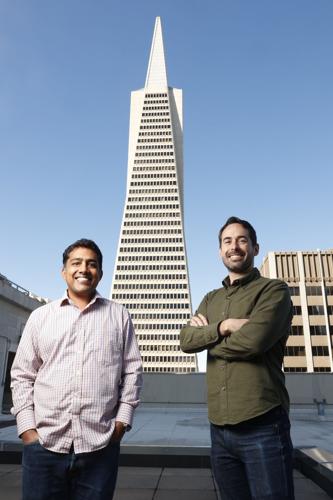
Meanwhile, GrowSF has budgeted at least $250,000 per supervisorial contest, including two races in the June primary election and as many as five in the November general election. The group’s level of involvement will depend on whether or not organizers determine the races to be competitive, said Sachin Agarwal, a GrowSF co-founder and co-director.

GrowSF is a nonprofit that advocates for building more housing, streamlining government, and maintaining clean and safe streets, among other things. It has received support from a wide variety of sources, including Garry Tan, the CEO of the famed startup accelerator Y Combinator, who is known for attacking progressive politicians on social media. Tan was previously on GrowSF’s board of directors.
GrowSF’s top focus has always been the Board of Supervisors since the organization was created five years ago. Though obscure to many, the Board of Supervisors wields enormous influence over city life with its lawmaking power, Agarwal said.
“We think that the Board Supervisors is critically important in moving San Francisco forward,” he said.
In addition to getting involved in supervisor races, Agarwal said GrowSF will also send its trademark voter guides to registered voters across The City. That will bring the group’s total budget for the June election to about $2 million and another $3 million for the November election, of which as much as $1.25 million could go to the November supervisor races, he said.
By comparison, GrowSF spent about $1.8 million on the November 2024 election, about $700,000 of which went to influence races for supervisor, Agarwal said.

“We are stepping it up this year,” he said. “We’re going to be prepared to go really big.”
A moderate majority could make it easier for Mayor Daniel Lurie to grapple with looming budget deficits, Agarwal said.
It could also be helpful for sending voters any charter-reform proposals that might be developed by a task force that Lurie and Board of Supervisors President Rafael Mandelman launched in December — possibly even for the November ballot, Agarwal said. The City Charter is effectively San Francisco’s constitution, and six supervisors’ signatures are required for the board to send a proposed amendment to voters.
GrowSF in 2024 was the leader of the successful “Dump Dean” campaign to oust former Supervisor Dean Preston, who was replaced by current District 5 Supervisor Bilal Mahmood. GrowSF spent more than $300,000 in that race, according to city records.
“We’ve taken everything that we learned from the last District 5 race with ‘Dump Dean’ — what worked well, what didn’t work well, how do we spend money effectively to get good information to voters?” Agarwal said. “We’re taking all of our learnings, and we’re going to apply them to every district this year.”
GrowSF so far has set up two independent committees — one to support District 2 Supervisor Stephen Sherrill, who was appointed by former Mayor London Breed in December 2024, and one to support District 4 Supervisor Alan Wong, who was appointed by Lurie on Dec. 1.
A campaign spokesperson for Sherrill, whose district includes the Marina and Cow Hollow neighborhoods, emphasized in a statement that independent groups make their own decisions about local races.
Wong rival Natalie Gee, who is chief of staff for Supervisor Shamann Walton, labeled GrowSF as an “outside group” out of step with residents in the Sunset district, which makes up most of District 4. GrowSF endorsed former Supervisor Joel Engardio, the lawmakere who was recalled by voters last year after he sponsored a ballot measure to close part of Great Highway to make way for Sunset Dunes park.
“District 4 voters will see through GrowSF’s big money and vote for the candidate who has consistently fought against outside wealthy interests,” Gee said.
Agarwal responded that he has lived in The City for 25 years and been a west-side resident for more than seven years.
On the initiative front, Cheng also said Neighbors for a Better San Francisco would be fighting a union-backed proposal to increase the Overpaid Executive Tax, which he said would “kill our recovery.”
Scott Mann, a spokesperson for the Stand Up for SF campaign pushing the tax, called Cheng’s warning about the local economy is “nothing more than a scare tactic intended to mislead voters.”
A bigger threat to the recovery would be cuts to the services that have stabilized The City, including health care, mental-health services, homelessness prevention and home care, he said.
On the supervisorial front, Cheng said Neighbors for a Better San Francisco would focus on District 8, which includes the Castro, Noe Valley and Cole Valley. The group will support candidate Manny Yekutiel, owner of Manny’s cafe and event space in the Mission. Yekutiel’s opponents include Gary McCoy, a campaign manager at U.S. Rep. Nancy Pelosi’s Save Our Healthcare campaign.
A Yekutiel spokesperson said his campaign would not comment and underscored that Neighbors for a Better San Francisco acts independently.
Catie Stewart, a campaign spokesperson for McCoy, suggested the group’s spending might be fruitless.
“If dumping Republican money into San Francisco politics were a guaranteed path to victory, we’d see a lot more of Neighbors’ candidates in office by now,” Stewart said.
Critics of Neighbors for a Better San Francisco have frequently pointed out that the organization’s financial backers — notably William Oberndorf — include people who have also contributed heavily to Republicans.
In District 10, meanwhile, Cheng, said his organization would back Theo Ellington against a raft of candidates, including Dion-Jay Brookter, a nonprofit executive endorsed by Walton, who is term-limited out of office.
District 10, in the southeastern part of The City, includes Potrero Hill, Bayview and Hunters Point.
Ellington was a member of the Neighbors for a Better San Francisco board from 2022 until 2025, said Noah Finneburgh, a consultant for the Ellington campaign, via email.
“Theo is a Bayview native with a deep family history in San Francisco, and that’s resonating with voters,” Finneburgh said. “It’s also reflected in who is funding this campaign — we have more than 500 grassroots donations from artists, teachers, nurses, small business owners, and community leaders.”
Vanessa Pimentel, a consultant with Brookter’s campaign, predicted that District 10 residents will not be swayed by any big spending.
“We’ve seen high-dollar interference before, and we’ve seen it fail when it collides with informed, engaged residents who care deeply about their neighborhoods,” Pimentel said. “This election isn’t for sale. It belongs to the people of San Francisco, and they won’t be fooled.”