


- Ingrid Lu | Staff
- Sep 1, 2026 (DailyCal.org)
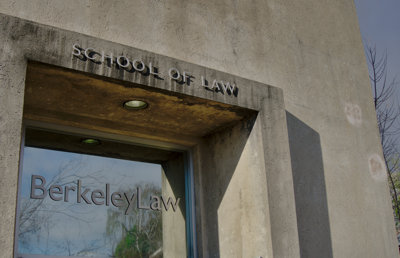
Law Students for Justice in Palestine at Berkeley Law said in an Instagram post last week that it was banned from tabling at UC Berkeley School of Law’s Student Activities Fair because of the group’s “longstanding” bylaw barring Zionist speakers.
In March, the UC Board of Regents settled a lawsuit from the Brandeis Center alleging that UC Berkeley failed to respond to antisemitic harassment and discrimination. The settlement resulted in a policy that campus law student organizations cannot have bylaws restricting event speakers.
Although LSJP is still a registered campus organization, according to campus law student and LSJP student organizer Asma Masude, its lack of registration with the law school means funding and tabling opportunities, as well as room bookings in the law building, are limited.
“LSJP was not assigned a table because only registered student organizations receive tables at the law school’s activities fair and LSJP has not yet fulfilled the requirements to be a registered student organization,” said campus spokesperson Dan Mogulof in an email.
Mogulof said LSJP’s bylaws include speaker policies that “exclude specific viewpoints,” which is prohibited by campus’s legally binding settlement with the Brandeis Center.
The lawsuit, filed in 2023, placed direct focus on LSJP’s bylaws; in the settlement, the university agreed that registered student organization constitutions at Berkeley Law could not include prohibitions on speakers.
“LSJP has a long-standing bylaw saying that we will not have any Zionist speakers at our events, just to be in line with our own beliefs and our dedication to Palestinian liberation,” Masude said. “We could not check that box honestly to confirm that we don’t have that policy.”
Masude said LSJP reached out to Berkeley Law Student Support Services and Dean Erwin Chemerinsky and was told that organizations with bylaws restricting speakers at events could not register with the law school, and therefore could not table at the law school’s Student Activities Fair. Berkeley Law administration also cited the Brandeis settlement in its restriction of organization bylaws.
LSJP tabled at the Student Activities Fair on Thursday, despite not being a registered campus law organization. Masude said the organization did not encounter any obstacles or backlash when tabling independently, and plans to “move forward with as much force as we can.”
“We don’t plan on slowing down our organizing at all, regardless of the law school’s attempts to stifle our efforts,” Masude said. “This isn’t a new thing, the law school trying to stifle Palestinian advocacy and liberation.”
Masude alleged other Berkeley Law student organizations previously included similar bylaws “in solidarity with Palestinian liberation,” but removed the bylaws under the law school’s new registration agreement.
Students for Justice in Palestine said in an email that it had not run into issues tabling this academic year. It is not affiliated with Berkeley Law.