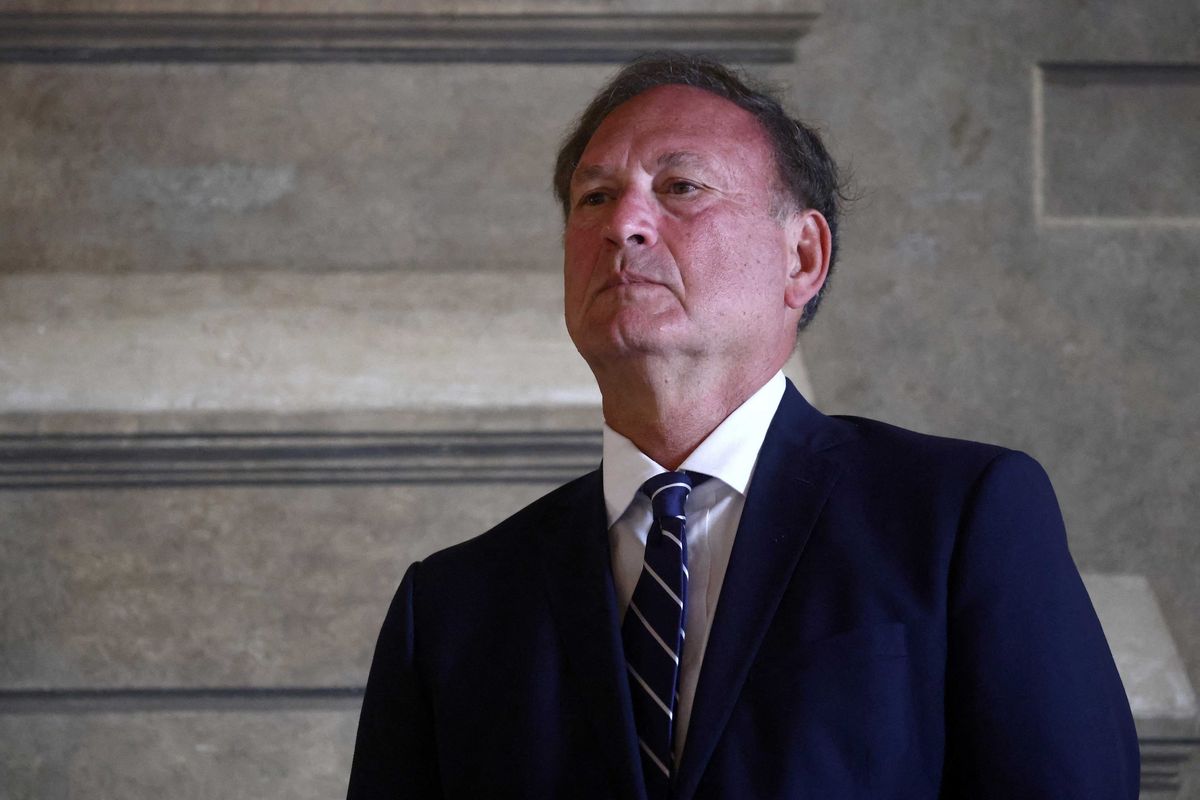
A long-delayed financial disclosure from Justice Samuel Alito shows he never sold the oil and gas holdings that watchdogs say disqualify him from a major climate case.
The report was posted on Monday by the Administrative Office of the United States Courts and covers Alito’s finances for calendar year 2025. It is the last disclosure the public will see before the Supreme Court hears the case in October. Alito signed the filing on Aug. 11, three weeks before it reached the public.
NBC News Supreme Court reporter Lawrence Hurley wrote on Bluesky that the filing confirms the justice is “still holding on to oil & gas stocks ahead of the big climate change case being heard in October.”
Two watchdog groups asked the Senate Judiciary Committee in May to investigate whether Alito violated the court’s ethics code by staying on the case, as reported by E&E News.
“Alito’s decision to reverse course and participate in granting the companies’ most recent petition — when a finding in favor of the companies could directly and indirectly benefit both himself and his billionaire friend — is an indefensible breach of ethical boundaries,” the groups wrote.
“As these parallel state climate deception cases are undeniably interlinked, and due to Justice Alito’s vested interests in the oil and gas industry … the only ethical option for Justice Alito is a blanket recusal from participating in any one of them,” the letter states.
The filing released Monday answers a question the May reporting left open. E&E News noted at the time that Alito might have sold the holdings, which would have resolved the conflict.
He did not, according to the new report.
Alito still holds shares in ConocoPhillips and Phillips 66, along with AES Corp., BHP Billiton, Black Hills Corp., OGE Energy and Woodside Energy, the financial disclosure report shows. Each of those positions appears at the same value range it carried the prior year, and none shows a sale.
The largest energy-related item is a mineral interest in Grady County, Oklahoma, which the report values at between $100,001 and $250,000.
No other justice holds oil and gas stock directly, E&E News reported. Chief Justice John Roberts owns shares in two companies, neither of them in energy.
Watchdogs are demanding Alito recuse himself from an energy case he agreed to hear in February. It began as a lawsuit by the city and county of Boulder, Colorado, seeking to make fossil fuel producers pay for the costs of climate change.
The companies, Suncor Energy and Exxon Mobil, are asking the justices to rule that federal law bars local governments from bringing those suits at all. A ruling for them would shield the industry from dozens of similar cases nationwide, according to E&E News.
Eight of the nine justices released their 2025 disclosures on June 29, Reuters reported. Alito was the only one granted a 90-day extension. That extension ran into late September, according to Reuters, which would have placed his disclosure within days of the argument.
Lisa Graves, a former senior Justice Department official who directs the watchdog group True North Research, called it “hugely problematic” that Alito holds investments that could be affected by the case, E&E News reported.
“Judges should not be ruling on cases where their ruling could benefit themselves financially,” Graves said. “That’s just a core principle of judicial ethics.”
In May, a court spokeswoman told NBC News that the justice is in the clear because he owns no stock in the two companies before the court.
“Justice Alito does not have a financial interest in any party” involved in the case, the spokeswoman said, adding that court lawyers advised him “his recusal is not required.”
The spokeswoman said Alito had been “inadvertently recused” from an earlier Colorado petition because the court considered it alongside other cases in which he held stock in the parties, NBC News reported. But Hannah Story Brown, deputy research director at the Revolving Door Project, rejected that account.
“The oil company petitioners in these cases have been explicit in court filings that they view the cases as linked; there is no reason for Justice Alito to view them otherwise,” she said.
The companies that Alito owns stock in made that argument themselves in 2022, telling the justices the Colorado suit was “uniquely positioned” and “less likely than those cases to present recusal issues,” E&E News reported.
The letter also raised Alito’s ties to Republican donor Paul Singer, who runs the hedge fund Elliott Investment Management.
Elliott owns more than 52 million shares of Suncor, worth more than $2.3 billion, the outlet reported. Alito acknowledged after a ProPublica report that he took a private jet to Alaska for a 2008 fishing trip paid for by Singer and left it off his disclosure form, E&E News noted.
The court adopted its first formal ethics code in 2023, after reports of undisclosed luxury travel by justices, a code that lets each justice decide his or her own recusals.
Graves told E&E News that the code is “toothless and basically meaningless since it’s not enforceable.”
Sen. Dick Durbin (D-IL), the Senate Judiciary Committee’s ranking member, said in a statement to E&E News that the letter “highlights the need for an enforceable code of conduct to ensure justices do the right thing when it comes to recusals and other ethics issues.”
Senate Judiciary Committee Chairman Chuck Grassley (R-IA) did not return a request for comment to the publication.
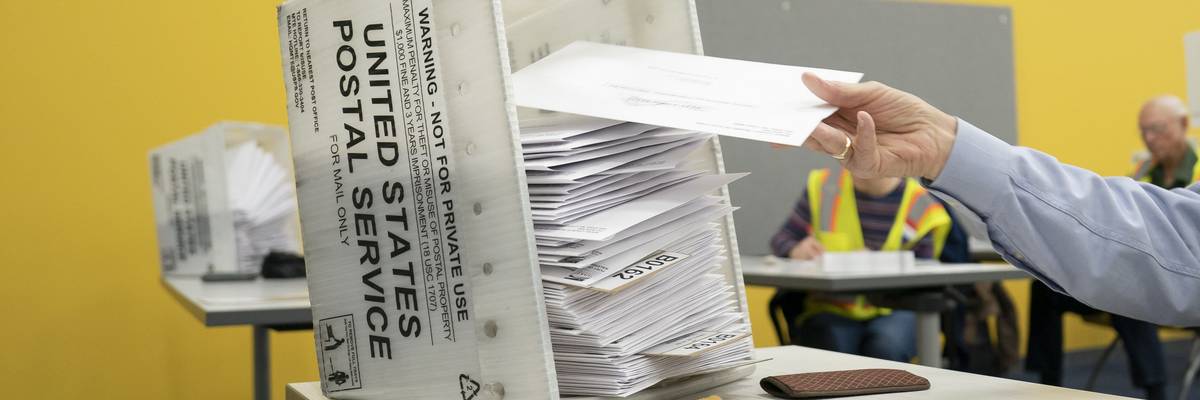
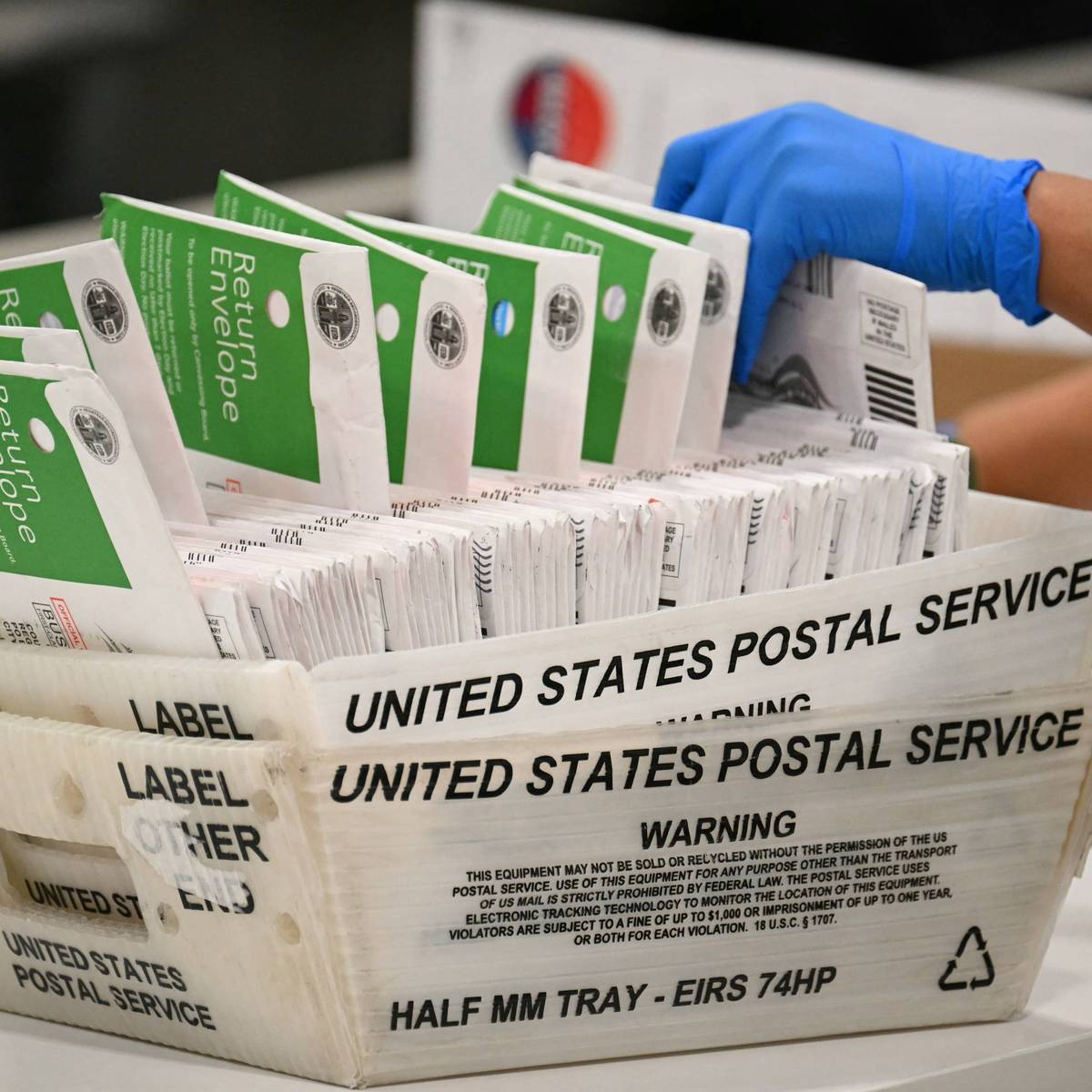
Absentee ballots are prepared to be mailed at the Wake County Board of Elections on September 17, 2024 in Raleigh, North Carolina.
(Photo by Allison Joyce/Getty Images)
An anonymous federal official warned of a “high likelihood that the new ballot mail verification processes will result in major disruptions in mail ballots ever getting delivered to voters.”
An anonymous federal official warned in a whistleblower disclosure submitted to members of the US Congress that the Postal Service’s haphazard implementation of President Donald Trump’s executive order on mail-in voting could “derail the midterm elections” by preventing potentially millions of American voters from receiving ballots.
The disclosure was released in full on Tuesday by Sen. Richard Blumenthal (D-Conn.), who included the document in a letter to Postmaster General David Steiner—Trump’s pick to lead USPS. Blumenthal said the whistleblower’s account provides “disturbing details about USPS’ seemingly illegal plot to interfere in November’s midterms.”
The new disclosure raises “significant concerns” about the Postal Service’s “secretive, rushed, chaotic, and fundamentally flawed process” for establishing “an entirely new and untested set of IT systems” in compliance with Trump’s March executive order, which is at the center of high-stakes legal fights just weeks before the November midterms.
Trump’s USPS directives have been blocked in federal court, but the administration is trying to get them reinstated ahead of the midterm contests—and the whistleblower complaint suggests the administration may be violating court orders by continuing to work on the new systems. Mail-in voting for the midterms is officially set to begin this week.
Described in the disclosure as the “Portal,” the new Postal Service IT systems “will govern the delivery of ballots to voters as soon as the 2026 mid-term federal elections and beyond.” The whistleblower raises “grave concerns” that the Trump administration has “hidden the high likelihood that the new ballot mail verification processes will result in major disruptions in mail ballots ever getting delivered to voters.”
“As presently designed, if even one bar code on one single ballot in a bulk-mailing of 10,000 ballots fails to properly scan during the verification process, the entire batch is rejected and sent back to the state—effectively stopping the ballots from being mailed to voters,” the disclosure states. “The whistleblower is particularly concerned that the Portal (where the bar codes are stored) will almost certainly have significant operating problems when released to the public, due to the rushed IT development; this will contribute to failures in the verification process.”
The whistleblower filing notes warnings that the Portal system could “completely crash” during rollout and quoted descriptions from IT workers at the Postal Service who described the entire process as “a shit show.”
Libby Liu, the CEO of Whistleblower Aid—a nonprofit representing the anonymous federal official—said in a statement that “the whistleblower’s service to our nation is warning the public that their ability to vote is in serious jeopardy.”
“We are crossing the Rubicon of American elections,” said Liu. “This dangerously defective mail-in ballot process could disenfranchise millions of voters, ensnaring ballots in red tape under the guise of solving a non-existent problem. People in states that rely heavily on vote-by-mail will have a more difficult time making their voices heard in our challenged democracy this November.”
The USPS whistleblower also provided their account to the House Oversight Committee. Rep. Robert Garcia (D-Calif.), the top Democrat on the committee, said in a statement Tuesday morning that the official’s account makes clear that “Trump’s attack on vote-by-mail for the 2026 election is more serious than previously understood.”
“This new secret tracking system at the US Postal Service is faulty, untested, and threatens to totally disrupt ballot delivery for millions of American citizens,” said Garcia. “We are fighting in court to protect the right to vote by mail for all and will continue to investigate. This unconstitutional and dangerous power grab must be permanently and immediately blocked.”
Our work is licensed under Creative Commons (CC BY-NC-ND 3.0). Feel free to republish and share widely.
A lounge inside SFO’s International Terminal is being used to detain immigrants, and 25 people were held there more than three days through July with limited access to medical care, legal representation, or beds.
San Francisco International Airport has had the second-highest number of airport detentions lasting more than three days this year, behind Miami, resulting in an ICE transfer, as the Chronicle reports. Twenty-five people were reportedly held at SFO for more than 72 hours through July of this year, with 19 of them holding green cards. Eighteen of those 25 people were eventually transferred to ICE detention.
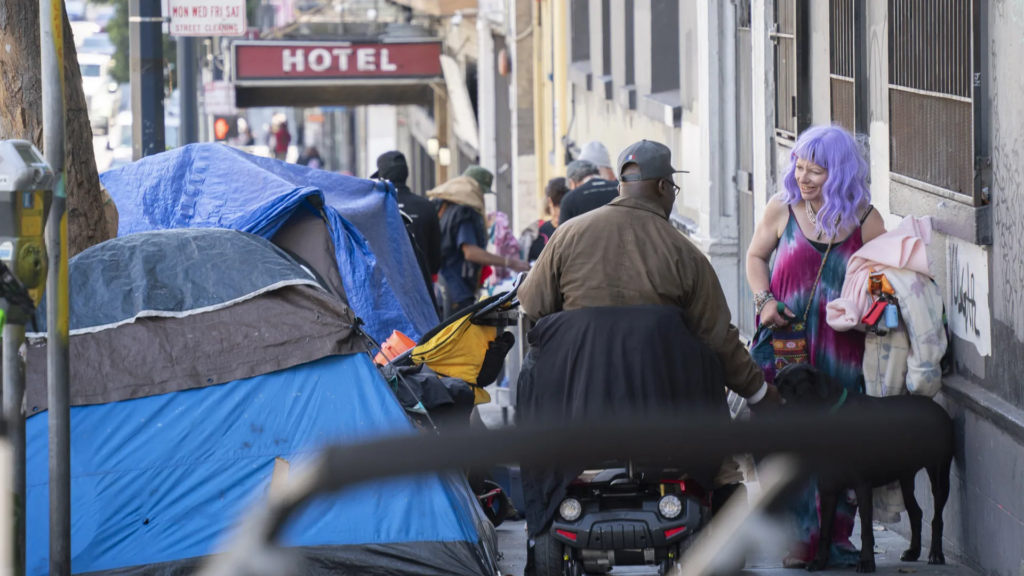
Instead of being released from the airport with an appointment to resolve questions about their immigration status, as was more common before the Trump administration’s current deportation crackdown, some have reportedly spent days inside the SFO holding area before being transferred to ICE custody.
According to the Chronicle, some were not even originally headed to San Francisco. The US Customs and Border Patrol (CBP) reportedly transported immigrants to SFO after they landed at other California airports, including Fresno Yosemite International Airport more than 180 miles away. Attorneys representing several of those detained said their clients were separated from their luggage and phones and had little or no contact with family while officers waited for certified court records or otherwise reviewed their admissibility.
CBP’s national standards say detainees generally should not be held for longer than 72 hours and that agencies should make every effort to keep detention as short as possible. Federal data shows the agency has nevertheless held more than 400 people at international airports nationwide for longer than 72 hours since January, including 146 lawful permanent residents.
The change has alarmed immigration attorneys who say green-card holders previously were often released from the airport under a process known as deferred inspection, per the Chronicle. That reportedly gave them a few weeks to obtain court records and meet with immigration officers, often with an attorney present. Attorneys began noticing last year that those appointments were increasingly being replaced by direct transfers into ICE detention.
The room where immigrants are being held at SFO is reportedly in the newly renovated Dianne Feinstein International Terminal. Marissa Hatton, a civil rights attorney who represents green-card holders detained at the airport, described the holding area as an inhumane makeshift jail.
“People are not free to leave, which is a key marker of something being used as a detention facility,” she said, speaking to the Chronicle.
Officials said the federal government controls the CBP facility and SFO has no authority over immigration decisions or the detention of travelers.
According to the Chronicle, the conditions inside the holding area have also raised concerns. Attorneys said some detainees spent days sleeping upright in chairs, under lights that remained on around the clock, while others had no contact with family. Food was reportedly provided from airport concession stands, and some detainees were allowed supervised five-minute phone calls.
Medical access has been another concern, particularly for older detainees. The Chronicle reports that the median age of green-card holders detained for more than three days in San Francisco was 57, compared with 44 nationwide, and attorneys said some people in their 60s were not medically screened when they arrived.
Rep. Kevin Mullin, D-San Mateo, whose district includes SFO, sought to see the facility after learning about the prolonged detentions from the Chronicle. CBP initially turned him away when he attempted to visit on August 20, despite federal law allowing members of Congress to inspect detention facilities without advance notice. He tells the paper he was admitted six days later and saw five people inside.
Mullin said federal officers acknowledged that the practice of holding people rather than releasing them for deferred-inspection appointments began early last year. He also said officers told him weekend court closures can extend some detentions to five or six days.
“They were not hiding from the fact this is a definitive policy shift from the Trump administration,” Mullin told the Chronicle. “They would not suggest there was a quota being handed out, but there is clearly direction being given from up top.”
The prolonged airport holds come as immigration enforcement has expanded nationwide. ICE recorded roughly 4,300 arrests in California and about 50,000 nationally in July, as the Trump administration pursues a goal of deporting one million people annually.
SFist’s associate editor, loves learning about the people and places in the Bay Area. Enjoys connecting dots and spotlighting overlooked subjects. Contact: leanne.sfist@gmail.com
In March, the UC Board of Regents settled a lawsuit from the Brandeis Center alleging that UC Berkeley failed to respond to antisemitic harassment and discrimination. The settlement resulted in a policy that campus law student organizations cannot have bylaws restricting event speakers. Alison Yang | Senior Staff
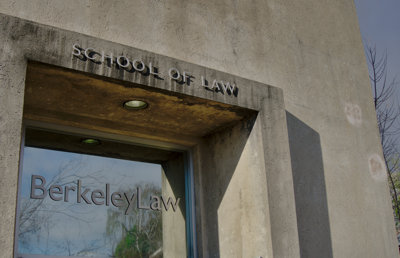
Law Students for Justice in Palestine at Berkeley Law said in an Instagram post last week that it was banned from tabling at UC Berkeley School of Law’s Student Activities Fair because of the group’s “longstanding” bylaw barring Zionist speakers.
In March, the UC Board of Regents settled a lawsuit from the Brandeis Center alleging that UC Berkeley failed to respond to antisemitic harassment and discrimination. The settlement resulted in a policy that campus law student organizations cannot have bylaws restricting event speakers.
Although LSJP is still a registered campus organization, according to campus law student and LSJP student organizer Asma Masude, its lack of registration with the law school means funding and tabling opportunities, as well as room bookings in the law building, are limited.
“LSJP was not assigned a table because only registered student organizations receive tables at the law school’s activities fair and LSJP has not yet fulfilled the requirements to be a registered student organization,” said campus spokesperson Dan Mogulof in an email.
Mogulof said LSJP’s bylaws include speaker policies that “exclude specific viewpoints,” which is prohibited by campus’s legally binding settlement with the Brandeis Center.
The lawsuit, filed in 2023, placed direct focus on LSJP’s bylaws; in the settlement, the university agreed that registered student organization constitutions at Berkeley Law could not include prohibitions on speakers.
“LSJP has a long-standing bylaw saying that we will not have any Zionist speakers at our events, just to be in line with our own beliefs and our dedication to Palestinian liberation,” Masude said. “We could not check that box honestly to confirm that we don’t have that policy.”
Masude said LSJP reached out to Berkeley Law Student Support Services and Dean Erwin Chemerinsky and was told that organizations with bylaws restricting speakers at events could not register with the law school, and therefore could not table at the law school’s Student Activities Fair. Berkeley Law administration also cited the Brandeis settlement in its restriction of organization bylaws.
LSJP tabled at the Student Activities Fair on Thursday, despite not being a registered campus law organization. Masude said the organization did not encounter any obstacles or backlash when tabling independently, and plans to “move forward with as much force as we can.”
“We don’t plan on slowing down our organizing at all, regardless of the law school’s attempts to stifle our efforts,” Masude said. “This isn’t a new thing, the law school trying to stifle Palestinian advocacy and liberation.”
Masude alleged other Berkeley Law student organizations previously included similar bylaws “in solidarity with Palestinian liberation,” but removed the bylaws under the law school’s new registration agreement.
Students for Justice in Palestine said in an email that it had not run into issues tabling this academic year. It is not affiliated with Berkeley Law.
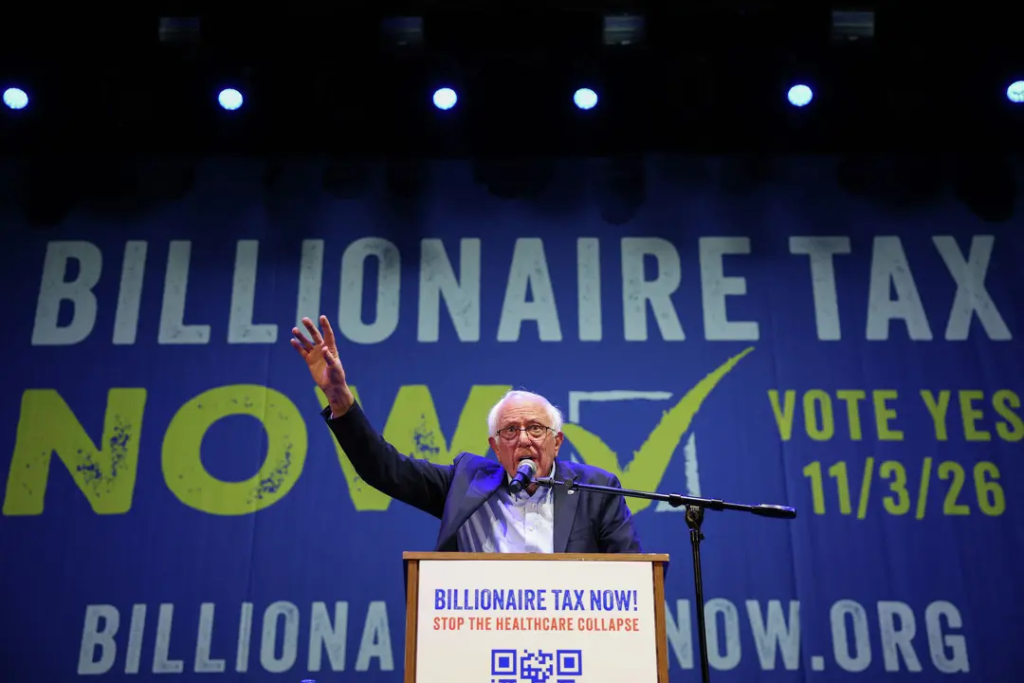
Sen. Bernie Sanders, I-Vt., speaks during the campaign kickoff for the California Billionaire Tax Act at the Wiltern in Los Angeles, Feb. 18, 2026. Patrick T. Fallon/AFP via Getty Images
By Anabel Sosa, Senior California politics reporter Aug 31, 2026 (SFGate.com)
California’s billionaire tax proposal is splintering the state’s Democratic Party, with party leaders opposing the wealth tax even as voters, and especially young voters, appear eager to increase taxes on the rich.
The latest division appeared last week when the San Francisco Democratic Party voted to oppose Proposition 40, the controversial wealth tax on the November ballot. The decision goes against the state party, which endorsed the plan earlier in the month.
Michael Nguyen, a candidate for the SF Board of Supervisors, said the local party’s rejection of the state party’s position on the tax was unprecedented, and he called out local Democrats for supporting the ultrawealthy.
“My colleagues chose billionaires over patients, caregivers, seniors, children, and working families,” he said in an email to SFGATE.
Polling shows that Democrats overwhelmingly support the measure, which would impose a one-time 5% wealth tax on any resident who was worth more than $1 billion and be implemented next year.
A May poll from Public Policy Institute of California found that 54% of likely voters, and 76% of Democrats, were in favor of a billionaire tax. Renters and young people were also highly supportive of the measure, with 71% and 67%, respectively, saying they plan to vote for it.
A more recent August poll found that 70% of Democrats support Prop. 40, and 75% of people ages 18 to 29 support the proposed tax. However, the poll found only 48% of likely voters supported the measure.
Despite their voters supporting the tax, the majority of party leaders have landed against the ballot proposal. Newsom has urged voters to reject the tax, as has gubernatorial candidate Xavier Becerra. Both have said the law will backfire by driving the ultrawealthy out of the state. Rep. Ro Khanna, whose district includes Silicon Valley, is one of the only high-profile advocates for the billionaire tax. He has also proposed a national tax on the ultrawealthy.
Most of San Francisco’s top politicians declined to even take a position on the tax at last week’s party meeting. According to endorsement vote tallies, state Sen. Scott Wiener abstained from voting on the endorsement and Supervisor Connie Chan was absent. Both are looking ahead to a competitive November congressional run to replace former House Speaker Nancy Pelosi.
Ian Krager, a spokesperson for Chan, told SFGATE that Chan had a scheduling conflict with local faith leaders and a fundraiser. Politico Playbook reported earlier that Chan had a fundraiser hosted by Pelosi the same evening at the luxury SF restaurant Julius’ Castle, where tickets ranged from $1,000 to $3,500. Krager said that despite her absence, Chan is in support of it.
Wiener, who voted on other issues during last week’s meeting, did not return SFGATE’s request for comment on his abstention. Wiener previously said he opposed the billionaire tax measure.
Pelosi, who was not in attendance but had a representative there, cast a “no endorsement” vote. Assemblymember Matt Haney, who is running for Wiener’s seat in the state Senate, and U.S. Rep. Kevin Mullin were absent and did not vote. Lt. Gov. Eleni Kounalakis and state Treasurer Fiona Ma voted “no.”
Meanwhile, Jane Kim, a Bernie Sanders-endorsed progressive candidate for California insurance commissioner, and Gordon Mar, a former member of the Board of Supervisors, supported Proposition 40.
The measure, which is sponsored by the Service Employees International Union-United Healthcare Workers West, one of the country’s largest healthcare unions, is aimed at raising revenue to offset federal cuts to Medi-Cal health benefits and to education. The California Budget & Policy Center, a left-leaning nonprofit, has said there’s a “high degree of uncertainty” over how much money it will raise, but it estimated it would be in the tens of billions.
In early August, the California Democratic Party endorsed the measure in a narrow vote. CalMatters reported that Democratic National Committee member David Atkins said voting against it would look bad to voters “who already believe that we are in the pockets of corporations and billionaires.”
San Francisco is a global capital for the ultrawealthy, with 99 of the world’s billionaires living in the city, according to Altrata, a data agency that tracks wealthy people. In addition, more than 60% of the city’s residents are renters, according to recent census data, and about 34% of city residents are under 30 years old
The divisive measure has even split billionaires. Nvidia CEO Jensen Huang has dismissed the idea of the tax being damaging to him, even though it could cost him $8 billion. “In a way, that’s our way of giving back,” Huang said in May. But Google co-founder Sergey Brin has framed the prospect of a billionaire tax as an existential threat. He moved last year to the Nevada side of Lake Tahoe, apparently to avoid the tax, and has donated $82 million to Building a Better California, a political action committee funded by tech and finance executives in an effort to squash the tax.
Peter Gallotta, a committee member of the San Francisco chapter, who was one of four to vote in favor of Prop. 40, said the party’s “no” vote would send signals to already disillusioned constituents. He said at the meeting that he believed he was one of the only Democrats in the city who is willing to put a flag in the sand and support taxing the rich, and that any opposition “is nothing more than a gift to the billionaires who are fighting it.”
Anabel Sosa is the senior California politics reporter at SFGATE. She previously covered the statehouse and elections for the Los Angeles Times. She has a masters degree in investigative journalism from UC Berkeley. You can reach her at anabel.sosa@sfgate.com.
The climate crisis won’t be solved with lifestyle choices but through political pressure and bold collective action.
Thousands of protesters convene at the “Rise for Climate, Jobs, and Justice” march on September 8, 2018, in San Francisco, California. Source: Flickr
By: Leah C. Stokes
August 31, 2026 (thereader.mitpress.mit.edu)
The first time my newborn’s eyes saw the sky, it was a dull gray. The first time her lungs breathed outdoor air, it was filled with smoke. On the morning she came home from the hospital, a wildfire burned just miles up the coast from Santa Barbara.
Leah C. Stokes is the author of “The Carbon Wave,” from which this article is adapted.
It was October 14, 2021, the day before her due date and 75 long nights after her birth. She’d spent that time inside a NICU incubator. But that evening, my baby slept in her bassinet for the first time, reunited with her twin sister who’d come home a few weeks earlier. The next morning, our family woke up under one roof. I’d anticipated this day for the past nine months. To mark the occasion, we were going to sing, eat chocolate cake, and celebrate.
The twins were not all that I’d been growing over that long year. I was having a strange, high-risk pregnancy, gestating policy ideas and babies. During this time, I was working with a team of fellow climate advocates on an ambitious plan to rapidly expand clean electricity and slash fossil fuel use. The idea began as a line in Jay Inslee’s 2020 presidential campaign platform pledging 100-percent carbon-free electricity by 2035. It grew into a policy paper, spawned a network of advocates, and eventually became a bill introduced in Congress. Along the way, we’d even managed to get President Joe Biden to commit to our plan. Now it was part of a major climate package, the biggest in history, slowly winding its way through Congress.
But both the policy and pregnancy proved precarious. There were weeks when my future children looked like they might die, while the policy seemed destined to pass. And other weeks, I was sure the babies would live, while the policy would crumble. I desperately wanted everything to work out, but often that felt impossible.
That jarring feeling hit me again on October 15, 2021, my due date. Just as we were about to sit down for our first dinner under the same roof, I checked my email. When I saw a message from Coral Davenport, my heart sank. As one of the longest-serving climate journalists at The New York Times, Coral was often the first to get the scoop. She wanted to talk as soon as possible. I immediately knew why.
Ten days earlier, as my baby was growing healthy enough to finally come home, I began to hear that the clean energy policy I’d poured so much into was dying. Rumors of its demise grew daily. On one of our last nights at the hospital, my friend Sonia Aggarwal, who worked at the White House, called. It was dinner time, and I needed to drive to the hospital before visiting hours ended, but I also knew I had to pick up the phone.
As one of my closest friends and allies in this work, Sonia said she wanted to be the one to tell me that the policy’s prognosis was not good. She would keep pushing, and so should I, but the case increasingly seemed terminal. Senator Joe Manchin from West Virginia had hardened against the idea. He held the pivotal 50th vote in the Senate and could veto anything he opposed. A man who’d made a fortune in coal could not support a rapid transition away from dirty fossil fuels. That night, surrounded by the incessant beeping and alarms of the NICU, I held my tiny daughter and wept.
One week later, with both of my children now home, I picked up the phone and Coral’s voice came over the line: “I’ve got the story. I know the policy is dead.” She wanted a quote, to explain why this mattered in simple terms, but I couldn’t find the words. “Can I call you back in five minutes?” was all I could manage.
The larger climate package was still on the table, but the clean electricity plan was on the chopping block. Without it, I feared we wouldn’t be able to cut pollution fast enough to hit Biden’s 80 percent clean energy target. Its loss would blow a giant hole through the bill. My first instinct was despair — but despair is contagious. Plus, there were many other policies left in the package, policies worth saving.
With just a small window of time, I reached out to three colleagues I’d worked with over the past nine months. Each one held a different view, leaving me feeling like I was running through the stages of grief in rapid succession. One person was stuck in denial: “It’s not dead yet. Do not confirm it. Keep pushing.” Another wanted to bargain: “Maybe we can still fix this. There must be something else we can do.” The third counseled acceptance: “It’s gone. We need to move on and focus on everything we can still save.”
With these conflicting voices in my head, I tried to compose a brief comment. Coral had the story right; she’d heard it from multiple sources. There was no point in denying or trying to change the facts. I also knew the loss was too big to accept quietly. Instead, I would try to communicate the gravity of the situation while leaving space for hope. I wrote down, word for word, what I intended to say and practiced it aloud to my husband, who was sitting on our bed watching.
All I felt was the overwhelming feeling that I had failed the world, and perhaps most acutely, failed my children.
When I called Coral back, I did my best to stick to my lines. But I found myself saying more than I meant to. Emotion came spilling out of me. My voice trailed off, “It’s pretty sad… it’s so sad.”
My husband, noticing I’d gone off script, signaled that I needed to stop talking. When I hung up, I reassured him, “Oh, the part about me being sad? Don’t worry, she won’t use that.”
That night, we still sat down for dinner. We still sang. We still ate cake. I did my best to hold the grief and the joy simultaneously. I’d found myself in the middle of my life, in the middle of a policy fight, in the middle of the climate crisis. In my brief 35 years, polluters had pumped out more than half of all carbon emissions in human history. Even on that happy day, the crisis was still there, casting a shadow. It had already made the air too smoke-filled to take my newborns outside.
The next morning, I walked to the corner store to pick up a copy of The New York Times and found the article on the front page above the fold: “Crucial element of climate plan likely to be cut: Manchin blocks effort.” It opened with a sober reading of the facts. “The most powerful part of President Biden’s climate agenda — a program to rapidly replace the nation’s coal- and gas-fired power plants with wind, solar and nuclear energy — will likely be dropped from the massive budget bill pending in Congress, according to congressional staffers and lobbyists familiar with the matter.”
Manchin’s staff all but confirmed it. The White House wouldn’t comment. And then, halfway down the page, were my words: “This is absolutely the most important climate policy in the package. We fundamentally need it to meet our climate goals. That’s just the reality. And now we can’t. So this is pretty sad.”
They say you should choose your words carefully. That you shouldn’t say something you wouldn’t want to read on the cover of the newspaper. Because words can have consequences you can’t predict. In the coming days, young people would begin a hunger strike outside the White House, staffers would find new ways to cut pollution, and pressure would grow on Congress to act. But that was all in the future. That Saturday, all I felt was the overwhelming feeling that I had failed — failed the world, and perhaps most acutely, failed my children.
Ifirst heard about climate change two decades earlier, in 2001. At the time, I was in high school, where my geography teacher — a brilliant British man with thick white hair — would draw fluffy clouds on the chalkboard to show how mountains create rain shadows and deserts. He was lighthearted and kind, and encouraged students to speak up. Plus, he had a funny ritual of closing each lecture by saying: “From the bottom of my heart, and the depths of my conviction: get lost.” I took every class he taught.
But one morning, he brought up global warming, saying it was an unproven theory. Just because temperatures were rising alongside carbon dioxide, he posited, did not mean humans were to blame. Correlation was not causation, after all. Despite my admiration for him, this lesson struck me as misguided. I don’t know why at the time, but I knew he was wrong.
During my four years at the University of Toronto, I became immersed in climate change through coursework and extracurriculars. One evening in the winter of 2007, a few months before graduation, I walked towards the University’s Convocation Hall.
Until we get rid of fossil-fuel infrastructure in every corner of our society, individual behavioral changes are mere nibbles at the edges of the problem.
It was here, surrounded by fellow climate activists, that I watched Al Gore give his famous slideshow. In Toronto, he was like a rockstar — when ticket sales for the event went live, the website crashed. After the talk ended, my friends and I were invited to attend a reception. I even got to shake Al Gore’s hand.
Gore’s documentary, “An Inconvenient Truth,” had been released nine months earlier, creating widespread public awareness of climate change for the first time. In it, he presents the same slideshow I saw live. Just four days after this talk, it would win best documentary at the Oscars.
When I think back on that film two decades later, strangely, the thing I remember most vividly is the credits. After all the charts and facts came a black screen and a series of messages appeared. “The climate crisis can be solved. You can reduce your carbon emissions. In fact, you can even reduce your carbon emissions to zero.”
These words appeared before me, like a sacred text. And then the answer came: “Buy efficient appliances and light bulbs…Recycle.”
The idea that individuals could solve climate change on their own was ubiquitous at the time. It was 2007, and “carbon footprints” were all the rage. The claim was that we were each responsible for producing a certain amount of emissions, and we each needed to work relentlessly to reduce them. It felt like everyone I knew was calculating how much pollution their “lifestyle” created.
As a psychology major, I was susceptible to this argument. In college, I ran campaigns to get students to change their behavior and save energy. For my first job after graduation, I conducted carbon audits for a nonprofit. Once I figured out exactly how big the problem was, the proposed solution was to buy carbon offsets, which funded things like reforestation and carbon capture projects. What else could we do? No one seemed to know. It was counting for counting’s sake.
During the same period, I joined 50 million people across the globe and sat in the dark for “Earth Hour,” a global campaign aimed at demonstrating the world’s commitment to climate action. In Toronto, the iconic CN Tower switched off its lights, alongside hundreds of other buildings, instantly dropping energy use by 9 percent. But as that dark hour passed, I began to wonder: How would turning off the lights solve the climate crisis?
When I think back now on the closing credits of “An Inconvenient Truth,” I can see they simply weren’t true. Until we get rid of fossil-fuel infrastructure in every corner of our society, individual behavioral changes are mere nibbles at the edges of the problem.
Of course, this was not Al Gore’s fault — as usual, fossil fuel executives were to blame. In 2004, the fossil fuel company BP put a carbon footprint calculator on its website, encouraging people to estimate how much their behaviors, such as food choices and commutes, affected the planet. For the next three years, they spent upwards of $100 million a year promoting the idea. The phrase “carbon footprint” was unfamiliar at first, but by the time “An Inconvenient Truth” hit theaters in 2006, it was everywhere. No wonder it became the film’s framework for action.
It took me a decade to understand why my brilliant high school teacher had spread climate denial. Beginning in 1998, the American Petroleum Institute funded online curricula that promoted fossil fuels and cast doubt on climate science. These dirty industries were doing everything they could to delay policy action and protect their profits. The longer I worked on climate change, the more I realized there were villains in this story.
Whether or not a baby is born, our world will keep churning out pollution.
The carbon footprint paradigm didn’t just shame people for driving to work or not recycling — it also discouraged having children. Academicarticles suggested that the number one way to reduce your impact was to forgo having a child. According to this perspective, the average American is responsible for 16 tons of carbon pollution every year — including every baby. If you don’t have that kid, theoretically the world makes less pollution.
My whole life, I struggled with whether to have children. Typically, when people ask if it’s moral to have a child with climate change accelerating, they are asking two things at once. They want to know if it’s okay to bring a child into a doomed world. And they want to know if the kid would only make the crisis worse. To me, both of these questions are fundamentally flawed: We are not doomed, and everyday people — let alone newborn babies — are not responsible for our dirty energy system.
We have too easily accepted the idea that we’re all to blame for the climate crisis. Whether or not a baby is born, our world will keep churning out pollution. Everyone alive today was born into a society that runs on fossil fuels. That’s even true for my grandparents, born almost a century ago. But it doesn’t have to be this way. We’ve jumped from climate denial to climate despair without pausing to consider a third option: actually doing something about the problem. Our dirty energy system is not inevitable. This is the work, regardless of whether or not someone chooses to have a child.
When we start thinking this way, the question shifts from minimizing our impact on the planet to maximizing it.
For that reason, I suggest that we replace the carbon footprint with a new idea: the carbon wave. Rather than thinking of a single person leaving a footprint in the sand, think of waves in the ocean. These waves are made by strong, sustained winds blowing in the same direction. Over generations, these waves are built as thousands of people work together to create change, adding to the efforts of those before them. And just as waves wash away footprints on a beach, our carbon waves can erase our carbon footprints. Whatever negative impacts we have on the planet from living in a fossil-fuel society can be offset by our activism if we join with others to change it. Working together, we can make waves.
Of course, waves are less controllable than footprints. The waves we make alongside others will have less certain impacts. But their potential is orders of magnitude larger.
The waves we make now will determine our future. The American public wants climate action — they have for decades. We must keep pushing our governments, corporations, and communities to act. We can break the cycle and refuse to pass our dirty energy system to yet another generation.
Leah C. Stokes is Anton Vonk Associate Professor of Environmental Politics at UC Santa Barbara. As a leading climate advocate, she has championed climate policy in the United States at all levels of government and was selected for Time Magazine’s Time100 Next list and Business Insider’s top 30 global climate leaders. She is the author of “The Carbon Wave,” from which this article is adapted.
Posted on Aug 31
The MIT Press is a mission-driven, not-for-profit scholarly publisher. Your support helps make it possible for us to create open publishing models and produce books of superior design quality.
Under previous sheriffs Mike Hennessey and Ross Mirkarimi, reporters were allowed to visit the jails; I went with Mirkarimi to the San Bruno facility, and back then it was a pretty chill jail, as they go. Inmates had activities every morning: His school GED or community college classes, yoga, meditation, bicycle repair … they were out of their cells and learning skills that would help keep them from coming back. In the afternoon, they could hang out in a day room, play cards, socialize, go to an indoor gym that was both a basketball and a soccer room.
I walked around with a deputy in an open room filled with inmates and never felt as if violence was about to start.
“Cleaning up the streets” has a huge impact on people who are locked away
Today, journalists don’t go to the San Francisco jails, so it’s hard to get a first-hand look at what’s really going on.
That’s why it’s important that the Department of Police Accountability, along with the Sheriff’s Office and the Public Defender’s Office, did what should have been standard practice: They surveyed prisoners on a wide range of issues.
More than 40 percent of the people locked up in San Francisco responded, meaning it’s a legitimate sample. Almost one in every three reported a serious injury while in custody, and 36 percent said the fear violence and that the deputies can’t protect them.
The jails are in lockdown much of the time these days, and 93 percent of the inmates said the lockdowns interfered with their free time. Almost 70 percent said the justification for lockdowns was inadequate and unclear, and almost 20 percent said they are experiencing lockdowns—when everyone is confined to a small cell—every single day.
This is a radical change from just a few years ago.
Some of it may be linked to the current sheriff, Paul Miyamoto, who, unlike his two predecessors, is a career law-enforcement person who never claimed to be a reformer.
But there’s another critical element that the survey doesn’t discuss: This mayor and district attorney, in their crusade to “clean up the streets,” have overloaded the jails with people who are suffering from severe mental illness and drug addiction and are not getting adequate (or any) treatment in the overcrowded and understaffed facilities.
It’s simple and obvious: You can’t use the jails as detox, recovery, and mental-health treatment facilities when the staff members are not trained in those areas. You can’t just lock everyone up and look the other way as the impacts of those policies on people who are innocent until proven guilty fester in the city’s custody.
Remember: The vast majority of people in the SF county jails have not been convicted of anything. They are locked up awaiting trial—and because DA Brooke Jenkins has resisted diversion and alternatives to incarceration, the numbers keep growing.
There are human impacts to the policies Daniel Lurie and Jenkins have implemented. We may not see them on the streets as much—but we are seeing them in the jails.
And the Chron, which was happy to attack relentlessly former DA Chesa Boudin and praise the mayor for making the city cleaner, hasn’t reported a word on this new survey.
I would encourage members of the Board of Supes who say they love what Lurie is doing to go spend a night in County Jail in San Bruno. Might be a bit of a wake-up.
48 Hills welcomes comments in the form of letters to the editor, which you can submit here. We also invite you to join the conversation on our Facebook, Twitter, and Instagram.
Tim Redmond has been a political and investigative reporter in San Francisco for more than 30 years. He spent much of that time as executive editor of the Bay Guardian. He is the founder of 48hills.
… Plus: Waymo and the Blue Angels, drones delivering packages—and why does the Chron care more about a team owner’s sex life than the horrifying, deadly working conditions on the field? That’s The Agenda for Aug. 30-Sept. 6
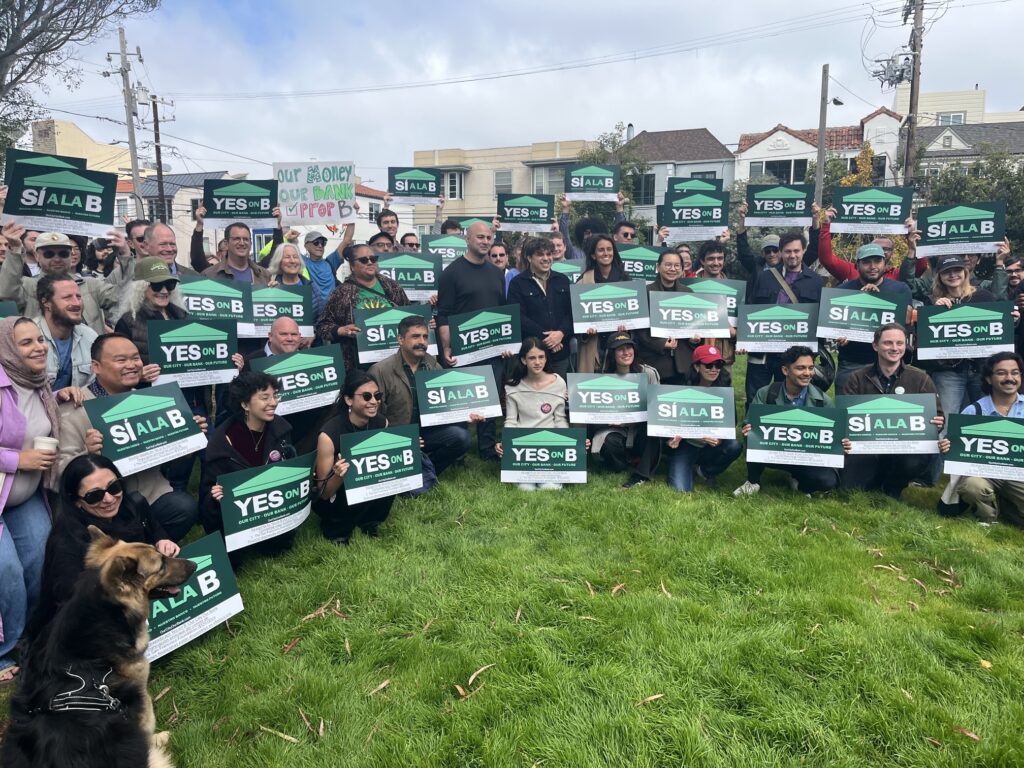
After ten years of organizing, supporters of a public bank in San Francisco will finally get a public vote—and a crowd showed up a Mission Playground Sunday to kick off the Yes on B campaign. Sups. Jackie Fielder, who was a founder of the Public Bank Coalition, and Cheyanne Chen, who carried the legislation at the board, were on hand, along with Sup. Bilal Mahmood, who only recently became a supporter.
An hour earlier, a much smaller group held a No on B event, with Sup. Alan Wong speaking. Wong told the Milk Club when he was running for Community College Board that he supported a public bank.
That’s not the first time Wong has shifted his positions. He ran for the college board as a progressive, and since Mayor Daniel Lurie named him to the Board of Supes, he’s become a reliable conservative mayoral ally.
Lots of support for Yes on B. The No campaign? Not so much
A senior member of Mayor Daniel Lurie’s staff awarded a $5.9 million contract last year to a company that ranked lower on the bidding scores but had connections to the mayor. A report by the supes Budget and Legislative Analyst found that the contract was technically legal, but that the Mayor’s Office did not follow best practices.
Now the Planning Department is asking the supes to approve an amendment to that contract—increasing it by $33 million to almost $40 million. The new contract comes before the Budget and Finance Committee Wednesday/2; it’s agenda item number 22. Agenda item 23 is a hearing on the entire deal, called by Sups. Jackie Fielder and Chyanne Chen.
In other words, the supes are scheduled to approve a $33 million deal before they hear what went wrong with the initial contract.
That meeting starts at 10am.
I’ve never been a fan of the Blue Angels, the loud, dangerous air show that is used as a military recruitment tool and terrifies dogs all over the city. But it brings tens of thousands of spectators to the waterfront—and the last time that happened, it turned into a traffic and public safety nightmare.
One reason: The Waymos got overloaded and stopped working. That happens where there are too many people and not enough bandwidth. (I discovered that problem when my son invited me to a Michigan football game, where the stadium holds 110,000 people. You couldn’t send a text or make a call; 110,000 people taking selfies for their friends far overwhelmed the bandwidth for every provider).
When Waymos don’t know what to do, they stop. And block traffic, and Muni, and make it impossible for police and fire to get through.
So: Sup. Stephen Sherrill has called a hearing Thursday/3 at the Government Audit and Oversight Committee to discuss what we can learn from that fiasco and how to make sure it doesn’t happen during Fleet Week. He’s invited the Mayor’s Office, Muni, the Dept. of Emergency Management, Rec-Park, and the cops and firefighters to come testify.
One key player is missing: Waymo. The city can talk all it wants about safety, but until we either know there’s a plan for the robot cars to avoid stalling—or we ban then altogether that day—the odds are it’s going to be mess again. So where’s are the co-CEOs of Waymo? Sherrill didn’t bother to ask either of them to appear.
That hearing starts at 10am.
It would seem to me that a report showing that 25 percent of the workers in a billion-dollar industry are likely to suffer a severe, debilitating, and often fatal injury for which there is no treatment—simply as a predictable consequence of going to work—would be big news in every city where that industry has employees.
The data was clear: At least 25 percent of the players on the San Francisco 49ers football team are likely to face dementia, violent mood swings, depression, and early death because of what they do every day for a paycheck.
All so the owners of the teams, most of whom are already billionaires, can get even richer. The team is now valued at $8 billion.
On the other hand, the Chron assigned at least three reporters and has published at least ten stories about a minor crime involving one of the owners of the team. A police sting captured the owner, who is separated from his wife and undergoing divorce proceedings, looking to pay a woman $140 to have sex with him.
The reporters have scoured police documents. They’ve gone to East Palestine, Ohio and taken pictures of the trailer park where the sting happened. They’ve posted the police video of the guy holding up his hands while the cops arrested him.
Nothing in any of these carefully reported stories suggests that he sought sex with anyone underage, or with someone who had been trafficked against their will.
Is it that big a deal that an adult who is not cheating on his soon-to-be-ex-wife wanted to hire a sex worker? I know, there’s the sordid elements—the trailer park at 9:45 on a Sunday morning, which seems awfully early for that sort of thing. It was, at the very least, a pretty bad lapse in judgment.
But seriously: This is big, huge news, worth sending reporters to a tiny town in Ohio and publishing numerous front-page stories about it—while the paper largely ignores the fact the team is allowing its workers to face perilous conditions that wouldn’t be allowed in any other industry in the country?
I could not possibly care less if a football team owner (or anyone else) hires a sex worker, as long as they’re both consenting adults. I do care if he hires people to make him richer and does nothing to protect them from a short life of brutal infirmity.
Priorities, people.
According to the Business Times, Uber and a company called Zipline are joining forces with Uber Eats to start drone deliveries, and I suspect we will soon see the partnership seek approvals in Bay Area cities. Amazon is already moving toward robot and drone deliveries, and Alphabet, which owns Google, is working with Wal-Mart on a simliar plan.
So pretty soon, the skies about our neighborhoods will be full of buzzing little aircraft that will, presumable, land on our doorsteps or on the sidewalk and drop off food and all the other stuff you can order from Amazon and Wal-Mart.
If this works, it will, of course, put thousands of people who drive for a living out of work. Eventually, the tech industry would like to eliminate all human drivers. More than 2 million people in the US earn their living as drivers—cab drivers, truck drivers, short-haul delivery drivers, bus drivers, even race drivers—and all of them would be pushed into unemployment.
Meanwhile, I don’t really like the idea of having to navigate drones swooping around my neighborhood, sometimes crashing into people, cars, and dogs (who will often by terrified by the robot invasion). I suspect I’m not alone.
The federal government, which controls airspace, could regulate the process, but under Trump, that won’t happen. The state of California could pass regulations, too, but Gov. Gavin Newsom is too busy running for president (and raising money from tech companies) to take any interest.
But San Francisco owns the rights-of-way to the streets, and air rights above them (with the understanding that aviation is controlled by the feds). So the Board of Supes could enact rules limiting the number of drone deliveries, the time of day they can operate, and the type of packages they can deliver. In fact, the city could probably ban drone deliveries over city streets and robot deliveries on streets and sidewalks.
If you’re wondering why Big Tech spend so much money to oust progressives and elect tech-friendly conservatives to the board, you’re about to find out.
48 Hills welcomes comments in the form of letters to the editor, which you can submit here. We also invite you to join the conversation on our Facebook, Twitter, and Instagram.
Tim Redmond has been a political and investigative reporter in San Francisco for more than 30 years. He spent much of that time as executive editor of the Bay Guardian. He is the founder of 48hills.
Volunteer for the first phone bank of the general election next Wednesday, September 9 as we contact Michigan voters in support of Abdul El-Sayed for Senate (5:30pm ET/2:30pm PT). We’re thrilled to announce the very first opportunity to continue to support candidates Indivisible endorsed in this year’s Democratic primaries. El-Sayed is running an entirely grassroots operation in one of the most watched battleground states in the country. He needs a wave of people power to propel him to victory and defeat the mountain of cash piling in for his opponent, and you can help! Paid for by Indivisible Action. Not authorized by any candidate or candidate committee.