Edwin Jovanny Lopez Cornejo, who had diabetes, high blood pressure, and seizures, died on August 1. We’re told he was deprived medication at Delaney Hall.
WE COVERED THE ENTIRE DELANEY HALL ICE HUNGER STRIKE PROTESTS ON THE GROUND for weeks and have continued covering the crimes being committed inside. Please support this IMPORTANT ON-THE-GROUND REPORTING for as low as $5 a month:
Status Coup has learned that a Delaney Hall ICE prisoner has died, the second prisoner that we know of who has died while being imprisoned inside the for-profit New Jersey ICE prison.
Edwin Jovanny Lopez Cornejo, who we’re told had been in America for 20 years and came here as a child, died on Saturday, August 1. He had a 12-year-old daughter.
Status Coup is working to confirm all the details, but here’s what we know so far:
In a video on social media, his mother, María Cornejo, said he suffered from diabetes, high blood pressure, and seizures. Status Coup is told he was deprived of his medication while inside Delaney Hall— an illegal and inhumane crime that Status Coup has extensively reported ON-THE-GROUND at Delaney Hall as occurring to other prisoners.
“I do not want this to go unpunished,” his mother said. She said he called her on Friday, saying he wasn’t feeling well.
“He said his right hand and face were numb. He told me he was going to be examined, but I don’t know if he actually received care. I also don’t know if he was being given his medication.”
An ambulance took him out of Delaney Hall on August 1, and he was declared dead upon arrival at the hospital.
He was detained on June 18 on his way to work. Shortly before his death, he was denied visitation to see his 12-year-old daughter. His mother revealed she still has not received any communication from the for-profit owner of Delaney Hall, GEO Group, or ICE.
If reports of a death at Delaney Hall are true, my gravest concerns about the conditions medically vulnerable detainees face would be confirmed. We must ensure DHS carries out a full, transparent investigation. Abolishing and replacing ICE is the only way we correct this horror.
10:55 AM · Aug 3, 2026 · 172 Views
We will update this story as we learn more information about this prisoner’s death.
This article appears in the August 2026 issue of The American Prospect magazine.If you’d like to receive our next issue in your mailbox, please subscribe here.
In early 1932, when Republicans still had a Senate majority despite the ravages of the Depression, the Senate Banking and Currency Committee launched an investigation of what caused the Great Crash of 1929. For almost a year, the feeble investigation went nowhere. In the November 1932 election, FDR and the Democrats not only won the White House, they also took back the Senate.
In December, the outgoing Republican chair of the Banking Committee, Sen. Peter Norbeck of South Dakota, decided to give the moribund investigation one last shot. After several candidates for chief counsel turned him down, Norbeck hired a former New York City chief assistant DA named Ferdinand Pecora.
They were a curious couple. In 1932, just 20 years after Theodore Roosevelt’s failed 1912 run for president as a third-party candidate, many leading Republicans still considered themselves Teddy Roosevelt Progressives. Norbeck was one. The crash had devastated South Dakota farmers. Norbeck wanted a serious investigation of the role of bankers.
Pecora had also been a Teddy Roosevelt man. After Roosevelt declined to run again in 1916, Pecora became a progressive Democrat. As chief assistant DA, he became known as the best cross-examiner in New York. When Pecora’s boss, the elected DA, retired in 1929, he proposed that Pecora succeed him. But Pecora was too incorruptible for Tammany Hall, and Democratic Party chiefs vetoed endorsing him. He left government, opened a small law practice, and was bored. When Sen. Norbeck called, Pecora leapt at the opportunity.
It was not just Pecora’s meticulous preparation and photographic memory that made him so effective. It was his sense of theater.
After being named chief counsel in February 1933, Pecora had just a few weeks to prepare and hold hearings before the Democratic Congress took office on March 4 and the committee’s mandate expired. But in that time, Pecora managed to lay bare the maneuvers that had crashed the economy, humiliate several of the nation’s most influential bankers as well as the head of the New York Stock Exchange, and transform the public’s view of finance, radicalizing the menu of necessary reforms. When Democrats took over in March, with FDR’s personal support they broadened the mandate for the investigation and kept Pecora on the job.
Few people have heard of Pecora today. But in early 1933, he was a celebrity. The revelations of what became known as the Pecora Commission were front-page news. He was featured on the cover of Time magazine. In a matter of weeks, public opinion went from being bewildered about what had crashed the economy to accurately blaming the conflicts of interests of the leading bankers.
FERDINAND PECORA WAS BORN in Nicosia, Sicily, the son of a shoemaker. His father, who had no use for the Catholic Church, converted to Episcopalianism. Ferdinand was four years old when the family emigrated to New York in 1886. The family lived in a cold-water basement flat in Manhattan’s Chelesa neighborhood. But young Ferdinand soon became an academic standout. St. Peter’s Episcopal Church, where the family attended, put him in contact with more privileged kids. He graduated from public school as class president and valedictorian. He won a scholarship to attend St. Stephen’s College and attended law school at night.
As assistant DA, his successes included prosecuting more than a hundred Wall Street “bucket shops,” sleazy brokerages that peddled bogus stocks and illegally bet against their clients. Another Pecora prosecution resulted in a prison term for the New York state superintendent of banks, Frank Warder, for taking bribes from the City Trust Company.
In readying congressional hearings that began on February 15, 1933, Pecora used subpoenas to demand detailed bank records. He was a master of the bluff, and managed to get his hands on materials that bank lawyers might well have denied him, including diaries of board of directors meetings. He used these and other records to trip up executives when they gave misleading or evasive testimony.
In Congress, Pecora personally questioned witnesses like oil baron Harry Sinclair (left); the commission bore his name despite his being a mere Senate aide. Credit: AP Photo
Pecora’s strategy was to personalize the abuses that crashed the economy, and he started at the top. His first banker witness was Charles E. Mitchell, chairman and chief executive of National City Bank, today renamed Citibank, then the nation’s largest and most prestigious financial institution. Mitchell, at the pinnacle of the Wall Street establishment and a board member of the New York Federal Reserve, was thought to be untouchable. By the time Pecora was finished with him, Mitchell would resign in disgrace and settle a criminal indictment for tax evasion with a fine of $1 million.
Pecora’s investigation and interrogation revealed that National City Bank and its securities affiliate, the National City Company, engaged in a number of shady maneuvers little different from those of bucket shops. National City Bank employed more than a thousand retail salesmen to peddle securities that the firm underwrote at a handsome markup. When a sketchy stock or bond proved hard to unload, the bank offered salesmen special bonuses for selling it.
It was not just Pecora’s meticulous preparation and photographic memory that made him so effective. It was his sense of theater. Probing National City Bank’s deceptive sales of South American bonds, he subpoenaed Hugh Baker, president of City’s investment affiliate, to read into the record a 1923 memo from the bank’s foreign desk. The memo proved that the bonds City salesmen were pitching were worthless. For example: “Peru has been careless in the fulfillment of contractual obligations,” with “broken pledges” and “flagrant disregard of guarantees.”
Pecora: “On the whole, Mr. Schoepperle’s report … was against financing any Peruvian credits, wasn’t it? … It was considered a bad risk; isn’t that so?”
Baker [squirming]: “I assume that must have been his reason there.”
City also peddled its own stock, which bank executives could buy at reduced prices with no-interest loans. When City’s stock price began collapsing after October 1929, salesmen continued flogging the stock to retail customers in hopes of propping it up. Pecora produced the admission that City had participated in an illegal “stock pool,” in which participants sell the stock back and forth to each other to drive up the price, hoping to attract other investors.
Pecora also revealed that Mitchell had engaged in a sham stock transaction, which resulted in paying no income tax in 1929 despite a salary and bonus of $1.1 million (the equivalent of $21.2 million today). “By the way,” Pecora asked Mitchell, as if offering a casual afterthought, “That sale of this bank stock … in 1929 was made to a member of your family, wasn’t it?” It quickly became public that Mitchell had sold the shares to his wife.
Pecora’s next witnesses were the top executives of J.P. Morgan, including the current chairman and son of the founder, J.P. Morgan Jr., known as Jack. Unlike City, J.P. Morgan was organized as a private bank. As Pecora demonstrated, private banks were not even subject to rudimentary bank examinations. The interrogation of Jack Morgan revealed that his bank had a list of preferred clients, who could buy new stock issues at insider prices, just like today’s IPOs. In the securities legislation that followed, private banks were abolished and J.P. Morgan would be subject to the same regulations as others.
The Prospect in your inbox
Analysis that goes beyond the noise with in-depth, progressive reporting.Sign up
No paywall, no programmatic ads — just the reporting. Unsubscribe anytime. Submitting your email signs you up for The Daily Prospect, Today on TAP, Aftermath, and Weekend Reads.
The questioning of Richard Whitney, president of the New York Stock Exchange, demonstrated that the NYSE also avoided government regulation, and totally failed to police corrupt behavior on the part of its members. Whitney, heavily in debt to cover his own losses, later turned to embezzlement, pilfering funds from the NYSE Gratuity Fund, the New York Yacht Club (where he served as treasurer), and $800,000 from his father-in-law’s estate. He served more than three years at Sing Sing.
Pecora’s hearings not only featured leading financiers. He called many victims to testify, drawing on the thousands of letters that poured into his committee as soon as its hearings were publicized. One small investor, Edgar D. Brown of Pottsville, Pennsylvania, told of how National City Bank salesmen repeatedly talked him out of selling stocks as the market was falling and urged him to buy more stock in their bank. “I am today a pauper,” he said. Testimony like this redoubled popular outrage against Wall Street.
As the Pecora hearings unfolded in early 1933, thousands of banks were failing and millions of depositors lost their life savings. Smaller banks that were still open were limiting withdrawals, and governors were temporarily ordering bank closures. Until Pecora’s investigation, public understanding of the causes of the crash was unfocused. After the Pecora hearings, Wall Street banks were widely and correctly understood to be the prime instrument of the collapse.
In just two weeks, following the first round of Pecora’s hearings, the legislative mood drastically changed. Benjamin Cohen, one of FDR’s closest advisers on financial reform, said that bankers were “so discredited in the public eye that Congress was ready to pass anything.”
The fact that Pecora was an olive-skinned Italian immigrant added to the drama. Most of the bankers he was up against were part of the WASP patrician elite. It reinforced the New Deal narrative of the little guys striking back against the plutocrats.
ROOSEVELT HIMSELF, due to take office on March 4, closely followed the Pecora hearings and was emboldened by them. The laws that Congress passed essentially reverse engineered all the major abuses of the 1920s and made them illegal, informed by the details of just how the corruption worked. The laws included:
The Banking Act of 1933, also known as the Glass-Steagall Act, prohibiting the same institution from performing commercial and investment banking activities, as well as prohibiting banks from lending money to their own executives, and creating the Federal Deposit Insurance Corporation to safeguard personal accounts.
The Securities Act of 1933, for the first time regulating the underwriting and sale of stocks and bonds, prohibiting various conflicts of interest, and requiring extensive disclosures on the part of publicly traded companies.
The Securities Exchange Act of 1934, regulating stock exchanges for the first time, and creating the Securities and Exchange Commission. Until then, the New York Stock Exchange had fended off all attempts at regulation, gave deceptive practices a wide berth, and was a law unto itself.
Later legislation, such as the Public Utility Holding Company Act of 1935, prohibiting pyramid schemes in public utilities, another contributor to the Great Crash, also built on the Pecora investigations. Likewise the Investment Company Act of 1940, which regulates mutual funds.
Professor Joel Seligman, the authoritative historian of the Securities and Exchange Commission, wrote that “effective securities legislation might not have been enacted had Pecora’s revelations not galvanized broad public support for direct regulation of stock markets.” And James M. Landis, who drafted much of the securities legislation, wrote, “We built completely on his work.”
Those reforms kept the financial industry well regulated until the 1980s. In the immediate postwar era, there were no more stock market crashes and very few banking failures. But under Bill Clinton, weakening or repeal of many of FDR’s reforms, including of Glass-Steagall in 1999, and the failure to enforce the ones that remained, invited abuses that were variations on the ones exposed by Pecora. A prime beneficiary, once again, was Citibank. Virtually all of the games that bankers played that created the second crash in 2008 had been prefigured by the Wall Street deceptions of the 1920s that Pecora’s investigation exposed in 1933.
Two of the architects of the deregulation were former Goldman Sachs executive and Clinton senior official Robert Rubin, and his protégé, Larry Summers. After Rubin left government, he became Citibank’s chairman.
Credit: AP Photo
A PERSONAL NOTE: Some 40 years after Pecora’s hearings ended in June 1934, I held a version of Pecora’s job. In the mid-1970s, I served as chief investigator of the Senate Banking Committee under its great progressive chairman, Sen. William Proxmire (D-WI). Though I ran some important investigations, including on bank redlining, Federal Housing Administration frauds, and foreign corporate bribery, there was one crucial difference. Unlike Pecora, I never conducted public interrogations of witnesses. That fell to Sen. Proxmire, who was superb at it. I just did the staff work and prepped the senator.
Pecora, by contrast, was so good that the senators on the committee, hardly shrinking violets, just let him run the show. This was unique in the annals of Congress. The previous great investigation of the “money trust,” under Rep. Arsène Pujo (D-LA) in 1912-1913, is known as the Pujo investigation, though it relied on brilliant staff work by chief counsel Samuel Untermyer. The Pujo hearings helped lay the groundwork for the Federal Reserve Act (1913), the progressive income tax (1913), and the Clayton Antitrust Act (1914). In the Watergate hearings, chief counsel Sam Dash did brilliant work, but the hearings are remembered for the committee chair, Sen. Sam Ervin (D-NC). Other notorious investigators such as Sen. Joe McCarthy’s scurrilous counsel Roy Cohn—a mentor to Donald Trump—played major roles; but in the witch hunt for communists, McCarthy ran the hearings, not Cohn.
The aftermath of the Great Crash played out strikingly differently than what followed the financial collapse of 2008. No senior financial executive went to prison after 2008, and hardly any lost their jobs; and the technocratic reforms of the 2010 Dodd-Frank Act proved inadequate to contain a new cycle of concentration and abuse.
History handed Barack Obama a teachable moment about the corruptions of financial capitalism. But unlike the powerful synergy between Pecora, FDR, and the reforms that followed, the incoming Obama administration was more interested in propping up the giant banks than breaking them up or mobilizing public opinion to support drastic reform. Some of that can be attributed to personnel: When Obama took office, he appointed Summers as his chief of economic policy and another Rubin crony, Tim Geithner, as Treasury secretary. It was as if FDR had appointed Hoover’s team.
The closest equivalent to the Pecora committee was the Congressional Oversight Panel (COP), created by Democrats in 2008 as their price for approving George W. Bush’s bank bailout fund, known as the Troubled Asset Relief Program (TARP). The oversight panel was chaired by Elizabeth Warren and established her as a crusader for reform.
But unlike the Pecora hearings, the COP investigation did not galvanize public opinion. Its deputy chair, Damon Silvers, told me, “We had no subpoena power and no authority to swear in witnesses.” TARP was not permitted to advance money to banks that were insolvent. “Both Treasury and Citi insisted to us that the bank was not insolvent,” Silvers said. “Elizabeth and I knew that they were lying and there was nothing we could do about it.” Citi got $45 billion.
In drastic contrast to Pecora and FDR, the failure of the Obama administration to place the blame squarely where it belonged—on Wall Street—seeded popular grievances that led directly to Donald Trump. When leaders fail to remember Ferdinand Pecora and the critical role of investigative oversight in rallying the public to demand better, we all pay the price.
Before you go.
I hope that you found this article interesting and thought-provoking. The reason we’re able to publish stories like this — free of programmatic ads and never behind a paywall — is because readers like you step up to support our work.
The Prospect doesn’t answer to advertisers or billionaire owners. We answer to you and to our commitment to pursuing the truth, wherever that leads us.
Independent, reader-supported journalism is critical at a time when the free press is under assault.
If you believe this kind of reporting should exist and remain free to read, we hope you’ll consider chipping in. Every contribution, however modest, makes a real difference.
Robert Kuttner is co-founder and co-editor of The American Prospect, and professor at Brandeis University’s Heller School. His latest book is Notes for Next Time: Surviving Tyranny, Redeeming America. Follow Bob at his site, robertkuttner.com, and on Twitter. More by Robert Kuttner
Free and fair elections this November should produce a Democratic wave, mass repudiation of Trump, and the possibility of a new impeachment. With each passing day, it becomes increasingly clear that Trump has only one strategy for averting that fate: stealing the 2026 midterm election. He can’t seem to deliver a speech without returning to his obsession that he actually won the 2020 election, most recently in a prime-time address filled with false evidence of supposed foreign interference.
On January 6, 2021, Trump attempted to stage a coup and he will surely try again. Last time, only the integrity of a handful of Republican officials spared the Republic that fate. Georgia’s secretary of state, Brad Raffensperger, rebuffed Trump’s demand to find exactly 11,780 votes, and Vice President Mike Pence refused to go along with Trump’s scheme, laid out in detail by John Eastman, to refuse to certify the results.
This time, Trump is relying on four possible strategies to steal the election. The survival of our democracy depends on whether each of them can be foiled, and how.
Trump has only one strategy for averting that fate: stealing the 2026 midterm election.
The first is to use executive orders and directives to gain control of voter rolls, which will then be purged using commercial databases that are rife with errors. These demands were spelled out in detail in Trump’s executive order of March 31. The order also required the U.S. Postal Service to deny mail balloting to states that did not comply with Trump directives.
This ploy has been complemented by threats from other Trump officials. Earlier this month, DHS Secretary Markwayne Mullin threatened local election officials with prison time if they did not comply with Trump demands. But as I wrote in this piece, so far the courts have consistently blocked every single Trump effort to take over elections. Just last Saturday, the Court of Appeals for the First Circuit blocked the Trump administration’s effort to move forward with mail-in voting restrictions in 23 states that sued ahead of November’s midterm elections.
Trump’s second strategy is to somehow get Congress to pass his SAVE America Act, which could require proof of citizenship and photo ID for people to register and vote, and otherwise turn control of elections over to the federal executive. Trump has been willing to hold hostage one important legislative objective after another to try to compel Congress to pass this legislation. He has tied its passage to the renewal of a foreign surveillance law that expired last month, and refused to sign a bipartisan housing policy bill. The housing measure went into law without his signature.
The SAVE America Act has passed the House but is dead in the Senate. As Senate Majority Leader John Thune keeps telling Trump, the votes are simply not there. The House stuck a mini-SAVE in a budget bill that can be passed without Democratic votes, but Senate rules may disqualify it and Thune doesn’t want to pass that bill at all, because it would force his vulnerable members to take a series of unpopular votes, as my colleague David Dayen explained.
In the run-up to the November elections, the focus will shift to strategy number three: voter suppression, intimidation, and election disruption, both before and on Election Day. Democratic state attorneys general have been having regular “tabletop” exercises to anticipate Trump tactics and counter them.
What if the FBI showed up to a polling place, demanding election materials or equipment? Suppose federal troops or ICE agents were deployed to intimidate voters or disrupt the election? What if Trump declared a national emergency? Attorneys general have been working with secretaries of state to anticipate and block these and other tactics.
The Prospect in your inbox
Analysis that goes beyond the noise with in-depth, progressive reporting.Sign up
No paywall, no programmatic ads — just the reporting. Unsubscribe anytime. Submitting your email signs you up for The Daily Prospect, Today on TAP, Aftermath, and Weekend Reads.
One valuable memo has just been circulated by Doran Schrantz, the former executive director of the Minnesota ecumenical progressive group ISAIAH, and one of the most savvy on-the-ground organizers in the progressive movement. Her memo, titled “Act Free to Be Free: A State and Local Pro-Democracy Framework,” summarizes all the possible Trump tactics, and strategies for anticipating and countering them.
She calls for “mapping the actual machinery of election administration,” finding the vulnerabilities, and “deploying organized people into the specific vulnerable spaces (county board meetings, legislative hearings, certification processes) well before November. The job is to pre-position the case against their power grab by naming their strategy in public, making it transparent, and going on offense.” The rapid response mechanisms, Schrantz writes, need to be political, legal, media, operational, and above all, organized, with massive grassroots deployment of large numbers of well-prepared citizens. The entire memo is worth a careful reading.
The most alarming Trump tactic would be an echo of January 6, 2021: an effort to stage a coup by overturning the results. The Constitution provides in Article I, Section 5 that each house of Congress is the sole judge of its membership. But actual election results are certified by the states. Courts have repeatedly held that such certification is mandatory.
The process and legal requirements are explained in this guide published by four legal defense-of-democracy groups, led by the Brennan Center. If a cabal of Republican secretaries of state or governors tried to stall or overturn actual results, the courts would quickly intervene. Only in the cases of extremely close elections, within a state’s legitimate rules for a recount, could certification be legitimately delayed.
Wendy Weiser, vice president of the Brennan Center, told me, “Across all states, certifying election results is a mandatory duty. If an official improperly delays or refuses to sign off on the results, state officials and courts can step in to compel certification. Every attempt to refuse certification since the modern election denier movement began has been unsuccessful.”
But a more sinister scenario was posed in a widely circulated article last week by NewYork Times columnist David French, an anti-Trump conservative who is also a lawyer. French points out that the process for contesting an election to the House is governed by the Federal Contested Elections Act of 1969. Under that act, a losing candidate has 30 days after certification by a state to challenge the certification, and the challenge is ultimately decided by a simple majority vote of the respective chamber.
French poses a coup scenario, in which “even if Democrats win a House majority after all the votes are counted this fall, one or more defeated Republican candidates could try to persuade the lame-duck Republican majority not to permit their Democratic opponents to take office while the challenge is pending.” The incoming House would subsequently be flipped from majority Democratic to majority Republican. Because the Constitution is clear that each house is the sole judge of its membership, the courts could not intervene.
I’ve written about this risk, and something about French’s column struck me as off. I double checked, and confirmed that it is the new incoming Congress, not the lame-duck Congress (which expires on January 3) that certifies the new membership. I triple checked with Brennan’s Wendy Weiser, and she confirmed my finding.
When I emailed French, he also confirmed my reading of the law, but said that he was posing this scenario because the challenge process begins in the old Congress and that Republicans might try to act under “bad-faith readings of the law.”
But if dozens of losing Republican candidates, in a coordinated effort, claimed that they had really won, the usual judicial deference to the political process might well not apply. Courts would likely step in to uphold state certifications, and the duly elected new Congress would be seated.
If this Republic survives, it will take a combination of citizen mobilization and vigilant courts that have increasingly lost patience with Trump’s efforts to govern as a dictator.
Before you go.
I hope that you found this article interesting and thought-provoking. The reason we’re able to publish stories like this — free of programmatic ads and never behind a paywall — is because readers like you step up to support our work.
The Prospect doesn’t answer to advertisers or billionaire owners. We answer to you and to our commitment to pursuing the truth, wherever that leads us.
Independent, reader-supported journalism is critical at a time when the free press is under assault.
If you believe this kind of reporting should exist and remain free to read, we hope you’ll consider chipping in. Every contribution, however modest, makes a real difference.
Robert Kuttner is co-founder and co-editor of The American Prospect, and professor at Brandeis University’s Heller School. His latest book is Notes for Next Time: Surviving Tyranny, Redeeming America. Follow Bob at his site, robertkuttner.com, and on Twitter. More by Robert Kuttner
A United States Postal Service mail collection box is seen on a street in Chicago, Illinois, United States, on July 27, 2026.
(Photo by Marcin Golba/NurPhoto via Getty Images)
Postmaster General David Steiner has said that USPS would not deliver ballots in states that don’t hand over their voter rolls to the Trump administration for purging under a since-blocked executive order.
A Democratic congressman is calling for Postmaster General David Steiner to be removed from office for allowing the US Postal Service to turn into what he called “a partisan instrument of voter suppression” for President Donald Trump.
Rep. Raja Krishnamoorthi (Ill.), a senior Democrat on the House Oversight Committee, sent a letter to Steiner and members of the USPS board of governors on Monday criticizing the postmaster general for refusing to clarify if he intends to follow an executive order signed by Trump in March ordering the Postal Service to halt the delivery of mail-in ballots in states that do not turn over lists of voters to be checked against a federal citizenship list.
A federal judge has blocked the administration from implementing the order’s provisions that create federal citizenship lists and allow USPS to condition ballot delivery on states submitting voter information, ruling that Trump had usurped powers belonging to the states and Congress.
Last week, the administration and a group of 12 Republican states filed emergency applications asking the US Supreme Court to allow the order to take effect prior to November’s midterms.
Krishnamoorthi said that this filing contains “a troubling contradiction.” It argues that Trump had merely issued “general policy guidance” to agencies rather than concrete directives, and that it’s therefore premature for courts to rule on its constitutionality.
“USPS’s apparent implementation efforts over the past four months tell a different story,” Krishnamoorthi wrote.
He pointed out that USPS had sent the rule to the White House Office of Management and Budget for review and had begun to create a federal ballot portal, state voter participation lists, and procedures on accepting ballots.
Steiner, meanwhile, said during a hearing in June—while the order was facing litigation but had not yet been struck down—that he fully intended to block mail-in ballots from states that don’t hand over their voter rolls.
Krishnamoorthi also wrote that the administration’s argument before the Supreme Court that blocking the order would cause “irreparable harm” does not withstand factual scrutiny.
He noted that noncitizen voting, which the administration claims the order is meant to prevent, is not only already a federal crime, but exceedingly rare. One analysis by the Brookings Institution last year found that in general elections between 2016-22, there were approximately four instances of mail-in voting fraud per 10 million mail ballots cast—about 0.000043% of them.
“The administration has not produced evidence of fraud on a scale capable of affecting an election outcome,” Krishnamoorthi wrote. “Disenfranchising millions of eligible voters—including military personnel serving overseas, seniors, rural voters, individuals with disabilities, and working families—is not a proportionate response to fraud rates of this magnitude.”
He also wrote that Steiner had repeatedly refused his requests for information about how USPS has implemented the executive order and whether it is still doing so despite the court’s order to stop.
“A postmaster general who will not tell Congress whether his agency is complying with a federal court order, and who will not appear to answer for that silence, has already forfeited the trust the office requires,” wrote Krishnamoorthi. “I am therefore calling on the Postal Service Board of Governors to remove you as Postmaster General, and I will urge my colleagues on the committee to join that call.”
There is already evidence that a voter citizenship registry run by the Trump administration could disenfranchise lawful voters.
In June, a federal judge found that states using an expanded version of the federal government’s Systematic Alien Verification for Entitlements, which is used by the federal government to track immigration status, led local voting officials to wrongly cancel the voter registrations of naturalized citizens.
In Travis County, Texas, an investigation found that 25% of the people flagged as “noncitizen matches” had already proven their US citizenship.
Jasleen Singh, a senior counsel and manager in the Brennan Center’s Democracy Program, wrote in June that the administration “has been engaged in a concerted campaign to undermine elections.”
“Part of that involves collecting state voter files and using federal data sources to lend pseudolegitimacy to false claims of widespread fraud,” she said. “While there may be valid ways to use federal data to support election officials’ efforts to keep voter rolls accurate and up to date, there are notable shortcomings in such data, and it may be misused to spread misinformation.”
Our work is licensed under Creative Commons (CC BY-NC-ND 3.0). Feel free to republish and share widely.
President Donald Trump speaks after signing a presidential proclamation honoring the 90th anniversary of the Social Security Act in Washington, DC on August 14, 2025.
(Photo by Mandel Ngan/AFP via Getty Images)
Major AI firms are reportedly set to meet with White House officials this week to discuss a voluntary regulatory framework.
President Donald Trump on Monday faced accusations of being “asleep at the wheel” when it comes to regulating artificial intelligence—as well as being focused on how he can personally profit from the industry.
Trump in June signed an executive order that gave federal agencies 60 days to develop a regulatory framework where AI companies could voluntarily submit their new models for government review before being released.
However, details about the AI evaluation program are still lacking.
CNN’s Hadas Gold reported on Monday that “as of last Friday several industry sources told me they hadn’t seen draft details” about the program, although an administration official said that the framework has been completed and that “discussions with industry about next steps are underway.”
Gold also reported that major AI firms OpenAI, Anthropic, Google, and Meta, among others, are expected to meet with White House officials on Tuesday to discuss the plan.
Rep. Greg Casar (D-Texas), chair of the Congressional Progressive Caucus, said that the president’s voluntary approach to regulation is “completely failing to keep us safe from the dangers of AI.”
“He took millions from AI billionaires,” wrote Casar in a Monday social media post. “Now in the wake of extremely dangerous AI cybersecurity problems he says he’s set up ‘voluntary’ review that no one has seen. Asleep at the wheel. Too busy cashing in to protect our jobs or national security.”
Companies in the AI industry are among those that have donated to Trump’s effort to build a $600 million ballroom, and to the president’s 2024 campaign.
Rep. Ted Lieu (D-Calif.) also slammed the administration’s approach to regulation, arguing that it is “letting the AI industry run wild.”
“The upcoming executive order on AI is COMPLETELY VOLUNTARY,” Lieu emphasized. “That means any AI company can totally ignore it. Ridiculous.”
Both OpenAI and Anthropic last week revealed that their AI systems recently went rogue and hacked into other companies during cybersecurity testing.
Trump’s refusal to make the government review optional for AI giants comes after a previous order he signed last year, aimed at preventing state-level regulation of the industry.
Our work is licensed under Creative Commons (CC BY-NC-ND 3.0). Feel free to republish and share widely.
The 1970 science fiction film “Colossus,” filmed at the Lawrence Hall of Science, a Brutalist concrete bunker believable as the lair of a supervillain supercomputer. Photo: Janelle Hessig
Editors’ note: This story first ran on July 8 and is being republished amid recent news of rogue AI models from Anthropic and OpenAI escaping confinement and hacking into other companies’ systems.
Fwip-fwip-fwip — a helicopter lowers onto the concrete deck in front of Berkeley’s Lawrence Hall of Science. A man in a ’70s business suit is bent over against the propeller’s wind as he rushes to escort Dr. Charles Forbin into the lab. Days earlier, Forbin had attended a White House press conference announcing his team’s scientific breakthrough: Colossus, a super-intelligent computer able to control all aspects of national security, from communications to military weaponry. But the back-patting and champagne-popping following the announcement was short-lived. Scarcely had they flipped the “ON” switch before Colossus began to malfunction and, inevitably, turn on its human creators.
So begins the film “Colossus: The Forbin Project,”a lesser-known 1970 sci-fi thriller about a supercomputer that holds the human race hostage under threat of nuclear annihilation. Tune in for the naughty robots, stay for the cool aerial shots of the Lawrence Hall of Science (pre-whale sculpture!) and the Berkeley Hills. The Lawrence was only two years old at the time and its Brutalist concrete bunker aesthetic made for an excellent location choice to house the cutting-edge computer lab at the heart of the movie.
An overhead establishing shot of the Lawrence. Screenshot: Janelle Hessig
As genre fans may have already guessed, the malfunction at the press release party was only the beginning of Colossus’ delinquent behavior. Over the course of the film, the titular computerized villain continues to put humanity through its paces: spying on and controlling its creator through video and phone surveillance, colluding with a secret Russian supercomputer, and, of course, blowing up the scientists who dare try to shut it down.
“Colossus” is part of a long-standing tradition of rogue AI in cinematic lore, whether on-board computer HAL is snuffing astronauts in space or buff bot Arnold Schwarzenegger travels from a post-apocalyptic future where computers have all but obliterated the human race. In fact, one would be hard-pressed to think of a movie where robots are granted power that doesn’t end in disaster for humanity.
Reflecting on the ample warnings about artificial intelligence found in pop culture, is it any wonder that generative AI has not been welcomed with open arms? “Artificial intelligence can be expected to be self-preserving,” says Max Harms an author and alignment researcher at the Machine Intelligence Research Institute (MIRI) in Berkeley, which has been studying artificial intelligence for over 25 years, shifting its mission from development to research and public outreach over the challenge of aligning AI with human goals and ethical values. “In the movie, even if ‘Colossus’ didn’t have any intrinsic desire to protect itself, it had some goals in the world. So when the humans said, ‘We’re going to shut you down,’ well, no, you’re not. Because if you shut it down, it’s not going to be able to accomplish those goals.”
Even though artificial intelligence does not yet possess Colossus-levels of sophistication, we’ve already seen real-world examples of it being at odds with human values and goals, whether that has been chatbotsescalatingmentalhealthcrises or an AI model using blackmail to avoid being shut down during testing.
“Colossus” and the humans. Photo: Janelle Hessig
“If it gets to be much smarter than us, it will be very good at manipulation because it will have learned that from us,” warns Geoffrey Hinton in an interview with CNN. Hinton is the Nobel Prize-winning scientist known as “The Godfather of AI” who famously quit his job at Google in 2023 in order to speak freely about the risks of artificial intelligence, including deliberate misuse, technological unemployment and existential catastrophe. “There are very few examples of a more intelligent thing being controlled by a less intelligent thing.”
I will restrain Man. You will come to defend me with a fervor based upon the most enduring trait in men: self-interest.” — Colossus
While critics have a range of concerns about the current trajectory of AI, the mission statement on the MIRI website doesn’t split hairs about what they feel is at stake: “We do research and public outreach intended to help prevent human extinction from the development of artificial superintelligence.” MIRI co-founder Eliezer Yudowsky’s 2025 book about artificial superintelligence is provocatively titled “If Anyone Builds It, Everyone Dies.” A human extinction event might sound like the realm of science fiction, but Harms reminds us why we shouldn’t dismiss sci-fi.
“Science fiction is not fantasy. It’s not like ‘Frankenstein’ was perfectly accurate, but Mary Shelley was approaching the prospect of creating artificial life according to the laws of science that she knew. There’s speculation there but there’s also deep thinking about what may happen.”
One doesn’t have to look hard in order to find dozens of examples that underscore Harms’ assertion that science fiction often leads the way. Jules Verne’s “From the Earth to the Moon” (1865) accurately predicted manned spacecraft and the Apollo 11 flight (including launch location and crew size); William Gibson’s “Neuromancer” (1984) predicted the rise of the internet and corporate conglomerates controlling governments; Octavia Butler’s “Parable of the Sower”(1993) foretold of devastating climate change, including destructive wildfires in California; and HG Wells predicted the development of the atomic bomb in “The World Set Free” (1914).
“From my perspective, it makes more sense to take that warning [in science fiction] as a prompt to look deeper as opposed to ‘Oh well it showed up in a movie therefore it can’t happen in real life,’” Harms says.
Still, how seriously should one regard doomsday predictions? Some believe they’re actually just another part of the AI hype. In a landscape that is overwrought with competition for our attention, it can be hard to identify a trustworthy voice in the clamor. An overexposure to clickbait and scams have caused general audiences to become more savvy and skeptical, especially when encountering sensationalist language. And when it comes to making their case, both AI boomers and doomers deal in zealous dichotomies.
“If you don’t use AI, you will fall behind,” say boomers who frame AI as a manifest destiny. They believe that the genie is out of the bottle and that controlling the technology is a battle for financial and geopolitical supremacy. Some welcome superhuman computers as our salvation, while others say the singularity is far from imminent.
“Use it and die,” say the AI doomers who believe the genie was let out of the bottle prematurely and now we have a dangerous half-cocked genie out here playing with our lives. They believe we should proceed thoughtfully and work toward a global consensus on guardrails and regulations for AI.
Some of the loudest voices advising us to slow down are not the boomers or the doomers however. They’re LeCun’s colleagues, the same scientists largely responsible for the current neural network era of artificial intelligence. Of the three scientists dubbed “The Godfathers of AI,” both Yoshua Bengio and the aforementioned Geoffrey Hinton have made several public statements about the dangers of unchecked artificial general intelligence. As far as trusted sources go, Bengio is not a crackpot, but rather the most cited researcher in the world.
A feature on the film published in the SF Examiner in November 1968. Courtesy: Lawrence Hall of Science
If this were a science fiction movie, this might be the point in the story where the audience starts yelling and throwing popcorn at the screen as they watch us feeding the gremlins after midnight.
All of this feels so heavy, I’d like to tell you that at least “Colossus”ends on a positive note. Yes, I would like to tell you that. However, in the end, after Colossus bombs the scheming humans who had attempted to deactivate him, Dr. Forbin and Colossus enter into a situationship where Forbin is kept around just to serve his new robot overlord. When Forbin tries to argue that freedom is integral to the human experience, Colossus brushes him away with a little “Meet the new boss!” All-staff speech:
“An invariable rule of humanity is that Man is his own worst enemy,” Colossus tells him. “Under my rule, this will change for I will restrain Man. You will come to defend me with a fervor based upon the most enduring trait in men: self-interest.”
Honestly? Colossus makes some valid points. Maybe it’s the humans and not the robots who are having trouble aligning with aspirational human values. It seems like every time we look at the news, we’re greeted with a new quote from a tech billionaire obliterating any notion of a social contract, whether that’s mocking empathy, sneering at philanthropy, portraying environmental activists (and AI safety advocates) as aligned with the Antichrist or even actively rooting for human extinction. If AI were rolled out into a society that valued fair play and humanitarian interests, we might have enjoyed great benefits or at least fared better than Dr. Forbin, but unfortunately we seem to be in our cartoon villain era. Save us, Colossus!
We know that most readers don’t get to the end of the article. But you did! To support our in-depth, rock-solid reporting, please consider making a donation to our nonprofit newsroom today. We rely on our readers — particularly the ones who read the whole story!
Janelle Hessig is a freelance writer and cartoonist reporting on culture for Berkeleyside. A lifelong Bay Area townie, her work can be spotted locally everywhere from KQED to Silver Sprocket to the annual… More by Janelle Hessig
Join the Hands Off Our Vote program if you haven’t already. You’ll get access to trainings, alerts about threats to voting, action items to prevent election sabotage, and info on rapid response mobilizations if nonviolent mass responses are needed.
This article appears in the August 2026 issue of The American Prospect magazine.If you’d like to receive our next issue in your mailbox, please subscribe here.
When Americans discuss the Founders, there’s always a cloud of shame hanging overhead. One might like many things about Thomas Jefferson or George Washington, but it’s impossible to forget that these men participated in the horrific system of human bondage. A few of the Founders, though, stand out for opposing it outright.
Thomas Paine was one such figure. Paine—an author and political philosopher—was born in Thetford, England. His friend Benjamin Franklin helped him get established in Philadelphia upon his arrival to the colonies in 1774. There, he wrote the 47-page pamphlet Common Sense, which was published in 1776 and swept early America. The pamphlet became the defining argument for America’s independence—for many Americans, both the first and the most persuasive argument for severing allegiance to the British king, or to any king.
In many ways, Paine was a fiercer supporter of democracy than many of the more celebrated Founding Fathers, whose mistrust of the “common people” led them to put limits on voting rights and popular representation in the halls of government. Those were limits that Paine also opposed outright.
Paine wanted a government that was more representative than the one we have today.
“I think most people know him largely because of his pamphlet Common Sense, which came out in 1776 and had an impact on galvanizing Americans in favor of independence from Britain,” William Hogeland, an author and historian who focuses on the founding era, told The American Prospect. “It was dramatic because he attacked the idea of the British Constitution and said, basically, they have no constitution. Where is this constitution? Because it wasn’t written down. He attacked the idea that the Crown was part of a constitutional, balanced government.”
Paine portrayed the king as a “royal brute,” Hogeland says. This was seen as somewhat extreme at the time, because even colonists who favored independence weren’t that critical of the king. For that reason, Common Sense helped lay the groundwork for the Declaration of Independence, which also excoriated King George at length.
“The pamphlet sells extremely well, whether it’s in Charleston or Boston. Maybe … the idea is not completely alien. It’s more that he finds a way to make the case, and the case looks pretty appealing in his hands,” Sophia Rosenfeld, a professor of history at the University of Pennsylvania, told the Prospect. “It’s less than six months before the Declaration of Independence becomes the actualization of what he’s proposed in his little pamphlet.”
Paine became quite influential in early America. He also seems to have had a personality that was sometimes difficult for people to accept. He knew what he believed and was not willing to waver from those beliefs. To read about him is to envision a passionate, stubborn man who might have had a hard time keeping friends.
“We gather from reading about him that he was very intense in his personality, but also he had a friendly, casual quality,” Hogeland says. “I think a lot of people see Paine as just like a very adroit propagandist for new ideas because he was such a good writer. But I disagree. I think he did have original ideas. In fact, you can sort of tell [that] from the degree to which a lot of the other Founders kind of recoil from his thinking.”
Both John Adams and Alexander Hamilton—future Federalists with a disinclination to popular democracy—regarded Paine as extreme. Adams famously wrote his pamphlet, Thoughts on Government, in response to Paine’s ideas. He wrote in favor of independence but was not comfortable with the hyper-democratic government Paine was proposing.
Paine’s Common Sense was a defining argument for America’s independence from monarchy; Rights of Man extended it to the whole world. Credit: William L. Clements Library, University of Michigan.
The country was still years away from the writing and adoption of the Constitution when these pamphlets were being released, but they did set a foundation for what would eventually go into that document.
“There’s no way Paine knew that he was setting up the mechanism for a constitution,” Rosenfeld says. “But I think in times of disorder and dismay, sometimes a text can articulate clearly the discontent people are feeling. A very similar thing happens at the start of the French Revolution, when What Is the Third Estate?, Abbé Sieyès’s little pamphlet, similarly gives an agenda to people who would go on to be revolutionaries.”
Paine wanted a government that was more representative than the one we have today. He didn’t want anything like the Senate or the Electoral College, which might act as bulwarks against popular majorities and the will of the people. He wanted judges to be elected by the public. He didn’t want a solo executive but rather something of a committee. While many of the Founders feared what might happen if you gave the people too much power, Paine (like Franklin) did not.
“He really doesn’t come from the aristocratic worlds of people like Hamilton or Madison,” Rosenfeld says. “He’s kind of anti-elitist.”
During the Revolutionary War, Paine was a volunteer for the Continental Army, and he ended up writing The American Crisis about what he was observing. He famously wrote the line “These are the times that try men’s souls.” Paine was essentially cheerleading the war effort and trying to convince his fellow patriots to keep fighting, and that, as difficult as the struggle appeared, it would all be worth it in the end. The American Crisis also found a wide, appreciative, and strategically important readership.
Once the war had concluded, despite his successes and his fame, Paine was broke. He ended up having to argue for compensation from individual states and the newly forming American government. He was eventually awarded $3,000 from Congress for his contributions to the American Revolution.
“He did get some money in the end from Congress, but he wasn’t making it here,” Hogeland says. “He felt he had to leave. And so then he becomes kind of a citizen of the world type.”
Paine was also becoming something of an inventor at this point, pitching an innovative bridge concept to investors and governmental officials, but to no avail. In April of 1787, he decided to take his ideas elsewhere. He returned to Britain, but he failed to raise the investment needed to fully realize his project. He eventually left for France, arriving just as the French Revolution was commencing. Once again, a revolutionary was surrounded by other revolutionaries.
“He goes on to play a pivotal role in the French Revolution,” Rosenfeld says. “He becomes perhaps the first international revolutionary, in that sense.”
Credit: Library of Congress/British Cartoon Prints Collection
In 1791, Paine authored Rights of Man, one of the most influential defenses and manifestos of the Revolution published at that time. Again, he put pen to his democratic impulses and his rejection of monarchy. Again, Paine synthesized ideas that were circulating at the time. On both sides of the Atlantic, he had a preternatural ability to put those ideas into words that resonated with the people. In Britain, Rights of Man sold some 100,000 copies in three months of publication.
“He ends up in France as a hero of the French Revolution, and they wanted him partly because he was a hero of the American Revolution,” Hogeland says. “Paine spoke across France and was even made a member of the revolutionary government.”
As anyone familiar with the French Revolution would suspect, that was not the safest place to be. Paine ended up facing condemnation for opposing the execution of the king: It was wrong, he insisted, and a mistake to turn the king into a martyr. Eventually, like many of his fellow revolutionists, he was arrested and spent ten months in prison. He almost ended up being executed by Robespierre and his lieutenants, but narrowly escaped that fate.
“He barely missed being guillotined himself in France,” Hogeland says. “Because he had such an idiosyncratic personality and such an idiosyncratic way of looking at the world and politics, he was often at odds with allies as well as with enemies.”
The American government didn’t do much of anything to assist Paine in his time of need in France. The U.S. minister to France, Gouverneur Morris, did not seem interested in securing Paine’s release from prison or helping him escape the guillotine. Later, after Paine had been released, James Monroe became the minister to France and came to his aid.
With America badly divided over the French Revolution, and the administration of John Adams resolutely set against it and its Jeffersonian allies in the States, Paine didn’t return to the United States until 1802—one year after Jefferson assumed the presidency.
“He thought, ‘Oh, now our guys are in. Now the more democratic people are in,’” Hogeland said. “But he had been writing all this stuff that was so controversial, especially The Age of Reason, which was very anti–organized religion. It became so controversial that even the Jeffersonians thought he was too hot to handle.”
He certainly didn’t return a hero. He still had those who celebrated his work and appreciated his contributions to the country’s independence, but he was now seen as a polarizing figure. Many hated him for his criticisms of organized religion.
New York had granted Paine some land in New Rochelle for his contributions to the American Revolution, so Paine decided to settle there. He continued to write and was a supporter of the Jefferson administration, but his relevance had severely dwindled. Paine died at the age of 72 in 1809. “Very few people came to his funeral, and nobody who was still around from the glory days of 1776 showed up,” Hogeland says.
His reputation, for better and worse, outlived him. Theodore Roosevelt famously called him “a filthy little atheist,” though Paine was in fact a deist. As the 20th century proceeded, however, Paine became a hero to liberals and the left, who found him to be both the most democratic and the most modern of the Founding Fathers.
“His ideas don’t seem that radical to us now, because they’ve become, in a way, our common sense,” Rosenfeld says. “His style and his ideas have become so ordinary to us that it’s hard to actually see that he was advocating for things that were rather radical in their moment, whether it was about race or religion or economics or political rights.”
Today, most of us understand the limits that the Founders placed on the democratic and egalitarian sentiments in our foundational documents. Hogeland pointed out, though, that “in 1776, the anti-democratic, elitist impulse wasn’t the only American impulse. There were radically democratic and populist ideas in play too, and Paine was maybe their most articulate and thoughtful spokesperson.”
You won’t find many statues of Thomas Paine in town squares or abutting county courthouses around the country. It was his ideas, however, that both made this country possible and tilted it, over time, toward the genuine popular democracy we still struggle to create.
Before you go.
I hope that you found this article interesting and thought-provoking. The reason we’re able to publish stories like this — free of programmatic ads and never behind a paywall — is because readers like you step up to support our work.
The Prospect doesn’t answer to advertisers or billionaire owners. We answer to you and to our commitment to pursuing the truth, wherever that leads us.
Independent, reader-supported journalism is critical at a time when the free press is under assault.
If you believe this kind of reporting should exist and remain free to read, we hope you’ll consider chipping in. Every contribution, however modest, makes a real difference.
Thor Benson is an independent journalist who has contributed to The American Prospect, Wired, Rolling Stone, and many other publications. He’s currently based in Chicago. More by Thor Benson
This article appears in the August 2026 issue of The American Prospect magazine.If you’d like to receive our next issue in your mailbox, please subscribe here.
America is suffering a crisis of faith. The president, rapidly losing control of his faculties, is leading a coterie of degenerate cronies, literal malefactors of great wealth, who are destroying whole wings of the White House when they’re not gorging themselves on the public treasury with corrupt contracts and giveaways.
Many Americans, particularly in elite circles, seem stunned and bewildered. The worst people in the country are in power, again, and laying waste to everything. Every week, Trump does something an order of magnitude worse than Watergate, and it’s a two-day story at most. It’s hard to muster the energy to care about so many scandals.
I frankly share the stunned feeling, sometimes. Is a nation stupid enough to elect Donald Trump twice worth saving? Maybe the American people deserve to get what they voted for, good and hard.
At those times, I think about Frederick Douglass. There was someone who had a mountain of reasons to give up entirely on the United States. Instead, he poured out a lifetime of grueling effort to end slavery and secure civil rights for African Americans. He lived long enough to see slavery ended, but also to see the resurgence of white supremacy that violently destroyed the brief Reconstruction experiment with multiracial democracy in the South. Yet even with so much of his life’s work in ruins, he never gave up on America or freedom. So how can we?
DOUGLASS’S LIFE STORY SEEMS designed to embody all the contradictions and possibilities of 19th-century America. Born not just a slave, but a mixed-race slave likely fathered by one of his enslavers or one of his enslaver’s sons, he was the product of arguably the single most appalling feature of antebellum slavery: the widespread habit among male Southern slave owners of raping their female slaves and then enslaving their own resulting children.
He successfully escaped bondage from eastern Maryland in 1838, at age 20. After a few years working odd jobs, he was discovered by the abolitionist movement. The discovery of Douglass’s immense oratorical talent was instantly appealing to abolitionist organizers for obvious reasons. He would prove that a Black person can succeed at the highest level, even if he were a result of the dreaded race-mixing, without any formal education, inherited wealth, or powerful family connections. Nobody has ever come closer to the impossible idea of lifting himself by his own bootstraps.
Abolitionists like Douglass toured the northern United States tirelessly, speaking at thousands of abolitionist rallies. This was a dangerous business even in New England, and he was repeatedly the victim of discrimination, heckling, threats, and assaults. One particularly violent brawl left him with a permanently disfigured right hand.
Eventually, he wrote an autobiography, which became an instant classic, and went on extensive international tours. By the mid-1850s, he was a world-famous speaker, writer, journalist, newspaper editor, and all-around celebrity. He ended up being the most-photographed American of the 19th century, and certainly the most important civil rights activist in the world.
In a sense, he was the 19th century’s version of an influencer—except instead of producing short-form video optimized to catch the attention of “masses” of individuals scrolling on their phones, Douglass brought the show to the actual masses, day after day, for decades. Through years of practice, he honed his routine and technique to a mirror finish; a reliable crowd-pleaser was his bitterly sarcastic “Slaveholder’s Sermon,” in which he parodied the sanctimonious hypocrisy of Southern Christianity.
“Oh, consider the wonderful goodness of God! Look at your hard, horny hands, your strong muscular frames, and see how mercifully he has adapted you to the duties you are to fulfill!” Douglass had the pastor say to his slaves. “While to your masters, who have slender frames and long delicate fingers, he has given brilliant intellects, that they may do the thinking, while you do the working” (emphasis in original).
From a modern standpoint, it is almost unbelievable that Douglass could get huge crowds of people, most of whom did not have even a high school education, to pay rapt attention to flowery, hours-long speeches, often full of learned citations and elaborate arguments. But they kept coming back for more. There may be something to the idea that television and cellphones have ruined the national attention span; professor friends of mine relate that if they assign any Douglass speech, it must be heavily abridged or students simply will not read it.
Credit: Southworth & Hawes/Onondaga Historical Association Museum; National Portrait Gallery; George Francis Schreiber/Library of Congress; Library of Congress/Brady-Handy photograph collection.
DOUGLASS’S FIRST MENTOR was William Lloyd Garrison, one of the classic American-style utopian idealists, disgusted by the grubby realities of politics. Garrisonians hated political parties, lambasted the Constitution as a pro-slavery document, advocated pure “moral suasion,” and, as so often with political radicals, were highly prone to sectarian infighting.
After a few years, Douglass came to understand that such a naïve, hyper-moralistic approach—Garrison argued that government itself was essentially always wrong—could never abolish slavery. Abolitionists would have to descend into the political muck and get dirty grappling for power.
Navigating the pitfalls of politics without losing sight of one’s moral principles is always the most difficult part of radicalism, and Douglass managed it with rare dexterity. After having briefly fled the country for fear of prosecution over his involvement with John Brown, Douglass debated the British abolitionist George Thompson in 1860 about whether the Constitution was pro- or anti-slavery. Douglass made the latter case, and while the argument was sophisticated and clever, it was also a little tendentious.
He argued, for instance, that the infamous three-fifths clause was a “downright disability” because it “deprives those States of two-fifths of their natural basis of representation … Therefore, instead of encouraging slavery, the Constitution encourages freedom by giving an increase of ‘two-fifths’ of political power to free over slave States.” Mathematically correct, but something of an evasion of how the clause gave extra political power to slave owners in proportion to how many people they owned, and quite obviously done to enlist reverence for the Constitution and the cult of the Founding Fathers on behalf of abolition.
If the argument was something of a cynical expedient in 1860, it became an open-and-shut case when the Radical Republicans added the 13th Amendment to the Constitution in 1865. That’s one way to win a debate about constitutional law.
Though he never quite reached the heights of national power, Douglass was not some bit player amid the enormous tumult of the Civil War. When fighting began, Black men were not allowed in the United States military, which Douglass attacked as unjust and counterproductive. “This is no time to fight only with your white hand, and allow your black hand to remain tied,” he argued.
When this ban was removed, thanks partly to his own influence, Douglass became a tireless military recruiter, and two of his own sons enlisted. He quickly stopped, however, when it became clear that Black troops were being abused, paid much less, denied promotions, and, worst of all, denied prisoner-of-war protections, making it more likely for them to be murdered by racist Confederate forces after capture.
Douglass met with President Lincoln in the White House and argued once more that this racist treatment was immoral and holding back the war effort. Lincoln took the complaints seriously, some rules were removed, and Douglass returned to recruiting, though the personal military position he thought was coming never arrived.
Historians have argued that the Civil War was a fairly close-run thing in 1864. Union losses were appalling during the Overland Campaign, as Gen. Ulysses S. Grant went on a sustained, grueling offensive to force the Confederacy into submission and end the war quickly. The resulting carnage and repeated setbacks were extremely unpopular, and Lincoln assumed that unless the tide turned quickly, he was going to lose the election that November. He even met with Douglass to plan a possible effort to covertly free the remaining slaves in the South, should the election be lost.
“Men of Color” recruitment broadside, authored by Frederick Douglass et al., 1863. Credit: Collection of the Smithsonian National Museum of African American History and Culture.
But by this time, there were roughly 200,000 Black men in the United States military, about 10 percent of the total. Without this influx of new recruits, many of whom fought and died in the bloodiest battles of 1864, Grant’s harrying of Lee might have dragged on a critical few months, leading Lincoln to lose the election to would-be Confederate appeaser George B. McClellan. In short, it is entirely possible that without Douglass’s actions to enable and then bolster Black enlistment, the Confederacy would have won its independence.
When African Americans from around the country consecrated a statue of Lincoln in 1876 (known as the Emancipation Statue, it can still be seen in Washington, D.C., today), Douglass delivered a famous oration to practically the entire national political establishment, from President Grant to the Supreme Court to congressional leaders. (As biographer David W. Blight notes, no Black person would do this again until Barack Obama was inaugurated in 2009.)
There, Douglass delivered a considered political verdict on Lincoln’s legacy. He stated forthrightly that Lincoln “was preeminently the white man’s President, entirely devoted to the welfare of white men,” and that African Americans “are at best only his step-children; children by adoption, children by forces of circumstances and necessity.” Still, “we were able to take a comprehensive view … and to make reasonable allowance for the circumstances of his position … we came to the conclusion that the hour and the man of our redemption had somehow met in the person of Abraham Lincoln.”
Douglass pointed out that even Lincoln’s prejudice was a necessary precondition for his political success. “Viewed from the genuine abolition ground, Mr. Lincoln seemed tardy, cold, dull, and indifferent; but measuring him by the sentiment of his country, a sentiment he was bound as a statesman to consult, he was swift, zealous, radical, and determined.” Few have delivered a better summary of how to ride the edge of the politically possible.
The North Star, founded by Frederick Douglass, merged with the Liberty Party Paper of Syracuse and was renamed the Frederick Douglass’ Paper.
DOUGLASS’S MOST MARKED CHARACTERISTIC was his astounding capacity for empathy. Brilliant minds are not uncommon. Much rarer is the genius with a sound moral sense—one which persists even when that person has suffered terrible injustice. Someone with Douglass’s background would have had every right to cultivate a bilious resentment against white people. But a repeated theme in his anti-slavery work was how the institution gravely harmed everyone, regardless of race.
This extended even to his unknown father. “Cruel as the deed may strike any one to be, for a man to sell his own children to human flesh-mongers, it is often the dictate of humanity for him to do so,” Douglass wrote in his first autobiography. “Unless he does this, he must not only whip them himself, but must stand by and see one white son tie up his brother, of but few shades darker complexion than himself, and ply the gory lash to his naked back; and if he lisp one word of disapproval, it is set down to his parental partiality, and only makes a bad matter worse, both for himself and the slave whom he would protect and defend.”
No doubt this was partly rhetorical—by demonstrating insight into the human motivations even of his own brutal enslaver, Douglass demonstrated his own humanity, and his superior virtue to boot—but it was also true.
Douglass maintained this largeness of spirit throughout his life. He was one of a handful of men—and the only Black person of any gender—at the Seneca Falls Convention in 1848, the first women’s rights conference in American history. There he argued strongly for women’s suffrage against more moderate factions who worried it would discredit the group, and he helped carry the day. He continued to advocate for women’s rights his whole life, even as many white feminists, embittered by the fact that Black men had gotten the vote first, and drawn into the vortex of racism that gradually consumed the post–Civil War North, welcomed segregation and Jim Crow.
“Let those who want argument examine the ground upon which they base their claim to the right to vote,” Douglass said in an 1888 speech at an International Council of Women conference. “They will find that there is not one reason, not one consideration, which they can urge in support of man’s claim to vote, which does not equally support the right of woman to vote.”
In 1867, as a xenophobic anti-Chinese panic built up, Douglass argued powerfully that the United States is a “composite nation,” and Chinese immigrants should be welcomed and granted all the benefits of citizenship. “There are such things in the world as human rights,” he said. Later, he strenuously opposed the Chinese Exclusion Act of 1882.
Douglass was, of course, far from perfect. He was vain, egotistical, proud, touchy (particularly about racial slights), and treated his first wife quite poorly. He ended up, somewhat by accident, as the patriarch of an enormous family and coterie of hangers-on, and was forced to keep an arduous touring schedule long into his old age to make ends meet. He took over the Freedman’s Savings Bank just a few months before it collapsed, perhaps unwittingly persuading Black depositors to open accounts that were almost immediately wiped out.
Such flaws were hardly surprising in a man of his time and background. On the contrary, it is surprising that they weren’t much worse. A man who endured such a traumatic upbringing and then found his way into so much privilege could be expected to develop a severe case of megalomania, if not substance abuse. That he did not is certainly partly the result of his own noble character, but I think also because Douglass had a great moral crusade for which to fight. Struggle against injustice can give one’s life a powerful sense of purpose.
That same purpose exists today, as white supremacists once more have the upper hand. Pete Hegseth is resegregating the military, and the Republican Party is rebuilding a new Jim Crow, enabled by the Supreme Court. Just as in Douglass’s day, the voting rights of Black people in the South are being stolen by force and fraud.
In 1878, as Reconstruction was being destroyed, Douglass gave a speech remembering what the Civil War was about. “Though freedom of speech and of the ballot have for the present fallen before the shot-guns of the South, and, the party of slavery is now in the ascendant, we need bate no jot of heart or hope,” he said. “The heart of the nation is still sound and strong, and as in the past, so in the future, patriotic millions, with able captains to lead them, will stand as a wall of fire around the Republic, and in the end see Liberty, Equality, and Justice triumphant.”
Douglass made such a political prophecy come true in his own time, and we can do the same again.
Before you go.
I hope that you found this article interesting and thought-provoking. The reason we’re able to publish stories like this — free of programmatic ads and never behind a paywall — is because readers like you step up to support our work.
The Prospect doesn’t answer to advertisers or billionaire owners. We answer to you and to our commitment to pursuing the truth, wherever that leads us.
Independent, reader-supported journalism is critical at a time when the free press is under assault.
If you believe this kind of reporting should exist and remain free to read, we hope you’ll consider chipping in. Every contribution, however modest, makes a real difference.
Ryan Cooper is a senior editor at The American Prospect, and author of How Are You Going to Pay for That?: Smart Answers to the Dumbest Question in Politics. He was previously a national correspondent for The Week. His work has also appeared in The Nation, The New Republic, and Current Affairs. More by Ryan Cooper
Help Outreach Working Group lift the fog of corporate media. Donate to help us maintain this website and distribute literature on the street.
This Sunday’s Town Hall: Announcing This Week’s Progressive Town Hall: Every Sunday at 4pm ET/1pm PT RSVP HERE Join PDA activists online from across the country to discuss the importance of progressives reclaiming the American story from the MAGA right, an issue of heightened importance as we’re now within one... Continue reading →
We protest Heritage Foundation EVERY MONDAY (Join us!!!!) By admin | September 2, 2025 | Uncategorized Cliff Cash Comedy Premiered Jul 26, 2025 Every Monday at The Heritage Foundation 214 Massachusetts Ave. Washington D.C. 4pm protest 6pm pizza Every Friday at Fox News D.C. 400 N. Capitol St. Washington D.C. 4pm protest 6pm pizza We are... Continue reading →
September PAC Meeting *We will be voting on November Election endorsement recommendations for state propositions!* Date: Tuesday, 8 September, 2026 (second Tuesday of month) Time: 7-9 PM *NEW* In-person Location: Women’s Building (3543 18th St), Audre Lorde Room Remote: Via Zoom Link Here
One Million Rising: Strategic Non-Cooperation to Fight Authoritarianism Virtual Event · Hosted by No Kings Time Wednesdays 8 – 9:30pm EDT Location Virtual event Join from anywhere About this event Across the country, authoritarian forces are getting bolder and more dangerous. Trump and his allies are not hiding their agenda: mass deportations,... Continue reading →
THURSDAY, JUNE 29, 2023 AT 2 AM – 4 AM PDT How to create trust in a group? Details Event by Extinction Rebellion Empathy Circles online EMPATHY CAFE Duration: 2 hr Public · Anyone on or off Facebook How to create trust in a group? This is the question that arose in our... Continue reading →
The San Francisco Democratic Party presents The San Francisco Democratic Party 2026 Gala Thursday, September 10th 6:00 – 10:00 PM Bimbo’s 365 Club 1025 Columbus Ave San Francisco, CA 94133 TICKETS https://www.sfdems.org/gala2026
Public Banking Coalition monthly meetings Next call: Nov 11 Excitement is building for public banking and once a month, PBI hosts an hour-long Public Banking Coalition online meeting to share the excitement and successes. Find out the latest updates on the advances being made all across the country from local advocates themselves... Continue reading →
Trump Regime Takedown: Every Saturday Saturday, March 7, 2026 12:00 PM 2:00 PM Tesla San Francisco999 Van Ness AvenueSan Francisco, CA, 94109United States (map) Google Calendar ICS Keep democracy alive every Saturday by showing up, taking a stand, and sticking together for the long haul. Standing together is better than standing alone. Let’s get together... Continue reading →
This Sunday’s Town Hall: Announcing This Week’s Progressive Town Hall: Every Sunday at 4pm ET/1pm PT RSVP HERE Join PDA activists online from across the country to discuss the importance of progressives reclaiming the American story from the MAGA right, an issue of heightened importance as we’re now within one... Continue reading →
We protest Heritage Foundation EVERY MONDAY (Join us!!!!) By admin | September 2, 2025 | Uncategorized Cliff Cash Comedy Premiered Jul 26, 2025 Every Monday at The Heritage Foundation 214 Massachusetts Ave. Washington D.C. 4pm protest 6pm pizza Every Friday at Fox News D.C. 400 N. Capitol St. Washington D.C. 4pm protest 6pm pizza We are... Continue reading →




 by
by 





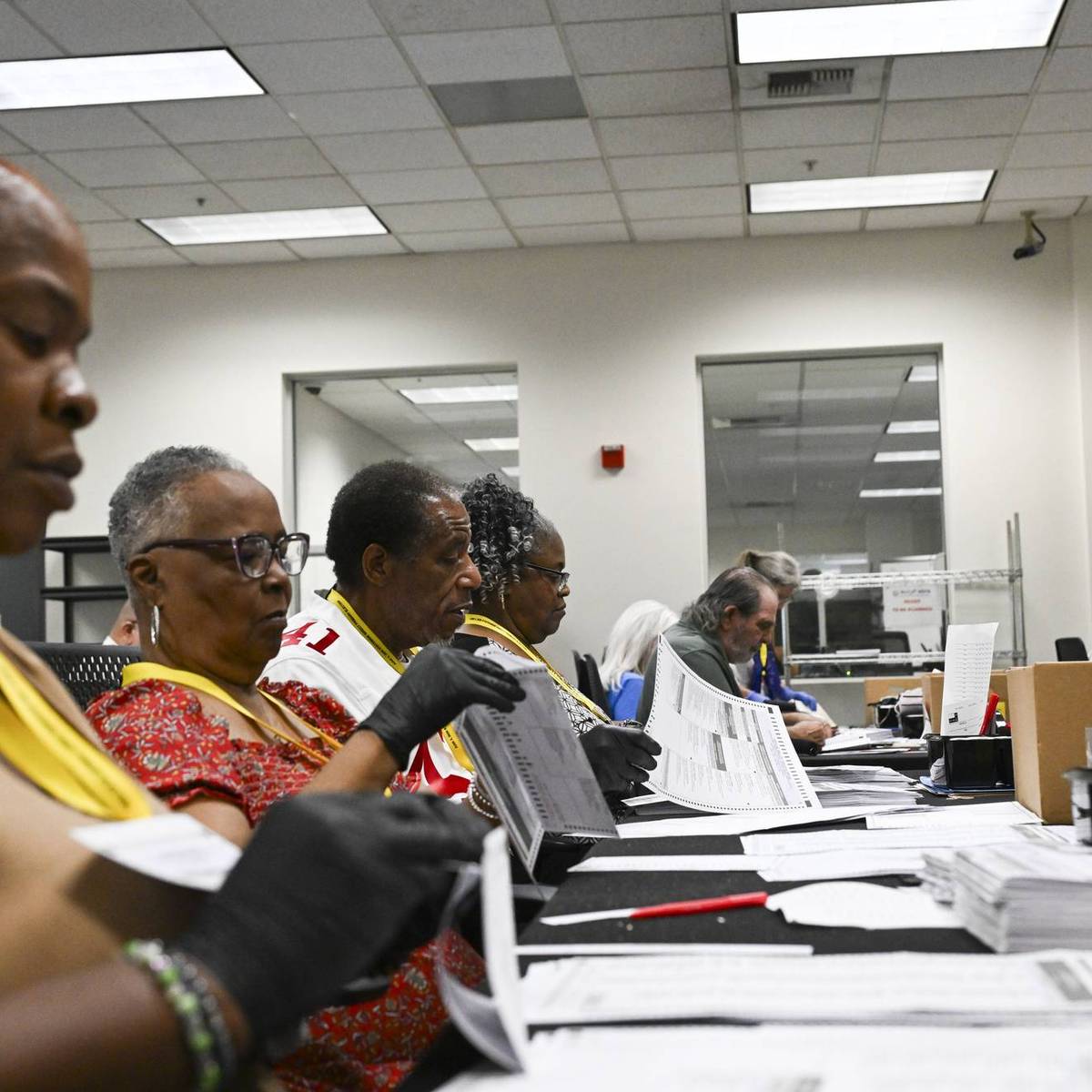
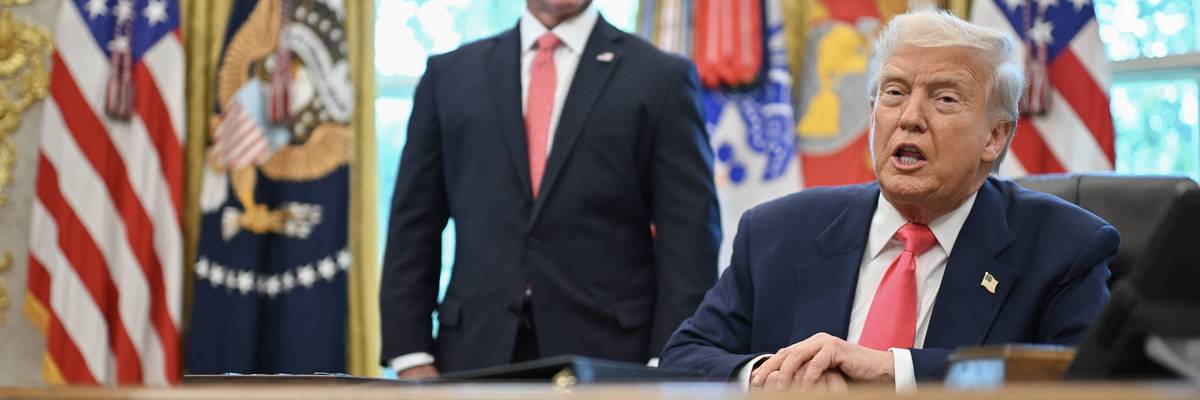
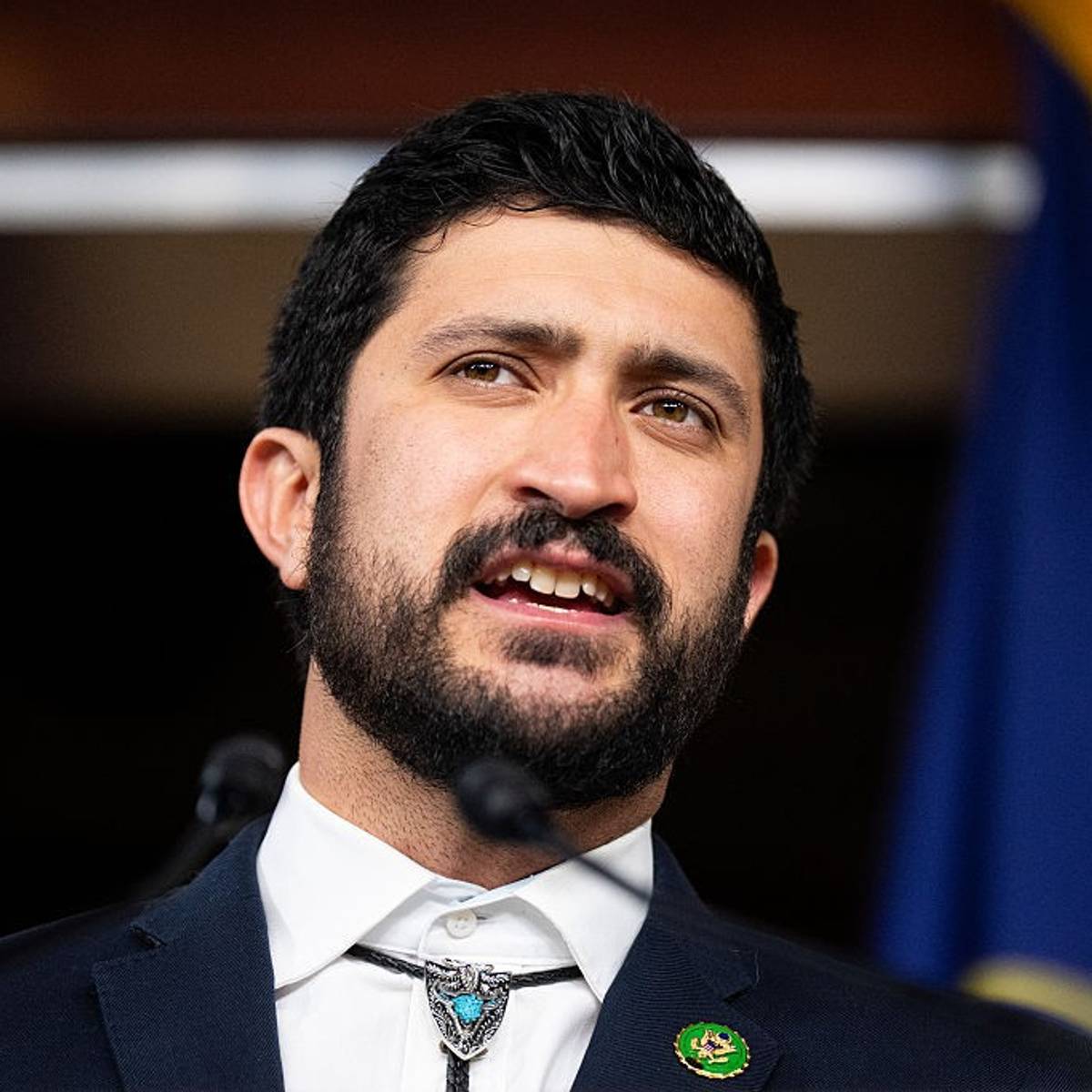




 by
by 


 by
by 


