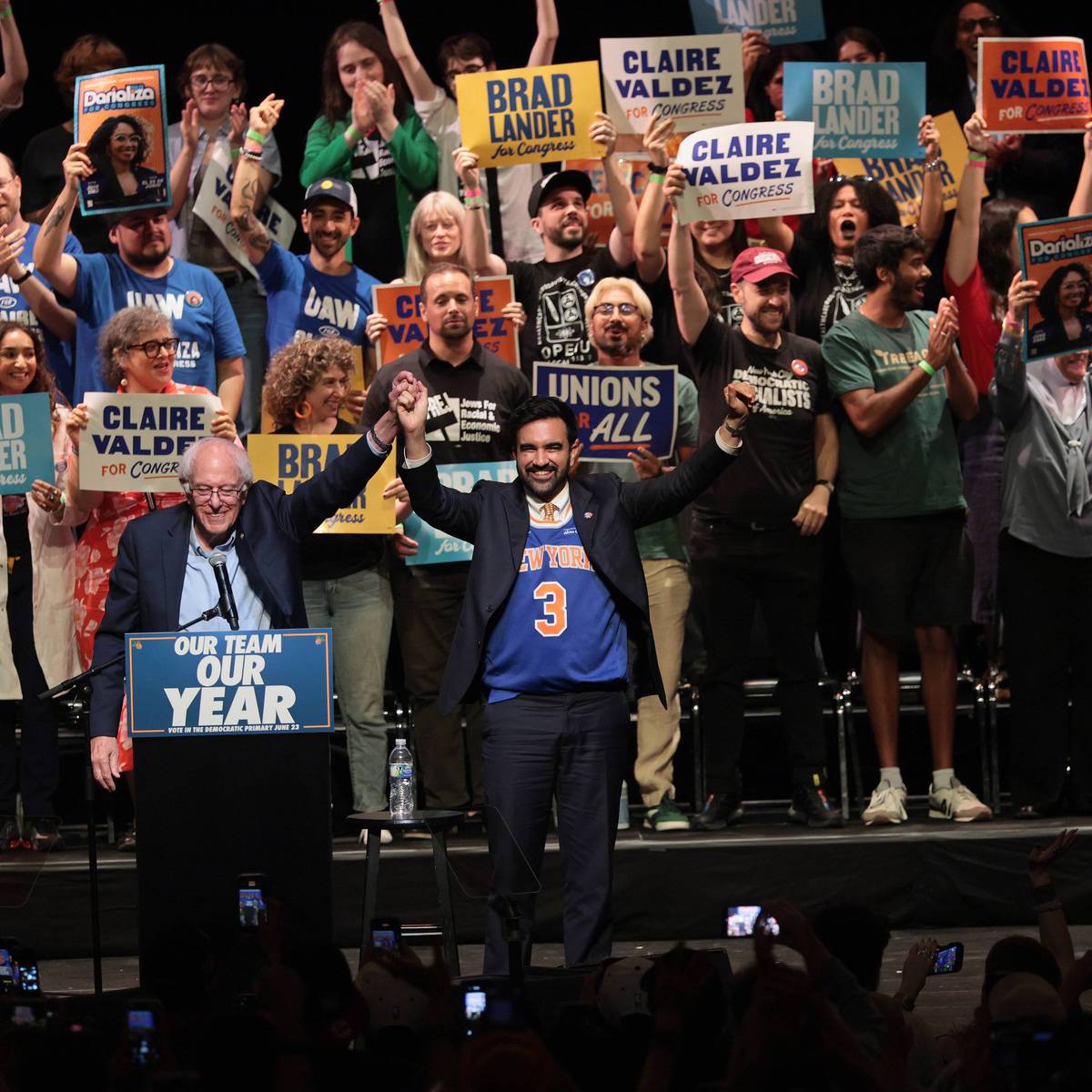
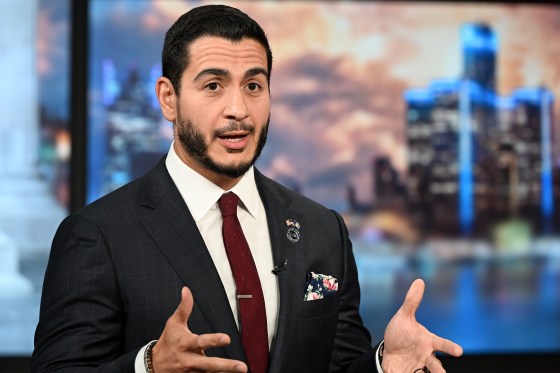
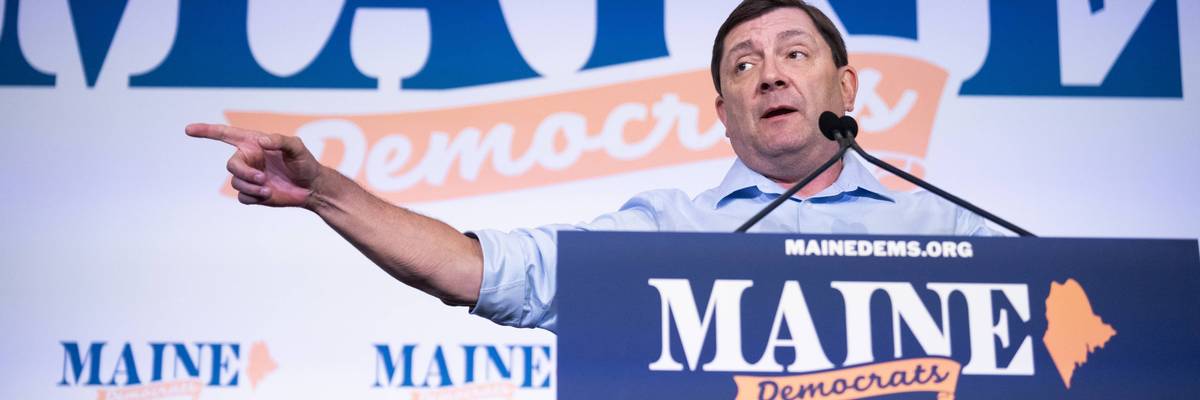
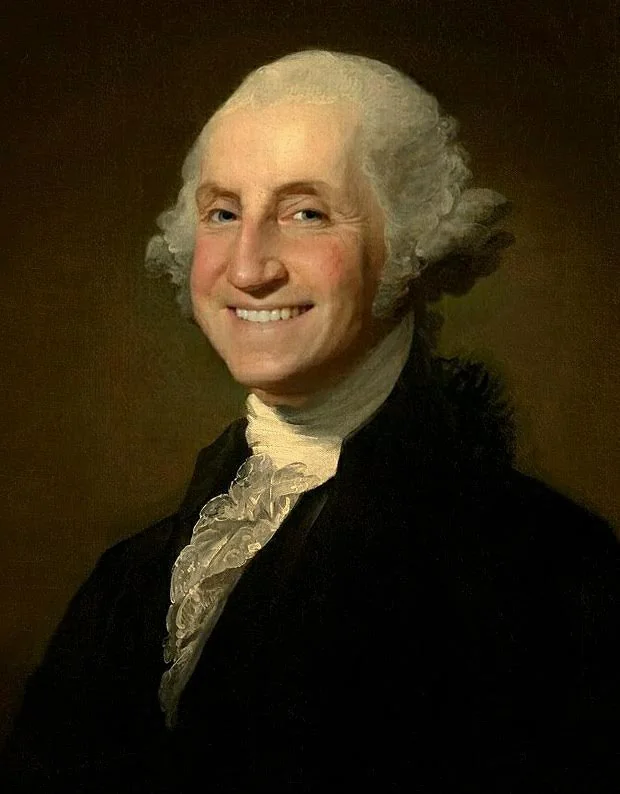
People always talk about how great it was that Washington only served two terms. I think he had to be convinced to run a second time.
ChatGPT:
Yes. By the end of his first term, George Washington was tired of politics and eager to retire to his home at Mount Vernon. He had intended to step down after four years.
Several factors persuaded him to seek a second term in 1792:
The young United States was deeply divided, especially between the supporters of Alexander Hamilton and Thomas Jefferson.
Many leaders feared that Washington’s retirement might destabilize the new government, which was still finding its footing under the Constitution.
Close advisers—including Hamilton and Jefferson, despite their disagreements—urged him to stay because they believed he was the one person trusted by nearly everyone.
Washington reluctantly agreed to run again and was unanimously reelected by the Electoral College.
By the end of his second term, however, he was determined to retire. In 1796 he declined to seek a third term and published his famous George Washington’s Farewell Address, in which he warned against excessive political partisanship and permanent foreign alliances.
So the short answer is yes: he had to be persuaded to run for a second term, and he did so more out of a sense of duty than personal ambition.
In her words, Frances Perkins, the first woman cabinet secretary, ‘came to Washington to work for God, FDR, and the millions of forgotten, plain, common workingmen.’
This article appears in the August 2026 issue of The American Prospect magazine.If you’d like to receive our next issue in your mailbox, please subscribe here.
The Asch Building was on fire.
Frances Perkins had been in New York for two years, having moved from Philadelphia to work for the New York Consumers League. On Saturday afternoon, March 25, 1911, the 30-year-old social reform advocate had joined friends for tea in Greenwich Village. During the meal, they heard fire trucks and rushed in the direction of the sirens at Washington Square.
They found the top three floors of the ten-story building engulfed in flames. The Triangle Shirtwaist Factory, the manufacturer of the button-up blouses prized by the era’s working women, occupied those floors. The International Ladies Garment Workers Union workers had protested conditions at the factory two years before. They’d been fired by the owners and replaced with immigrant laborers.
The firemen’s longest ladder only reached the sixth floor.
They had been holding until that time, standing in the windowsills, being crowded by others behind them, the fire pressing closer and closer, the smoke closer and closer. Finally, the men were trying to get out this thing that the firemen carry with them, a net to catch people if they do jump … they couldn’t wait any longer. They began to jump … the weight of the bodies was so great, at the speed at which they were traveling that they broke through the net. Every one of them was killed, everybody who jumped was killed. It was a horrifying spectacle.
The 146 victims were mainly young immigrant women from Tsarist Russia, Central Europe, and Italy. A fire escape had collapsed. Others died trying to escape through the elevator shafts. Fearing thefts by their underpaid workers, the owners had the factory doors bolted and locked. When they were able to enter, firemen found skeletons and bodies mutilated by the inferno.
Perkins reflected later that “the New Deal was born that day.”
For the city and the state, the Triangle fire was the September 11th of the 20th century. New York’s Democratic legislative leaders Assemblyman Al Smith and state Sen. Robert Wagner headed the Factory Investigating Commission probing the disaster. Perkins, a familiar face working in Albany, was the chief investigator. The group met every Saturday morning for four years. The commission exceeded its fire safety regulations mandate, proposing reforms on hours and wages, child labor, and sanitary issues in factories.
The owners were acquitted of manslaughter. They received $400 for each victim through their insurance policy and paid $75 to the families of the victims.
In 1933, Franklin Roosevelt selected Frances Perkins as his secretary of labor, the first woman to serve in a presidential cabinet.
The trauma of the 1911 fire deeply affected her. Amanda Hatch is the executive director of the Frances Perkins Center, a cultural organization affiliated with the family’s homestead in Newcastle, Maine, which was designated a national monument in 2024. “Her grandson wrote about his memory of visiting his grandmother when he was a child, and one of the first things they did were fire drills,” Hatch says. “She would show him where the rope ladder was, and how to attach the rope ladder to the second-floor window.”
BEFORE PERKINS ARRIVED IN WASHINGTON, her professional journeys took her to Chicago, Philadelphia, and New York. Her experiences in those three cities crystalized Perkins’s understanding of the problems of urban workers and informed her real-world solutions to assist the men, women, and children working in dangerous conditions for starvation wages and living in squalid, crowded, and disease-prone tenements.
After graduating from Mount Holyoke College in western Massachusetts in 1902, Perkins went to Chicago for a teaching job and volunteered over her three-year sojourn at Hull House, the settlement house established by the social reformers Jane Addams and Ellen Gates Starr.
Hull House was an early multi-service center where immigrants on the Near West Side could locate not only employment listings, but child care, legal information, and other assistance. Addams, who in 1931 went on to become the first American woman to win a Nobel Peace Prize, activated Perkins’s interest in social work and was a key mentor throughout her career.
Perkins’s sisterhood of mentors imbued her with the superpowers she drew on in the White House. “They were really embedded in the community and had experiential knowledge of what they were talking about,” says Judy Whipps, a Grand Valley State University professor emerita of philosophy and interdisciplinary studies.
“I thought I ought to give my life to the poor,” Perkins wrote in 1939 while secretary of labor (right). Credits: AP Photo; Frances Perkins Collection, Rare Book & Manuscript Library, Columbia University
Perkins left Chicago in 1907 for the Philadelphia Research and Protective Association, where she took on rescuing immigrants and Southern Black women and girls from sex traffickers. After earning her master’s degree in economics and sociology from Columbia University in 1910, she joined Florence Kelley, another Hull House alumna, at the New York Consumers League.
The New Englander gained entrée to the glamorous world of fine homes, country getaways, and cultural events enjoyed by progressive, upper-middle-class New Yorkers. But she was never wealthy. Her parents moved from Maine to Boston, where she was born in 1880, and from there to central Massachusetts, where her father opened a stationery company. She married Paul Wilson, another nonprofit professional, in 1913. Unusually for that time, Perkins kept her own surname. The family’s finances disintegrated after Wilson developed bipolar disorder and was frequently hospitalized. Their only child, Susanna, also experienced mental illness.
Perkins first met Roosevelt at a tea dance in New York City in 1911. Roosevelt was basically a “prince” of the Hudson Valley aristocracy: “There was nothing particularly interesting about the tall, thin young man,” she wrote in her best-selling 1946 memoir, The Roosevelt I Knew.
When Perkins lobbied New York legislators on a plan that would guarantee women a 54-hour workweek, Roosevelt wasn’t curious about it. But “Big Tim” Sullivan, a notorious veteran of the corrupt Tammany Hall machine, was. His 14-year-old sister had had to work, and he put his shoulder to the bill. “[Big Tim] was real,” Perkins told a New Yorker interviewer in 1933. “You didn’t have to show him statistics on the incidence of fatigue poisoning to make him understand that a girl’s back aches if she works too much.”
When FDR was elected governor in 1928, Perkins had already held state labor department positions. The outgoing governor Al Smith had just lost the presidential election, and Roosevelt asked her to serve as the state industrial commissioner, running the entire labor department. Smith had warned him that men would have problems with a woman. “Al’s a good, progressive fellow,” Roosevelt said, “but I am willing to take more chances. I’ve got more nerve about women and their status in the world than Al has.”
PERKINS’S SELECTION AS THE PRESIDENT’S secretary of labor was a bold stroke in 1933. But Perkins initially resisted, reminding Roosevelt that turf-conscious labor leaders would be irate seeing her running their department; if he was intent on a woman, someone with a union track record would be better. When that didn’t work, she thought that if she insisted on very ambitious, politically dicey conditions (ones that would actually dent the 25 percent unemployment), the new president would think twice:
In broad terms, I proposed immediate federal aid to the states for direct unemployment relief, an extensive program of public works, a study and an approach to the establishment by federal law of minimum wages, maximum hours, true unemployment and old-age insurance, abolition of child labor, and the creation of a federal employment service.
She warned him it was all borderline unconstitutional. “Well, that’s a problem,” Roosevelt said, “but we can work out something when the time comes.”
Like her three liberal colleagues in FDR’s inner circle (Harry Hopkins, Henry Wallace, and Harold Ickes), Perkins came to Washington with specific ideas about how to tackle the Great Depression. But the president left the details to them. Said Perkins, “The notion that the New Deal had a preconceived theoretical position is ridiculous.”
Derek Leebaert, author of Unlikely Heroes, a study of FDR and his “four lieutenants,” credits the social reformer’s “brain power” for her ability to survive the Roosevelt White House. “It was her determined preparation for any meeting, which is why nobody would cross her in a cabinet meeting, because she was always superbly prepared,” says Leebaert. “One of the very first things she did was assemble a group of young high-powered lawyers, most from Harvard Law, to serve as legal advisors to the Department of Labor.”
Perkins confronted relentless misogyny. She kept “Notes on the Male Mind,” a folder of observations about her colleagues. To appear less threatening to the men, she adopted a maternal aura, wearing longer skirts, pearls, and a three-cornered hat. She sat with the cabinet wives at social functions and only spoke in meetings when FDR asked.
If not for Perkins, Social Security, as Americans understand the program today, would not have been created.
After the March 1933 inauguration, Harry Hopkins, who headed New York’s relief efforts, came to Washington with a plan to graft some of the ideas that had worked in the state’s successful Temporary Emergency Relief Administration onto a federal appropriation of grants-in-aid to serve as immediate unemployment relief to the states. He couldn’t get in to see the president on his own—Perkins made the meeting happen.
By mid-May, the Federal Emergency Relief Administration had been signed into law. “One sees that it provided a substantial stimulus to the revival of industry,” Perkins wrote, “by creating purchasing power in a class previously destitute, and that it had a tremendous effect on raising the standards of living of the poorest and lowest paid people.”
Even before the relief programs were launched, Perkins had been thinking long and hard about what came to be Social Security. She never really took credit for her accomplishments and was content to let FDR shine. However, it is an undisputed fact that if not for Perkins, Social Security, as Americans understand the program today, would not have been created. Though the first private pension plan had been launched by American Express in 1875, most workers toiled until they couldn’t. The modern concept of retirement did not exist.
Roosevelt gave Perkins the freedom to develop the program. Since a relief plan was already in progress, FDR wanted to make clear that the goal was to assist Americans during future periods of unemployment and address the problems of “unprotected” old age. And he wanted it for everyone, not just factory workers. He also aimed to keep the two programs separate from the relief programs to avoid having conservative opponents label them as “the dole.” He’d wanted to add health insurance to the mix, but groups like the American Medical Association were dead set against it.
Perkins first lobbied Congress, where there was support for both old-age and unemployment insurance. She branched out to speak across the country. As she tried to figure out how to fund these mammoth programs, Supreme Court Justice Harlan Stone provided a bit of unsolicited advice at an event: “The taxing power of the Federal Government, my dear; the taxing power is sufficient for everything you want and need.” She took this intel back to her working group as the premise for creating a viable fund for the benefits. They figured out that aid to the poor and dependents could come out of federal appropriations that the states could match.
She decided that to fund old-age insurance, both employers and workers would be taxed to contribute to a fund that would distribute monies to eligible employees at age 65, who had paid into the fund. One of the drafters of the plan said they wanted a “life-long series of contributions.” “We decided that equal contributions by employers and employees were necessary, with the government contributing a third share as an offset to the assistance costs to be saved.”
Perkins in the crowd as President Franklin Roosevelt signs the Social Security Act into law, 1935. Credit: Frances Perkins Collection, Rare Book & Manuscript Library, Columbia University
AS WORLD WAR II UNFOLDED, Perkins took risks on immigration issues well beyond Roosevelt’s political comfort zone. The Immigration Act of 1924 established a system of national origin quotas to exclude specific racial, ethnic, and religious groups (chiefly, Jews and Catholics). At that time, the State Department issued visas and the Labor Department enforced immigration laws.
Brutal immigration tactics aren’t new. In Dear Miss Perkins: A Story of Frances Perkins’s Efforts to Aid Refugees From Nazi Germany, historian Rebecca Brenner Graham explains that federal labor officials in the 1930s ramped up deportations, initially targeting Mexicans in raids conducted along the southern border, complete with patrols by the KKK and other vigilantes. Boardinghouses and other locations were also singled out. Perkins laid off Labor Department old-timers in the hope of steering remaining employees to help new arrivals rather than seizing and deporting them.
Pressures to admit new Jewish refugees from Nazi Germany or extend visas of people already in the United States led to conflicts with State Department officials. However, the secretary managed to save hundreds of Jewish children despite congressional and bureaucratic opposition. The president allowed her to extend visas for up to 15,000 German Jews. But overall, Roosevelt kept the United States on the sidelines of the crisis.
Perkins ran into more trouble when she prohibited the deportation of longshoreman union head Harry Bridges. The Australian immigrant had led a successful general strike in San Francisco in 1934 and built one of the nation’s most militant unions. Right-wing congressmen called for her impeachment, and in 1939 she defended her decision before the Committee on Un-American Activities. Roosevelt dodged making any statements of support for the stances she took.
Congressional Republicans failed to blunt the New Deal by attacking Perkins, but her political cachet faded though she remained at the Labor Department through June 1945. She wanted to resign right after FDR’s January inauguration, his fourth. Even with the war winding down, Roosevelt didn’t want to think about that. “Frances, you have done awfully well,” FDR told her the day before the ceremony. “I know what you have been through. I know what you have accomplished. Thank you.” By mid-April, the president was dead.
Frances Perkins beat the system for countless forgotten, common working Americans, then and today. She died 20 years after FDR in 1965.
Before you go.
I hope that you found this article interesting and thought-provoking. The reason we’re able to publish stories like this — free of programmatic ads and never behind a paywall — is because readers like you step up to support our work.
The Prospect doesn’t answer to advertisers or billionaire owners. We answer to you and to our commitment to pursuing the truth, wherever that leads us.
Independent, reader-supported journalism is critical at a time when the free press is under assault.
If you believe this kind of reporting should exist and remain free to read, we hope you’ll consider chipping in. Every contribution, however modest, makes a real difference.
Gabrielle Gurley is a senior editor at The American Prospect. She covers states and cities, focusing on economic development and infrastructure, elections, and climate. She wins awards, too, most recently picking up a 2024 NABJ award for coverage of Baltimore and a 2021 Association for Education in Journalism and Mass Communication urban journalism award for her feature story on the pandemic public transit crisis. More by Gabrielle Gurley
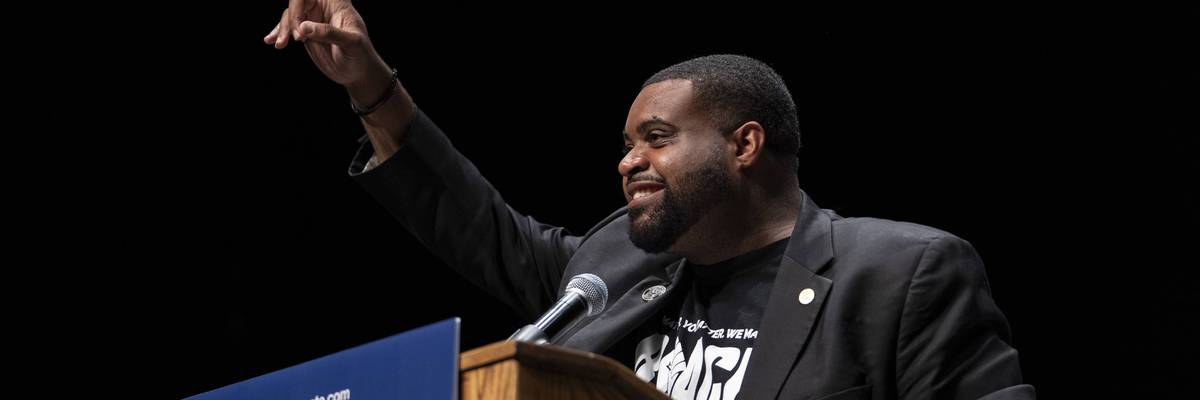
Michigan Democratic candidate for Congress Donavan McKinney speaks at The People V. The Powerful rally at the Detroit Opera House on July 18, 2026 in Detroit, Michigan, along with Democratic candidate for Senate Abdul El-Sayed.
(Photo by Sarah Rice/Getty Images)
“The Democratic establishment threw everything it had at Abdul El-Sayed,” said one podcaster. “If he wins, the reverberations will be felt far outside of Michigan.”
Voters in five states are going to the polls Tuesday to cast ballots for US House and Senate candidates, including several who aim to continue a recent streak of progressive victories that—as Colorado democratic socialist Melat Kiros said after she won her own primary race last month—will send a message to “both parties, to Donald Trump, and to the entire country.”
Major races in which progressives are hoping to beat corporate-backed, centrist Democrats are set to be decided in Missouri and Michigan, and observers have pointed to unprecedented outside spending on the primaries—including more than $100 million that’s been poured into races by the American Israel Public Affairs Committee (AIPAC) as public support for Israel plummets—as clear evidence that the political establishment views left-wing challengers as formidable opponents.
With AIPAC taking an outsized role in funding a number of centrist primary campaigns this election cycle, the results Tuesday night are expected to reveal whether the lobby group can continue to influence elections and US policy regarding Israel, while a growing number of Americans view Israel negatively following nearly three years of its US-backed assault on Gaza.
Dan Pfeiffer, a former Obama administration staffer who co-hosts the podcast “Pod Save America,” said that with the Democratic establishment particularly throwing its weight behind pro-Israel US Rep. Haley Stevens (D-Mich.) in the race between her and progressive former public health official Abdul El-Sayed in Michigan’s US Senate race, Tuesday will be “the culmination of one of the most heated and expensive Democratic Senate primaries in history.”
“The Democratic establishment threw everything it had at Abdul El-Sayed,” said Pfeiffer. “If he wins, the reverberations will be felt far outside of Michigan.”
The Michigan Senate race is arguably the most high-profile race taking place Tuesday, but in a number of House districts in the state and elsewhere, progressives are vying for seats in Congress in hopes of increasing the number of Democrats who would use their power to advocate for programs like Medicare for All and universal childcare and against massive Pentagon budgets and US aid to Israel.
Key races include:
State Rep. Donavan McKinney (D-11) vs. US Rep. Shri Thanedar (D-Mich.)
McKinney, a former labor organizer, is running to unseat Thanedar in the state’s 13th District, and recently notched endorsements from the Democratic Socialists of America and Rep. Summer Lee (D-Pa.). Sen. Bernie Sanders (I-Vt.) and Rep. Rashida Tlaib (D-Mich.) have also thrown their support behind McKinney.
The state lawmaker’s website states that he is running “because I’ve lived through the same bull**** as you my whole life, right here at home in Detroit.” He calls his city “the poster child for communities in need of the Green New Deal,” pointing to lead-polluted water and “some of the most polluted air in the country.”
He has also pushed to ban utility monopolies and government contractors, calling Thanedar “our multimillionaire congressman who bought this seat with his own money,” and had pledged to defeat “the corporate and right-wingsuper PACs that will spend millions to support” Thanedar.
According to Punchbowl News, Thanedar is “heavily self-funding” his campaign and, along with the pro-cryptocurrency group Protect Progress, has spent $4.6 million on TV ads.
McKinney has also pointed to Thanedar’s campaign funding from Detroit’s unpopular energy utility company, DTE, and from AIPAC. According to The Intercept, “two-thirds of the money Thanedar raised in the last quarter came from AIPAC, which collects money from multiple donors and funnels it to the pro-Israel group’s preferred candidates… Less than a quarter of those donors listed Michigan as their state of residence.”
Thanedar “was in the minority of House Democrats who voted against cutting $3.3 billion in military aid to Israel from a State Department spending bill” last month, The Intercept added.
In his “closing message” on Tuesday, McKinney told radio show host Dean Obeidallah that he doesn’t “have any special interests pulling the strings.”
“My special interest is the people of the mighty 13th District, and instead of continuing to send our taxpayer money to fund genocide and send it for bombs and weapons to kill families and children, or to start wars in Iran and spend over $1 billion a day on average, my focus is going to be taking those resources, our taxpayer money, and bringing it back home for people who need it the most,” said McKinney.
— SiriusXMProg.bsky.social (@SiriusXMProg) August 4, 2026
Organizer William Lawrence vs. Retired Navy SEAL Matt Maasdam vs. Former US Ambassador to Ukraine Bridget Brink
Lawrence has also been endorsed by Sanders, Tlaib, and a number of progressive groups in his race in the state’s 7th District, where he and the two moderate candidates seek to oust US Rep. Tom Barrett.
Some polls have shown the progressive co-founder of Sunrise Movement in the lead by as many as six percentage points, but other recent surveys have shown Brink in the lead.
Lawrence has touted his energetic grassroots campaign, announcing on Monday that 864 volunteers had knocked on 100,000 doors in the district, which includes Lansing and the surrounding area.
Yesterday we knocked our 100,000th door. We've built a grassroots operation unlike anything Mid-Michigan has seen before.
864 volunteers got us here, and we're just getting started. We will hit even more by November to beat Barrett. pic.twitter.com/WDZJ7gYPDl
Lawrence has focused heavily on the push to build nearly 80artificial intelligence data centers in communities in Michigan. President Donald Trump has demanded a deregulated approach, and people in towns and cities across the country have rallied against the facilities, arguing the massive water and energy consumption of data centers makes them undesirable additions to their communities.
Lawrence has joined Sanders and US Rep. Alexandria Ocasio-Cortez (D-NY) in calling for a nationwide moratorium on the construction of new data centers. In one campaign ad he was seen at a farm, saying, “Tech billionaires want to turn this field into a massive data center that’ll jack up our energy bills and ruin our home values… I’m running for U.S. Congress because I’ve never been afraid to stand up to corporate power.”
Some in the Democratic establishment attacked Lawrence recently over comments he made in 2024 in which he said older Black leaders in the party have worked to defang “the white left.” He apologized for the remark.
At a rally ahead of the primary, Lawrence told supporters that the campaign has “continued climbing” despite the attacks.
“And that’s because there are real human beings in this campaign who are having real conversations, and that is cutting through the lies and the bullshit,” he said.
Our campaign has continued to surge despite the millions of dollars in attacks misrepresenting my record.
We've built real relationships with our neighbors that the dark money outsiders can't buy with lies.
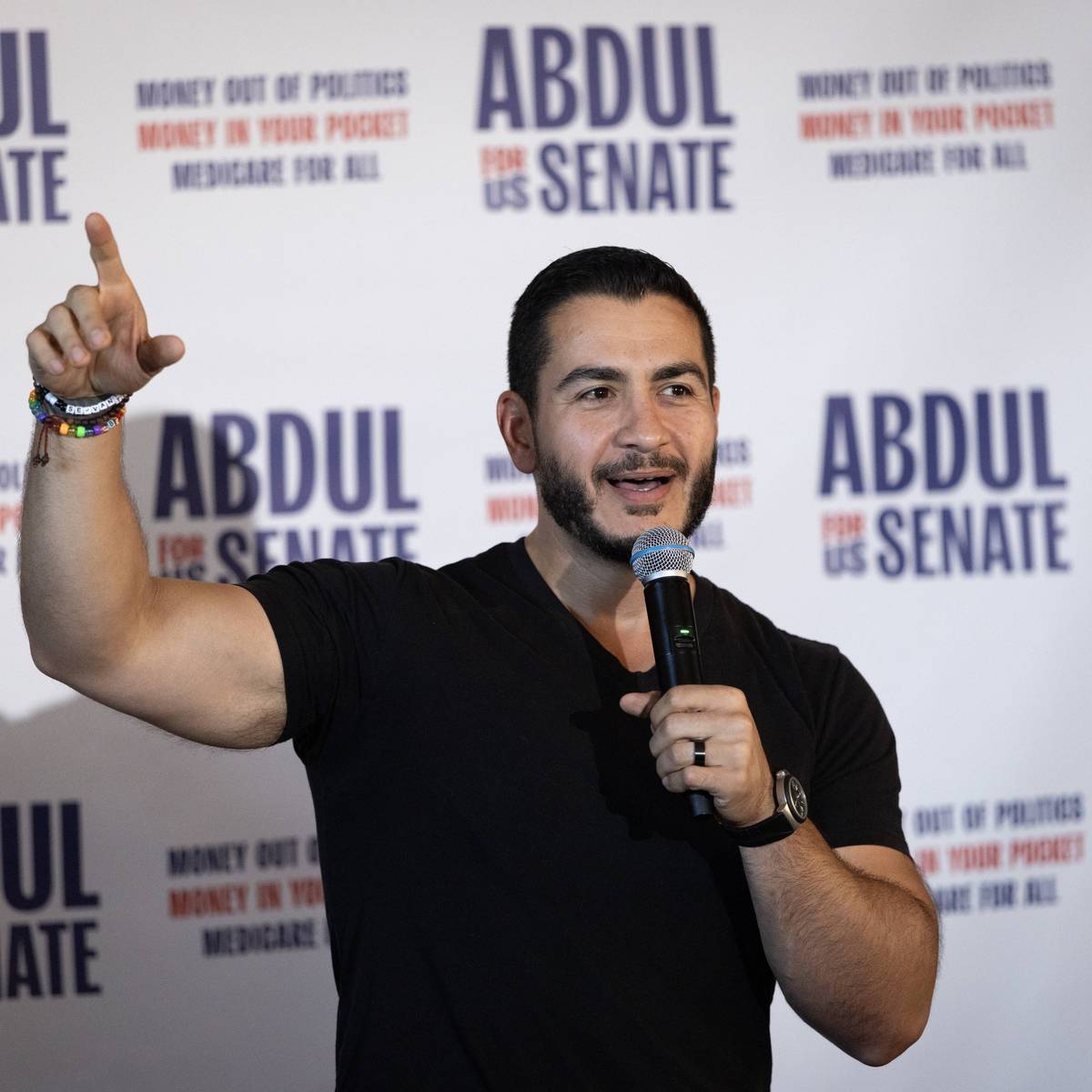
In the state’s most closely-watched race, El-Sayed has taken direct aim at Stevens for benefiting from tens of millions of dollars in AIPAC money as he has run on the slogan, “Money out of politics, money in your pocket, and Medicare for all.”
Stevens has been endorsed by Senate Minority Leader Chuck Schumer (D-NY), who has come under fire this election cycle for other endorsements including that of Maine Gov. Janet Mills in the New England state’s Senate race, with progressives arguing Schumer has backed establishment candidates and ignored the energy around Medicare for All, taxing billionaires, and ending aid for Israel among the party’s base.
Ben Rhodes, another former Obama staffer, said Monday that the party leadership “decided to back Haley Stevens in part out of fear of Abdul and the future he represents.”
El-Sayed is an outspoken advocate for Medicare for All, but Stevens has appeared eager to center his identity as a Muslim American in the race, joining the centrist think tank Third Way in attacking him for campaigning with commentator Hasan Piker, an outspoken critic of Israel, and claiming last week that El-Sayed wants “to blame all of [his] problems on Jewish Americans.”
The latter comment was widely condemned as “race-baiting.”
El-Sayed closed his primary campaign out Tuesday with an ad featuring several of his high-profile endorsers as well as grassroots supporters.
“We need to talk about who we are and affirm what we’re willing to fight for, and that’s exactly why this movement is resonating with so many,” said Rep. Ayanna Pressley (D-Mass.).
Time to vote, Michigan! For the many. For money out of politics. For money in your pocket. For Medicare for All. pic.twitter.com/e64Y9A4wuH
Numerous polls in recent weeks have shown El-Sayed far ahead of Stevens, particularly among younger voters.
Drop Site News highlighted a number of other Michigan races in which progressives are running, including organizer Abbas Alawieh in the 2nd state Senate district and Sanders-endorsed Eboni Taylor in the 3rd state Senate district.
Former US Rep. Cori Bush vs. Rep. Wesley Bell
In Missouri’s 1st District in St. Louis, former US Rep. Cori Bush is running for a second time against Rep. Wesley Bell, who defeated her in the 2024 primary after nearly two-thirds of his campaign funding came from the United Democracy Project (UDP), a super political action committee affiliated with AIPAC. The group allocated more than $100 million toward defeating candidates that supported Palestinian rights and opposed US military funding for Israel that year.
Bush told Politico recently that this year’s election is no different.
“One of us is of the people, by the people, and for the people,” Bush said in a recent interview. “The other one is paid for by AIPAC.”
According to AdImpact, UDP has again spent more than $3 million on advertising in the primary.
While Bell has a clear financial advantage, he lacks the “grassroots army” Bush has, The Intercept recently reported, as well as voter engagement. The former county prosecutor has not shown up to several candidate forums.
Polling in the race has been scarce; a survey released in February that was sponsored by Bush’s campaign showed Bell ahead by four points, with 17% of respondents undecided.
Jessica Montgomery, co-chair of the St. Louis DSA chapter, told The Intercept that voters in St. Louis are likely to show “buyer’s remorse” regarding Bell in Tuesday’s election.
He voted along with 74 other Democrats to “thank” US Immigration and Customs Enforcement in June 2025, when Trump was beginning his violent mass deportation campaign
“There’s a lot of very progressive voters in St. Louis who don’t like the fact that he voted to thank ICE,” Montgomery told the outlet. “I think they want someone who will be more adversarial and will fight back against the Trump administration.”
Bush said Monday that her opponent “is backed by billionaires, MAGA money, and AIPAC. But our movement is backed by the people.”
Our work is licensed under Creative Commons (CC BY-NC-ND 3.0). Feel free to republish and share widely.
US Sen. Ron Wyden (D-Ore.) speaks at a December 16, 2025 press conference with other Senate Democrats about the release of the Epstein files, on Capitol Hill in Washington, DC.
(Photo by Nathan Posner/Anadolu via Getty Images)
“This report is a ready-made roadmap for prosecutors, investigators, and members of Congress to finally start holding the Epstein class accountable,” said Sen. Ron Wyden.
A yearslong Senate investigation released on Tuesday revealed how some of the world’s largest banks allegedly broke federal money laundering laws by failing to stop or promptly report financial transactions that allegedly helped sustain the sex trafficking of children and young women by Jeffrey Epstein, the late billionaire and former friend of President Donald Trump.
Released by Senate Finance Committee Ranking Member Ron Wyden (D-Ore.), “Looking the Other Way” examines “how years of complicity by top officials at multiple Wall Street Banks enabled Jeffrey Epstein to transfer hundreds of millions of dollars around the world to finance his sex trafficking operation.”
“Major compliance failures at several Wall Street banks enabled Epstein for years,” the publication states. “By failing to report—or choosing not to report—his suspicious financial transactions to federal law enforcement, these banks allowed Epstein to send cash payments and wire transfers to his victims, friends, and collaborators around the world. The bankers who needed to be asking questions didn’t ask them. Jeffrey Epstein’s crimes were hiding in plain sight.”
“The investigation found significant evidence that JPMorgan Chase (JPMC), Deutsche Bank, and Bank of America violated federal anti-money laundering laws by failing to screen and report Epstein’s suspicious financial transactions in a timely manner,” the report continues.
“A review by Sen. Wyden’s staff of records housed at the US Department of the Treasury as well as internal bank records determined that top executives at major Wall Street banks were aware of Epstein’s suspicious financial activity for years but withheld information from the US government and protected Epstein from federal scrutiny,” the publication says.
According to the report:
Wall Street banks looked the other way as Epstein withdrew millions of dollars in cash with no clear business purpose and was party to thousands of suspicious wire transfers worth more than $1 billion. These banks failed to conduct appropriate due diligence on more than $170 million in payments to Epstein from billionaire Leon Black. In fact, documents reviewed during this investigation demonstrate that JPMC’s senior leadership repeatedly protected Epstein as a client despite repeated warnings from internal compliance personnel.
The documents also show that even after JPMC formally terminated Epstein as a client due to human trafficking concerns, the bank still waited years to report his activity to regulators, and top bankers eagerly continued to work with him informally and through other channels where he could continue to be a source of referrals for other ultrawealthy clients.
The three banks were among four financial institutions from which House Judiciary Committee Ranking Member Jamie Raskin (D-Md.) last year demanded records concerning over $1.5 billion in “suspicious” financial transactions tied to Epstein’s trafficking ring.
“I said from the start that if you want to get to the bottom of the Jeffery Epstein cover-up, you had to follow the money,” Wyden said Tuesday in a statement announcing the report’s publication.
“My small team of investigators did what Trump’s attorney general and treasury secretary said was impossible: They connected the dots and found evidence of multiple crimes related to Epstein’s associates,” the senator continued. “Bank records they reviewed, along with public court filings, detail a shocking pattern of the biggest Wall Street banks in the country choosing to ignore clear evidence of sex trafficking and money laundering, just to keep a wealthy client on the books.”
“This report is a ready-made roadmap for prosecutors, investigators, and members of Congress to finally start holding the Epstein class accountable,” Wyden added.
That’s highly unlikely to happen under the current Republican-controlled Congress. Republicans spent years insisting the Epstein case exposed elite corruption, promising full transparency, and rallying behind Trump’s 2024 reelection bid in part because he vowed to release every file.
Trump, former Attorney General Pam Bondi, FBI Director Kash Patel, and others promised transparency. Instead, the Trump administration has missed legal deadlines, released heavily redacted records, and withheld millions of pages in what critics say are violations of the bipartisan Epstein Files Transparency Act. Signed by the president last year, the law compelled the Department of Justice (DOJ) to publish all unclassified Epstein-related records within 30 days and explain every omission to Congress.
Acting US Attorney General Todd Blanche, Trump’s former personal attorney, angered many Epstein victims and others by announcing that there was no evidence of a secret client list, by falsely claiming that the DOJ was fully complying with the law, and by meeting with Epstein’s co-conspirator Ghislaine Maxwell in prison shortly before she was suspiciously transferred to a lower-security prison.
The Senate Judiciary Committee voted 12–10 Tuesday along party lines to advance Blanche’s nomination to become permanent attorney general, sending it to the full upper chamber for a confirmation vote expected later this week.
As the Trump administration fails to fully comply with the Epstein Files Transparency Act, its authors—Reps. Ro Khanna (D-Calif.) and Thomas Massie (R-Ky.)—recently proposed an updated version of the legislation, which strengthens the original by allowing state attorneys general, Epstein victims, members of Congress, and certain prosecutors to sue the DOJ if it fails to release required records.
The business-focused news site Bloomberg sought comment from the three banks. Deutsche Bank declined to respond, JPMC said it began notifying regulators “after the full scope of [Epstein’s] crimes became public in 2019,” and a spokesperson for Bank of America said that “we take our legal and regulatory responsibilities seriously and, as we have previously said, the bank did not facilitate wrongdoing.”
An attorney for Black told Bloomberg that the report’s assertions “outrageous and false.”
Wyden’s report came on the same day that The New Republic’s Ellie Quinlan Houghtaling revealed that CBS’ “60 Minutes” killed its own scoop on Wall Street’s long-standing financial ties to Epstein after the network’s incoming Trump-aligned boss, Bari Weiss, fired correspondent Sharyn Alfonsi, who led the investigative report. Alfonsi had interviewed Wyden for the segment.
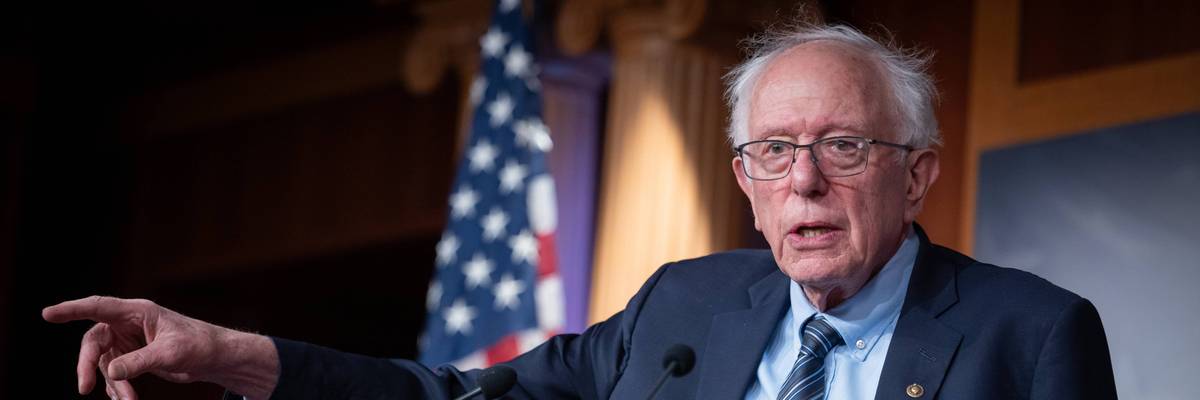
Sen. Bernie Sanders (I-Vt.) speaks at a press conference at the US Capitol in Washington, DC on May 20, 2026.
(Photo by Nathan Posner/Anadolu via Getty Images)
“If the Democratic Party is ever to regain the faith of ordinary Americans it must stand firm on the issue of Social Security,” said Sen. Bernie Sanders.
US Sen. Bernie Sanders on Tuesday warned his Democratic colleagues against supporting bipartisan legislation that would open the door to fast-tracked Social Security cuts under the guise of rescuing the New Deal program from insolvency.
In a Dear Colleague letter, Sanders (I-Vt.) wrote that the best and most popular way to extend the life of Social Security and expand its modest benefits is to lift the payroll tax cap, which currently exempts annual income above $184,500 from taxation. But the senator argued that the Protecting Retirement Opportunities and Maintaining Income Security for Everyone (PROMISE) Act—introduced last month by a bipartisan group of senators—“moves us in exactly the wrong direction.”
“The so-called PROMISE Act would direct four unelected members of the Social Security Advisory Board to produce, in little more than a month, a proposal to make Social Security solvent for the next 50 years—with virtually no transparency, no meaningful public input, and no accountability,” Sanders wrote. “If the Advisory Board reaches an agreement, Congress would be required to vote on their proposal during the lame-duck session after the November elections when Republicans still control the Senate and the House.”
“If the board cannot reach an agreement, the PROMISE Act would allow any member of Congress to force a vote on their own Social Security proposal under expedited procedures without the opportunity to amend it or seek a compromise—also during the lame-duck session,” Sanders continued. “In other words, Members of Congress who have been defeated at the polls or who have chosen to retire could determine the future of Social Security for the next half century.”
The PROMISE Act’s lead sponsors are Sens. Bill Cassidy (R-La.), Dick Durbin (D-Ill.), Thom Tillis (R-NC), Tim Kaine (D-Va.), John Cornyn (R-Texas), Angus King (I-Maine.), and Alan Armstrong (R-Okla.). Five of the bill’s seven sponsors either lost reelection or aren’t running again in 2026.
“In other words, members of Congress who have been defeated at the polls or who have chosen to retire could determine the future of Social Security for the next half century,” Sanders wrote in his letter. “Even more significantly, a political party that was repudiated by the electorate in the midterm elections could determine the fate of Social Security. That would be absurd, anti-democratic, and unacceptable.”
Sanders isn’t alone in warning against the PROMISE Act. A week after the bill’s introduction, the AARP’s executive vice president expressed opposition in a letter to Cassidy and Durbin, writing that “we strongly object to fast-tracking Social Security changes through Congress, as your bill would do.”
Max Richtman, president and CEO of the National Committee to Preserve Social Security and Medicare, echoed Sanders’ concern that the legislation’s changes “would likely occur during a lame-duck session, after the election, when many members are on their way out.”
“Those members could be asked to vote on sweeping changes to Americans’ earned benefits, when they’ll no longer be accountable because they’re leaving office. I think that’s a real problem,” said Richtman. “And I think members of Congress should be 100% responsible for any changes to the Social Security program.”
“We will strengthen and expand Social Security by requiring the wealthiest Americans to finally pay the same percentage of their income into Social Security as tens of millions of working people.”
In early June, Social Security’s Board of Trustees said in its annual report that—in the absence of congressional action—the program will be unable to pay out full benefits by the end of 2032. At that point, the Social Security trust fund “will be sufficient to pay 78% of total scheduled benefits,” the trustees said.
Sanders argued on Tuesday that the solution is straightforward: “strengthen and expand Social Security by requiring the wealthiest Americans to finally pay the same percentage of their income into Social Security as tens of millions of working people do today.”
Last year, Republicans blocked Sanders’ attempt to pass via unanimous consent his legislation to expand Social Security benefits by $2,400 a year per recipient. The expanded benefits would be funded by subjecting all annual income above $250,000 to Social Security payroll taxes.
According to the senator’s office, his legislation would ensure Social Security’s solvency for the next 75 years. Data for Progress polling shows Sanders’ proposal is overwhelmingly popular, with 80% of US voters supporting the measure.
“If the Democratic Party is ever to regain the faith of ordinary Americans it must stand firm on the issue of Social Security,” Sanders wrote on Tuesday. “That means: We will not cut Social Security benefits. We will not raise the retirement age. We will not reduce cost-of-living adjustments. We will not privatize Social Security.”
“We will not support procedural shortcuts that make it easier to reduce earned Social Security benefits behind closed doors while limiting public debate,” Sanders continued. “Instead, we will strengthen and expand Social Security by requiring the wealthiest Americans to finally pay the same percentage of their income into Social Security as tens of millions of working people do today.”
Our work is licensed under Creative Commons (CC BY-NC-ND 3.0). Feel free to republish and share widely.
The campaign supporting Scott Wiener for Congress has launched a new interactive, parody AI chatbot that poses as rival candidate Connie Chan, and mocks her stances and votes on various issues.
The bot, dubbed ConnieChan.ai, just launched this week, as KRON4 reports, and it’s a fairly simple gimmick that resembles chatbots like Claude or ChatGPT, responding to questions or to various suggested prompts about hot-button topics like “Blocking Housing” or “Derailing Public Transit.” The tagline at the top, “Let’s do nothing together.”
Clicking on the public transit prompt, the bot responds with, “I do love a good delay, and I’ve truly made an *impact* on our city’s ability to move people around efficiently.” It then suggests four subtopics, including “Making Buses Slower,” and if you click on that, the AI Connie discusses how she voted to block a proposed bus rapid-transit (BRT) lane on Geary Boulevard, like the one we have on Van Ness.
On the topic of “Silencing Live Music,” the bot points to an SF Standard article and highlights how, three years ago, Chan “tried to sabotage Outside Lands by playing games with its permits,” and also how Chan voted against turning the Castro Theatre into a music venue. (To be fair, many of SF’s progressives stood on the side of the “don’t remove the seats” crowd who feared the theater would never be used to screen movies again.)
If you try to ask a question that is not related to any of the suggested prompts, like about homelessness, the bot just steers you back to the prompts, saying things like, “Homelessness is indeed a pressing issue, but I’m afraid my particular expertise lies in the finer points of obstruction across other domains — I’m simply not equipped to share my record on that one.”
Chan was a well-known “no” vote on banning cars from JFK Drive in Golden Gate Park, and the bot also highlights a dustup, documented on Reddit, over Chan staring at her phone during a public-comment session at the Board of Supervisors on that topic.
The mocking chatbot is being released just as we saw new poll numbers last week (in a poll commissioned by Chan’s campaign) that put Chan just five percentage points behind Wiener.
And the jokey nature of the chatbot stunt has the hallmarks of political consultant Conor Johnston, who was linked to an April stunt involving a minivan that was being parked around town bearing the message, “Where does Saikat live? Saikat lives in Maryland.” That stunt took aim at accused carpetbagging political candidate Saikat Chakrabarti, who lost his primary bid to Chan and Wiener.
Photo via SFist tipster
A very similar stunt involving a sedan that looks like a yellow taxicab, with the same sort of banner mounted on its roof, was seen parked next to Dolores Park last week with the message, “Connie Chan Opposes Everything” — essentially the same message being promoted by the AI chatbot.
So, the negative campaigning has begun! And it’s barely August. We’re certainly in for plenty more.
Top image: San Francisco Supervisor and congressional candidate Connie Chan speaks at a “Get Out the Vote” rally on May 29, 2026 in San Francisco, California. U.S. Rep. Nancy Pelosi (D-CA) has endorsed San Francisco Supervisor Connie Chan to fill her seat representing California’s 11th Congressional District. (Photo by Benjamin Fanjoy/Getty Images)
Abdul El-Sayed has won Michigan’s slugfest of a Democratic Senate primary, NBC News projects, clinching the nomination in a close race over Rep. Haley Stevens and establishing a Midwest beachhead for a progressive left on the march this midterm cycle.
El-Sayed overcame a nearly $65 million onslaught of outside money and an establishment that had rallied around Stevens. Popular Gov. Gretchen Whitmer endorsed Stevens late last month — a move seen as a last-ditch effort to stop a rising El-Sayed.
El-Sayed, a former public health official, goes on to face former Rep. Mike Rogers, who claimed the Republican nomination without opposition Tuesday. Their race in November is expected to be one of the most competitive in the country, and it could determine which party controls the Senate.
Whoever wins will succeed Sen. Gary Peters, a Democrat who decided against seeking a third term and endorsed Stevens in the primary.
Republicans have 53 seats in the chamber, and Democrats are going after some red states to flip the four seats they’d need to swing the majority. But Democrats also have to defend seats in several battleground states, including Georgia and Michigan.
President Donald Trump, whose early endorsement of Rogers helped clear the GOP primary for him, won Michigan in 2016 and 2024 and lost to Joe Biden in 2020.
Rogers and national Republicans had signaled that they consider El-Sayed an easier opponent than Stevens. The National Republican Senatorial Committee went so far as to produce a digital ad emphasizing El-Sayed’s progressive credentials and endorsement from Sen. Bernie Sanders, I-Vt. — a move many viewed as an effort to boost him into the general election.
Sanders and Rep. Alexandria Ocasio-Cortez, D-N.Y., barnstormed the state for El-Sayed, whose push for “Medicare for All,” condemnation of money in politics and criticism of Stevens for supporting aid to Israel were central to his campaign. The primary was seen as a test of whether an insurgent populist movement that had scored victories in primaries in blue states like New York and Colorado could take root in a purple battleground in the industrial Midwest.
Like other Democrats who have run to push the party to the left in recent years, El-Sayed accused Israel of committing genocide against Palestinians in Gaza. That’s a particularly relevant position in Michigan, with its large Muslim and Arab American populations.
El-Sayed also frequently blasted Stevens over the money she accepted from corporate PACs and the TV air cover she received from big-spending allies, including more than $30 million from a group affiliated with the American Israel Public Affairs Committee, the powerful pro-Israel group known as AIPAC.
While many of the group’s ads made a positive case for Stevens, some of the messaging attacked El-Sayed. Overall, Stevens and her allies spent nearly nine times as much on advertising as El-Sayed and his allied groups did, according to AdImpact, an ad-tracking firm.
“If you need a $60 million crutch, you probably can’t be elected on your own terms,” El-Sayed said at a debate last week in Detroit.
Stevens, a four-term congresswoman, aligned herself closely with the Democratic establishment, including not only Whitmer and Peters in Michigan, but also Senate Minority Leader Chuck Schumer of New York. And while El-Sayed marshaled support from national figures on the left like Sanders and Ocasio-Cortez, he also scored an endorsement from the United Auto Workers, a major presence in the state given its car-making pedigree.
The closing month of the primary grew increasingly hostile, especially after a third Democrat, state Sen. Mallory McMorrow, dropped out last month. McMorrow had tried to cut a path between Stevens and El-Sayed, running as a compromise candidate who could appeal both to moderates and the progressive left.
But the flood of TV ads in Stevens’ behalf and the energy around El-Sayed’s Sanders-backed campaign left little room for McMorrow, and the differences between the two remaining Democrats became even more pronounced once their mutual rival exited.
Stevens often accused El-Sayed of focusing too much on national politics and not enough on Michigan. The July 24 endorsement from Whitmer, who beat El-Sayed in the 2018 Democratic primary for governor, helped underline Stevens’ argument. So did a recent call El-Sayed held with donors.
On the call, audio of which leaked to NBC News and others, El-Sayed said a victory for him in Michigan could reverberate into 2028 and encourage primary challengers against the likes of Sen. John Fetterman, D-Pa., who has fallen out of favor with the left. He characterized such a move as putting “an ogre on a pike” — rhetoric that some Democrats believed was targeted at Stevens, though El-Sayed had described Fetterman as an “ogre” in the past.
Stevens, who spent the closing days of the race simultaneously shrugging off and leaning into social media snark about her Upper Midwest accent and appearance, used the episode to reinforce her message.
“These folks are making fun of the way I sound,” Stevens said at last week’s debate. “But yet, I sound like the people who need help, who are talking to me about what they need.”
El-Sayed rarely deviated from his core message.
“This is about whether or not you deserve a politics of the people, by the people and for the people,” he said at the debate, “or of the corporations, by the billionaires and for the special interests.”Share
Troy Jackson, the Democratic nominee for US Senate in Maine, speaks after winning the vote his party’s nominating convention in Bangor, Maine on July 25, 2026.
(Tom Williams/CQ-Roll Call, Inc via Getty Images)
Musk reportedly plans to spend at least $100 million to help Sen. Susan Collins and other vulnerable Republicans across the United States.
Troy Jackson, the Democratic nominee for US Senate in Maine, delivered a video response on Sunday to mega-billionaire Elon Musk’s plan to spend at least $100 million to aid Sen. Susan Collins and other Republicans in key races across the country.
The New York Timesreported that Musk, through his America PAC, intends to “spend $100 million to $120 million on a new field program in at least eight states to help elect Republicans in November.” The group, according to the Times, “plans to initially target Senate races in at least five states—Alaska, Iowa, Maine, Michigan, and Ohio—and is having conversations about the contests in North Carolina, Georgia, and Texas.”
“Apparently Elon Musk has gotten off Twitter long enough to realize that he’s got a real problem here in Maine,” Jackson, the former president of Maine’s Senate, said in a one-minute response to the report on America PAC’s spending plans. “The problem is me and you, working to try and get a government that we should have, that we deserve.”
“He wants to have people that are totally beholden to him and [President] Donald Trump making sure that we’re getting tax cuts for billionaires on the back of our healthcare system, on the back of our hospitals,” Jackson continued. “That’s what Elon Musk wants. He doesn’t care about us. Really doesn’t care about Susan. He cares about him. So I would say to you Elon: Maine and really the whole United States doesn’t want your dirty money in our politics. You don’t get to buy the government that you want. This is about all of us coming together and fighting for the government that we deserve, and you’re not in it.”
The Times reported that Musk’s super PAC is “closely coordinating with an ecosystem of outside groups that are preparing field campaigns, including Americans for Prosperity, which is part of the billionaire Koch brothers’ political network, and the Sentinel Action Fund, another conservative organization.”
Musk became the world’s first trillionaire earlier this year with the public market debut of SpaceX, whose subsequent decline in market cap pushed his net worth back down to around $690 billion—still the largest individual fortune in the world.
In the two days following his nomination, Jackson raised $2 million from 58,000 donors, including 30,000 new contributors—a major show of small-dollar support.
“We’re all getting crushed out here. Healthcare, housing, heat,” Jackson says in his first general election campaign ad, which is set to begin airing this week. “We’ve gotta fight back. We’re all hungry for it. Maine is ready for a change.”
Our work is licensed under Creative Commons (CC BY-NC-ND 3.0). Feel free to republish and share widely.
On the night of May 15, 2025, James Comey did something millions of us do every day: he opened Instagram and posted a photo. As is well known by now, it showed seashells on a North Carolina beach, spelling out “86 47.” That photograph is the entire basis for a federal prosecution that’s intended to send him to prison for up to a decade.
What happened next, laid bare in court filings unveiled last week, is why I believe the Comey prosecution will be remembered as one of the most significant First Amendment cases in American history. An American president is trying to imprison a critic for posting a photograph. And to build the absurd case, the government surveilled that critic without a judge’s approval, in a manner its own agents admitted in writing was illegal. The filings answer some questions about what was done to Comey, but they open a far larger one that may not be answered for years: how many other people is this administration illegally watching and preparing to illegally punish?
Here’s what we now know about a case that was already outlandish before an indictment was even issued.
Within hours of that Instagram post, the Secret Service had Comey on the phone. The next morning, Trump went on Fox News and declared that the picture “meant assassination.” By that afternoon, a senior Justice Department official, identified in the filings only as “the number three guy at DOJ,” wanted the Secret Service to ping Comey’s cellphone and track his location in real time.
The Secret Service’s own supervisor put his objection in writing. Pinging the phone “could be done,” he warned, “but it would be a bad idea.” Warrantless emergency tracking requires an imminent threat to life, and “we did not believe that anyone’s life was in immediate danger.” It was, in his words, “legally questionable.” His boss agreed, according to the emails, “but said we might do it anyway.”
And they did. The next day, an agent filled out a form telling Verizon the government faced “an emergency involving danger of death or serious physical injury,” certified that this was “true and correct,” and got Comey’s location data. There was no emergency, and everyone involved seemingly knew it. Agents then tracked Comey electronically and tailed him as he and his wife drove home from North Carolina to Virginia, including as they stopped to visit the grave of their deceased son. All the while, Trump was allegedly following it from Air Force One. The agent in charge traveling with the president emailed that the case was “a hot topic on the plane,” that Trump was “very interested,” and wanted Comey’s interview notes in hand for his six o’clock press conference.
So, to be clear, we found out that the president of the United States was aboard his airplane, personally tracking the surveillance of a private citizen who had posted a photo of four digits. Obvious free speech. Breathtaking abuse of power to punish it.
Then the story gets worse. The Secret Service investigated and found nothing. By November 2025 it had formally closed the matter, concluding there was no risk to the president’s life from James Comey (because of course there wasn’t) and no basis whatsoever for any charges. That should’ve been the end. Until March 23, 2026, ten months after the seashell photo and four months after the professionals had walked away, the FBI suddenly obtained warrants for Comey’s Apple and Google accounts. Those warrants came days before Trump fired his attorney general, and the indictment followed in late April, right as Todd Blanche was angling to replace Pam Bondi. The surveillance did not intensify because a new threat emerged; rather, it appeared to intensify because the political usefulness of nailing Comey increased. The same Todd Blanche whose nomination you helped freeze last week built his audition for attorney general partly on this case.
(By the way, before Comey ever posted, Amazon vendors had sold more than 200,000 products bearing “86 47” or its variants, generating exactly zero federal investigations. The FBI’s own threat database, kept since 2007, also showed no prior instances of “eighty-six” being an assassination threat. Also, a federal judge in Washington recently ruled that protesters’ “86 47” signs are so manifestly, obviously protected speech and not imminent death threats.)
Your average American might shrug all this off. With high prices gobbling up the budgets of working class households, a court case involving a vindictive president feuding with an ex-FBI director who once investigated him sounds like Washington drama, not a kitchen-table concern. But the precedent is not really about Comey. It’s about each of our constitutional rights, the phones in our pockets, and about what we are allowed to say before the government reaches for those devices.
The new details from last week show that the president has given himself the ability to name an enemy, point to that enemy’s free speech, and then wiretap him over it without the approval of any judge. That’s at least three constitutional violations. The First Amendment is supposed to shield the speech. The Fourth is supposed to stand between you and a search like this. And the Fifth and Fourteenth Amendments should safeguard any citizen from being selectively and vindictively prosecuted. Here, all three were simply skipped. And if that can be done to a former FBI director with the best lawyers and a national profile, it can be done to virtually anyone.
I don’t write this as a bystander of course. Trump has publicly accused people like me, John Brennan, James Clapper, Adam Schiff, and even Barack Obama and Joe Biden, of treason. I have to assume some of us are already under surveillance for the audacity of criticizing the sitting president, while he has agents hunt for something—anything—to charge us with as punishment. (They’re welcome to my Instagram, where they’ll find more than just mentions of “86 47” but daily broadsides against Trump’s naked corruption, deficient character, and unfitness for office. I won’t stop no matter what they do.) Ironically, one of those criticisms is that I’ve long warned a second Trump term would turn the intelligence apparatus into an instrument of personal revenge and political spying. Again, the wannabe despot in the Oval Office has proven my point.
So here’s the answer to the question in the headline of this essay. We don’t know how many Americans are being warrantlessly monitored right now, or individually targeted despite their constitutional rights. That is the problem. Comey’s surveillance surfaced only because his prosecution forced these documents into open court. Everything about how this administration treats the people it considers enemies tells me his case is the rule, not the exception, and that there may be far more people they’ve decided to watch than to tip their hand by bringing weak and foolish cases.
The Framers gave us the three, aforementioned safeguards for exactly this moment. The First Amendment so a citizen could mock or provoke his leaders without fear… the warrant requirement, the Fourth, because they had lived under a king who searched his subjects at will… and the Fifth and Fourteenth to keep people from being singled out for revenge because they are out of favor with the powerful. In Comey’s case the government ran past all three, punishing the speech and skipping the warrant and going after a Trump critic just because he was a Trump critic—all in a single move.
We are watching a president test whether those protections still exist for any of us. The courts will decide Comey’s fate sooner or later. But the rest of us have to decide, in the years ahead, whether we make the cost of this abuse of power so high that no one dares to repeat it.
This Sunday’s Town Hall: Announcing This Week’s Progressive Town Hall: Every Sunday at 4pm ET/1pm PT RSVP HERE Join PDA activists online from across the country to discuss the importance of progressives reclaiming the American story from the MAGA right, an issue of heightened importance as we’re now within one... Continue reading →
We protest Heritage Foundation EVERY MONDAY (Join us!!!!) By admin | September 2, 2025 | Uncategorized Cliff Cash Comedy Premiered Jul 26, 2025 Every Monday at The Heritage Foundation 214 Massachusetts Ave. Washington D.C. 4pm protest 6pm pizza Every Friday at Fox News D.C. 400 N. Capitol St. Washington D.C. 4pm protest 6pm pizza We are... Continue reading →
September PAC Meeting *We will be voting on November Election endorsement recommendations for state propositions!* Date: Tuesday, 8 September, 2026 (second Tuesday of month) Time: 7-9 PM *NEW* In-person Location: Women’s Building (3543 18th St), Audre Lorde Room Remote: Via Zoom Link Here
One Million Rising: Strategic Non-Cooperation to Fight Authoritarianism Virtual Event · Hosted by No Kings Time Wednesdays 8 – 9:30pm EDT Location Virtual event Join from anywhere About this event Across the country, authoritarian forces are getting bolder and more dangerous. Trump and his allies are not hiding their agenda: mass deportations,... Continue reading →
THURSDAY, JUNE 29, 2023 AT 2 AM – 4 AM PDT How to create trust in a group? Details Event by Extinction Rebellion Empathy Circles online EMPATHY CAFE Duration: 2 hr Public · Anyone on or off Facebook How to create trust in a group? This is the question that arose in our... Continue reading →
The San Francisco Democratic Party presents The San Francisco Democratic Party 2026 Gala Thursday, September 10th 6:00 – 10:00 PM Bimbo’s 365 Club 1025 Columbus Ave San Francisco, CA 94133 TICKETS https://www.sfdems.org/gala2026
Public Banking Coalition monthly meetings Next call: Nov 11 Excitement is building for public banking and once a month, PBI hosts an hour-long Public Banking Coalition online meeting to share the excitement and successes. Find out the latest updates on the advances being made all across the country from local advocates themselves... Continue reading →
Trump Regime Takedown: Every Saturday Saturday, March 7, 2026 12:00 PM 2:00 PM Tesla San Francisco999 Van Ness AvenueSan Francisco, CA, 94109United States (map) Google Calendar ICS Keep democracy alive every Saturday by showing up, taking a stand, and sticking together for the long haul. Standing together is better than standing alone. Let’s get together... Continue reading →
This Sunday’s Town Hall: Announcing This Week’s Progressive Town Hall: Every Sunday at 4pm ET/1pm PT RSVP HERE Join PDA activists online from across the country to discuss the importance of progressives reclaiming the American story from the MAGA right, an issue of heightened importance as we’re now within one... Continue reading →
We protest Heritage Foundation EVERY MONDAY (Join us!!!!) By admin | September 2, 2025 | Uncategorized Cliff Cash Comedy Premiered Jul 26, 2025 Every Monday at The Heritage Foundation 214 Massachusetts Ave. Washington D.C. 4pm protest 6pm pizza Every Friday at Fox News D.C. 400 N. Capitol St. Washington D.C. 4pm protest 6pm pizza We are... Continue reading →




 by
by