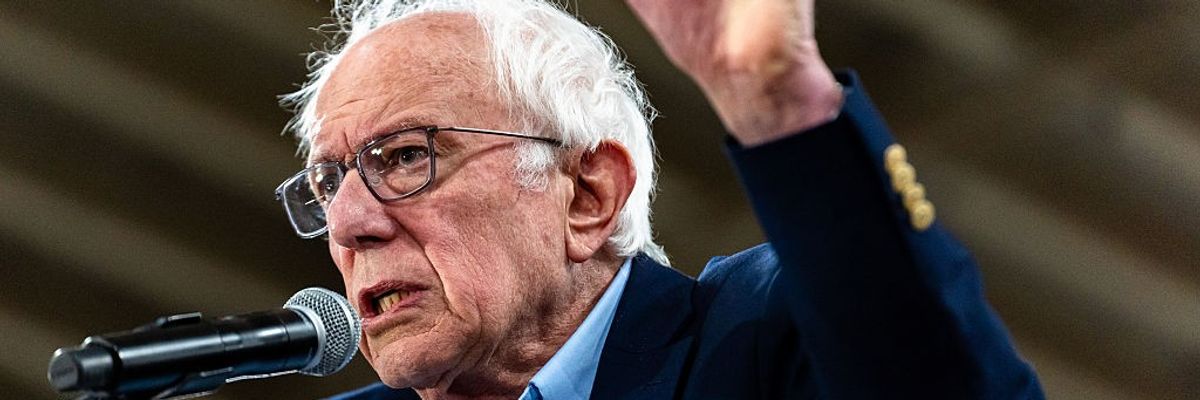
ICEBlock app

Clare Duffy

By Clare Duffy, CNN

Updated 10:14 AM EDT, Mon June 30, 2025

‘I wanted to do something to fight back’: Developer makes app to flag ICE raids.

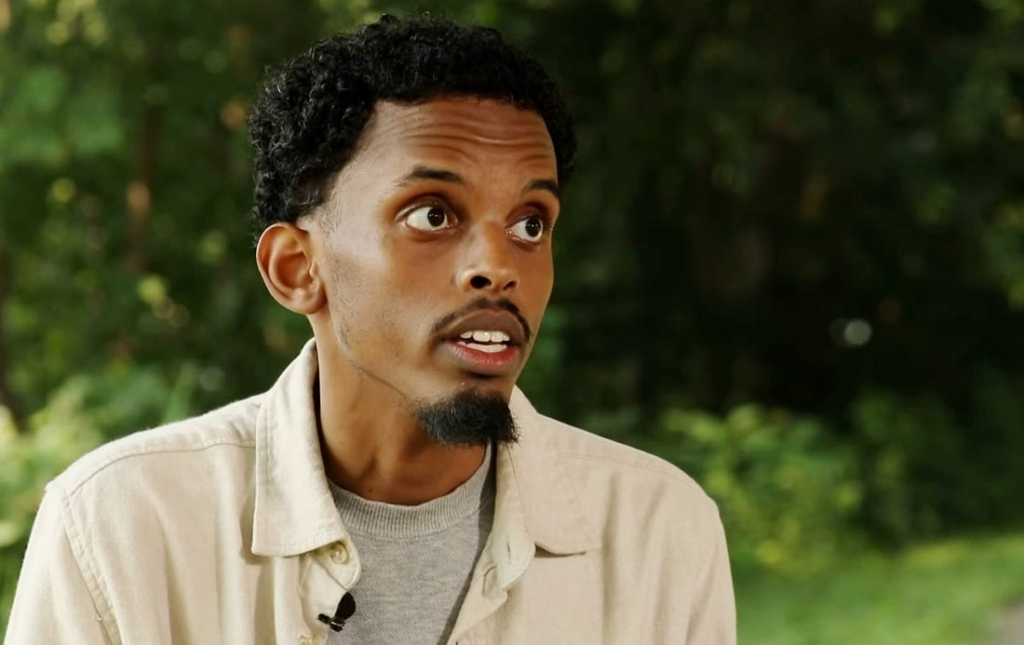
Joshua Aaron has worked in and around the tech industry for around two decades. He built his first app — a blackjack game — at computer camp when he was 13.

His newest app is designed for a very different purpose: to let users alert people nearby to sightings of Immigration and Customs Enforcement agents in their area.

Aaron launched the platform, called ICEBlock, in early April after watching President Donald Trump’s administration begin its immigration crackdown. The White House’s immigration policies have sparked mass protests across the United States; a CNN poll in April showed 52% of Americans polled said Trump has gone too far in deporting undocumented immigrants.

ICEBlock currently has more than 20,000 users, many of whom are in Los Angeles, where controversial, large-scale deportation efforts have taken place.

“When I saw what was happening in this country, I wanted to do something to fight back,” Aaron told CNN, adding that the deportation efforts feel, to him, reminiscent of Nazi Germany. “We’re literally watching history repeat itself.”

ICEBlock is designed to be an “early warning system” for users when ICE is operating nearby, Aaron said. Users can add a pin on a map showing where they spotted agents — along with optional notes, like what officers were wearing or what kind of car they were driving. Other users within a five-mile radius will then receive a push alert notifying them of the sighting.

President Donald Trump speaks to reporters before boarding the Marine One presidential helicopter and departing the White House on June 24, 2025 in Washington, DC.

RELATED ARTICLEExclusive: New Trump administration plan could end asylum claims and speed deportations for hundreds of thousands of migrants

Aaron said he hopes those notifications will help people avoid interactions with ICE, noting that he does not want users to interfere with the agency’s operations. The app provides a similar warning when users log a sighting: “Please note that the use of this app is for information and notification purposes only. It is not to be used for the purposes of inciting violence or interfering with law enforcement.”

ICE did not respond to CNN’s request for comment regarding the app or Aaron’s characterization of the agency’s activity prior to this story’s publication. On Monday, ICE Acting Director Todd Lyons released a statement criticizing CNN’s report and saying that ICEBlock “basically paints a target on federal law enforcement officers’ backs” and that “officers and agents are already facing a 500% increase in assaults.”

ICEBlock doesn’t collect personal data, and users are completely anonymous, according to Aaron. It’s only available on iOS because Aaron says the app would have to collect information that could ultimately put users at risk to provide the same experience on Android.

Reassuring users of those privacy protections will likely be key to growing ICEBlock’s user base, given how the government is building a database to aid in its deportation efforts.

“We don’t want anybody’s device ID, IP address, location,” Aaron said. “We don’t want anything being discoverable. And so, this is 100% anonymous and free for anybody who wants to use it.”

What do you think?Join 299 others in the comments

View Comments

Although ICEBlock has no surefire way of guaranteeing the accuracy of user reports, Aaron says he’s built safeguards to prevent users from spamming the platform with fake sightings. Users can only report a sighting within five miles of their location, and they can only report once every five minutes. Reports are automatically deleted after four hours.

Aaron says he has no plans to monetize the free app but rather wants it to be a service to the community.

Aaron’s work on ICEBlock stands in contrast to the support that some leaders in Silicon Valley have shown to Trump, including by donating to and attending his inauguration. Some companies have also announced investments in expanding their US presence following the president’s push for domestic tech manufacturing.

“I think I would say grow a backbone. You can’t just be about the money,” Aaron said when asked what he would say to those tech leaders.

“I understand that you have shareholders to report to. I understand that you have employees that need their paychecks,” he added. “But at what point do you say, ‘Enough is enough’?”

This story has been updated with additional content.

Supreme Court Continues Role as Trump’s Servant

by Stephen Kaus on June 30, 2025 (BeyondChron.org)

The Supreme Court will often have final word

Last week, the United States Supreme Court continued its support of President Trump’s march toward fascism.

On Friday, it struck down several nationwide injunctions against  Trump’s executive order attempting to narrow birthright citizenship granted by common law since the birth of the country and affirmed by the Fourteenth Amendment.  

The Court limited district and appellate courts to giving relief only to the parties before them, giving oxygen to Trump’s battle against trial courts enforcing the Constitution.

Last Monday, the Court contradicted its previous guarantee of due process to all deportees by allowing Trump to summarily ship people to dangerous places to which they have no connection at all.

Justice Sondra Sotomayor wrote desperate and heart-felt dissents in both cases. She decried the majority acting “shamefully” in the birthright citizenship case and its “absurd” allowance of third country removal without meaningful notice and a hearing.

The Birthright Citizenship Case

The court did not actually rule on Trump’ cramped definition of birthright citizenship.Instead, the court bars, with a few gaping loopholes,  nationwide or “universal” injunctions from lower courts. Trial and appellate court actions are now limited to giving complete relief to the actual plaintiffs before them, which generally, but not always, would fall short of a nationwide injunction.

Nationwide injunctions are a recent phenomenon that Republicans happily used, along with filing in single-judge right-wing courts, to curtail Democratic programs such as vaccine mandates, Obamacare and DACA amnesty as well as to ban the abortion drug mifepristone.

The immediate effect of this decision is to nullify approximately 53 injunctions issued against various Trump policies, eliminating a powerful weapon against Trump overreach.

The actual dispute in this case concerns Trump’s attempt to alter the longstanding concept of birthright citizenship. In an 1897 case, United States v. Wong Kim Ark, the Supreme Court confirmed that under the Fourteenth Amendment and English common law before that, children born on United States soil are U.S. citizens. As the law has been interpreted for hundreds of years, this gives citizenship to children of non-citizen immigrants.       

So, settled, right? Not to right-wing racist Ann Coulter and disgraced insurrection lawyer John Eastman. They made up an argument  that birthright citizenship does not apply to children of undocumented immigrants.  

This fringe theory found a customer in Donald Trump. On Inauguration Day, he signed an order eliminating citizenship for children of mothers “unlawfully present” or lawfully but “temporarily present” in the United States unless the father is a “United States citizen or lawful permanent resident.”

Courts have had no problem finding this order to be both beyond the President’s power and incorrect. Federal district courts in several states immediately issued nationwide injunctions preventing enforcement of the Order.

For example, conservative Reagan appointee  Judge John Coughenour in Washington called the Order “blatantly unconstitutional.” Judge Coughenour accurately declared that “it has become ever more apparent that to our president the rule of law is but an impediment to his policy goals.”

The nationwide injunctions issued against Trump’s order were appropriate because of the chaos that would be caused by having one citizenship rule in the blue plaintiff states and another in the remaining red states. The state plaintiffs cited the administrative impossibility of administering benefits requiring citizenship. Moreover, some of the plaintiffs were organizations with members spread across the country, which also would justify nationwide relief for those members.

Seven courts struck down the Order, none upheld it.

Sensing that its position on the merits was untenable, the government’s “emergency” appeal to the Supreme Court did not even argue that Trump’s order was correct. Instead, it only took on the legality of nationwide injunctions.

The Court played along, studiously refusing to deal with the constitutionality of Trump’s Order. Instead, the Court went procedural, decrying “universal” injunctions and requiring the district courts to limit their injunctions to giving relief to the actual parties.

The decision written by Amy Coney Barrett has been described as reading like a Trump press release. However, the court not only avoided the merits of Trump’s alteration of the Constitution, but also punted on whether a class action could provide nationwide relief or whether a nationwide injunction is justified to give complete relief to the plaintiff states or to nationwide organizational plaintiffs.

Most obviously, a nationwide ban is needed to give relief to the 22 states, District of Columbia and City of San Francisco, all of whom are plaintiffs. Otherwise, the resulting patchwork chaos would mean that babies born to undocumented people would be citizens in the plaintiff states but not in the 28 other states.

States administer federally funded benefits such as Medicare and food stamps (SNAP) that require social security numbers that are only issued to citizens. Although all children would be considered eligible citizens in the plaintiff states, children born in non-plaintiff states would not have the social security numbers required to receive those benefits.

What about a baby born in non-citizen states to parents who live in one of the citizenship states. A child whose mother lives near a border may be born in one state or the other depending which hospital is easier to reach. Also, parents may be traveling or move. Which law applies?

Moreover, what if the immigration status of the mother can’t be readily determined? Is a passport now a requirement for a hospital admission to have a child? If the mother is undocumented and the child’s citizenship depends on the father, how is his status to be determined? Maybe the father is not even there.

For that matter, how is the identity of the father to be determined. Does he have to take a paternity test?

This is a mess. The court specifically avoided whether the burden on states to figure this all out justifies a nationwide injunction.

Additionally, the court left open the possibility of nationwide class actions. This could provide eventual relief, but class actions are slow, and the nationwide injunctions provided quick remedy to Trump’s improper acts.

Deportation to Third Countries

The third country removal decision last Monday gave an appalling amount of power to the President to deport immigrants to countries with which they have no connection. It stayed orders from Judge Brian Murphy of the Massachusetts District Court that the immigrants be given a “meaningful opportunity” to contest their removal to the specific country.

If you wonder how the Court managed to get briefing and argument finished in time to decide the issue already, the answer is that it didn’t. The case was placed on its emergency or “shadow” docket and decided with the benefit of only an emergency petition and hasty responses from the plaintiffs and other supporting parties. The opinion gives no reasons for the stay of Judge Murphy’s order.

The use of the shadow docket deprives the decision of credibility and leaves us all in the dark on what procedural or substantive issue was the basis of the court’s action.

“Third country removal” is permitted by statute if deportation to the country from which the immigrant came is not possible. However, an international treaty implemented by the Foreign Affairs Reform and Restructuring Act (FARRA) passed by congress prohibits sending any person “to another State where there are substantial grounds for believing that he would be in danger of being subjected to torture.”

The Trump administration has promulgated two sets of regulations purportedly implementing FARRA. For good reason, Judge Murphy said they are.

The key problem is Trump’s twisted understanding of the FARRA’s requirement of notice and a hearing. The government contends that “credible assurances” from the third country that deportees would not be persecuted or tortured eliminates any individual due process requirement.

Even in the absence of such assurances, the government contends that, for example, if someone is woken up at 6 a.m. and told that they are going to South Sudan and they don’t immediately contend that they would be tortured there, off they go in an hour or two.

As a result, the government attempted to deport immigrants from Latin America to Libya and South Sudan, both of which are in the middle of shooting wars between the government and militias. Each country is listed as “Level 4: Do Not Travel” by the State Department. The deportees had no chance to object.

An additional issue in this case is the government’s serial defiance of Judge Murphy’s orders not to remove people while their cases are pending. This is how six deportees ended up living in a shipping crate in South Sudan while wrangling over their cases continued.

The government does not have the “clean hands” that has always been required for equitable relief.

A showing of irreparable injury is also required to obtain equitable relief. The government is well short of that.

The administration rationalizes its behavior by claiming that the involved immigrants are the “worst of the worst.” This does not justify abandoning due process and, for that matter, is not true.  Two of the named plaintiffs have no criminal record at all according to plaintiffs’ counsel.

The government also raised several technical defenses that Justice Sotomayor says are comparable to an arsonist calling 911 and objecting that the fire department is violating noise ordinances.

Regardless, it was only a month ago that a unanimous court stood up for due process. It is sad that it has beaten such a hasty retreat in the service of Trump.

Stephen Kaus is a retired Alameda County Superior Court Judge. @stephenkaus on X. @stephenkaus.bsky.social on Bluesky.

Stephen Kaus

More Posts

SF’s Mamdani Moment Happened in 2003

by Randy Shaw on June 30, 2025 (BeyondChron.org)

Mamdani 2025/ Gonzalez 2003

Two Inspiring Campaigns

A young insurgent running outside the traditional Democratic Party galvanizes young voters. His candor, optimism and energy bring support from voters of diverse ideologies and income levels. He infuses fresh air into the city’s tired politics. Despite entering the race at the last minute, his grassroots base propels him to a primary runoff against the establishment candidate.

The insurgent’s name is Matt Gonzalez. If Zohran Mamdani’s Democratic primary victory in New York City looked familiar, its because it so closely paralleles Gonzalez’s 2003 San Francisco campaign.

Why has San Francisco not seen a similar insurgent mayoral campaign since 2003? Moderates blame the city’s problems on “progressives” despite no insurgent progressive candidate even coming close to winning in over twenty years.

NYC 2025 v. SF 2003

Mamdani’s campaign differed from Gonzalez’s 2003 race in two key ways.

First, Mamdani’s chief opponent, Andrew Cuomo, was deeply flawed. Backed by $8 million from Michael Bloomberg and over $31 million overall, Cuomo spent little time energizing voters. He did not seem excited to even be in the race.

In contrast, Gonzalez faced a young, ambitious politician in Gavin Newsom. Many saw Newsom as a political lightweight heading into the 2003 campaign. But he always had a large moderate to conservative base. I helped prepare Gonzalez for one of his debates with Newsom. We were surprised when Newsom demonstrated a grasp of issues he had not shown as a supervisor.

So unlike New York City in 2025, San Francisco’s 2003 race had grassroots energy and rising young talent on both sides. In both cities the insurgent progressive was massively outspent. Newsom over Gonzalez 10-1, Mamdani was outspent nearly 4-1.

Newsom’s spending did not include the political value of Bill Clinton and Al Gore joining his campaign against the Green Party’s Gonzalez. The national Democratic Party was deeply concerned about the message a Green Party mayoral victory in San Francisco would send. Newsom’s campaign won over longtime Democrats by turning the mayoral runoff into a political loyalty test.

Mamdani’s campaign also differed from Gonzalez by the availability of ranked choice voting.  Mamdani’s partnership with Brad Lander hugely impacted his victory. Landers’ alliance broadened Mamdani’s support, as voters saw a candidate accused of being hostile to Jews strongly backed by the city’s top Jewish official.

Gonzalez did not have a ranked choice option. So had no chance to overcome Newsom via a partnership with other progressive candidates in the field. But given resentment from Tom Ammiano backers against Gonzalez entering the race, it’s unlikely that the Green Party icon could have replicated what Mamdani did with Lander.

Is NYC More Open to Progressive Mayors?

That seems unlikely given NYC gave two terms to Rudy Giuliani and three to Michael Bloomberg. Neither could have been elected mayor in San Francisco (Lurie is rich but his career focused on starting a nonprofit for the homeless. Very different from Bloomberg).

But NYC also gave two terms to progressive Bill de Blasio (2014-21). And while de Blasio was not a Democratic Party outsider like Mamdani, he also was elected by a powerful grassroots campaign.

San Francisco’s last insurgent mayor’s race that gained traction was Jane Kim’s 2018 campaign. It came nowhere close to Gonzalez’s 2003 effort.

The Jane Kim-Mark Leno ranked choice voting alliance nearly brought a Leno victory. Yet San Francisco progressives were unable to offer a similar partnership to boost Aaron Peskin’s mayoral chances last November. Peskin did not get the second choice votes needed to win.

Different Outcomes

Had Newsom lacked his own strong grassroots campaign and the money for a huge absentee voter effort,  Gonzalez would have won. He almost pulled off the upset of the century.

Mamdani has a stronger chance. Unlike Gonzalez, who was not a Democrat in 2003, Mamdani won the Democratic nomination. Major unions that backed Cuomo have already endorsed and are committed to mobilizing for Mamdani. There will be pressure on other elected Democrats to back their nominee instead of Democrats coalescing to save San Francisco from a Green Party mayor.

When ranked choice votes are tabulated on July 1 Mamdani’s already large victory margin will expand as he gets the vast majority of  Lander’s second place voters. On election night Cuomo did not sound like a candidate interested in staying in the race. Cuomo’s name will appear on the ballot but multiple sources report that he is still deciding whether to run an active campaign.

As with Gonzalez, Mamdani’s primary victory has provoked an all-out establishment media attack on the progressive insurgent. The San Francisco media largely ignored Gonzalez in the November primary because he was not seen as likely to make the runoff. Once he did, and displayed a massive grassroots turnout of young voters, the establishment media went to work against him.

The Sunday SF Chronicle prior to the Tuesday December runoff had so many stories and columns attacking Gonzalez and praising Newsom that it read like a Newsom campaign mailer. It led my organization to launch Beyond Chron to offer another alternative voice (social media was still in its infancy)

Because polls repeatedly showed Mamdani running second to Cuomo  he’s already experienced media attacks. The good news is that voters ignored the recommendation of the NY Times Editorial Board that they not include Mamdani among their top five ranked choices. Establishment media’s clout has vastly diminished since 2003.

I was a big fan of de Blasio when he ran but after he took office was disappointed over his housing policies toward tenants and his difficulty connecting with people. Mamdani appears to have the people skills that de Blasio lacked and that politicians pushing real change always need.

Matt Gonzalez left politics when his term ended in 2004. He returned to the San Francisco Public Defender’s office where he continues working as one of the nation’s top criminal defense attorneys.  Since that time the city’s left has not produced a candidate with his charisma, openness to those with different views,  and overall ability to win a citywide mayor’s race.

I have my thoughts on why this is the case. What are yours?

If you like reading our stories become a free subscriber. To subscribe, see button on right side of https://beyondchron.org/

Randy Shaw

Randy Shaw is the Editor of Beyond Chron and the Director of San Francisco’s Tenderloin Housing Clinic, which publishes Beyond Chron. Shaw’s new book is the revised and updated, The Tenderloin: Sex, Crime and Resistance in the Heart of San Francisco. His prior books include Generation Priced Out: Who Gets to Live in the New Urban America. The Activist’s Handbook: Winning Social Change in the 21st Century, and Beyond the Fields: Cesar Chavez, the UFW and the Struggle for Justice in the 21st Century.

More Posts

Trump’s Big Ugly Bill has passed the Senate. We can still defeat it in the House.

July 1, 2025 (info@indivisible.org)

Remember the night Trump’s first reconciliation bill failed and we saved the Affordable Care Act?

I do. It was July 28, 2017.

After months of nonstop calls, packed town halls, and rallies in blistering Arizona heat, every sign pointed to defeat. Republicans appeared to have the votes to kill Obamacare, and we had our “we lost” email written, proofed, and ready to send. But we should have known better.

Because in those months, weeks, and days leading up to that vote, Indivisibles never stopped fighting.

Activists like you showed up at Susan Collins’ Fourth of July parades with signs and bullhorns. You stood outside John McCain’s Phoenix office in 100-degree heat. You flooded the Senate with calls. And at 1:29am that July morning, McCain gave the most famous thumbs-down in Senate history — joining Collins and Murkowski to kill Trumpcare for good.

That wasn’t luck. That was power — your power. We fought until the gavel fell, and we changed the course of history.

So, why am I telling you this story?

Simple.

Moments ago, almost 8 years to the day after we killed Trumpcare, the Senate passed Trump’s Medicaid-slashing, billionaire-enriching, big ugly bill. Republicans are celebrating, and we understand if you’re feeling angry and deflated. Lord knows, we’re angry.

But this fight isn’t over. Not by a long shot.

You’ve already moved the needle. You made Medicaid the defining issue of the debate. Senator Thom Tillis broke with Trump on national TV, called out the cruelty of this bill, and announced he wouldn’t seek re-election rather than betray his state’s Medicaid recipients. That didn’t happen in a vacuum — it happened because North Carolinians showed up, called in, rallied at Hands Off events, and refused to let him look away.

The bill now heads back to the House, where Republicans can only afford to lose three votes. It barely squeaked by with a single-vote margin the first time, and it’s only gotten more divisive since:

The so-called deficit hawks are fuming about the $3 trillion this adds to the debt.

Vulnerable “moderates” understand that ripping health insurance away from 17 million people and kicking 11.8 million more off SNAP in order to shovel $4.5 trillion to the ultra-rich might not be a winning message back home.

Anyone who tells you this is a done deal doesn’t know what the hell they’re talking about.

Is it an uphill battle? Yes. But so was 2017.

So no matter where you live or who your Member of Congress is, here’s what you can do right now:

If You Live in a Republican House District

Flood the phones. Tell your representative that a vote for this bill is a vote to destroy lives — and you’ll remember it. Then, send an email to drive home the point

 Fight back with friends. We’re stronger together, so encourage your friends and family to take action to stop the cuts to Medicaid and SNAP. Sign up and get access to Empower, an app that has everything you need to text your circle about the Republican tax scam: ready-to-use scripts and messages with links they can use to call their own Members of Congress

 Help spread the word about what’s in this bill using our social toolkit. When people know what’s in the bill, they overwhelmingly oppose it — but a lot of people still aren’t aware of the details. You can help change that.

Forward this email. Five texts. One group chat. You never know who’s in a swing district until you ask.
If You Don’t Live in a Republican District

 Call folks whose GOP representatives are flippable. If you can spare 1-2 hours for the fight, join a phonebank to call people in vulnerable Republican districts, sound the alarm about this bill, and patch them through to let their GOP representative have it. Anyone can join a phonebank; you just need a phone and a computer.

 Fight back with friends. We’re stronger together, so encourage your friends and family to take action to stop the cuts to Medicaid and SNAP. Sign up and get access to Empower, an app that has everything you need to text your circle about the Republican tax scam: ready-to-use scripts and messages with links they can use to call their own Members of Congress

 Help spread the word about what’s in this bill using our social toolkit. When people know what’s in the bill, they overwhelmingly oppose it — but a lot of people still aren’t aware of the details. You can help change that.

Forward this email. Think your friends in swing districts already know? Don’t risk it. Hit forward.

We already changed the trajectory of this fight in the Senate. We may have come up a vote short, but all the pressure we’ve built is now being felt by the House.

Will we win? I don’t know.

But this is what movements do. We rise when they expect us to fold. We organize through the setbacks. And we win the fights they say are impossible — because we refuse to give up.

You ready?

Let’s finish what we started.

In solidarity,
Sarah Dohl
Co-founder, Chief Campaigns Officer, Indivisible

P.S. This isn’t a fundraising email — calls and door knocks and district office visits matter more to us than dollars. But if you’ve got cash itching for a fight, we’ll put it to good use: turbo-charging expanded House phonebanks to patch folks through to their Members of Congress, fueling door-knocks in key House districts, and plastering billboards in key states and districts that scream, “You voted to rip away our healthcare.” If you want to chip in, click here (and thank you in advance).

‘Let’s Break It Down’: Mamdani Gives His Perspective on Historic NYC Win

'Let's Break It Down': Mamdani Gives His Perspective on Historic NYC Win

New York City mayoral candidate Zohran Mamdani attends the 2025 NYC Pride March on June 29, 2025 in New York City. 

(Photo: Noam Galai/Getty Images)

Zohran Mamdani solidified his win in the Democratic primary for New York City mayor with the release of ranked choice voting results.

ELOISE GOLDSMITH

Jul 01, 2025 (CommonDreams.org)

Last week, democratic socialist and state Assemblymember Zohran Mamdani stunned in an upset victory over disgraced former New York Gov. Andrew Cuomo in New York City’s Democratic mayoral primary—sparking broader conversations about the future of the party and sending shockwaves through the American political system.

One week later, on Tuesday, Mamdani both solidified his win thanks to the release of the election’s ranked choice voting results and unveiled a new video highlighting factors that in his view were key to his campaign’s success. Mamdani credits his relentless focus on affordability and a commitment to reaching all New York City voters, including those who have previously voted for U.S. President Donald Trump, are inconsistent primary voters, or who speak languages besides English.

https://x.com/ZohranKMamdani/status/1940058011432599968?ref_src=twsrc%5Etfw%7Ctwcamp%5Etweetembed%7Ctwterm%5E1940058011432599968%7Ctwgr%5E%7Ctwcon%5Es1_c10&ref_url=https%3A%2F%2Fwww.commondreams.org%2Fnews%2Fmamdani-video-lets-break-it-down

The goal, in Mamdani’s words, was nothing short of rebuilding “a coalition that had frayed over years of disappointment and neglect, to win people back to a Democratic Party that puts working people first.”

On Tuesday, New York City’s Board of Elections announced the ranked-choice voting results from the June 24 primary, underscoring Mamdani’s decisive victory. Mamdani secured 56% of the vote compared to Cuomo’s 44%. All other candidates’ votes were reallocated to Mamdani and Cuomo in the third round of voting. All told, some 545,000 New Yorkers ranked Mamdani on their ballots.

In the video, Mamdani touted some of his impressive margins, including his ability to win over districts that had gone for Trump in the last election, noting the inroads that Trump made in New York City in 2024. According to an analysis from Gothamist, Mamdani won 30% of primary election districts Trump carried in the general election last year.

Mamdani said his campaign achieved this by visiting areas that went for Trump, “not to lecture, but to listen.”

He also said that his campaign knew it could turn out less consistent primary voters if “they saw themselves in our policies.”

“We ran a campaign that tried to talk to every New Yorker, whether I could speak their languages or just tried to… and the coalition that came out on Tuesday, reflected the mosaic of these five boroughs,” Mamdani said.

As part of the focus on connecting with voters, Mamdani put out campaign videos with him speaking in languages like Hindi and Spanish.

On Election Day, Mamdani led in areas with majority Asian, white, and Hispanic voters, while Cuomo led in areas with majority Black voters. “We narrowed Andrew Cuomo once sizable lead with Black voters, outright winning young Black New Yorkers in neighborhoods like Harlem and Flatbush,” he said.

Mamdani also highlighted that he trounced Cuomo despite the super political action committee money supporting the former governor.

“We rewrote the rule book by, get this, talking to New Yorkers,” he said. “Politics in this city won’t ever be the same, and it’s all thanks to you. The next chapter begins today New York.”

Our work is licensed under Creative Commons (CC BY-NC-ND 3.0). Feel free to republish and share widely.

ELOISE GOLDSMITH

Eloise Goldsmith is a staff writer for Common Dreams.

Full Bio >

Bush and Obama fault Trump’s gutting of USAID on agency’s last day

By Associated Press

Published 6:18 PM EDT, Mon June 30, 2025 (CNN.com)

Former Presidents George W. Bush and Barack Obama

Former Presidents George W. Bush and Barack Obama Getty ImagesAP — 

Former Presidents Barack Obama and George W. Bush delivered rare open criticism of the Trump administration – and singer Bono held back tears as he recited a poem – in an emotional video farewell on Monday with staffers of the US Agency for International Development.

Obama called the Trump administration’s dismantling of USAID “a colossal mistake.”

Monday was the last day as an independent agency for the six-decade-old humanitarian and development organization, created by former President John F. Kennedy as a peaceful way of promoting US national security by boosting goodwill and prosperity abroad.

Secretary of State Marco Rubio has ordered USAID absorbed into the State Department on Tuesday.

The former presidents and Bono spoke with thousands in the USAID community in a video conference, which was billed as a closed-press event to allow political leaders and others privacy for sometimes angry and often teary remarks. Parts of the video were shared with The Associated Press.

They expressed their appreciation for the thousands of USAID staffers who have lost their jobs and life’s work. Their agency was one of the first and most fiercely targeted for government-cutting by President Donald Trump and billionaire Elon Musk, with staffers abruptly locked out of systems and offices and terminated by mass emailing.

Trump claimed the agency was run by “radical left lunatics” and rife with “tremendous fraud.” Musk called it “a criminal organization.”

Obama, speaking in a recorded statement, offered assurances to the aid and development workers, some listening from overseas.

“Your work has mattered and will matter for generations to come,” he told them.

Obama has largely kept a low public profile during Trump’s second term and refrained from criticizing the monumental changes that Trump has made to US programs and priorities at home and abroad.

“Gutting USAID is a travesty, and it’s a tragedy. Because it’s some of the most important work happening anywhere in the world,” Obama said. He credited USAID with not only saving lives, but being a main factor in global economic growth that has turned some aid-receiving countries into US markets and trade partners.

The former Democratic president predicted that ”sooner or later, leaders on both sides of the aisle will realize how much you are needed.”

Asked for comment, the State Department said it would be introducing the department’s foreign assistance successor to USAID, to be called America First, this week.

“The new process will ensure there is proper oversight and that every tax dollar spent will help advance our national interests,” the department said.

USAID oversaw programs around the world: providing water and life-saving food to millions uprooted by conflict in Sudan, Syria, Gaza and elsewhere; sponsoring the “Green Revolution” that revolutionized modern agriculture and curbed starvation and famine; preventing disease outbreaks; promoting democracy; and providing financing and development that allowed countries and people to climb out of poverty.

Bush, who also spoke in a recorded message, went straight to the cuts in a landmark AIDS and HIV program started by his Republican administration and credited with saving 25 million lives around the world.

Bipartisan blowback from Congress to cutting the popular President’s Emergency Plan for AIDS Relief, known as PEPFAR, helped save significant funding for the program. But cuts and rule changes have reduced the number getting the life-saving care.

“You’ve showed the great strength of America through your work – and that is your good heart,’’ Bush told USAID staffers. “Is it in our national interests that 25 million people who would have died now live? I think it is, and so do you,” he said.

Former Liberian President Ellen Johnson-Sirleaf, former Colombian President Juan Manuel Santos and former US Ambassador to the U.N. Linda Thomas-Greenfield also spoke to the staffers.

So did humanitarian workers, including one who spoke of the welcome appearance of USAID staffers with food when she was a frightened 8-year-old child in a Liberian refugee camp. A World Food Program official vowed through sobs that the US aid mission would be back someday.

Bono, a longtime humanitarian advocate in Africa and elsewhere, was announced as the “surprise guest,” in shades and a cap.

He jokingly hailed the USAID staffers as “secret agents of international development” in acknowledgment of the down-low nature of Monday’s unofficial gathering of the USAID community.

Bono held back tears at times as he recited a poem he had written to the agency and its gutting. He spoke of children dying of malnutrition, a reference to millions of people who Boston University researchers and other analysts say will die because of the US cuts to funding for health and other programs abroad.

“They called you crooks. When you were the best of us,” Bono said.

‘You Know It’s a Terrible Bill’: Murkowski Helps GOP Gut Safety Net After ‘Bribe’ Shields Her State

Senator Lisa Murkowski

Sen. Lisa Murkowski (R-Alaska) walks toward the Senate floor at the U.S. Capitol Building on June 30, 2025.

 (Photo: Andrew Harnik/Getty Images)

Sen. Lisa Murkowski was the deciding vote to pass Republicans’ massive social safety net cuts through the Senate. She said she didn’t like the bill, but voted for it anyway after getting Alaska exempted from some of its worst harms.

STEPHEN PRAGER

Jul 01, 2025 (CommonDreams.org)

By the thinnest possible margin, the U.S. Senate voted Tuesday to pass a budget that includes the largest cuts to Medicaid and nutrition assistance in U.S. history while giving trillions of dollars of tax cuts to the wealthiest Americans.

The deciding vote was Sen. Lisa Murkowski (R-Alaska), who admitted she didn’t like the bill. However, she voted for it regardless after securing relief for her home state from some of its most draconian cuts.

But in an interview immediately afterward, she acknowledged that the rest of the country, where millions are on track to lose their healthcare coverage and food assistance, would not be so lucky.

“Do I like this bill? No,” Murkowski told a reporter for MSNBC. “I try to take care of Alaska’s interests. I know that in many parts of the country there are Americans that are not going to be advantaged by this bill. I don’t like that.”

https://x.com/factpostnews/status/1940103699784663354?ref_src=twsrc%5Etfw%7Ctwcamp%5Etweetembed%7Ctwterm%5E1940103699784663354%7Ctwgr%5E%7Ctwcon%5Es1_c10&ref_url=https%3A%2F%2Fwww.commondreams.org%2Fnews%2Fyou-know-it-s-a-terrible-bill-murkowski-helps-gop-gut-safety-net-after-bribe-shields-her-state

The 887-page bill includes more than $1 trillion in cuts to Medicaid and the Children’s Health Insurance Program over the next decade—cuts the Congressional Budget Office (CBO) projects will result in nearly 12 million people losing health coverage. The measure also takes an ax to the Supplemental Nutrition Assistance Program (SNAP)—imperiling food aid for millions.

In recent days, Murkowski—a self-described “Medicaid moderate”—expressed hesitation about signing onto a list of such devastating cuts, calling the vote “agonizing”. To get her on board, her Republican colleagues were willing to give her state some shelter from the coming storm.

As David Dayen explained in The American Prospect, Murkowski was able to secure a waiver that exempts Alaska from the newly implemented cost-sharing requirement that will force states to spend more of their budgets on SNAP.

In The New Republic, Robert McCoy described it as a “bribe.”

Initially, Republicans attempted to simply write in a carve-out for Alaska and Hawaii. But after this was shot down by the Senate parliamentarian, they tried again with a measure that exempted the 10 states with the highest error rates.

Sen. Amy Klobuchar (D-Minn.) called it “the most absurd example of the hypocrisy of the Republican bill.”

“They have now proposed delaying SNAP cuts FOR TWO YEARS ONLY FOR STATES with the highest error rates just to bury their help for Alaska,” she said.

https://x.com/amyklobuchar/status/1939931832230760466?ref_src=twsrc%5Etfw%7Ctwcamp%5Etweetembed%7Ctwterm%5E1939931832230760466%7Ctwgr%5E%7Ctwcon%5Es1_c10&ref_url=https%3A%2F%2Fwww.commondreams.org%2Fnews%2Fyou-know-it-s-a-terrible-bill-murkowski-helps-gop-gut-safety-net-after-bribe-shields-her-state

Murkowski also got a tax break for Alaskan fishing villages inserted into the bill. She attempted to have Alaska exempted from some Medicaid cuts as well, but the parliamentarian killed the measure.

“Did I get everything that I wanted? Absolutely not,” she told reporters outside the Senate chamber.

However, as Dayen wrote, “Murkowski decided that she could live with a bill that takes food and medicine from vulnerable people to fund tax cuts tilted toward the wealthy, as long as it didn’t take quite as much food away from Alaskans.”

Murkowski showed herself to be well aware of the harms the bill will cause. After voting to pass the bill, she said, “My hope is that the House is gonna look at this and recognize that we’re not there yet.”

Rep. Pramila Jayapal (D-Wash.) called Murkowski’s bargain “selfish,” “cruel,” and “expensive.”

“Voting for the bill because [of] a carve-out for your state is open acknowledgement that people will get kicked off healthcare and will have to go to much more expensive emergency rooms,” Jayapal wrote. “Clear you know it’s a terrible bill for everyone.”

Our work is licensed under Creative Commons (CC BY-NC-ND 3.0). Feel free to republish and share widely.

STEPHEN PRAGER

Stephen Prager is a staff writer for Common Dreams.

Full Bio >

Mission residents write to drag performer arrested by ICE: ‘We’re with you’

by OSCAR PALMA July 1, 2025 (MissionLocal.org)

A group of people sit around a table in a meeting room, listening to a presenter standing by a large screen displaying a document.
Ani Rivera, Executive Director of Galeria de la Raza, speaking to attendees who showed up to write letters of support to Hilary Rivers, the drag performer who was arrested by ICE last week, on Monday June 30, 2025. Photo by Oscar Palma.

Galeria de la Raza filled up with about 30 people on Monday evening, all of them there to write letters of support to Hilary Rivers, the San Francisco drag performer who was arrested by Immigration and Customs Enforcement agents on Thursday after an immigration court appearance.

For about two hours, Galeria de la Raza offered pen, paper and its space to anyone interested in sending a message of love and support to Rivers, who is currently being detained about 270 miles from San Francisco, at the Golden State Annex, an ICE detention center in McFarland just north of Bakersfield. 

“Letters of solidarity to people in detention can offer crucial emotional support, hope, and a sense of connection to the outside world,” said Sarah Jimenez, one of the event’s organizers.

Mission Local logo, with blue and orange lines on the shape of the Mission District

Want the latest on the Mission and San Francisco? Sign up for our free daily newsletter below.Sign up

Rivers’ arrest came hours after she finished as a runner up at the Mr. and Mrs. Safe Latino on Wednesday night. The event, which is organized by Galeria de la Raza, has for the last 30 years promoted the wellness of the Latinx LGBTQ+ community in San Francisco.

Person wearing a rainbow cowboy hat and a colorful faux fur vest, with long wavy blonde hair and makeup, posing against a plain background.
A portrait of Hilary Rivers. Photo from River’s Instagram account.

Rivers is just the latest person to be arrested immediately following a court appearance. In San Francisco and nationally, ICE agents are targeting those who voluntarily come into court or check-ins with ICE agents, arresting them immediately afterwards. 

At times, federal attorneys are relying on a novel tactic of seeking to dismiss asylum cases so that asylum-seekers are put in legal limbo and can be arrested. In at least one case documented by Mission Local, an asylum-seeker was arrested, transferred to the same detention center where Rivers is being held, and put in front of a more conservative judge, hurting his chances at asylum.

The evening started with Jimenez and Ani Rivera, executive director of Galeria de la Raza, providing a few instructions to attendees. 

“Try not to forget that people in ICE detention are just that, people,” Jimenez said. “Try to avoid any overwrought language that could inadvertently lead to increased feelings of stress or anxiety. Keep in mind that what you write may be read by ICE and or detention facility staff.”

A person wearing a beaded bracelet writes on a clipboard with a blue pen; blank paper and acrylic stands are on the wooden table.
An attendee writes a letter of support to Hilary Rivers, the drag performer who was arrested by ICE last week, on Monday June 30, 2025. Photo by Oscar Palma.

The letters were to be written in Rivers’ preferred language, Spanish. And for those who don’t speak the language, don’t worry, Jimenez said:  “Just write in English or use Google Translate. Let the words come from your heart.”

Rivera, who spoke with Rivers and River’s mom in Guatemala on Sunday, said that Rivers had a message: She was following the law when she was arrested. And she is worried for her mother. 

“She told me, ‘I would be lying if I told you I’m OK. I’m making it day by day,’” said Rivera. “She was really worried about her family. She wanted her family to know that she’s fine and that she has support.”

Rivers had been told not to attend the hearing by those concerned she might be arrested, Rivera said, but decided to keep her appointment to continue the legal process. 

Felipe Flores, a contestant who won the “Mr.” category at the Safe Latino contest, described Rivers as having a big, high energy personality that was impossible to ignore.

“Even when we were doing dress rehearsal and everything, whenever her music would come on it would just change the entire vibe of the space,” said Flores. “It shifted the entire vibe of the room into this kind of high energy dance that you couldn’t escape wanting to get up yourself.”

Flores was one of the first people to be notified of Rivers’ arrest. He was devastated.

Three people work at a conference table with laptops and papers; a large screen displays text, and a red WiFi information card sits in the center of the table.
Attendees write letters of support to Hilary Rivers, the drag performer who was arrested by ICE last week, on Monday June 30, 2025. Photo by Oscar Palma.

“Just to imagine her being detained at that moment hurt so much,” Flores said. “I was lucky enough to win … but then it felt like I couldn’t really fully enjoy myself because I just kept thinking about what was going on for her.”

Amongst those present on Monday evening was District 9 Supervisor Jackie Fielder, who said writing letters for someone in the community can feel small. But it’s critical for those in detention. 

“We’re with you. She’s brought us together in this really difficult moment, people of all walks of life — queer, straight, Latinx, white,” Fielder said. “It’s really beautiful that someone can be so impactful even far away.”

A group of people sit around a table engaged in a meeting or workshop; artwork with several figures is displayed on the wall behind them.
District 9 Supervisor Jackie Fielder wrote a letter of support to Hilary Rivers, the drag performer who was arrested by ICE last week, on Monday June 30, 2025. Photo by Oscar Palma.

Xochilt, another drag performer, said Rivers’ arrest had brought together San Francisco’s drag community — in solidarity and fear.  

“I came because I’m a member of the drag queen community, a member of the undocumented community. I’m a DACA recipient, and so seeing her story just epitomizes a lot of the fear that’s in the community right now,” said Xochilt. “We need a rally when someone of our own community is taken in such a brute way.”

More details about the case are expected to be announced by Rivers’ attorneys in the next few days. 

OSCAR PALMA

oscar.palma@missionlocal.com

Oscar is a reporter with interest in environmental and community journalism, and how these may intersect. Some of his personal interests are bicycles, film, and both Latin American literature and punk. Oscar’s work has previously appeared in KQED, The Frisc, El Tecolote, and Golden Gate Xpress.More by Oscar Palma

‘We are perilously close to the point of no return’: climate scientist on Amazon rainforest’s future

A graphic showing a distorted aerial image of destruction of the Amazon rainforest
3-CarlosComposite: AFP/Getty Images / Guardian Design

Carlos Nobre, who has fought for decades to save the rainforest, says up to 70% of it could be lost if a tipping point is reached

Jonathan Watts Thu 26 Jun 2025 (TheGuardian.com)

For more than three decades, Brazilian climate scientist Carlos Nobre has warned that deforestation of the Amazon could push this globally important ecosystem past the point of no return. Working first at Brazil’s National Institute for Space Research and more recently at the University of São Paulo, he is a global authority on tropical forests and how they could be restored. In this interview, he explains the triple threat posed by the climate crisis, agribusiness and organised crime.

Carlos Nobre stood under a tree while looking at the camera
Carlos Nobre fears that the world is not acting with enough urgency. Photograph: Victor Moriyama/The Guardian

What is the importance of the Amazon?
As well as being incredibly beautiful, the world’s biggest tropical rainforest is one of the pillars of the global climate system, home to more terrestrial biodiversity than anywhere else on the planet, a major influence on regional monsoon patterns and essential for agricultural production across much of South America.

You were the first scientist to warn that it could hit a tipping point. What does that mean?
It is a threshold beyond which the rainforest will undergo an irreversible transformation into a degraded savannah with sparse shrubby plant cover and low biodiversity. This change would have dire consequences for local people, regional weather patterns and the global climate.

At what level will the Amazon hit a tipping point?
We estimate that a tipping point could be reached if deforestation reaches 20-25% or global heating rises to 2.0-2.5C [above preindustrial levels].

What is the situation today?
It is very, very serious. Today, 18% of the Amazon has been cleared and the world has warmed by 1.5C and is on course to reach 2.0-2.5C by 2050.

How is this being felt now?
The rainforest suffered record droughts in 2023 and 2024, when many of the world’s biggest rivers were below the lowest point on record. That was the fourth severe drought in two decades, four times more than would have been expected in an undisrupted climate.

Every year, the dry season is becoming longer and more arid. Forty-five years ago, the annual dry season in the southern Amazon used to last three to four months and even then there would be some rain. But today, it is four to five weeks longer and there is 20% less rain. If this trend continues, we will reach a point of no return in two or three decades. Once the dry season extends to six months, there is no way to avoid self-degradation. We are perilously close to a point of no return. In some areas, it may have already been passed. In southern Pará and northern Mato Grosso, the minimum rainfall is already less than 40mm per month during the dry season.

Aren’t those the areas where the most forest has been cleared for cattle ranching and soy plantations?
Yes. Livestock grazing is a form of ecological pollution. The areas that have been most degraded by pastures are at, or very close to, a tipping point. That is all of the southern Amazon – more than 2m sq km – from the Atlantic all the way to Bolivia, Colombia and Peru. Scientific studies show degraded pastures recycle only one-third or one-fourth as much water vapour as a forest during the dry season.

People walk along a dried up river bed
People walk along the dried up bed of the Solimões River in Brazil, which goes on to form the Amazon River. Photograph: Raphael Alves/EPA

There is so much water in the Amazonian soil. Trees with deep roots bring it up and release it into the air, mostly through transpiration by the leaves. In this way, forests recycle 4-4.5 litres of water per square metre per day during the dry season. But degraded land, like pastures, recycles only 1-1.5 litres. That helps to explain why the dry seasons are growing one week longer every decade.

Why isn’t an Amazonian savannah a good idea?
It would be less humid and more vulnerable to fire. The tropical forest generally has 20-30% more annual rainfall than tropical savannahs in Venezuela, Colombia, Bolivia and Brazil. The Amazon also has fewer lightning strikes because the clouds are lower than in the savannah. But the most important difference is the fact that a rainforest has a closed canopy so only 4% of solar radiation reaches the forest floor. This means there is always very little radiated energy for the evaporation of the water so the forest floor vegetation and soil are very wet. Historically, this means that lightning strikes only start very small fires that kill only one or two trees but do not spread. In evolutionary terms, this is one reason why there is so much biodiversity in the rainforest; it is resilient to fire. But once it starts to dry and degrade, it is easier to burn.

How would an Amazon tipping point affect the global climate?
The forest in the south-eastern Amazon has already become a carbon source. This is not just because of emissions from forest fires or deforestation. It is because tree mortality is increasing tremendously. If the Amazon hits a tipping point, our calculations show we are going to lose 50-70% of the forest. That would release between 200 and 250bn tonnes of carbon dioxide between 2050 and 2100, making it completely impossible to limit global warming to 1.5C.

An aerial image showing fields and the cut down Amazon rainforest lined by roads
Large areas of the Amazon have been cut down for soy plantations. Photograph: Léo Corrêa/AP

Brazil is one of the world’s biggest agricultural exporters. How would a tipping point affect global food security?
Almost 50% of the water vapour that comes into the region from the Atlantic through trade winds is exported back out of the Amazon on what we call “flying rivers”. I was the first to calculate the huge volume of these flows: 200,000 cubic metres of water vapour per second. My former PhD student, Prof Marina Hirota, calculated that tropical forests and Indigenous territories account for more than 50% of the rainfall in the Paraná River basin in the far south of Brazil, which is a major food-growing area. These flying rivers also provide water for crops in the Cerrado, Mato Grosso, Mato Grosso do Sul, Goiás, Paraná, Santa Catarina, Rio Grande do Sul, Paraguay, Uruguay, and all that northern Argentina agricultural area. So if we lose the Amazon, we are going to reduce the rainfall there by more than 40%. Then you can forget agricultural production at today’s levels. And that would also contribute to converting portions of the tropical savannah south of the Amazon into semi-arid vegetation.

What would be the consequences for nature and human health?
The devastation of the most biodiverse biome in the world would also affect hundreds of thousands of species and raise the risks of zoonotic diseases crossing the species barrier. For the first time since the Europeans came to the Americas, we are experiencing two epidemics: Oropouche fever, and Mayaro fever. In the future, the degradation of the Amazon forest will lead to more epidemics and even pandemics.

How can an Amazonian tipping point be prevented?
In 2019, [the American ecologist] Tom Lovejoy and I recommended nature-based solutions, such as large-scale forestry restoration, zero deforestation, the elimination of monocultures, and a new bioeconomy based on social biodiversity. We argued that it is possible to build back a margin of safety through immediate and ambitious reforestation particularly in areas degraded by largely abandoned cattle ranches and croplands. This prompted a lot of research and new thinking.

Is the Brazilian government adopting these ideas?
Progress fluctuates depending on who is in power. In August 2003-July 2004, we had about 27,000 sq km of deforestation – a huge number. But the first Lula government, with Marina Silva as environment minister, brought the figure down and it reached 4,600 sq km by 2012. Later, during Bolsonaro’s government, it went up to 14,000 sq km. And now, with Lula and Marina back, it is fortunately going down again and there are several beautiful new reforestation projects. This is progress, but not enough. Now I’m saying to Marina Silva, ‘Let’s get to Cop30 with the lowest deforestation in the Amazon ever, less than 4,000 sq km.’ Who knows? But anyway, Brazil is working hard.

A forest fire in the Amazon rainforest
Nobre believes that more than half of the forest fires in the Amazon were began by arsonists. Photograph: Carl de Souza/AFP/Getty Images

You have warned that criminal activity is a major new risk. Why?
Last year, we had a record-breaking number of forest fires in all biomes in tropical South America – from January to November 2024, the Amazon had more than 150,000. Studies by INPE (The Brazilian Space Agency) show something very, very serious is happening. More than 98% of the forest fires were man-made. They were not lightning strikes. This is very worrying. Because even when we are reducing deforestation, organised crime is making it worse. In my opinion, more than 50% of forest fires were arson.

All Amazonian countries are trying to reduce deforestation. That is wonderful, but then what to do to combat organised crime? They control a $280bn business – drug trafficking, wildlife trafficking, people trafficking, illegal logging, illegal gold mining, illegal land grabbing. It is all connected. And these gangs are at war with the governments. That’s one of the main reasons I’m becoming concerned because I know reducing deforestation is doable, so is forestry restoration. But how to combat organised crime?

How have your feelings about this problem changed?
I am worried that we are not acting with sufficient urgency. Thirty-five years ago, I thought we had plenty of time to get to zero deforestation and to combat the climate problem. Back then, deforestation was 7% and global warming was a little bit above 0.5C. I was not pessimistic because I felt we could find solutions. At the Rio Earth Summit in 1992, many people were saying that the world should aim for zero emissions by the year 2000. Unfortunately, nobody moved. Emissions continued to rise and they hit another record high last year. We now face a climate emergency. I am very, very concerned.


Tipping points: on the edge? – a series on our future

Globe
 Composite: Getty / Guardian Design

Tipping points – in the Amazon, Antarctic, coral reefs and more – could cause fundamental parts of the Earth system to change dramatically, irreversibly and with devastating effects. In this series, we ask the experts about the latest science – and how it makes them feel. Tomorrow, Louise Sime talks about Antarctic tipping points

Read more

WHAT BIRDS CAN TEACH US ABOUT PROTEST

The Chickadees I Feed Are Adept at Speaking Out When Their Flock Is Threatened

By Trish O’Kane June 30, 2025 (ZocaloPublicSquare.org)

Are we all chickadees living under dictatorship? Trish O’Kane, who spent time as a human rights investigative reporter in Central America, draws lessons for protesting Americans from her time birding. Credit: University of Vermont birding mentor Nadyah Khan

On a piercingly bright 13-degree morning this spring, I grab some bird seed and drive to Woodside. I seek the counsel of the feathered.

This scruffy, 340-acre strip of wetland, sandplain, and floodplain forest is one of my favorite birding haunts in Vermont, sandwiched between a busy highway and the Winooski River. Near a medical complex and a giant Lowes, most drivers racing by at 50 mph do not even notice it. But long-distance migratory birds following watery highways north, some flying thousands of miles from South America and the Caribbean, certainly do. This wet green ribbon of refuge in the middle of concrete is an ideal avian gas station. The river and its banks offer plenty of the insect protein marathon fliers urgently need after losing up to 20% of their muscle mass on their way to nesting grounds in Vermont’s mountains or Canada’s boreal forests. That’s why diligent birders have discovered 189 bird species here, including hundreds of crows who play and forage in a giant compost pile, a corvid daycare center.

I started birding years ago, after a major midlife crisis. Now our entire country is in a major midlife crisis, just one year before we celebrate our 250th anniversary as a democracy. I don’t know what advice my feathered friends have about confronting a wannabe orange-crested dictator-king or his functionary, JD Vance, who we chased out of our little state only this week. But I do know that they have never, ever let me down. 

In my life before birds, I was a human rights investigative reporter in Central America, covering weak and teetering democracies emerging from U.S.-backed dictatorships. I lived in Guatemala for six years, and reported on one of the worst massacres in recorded North American history, during which the U.S.-trained Guatemalan military slaughtered a village of over 300 souls. I know how dictatorships take residence in your body and how fear changes your daily behavior. How people lower their voices and glance around before they mention certain names. How every SUV with tinted windows and no license plate that slowly passes by starts your heart on a wild race.

Since Trump was elected, my reporter brain keeps telling me that he is just throwing a lot of executive-order bullshit spaghetti against the wall—mostly illegal—and that our courts will hold. This is not Guatemala, where judges got daily death threats, left the country, or just took the bribe, and where death squad vans cruised city streets. But with every horrific headline, my Guatemala brain powers on, and I wake up in terror. Time to feed the birds, and my soul.

It is cold, quiet, and snowy at Woodside. I am the only human here. During COVID, some anonymous St. Francis-type spent dozens of hours in the bitter cold, mittened palms filled with sunflower and safflower seeds, to entice the birds to feed from their hands. So now there is usually a hungry flock waiting near the gate. I fill my gloved right hand with seed and stand still as a statue.

Five minutes later, the first bird lands, a chickadee plumper, larger, and more full of himself than his buddies watching from surrounding bushes. He cocks his head, stares at me for one or two heart-stopping seconds, then grabs that first sunflower seed. Up he zips into a small tree to pound his seed against the trunk until he cracks it open.

Every first protester is like First Chickadee, that sassy bold one who makes that first landing as all the other birds watch very closely and weigh the risks of joining in.

After another five minutes, a few chickadees who have been carefully observing First Chickadee begin hovering around my head like gigantic mosquitoes. They do not land. Others observe from nearby branches as First Chickadee shuttles back and forth between my palm and his seed-pounding trunk, an operation he continues solo until finally another chickadee flies straight at me, nearly skimming my palm. She dips to land, then changes her mind mid-air and races back to her tree, as her audience makes squeaky chortles.

When a second chickadee does land, he does not grab a seed. Instead, he spends several seconds methodically shoveling them out of my palm with his tiny beak, dumping the seeds onto the snow. Several chickadees watching from the bushes then dive at my boots to feast. Is the seed-dumper trying to help his buddies who are too scared to land on my palm, what biologists call “altruism”? Or is he just a messy eater?

A distracted chickadee is a dead chickadee. Their collective defense system depends on watching and listening to each other with a laser-like focus. It takes another 20 minutes of careful observation for the other chickadees to decide I am “safe.” Three land on my palm at the same time. One opens her beak a fraction and emits a silent chickadee curse, sending the other two skedaddling. A fourth perches on my sleeve, waiting. There are chickadees who only want peanuts, chickadees who only pluck sunflower seeds, and chickadees who prefer shell-less safflower seeds. A lone chickadee chooses a single-shelled pumpkin seed, a culinary avian-adventurer. As my ornithology brain catalogues the variations in behavior, my soul delights in the trusting clutch of tiny talons on my Smartwool mitten.

Links to videos:

https://videopress.com/embed/imgmLFAH?cover=1&posterUrl=https%3A%2F%2Fwww.zocalopublicsquare.org%2Fwp-content%2Fuploads%2F2025%2F06%2Funiversity-of-vermont-birding-mentory-1_mov_dvd.original.jpg&preloadContent=metadata&useAverageColor=1&hd=0Credit: University of Vermont birding mentor Isabel Homsi

https://videopress.com/embed/4WXflUey?cover=1&preloadContent=metadata&useAverageColor=1&hd=0Credit: University of Vermont birding mentor Isabel Homsi

Unfortunately, at 13 degrees with a north wind, my feet are quickly becoming blocks of ice. I can stand like St. Francis of the Frozen Tundra no longer. The 40 minutes I’ve lasted is not long enough for the other avian species to summon their courage and brave the perils of my palm. But the semi-circle of branches above is bustling with them, titmice and nuthatches and downy woodpeckers all watching the handfeeding show from their balcony seats, as if I am standing on a stage below.

When chickadees detect a threat, their alarm calls activate an avian rapid-relay system that warns over 50 different bird species in the vicinity of any imminent threat before it can reach them. These avians must know by now that I am safe. But they do not approach. They just watch as the chickadee circus grows louder and rowdier with a chickadee buzzing by my right ear like a large bee, others flapping around my face, so close, they could land on my nose.

I close my eyes and enjoy one last tiny rush of frigid air against my cheek as they careen past, stare at me, grab a seed, and zoom back to their safe perch. But I am disappointed. There have been no aha-avian wisdom moments, no insights on how to drive away an orange-crested wannabe dictator-predator. And none of the other bird species came to my outstretched hands. Then I think back to every time I’ve hand-fed birds over the past decade: The first bird to take that risk has always been a chickadee. They are intrepid. Their curiosity overcomes their fear of a predator. They are the first avian to inquire: What in the hell is going on?

As I leave Woodside, I realize something: We are the chickadees. The Vermonters standing alongside me in the cold for hours to chase Vance away. The intrepid citizens who just started 50501, Indivisible, and the Tesla Takedown. And soon we will be joined by many more, like the people in Los Angeles, San Diego, Minneapolis, Chicago, and New York who are trying to stop ICE from dragging away members of our flock.

It’s scary to protest your first time. We usually only hear about protests that face violent repression, or that turn destructive—seldom about daily acts of courage, some as simple as a single person standing on a street corner with a sign. But every first protester is like First Chickadee, that sassy bold one who makes that first landing as all the other birds watch very closely and weigh the risks of joining in. And the seed that First Chickadee grasps is one of solidarity, comradeship, hope, and joy.


Trish O’Kane is the author of Birding to Change the World: A Memoir. She teaches at the University of Vermont.