“A group of radical activists took over a tiny park near Wall Street and did the seemingly impossible: They got thousands of disaffected, cynical, frustrated people—including me—to believe that a better world was possible.”
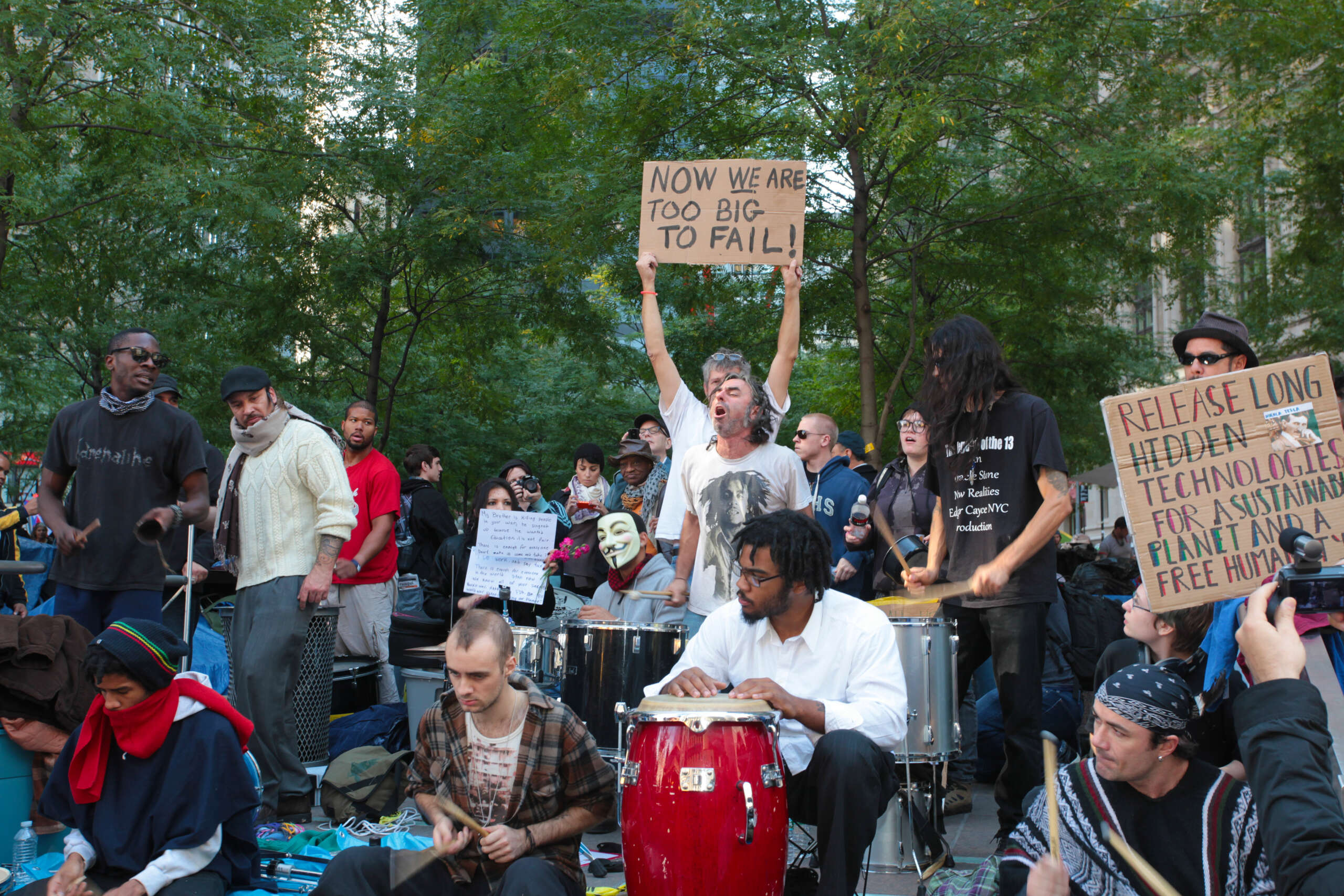
A drum circle performs as Occupy Wall Street activists camped at Zuccotti Park in the fall of 2011. (Photo: Shutterstock.com/a katz)
I’ve spent the last year reporting on a movement that most people, if they even remember it, consider a failure: Occupy Wall Street. It was, as many occupiers I spoke to agreed, a hot mess. But it was also the most inspirational event in many of our lives.
To tell the story of the Occupy movement, which began 15 years ago Thursday, we have to go back a little further. In 2008, Wall Street’s short-sighted bets on subprime mortgages caused a global financial meltdown.
The Democratic president who had promised hope and change handed out a $700 billion bailout to the banks that caused the crash. Those same institutions paid their top earners enormous bonuses while millions of ordinary people lost their jobs, homes, and retirement savings. My partner and I were both laid off. We put ourselves on an austerity budget to make unemployment checks stretch and asked our landlord to reduce the rent. He declined.
Stay informed with the City Limits Weekly newsletter.EmailSign up
Thankfully, I found a (lower-paying) job within a few months, and my partner’s involuntary transition into the gig economy worked out. We recovered financially, but I was left deeply cynical about the Democratic establishment. Prominent Democrats gave endless speeches about punishing Wall Street greed and helping working families, but seemed unable or unwilling to make structural changes to an economic system clearly stacked against most of us.
The Right had its Tea Party movement, shaking up the Republican Party. The Left remained mostly quietly angry. Complacent. Until Occupy Wall Street.
In 2011, three years after the crash, a group of radical activists took over a tiny park near Wall Street and did the seemingly impossible: They got thousands of disaffected, cynical, frustrated people—including me—to believe that a better world was possible.
The activists arrived at Zuccotti Park on September 17 with sleeping bags and an attitude that felt revelatory: Don’t ask permission. Take up space. Don’t wait for someone to save us. Imagine the world we want and start building it ourselves.
They also brought a different way of organizing. There was no charismatic leader, just facilitators running twice-daily general assemblies where anyone could speak. Without permits for amplified sound, speakers used the “people’s mic,” with the crowd repeating each sentence so everyone could hear. Decisions were made by consensus, using hand signals to indicate agreement or disagreement.
Protesters marched through Manhattan chanting, “Banks got bailed out, we got sold out!” But it was what happened inside the park that inspired people to leave the comfort of home and sleep on concrete for weeks. There were small group discussions where people from different backgrounds commiserated over their struggles, discussed ideas, and brainstormed solutions. They were learning about mutual aid and putting it in action. Creating community and learning how to organize themselves. And all of it was happening in a little anti-capitalist village that occupiers were building themselves.
There was a kitchen serving free meals, a library that amassed 5,000 books, a medical tent, sanitation and security crews, and a free store where people could get sleeping bags or clothes. Volunteers ran everything, with supplies paid for by individual donations.
For many of us who grew up with the bootstrap individualism of white America, this was the first time we had participated in a collective. And it was inspiring. I pedaled the stationary bike that powered their generator and brought food to the kitchen. The vibrant, sometimes goofy atmosphere in Zuccotti Park felt like a reprieve from the punitive world outside of it.
Quickly, Occupy Wall Street became a worldwide movement. Copycat occupations sprang up across the country and around the world. At first, many Democratic politicians seemed mystified. There were jokes about Occupy having no demands and no leaders. Hecklers yelled, “Get a job!” and pundits questioned what occupiers were hoping to accomplish by living in a park.
But Occupy did accomplish something extraordinary: It changed how Americans talked about capitalism and class. “The 99 percent versus the 1 percent” transformed the usual left-versus-right political frame into one focused on economic power. Occupy exposed structural inequality and punctured the myth that financial security is simply the result of individual choices—that wealth is always the reward for hard work and poverty a personal failure.
There were, of course, problems. Radical inclusivity also meant infiltrators were welcomed in. Meetings could be unwieldy and endless. There was infighting over tactics. Things sometimes turned violent, mostly at the hands of police but also between occupiers. After 59 days, police forcefully cleared the park in the middle of the night, arresting 200 people in the process.
The conventional wisdom is that Occupy failed. It did not dismantle capitalism or produce a lasting political organization. But it prompted a political shift that would have been difficult to imagine before the movement. Politicians who challenged corporate power, such as Bernie Sanders and Elizabeth Warren, moved into the mainstream. Ideas once considered marginal, including student debt relief, became national talking points. Support for unions started to grow.
Although it didn’t change much structurally, Occupy made dissent more common and motivated thousands of people into action—which is why I think it’s important to remember Occupy on its 15th anniversary. We desperately need a reminder of what hope feels like—and a reminder that we, as a collective, don’t have to wait for our leaders to solve the nation’s problems.
Now, economic inequality is even more pronounced. At the same time, President Donald Trump and his administration are attacking democratic institutions and making America feel unsafe for many people because of where they were born, the color of their skin, or their gender.
The response from many universities, media companies, and corporations has been acquiescence: Make deals, self-censor, quietly discontinue programs that might upset those in power. Meanwhile, the Democratic Party continues to stumble and get stuck in internal debates.
It’s unclear what, if anything, will stop the trajectory we’re on. Maybe the Democrats, despite being disorganized and outspent, will sweep the midterms and finally have enough muscle to block some of Trump’s most inhumane policies. Maybe the MAGA movement will collapse in on itself.
However, I don’t think we can count on the electoral process or traditional protest, like the No Kings marches, to turn the tide. We need something that, like Occupy, will awaken a cynical and disengaged populace, bring us together in a way that feels powerful, and force the world to pay attention. We’ve seen that Occupy spirit in Minneapolis’s response to ICE; we need to expand that level of fierce, creative, decentralized dissent into something national.
We need something that brings thousands of ordinary people together to imagine a different future. Something that moves people from helplessness to action, from isolation to community, from cynicism to hope.
Occupy proved that it can happen. And if it happened once, it can happen again.
Maria Luisa Tucker is an award-winning investigative journalist and producer of the podcast seriesOccupy! An Unfinished Uprising.
Laura Strickler, Justin Goldman and Julia Ainsley, Senior Homeland Security Correspondent. – NBC News
Stephan: There is almost no media coverage of the cages in Trump’s concentration camps where non-White immigrants are held, or the concentration camps themselves, and it is playing no role in the November election. But the reality is that Trump, like all fascists has created an “other” population, and treats them in a subhuman way. This is America under Trump and I am disgusted and angry about this. How do you feel about this?
A Trump concentration camp cage Credit: NBC
WASHINGTON, D.C. — Some immigrants detained at Florida’s now-shuttered “Alligator Alcatraz” were confined in outdoor cages only slightly larger than telephone booths for more than an hour at a time, according to a new report by the Department of Homeland Security’s inspector general.
The watchdog report marks the first time a government agency has confirmed the existence of the cramped cages at the South Florida Detention Facility. Amnesty International found in a report published in December, based on interviews with detainees and a tour of the facility, that the cages were used to punish detainees and amounted to torture, sparking a congressional probe.
The inspector general’s findings don’t go as far, but the report says “the use of such restrictive spaces is highly unconventional and does not align with standards for humane treatment.”
The DHS watchdog findings are a rare instance when a federal inspector general has publicly criticized the Trump administration. Since he returned to office in 2025, President Donald Trump has […]
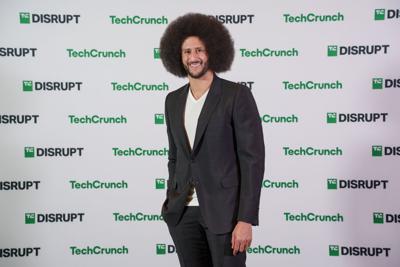
Kaepernick said he was surprised that the controversy over his decision to sit during the national anthem swelled into a major news story. Photo: TechCrunch, CC BY 2.0, via Wikimedia Commons
A decade after quarterback Colin Kaepernick protested racial injustice by sitting or kneeling during the national anthem before NFL games, he has written a memoir, “The Perilous Fight.”
The nearly 300-page book, which was released Tuesday, revisits the saga from Kaepernick’s perspective. His protest spread across the league and became a political lightning rod that forced fans to grapple with the meanings of patriotism and free speech.
Here is what to know about the controversy and the memoir:
When did Kaepernick’s protest begin?
Several years after Kaepernick led the San Francisco 49ers to a Super Bowl appearance, he was spotted sitting on the bench while the national anthem played before a preseason game in August 2016.
After the game, Kaepernick told Steve Wyche, a reporter from NFL Network, that he would not “stand up to show pride in a flag for a country that oppresses Black people and people of color.” The comments immediately drew backlash, particularly from those who considered his actions disrespectful to military veterans.
Kaepernick began kneeling instead of sitting, and was joined in protest by his teammate Eric Reid and other NFL players. High school, college and professional athletes across other sports also began protesting, including soccer player Megan Rapinoe.
In September 2017, President Donald Trump used an expletive to describe Kaepernick during a rally and suggested that NFL owners should fire players who did not stand for the anthem.
What happened to Kaepernick?
When Kaepernick became a free agent after the 2016 season, no team signed him. He filed a grievance through the players union that argued that the 32 NFL owners had colluded to blackball him because of his protests.
After an independent arbitrator ruled that the case could go forward, the NFL reached a confidential settlement with Kaepernick and Reid. The league did not publicly admit collusion.
In the years since Kaepernick’s playing career stalled, he has worked as a civil rights activist and started media projects. He cocreated the Netflix series “Colin in Black & White,” which explored his high school years, and also released a children’s book and a graphic novel.
ESPN greenlit a documentary centered on Kaepernick that was to be produced by Spike Lee, but the project was canceled after Kaepernick and Lee disagreed over the creative approach.
What was the fallout in the NFL?
After high-profile musicians said that in solidarity with Kaepernick, they would not participate in the Super Bowl halftime show, the NFL signed a partnership with Roc Nation, the entertainment company founded by Jay-Z, to help produce the show and work on social justice initiatives. The deal, signed in 2019, drew backlash. Some said it was hypocritical of Jay-Z, who had worn Kaepernick’s jersey during a “Saturday Night Live” performance in 2017.
In announcing the deal, Jay-Z said he felt the public needed to move past kneeling to enact more concrete changes. Headliners of the seven Super Bowl shows Roc Nation has helped produce include Bad Bunny, Kendrick Lamar and Rihanna. In 2022, as part of a hip-hop medley that included Snoop Dogg and Dr. Dre, Eminem took a knee during the performance, an act that was widely interpreted as a nod to Kaepernick.
After the police killing of George Floyd in 2020, several Black NFL players posted a video on social media that urged the league to take a definitive stance against systemic racism. NFL Commissioner Roger Goodell responded in a video, saying the league was “wrong for not listening to NFL players earlier” and encouraging all to “speak out and peacefully protest.” Kaepernick’s name was not mentioned.
Teams now have the option to paint slogans such as “End Racism” and “Stop Hate” on portions of the field, and players can wear them on the backs of their helmets.
What does Kaepernick’s memoir reveal?
Kaepernick writes that his worldview was reshaped around 2015 after he began reading a series of books, including the autobiography of civil rights leader Malcolm X.
He said he also became enraged after watching video of the San Francisco police fatally shooting a Black man, Mario Woods. That 2015 shooting led to protests, a lawsuit and the eventual ouster of the police chief. He writes that he was further affected by the killings of Freddie Gray in Baltimore, in 2015, and Philando Castile in Minnesota, in 2016.
Kaepernick said he was surprised that the controversy over his decision to sit during the national anthem swelled into a major news story. “Wow, y’all are really sensitive!” he writes in the memoir. “I thought. ‘Y’all can see a Black man get killed on camera and be like, ‘Hmm, where should we go for lunch?’ But let me not stand for the anthem and you have this visceral reaction? This is the thing that upsets you?”
In the memoir, Kaepernick also challenges the popular account of why he started kneeling during the national anthem instead of sitting.
Nate Boyer, a U.S. Army Green Beret veteran who briefly played in the NFL, has said he suggested kneeling as a more respectful posture toward the military. But Kaepernick writes that although he and Reid did meet with Boyer, their decision to kneel had already been made. He said Reid came up with the idea to be physically closer to their teammates on the sideline.
“It was a clear illustration of white supremacy at work — a white savior military veteran who used to play football telling us what to do,” Kaepernick writes. “A convenient narrative that made our protest more palatable.”
Kaepernick also writes about Roc Nation, saying he declined when it recruited him to be a client. He said he turned down a request from Jay-Z to kneel during a performance of the song “The Story of O.J.,” in part because he disagreed with some of its lyrics about race.
The day before Roc Nation announced its partnership with the NFL, Jay-Z called Kaepernick and told him the news, the athlete wrote. Kaepernick said he disapproved.
“‘I just want you to know, one, you’re serving the culture up to a bunch of racists and, two, they don’t care about you,” Kaepernick writes, recalling the conversation. “‘You’re the music guy to them. They quite literally need a Black face — and have said as much.'” Jay-Z’s response, he wrote, was, “‘Well, the ink’s dry.'”
by Kelly Waldron September 16, 2026 (MissionLocal.org)
Saikat Chakrabarti makes an announcement after the second election results drop on June 2, 2026. Photo by Zoe Malen.
Vanquished San Francisco congressional candidate Saikat Chakrabarti has disbursed $400,000 to support several measures on the San Francisco November ballot, according to a new filing published on Wednesday.
Chakrabarti made three contributions: $150,000 to support Proposition B, the public bank measure; $150,000 to support Proposition I, which would route existing tax dollars into affordable and “social” housing; and $100,000 to support the regional transit sales tax measure.
Chakrabarti, who came third in June in the congressional primary, is a centimillionaire, former Stripe engineer and co-founder of Justice Democrats, a political PAC working to elect progressive members to congress. He made his millions as one of Stripe’s early employees.
Chakrabarti did not immediately respond to requests for comment.
Most of the major donors in the November election have given to Mayor Daniel Lurie’s package of charter reform measures to consolidate mayoral power and to Prop. H, the Muni parcel-tax measure. As of Friday, some 16 major donors, who, for the most part, work in tech and finance, had contributed more than $13 million, largely to those four measures.
In the last couple of weeks, however, more large sums have trickled in for Props I and J.
Dean Preston, a democratic socialist and former District 5 supervisor, has contributed nearly $118,000 to support Prop. I, which would cement his proposition to tax sellers of big real estate properties that voters passed in 2020 — which was also, cosmically, called Prop. I.
The Service Employees International Union, one of the city’s largest unions, contributed $100,000 to Prop. J, a separate measure that would remove a transfer-tax exemption for foreclosures, earlier this month.
Still, those propositions have raised far less than the charter-reform and Muni measures. The charter-reform measures have raised some $9.7 million, and the Muni measure some $4 million. Meanwhile, both Props I and J have raised far less: About $550,000 and $150,000, respectively.
It is not surprising to see Chakrabarti spending on the local measures. The former candidate has put massive sums toward his political ambitions. Chakrabarti spent at least $8.9 million funding his run for congress, far outpacing his opponents, Scott Wiener and Connie Chan.
Following the primary, Chakrabarti repurposed his candidate committee, making it a new PAC — “SF Solidarity PAC” — to support Chan.
Chakrabarti also contributed $50,000 to Proposition J.
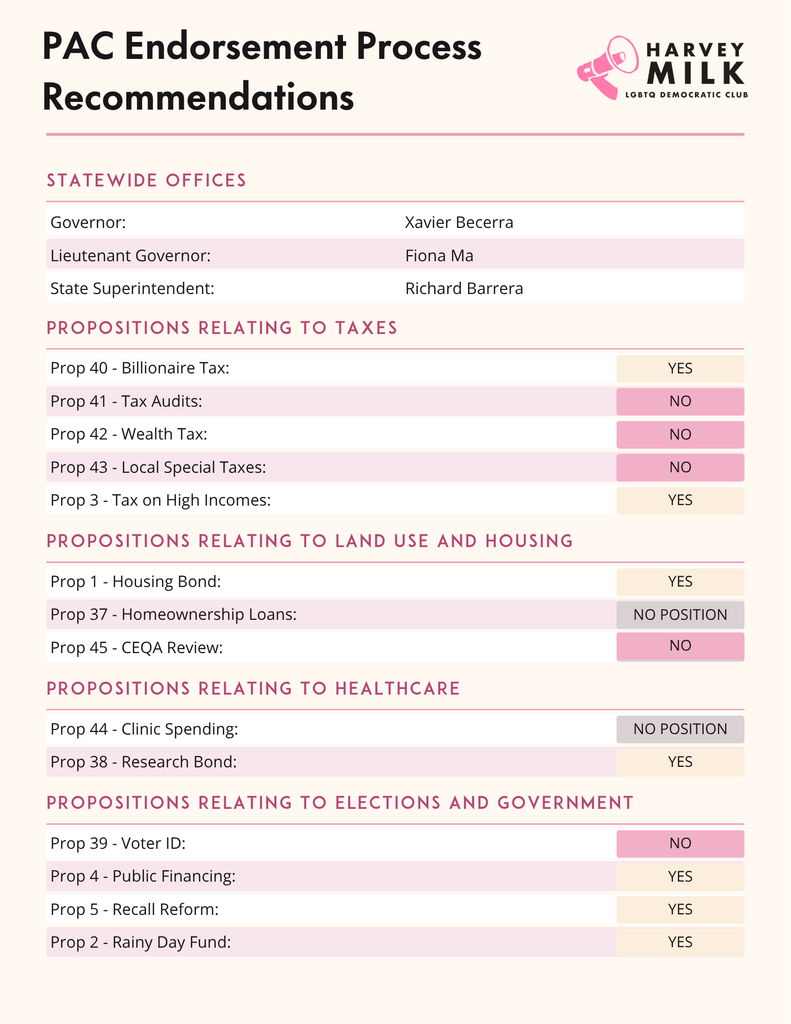
There’s a lot on the ballot, but we’ve got you covered.
This November, San Franciscans will weigh in on 30+ candidates, 10 ballot measures, and a host of other regional and state propositions. But fear not: Mission Local is covering it all.
We have the most in-depth election reporting in San Francisco, covering every race up and down the ballot. We’re doing weekly questionnaires of every major candidate, diving deep into the money behind the election, and analyzing what it all means.
We think that’s critical to a city like this. And we think it’s critical that election reporting remain free for all to read, because every voter deserves to know where candidates stand.
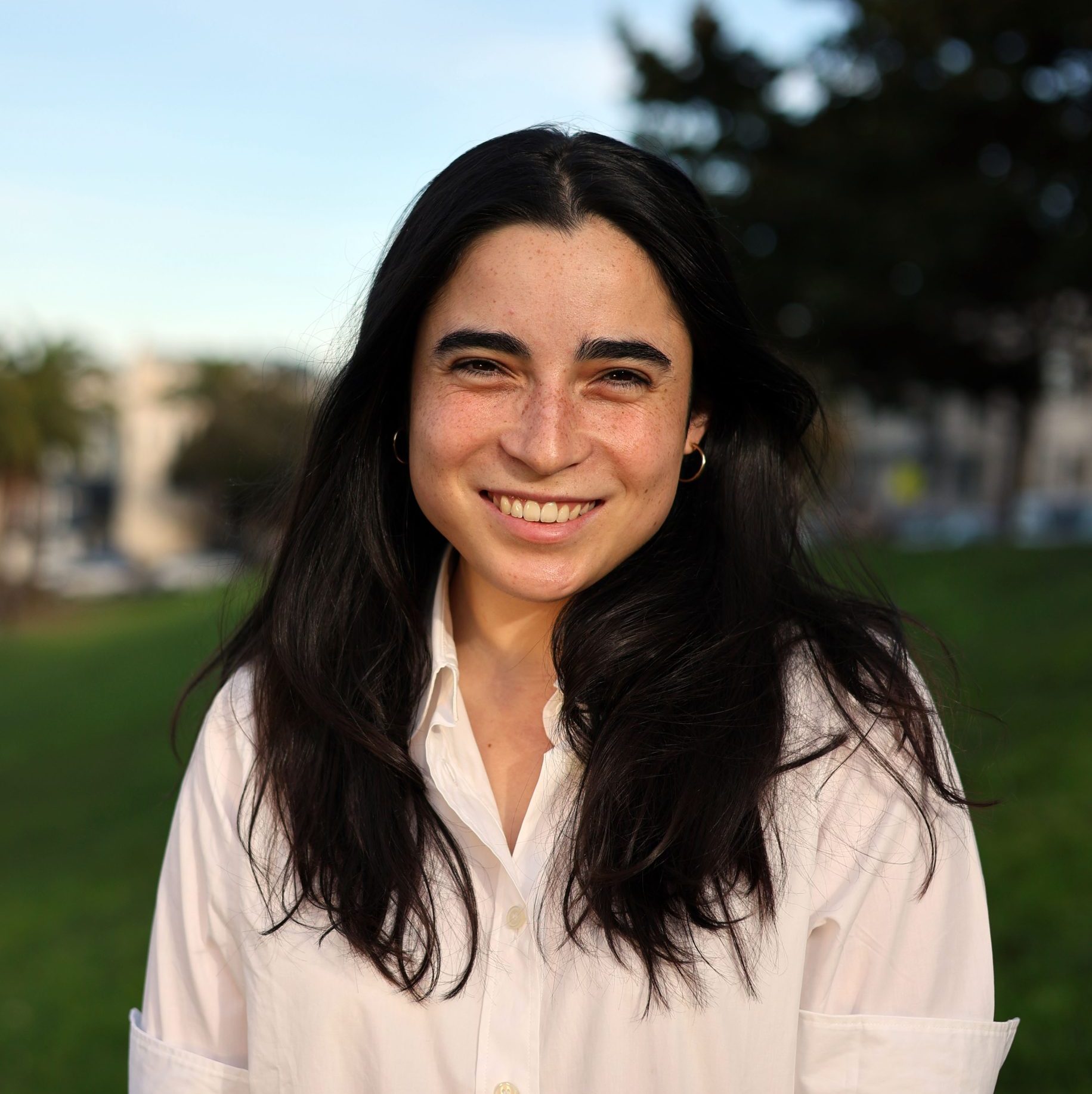
Kelly Waldron is a data reporter at Mission Local. She studied Geography at McGill University and worked at a remote sensing company in Montreal, analyzing methane data, before turning to journalism and earning a master’s degree from Columbia Journalism School. You can reach her on Signal @kwaldron.60.More by Kelly Waldron
by Randy Shaw on September 14, 2026 (BeyondChron.org)
YIMBY’s Should Support Affordable Housing
Most San Franciscans support more affordable housing. So why are SF YIMBY and the San Francisco Democratic Party opposing Prop I, the Affordable Housing Guarantee Act? The Act will bring roughly $100 million for housing programs. The funds come from a voter-approved transfer tax hike in 2020 on real estate worth more than $10 million. Although Prop I’s clear intent was to fund affordable housing, the city has spent most of the money elsewhere.
Funds targeted to affordable housing were not spent for that goal because the city attorney ruled that a transfer tax hike could not be designated for a specific purpose. Even if voters approved such designation by a 2/3 vote.
To alert voters where the new money would go, the Board of Supervisors voted unanimously in July 2020 for a resolution stating it was “the Board of Supervisor’s intent to appropriate revenue generated by a November 2020 transfer tax ballot measure to a COVID-19 Rent Resolution and Relief Fund and a Social Housing Program Fund.”
But that didn’t happen. Mayors Breed and Lurie have since redirected Prop I funds to the general fund.
I understand why Mayor Lurie and non-housing groups funded by the city budget would oppose Prop I. What makes no sense is why SF YIMBY opposes the measure.
The core YIMBY value is building housing for all income levels. Many YIMBYs oppose transfer taxes. But Prop I doesn’t impose new taxes. Prop I simply says that 50% of the transfer tax hike revenue from the 2020 Prop I should go to affordable housing rather than the general fund.
Politics Over Policy
The chief reason a group promoting housing for all opposes a ballot measure furthering that goal is likely politics. The prior and current Prop I are most identified with former supervisor Dean Preston. Preston has consistently criticized the YIMBY movement. He has repeatedly claimed that YIMBY’s are a front for developers and care nothing about affordability.
I’ve long disagreed with Preston’s assessment. But SF YIMBY’s formal opposition to Prop I enabled Preston to say I Told You So.
San Francisco’s YIMBY’s are more libertarian than those in other major cities. In Cambridge, Culver City, Portland, Berkeley, Los Angeles New York City, and other cities, YIMBY groups have strongly promoted affordable homes. Open New York played a leading role in the decade-long fight to get affordable senior housing built in an affluent neighborhood at Elizabeth Street Garden.
SF YIMBY’s unhappy with the 2020 transfer tax hike have not tried to repeal it. Instead, they are opposing using the transfer taxes to maximize affordable housing.
It appears SF YIMBYs are guilty of what they often correctly accuse their opponents of doing: robbing thousands of low-income, working and middle-class people of the chance to live in San Francisco. These people deserve more affordable housing opportunities.
Affordability: A Longtime SF Goal
San Francisco has spent decades talking about its affordability crisis.
I moved to the city in July 1979 and immediately joined a citywide rent control and affordable housing campaign (Prop R). The first wave of gentrification had made affordable housing a front-burner issue. It has remained so ever since.
Despite San Francisco’s failure to build enough housing to meet increased demand, most voters want San Francisco to be an economically diverse city, not an elite enclave.
YIMBYs have correctly argued that restrictive zoning laws have made San Francisco less diverse. These laws have banned new apartments in most of the city, particularly in affluent neighborhoods. But new state and local zoning laws give San Francisco the historic opportunity to build the housing for all income levels that it has long needed..
That’s why the YIMBY movement should be embracing Prop I. It gives pro-housing activists their chance to say their own I Told You So to critics of upzoning.
The original Prop I was backed by 57% of voters in 2020. Let’s hope those numbers repeat for the new Prop I in 2026.
Randy Shaw is the Editor of Beyond Chron and the Director of San Francisco’s Tenderloin Housing Clinic, which publishes Beyond Chron. Shaw’s new book is the revised and updated, The Tenderloin: Sex, Crime and Resistance in the Heart of San Francisco. His prior books include Generation Priced Out: Who Gets to Live in the New Urban America. The Activist’s Handbook: Winning Social Change in the 21st Century, and Beyond the Fields: Cesar Chavez, the UFW and the Struggle for Justice in the 21st Century.
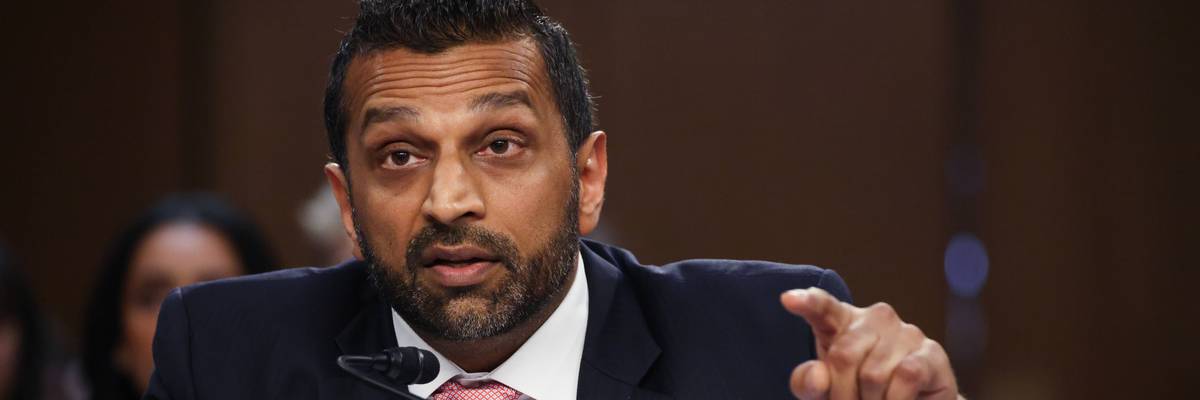
Federal Bureau of Investigation Director Kash Patel testifies during a Senate Judiciary Committee hearing on September 15, 2026 in Washington, DC.
(Photo by Win McNamee/Getty Images)
One critic said his comments made clear that “Patel’s leadership at the FBI has been plagued by inappropriate politicization, rampant mismanagement of funds and resources, and a lack of regard for public safety.”
The US Senate Judiciary Committee’s Tuesday oversight hearing for the Federal Bureau of Investigation covered a wide range of topics, from alcoholism and bestiality to a snorkeling tour of Pearl Harbor and President Donald Trump’s persistent but baseless claims that he won in 2020—and FBI Director Kash Patel came under fire for bolstering the Republican’s election lies.
Sen. Peter Welch (D-Vt.) pointed out that just a few days ago, Trump said: “We had a rigged election, as you know. It was totally rigged. Because I won three times. I didn’t win twice. I won three times.”
The senator then asked Patel if he agreed with Trump’s declaration that he won the 2020 election. Although the president’s attempts to abuse the US courts to cling to power affirmed his loss, the FBI director responded that “there are many ongoing investigations surrounding that matter, so I’m not gonna comment on it and stylize the evidence.”
After giving Patel another opportunity to answer, which the agency leader used to effectively repeat his response, Welch highlighted the FBI’s January raid of an election hub in Fulton County, Georgia—which critics, at the time, condemned as an ominous signal that Trump and his allies would do whatever they could to interfere with this November’s midterms.
Welch stressed that the raid occurred despite two recounts in Georgia following the 2020 contest—including one by hand, which showed that Trump lost the state by 11,779 votes—“and no investigation has found any evidence of wrongdoing.”
Patel refused to even confirm that there haven’t yet been any related indictments, saying, “That matter is ongoing.”
Asked by Welch if he would promise to “not in any way interfere in the will of the American people when they go to the polls” this November, Patel said, “I pledge unequivocally that I will not participate in your charade of lies,” and signaled that FBI agents would be present at some polling stations for the midterms.
Welch also cited Trump’s claims that this year’s elections are rigged if Republicans lose and Democrats can only win if they cheat. The senator asked Patel if he agreed with the latter, and the bureau chief again refused to comment on what he called “ongoing investigations.”
Watch the full hearing below:
Lisa Gilbert, co-president of the watchdog group Public Citizen, said in a statement that “while under oath today, Kash Patel peddled dangerous conspiracy theories and misinformation in order to appease Donald Trump’s ego.”
“His cowardly statement supporting Trump’s claim that the only way Democrats could possibly win in November is if the party cheats is particularly rich given Trump’s attempt to overturn the results of the 2020 election and his more recent offer to pay $5k to each American if his own party wins the upcoming election,” she continued.
“These sycophantic statements and his testimony throughout the hearing make it clear that Patel’s leadership at the FBI has been plagued by inappropriate politicization, rampant mismanagement of funds and resources, and a lack of regard for public safety,” she added. “With Patel at the helm of the agency, dedicated career officers have been dumped over loyalty tests, child predators have been protected, and taxpayer dollars have been wasted going after Trump’s personal enemies. Every day Patel remains in charge of the FBI is a day too long.”
In addition to Welch, several other Democrats had testy exchanges with Patel throughout the hearing—including Sen. Cory Booker (NJ), who blasted the director as an “incompetent lackey” and said: “He’s like an 18-year-old kid who wants to join a fraternity that he could never be a member of, doing keg stands and chugging with friends. He’s an embarrassment to the agency and wouldn’t qualify even to be an FBI agent.”
Our work is licensed under Creative Commons (CC BY-NC-ND 3.0). Feel free to republish and share widely.
From J. Robert Oppenheimer to Chiura Obata. Alice Waters to Alice Walker. Rita Moreno to the Unabomber. Athletes, activists, architects, artists. Here’s our roundup of over 150 major figures from the city’s past and present.
You likely won’t be shocked by the protest-era social movements that are included in this list of the city’s famous firsts, innovations and inventions. But Berkeley’s history of groundbreaking thinking is not limited to any one time period. From wetsuits to the canned fruit cocktail, a surprising array of phenomena trace their origins to our fair city.
This list is not meant to be comprehensive, and in some cases, of course, the concept of “first” is a bit squishy and up for debate. But the list is intended as an entry point into the rich history of Berkeley.
If there’s another famous first you think we missed, please email editors@berkeleyside.org.
Students from Students Together Opposing Prejudice (STOP), a group that helped establish an ethnic studies requirement at Berkeley High, pose for a yearbook photo in 1991. Credit: Berkeley High
Modern policing (first police officers on bikes, first police officers on motorcycles, first police officers in patrol cars, first radio communications between police officers, first blood and fiber analysis for crime solving, first police school on laws of evidence).
Will Wright, creator of “The Sims” video game, poses with a computer image of the game at Maxis Studios in Walnut Creek in 2004. He was inspired to make the game after his home burned in the Oakland-Berkeley Firestorm Credit: AP/Marcio Jose Sanchez
We know that most readers don’t get to the end of the article. But you did! To support our in-depth, rock-solid reporting, please consider making a donation to our nonprofit newsroom today. We rely on our readers — particularly the ones who read the whole story!
Forget November 3. It’s January 3 when Donald Trump and his MAGA Republicans might bury our democracy once and for all. Here’s how.
Illustration by Mark Harris; Getty (x6)
Donald Trump instigated a war against America’s democracy on January 6, 2021. He and his Republican allies would have crippled America’s democracy that day had his own vice president not refused to be party to the gravest constitutional offense a president can commit—the refusal to relinquish and peacefully transfer the power of the presidency to his duly elected successor.
Today, almost six years later, Donald Trump and his Republican congressional allies are even more determined to prosecute the president’s war against American democracy to its catastrophic end than they were on January 6, 2021.
That catastrophic end could well come on January 3, 2027, when Trump and his Republican congressional allies wage the final battle in Trump’s determined war to corrupt America’s democracy and deliver a lasting political victory over the Democrats for his MAGA Republican Party.
Trump and his Republican allies have been preparing for this final battle since January 6, 2021. For the past six years, they have embarrassed themselves and the U.S. with their preposterous, win-at-any-cost denial that Trump lost the 2020 presidential election and their deceitful slander of America’s democracy. Since his return to the White House, Trump’s every unconstitutional act in his effort to seize control over the midterm elections—each hailed by his prostrate Republican Congress—has been toward the end of ensuring that Republicans retain a majority in the 120th Congress.
Trump told talk show host Dan Bogino on February 2, “The Republicans should say, ‘We want to take over. We should take over the voting.’… The Republicans ought to nationalize the voting.’” The Republicans have dutifully fallen in line.
Before Donald Trump arrived, it was the Republicans who professed to stand for the Constitution, principle, truth, honesty, integrity—even honor. Republicans were the proud party of Abraham Lincoln and Ronald Reagan. It was our party that could be expected to put country before party when the time came, as when Barry Goldwater and other party elders told Richard Nixon in 1974 that it was time to resign the presidency. That was then. None of this is true of today’s Republican Party and this Republican Congress. So enthralled with the forty-seventh president are today’s House Republicans that they long ago abandoned everything the Republican Party has stood for since its founders first met in Ripon, Wisconsin, in 1854.
Today’s congressional Republicans took a blood oath six years ago not just to put their party before their country, but to put Donald Trump before their country. And so it is that only weeks before the midterm elections, House Republicans have already sworn their allegiance to Donald Trump and doomed the U.S. to another January 6 next January 3.
So unalterably subjugated to Trump is today’s Republican House that even a decisive victory for Democrats and a resounding repudiation of Trump and the MAGA Republicans at the polls in November will not guarantee that a Democratic majority-elect will be seated in the 120th Congress on January 3.
All year long, Trump has been dragooning House Speaker Mike Johnson and the congressional Republicans into prejudging as fraudulent the upcoming November elections of the presumed Democratic majority, as he himself has already prejudged those elections. His dragooning appears to have worked. House Republicans are now poised to claim that the midterm elections were stolen from them when they meet on January 3 to decide which members-elect will be seated in the 120th Congress.
Over the past year and a half since his return to the White House, Trump has exploited every conceivable unlawful means possible to rig the midterm elections in favor of the Republicans, and the federal courts have struck down as unconstitutional every one of these unlawful attempts. He will try every unlawful means over the remaining weeks to ensure that Republicans handily win the midterm elections in November. Those of us who oppose his illegality will look to the courts, but the federal courts will be institutionally incapable of checking his final unlawful rampage.
Trump punctuated his expressed intent to interfere in the midterm elections eight weeks ago in a national prime-time address on “election integrity,” accusing the Democrats and the Chinese in particular of threatening the free and fair elections in November. In that address, he claimed without evidence or support (as usual) that the 2026 midterm elections were being threatened by noncitizen voting, weaknesses in voter registration systems, foreign interference, and vulnerabilities in electronic voting systems.
The concocted address was universally panned as purely partisan, devoid of evidence and support, and anticipatory of his forthcoming claim in November that the Democrats won a majority in the House of Representatives only because of fraud in their respective elections.
Everyone knows that the greatest threat to the upcoming midterm elections is not the Democrats or the Chinese, noncitizen voting, or electronic voting machines, but the president of the United States and his servile Republican Congress.
Every member of Congress takes a solemn oath to support and defend the Constitution, an oath that obligates them to honor the will of the American electorate. It is a sacred imperative that the Congress of the United States must defend our constitutional right to choose our representatives to Congress against all enemies, domestic as well as foreign, who would deny us this fundamental right.
There was a time not long ago when virtually every member of Congress could be expected to commit to the peaceful transfer of congressional power in advance of an election, just as every president could be expected to commit to the peaceful transfer of presidential power. But those times came to an abrupt end upon Donald Trump’s arrival in January 2017. In a damning indictment of the president and today’s congressional Republicans, it would be hard to find even one congressional Republican with the integrity, sense of duty to country, honor, and courage to put America above the Republican Party, let alone above Donald Trump.
Yet America’s only hope for saving its democracy and avoiding another crippling constitutional crisis on January 3 is for the House Republicans to decide that they are not going to betray their oaths and their country one last time for Donald Trump, and telegraph to Trump and Mike Johnson that any unconstitutional plan they might be contriving to deny Democratic members-elect their rightful seats in the 120th Congress would be dead on arrival January 3.
If there are any such Republicans in the Congress today, they should announce well before November 3 that they will not be party to Trump’s and Johnson’s attempt to steal the midterm elections from the American people.
In fact, the House members of both political parties should stand united before November 3 and affirm to the American people that in the United States of America, government derives its just powers from the consent of “We the People”—the governed. They should campaign in the fall on any refusal by their political opponents to affirm the same. Their political opponents should in turn campaign on House members’ refusal to affirm that they will not be complicit in any attempt to steal the midterm elections.
Standing united before the midterm elections against any attempt by Trump and Johnson to overturn those elections would go a long way toward restoring Americans’ lost trust in their Congress and their government. It would send a powerful message to Trump and Johnson that Americans will never again be forced by their own government to endure another January 6.
While it is small solace, Americans are not entirely at the mercy of this Republican Congress to suddenly decide to honor its oath to the Constitution and the American people. It will be the Supreme Court, not Trump, Johnson, or even the House of Representatives, that will have the final word as to who will be seated in the 120th Congress of the United States.
Article I, Section 5, Clause 1 of the Constitution provides that “Each House shall be the Judge of the Elections, Returns and Qualifications of its own Members.” Under Clause 1, the House of Representatives is the “judge” of its “elections” and “returns.” But the House’s power is not plenary. The Constitution constrains how the House can exercise its power to refuse to seat members-elect. Indeed, in 1969, in Powell v. McCormack, the Supreme Court ensured that the House constitutionally exercised its power to “judge the qualifications” of members-elect when it ordered the seating of New York Representative Adam Clayton Powell, who had won reelection in 1966 despite a House vote to refuse to seat him. Just as the court intervened then, so also will the Supreme Court ensure that the House exercises its power to “judge” its “elections” and “returns” within the limits imposed by the Constitution. At least we hope it will, but can we be sure with this court?
Whether the House constitutionally exercises its power not to seat members-elect will ultimately be determined by the federal courts and the Supreme Court—not by a majority vote of the House of Representatives.
This is how the crisis would unfold. The precursor of the crisis will come sometime before noon on January 3, when Speaker Johnson removes current House Clerk Kevin McCumber and replaces him with a person loyal to Johnson and House Republicans who they know will refuse to list on the statutory roll of representatives-elect to the 120th Congress any Democrat-elect whom Johnson and the Republicans direct him or her not to list. Under Rule II, Clause 1 of the Rules of the House, the Speaker of the House has the unilateral power to remove the incumbent clerk, and then the power under Title 2 U.S.C. § 5501(a) to replace him temporarily with whomever he wishes until the House elects a successor. McCumber is a Republican appointed by former Speaker Kevin McCarthy. He is widely respected for his integrity and faithful adherence to the Constitution and is reputed to be unwilling to carry out orders he considers to be unconstitutional.
The first moment of constitutional crisis will come when, sometime before the 120th Congress has been gaveled into session, the loyal temporary clerk refuses to list Democrat representatives-elect on the clerk’s roll of representatives-elect that determines who may participate in organizing the new Congress. At that moment, interested members-elect and others will be forced to seek a writ of mandamus—a court order to a government official instructing him or her to perform a mandatory duty—from the federal court to the temporary clerk, ordering him or her to list on the clerk’s roll all members-elect who have been certified by the states as having been elected from their districts to the new Congress.
Members-elect will argue that the clerk has a ministerial duty under 2 U.S.C. § 26 to list all representatives-elect whose properly filed state certifications show that they were “regularly elected in accordance with the laws of his state or of the United States.” Because the clerk has no authority to omit any duly certified representative-elect, even if a representative-elect’s election is contested, the clerk unquestionably has a ministerial duty under law to list all duly certified representatives-elect. But this begs the question whether a court will issue the writ of mandamus to the acting clerk.
At first blush, a court will be reluctant to order the clerk to list all duly certified representatives-elect because of an instinctive belief that such an order would interfere with the constitutional process of the House to judge its own elections and returns. The wise and learned judge, however, will understand that rather than interfering with the House process, issuance of the writ will actually enable the House process to proceed to completion without judicial interference. Were that wise and learned judge to issue the writ, his or her order would immediately be appealed to the Court of Appeals, and from that court to the Supreme Court, while the country and the world wait in suspense.
The next moment of constitutional crisis will come if and when, after appeals, the court finally issues the writ of mandamus, and the clerk refuses to obey the court’s order to list the Democratic representatives-elect. At that point, it is possible there will be no further federal court involvement until such time as the 120th Congress officially convenes and votes not to seat representatives-elect. Then, that vote by the 120th Congress will be immediately reviewable by the federal courts, up to and including the Supreme Court of the United States.
Judicial review of the House’s decision not to seat Democratic representatives-elect in the 120th Congress would take weeks, if not months, during which time the United States would be in the throes of a paralyzing constitutional crisis, helplessly vulnerable to all the world’s evil, as it would have been in January 2021 had Mike Pence not thwarted Donald Trump’s plan to overturn the 2020 presidential election.
It is not difficult to imagine the many possibilities, some of the most critical being entirely realistic. It would be the ideal moment for China to move against Taiwan, by way of military blockade, attack, or even invasion. It would be the perfect moment for Vladimir Putin to complete his conquest of Ukraine, and perhaps even to move militarily against Estonia. Every passing day could bring a deepening economic crisis, worsened by our angry allies around the world who would welcome the opportunity to requite Donald Trump for his belittling mockery of their countries and presidents. Without the Congress, the United States would be powerless to respond to any of these crises.
The House has historically claimed that its decision not to seat a member-elect because of fraud or irregularities in the elections is unreviewable by the federal courts. But its decision is reviewable. The Constitution unquestionably requires the House to seat a member-elect who was validly elected in a free and fair election. The Article 1, Section 5 power of the House to be the judge of its elections and returns does not give the House the power to deny a seat in the Congress of the United States to a candidate elected by the American people in a free and fair election on the mere assertion, pretextual or otherwise, by a simple majority of the House that the candidate’s election was tainted by fraud.
Thus, on and after January 3, if congressional Republicans were to determine that a Democratic member-elect was elected because of fraudulent voting and refuse to seat him or her, that determination would be scrutinized by the federal courts, up to and including the Supreme Court.
It will never be a nonjusticiable political question whether the United States House of Representatives by simple majority vote can refuse to seat a member elected to Congress by the American people in a free and fair election on the pretextual and unsupported assertion that the member-elect’s election was tainted by fraud. Such is the very opposite of a nonjusticiable political question committed to the House of Representatives. For in the decision of this question lies the answer to perhaps the most fundamental question under the Constitution: Is the United States of America a democracy, in which “We the People” elect our representatives to the Congress and to the presidency, or is it not?
I don’t intend to be overly sanguine about this Supreme Court. This is the court that shattered the one constitutional truth in the U.S. since 1789 that “no man is above the law” and placed Donald Trump of all presidents above the law in Trumpv.UnitedStates. This is the court that betrayed the Constitution by refusing even to decide whether Trump was disqualified from the presidency under the Fourteenth Amendment because of his insurrection against the Constitution, which he clearly was. This is also the court that has cynically authorized Trump’s lawlessness for the past two years through its aptly named “shadow docket,” without so much as briefing, argument, or written opinion.
But surely by now this court must understand what it has wrought for the U.S. and the Constitution, and is aghast as we all are, even if it is not penitent. Surely, surely, it will understand the signal moment in American constitutional history that would be presented, and this time understand its supreme obligation to the nation.
Between now and November 3, congressional Republicans would do well to ponder one last time the fate of their Republican Party were the Supreme Court of the United States to reverse a fraudulent determination by the 120th Republican Congress not to seat Democratic members-elect who would give the Democrats majority control of the House.
Two hundred and fifty years into the greatest experiment in self-government in the history of the world, the Republican Party would finally meet the fate to which it has been destined since January 6, 2021, and cement its place in history as the most corrupt political party ever to emerge in the United States of America for its second attempt in six years to defy the will of the American people on Election Day.
If we Americans are to save our democracy from the forty-seventh president and his MAGA Republican Party, we must disenthrall ourselves from our political bondage to Donald Trump and MAGA, as Abraham Lincoln urged the nation in 1863 to disenthrall itself from its bondage to the ruinous political dogmas of its time. “We must disenthrall ourselves, and then we shall save our country,” the sixteenth president admonished. The Republican Party in particular must finally loose the chains of its political and moral enslavement to Donald Trump and separate itself from the MAGA political party cult.



 by
by 







.jpg)