‘Must Be Done’: Sanders Calls for Ban on Super PAC Spending in Democratic Primaries​

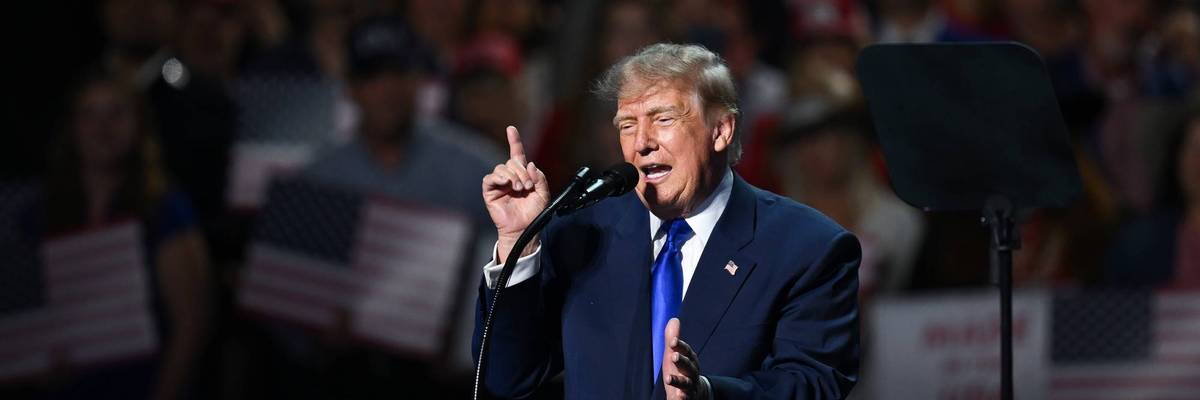
Sen. Bernie Sanders speaks at a rally in Michigan

US Sen. Bernie Sanders (I-Vt.) speaks at a rally on July 18, 2026 in Detroit, Michigan.

 (Photo by Sarah Rice/Getty Images)

“I would hope that we can all agree that Republican special interests should not play a role in determining the outcome of Democratic primaries. The time to act is now.”

Jake Johnson

Aug 10, 2026 (CommonDreams.org)

US Sen. Bernie Sanders on Monday urged national Democratic leaders to impose a total ban on super PAC spending in primary contests, a change that the progressive senator said is necessary to prevent corporate interests from heavily influencing the party’s electoral outcomes.

In a letter addressed to Senate Minority Leader Chuck Schumer (D-NY), House Minority Leader Hakeem Jeffries (D-NY), and Democratic National Committee Chair Ken Martin, Sanders (I-Vt.) wrote that “what is particularly obscene is not only the outrageous amount of money coming into Democratic primaries from billionaire-funded super PACs, but the reality that these special interests have no particular desire to see Democrats win.”

RECOMMENDED…

Michigan Democratic Senate Candidate Haley Stevens Campaigns In Lansing

Stevens Dismisses Concerns About Campaign Finance, Super PAC Funding as ‘Educated Issue’

Kansas City Prepares to Host FIFA World Cup 2026

Sports Betting Giants Join Unprecedented Corporate Efforts to Buy 2026 Midterms

Sanders, who caucuses with the Democratic Party, cited as a telling example the American Israel Public Affairs Committee’s $30 million intervention in the Democratic primary for a critical US Senate seat in Michigan. The organization, known as AIPAC, spent heavily to boost Rep. Haley Stevens (D-Mich.) and attempt to tear down her progressive opponent, Abdul El-Sayed—who went on to win the race despite being massively outspent.

AIPAC is now reportedly planning to spend big in support of El-Sayed’s Republican general election opponent, Mike Rogers.

“It is absurd that they spend tens of millions of dollars to try to determine who the Democratic nominee is and, if they fail, then proceed to support the Republican candidate in the general election,” Sandres wrote. “That is not democracy. That is not what Democratic voters want.”

Sanders emphasized his support for passage of a constitutional amendment to repeal the US Supreme Court’s 2010 Citizens United decision, which paved the way for the establishment and proliferation of super PACs—entities that can raise and spend unlimited sums supporting or opposing political campaigns.

“BUT WE DO NOT HAVE TO WAIT,” Sanders wrote in all caps. “Right now, the Democratic Party has the power to prohibit super PACs from participating in its primaries. That can be done. That must be done. I urge you to take action and make clear that the Democratic Party will no longer maintain this corrupt system.”

“While there are ideological differences of opinion within the big tent of the party, I would hope that we can all agree that Republican special interests should not play a role in determining the outcome of Democratic primaries,” the senator continued. “The time to act is now.”

The DNC has repeatedly faced calls in recent years to curb or eliminate the influence of super PACs in Democratic primaries—but has yet to take concrete action.

Earlier this year, the DNC Rules Committee rejected a proposed resolution that condemned the “growing influence” of AIPAC and other organizations pumping huge sums into Democratic primaries. The rules panel instead advanced a resolution broadly condemning dark money and expressing the DNC’s “commitment to campaign finance practices that align with the party’s core values.”

Nearly a third of all corporate political spending on elections since the Supreme Court’s Citizens United ruling has come during the 2026 election cycle, according to a June report by Public Citizen.

“Cryptocurrency, artificial intelligenceBig Tech, and online betting corporations have collectively spent $294 million to influence federal elections in the 2026 midterm cycle, reflecting a strategic move to spend directly on political action committees to influence federal elections,” the report found. “These corporate super PAC political contributions make up 57% of the $517 million that corporations have reported spending on the 2026 midterms so far.”

Our work is licensed under Creative Commons (CC BY-NC-ND 3.0). Feel free to republish and share widely.

Jake Johnson

Jake Johnson is a senior editor and staff writer for Common Dreams.

Full Bio >

‘It’s Not Radical to Believe You Should Have Healthcare’: El-Sayed Hits Back at Trump, GOP Attacks

Michigan Democrats Hold General Election Kickoff Event In Detroit

Democratic US Senate nominee Abdul El-Sayed speaks during a rally on August 7, 2026 in Detroit, Michigan.

 (Photo by Bill Pugliano/Getty Images)

“Donald Trump’s vision is the one you’re living in right now,” said the Democratic US Senate nominee. “Can you afford your gas? Can you afford your groceries?”

Jake Johnson

Aug 10, 2026

Fresh off his victory in the Democratic primary race for US Senate in Michigan, progressive epidemiologist Abdul El-Sayed used television appearances on Sunday to respond to increasingly hysterical attacks by Republicans and President Donald Trump while offering a positive vision for the future, underscoring his support for Medicare for All and a humane foreign policy that doesn’t fund genocide.

“It’s not radical to believe that people should be able to afford their groceries,” El-Sayed, who is set to face Republican Mike Rogers in November, told NBC’s Kristen Welker in response to the Senate GOP’s first attack ad of the general election. “It’s not radical to believe that you should have healthcare in this country. It’s not radical to believe that you don’t think the president should be able to deny elections or make $2.2 billion off of his role in office. It’s not radical to believe that all of us should be able to breathe clean air and drink clean water. Those are the things that I’ve been fighting for.”

RECOMMENDED…

Trump and Melania on NYE 2024.

‘Racist and Bigoted’: Trump Rebuked for Grotesque Attack on Abdul El-Sayed and Wife

Democratic Leaders Rally Voters In Michigan For Senate Candidate Abdul El-Sayed

Dem Establishment Intensifies Attacks on El-Sayed as New Poll Shows Him Leading by Double Digits

Trump and congressional Republicans wasted no time launching unhinged and bigoted attacks on El-Sayed following his primary victory last week. In a Truth Social post on Saturday, Trump posted an image showing a photo of himself and First Lady Melania Trump alongside a photo of El-Sayed and his wife, psychiatrist Sarah Jukaku. The caption of the photo blared, “Two VERY DIFFERENT America’s [sic].”

Asked by CNN’s Jake Tapper to respond to the post, El-Sayed said Sunday that the caption is “right.”

“One [America] in which your overlords are two people who don’t like each other, but joint in the interest of making billions of dollars off of you, or two people who genuinely love each other, enjoyed some pancakes together, want to come together to build the kind of America where they can raise a family and know that that family is going to have the good things,” said the Michigan Democrat.

“So, yes, you got two different visions of America. Donald Trump’s vision is the one you’re living in right now,” he continued. “Can you afford your gas? Can you afford your groceries? Do you believe, when you look your kids in the eye, that they’re going to have a better future than you did?”

El-Sayed overcame more than $30 million in spending by the American Israel Public Affairs Committee (AIPAC)—and over $60 million in total outside spending—to defeat Rep. Haley Stevens (D-Mich.) in last week’s primary contest. Throughout his primary campaign, El-Sayed criticized AIPAC as a destructive force in US politics and spoke out in support of ending American military aid to Israel—a stance that Trump and Republicans have sought to equate to antisemitism.

“He doesn’t love Israel. He doesn’t love Jewish people,” Trump said of El-Sayed last week. “He hates them. He hates them with a passion that burns in his heart.”

During his CNN appearance on Sunday, El-Sayed hit back at the president’s smear, saying, “I love and revere Judaism and the Jewish people.”

“They are not the same as AIPAC in Israel,” he said. “I want our tax dollars spent to provide good schools, to pay for healthcare, to rebuild our roads here in Michigan, rather than it being sent abroad to subsidize foreign militaries. That’s not just Israel, by the way. That is also Egypt and Saudi Arabia and Jordan and Pakistan.”

“So I believe in international law,” El-Sayed continued. “I believe in equal rights to peace, dignity, and self-determination for all people. I believe in a process that allows a free Palestinian people and free Jewish Israeli people to come together around what they believe the ultimate peace should look like.”

Our work is licensed under Creative Commons (CC BY-NC-ND 3.0). Feel free to republish and share widely.

Jake Johnson

Jake Johnson is a senior editor and staff writer for Common Dreams.

Full Bio >

‘Has Trump’s Invasion of Greenland Already Begun?’: Experts Fearful as MAGA-Linked Oil Company Prepares Unauthorized Drilling

Greenland: Every Day Life And General Views

People walk past a shop’s placard that reads “Greenland is not for sale!” on July 24, 2026 in Nuuk, Greenland.

 (Photo by Sean Gallup/Getty Images)

“Let nobody think Trump has given up on taking Greenland,” warned one professor of European politics.

Stephen Prager

Aug 08, 2026 (CommonDreams.org)

After appearing to back off earlier this year, President Donald Trump this week renewed his threats to seize Greenland. A Saturday report that a Texas oil company with ties to Trump had begun preparing to drill in the Arctic territory without permission has raised fresh concerns that his push for control of the island may already be moving beyond rhetoric.

As The Guardian reported, Greenland’s government issued a “strong warning” last week after learning that a Texas oil company called Greenland Energy had begun making unauthorized preparations for oil extraction in Jameson Land, a remote area of eastern Greenland, including bringing drilling materials ashore.

RECOMMENDED…

US President Donald Trump

‘Recipe for Catastrophe’: Trump Moves to Weaken Arctic Drilling Safeguards

Golden Pass LNG plant

Report Shows How Trump’s Fossil Fuel Agenda Is ‘Making Everyone’s Lives More Expensive’

The company, founded last year, has claimed that Jameson Land may contain $1 trillion worth of crude oil and announced plans to drill two wells there—a project that requires approval from Greenland’s government.

X post: https://x.com/KenRoth/status/2086035678677041477?ref_src=twsrc%5Etfw%7Ctwcamp%5Etweetembed%7Ctwterm%5E2086035678677041477%7Ctwgr%5E62138366a91d04a0f9f66eeb38c775a8b4ffb3f0%7Ctwcon%5Es1_c10&ref_url=https%3A%2F%2Fwww.commondreams.org%2Fnews%2Ftrump-greenland-oil

The company also has ties to several Trump allies and associates. According to The Guardian:

Greenland Energy has retained Phil McGraw, better known as Dr. Phil, a prominent right-wing former chatshow host who served on Trump’s religious freedom commission, to make a documentary series that will “capture the mission of these modern-day wildcatters.”

It has also appointed as a director a US Navy veteran who is working on Golden Dome, the missile defense plan for which Trump says controlling Greenland is “vital.”

Larry Swets, Greenland Energy’s chair and a big shareholder, appears to enjoy access to Trump’s circle. He has said the oil project is “not related to American annexation.”

A Greenland Energy representative falsely claimed in June that the company had permission to place equipment on Jameson Land, before later saying there had been confusion.

But the following month, residents saw a barge arrive with drilling equipment. A Danish outlet confirmed that the delivery was intended for Greenland Energy.

Following the delivery, Greenland’s government said on July 30 that the company “did not have the necessary approvals from the mineral resources authority” and would receive a warning that “all future logistical matters must be advised and approved by the mineral resources authority—before they are carried out.”

Two days later, Trump posted an ominious digitally altered image to Truth Social depicting himself as a giant looming over a Greenlandic town, captioned “Hello, Greenland!”

A day earlier, Trump had appeared on the right-wing network Real America’s Voice, where host Steve Gruber reminded him that he had predicted Greenland would be under US control by the time he leaves office in 2029.

“You’ll be right,” Trump replied. “Greenland is important. Not from their standpoint, from our standpoint. You should make that bet.”

Before this week’s comments, Trump had spoken far less publicly about Greenland since January, when he threatened to use military force to take over the island if Denmark did not cede it. To pressure NATO allies, Trump threatened steep tariffs on several European countries, but backed off after Europe pledged retaliatory tariffs, causing panic in the financial markets.

“Let nobody think Trump has given up on taking Greenland,” said John O’Brennan, professor of European politics at Maynooth University in Ireland. He added that Greenland Energy’s unauthorized activity “is the latest act of lawlessness his acolytes are engaged in.”

Kenneth Roth, the former executive director of Human Rights Watch, responded to the story by asking, “Has Trump’s invasion of Greenland already begun?”

Historian Ruth Ben-Ghiat suggested it was possible. “Invasions,” she said, “often start with ‘technical’ projects that justify the presence of operatives and ‘technical experts’ who are also doing recon and advance prep.”

The Greenlandic government ultimately said it “would not be proportionate” to order Greenland Energy to remove the drilling equipment, a decision that The Guardian said underscored the difficult position facing its officials.

“They could grant permission for oil drilling, even though the planned wells appear to fall within a conservation area protected by the Ramsar convention on wetlands,” the report explained. “Or they could refuse and, some worry, give Trump a pretext to advance his imperialist agenda.”

Although the project has not been approved, a Greenland Energy representative said a vessel carrying additional drilling equipment would depart Canada in September, with drilling set to begin in October.

Jessica Berlin, a senior fellow at the Center for European Policy Analysis, warned that allowing the equipment to remain would signal weakness that Trump could exploit.

“Don’t even think about allowing this,” she wrote in a post directed to the Greenlandic and Danish governments. “If you give them an inch, they’ll take 100 miles. Kick them out now or accept that you just opened the floodgates.”

“Like Putin, you can’t negotiate with Trump,” she added. “Showing weakness will just guarantee the next outrage.”

As part of the Kingdom of Denmark, Greenland is covered by NATO’s Article 5 collective-defense clause, which obligates member nations to defend one another from armed attack. But NATO has no precedent for how Article 5 would apply if one member—the US—attacked another.

O’Brennan warned, “Europe—you are about to be seriously tested.”

Our work is licensed under Creative Commons (CC BY-NC-ND 3.0). Feel free to republish and share widely.

Stephen Prager

Stephen Prager is a staff writer for Common Dreams.

Full Bio >

Ex-Trump Lawyer Says ‘We’re Screwed’ if Trump Pressures New AG Blanche to Subvert Elections

Justice Department, FBI Announce Enforcement Efforts Against Mexican Cartel

US Attorney General Todd Blanche speaks during a news conference at the Robert F. Kennedy Department of Justice building on August 5, 2026 in Washington, DC.

 (Photo by Anna Moneymaker/Getty Images)

“There’s no circumstance under which we shouldn’t expect Blanche to seize ballots and seize voting machines and try to interfere in the process of the upcoming election.”

Stephen Prager

Aug 09, 2026 (CommonDreams.org)

One of the many questions swirling around new US Attorney General Todd Blanche is whether he’d go along with President Donald Trump’s efforts to subvert the result of another election.

In 2020, when Trump attempted to overturn his loss to former President Joe Biden, his attempts to claim the result was marred by systemic fraud were met with resistance from then-Attorney General William Barr.

RECOMMENDED…

Trump watches Todd Blanche being sworn in as acting deputy attorney general

‘Impeachment Is Next,’ Says Senate Dem After Judge Voids Trump Slush Fund Settlement

Acting AG Todd Blanche Testifies In Senate Hearing On Tuesday Morning

Senate Urged to Ditch ‘Corrupt and Indefensible’ Blanche as Trump Threatens to Pull Nomination

But under Blanche, who served for two years as Trump’s personal defense attorney, things may be very different.

That’s according to another of Trump’s former lawyers, Ty Cobb, who served as White House special counsel for nearly a year during Trump’s first term, as he came under investigation by then-special counsel Robert Mueller over his campaign’s alleged coordination with the Russian government.

Cobb, who has been an outspoken critic of both Trump and his appointment of Blanche, appeared for an interview released Saturday on Zeteo’s “Mehdi Unfiltered.” Host Mehdi Hasan asked Cobb, “Come 2028, does American democracy survive Donald Trump?”

“I’m not sure they survive it in 2026,” Cobb responded.

Video: https://zeteo.com/p/ty-cobb-mueller-trump?r=e0iq&utm_campaign=post&utm_medium=web&timestamp=12.2

Noting Barr’s resistance to Trump in 2020, Hasan asked: “If the midterms don’t go Trump’s way this fall, is there any world in which Todd Blanche stands up to Trump if he’s asked to find some fake evidence of voter fraud, or are we screwed now?”

“We’re screwed,” Cobb said bluntly.

“Great,” Hasan said. “That’s what I suspected.”

Trump has, on multiple occasions, floated the idea of canceling the midterm elections outright and has enacted measures aimed at blocking mail-in voting and seizing voter information from states. He has also said he wants Republicans to “nationalize” elections in Democratic-leaning locales.

Cobb noted that Blanche “has already echoed [former Trump chief strategist] Steve Bannon’s view that [Immigration and Customs Enforcement] should be on the street during the election,” adding, “I think we’ll almost certainly see that.”

Hasan pointed out that the administration has routinely ignored court orders, especially with regard to its immigration enforcement. Cobb predicted that “the level of noncompliance” so far “is nothing compared to what we’re about to see.”

He said that if Democrats take the US House of Representatives and begin pursuing investigations, he suspects there will be “a number of contemptuous acts” by the administration. “We can count on the Justice Department to pursue zero of those referrals.”

“That’s assuming that the midterms actually produce a Democratic Congress,” he continued, noting that even if one were elected legitimately, “whether they get seated or not by [Republican House Speaker] Little Mikey Johnson and his service to the president, that remains to be seen.”

Cobb said that’s in addition to other “dangers” around the election, including the presence of ICE agents. “Blanche has suggested that people should be happy to see ICE at the polls.”

Where Barr refused Trump’s requests to do so in 2020, Cobb said, “There’s no circumstance under which we shouldn’t expect Blanche to seize ballots and seize voting machines and try to interfere in the process of the upcoming election.”

“I think that the president has made it very clear that he doesn’t want immigrants or people of color to have the ability to go to the polls,” Cobb said. “He’s going to do everything he can in blue states and elsewhere to try to prevent this election from going smoothly.”

Our work is licensed under Creative Commons (CC BY-NC-ND 3.0). Feel free to republish and share widely.

Stephen Prager

Stephen Prager is a staff writer for Common Dreams.

Full Bio >

Book: “City on the Edge: Technology, Politics, and the Fight for the Soul of San Francisco”

City on the Edge: Technology, Politics, and the Fight for the Soul of San Francisco

Jonathan Weber

By one of San Francisco’s foremost chroniclers, the story of the city’s meteoric transformation into a global capital of technology, and how the same creative and political forces that gave rise to its boom nearly engineered its collapse.

At the dawn of the 1990s, San Francisco was a beautiful if troubled mid-sized metropolis. The mythic, fog-shrouded city at the edge of the continent was still reeling from the AIDS epidemic and the Loma Prieta earthquake, its economy stuck in a post-industrial slump. Once the undisputed capital of the American West, and later the beating heart of the global counterculture, San Francisco faced an uncertain future.

But in that very moment, a band of free-thinking technology enthusiasts was meeting the unique creative zeitgeist of the city, and inventing the contemporary internet. The companies they spawned would change the way we work, play, socialize and engage in politics. San Francisco would undergo a transformation unlike any in modern American history, becoming an economic and cultural juggernaut that could fairly claim the title of tech capital of the world. Local politicians like Gavin Newsom and Kamala Harris advanced to the national stage, even as a union of underground culture and technological optimism gave rise to the annual reverie known as Burning Man.

This should have been a happy story for San Francisco. But while the city’s tech economy roared, a host of urban ills lurked in the homelessness, drug addiction, mental illness, and a crippling lack of new housing. The city’s famously liberal political establishment struggled to get its arms around the mounting problems in the streets, becoming a punching bag for President Trump and the new right. When the pandemic arrived in 2020, it didn’t just create new crises but laid old ones bare, and shattered a “City Family” that had ruled for thirty years.

Reporter and newsroom leader Jonathan Weber was an eyewitness to these events. He offers a sweeping history of a city that rose to dizzying heights, only to be all but undone by the greed of a tech industry it did so much to spawn, and politicians who had lost the plot. Drawing on nearly two hundred interviews with mayors, CEOs, activists, investors, artists, and beyond, City on the Edge is more than a than a simple chronicle of a city. It’s the story of a war waged for the heart of San Francisco—one that both anticipated and reflected the culture wars raging around the world. Its outcome would have an impact far beyond the city’s famed Golden Gates.


About the author

Jonathan Weber

1 book1 followerFollow

Jonathan has been covering technology and politics for more than thirty years as a reporter, editor, newsroom leader and journalism entrepreneur.

After a stint in the technology trade press that included a posting in Paris, in 1990 he was named the first Silicon Valley correspondent for the Los Angeles. He subsequently served as co-founder and editor in chief of The Industry Standard, a weekly news magazine that became a symbol of the dot-com boom of the late 1990s. In 2005, as independent online media was beginning to take shape, he launched a local and regional online magazine called New West, serving the Rocky Mountain West. He then returned to San Francisco as the founding editor of The Bay Citizen, a non-profit news organization devoted to Bay Area news.

Later he served as West Coast Bureau chief and Global Technology editor for Reuters News, and then was the founding editor of another local news organization, the San Francisco Standard. He holds a BA in Philosophy from Wesleyan University.

The Second Ever Congressional Candidate Empathy Dialogue

“Mike Zonta, a citizen from District 11, invited all candidates and Nancy Pelosi to participate.  2 candidates accepted this bold and courageous invitation: Shahid Buttar and Bianca Krieg.”

Talk-It-Out Radio

June 5, 2022(KPFA.org)

Listen to show: https://kpfa.org/player/?audio=380437

Timothy Regan hosts and facilitates the second congressional candidate empathy circle ever, for our US House of Representatives, CA District 11, San Francisco, currently represented by Nancy Pelosi.

Mike Zonta, a citizen from District 11, invited all candidates and Nancy Pelosi to participate.  2 candidates accepted this bold and courageous invitation: Shahid Buttar and Bianca Krieg.

Shahid and Bianca sit down together and talk and listen to eachother with respect, civility, honesty, and depth, in a simple process of speaking and listening directly to eachother called an empathy circle.

These candidates met on May 22 , 2022 by Zoom for this unique dialogue, to answer one question: “Why should people vote for you?” and to speak to what is on their minds and hearts.

Check out this conversation – it’s inspiring!  This is what is possible in politics these days! If you are caught by the dangerous illusion that people can’t talk anymore with respect and collaboration – listen up!  This is what’s possible: listening, and being heard, and honest and civil dialogue between competing election candidates! This is a kind of leadership that is inclusive, collaborative, and actually interesting – because respectful dialogue brings the best out of all of us – and we need our best these days.

Candidate Participants:

Shahid Buttar (D) – Challenger
https://shahidforchange.us/
info@shahidforchange.us

Bianca Von Krieg (D) – Challenger
https://www.facebook.com/TheBaronessForCongress/
bianca.for.sanfrancisco@gmail.com

Moderate Democrats prepare for ‘war’ against an ascendant left

  • Shane Goldmacher | © 2025 The New York Times Company
  • Aug 6, 2026 (SFExaminer.com)
Dr. Abdul El-Sayed Wikimedia
“The Democratic Party is now Blockbuster,” Van Jones, the Democratic commentator and former Obama administration official, said on CNN on Tuesday. “These kids are Netflix.” Photo: U.S. Senate Committee on Health, Education, Labor and Pensions, Public domain, via Wikimedia Commons

The embattled establishment of the Democratic Party searched furiously for a political reset after Dr. Abdul El-Sayed’s progressive victory in Michigan handed the party’s long-dominant moderate wing its most painful defeat of the year.

Some strategists urgently pressed to adopt a sharper edge to tap into the fury among Democratic voters that was felling its centrist candidates. Others wanted to attack democratic socialism, undercutting a budding movement now set to have far more than a toehold in the next Congress. Yet another young democratic socialist ousted an incumbent member of Congress in Detroit on Tuesday.

“We are preparing for the next war that is coming,” said Jonathan Cowan, the president of Third Way, a leading centrist Democratic group, revealing to The New York Times a new $15 million effort between now and 2028 to discredit democratic socialism.

El-Sayed’s win was not the blowout that some preelection polls had predicted. But his narrow nomination in one of the country’s signature swing states still represented a critical moment for the party’s middle, which had previously sought to cast the far left’s successes as contained within the country’s most urban and liberal corridors.

Their fear: El-Sayed was paving a path for a progressive to seize the party’s presidential nomination in 2028 — and then go on to lose the general election.

“It is deeply troubling to see radical, far-left candidates winning in places that are potentially presidential swing states,” Cowan added.

Most party leaders — from Gov. Gretchen Whitmer of Michigan to Sen. Chuck Schumer of New York to former Vice President Kamala Harris — quickly embraced El-Sayed’s Senate candidacy, given the stakes of the Michigan seat at the play. But some moderates see the emerging left as a danger.

The fact that Democrats recently put Michigan in the early lineup of presidential nominating states — a race just 18 months away — only heightened the significance of El-Sayed’s victory.

For now, the next big test is only a week away. In Wisconsin, Francesca Hong, a democratic socialist and state Assembly member representing the progressive hotbed of Madison, has emerged as the party’s front-runner for governor in another key battleground race.

Cowan said the $15 million his group would spend through 2028 was not directed at individual candidates. Instead, the group plans to target the Democratic Socialists of America movement, which he believes poses a “mortal danger” for Democrats.

He said the effort would include opposition research into DSA, polling, social media programs and educating Democratic activists and leaders. It would target both proud democratic socialists and those such as El-Sayed, whom he derided as performing the “DSA dodge” — flirting with democratic socialists enough to get their organizing power and support while remaining distant enough to avoid the explicit label.

How this discrediting campaign will affect the current midterm cycle — potentially undercutting Democratic nominees in swing-state races and undermining the party’s chances of retaking Congress — remains unclear.

Centrist Democrats say their purpose is to make progressives understand the risks of some of the more radical planks of the official DSA platform: defunding the “Department of War,” taking “steps toward fully abolishing the police and prison system,” enacting “reparations” and establishing a 32-hour workweek.

“The upside of being associated with more extreme movements is you get attention and real and perceived energy and outsider status,” said Liam Kerr, the co-founder of another centrist group called Welcome PAC.

Kerr said that the far left was currently receiving all of those benefits without “the baggage” of particular positions — a dynamic he hoped would shift with added attention.

On Wednesday, one progressive Democrat who won his party’s House nomination distanced himself from the DSA. Will Lawrence, a co-founder of the Sunrise Movement who defeated two more moderate Democratic rivals in Michigan on Tuesday, said he allowed his DSA membership to lapse in the last month. Lawrence, 35, now faces a Republican incumbent, Rep. Tom Barrett, in one of the country’s premier battleground districts.

Whatever comes next, El-Sayed’s triumph was a watershed moment for the progressive movement, a statewide success in Middle America that could not easily be dismissed. This was not Zohran Mamdani’s win over Andrew Cuomo in New York City, or a congressional primary win in Manhattan, Brooklyn, Philadelphia or Denver.

After all, the party establishment had the one-on-one race it had wanted against El-Sayed. The state’s Democratic governor delivered a late endorsement of Rep. Haley Stevens, the moderate alternative. And Stevens enjoyed a gargantuan advertising advantage that swelled into the tens of millions of dollars.

More than $32 million of that money came from a super political action committee linked to the American Israel Public Affairs Committee, which signaled that it would continue opposing El-Sayed through the fall.

El-Sayed has made running against AIPAC a centerpiece of his candidacy. On MS NOW on Wednesday, he said the links between Israel and Prime Minister Benjamin Netanyahu were “inextricable.”

“Netanyahu is a big reason why they’ve gotten so aggressive and, frankly, so bloodthirsty under his reign,” El-Sayed said.

Ex // Top Stories

St. Anthony’s annual back-to-school event serves hundreds of families

This year marks the 11th year that the organization has gathered supplies and clothes for elementary-school to high-school-aged children of low-income families

Pelosi slams Wiener chatbot mimicking opponent as sexist, racially problematic

Supervisor Connie Chan’s camp says the AI-driven website delivered ugly answers; frontrunner in congressional race accuses her side of flooding it with ‘malicious questions’

SF health clinics brace for fallout from federal cuts to Medicaid

They worry about how cuts to the social safety net and changes to enrollment for undocumented immigrants will affect the most vulnerable patients

Progressives have not won every race this year. On Tuesday, Cori Bush, a left-wing former member of Congress, lost badly in her bid to win back her old seat.

But they have won convincingly in enough places — including Graham Platner’s Senate nomination in Maine before his withdrawal — to put the party’s establishment on its heels.

“The Democratic Party is now Blockbuster,” Van Jones, the Democratic commentator and former Obama administration official, said on CNN on Tuesday. “These kids are Netflix.”

Colin Mortimer, the director of the centrist Center for New Liberalism, said that moderates needed to stop tempering their tone to appeal to voters sick of the status quo.

“It seems to me a lot of energy is on the left, but the big energy we are seeing from the base of the Democratic Party is just a rejection of the establishment and a rejection of incumbents,” Mortimer said.

He pointed to some upcoming races as key tests where it was younger center-left candidates doing the challenging of older incumbents, including the bid of Rep. Seth Moulton, a moderate, to unseat Sen. Ed Markey in Massachusetts, as well as Luke Bronin’s challenge to Rep. John Larson of Connecticut.

Maurice Mitchell, the national director of the progressive Working Families Party, sharply disagreed.

“They’re missing the plot,” Mitchell, who spent the last week campaigning in Michigan, said in an interview. “There is a populist insurgency taking place in this country.”

Moderates, he said, were misreading the room if they did not believe voters were animated by specific ideas as much as tenor. “I can tell you what they’re missing,” he said. “They’re missing a point of view.”

Or as Hasan Piker, the lightning rod live-streamer who campaigned in Michigan with El-Sayed, said in a text message Wednesday, “70 million dollars worth of smears couldn’t make up for a lack vision demonstrated by the establishment dems.”

With a signature fitted V-neck black T-shirt, El-Sayed built his successful campaign with a call-and-response set of catchphrases that captured the scope of his ambitions: “Money out of … politics. Money in your … pocket. Medicare for … all.”

Some Democratic strategists hoped he would focus, in particular, on the second of the three in the coming months, as polls show that voters are ready to punish President Donald Trump and his party for failing to bring down costs.

Republicans appeared most eager to frame the race around crime, linking El-Sayed to past movements and comments about defunding the police or prisons. Chris Gustafson, a spokesperson for the top Senate Republican super PAC, previewed that line of attack, calling El-Sayed “a dangerous threat to the safety and freedoms of every American.”

The contours and coalitions of the Stevens-El-Sayed primary are likely to provide a road map for progressives who decide to run for president. El-Sayed campaigned with Sen. Bernie Sanders and Rep. Alexandria Ocasio-Cortez — and featured them both prominently in his closing ad.

The Senate primary was not the first time that Michigan opted for a left-wing candidate in a marquee contest. In 2016, the state delivered an upset win for Sanders in his presidential primary against Hillary Clinton, who went on to lose Michigan that November to Trump.

The Michigan Senate race of 2026 was already a must-win for Democrats if they hope to wrest control of the Senate from Republicans this fall. At the same time, for Schumer, El-Sayed would add to the ranks of Democrats opposed to him as a leader.

It is also a must-win for progressives aspiring to prove they can succeed not just in primaries but also in crucial and competitive general elections.

For now, the party’s moderate wing was hoping to learn lessons after a painful defeat.

“Necessity is the mother of invention,” Kerr said. “It’s a tough but necessary time.”

This article originally appeared in The New York Times.

Cannabis cafes are coming to SF—and it’s about damn time

Activist Terrance Alan advocated for cannabis cafes before he passed away last year.

Arts + CultureCulturePuffDrug policy

A bill finally passed by the city last month allows cannabis retailers to serve food and beverages. Will SF become a new Amsterdam?

By Dan Karkoska

August 7, 2026 (48hills.org)

San Francisco finally made some steps last month toward embracing the area’s cannabis culture by passing a law to allow Amsterdam-style cannabis cafes to open up in the city.

“Today, the San Francisco Board of Supervisors gave final approval to legislation authored by Board President Rafael Mandelman that enables San Francisco’s licensed cannabis retailers to prepare and serve food and non-alcoholic beverages for consumption alongside cannabis on their premises, and creates a new cannabis cafe permit to support innovative hospitality-focused cannabis businesses,” states the press release after the mayor signed off on the bill.

SF-based cannabis journalist and author David Downs hailed the decision. “Tourism is a key part of San Francisco’s economy, and that includes counter-culture tourism,” he said. “San Francisco has the most advanced legal cannabis offerings and experiences in the world.”

According to Downs, the bill’s passage will kick off a year-long tourism push to attract more people from around the world. That push includes tourism maps featuring consumption lounges and dispensaries, an events calendar, museum events, and cannabis festivals.

“San Francisco has consistently pioneered groundbreaking cannabis tourism, offering safe consumption lounges alongside world-class, legal California products,” said Bram Goodwin of the SF Brownie Mary Democratic Club. “With this new legislation, we look forward to welcoming global visitors to our latest immersive experience—Cannabis Cafes that bring together cannabis, dining, and entertainment under one roof.

“Much like our iconic cable cars, San Francisco’s cannabis tourism is now officially on track.”

As a longtime cannabnis journalist and advocate myself, my first response like many of us was, “It is about damn time.” I reached out to some of the cannabis companies for a reaction.

“Having served on San Francisco’s Cannabis Oversight Committee and now operating a cannabis brand serving retailers across California, I’ve seen how much thoughtful collaboration improves policy,” said Ali Jamalian, owner of Sunset Connect. “My hope is that implementation includes meaningful dialogue with the operators, advocates, and community members who’ve spent years building this industry, while ensuring cannabis cafés complement—not cannibalize—the existing lounges that invested so much to open.”

I couldn’t agree more. Now that this law has passed, let’s do a better job of figuring it out than we did when we accepted a lot of junk along with Prop 64 legalizing recreational cannabis. Back then, the argument was “Let’s get this passed, and then we can change it along the way.”

Well what happened was a whole lot of fees and taxes that looked and were more punitive than helpful. Not a lot changed; the city never really embraced the cannabis industry and treated us somewhat similar to how the Wicked Stepmother treated Cinderella in the fairytale.

The Green Wave some hoped for never really happened. Maybe a green tidal pool at best. 

Now there is hope again that some of those wrongs are about to be righted, and the city will embrace a potential multi-million industry.

Interestingly, everyone else I reached out to was not as full of hope and joy as the press releases sounded.

“I don’t think this measure is as easy as it sounds. If the single serve component is in play, I’m not sure how well that would work,” said one dispensary manager. I pressed on that, and he said it was his understanding that the new cafes will be only selling single items that must be consumed during that visit. So you wouldn’t be able to walk out with any items or buy multi-packs.

Interesting thought. So these cafes will have to serve single joints of varying size depending on how long you’ve got, single serving sodas and edibles, no eighths or quarters unless you plan on really blazing out. (Of course, a nice dab bar could be the star of the show!) There’s obviously still a lot to work out and cannabis culture will have to change to adapt.

Other people I talked to said it was good the bill passed, but they will wait and see what happens before commenting. That makes sense too, coming from a community that has been let down by the government many times. 

Just to show you how much they don’t trust Johnny Law, according to the California Department of Cannabis Control, of the 3.8 million pounds of cannabis consumed in 2024, 62% was sold outside of the dispensary system from unlicensed sources.

I started producing entertainment in the cannabis community 10 years ago this year. I have seen it become legalized with great companies closing and fantastic new ones popping up. I have seen unfair taxation and ridiculous rules keeping these companies from being able to grow. So, I welcome this new bill hopefully representing real change. We have finally made that next step we talked about all those years ago. 

It makes me think of cannabis activist Terrance Alan, sitting with me back in 2018 at Cafe Flore as he talked to me about turning Flore into a restaurant with cannabis options. “If you want cannabis salad dressing, you can order it, and the waiter will just walk across the street to the dispensary and get it for you,” I remember him saying. “We will have the best cannabis and CBD mocktails in town!”

He got me so enthused about working there to create this new cannabis nightlife and food culture that I was sure it would happen within months. He tried very hard, but sadly, it did not and Terrance passed on last year before it became a reality.

So let’s pick up that baton and continue the race. We carry with us all those who have strived before us like Terrance, Dennis Peron, Brownie Mary, Wayne Justmann, Eddie Lepp, Jack Herrer, and so many more. The finish line is still ahead of us, and we just got a few steps closer.

Personally, I am excited that there is a provision for cannabis entertainment since that is what I have been doing since PUFF at the Stud in 2016 all the way through to BONG-O BINGO at Mission Cannabis Club for the past three years. I can’t wait to create new programming for these cafes and am open for meetings!

Now it’s time to light up… soon in a cafe!

Dan Karkoska

Dan Karkoska is an independent producer, promoter, film critic, and DJ on the San Francisco scene. He also works with Maria Konner at Under the Golden Gate and is currently producing and hosting PUFF, the first queer marijuana rock-and-roll drag party every first Thursday at The Stud. He is a big stoner. Photo by Sari Staver.