They Said It Couldn’t Be Done. Sixteen years ago, Viktor Orbán came to power in Hungary through a democratic election, then captured the courts, silenced the press, and had the constitution rewritten to keep himself in power—much like the current administration is doing today in America. But on April 13, 2026, the Hungarian people walked into voting booths and swept Orbán out of office in a historic landslide. Now it’s America’s turn.
We Are the Power arrives at the most consequential moment in a generation, with the November 2026 midterms just months away and democracy itself hanging in the balance. This is a battle-tested, step-by-step action guide written by Gary Lucks, an environmental lawyer, scientist, policy adviser, adjunct professor, and lifelong organizer who has campaigned in every election for over four decades.
Lucks founded the Progressive Action East Bay coalition and led his Indivisible group through the hardest years of political resistance. He knows, from experience, what actually moves the needle. He wrote this book because the moment is too urgent for anything less than a complete playbook.
You Have Been Waiting for Someone to Save Democracy. That Someone Is You. Democrats need only 3 additional seats in the House and 4 in the Senate to reclaim the majority, restore committee subpoena power, reinstall inspectors general, and erect guardrails against the most dangerous elements of the Project 2025 agenda. We Are the Power is the map to achieve that goal.
What You’ll Find Inside This is not a book you read once and put on a shelf. It is a field manual you return to every week between now and November 3rd — and beyond.
Part 1: Unity Is Power cuts through the paralysis of grief and anxiety, turning your energy into focused, effective action. You’ll get a realistic, month-by-month timeline that shows exactly when to sprint and when to pace yourself.
Part 2: Strategy by Geographical Area takes the guesswork out of where to put your energy. Whether you live in a blue, purple or red district, Gary gives specific, tailored actions that match your geography. No one-size-fits-all advice. No wasted effort. Just clarity about what works where you are.
Part 3: Find Your Team is alone worth the price of the book. Gary has personally vetted over 80 grassroots organizations for credibility and effectiveness, then organized them both by issue and in an alphabetical directory — complete with QR codes that take you directly to each group’s website. Whatever your passion, whatever your skills, there is a team waiting for you right now.
The Numbers Tell a Story — and It’s One of Hope In 2024, approximately 90 million eligible Americans did not vote. The election was not lost to the opposition. It was lost to the couch. The majority of Americans do not want to live under authoritarian rule. We Are the Power equips you to find those voters and get them to the polls. It is proven methodology.
What Readers and Leaders Are Saying Former California Insurance Commissioner Dave Jones calls it “an indispensable resource for everyone who refuses to sit on the sidelines.” Former California Senate majority leader Darrell Steinberg calls it “a durable manual for sustaining a democratic movement over the long haul.” Author and Hall of Fame broadcaster Brian Copeland calls it “a clear ‘how to’ manual for saving our democracy from the grips of wannabe totalitarians.”
This Is Your Moment: History is not made by the people who watch from the sidelines. It is made by the people who show up. The midterms are months away. The organizations are ready. The strategies are proven. The playbook is in your hands. It’s Time to Use It.
An anti-democracy faction has hijacked and now controls a durable 6-3 majority on the U.S. Supreme Court.
Unconstrained by principle or enforceable ethics rules and insulated by life tenure, right-wing justices are rewriting the Constitution to expand their power, erode fundamental freedoms, and break the levers of democratic pushback. As America descends into autocracy, one thing is clear: the courts won’t save us. Only We, the People, will.
The Work
What We Do
Investigate
Expose the corrupting influences that have hijacked our courts
Shape
Drive narrative on judicial corruption and assaults on freedoms, building movement power to confront these threats
Support
Propel congressional oversight and policy reform to confront judicial capture
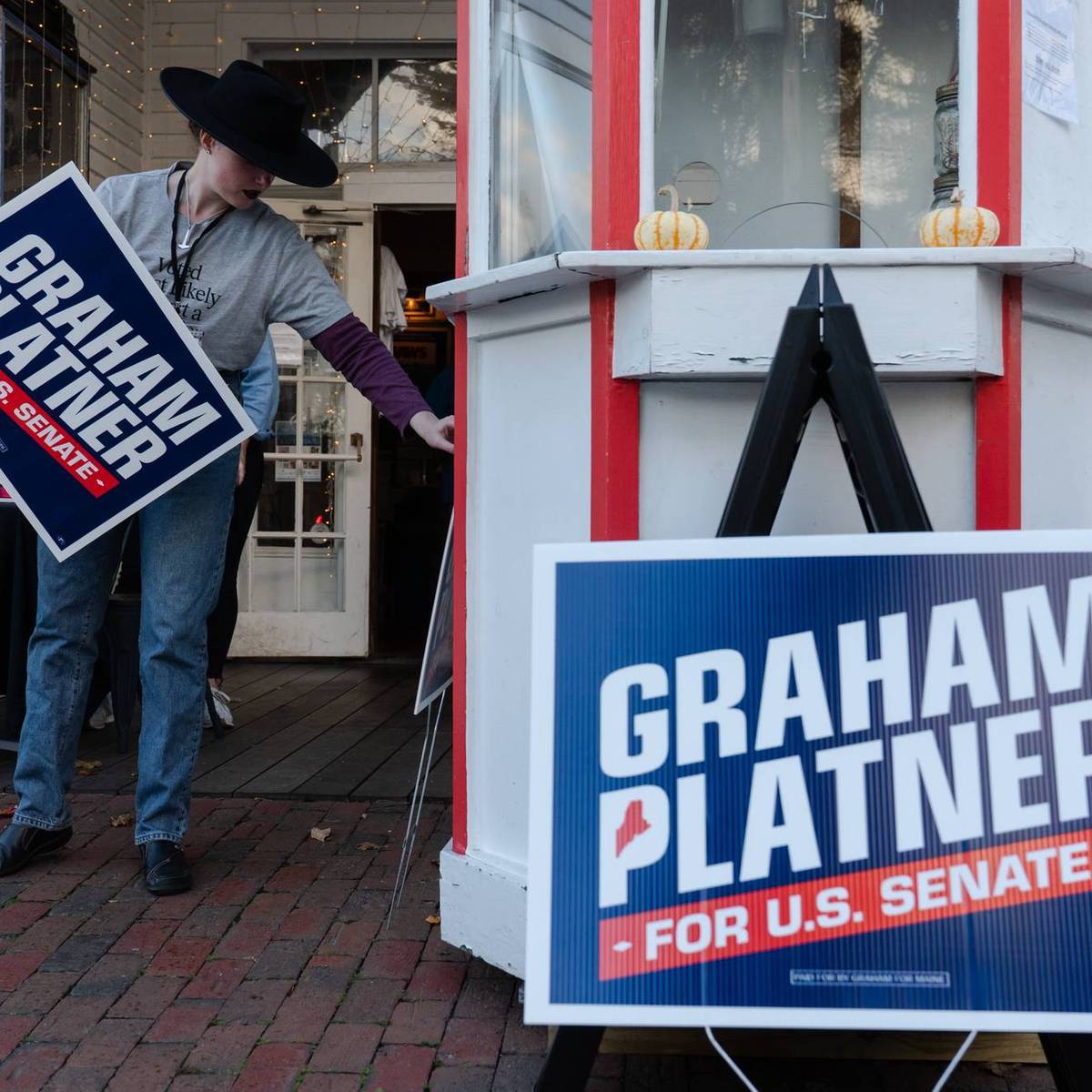
This week kicks off a 14-day sprint to choose the Democratic nominee in Maine, a race that could decide the U.S. Senate. When it became clear that Graham Platner wasn’t going to remain the nominee, I wrote that keeping the record number of Mainers who turned out for last month’s primary engaged and energized required a process that would allow them to participate, rather than a backroom affair. The Maine Democratic Party came up with something that I’m sure I can quibble with at the edges, but which recognizes that imperative and creates an organizing opportunity for the grassroots volunteers who really built the new kind of politics in the state. It’s a credit to state party chair Charlie Dingman, who so far has navigated a treacherous path pretty well.
From the outset, Maine Democrats listed two possible choices to decide the nomination: a statewide caucus, or a nominating convention. In the end, they chose a hybrid of both. The formal nomination will be made at a convention on July 25 in Bangor, conveniently located in the interior of the state. But instead of being decided by 101 members of the state party committee, 500 delegates from all 16 counties will also participate in the vote. And those delegates will in turn be voted into the convention at county meetings this coming weekend.
Any registered Maine Democrat can participate in the delegate meetings; they’ll have to sign up, but they can do that beforehand and even on the day of the meeting. Delegate candidates need to declare by Wednesday at 5 p.m. Eastern; already, over 2,000 people have filed to run, according to the state party.
It will almost be a time warp to the days before the modern presidential primary process.
The number of delegates from each county is based on the Democratic vote from each county in the 2024 election. About 30 percent of the total, 149 in all, will come from Cumberland County, home to Portland, the state’s largest city; Piscataquis County, the least populous in the state, will send four delegates.
A parallel participatory process is being held to qualify candidates for the Senate seat. Each must gather 500 signatures, with at least 50 signatures from eight of Maine’s 16 counties. Candidates have already gotten to work on this process; Nirav Shah, the former Maine health official who finished second in the gubernatorial primary last month, announced that he had already secured more than 800 signatures.
It won’t be determined until Tuesday whether the county meetings will be in-person or virtual; that’s at the discretion of the county chairs. But Oxford County’s chair has already announced an in-person meeting, and I’d expect the vast majority of them to be live. The in-person meetings will include a one-hour mingling session where delegate candidates can generate interest in their candidacies. Then voting will commence, and those with the most votes to fill the slots win. (No ranked-choice voting will take place here; there are some diversity “goals,” but county chairs are merely encouraged to take them into account.)
The Prospect in your inbox
Analysis that goes beyond the noise, from Dayen, Kuttner, Meyerson, and more.Sign up
No paywall, no programmatic ads — just the reporting. Unsubscribe anytime. Submitting your email signs you up for The Daily Prospect, Today on TAP, Aftermath, and Weekend Reads.
In addition to Shah, the most competitive replacement candidates include former state Senate leader Troy Jackson and Secretary of State Shenna Bellows, both of whom also ran for governor and lost the primary (they came in third and fourth, respectively, and formed an alliance with Hannah Pingree, the eventual winner). Also in the field are Jordan Wood and Paige Loud, both of whom lost the open-seat primary for Maine’s Second Congressional District; brewery owner Dan Kleban, who briefly announced for the Senate race last year but quickly withdrew; and David Costello, who did run for Senate and got 8 percent of the vote. State Rep. Valli Geiger, a Platner ally, has expressed interest but has not formally declared.
Candidates’ ability to turn out supporters to the delegate meetings will almost certainly have a determinative effect on the winner of the nomination. There will not be formal slates, but clearly candidates will inform supporters who to vote for as delegate.
The speed of the process will be ruthless. Since none of these candidates were running for Senate and only a couple for federal office prior to this, they don’t really have any money to devote to the effort yet. There won’t be ads of any kind, and ads wouldn’t have much time to work if they existed. It’ll be a pure grassroots organizing challenge; how many people can you get to a county meeting? In a national political environment dominated by money and influence, this is about as quaint a procedure as there will ever be. And it’s kind of a capsule of what politics can look like under campaign finance reform, albeit an unusual one.
Organizers not tied to a candidate can also impact the process. Platner’s volunteer network, which numbers over 15,000, has signaled through an open letter that it will only work for candidates aligned with the policies that Platner supported, including “healthcare as a right, housing affordability, an economy that works for regular people and not billionaires, strengthening workers and unions, end forever wars, oppose complicity in atrocities, an end to mass-deportation enforcement, energy and climate accountability, and human rights for all.”
You could see this volunteer network pushing voters to select their preferred delegates or running as them themselves. If they have critical mass, they can make demands at the convention for candidates to align with their priorities. Frankly, most of them already do; Jackson (who already snagged the Maine AFL-CIO endorsement) and Bellows are progressives, and Shah has been publicly stumping for Medicare for All and against the genocide in Gaza. Kleban had a platform when he was in the primary that largely mirrored Platner’s.
With a premium put on generating enthusiasm, the process can help wash away the past few weeks and put the focus on defeating Susan Collins by talking neighbor to neighbor about the stakes and the kind of political leadership they want. That’s really unique and can slingshot the right candidate into the general election.
Maine’s Democratic leadership still holds some sway on the process with the 101 superdelegate-like votes at the convention. The 601 convention delegates will hold ballots until a candidate gets to a majority, narrowing to five candidates after the first ballot and eliminating the lowest performer on each subsequent ballot until emerging with a winner.
A balloting process rather than an instant-runoff vote with ranked-choice allows time for horse trading in between. But this is how most conventions are run. The 101 insiders will have a say, but they are much smaller in number than the elected delegates.
It will almost be a time warp to the days before the modern presidential primary process, where nominating speeches mattered and coalitions had to form. Candidates can withdraw during balloting and throw their supporters to someone else. For decades, journalists and those drunk on nostalgia have fantasized about the mythical “brokered convention,” but on July 25 in Bangor, that will actually come to life. And unlike a smoke-filled room where insiders dominate politics, the tools are in place for the grassroots to be the kingmakers.
Before you go.
I hope that you found this article interesting and thought-provoking. The reason we’re able to publish stories like this — free of programmatic ads and never behind a paywall — is because readers like you step up to support our work.
The Prospect doesn’t answer to advertisers or billionaire owners. We answer to you and to our commitment to pursuing the truth, wherever that leads us.
Independent, reader-supported journalism is critical at a time when the free press is under assault.
If you believe this kind of reporting should exist and remain free to read, we hope you’ll consider chipping in. Every contribution, however modest, makes a real difference.
David Dayen is the executive editor of The American Prospect. He is the author of Monopolized: Life in the Age of Corporate Power and Chain of Title: How Three Ordinary Americans Uncovered Wall Street’s Great Foreclosure Fraud. He co-hosts the podcast Organized Money with Matt Stoller. He can be reached on Signal at ddayen.90. More by David Dayen
Join Wednesday’s mass call with our partners at Disappeared in America, Justice for Lorenzo: Day of Action and Accountability Movement Call (8pm ET/5pm PT). On this mass call, we will hear from Lorenzo’s loved ones, get updates about the case, and learn how to take action to demand justice for Lorenzo and his family.
When H.R. 1 passed last year and slashed $1 trillion from federal health care programs, we warned that the implications would be horrific and far-reaching.
Now, our worst fears are being realized. Our new report, A Preventable Crisis, found that these cuts put more than 600 hospitals at extreme risk of cuts and closures of essential health care services.
The triple threat of cuts to Medicare, Medicaid, and ACA subsidies will add between $5.21 and $7.72 billion in aggregate deficit per year to already financially vulnerable hospitals — which could force them to shut down.
This is a devastating figure that will close off care to millions of people across the country by impacting:
131 Critical Access Hospitals, the sole or primary hospital serving rural communities.
469 Short Term Acute Care hospitals, which handle most inpatient admissions, emergency visits, and surgical procedures for working people in urban and suburban areas.
Rural, micropolitan, and metropolitan communities across nearly every single state.
On the ground, this means people will have to travel further for emergency services, wait longer to see a doctor, and lose the ability to get the care that should be guaranteed as a human right.
We cannot allow these cuts to stand. We must fight to reverse these cuts, along with more policy recommendations outlined in our new report. But we also know that the only way to permanently protect these hospitals and truly fix our broken health care system is to pass Medicare for All.
Everybody should be able to get the care they need, when they need it. Medicare for All would ensure people have high-quality health care, and that hospitals like these would no longer be at risk of closure.
As the impacts of H.R. 1 have gone into effect, our movement to pass Medicare for All has grown. When people learn what’s happening to our health care system, they join our fight. We have to keep raising that awareness by ensuring this report reaches far and wide.
In times like this, it can be easy to give in to despair. But we know that we can and will undo these cuts and pass Medicare for All by organizing together.
California Governor Gavin Newsom. Photo Credit: Chris Allen, VOICE
Note from the author: It is totally fine if you aren’t up for today’s 10 minute Activist Action! If you read this article and share it anywhere, especially if you share it with your local Indivisble chapter or directly with anyone who may be interested, that is incredibly helpful! Asking your County Democrat Chapter or any other group to endorse the legislation and share it with their members also has a powerful force multiplication impact.
California’s new felony is the latest state election protection law, not the first. The model bill for the other 49 states is at the bottom of this article.
On July 4, Governor Gavin Newsom announced that California will introduce legislation making it a felony to seize ballots before they are counted and certified by state or county officials. The announcement responds to documented events. The FBI seized ballots in Fulton County, Georgia, and Riverside County Sheriff Chad Bianco took more than 650,000 ballots from his own county’s elections office before the California Supreme Court paused his investigation.
California already has a first version of this law in effect. Senate Bill 73, signed in May, makes it a felony to remove ballots from the custody of a county registrar, prohibits law enforcement, including federal officials, from accessing voting machines or voter rolls without a court order, and allows the attorney general or secretary of state to stop law enforcement deployments at voting locations. The legislature attached an urgency clause, so the law took effect immediately, six days before the June 2 primary. The new proposal extends felony coverage across the entire period between voting and certification.
California did not invent election protection law. Taking, destroying, or tampering with ballots was already a crime under state election codes across the country, and since 2020, 22 states have passed laws protecting election officials and workers from threats, harassment, and doxxing, many with bipartisan votes. What California added is narrow and new: a felony written in response to an actual seizure of ballots by a law enforcement agency, an event the president of the California Voter Foundation said had not previously happened anywhere in the country. The model bill below treats the California law as what it is, one piece of a larger act that assembles the protections states have been passing one at a time.
Your state can do even more to protect its elections, because ballot seizure is one method among several. Newsom’s own speech described the Department of Justice’s repeated attempts to obtain private voter data, the National Guard deployment in Los Angeles, and the intimidation of poll workers by federal agents. The model bill at the bottom of this article names seven offenses: seizure of ballots, unauthorized access to voting systems and nonpublic voter data, intimidation of election officials and workers, interference with the canvass or certification, refusal by an official to perform a required certification duty, destruction of election records, and coordinated armed deployments at election facilities.
Here is what makes this bill different, in plain English.
It is rapid. Most criminal prosecution happens after the fact: the crime is completed, the investigation takes months, and the charges arrive long after the election they failed to protect. This bill is written to operate while the crime is happening. An attempt carries the same felony penalty as the completed act, so a police officer can arrest on probable cause while the interference is in progress. State and local police are required to protect election workers, facilities, and materials the moment an election official requests it. And a court must hear an emergency injunction request within 24 hours of filing, with no bond required.
It takes the money. A court can restrain assets connected to the offense before trial so they cannot be moved or hidden, and on conviction the state takes the funds and property that financed the operation, along with its proceeds. The offenses also become racketeering predicates, which lets prosecutors treat an organized, funded interference operation as exactly that, with the forfeiture and civil damages that racketeering law provides.
It goes up the chain of command. The person who ordered the seizure, the person who organized it, and the person who financed it commit the same felony as the person who carried it out, whether or not they were present and whether or not the plan succeeded. Following orders is not a defense. Section 10 of the bill states it the way Newsom said it: “It does not matter who gave the order.”
It survives a presidential pardon. The pardon power covers offenses against the United States only. Every offense in this act is a state offense. A conviction stands no matter who ordered the act and no matter what protection was promised afterward.
And it already contains the answer to the Supremacy Clause. In plain English: the Supremacy Clause is the part of the Constitution that makes valid federal law override state law when the two conflict. Vice President JD Vance and other administration officials have claimed it gives federal agents absolute immunity from state prosecution, and a reader who sends this bill to an office may receive that claim in response. The claim overstates the law. Under the test courts have applied since 1890, a federal officer is protected from state prosecution only when federal law actually authorized the act and the officer reasonably believed the act was necessary and proper to federal duties; federal officials have never held blanket immunity.
Sections 10 and 11 of the bill are drafted to that exact test. Section 11 states that the act criminalizes nothing a valid federal statute or federal court order affirmatively authorizes, so the bill cannot conflict with federal law, and no current federal statute authorizes taking ballots, voter data, or voting equipment from state custody before certification. A federal officer charged under this act therefore has to show a court an authorization that does not exist. If the officer moves the case to federal court, the state still prosecutes it there, and a conviction is still a state conviction. And sheriffs, contractors, party staff, planners, and financiers hold no federal office, so they have no Supremacy Clause claim at all.
One timing fact needs acknowledging. California’s legislature remains in session through August, and many state legislatures have already completed their 2026 regular sessions. Adjournment leaves several actions available. A governor cannot create a felony by executive order, because only a legislature can define a crime, but governors in all 50 states have the authority to call a special session and place this bill on its agenda. A governor can also direct state police to enforce the ballot theft and tampering statutes the state already has, request a formal attorney general opinion confirming those statutes apply to anyone who takes ballots without a court order, and, where a genuine threat exists, use emergency powers, since in many states violating a governor’s emergency order is itself a criminal offense. The email below covers both situations.
Here is the request. We are asking Existentialist Republic readers and activists to help send this bill to all 50 governors, and to send it to your own state legislators. Legislators respond to what other states have already enacted, and the record here is real: the election codes states already enforce, the worker protection laws 22 states have passed since 2020, and now California’s ballot seizure felony.
We need 10 subscribers per article to keep this machine producing the activism that puts democracy on the offensive. Don’t let this be the reason you skip a meal or miss rent but if you can subscribe then you’re essentially gifting the publication to millions of readers. Check out the bottom of this article to see the free ER library of activism books, booklets, and legislation.
Find your governor’s contact page. Search your governor’s name plus the word contact, or use the directory at nga.org/governors.
Find your state legislators at openstates.org/find_your_legislator. Enter your address and the tool lists each legislator who represents you. The number varies by state, from one in Nebraska to three or more in states with multi-member districts. Send the message to each of them.
Send each office the message below, adjusted to fit you. If you are able, copy the full model bill from the bottom of this article and paste it below your signature, in the body of the email, not as an attachment. This is easiest from a computer browser, because the bill is long. Pasting matters: many offices do not click links in email from senders they do not know, spam filters divert messages that contain links, and attachments from unknown senders often go unopened. Pasted text arrives readable with nothing to click and nothing to open. If you are on your phone and pasting the full bill is not practical, send the short message with the link anyway. A short message that gets sent accomplishes more than a complete one that does not.
Democratic US Senate candidate Graham Platner speaks to voters at a town hall at the Elks Lodge 188 on June 7, 2026 in Portland, Maine.
(Photo by Laura Brett/Getty Images)
The campaign, said one organizer, “was never really about one candidate. It was about what Mainers ultimately wanted and deserved: a Senate seat that answers to them.”
As calls mounted on Monday evening for US Senate candidate Graham Platner to drop out of the race in Maine following sexual assault allegations, progressive organizers emphasized that primary voters in the state have made clear their demand for a candidate who prioritizes the needs of working people.
Should Platner be replaced as the Democratic nominee, said the political action organization Our Revolution, the new candidate must be one “who has actually lived the fight Graham Platner ran on: a record with working people, with unions, against corporate money.”
“To the Democratic establishment: This is not your opening,” said Joseph Geevarghese, the group’s executive director. “Mainers did not vote by an overwhelming margin against Janet Mills and the [Democratic Senatorial Campaign Committee]’s handpicked pick just to be handed another status-quo candidate anyway. They deserve what they voted for… The movement will settle for nothing less, because that is what Mainers deserve.”
Platner has not said whether he will end his campaign, during which he has traveled across the state and energized voters from across the political spectrum with his working-class-focused platform—one that calls for Medicare for All, a billionaire’s minimum tax, a stop to “billionaires buying elections” through a repeal of Citizens United, and an end to US military aid for Israel.
In a video he posted on social media Monday in response to the allegations, which came from a woman he dated from 2019-21, he denied that he had committed sexual assault but said he was “mindful of the political reality” and that his campaign is “taking the time to reflect on the best path forward” in order to defeat five-term Republican Sen. Susan Collins. The Maine Senate race is crucial as Democrats aim to win back control of the US Senate.
An aide for Platner told The New York Times Monday evening that if he were to step aside, “it would only be with a guarantee of being replaced by a candidate who he believes is true to the values and vision and policy agenda of the campaign that Maine voted for.”
Platner won the Democratic primary in June by nearly 53 points. His opponent, Gov. Janet Mills, was on the ballot despite having suspended her campaign in April, citing a lack of funds. Ahead of the primary, Platner had faced other controversies, including one regarding comments he made on Reddit several years ago; a skull-and-crossbones tattoo that resembled a Nazi symbol—a connection he said he was not aware of; and allegations of physical aggression from a GOP-affiliated ex-girlfriend.
Geevarghese said Monday that “everyone deserves a fair and open process, and Graham Platner is entitled to due process like anyone else. But the allegations against him are credible, and at this point they are too serious to treat as a distraction from the campaign or the issues. Sexual violence is a red line. We are withdrawing our endorsement and calling on him to withdraw from this race.”
He emphasized that the campaign “engaged thousands of working people in Maine around a simple idea: that Maine’s Senate seat should belong to its people, not corporate money.”
“That was never really about one candidate,” Geevarghese said. “It was about what Mainers ultimately wanted and deserved: a Senate seat that answers to them.”
The sentiment was echoed by the Maine Democratic Socialists of America (DSA), which had not previously endorsed Platner.
“The power of the Platner campaign was undeniable, but that power does not come from a candidate; it comes from tens of thousands of Mainers who were inspired by his campaign’s platform and urgency,” said Maine DSA. “Over the last year, everyday people who had long ago written off electoral politics have shown up and worked to build power on a scale Maine has never seen before.”
“Maine Democratic Party leadership has a choice: Nominate an establishment candidate who offers excuses, not answers, and ultimately loses to Susan Collins; or offer a candidate who harnesses the still-growing momentum, follows the platform that is so energizing to voters in Maine and across the country, and takes our state back for the many, not the money,” said the group.
The state’s Democratic candidate for governor, former state legislator Hannah Pingree, also said that Platner had “tapped into something real—voters hungry for change showed up with real passion and energy.”
“That energy doesn’t have to go away,” said Pingree. “It needs a new candidate to carry it forward.”
Under state law, Platner could be replaced on the ballot if he withdraws by July 13. The state Democratic Party would have until July 27 to name a replacement.
According to the Times, party officials in the state “have discussed possible plans to replace Mr. Platner on the ballot, with options including a pop-up convention on the weekend of July 25 to choose a nominee, or holding a statewide caucus to effectively redo the party’s primary election.”
They have reportedly “ruled out having the state party’s committee, which includes about 100 members, choose the nominee.”
Potential replacements who have been named include former Democratic gubernatorial candidates such as Secretary of State Shenna Bellows and former state Senate President Troy Jackson, who campaigned with Platner and was also endorsed by Sen. Bernie Sanders (I-Vt.) when he ran for governor.
Jackson told Bangor Daily News reporter Benjamin Kail late Monday that potentially having to replace Platner on the ballot was “something I never considered, but if Graham’s stepping away, I am very, very interested and think I’m the best person to replace him.”
He said he “received dozens of calls and messages of support” after the news broke Monday.
Our work is licensed under Creative Commons (CC BY-NC-ND 3.0). Feel free to republish and share widely.
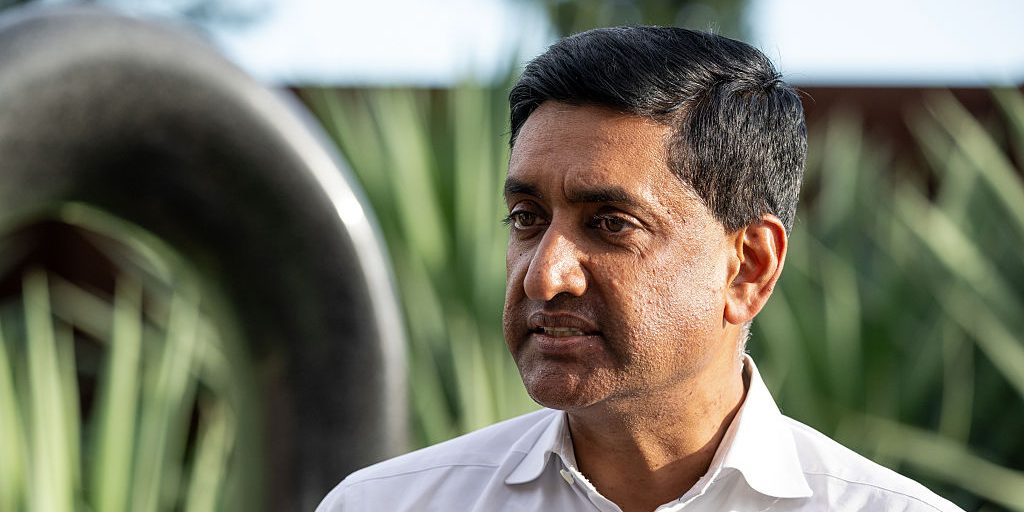
Rep. Ro Khanna, a Democrat from California, in Santa Rosa, Calif., on May 27, 2026. Photo: David Paul Morris/Bloomberg via Getty Images
On a hot Wednesday afternoon in the Palestinian village of Zanuta, California Rep. Ro Khanna walked through the ruins of a Palestinian school demolished by Israeli settlers several years earlier.
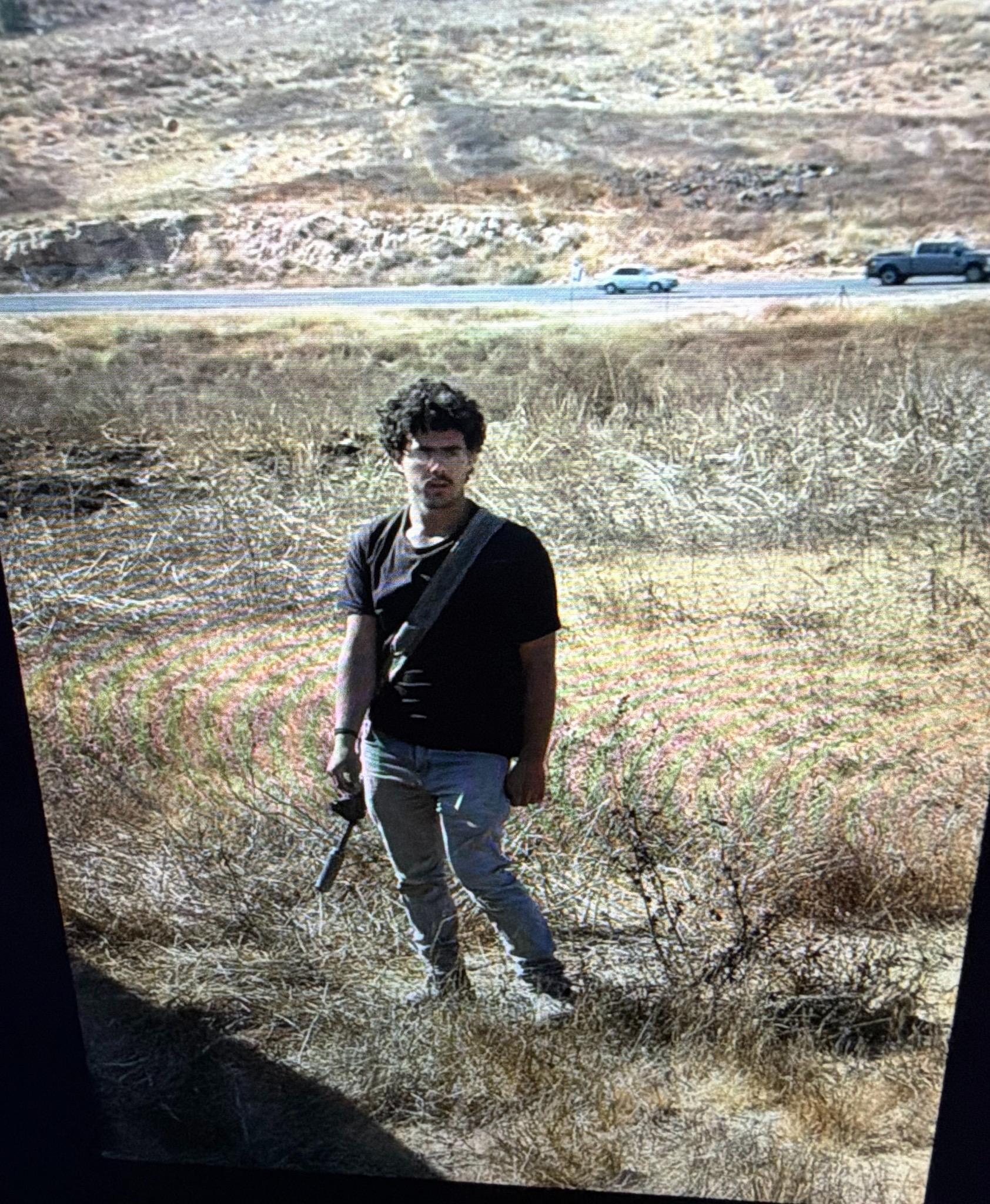
While standing amid the rubble, one of Khanna’s staffers spotted an Israeli settler wearing a large smile on his face with an assault rifle draped around his shoulder, peering at the group through a broken window.
Khanna and his small delegation of his staffer Cameron Kasky, their driver, and a security guard hurried back into their van, Khanna and Kasky, a Parkland school shooting survivor and former congressional candidate, said in interviews with The Intercept.
Settlers had parked their car directly in front of them, blocking their exit along a narrow dirt road that juts from Highway 60 with rocky slopes and dry grass on both sides.
Over the next 75 to 90 minutes, Israeli settlers, who carried what appeared to be M4 assault rifles, intimidated and harassed Khanna and his group, who felt their fear rising from inside the van. The settlers proceeded to menace the Americans: They prevented the group from leaving the village, brandished their rifles, laughed and yelled taunts at the group, kicked the van’s tires, and wiped down the windows with their hands to gawk inside, recording the group and snapping photos. Khanna and Kasky said their security aide identified the men as members of the Hilltop Youth, an extremist settler group with a history of violent raids, which prompted more concern among the delegation.
A video provided by Cameron Kasky appears to show members of the Israeli military talking with the settlers who had blocked the road to stop Khanna’s delegation from leaving.
“It’s the most powerless I have felt,” Khanna told The Intercept. “They paraded around the van, laughing, smiling, brandishing the M4s. I have not been treated that way in any other country I’ve traveled to, including China. In any place that I have traveled, it’s the most arrogant and humiliating treatment of American citizens I have endured — I was quite shocked.”
“It’s the most powerless I have felt.”
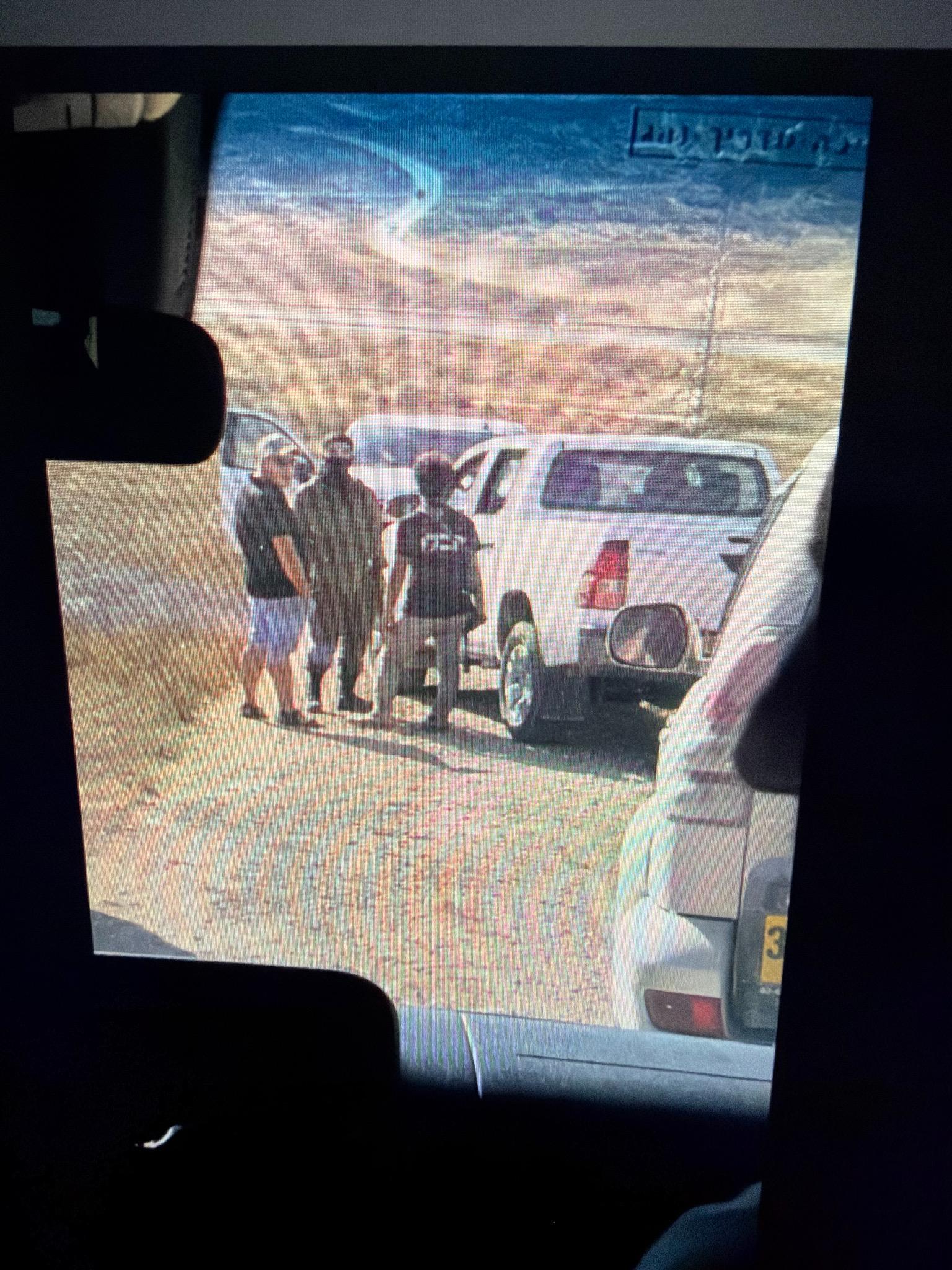
Two white pickup trucks later pulled up and out stepped more armed settlers, according to video and footage reviewed by The Intercept. Later, another vehicle arrived carrying a group of four men and women dressed in green military uniforms, which their security aide identified as Israeli military, Khanna and Kasky recalled. Rather than attempting to resolve the situation, the soldiers joined the group, laughing and talking with the settlers, and at one point, smoking cigarettes together, they said.
Even after the security aide identified the group as an American delegation with a member of Congress, the settlers and soldiers did not budge. “The security person said this is the most concerned he’s ever been, and he’s done tours for decades,” Khanna recalled.
In this image provided by Kasky, the Khanna staffer who was part of the delegation, show a person they said was among the armed settlers who detained them on the road. Photo: Courtesy of Cameron Kasky
In response to a request for comment by The Intercept, the Israeli military acknowledged that “a report was received regarding Israeli civilians who were unlawfully blocking the vehicles of foreign nationals and members of the media.” The statement directly contradicted Khanna’s and Kasky’s account, with the military claiming soldiers had helped clear the group of settlers.
“Upon receiving the report, IDF troops were dispatched to the scene, quickly dispersed the Israeli civilians, and reopened the blocked road. The IDF soldiers operating in the area did not take part in blocking the road,” the military said, adding, “The identity of the armed individual is currently under review.”
“I’m a Jewish school shooting survivor, and I’m sitting here looking at Jewish kids who have the eyes of a school shooter.”
Kasky, who joined Khanna’s office in January following his own visit to the West Bank and has been working with Khanna on his Israel and Palestine policy, said he was afraid the incident would turn more violent, recalling accounts of settler attacks.
“I was sitting there like, ‘Are the Hilltop Youth about to blow a bunch of holes in our vehicle?’” Kasky remembered saying to himself. “I’m a Jewish school shooting survivor, and I’m sitting here looking at Jewish kids who have the eyes of a school shooter. So it was a very surreal experience for me.”
This photo provided by Kasky appears to show the settlers interacting with a member of the Israeli military. Khanna and Kasky said when they military arrived, they did not help clear their path, instead laughing, talking, and smoking with the settlers. Photo: Courtesy of Cameron Kasky
Harassment of foreign delegations in the West Bank is more rare. In September 2023, European Union diplomats reported harassment by Israeli settlers during a visit. In May 2025, Israeli soldiers fired warning shots toward a delegation of diplomats visiting Jenin, which included officials from the United Kingdom, France, Canada, and Ireland. The last reported instance of harassment toward an American delegation was in 2015, when settlers hurled rocks at diplomats investigating reports of settler attacks in the area.
Members of Congress have visited the West Bank in the past, but Khanna’s run-in with settlers is the first known instance of direct harassment by Israeli settlers toward a sitting U.S. lawmaker.
“Imagine what life is like for ordinary Palestinians who do not have a national platform.”
During the incident, Khanna said he phoned an official in the U.S. Embassy, which urged the group not to escalate the situation. After more than an hour, the group of settlers and soldiers suddenly drove off. Shortly after, Israeli police arrived and instructed the group not to return under threat of arrest.
“I thought to myself, if they can do this to an American member of Congress and to American citizens, imagine what life is like for ordinary Palestinians who do not have a national platform, who can’t just pick up the phone and call the American embassy,” Khanna said.
The recent trip wasn’t Khanna’s first visit to the West Bank. In 2022, Khanna joined a delegation of lawmakers, led by Rep. Nancy Pelosi, D-Calif., and visited with leaders in Israel and Palestinian leaders in Ramallah. Khanna’s remarks praising Israel’s tech industry drew criticism from pro-Palestine advocates, who at the time accused the lawmaker of using the visit as a “photo op” to “whitewash Israeli apartheid.”
Khanna had long branded himself as an anti-war figure. In 2004, he ran an unsuccessful bid for Congress centered around his opposition to the Iraq War. And after being elected to Congress in 2016, Khanna would help spearhead an effort to halt U.S. military support to Saudi-led military intervention in Yemen’s civil war.
Israel, however, remained a blindspot. But since the October 7 Hamas attacks and the start of Israel’s genocide in Gaza, Khanna has evolved from a pro-Israel Democrat who regularly voted to send military aid to Israel into one of its staunchest opponents, especially as he gears up for a potential 2028 presidential run.
Khanna is a co-sponsor to the Block the Bombs bill and in April said he opposes the transfer of all U.S. arms — both offensive and so-called defensive weapons — to Israel. Last month, he attempted to strike a portion of the National Defense Authorization Act that seeks to codify Israel’s joint development of weapons with the U.S. and said he would also urge senators to oppose the pro-Israel proposal. Khanna is also a co-sponsor on the West Bank Violence Prevention Act, which seeks to codify sanctions on Israeli settlers, and in January, introduced a resolution opposing the expansion of settlements. In his war powers resolution against the Iran war, he said in June 2025, “U.S. involvement in Israel’s war with Iran is a red line.”
After the run-in with Israeli settlers, the congressman put a finer point on the need to stop arming Israel.
“We’re supplying them the M4s that they’re using to detain American citizens,” he said. “We’re supplying them the weapons that they’re using to kill Palestinian Americans. We’re supplying them the weapons that they’re using to commit terror on the Palestinian population in the West Bank. It is simply inhumane, and the United States needs to not just sanction these extremist settlers — we need to demand that the IDF start to demolish the outposts in the West Bank.”
“We’re supplying them the weapons that they’re using to kill Palestinian Americans.”
Khanna said he still differentiates between settler outposts and larger, long-standing Israeli settlement communities that function as suburban neighborhoods. While he believes outposts should be dismantled, he said the larger settlements should be subject to a land swap with Palestinians as part of a broader political deal to grant Palestinians sovereignty. Yet he still opposed the expansion of the larger settlements and said U.S. funds should not be used to construct such developments.
As Congress took its summer recess, Khanna took the three-day visit to the West Bank this week at Kasky’s urging. The American journalist Jasper Nathaniel, who extensively covers the West Bank and facilitated Kasky’s previous visit, had invited Khanna to visit and connected the group with local Palestinian residents, businesses, activists, and leaders.
When Khanna and Kasky landed in Tel Aviv on Tuesday, Kasky said Israeli airport security took him to a back office where officers questioned him for 40 minutes while showing him a printed screenshot of his Twitter profile where he had previously written in his bio “Stop funding genocide” and a separate printout of a tweet by a pro-Israel user who had spotted Kasky at Tel Aviv’s Ben Gurion Airport in December 2025. The officials continued to hold Kasky despite Khanna identifying him as a part of his office.
After his release, Kasky said he received notification that the Israeli government had revoked his travel visa.
“I’m probably never going to get into the country again,” he said.
During the wide-ranging trip, the delegation spoke with Palestinian shopkeepers in Hebron, who reported harassment from neighboring Israelis who from the upper floors hurled rotten vegetables and acid, and urinated on their stores below. Mayors of Bethlehem, Beit Sahour, and Beit Jala told Khanna of water shortages and the Israeli military-imposed restrictions on Palestinians from drilling new wells, while Israeli settlers enjoy unfettered access to water. Khanna met with the relatives of Amer Mohammad Saada Rabee, the 14-year-old Palestinian American from New Jersey who was shot and killed by Israeli soldiers in April. Other Palestinian residents, including American citizens, spoke of settlers destroying their cars and raiding their homes. The brother of Awdah Hathaleen, who was shot dead by the Israeli settler Yinon Levi in July 2025, told Khanna how he still sees Levi roam free as Israeli prosecutors mull whether to charge him.
We’re independent of corporate interests — and powered by members. Join us.
On Wednesday, the same day of the incident with Israeli settlers, Khanna’s group had been held up for more than an hour by Israeli officials in Masafer Yatta, where the Israeli government constructed a large metal gate on the only road in and out of the area. Khanna, who is Hindu and of Indian descent, said he has never been more acutely aware of his identity as when he was in Palestine, with Israeli guards constantly asking about his race and religion.
Khanna — who is a ranking member of the House Armed Services subcommittee on Cybersecurity, Innovation Technology, and Information Systems — urged other members of Congress, especially other ranking members in foreign policy committees, to also visit the West Bank in Palestinian-led visits.
He said he would raise the issue of the settler incident with the State Department and his colleagues in Congress.
“I am convinced that the most pro-Israel candidate — who may dispute my characterization of genocide by legal means, who may disagree with me in my belief of a Palestinian state, who may argue with me about Israel taking preventive measures, in their view, to minimize civilian casualties — even such a person, if they spent one day in the West Bank,” Khanna said, “if they visited the Palestinians side of Hebron, if they visited Um al-Khair, if they visited Palestinian towns and villages in Areas A and B, if they saw the settler’s outpost, they would conclude that it is apartheid, that it is unjust, that it is a perversion of Judaism in any form of civilized human existence.”
I’M BEN MUESSIG, The Intercept’s editor-in-chief. It’s been a devastating year for journalism — the worst in modern U.S. history.
We have a president with utter contempt for truth aggressively using the government’s full powers to dismantle the free press. Corporate news outlets have cowered, becoming accessories in Trump’s project to create a post-truth America. Right-wing billionaires have pounced, buying up media organizations and rebuilding the information environment to their liking.
In this most perilous moment for democracy, The Intercept is fighting back. But to do so effectively, we need to grow.
That’s where you come in. Will you help us expand our reporting capacity in time to hit the ground running in 2026?
We’re independent of corporate interests. Will you help us?


 by
by