


“So this generation of Rockridge residents, like those in many similar communities, will likely have to pay a price for the exclusionary sins of its past. Relatively speaking, it’s a pittance. While generations of Californians were blocked from living in the neighborhood for financial or racial reasons, the current neighbors may only lose a nearby place to buy Joe-Joe’s.”
By Joe Garofoli, Political Columnist July 19, 2026
Gift Article (SFChronicle.com)
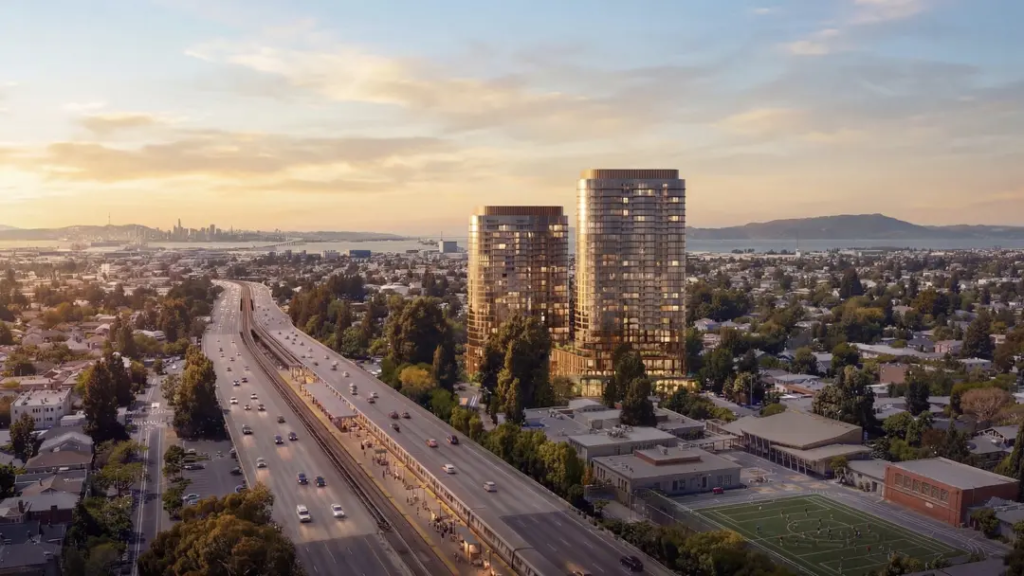
A one-story Trader Joe’s store and its sprawling parking lot could become a pair of towers that would house a 415-unit senior living campus in Oakland’s Rockridge neighborhood.Courtesy of SBC Global
Oakland Assembly Member Buffy Wicks has fought to build more housing across California for nearly a decade. Now there’s a NIMBY — “not in my backyard” — showdown in her own backyard.
The burgeoning battle over a proposal to build 415 units on the site of a popular Trader Joe’s in Oakland’s Rockridge neighborhood is a cautionary tale about what Gov. Gavin Newsom has called California’s “original sin” — its failure for decades to build enough housing, which has created a crippling affordability crisis.
Rockridge, the North Oakland neighborhood where the average home price is $1.8 million, was long a poster child for NIMBYism. Even though 89% of Wicks’ district voted for Kamala Harris in 2024, and signs in front of many homes virtue-signal that “In this house, we believe in science” and “Black Lives Matter,” there is almost no affordable housing, and neighbors have long swatted away anything that violates the height limits along its College Avenue commercial corridor.
But now, the NIMBY chickens have come home to roost. And in the case of Rockridge, it will likely have to choke down two massive towers that are out of scale with the three- and four-story buildings that line College Avenue. Perhaps more important to many residents: They could lose their beloved Trader Joe’s.
Align, the project’s developer, is proposing one 31-story tower at the property, and a second 25-story tower. It is designed for seniors, enabling developers to employ the state’s housing density bonus and include more units. Retail is planned for the ground floor, but at this point it does not include Trader Joe’s. Many in the neighborhood, where I have lived and raised a family for 26 years, are incensed.
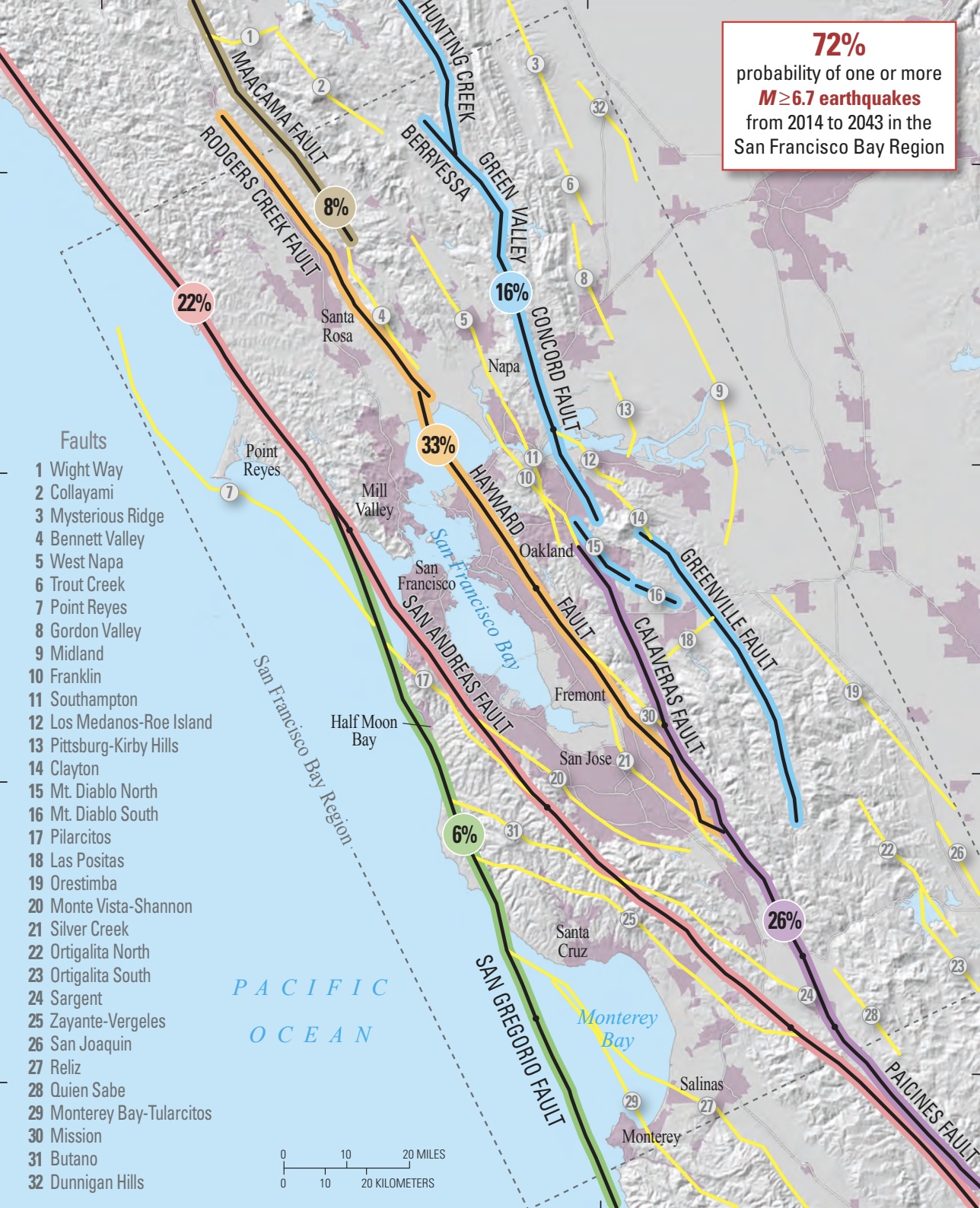
More than 200 people filled nearby St. Augustine Catholic Church on a recent night in July to learn more about the project and vent. And while many speakers tried to sink the project by tossing familiar red herrings — concern about the towers surviving an earthquake despite living in a neighborhood that straddles the Hayward Fault — the predominant worry among many in the room and countless neighbors I’ve spoken to has little to do with the buildings’ height, or as one town hall speaker put it, its “Miami Vice”-style proposed facade. Many harbor one simple wish: Can they just keep the Trader Joe’s?
Zac Unger, the Oakland City Council member who represents the neighborhood and lives near the proposed project, tried to set expectations early. He said his hands — and those of his constituents — were tied by state laws designed to make it easier to build housing and to limit local residents’ ability to block new projects, especially those near public transportation. (The Rockridge BART stop is half a block away, making it an ideal infill location for multifamily housing.)
Unger looked into the restless audience and did what many local officials would: He pointed his finger directly at Sacramento and indirectly at Wicks, who has been lauded nationally by housing advocates for her leadership on the issue.
“To be quite frank, a big part of those state laws has been to take rooms like this out of the picture and to take elected officials like me out of the picture,” said Unger, a first-term council member who was endorsed by YIMBY Action East Bay.
Wicks’ constituents have reelected her three times with no less than 69% support. She was out of the country and unable to attend the meeting.
Wicks supports the projects with the caveat that she hasn’t reviewed “every aspect of the design.”
“Like anyone, I care deeply about what gets built in my own community,” Wicks told me in an email. “But I don’t believe we can say we support solving the housing crisis in theory while opposing housing in the places where it makes the most sense. If we’re serious about creating more homes, transit-oriented infill projects have to be part of the solution — including in our own neighborhoods.”
For decades, California cities, driven by residents who snagged their California Dream but didn’t want to share it, have refused to build enough housing. During Newsom’s tenure, state officials have gotten tough. Last week, Attorney General Rob Bonta and the California Department of Housing and Community Development sued five local governments that failed to comply with California’s Housing Element Law, which requires cities to lay out how and where they will build enough housing to accommodate their projected growth.
The scene in the soon-to-be shuttered church — where residents demanded that officials block a project they don’t like — is one that’s played out in virtually every neighborhood in every city across California for ages. It’s precisely why lawmakers like Wicks have been forced to take steps to ensure housing gets built over those objections.
As a result, Unger is right: There isn’t much that neighbors and local officials can do to block compliant projects, and that’s nobody’s fault but the residents and their representatives who for decades shut down attempts to build housing.
A 1909 advertisement in the San Francisco Call newspaper encouraging people to move to “absolutely the most desirable place for a permanent home in Northern California”—“Rock Ridge Park,” which is now known as Upper Rockridge, said: “No negroes, no Chinese, no Japanese can build or lease in Rock Ridge Park.” It reflected the racist roots of NIMBYism that were tucked into covenants included in real estate deeds at the time.
That attitude continued for nearly a century, even after the passage of housing discrimination laws, said Erika McLitus, housing and planning policy manager at San Francisco Bay Area Planning and Urban Research Association, or SPUR, a nonprofit public policy think tank.
“We saw this huge rise in activism in Rockridge in the 1970s that was all geared around limiting multifamily housing. But that’s not just because people didn’t want to see tall buildings; it’s because they didn’t like that Black residents were moving in,” McLitus said. “It was very much in response to losing the ability to have these explicitly discriminatory policies, and so it became kind of a backdoor way to keep the composition of the neighborhood the same by blocking multifamily housing that would have allowed low-income residents, that would have allowed more people in.”
That attitude prevailed as BART arrived in the early 1970s and property values boomed.
By a show of hands, most of the largely white-haired audience at Unger’s town hall identified themselves as being over 45 and homeowners. Most of those who spoke prefaced their remarks by touting how long they’ve lived in the neighborhood. Unmentioned: Those who have lived here for decades have seen their property values skyrocket (7.5% last year alone, according to Zillow) while their property taxes have been held in check by Proposition 13. They’ve gotten theirs, but want to close the door to the neighborhood behind them.
Rockridge is far from alone. For decades, California cities have invoked laws that were designed to protect the environment as a way to derail housing projects. Or they jammed projects at local design review boards by insisting that they wanted to maintain the character of the neighborhood. The result was that available housing became so scarce that it has become near impossible to buy a home in California unless you’re tech-rich or tapped into substantial family money.
Attitudes have shifted as the YIMBY movement took hold and California — led by Wicks, state Sen. Scott Wiener and Newsom — began passing scores of laws designed to make it easier and faster to build housing. Many of those did take some of the power from local officials to stop or stall development, or have any leverage to save, say, a Trader Joe’s.
“The evidence is that without the blunt instrument of the state overriding local control, you don’t get the housing you need,” said Matthew Lewis, director of communications for California YIMBY, a pro-housing group. And without local leverage, “you don’t get the finer-grained outcome you want at the local level, where you get to save the Trader Joe’s. It would have been much better if the neighborhood of Rockridge had been approving housing over the last 50 years, so that it was a denser neighborhood. It could have been.”
Wicks maintained that the city still has a role in reviewing the project by determining whether it complies with applicable laws.
“Residents should absolutely continue participating in the public process and providing feedback on issues like design, traffic, open space, and neighborhood impacts,” Wicks said. “But we also have to recognize that once communities adopt rules encouraging housing in places like this, projects that comply with those rules should generally be able to move forward.”
The good news is that Rockridge is also changing, albeit a bit too late. A YIMBY majority controls its local planning council. The neighborhood elected a YIMBY champion in Wicks.
The other concern among many in the audience is that the developers were able to pitch a bigger project because it got a “density bonus” for building senior housing. But not just any seniors. Bougie ones. Residents would have to pay a hefty upfront fee to secure a spot, plus a pricey rent to be determined. Proponents say it will take pressure off the housing market by enabling seniors living in homes too big for them to downsize in a spot in their own neighborhood. The developers expect 70% of the project to be filled by people moving from nearby neighborhoods.
Another twist in this tale is that Safeway is the property manager of the site (it used to be an Albertsons grocery store until a series of corporate mergers.) It doesn’t make economic sense that the grocery giant would help a competitor revive its store there — especially when there is a Safeway a few blocks away (and another 1.2 miles away) that would love to have a bunch of former Trader Joe’s shoppers coming through its doors.
One bright spot, Unger told the audience, is that the developers are looking at a way to include the Trader Joe’s when they formally introduce the project in the upcoming months. “I don’t want to overpromise anything,” he said.
Wicks, who I have bumped into while shopping at Trader Joe’s, said, “It’s a beloved neighborhood store, and I’d love to see it remain. That’s why I’ve requested from the developer that it stay if possible.”
But that is far from a done deal. So this generation of Rockridge residents, like those in many similar communities, will likely have to pay a price for the exclusionary sins of its past. Relatively speaking, it’s a pittance. While generations of Californians were blocked from living in the neighborhood for financial or racial reasons, the current neighbors may only lose a nearby place to buy Joe-Joe’s.
July 19, 2026
Senior Political Writer
Joe Garofoli is the San Francisco Chronicle’s senior political writer, covering national and state politics. He has worked at The Chronicle since 2000 and in Bay Area journalism since 1992, when he left the Milwaukee Journal. He is the host of “It’s All Political,” The Chronicle’s political podcast. Catch it here: bit.ly/2LSAUjA
He has won numerous awards and covered everything from fashion to the Jeffrey Dahmer serial killings to two Olympic Games to his own vasectomy — which he discussed on NPR’s “Talk of the Nation” after being told he couldn’t say the word “balls” on the air. He regularly appears on Bay Area radio and TV talking politics and is available to entertain at bar mitzvahs and First Communions. He is a graduate of Northwestern University and a proud native of Pittsburgh. Go Steelers!