


- Francis Luo | Staff
- Aug 21, 2026 (DailyCal.org)
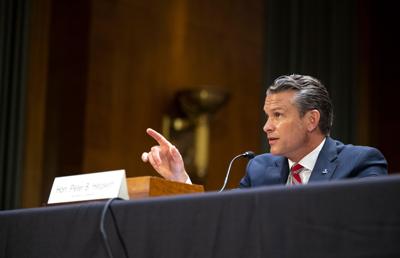
The U.S. Department of Defense has ordered a “research security audit” of UC Berkeley and 29 other academic institutions, demanding an immediate review of foreign academic, financial and research collaborations, according to a U.S. official.
In a press release, the DOD said failure to comply with the audit before Aug. 31 could mean losing federal research funding in the future.
The Pentagon said its aim is “to protect American taxpayer-funded research investments from unauthorized technology transfer, intellectual property theft and adversarial exploitation.” Universities have been directed to audit foreign collaborations, assess exposure of sensitive research and terminate existing partnerships with “problematic” institutions.
According to Fox News — who received the full list from a U.S. official — the Pentagon also issued audit notifications to UC San Diego and UCLA.
The Pentagon claims the 30 universities listed are collaborating with “foreign institutions engaging in problematic activities” in countries such as China, Russia and Iran. The audit also targets universities with ties to “organizations associated with rebranded Confucius Institutes.”
“As a member of the (UC) Berkeley faculty, I think this particular assertion that Berkeley has done anything wrong is nonsense,” said Goldman School of Public Policy professor Andrew W. Reddie. Reddie is the founder and faculty director of the UC Berkeley Risk and Security Lab, which researches technology and security as it relates to global policy.
Reddie pointed out that federal funding has been important in making the United States a “behemoth” of innovation, crediting it with creating technologies such as the gene-editing tool CRISPR and large language models, both of which have close ties to campus.
“Universities are critical partners in executing a wide range of Department of War research programs, and the Department must therefore ensure that our research investments are well protected from foreign exploitation,” said Joseph Jewell, assistant secretary of war for science and technology, in the press release.
The move comes as the federal government has become increasingly critical of foreign academic collaborations nationwide, especially of those with China. In August, UC Berkeley disputed a U.S. Department of Education dashboard claiming campus had received $224.5 million in gifts and contracts from Chinese sources over the past 25 years. Federal concerns about Chinese researchers led to a researcher being fired from Lawrence Berkeley National Laboratory last fall. Campus also ended a decade-long relationship with China’s Tsinghua University in 2025.
“The trouble is that, at least from this administration’s perspective, an overwhelming amount of the good ideas are emanating from the U.S. and then escaping the U.S.’s clutches,” Reddie said. “But there’s a lot that the U.S. gains from the broader international ecosystem of science and innovation, and indeed much of our science and innovation has been useful for the globe at large.”
Campus spokesperson Dan Mogulof declined to comment on the audit order.


