


- by JL Odom
- Wednesday, September 2, 2026 (ebar.com)

Castro small business owner Jeffrey Wang, left, whose store, Entour, is closing, talked with District 8 supervisor candidate Emanuel “Manny” Yekutiel, who stopped by with former supervisor Bevan Dufty during a September 1 tour of the LGBTQ Neighborhood. Photo: JL Odom
There’s a simple way to get a sense of a place: Go there.
San Francisco District 8 supervisor candidate Emanuel “Manny” Yekutiel recently did just that, spending a sunny Tuesday afternoon walking Market, Castro, and 18th streets to get a firsthand look at one of the LGBTQ neighborhood’s most visible problems: vacant storefronts.
Accompanied by campaign staff, civic leaders, and business owners, Yekutiel stopped at empty storefront after empty storefront, noting their locations, discussing what they could become and keeping count.
He’s determined to bring an end to the vacancies that have become fixtures along the Castro’s commercial corridors.
“This is the beginning of the final chapter of all these vacancies,” Yekutiel said. “We’re all collectively witnessing them.”
Yekutiel’s September 1 walk came just days after the San Francisco Democratic Party narrowly endorsed him in the race for the open District 8 seat on the Board of Supervisors, a closely watched contest on the November 3 ballot, as the Bay Area Reporter previously reported.
The party’s Democratic County Central Committee voted 12-10 after three rounds of voting to sole endorse Yekutiel rather than make no endorsement. The D8 seat is being vacated by termed-out gay Supervisor Rafael Mandelman, currently board president, who endorsed Yekutiel early in the race and has continued to support him after gay San Francisco resident Brad Chapin accused Yekutiel of sexually assaulting him at a private party in 2020. Yekutiel has strongly denied the allegation.
Yekutiel, who owns an eponymously named cafe and events space in the Mission District, centers on three priorities in his campaign plan for vacant storefronts: working directly with landlords to identify prospective tenants and reduce unnecessary red tape; supporting temporary pop-ups while permanent tenants are found; and strengthening the city’s vacancy tax to discourage property owners from leaving storefronts empty indefinitely.
His campaign has identified 63 vacant storefronts across District 8. Joel Gentes, the campaign’s director of technology and data, rode his bike throughout the district, photographing empty storefronts and recording their addresses before compiling the information into a spreadsheet.
“We physically went throughout the district because there were no good data sets that were publicly available – we created our own,” Yekutiel said.
The campaign will also compare its findings with the Castro Merchants Association’s list of vacant storefronts. But, as the B.A.R. has noted in previous coverage, the number of such vacancies is fluid and somewhat misleading, as spaces that appear empty sometimes have been leased to new tenants whose openings can be delayed by either construction or permitting issues.
Nate Bourg, a gay man who is the president of the Castro Merchants Association and co-founder of The Academy, a private social club, expressed support for Yekutiel’s approach during the walk. (The merchants group does not endorse candidates in political races, though Bourg has personally endorsed Yekutiel in the contest.)
“It’s really exciting how many opportunities there are in the Castro to fill, especially some of the notable vacancies, but even down to the smaller ones,” Bourg said. “We’re not going to make big progress if we think incrementally.”
Now that the campaign has pinpointed the locations of the vacant storefronts, Yekutiel said the next step is to contact the landlords behind each to learn the backstory.
“We want to understand why it’s vacant, if they’ve actively been trying to see tenants, if there’s an issue with the city, [or] if there’s a physical infrastructural issue with the space,” said Yekutiel, who rented a former bank location on 24th Street in Noe Valley for his campaign headquarters.
Sign up today to receive trusted LGBTQ news in your inbox.Please select the newsletters you’d like to subscribe to:Bay Area Reporter newsletterNews is Out weekly newsletterBay Area Reporter health newsletterSubmit
Yekutiel said his campaign is focused on storefronts without active businesses, even if a space has technically been leased.
“From the perspective of a resident, I think a vacancy is a vacancy, so it’s really about having them be filled,” he said. “Sometimes you can have a storefront that’s leased, but they never actually move in, or it takes years to get the construction done, so I still consider it vacant.”
Some previously empty storefronts elsewhere in District 8 have recently been filled, he noted, including the former Pharmaca Integrative Pharmacy space in Cole Valley, now home to Double Black SF cafe, and the long-vacant 24th Street Cheese Company space in Noe Valley, where Sala Thai Massage was approved to open last September by the city’s planning commission but has yet to do so. New storefronts have opened in Glen Park as well.
“There’s been some action in the outer neighborhoods – we’ll have to see how the Castro compares,” Yekutiel said.
The early legwork, he said, is intended to give him a head start if voters elect him.
“We don’t want to have to do all this work starting in November – we want to have it all ready so that we can get to work as soon as possible,” he said.
Yekutiel supports converting underused sites along Castro and Market streets – including existing gas stations and the long-vacant Pottery Barn site at the intersection – into housing.
During the walk, Yekutiel stopped at a particularly dilapidated storefront at the corner of Sanchez and Market streets. The space was boarded up and covered in graffiti, as work to demolish it for new housing has stalled. (Plans to turn the prominent corner space into a mixed-use development with apartments over retail have been in the works for more than a decade, as the B.A.R. noted in a 2016 story about several housing redevelopments proposed for upper Market Street in the Castro, with SF Yimby noting in 2024 that construction on an even larger building at the site was to begin earlier this year.)
“It’s in the middle of the district – a prime location,” Yekutiel said. “It’s been vacant for years and years and years, basically functioning as a parking lot. It should be housing with a ground floor for a retail establishment, restaurant, nightclub, or something [else].”
He also wants to help businesses open in vacant storefronts through grants of up to $100,000, which could be used for construction, materials, or other costs associated with getting a business up and running.
Other proposals include simplifying zoning rules that make it difficult to open businesses in neighborhood commercial areas and offering tax incentives to businesses that stay open later. His broader platform calls for a 4 a.m. closing time for bars, 24-hour Muni service and cleaner, safer and more vibrant streets.
He has his eyes on rebuilding and renovating Harvey Milk Plaza and Jane Warner Plaza as well. The Friends of Harvey Milk Plaza has spearheaded a renovation for Milk plaza above the Castro Muni Station that is expected to break ground later this year, while a decadelong-planned new four-stop elevator within the public parklet for the subway station is scheduled to open this fall.
As for Jane Warner Plaza across the street, Mandelman had city transit officials draw up potential plans for how to revamp the outdoor piazza carved out of a section of 17th Street between Castro and Hartford streets. As the B.A.R. reported two years ago, the suggested ideas would cost millions of dollars to implement, with no funding source secured at the moment.
“We’d work with the community to figure out what the community wants, but, in my mind, I feel like finding a way to change the F-line [streetcar] turnaround so it’s not through Jane Warner Plaza,” said Yekutiel, who previously served on the San Francisco Municipal Transportation Agency’s board of directors.
His vision includes removing the rails, raising the concrete, and creating “an actual plaza” with landscaping, seating, activations, and entertainment, including music and theater performances.


Fellow District 8 candidates weigh in
Yekutiel’s approach to vacant storefronts is not unique among the District 8 candidates in that all seek to address the issue head-on.
District 8 candidate and Noe Valley resident Darshini Patel, a bisexual and queer woman who used to work at DoorDash, said the city first needs to better enforce its existing vacancy tax and close loopholes that allow some persistently empty properties to avoid it.
“My understanding is the city largely tracks vacancies based on that vacancy tax,” Patel said in a phone call with the B.A.R. “Because they’re not enforcing it, we actually don’t have an accurate count of how many stores are vacant.”
She said the city should also work more closely with merchants who are already tracking vacant storefronts themselves.
“I know that, at least in the Castro, some of the merchants here have started their own database where they’re tracking which stores are vacant and which have been vacant for a while,” said Patel, who is renting a vacant retail space on the 500 block of Castro Street for her campaign headquarters. “They have a more robust system than what the city does, which is unfortunate.”
She wants to pair that focus on stronger enforcement with an expansion of the city’s Vacant to Vibrant program , which helps activate empty storefronts with temporary businesses.
She also proposed a community fundraising model in which residents could raise money for projects and receive matching public funds, allowing vacant spaces to be used for more than traditional retail.
“It could be performance spaces if we wanted,” she said. “Maybe someone wants to help to raise funds for a short-term gallery. It could be any number of things – it doesn’t have to be stores.”
For the long-vacant Pottery Barn space on Market Street, Patel said she would want to involve the community before deciding what should go there. One possibility she has explored is a daytime drop-in center for unhoused people, offering a community lounge space, showers, and laundry facilities. The site has been eyed for various uses, such as affordable housing or a LGBTQ cultural institution, but the property owner has sought too high a price for the city to purchase it, Mandelman said during a discussion several years ago.
“We talk a lot about how to get people off the street, but then not enough about how do we then help them find and maintain jobs so they can earn a living and stay off the street,” Patel said.


District 8 candidate Gary McCoy, a gay longtime political aide to Congressmember Nancy Pelosi (D-San Francisco) who’s on leave from her healthcare campaign, said the city should both penalize property owners who keep storefronts vacant and create incentives for them to fill the spaces, even temporarily. He leased a vacant retail space fronting Jane Warner Plaza for his campaign headquarters.
“A lot of the challenge – in the Castro in particular – is that we’ve got two or three property owners that just refuse to rent out their property and it’s been sitting vacant [and] boarded up for a very long time,” McCoy said in a phone call with the B.A.R.
McCoy said he has seen the problem firsthand. While serving as Pelosi’s political director, he helped look for space for her Castro volunteer hub. The campaign used Les Natali’s space at 541 Castro on a month-to-month basis for several years, McCoy said, but the property owner declined to negotiate a longer-term lease because he was holding out for a formula-retail tenant.
In addition to finding ways to encourage property owners to make their spaces available, including for short-term pop-ups for artists, entertainers, and startups, McCoy said the city also needs to do more to help existing small businesses stay open.
“I want to look at what we can be doing for them in terms of potentially reforming a lot of the annual permits that are required for them and see where we can waive fees on some of those and eliminate the ones that aren’t posing any type of safety concerns,” he said.
He pointed to Castro Coffee Co. and Castro Nail Salon, small businesses he said he helped try to keep in the neighborhood after they struggled to find suitable long-term leases. Castro Nail Salon eventually moved to 18th and Eureka streets, while Castro Coffee Co. moved into a smaller space on Castro Street. Both businesses previously flanked the Castro Theatre, as the B.A.R. previously reported. Their leases were not renewed by the Nasser family that owns the historic movie house, which includes the storefronts.
McCoy is widely viewed as Yekutiel’s strongest challenger and has secured endorsements from both of San Francisco’s leading LGBTQ political clubs, the Alice B. Toklas and Harvey Milk LGBTQ Democratic clubs. Alice endorsed McCoy outright, while Milk designated him as its first choice, as previously reported by the B.A.R.
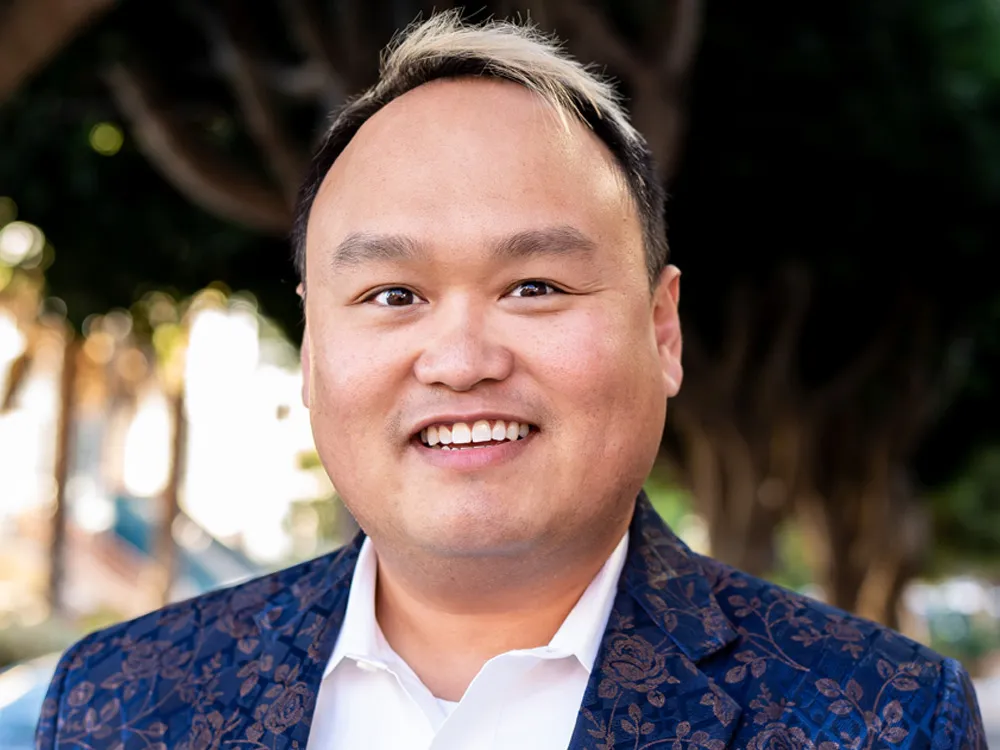

District 8 candidate Michael Trung Nguyen, a gay patent attorney also known by his drag persona Juicy Liu, received Milk’s second-choice endorsement in the race, which will be decided by ranked choice voting. He has yet to announce finding a space to rent for his campaign, recently telling the B.A.R. there weren’t many good options to do so in the supervisorial district.
Commenting on the need to fill retail vacancies to create a safer district, Nguyen echoed Patel’s support for the city’s Vacant to Vibrant program.
“D8 has 63 empty storefronts right now, and every one of them is a corridor that’s less safe and less alive,” he wrote in a statement to the B.A.R. “I’ve proposed a Vacant to Vibrant program that extends city investment and support to a full two years, instead of the current three months, so small businesses actually have a shot at getting established. I’d pair that with commercial rent stabilization, so existing businesses aren’t priced out the moment their lease turns over.”
“Active storefronts are also a public safety strategy. Well-lit corridors with real foot traffic give us the eyes on the street that actually keeps people safe, and that’s the kind of vibrancy I want to bring back to our commercial corridors,” he continued.
Envisioning future occupancies
Those who joined Yekutiel on the Castro walk had their own ideas for what the vacant storefronts could become: a doughnut shop, a coffeehouse, a new restaurant.
Suzanne Ford, who is the executive director of San Francisco Pride and the first trans woman to hold the office, said she would like to see a treatment center open in the Castro, as well as a trans-owned business. She emphasized that she was at the walk in her personal capacity and not representing SF Pride.
“[It] would be revolutionary,” Ford, a Castro resident, said of a trans-owned establishment.
In fact, the Lobby bar on 18th Street across from the Castro’s Mollie Stone’s Market is owned by Grace Huntley, a trans woman, as the San Francisco Standard reported last September.
Bevan Dufty, a gay man and former D8 supervisor, who currently sits on the city’s Homelessness Oversight Commission, was also among the group, occasionally stopping in open stores with Yekutiel to greet owners.
“Manny has run a very strong campaign focused on small businesses, which really are the life’s blood of the Castro and the whole city,” said Dufty, who has endorsed Yekutiel. “It creates our identity. It builds community with these businesses that mean so much to people in their neighborhood.”
Dufty also served two terms as an elected board member of the regional BART transit system.
“I see business owners talk to him, and they speak the same language, and he’s very passionate,” Dufty said of Yekutiel. “He’s somebody who’s proven that he can get things done, no matter how complex they are.”
For Yekutiel, the walk was about identifying vacant storefronts while envisioning what could replace them – and laying the groundwork to begin making that happen.
“I won’t be able to do any of this alone,” he told the group. “It’s going to be a big community effort – CBD merchants, the neighborhoods, nonprofits, all together – to get them filled.”