Esther Duflo | TED Countdown Summit 2025
• June 2025



People rally in Houston for a June 14, 2025 “No Kings” protest against US President Donald Trump’s policies.
(Photo by Brett Wilkins/Common Dreams)
Oct 16, 2025 (CommonDreams.org)
Amid President Donald Trump’s unprecedented and accelerating attacks on US democracy, millions of Americans in every state and beyond are preparing to take to the streets Saturday for a second wave of No Kings rallies.
In what organizers and participants say might be the “largest protest in US history” in a single day, No Kings demonstrations are set to take place in more than 2,500 communities across the nation, from its biggest cities to small towns like Burns, Oregon—population 2,700—and Bryson City, North Carolina, with 1,500 residents.
RECOMMENDED…

The first round of No Kings rallies, held on June 14, drew an estimated 4-6 million participants to over 2,100 demonstrations. Organizers say that the October 18 protest could be even bigger, as Americans are more alarmed than ever by the assault on democracy by Trump and Republicans.
“What we’re seeing is truly unprecedented,” Lisa Gilbert, co-president of the consumer advocacy group Public Citizen, told Common Dreams. “What we’re seeing from this administration is authoritarian slip. We are seeing them attack judges, attack nonprofits, trying to attack the media, stifle First Amendment protected speech, and arrest sitting members of Congress for doing their oversight of [Immigration and Customs Enforcement].”
“The list, unfortunately, is very long and what we want is what we’ve seen in other countries that have successfully resisted authoritarianism—to hold on to our democracy and to create and protect the checks that we have against that kind of executive overreach,” she added. “It’s a lofty goal, but it starts with us exercising our right to peacefully protest.”
https://embed.bsky.app/embed/did:plc:vunhim5ios6uyjradxi6b4b2/app.bsky.feed.post/3m3365irbs225?id=41219892759777266&ref_url=https%253A%252F%252Fwww.commondreams.org%252Fnews%252Fno-kings-october-18-2025&colorMode=system
As Republicans including US House Speaker Mike Johnson (La.)—who called Saturday’s pro-democracy demonstrations “hate America” rallies—attempt to smear the No Kings movement, organizer Sarah Parker of 50501 and Voices of Florida said during a Thursday press conference that “we have a saying in the South: A hit dog will holler, and I’m hearing a lot of noise from Washington, DC right now.”
“And with that said, on October 18 millions of people just like me… are going to take the streets peacefully and say there will be no kings in America,” she continued.
“These are everyday Americans coming together to organize,” Parker said. “These are faith leaders, teachers, veterans, small business owners who are being impacted by extremely dubious tariffs. These are people that are seeing their friends and family members be kidnapped off the streets. These are everyday Americans that are struggling to put groceries into their fridge, and these are Millennials and Gen Zers who were promised a beautiful and free America.”
“They are rising to this moment because they feel… it is their obligation to joyfully and peacefully push back against authoritarianism like the generations that came before us,” she added.
Jamie Contreras, the executive vice president of Service Employees International Union (SEIU) 32BJ who is also a US Navy veteran and former undocumented immigrant, told the press conference that “America belongs to the people—working people—not to billionaires or a few politicians who think they can rule like kings.”
Addressing the Trump administration’s designation of leftist protesters as “terrorists” and its ominous threat to take the “same approach” to them as to the alleged drug traffickers it is extrajudicially assassinating on the high seas, Contreras said that “the real threat to this country isn’t peaceful protesters, it’s politicians shutting down our government to protect billionaires and corporate greed.”
“What’s ironic to me is, you call peaceful protesters terrorists, but then the [January 6 insurrectionists] patriots,” he added. “That’s so ironic and so far from the truth.”
The federal government shut down at the beginning of the month, and as Democrats and Republicans continued to spar over the GOP’s healthcare cuts, Johnson warned this week that it could be the longest shutdown ever.
Indivisible co-founder Leah Greenberg told the press conference: “Republicans are blaming and smearing millions of Americans who are peacefully protesting because they have run out of excuses for their own failures. Republicans understand that Americans are blaming them for the shutdown, Americans are blaming them for out-of-control healthcare prices, and a rising affordability crisis.”
Greenberg continued:
They are blaming them for the fear and chaos gripping the country. They are panicking and they are flailing and they are searching for anything, literally anything, to distract from their governing failures. And in their desperation they have decided to go with smearing millions of Americans who are coming out to peacefully, directly assert our rights. It is both ridiculous and outrageous. It is ridiculous because it is transparently false, it is outrageous because it is an attack on the First Amendment and on all of our right to free speech.
Parker said Republicans “are refusing to accept the fact that the American people are pissed, by the millions. They are refusing to accept the fact that their actions are harming our beloved country. They are refusing to look in the mirror and accept the fact that they are destroying America.”
https://embed.bsky.app/embed/did:plc:5y5mgzgs2kx63mqc5gcz2n3v/app.bsky.feed.post/3m34f5zo3d22z?id=037643008159259805&ref_url=https%253A%252F%252Fwww.commondreams.org%252Fnews%252Fno-kings-october-18-2025&colorMode=system
ACLU chief political and advocacy officer Deidre Schifeling said during the press conference that “President Trump and his allies are abusing their power and attempting to scare their own citizens away from exercising our rights and freedoms.”
“What we have seen so far is as troubling as it is illegal,” Schifeling continued. “The Trump administration has directed ICE to kidnap people including journalists and students off the street, ripping them from their families and deporting them without due process.”
“Their allies are attempting to undermine fair elections at President Trump’s direction by redistricting voting maps and further gerrymandering states,” she noted. “And they are attempting to limit our First Amendment rights and use the federal government to attack political rivals, stifle dissent, and undermine checks and balances on presidential power.”
“The Trump administration has even deployed armed agents and troops into American cities, including my home of Washington, DC, turning our streets into militarized zones and threatening to do so again to quash Saturday’s protests,” she said.
“You have to ask: Why are they so afraid of their own citizens?” Schifeling said. “Well, they know that their agenda of selling fear, division, misinformation, lawbreaking, and violence is deeply unpopular. Millions of Americans will peacefully protest on Saturday to tell the Trump administration that we are a country of equals, we are a country of laws that apply to everyone, of due process, and of democracy.”
“We will not be silenced,” she added. “If we stop exercising our rights, our First Amendment freedom of speech out of fear, we forfeit our power in advance. The best way to protect our freedom is to act free.”
https://embed.bsky.app/embed/did:plc:iu4j537hox5huj4bwnwgub4z/app.bsky.feed.post/3m3bq6xs7ui2h?id=4456267393447473&ref_url=https%253A%252F%252Fwww.commondreams.org%252Fnews%252Fno-kings-october-18-2025&colorMode=system
Gilbert told Common Dreams: “I think we can turn this around. I think we wouldn’t be doing this if we couldn’t. We are still in a democracy today, we’re having this free and fair conversation right now, you and I… and we have a set of protections we can exercise and we need to remind people what democracy is supposed to look like.”
As Contreras said, “When working people stand together, no king, no billionaires, no politicians can stop us.”
“On October 18 and everyday, we’ll show the world what democracy looks like,” he added. “No thrones! No clowns with crowns! No kings, just working people united in power to defend our democracy.”
Our work is licensed under Creative Commons (CC BY-NC-ND 3.0). Feel free to republish and share widely.
Brett Wilkins is a staff writer for Common Dreams.
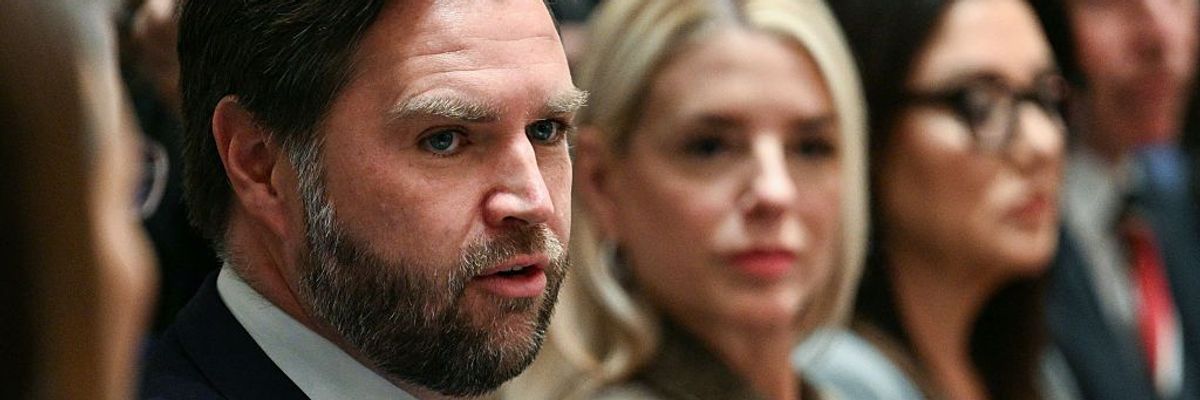
US Vice President JD Vance speaks during a cabinet meeting hosted by US President Donald Trump in Washington, DC on October 9, 2025.
(Photo by Jim Watson/AFP)
Oct 16, 2025 (CommonDreams.org)
https://trinitymedia.ai/player/trinity-player.php?pageURL=https%3A%2F%2Fwww.commondreams.org%2Fnews%2Fjd-vance-racist&contentHash=4fc626cfa0fdcd6617b8155ffc7ca9da0cfded2ae613c2373d4e17e52c64e3d2&unitId=2900021701&userId=5752cafe-a61d-4177-b146-0c8454dc0ef8&isLegacyBrowser=false&isPartitioningSupport=1&version=20251016_e6a32db67207718aa5032ad6c0755a285d9bd1c4&useBunnyCDN=0&themeId=478&isMobile=0&unitType=tts-player&integrationType=web
Since the killing of far-right activist Charlie Kirk last month, Vice President JD Vance has led the charge among right-wing politicians who have railed against “left-wing extremists” and what he has claimed is a “network” of advocacy groups that foment and perpetrate violence—suggesting the “rhetoric” of progressives who are critical of President Donald Trump and his allies is akin to violence.
But confronted with racist, antisemitic messages and jokes about rape that were sent in a group chat by members of the group Leaders of Young Republicans on Wednesday, the vice president dismissed the outrage that has ensued over the chats as “pearl clutching” over the actions of “young boys.”
RECOMMENDED…


The “young boys” who sent messages that explicitly praised Adolf Hitler, lauded Republicans who they believe support slavery, and said their political foes should go to “the gas chamber,” were between the ages of 24-35.
“The reality is that kids do stupid things, especially young boys,” Vance said on The Charlie Kirk Show. “They tell edgy, offensive jokes. That’s what kids do. And I really don’t want us to grow up in a country where a kid telling a stupid joke—telling a very offensive, stupid joke—is cause to ruin their lives.”
Since the messages were leaked, some of the Young Republicans who took part in the group chat have stepped down from their jobs—which they held, in some cases, with state lawmakers and the New York state court system. One member, Vermont state Sen. Samuel Douglass, who was the only elected official in the chat and made a racist remark about South Asian people, has faced calls to resign.
“Lil’ JD defends Nazi-loving Republicans as ‘boys,’ though they’re almost his age. I wonder how his wife feels about his waving away anti-Indian slurs?” said The Nation‘s Joan Walsh, referring to Usha Vance, whose parents immigrated to the US from India.
On CNN Wednesday evening, I’ve Had It podcast host Jennifer Welch said Vance’s defense of racism—despite the fact that he has a South Asian wife and biracial children—offers the latest evidence that he’s unlikely to fight for the rights of anyone, including those who voted for him.
Vance’s suggestion that the fallout from the Young Republicans’ praise for Hitler and other comments could “ruin their lives” comes as the vice president and other far-right leaders have called for federal investigations and other actions to “disrupt” groups that express disagreement with the Trump administration—for example, those that call the deployment of armed immigration agents in US cities “authoritarian.”
The administration and its allies have also already taken extreme actions against individuals who exercise their First Amendment rights—detaining pro-Palestinian protesters like Mahmoud Khalil and Rümeysa Öztürk and trying to deport them for speaking out against US support for Israel’s genocidal military campaign in Gaza. A man in Tennessee was charged with threatening mass violence and held in jail for weeks after he posted a meme with a quote from Trump after Kirk’s killing, and more than 145 people have been fired for making comments about the activist’s assassination.
While Vance “infantalizes people on the right to defend them,” said journalist Zaid Jilani, “he never shows the same charity to the left (like, for instance, students that Trump has tried to deport).”
When asked by Politico, White House spokesperson Liz Huston rejected the idea that the ideas expressed in the group chat was reflective of rhetoric that Trump and other Republicans use in public and claimed that “no one has been subjected to more vicious rhetoric and violence than President Trump and his supporters.”
Trump megadonor and former special government employee Elon Musk displayed what appeared to be a Nazi salute at an inauguration event for the president, and both Vance and Musk embraced the neo-Nazi political party Alternative for Germany before the country’s election earlier this year.
On Wednesday, US Capitol Police opened an investigation after a modified US flag that displayed a swastika was seen in a video taken in Rep. Dave Taylor’s (R-Ohio) office.
But on Thursday, House Speaker Mike Johnson (R-La.) joined Vance in dismissing questions about the group chat’s participants, whose group has been expressly supported by GOP leaders.
“I don’t know who any of these people are,” said Johnson, before acknowledging that a photo had been posted online showing him standing with some of the group chat participants.
With Vance attempting to deflect attention away from the group chat this week, Massachusetts state Rep. Manny Cruz (D-7) reminded him that “these are the leaders of the Young Republican National Federation, the GOP’s 15,000-member political organization for Republicans between 18 and 40 years old.”
“As leaders of national organizations and staff in state government,” said Cruz, “they are rightfully being held accountable.”
Our work is licensed under Creative Commons (CC BY-NC-ND 3.0). Feel free to republish and share widely.
Julia Conley is a staff writer for Common Dreams.
While the Oakland Jewish Alliance applauded the law, the ACLU and union leaders say it risks censoring teachers and undermining academic freedom.
 by Ashley McBride Oct. 16, 2025 (Oaklandside.org)

On the second anniversary of the Oct. 7 Hamas attack on Israel, Gov. Gavin Newsom signed Assembly Bill 715, establishing a state office of civil rights and an antisemitism prevention coordinator to address claims of bias in public schools. He also signed Senate Bill 48, which creates four additional coordinator roles focused on addressing and preventing religious, racial, ethnic, gender, and anti-LGBTQ discrimination. The bills, Newsom said, “make clear our schools must be places of learning, not hate.”
The pair of new state laws focused on the state’s public schools has been met with controversy — embraced by many California Jewish organizations and sharply criticized by free speech advocates. One of the laws, AB 715, authored by Democratic reps. Dawn Addis and Rick Chavez Zbur and championed by the legislature’s Jewish Caucus, could also have profound implications for Oakland Unified School District, which is under federal investigation over a teach-in some educators led on the Gaza war.
The Oakland Jewish Alliance, a group formed in the wake of Oct. 7 to advocate for Jewish and Israeli families as local city councils and school boards considered ceasefire resolutions, lobbied for the bill, which was sponsored by the Jewish Public Affairs Committee, or JPAC.
Never miss a story. Sign up for The Oaklandside’s free daily newsletter.Email
“These bills are not perfect, but we advocated for them because they provide a meaningful step in the right direction to combat antisemitism as well as discrimination more generally in schools, including in OUSD,” the group said in a statement. “We look forward to a day when Jewish children can attend school alongside their peers and be treated no differently than them. Until then, OJA will continue to fight against antisemitism and all flavors of discrimination in our schools.”
The bills also require that incidents be investigated if someone claims a student was subjected to lessons or material that amount to discrimination. JPAC called the bill a “major legislative victory,” saying it “requires swift responses when bias occurs and promotes inclusive learning environments so that Jewish students — and all students — can learn without fear.”
What began as an effort to prohibit the use of certain phrases or the broaching of specific topics in classrooms, such as lessons that “directly or indirectly deny Israel’s right to exist,” became, through a contentious process, a bill with more general language regarding bias in instruction and professional development materials, as CalMatters reported.
While AB 715, in its final form, passed both chambers of the legislature without any opposition (though some abstentions), the bill sparked criticism by players outside the Ccapitol — from teachers unions and civil liberties groups who fear the new laws could stifle discussion of contentious topics like Israel’s war on Gaza.
“California schools should be places where students learn to think critically, engage with diverse perspectives, and build understanding across differences,” the California ACLU said in opposing the bill. “But AB 715 would do the opposite — censoring teachers, undermining academic freedom, chilling critical, constitutionally protected classroom discussion, and threatening freedom of speech in our public schools.”
The California Faculty Association denounced the bill, saying “AB 715 will not address antisemitism—at least not in the way its authors may have intended. It will instead offer a legitimate means to surveil and censor educators in the very institutions founded on the principles of free speech and academic freedom.”
The California Teachers Association took a similar position. “AB 715 raises serious free speech concerns, leaving teachers uncertain about what they can lawfully say in the classroom on a wide range of issues,” said David Goldberg, the association’s president. “In the coming months, we will work to ensure that elements of the bill that threaten students’ access to high quality education and educators’ ability to do the critical work of teaching students are addressed.”
When asked for comment, the Oakland Education Association, which represents OUSD teachers, pointed to Goldberg’s statement, as OEA is part of CTA. OEA came under fire in the weeks following the Oct. 7 attack for issuing a statement that called Israel a genocidal and apartheid state and advocated for Palestinian liberation. The union later withdrew the statement and said it was committed to listening to members, students, and families about the issue.
In November 2023, the OUSD school board considered a ceasefire resolution, but it was never brought forward for a discussion or vote. The city council passed its own ceasefire resolution that December.
That same month, a group of OUSD teachers held an informal teach-in, where they set out to teach Palestinian perspectives on the Gaza war. That event triggered an investigation by the federal Office of Civil Rights over claims that it tolerated discrimination against Jewish students.
Critics of the teach-in said they felt that it offered students a one-sided account of the conflict that demonized Israel and the Israeli and Jewish people. In January 2024, OUSD and then-superintendent Kyla Johnson-Trammell received a letter from the Office of Civil Rights saying it would investigate “whether the district failed to respond in a manner consistent with the requirements of Title VI to alleged harassment of students by District employees based on national origin (shared Jewish ancestry).” The letter asked for information regarding the teachers who participated, actions the district has taken to investigate them, and any discrimination complaints the district had received.
The investigation is listed as ongoing on the website for the Office of Civil Rights. John Sasaki, the district’s spokesperson, did not respond to requests for comment.
Marleen Sacks, an Oakland attorney, had filed multiple complaints against OUSD on behalf of the Oakland Jewish Alliance, alleging dozens of incidents in schools over the last two years that have created hostile environments for Jewish and Israeli students, families, and staff. The complaints claimed that teachers hung up “Free Palestine” posters in classrooms, staff made anti-Zionist statements on social media, schools flew the Palestinian flag, and teachers offered what the group viewed as one-sided lessons about the conflict. Sacks also claimed that the district failed to respond to her complaints in a timely manner, as required by the state education code.
While Sacks said she’s thrilled that the governor signed the bills and believes they’ll be helpful in fighting antisemitism in California, she said they’re not a “cure-all.”
“There’s nothing that really gives remedies for victims of antisemitism and other forms of discrimination when the schools aren’t doing what they’re supposed to be doing,” she told The Oaklandside. “I wish there was more in the bill that was addressing that problem.”
Ashley McBride writes about education equity for The Oaklandside. Her work covers Oakland’s public district and charter schools. Before joining The Oaklandside in 2020, Ashley was a reporter for the San Antonio Express-News and the San Francisco Chronicle as a Hearst Journalism Fellow. In 2024, Ashley received the California School Board Association’s Golden Quill Award, which recognizes fair, accurate, and insightful reporting on public schools. Ashley earned her master’s degree in journalism from Syracuse University and holds a certificate in education finance from Georgetown University.More by Ashley McBride
Caitlin Johnstone Oct 15, 2025 JOHNSTONE radio Israel is so evil it’s actually hard to wrap your mind around it. Reading by Tim Foley.
Salesforce CEO’s inane call for siccing the National Guard on San Francisco is met with performative inanity
 by Joe Eskenazi October 14, 2025 (MissionLocal.org)
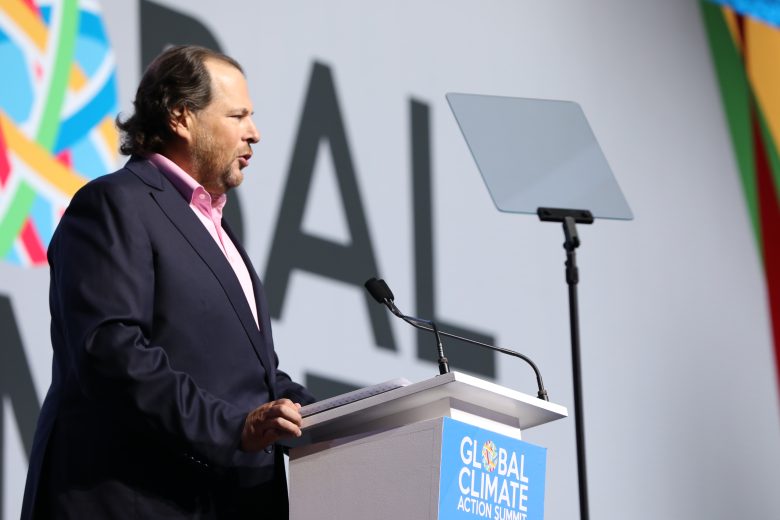
Salesforce co-founder and CEO Marc Russell Benioff is 61 years old, which is too young to be bleating endlessly about San Francisco defunding its police and being overrun by crime.
Vast wealth does not confer subject-matter expertise. It doesn’t make you a theologian or a doctor or a political scientist.
The objective truth is that San Francisco never defunded its police, as more than one mayor — the person responsible for San Francisco’s budget and San Francisco’s police — has made clear to Benioff and everyone else. The police budget is at an all-time high.

Want the latest on the Mission and San Francisco? Sign up for our free daily newsletter below.Sign up
This barstool talk would be embarrassing enough at a family gathering, let alone within earshot of the New York Times just days before his own company’s sprawling Dreamforce conference, which commenced today.
It is Benioff’s prerogative to praise President Trump, as he did in the Times. Oligarchs slipping on the armband to appease and flatter a narcissistic kleptocrat is hardly anything new. But it’s a different thing for Benioff to call for Trump to deploy the National Guard to San Francisco. And wouldn’t you know it, he did that, too.
Vast wealth, again, does not confer subject-matter expertise. And it does not counter objective facts.

Benioff subsequently attempted to walk back his call for National Guard intervention hard enough as to resemble John Cleese and the Ministry of Silly Walks by claiming he merely wants to see proper police staffing.
So it’s worth noting that armed National Guardsmen do not — and cannot — assume the tasks of local law-enforcement.
As unnerving and disheartening as San Francisco’s overt misery and drug use and mental instability can be, that’s not the same thing as crime.

Reported San Francisco crime, which was already low, is down nearly a third. Homicides are on track for their lowest yearly total since Dwight Eisenhower was in the White House and the Giants were playing in Manhattan.
Subjectively, you may not feel safe in San Francisco. Objectively, you’ve rarely been safer.
Alas, most of us will not be billionaires. But, in the worst of all arrangements, the billionaires’ ability to disregard and bury inconvenient facts is now a feature of modern life for all of us, regardless of income level. Facts, today, matter less and less.

https://platform.twitter.com/embed/Tweet.html?creatorScreenName=EskSF&dnt=true&embedId=twitter-widget-0&features=eyJ0ZndfdGltZWxpbmVfbGlzdCI6eyJidWNrZXQiOltdLCJ2ZXJzaW9uIjpudWxsfSwidGZ3X2ZvbGxvd2VyX2NvdW50X3N1bnNldCI6eyJidWNrZXQiOnRydWUsInZlcnNpb24iOm51bGx9LCJ0ZndfdHdlZXRfZWRpdF9iYWNrZW5kIjp7ImJ1Y2tldCI6Im9uIiwidmVyc2lvbiI6bnVsbH0sInRmd19yZWZzcmNfc2Vzc2lvbiI6eyJidWNrZXQiOiJvbiIsInZlcnNpb24iOm51bGx9LCJ0ZndfZm9zbnJfc29mdF9pbnRlcnZlbnRpb25zX2VuYWJsZWQiOnsiYnVja2V0Ijoib24iLCJ2ZXJzaW9uIjpudWxsfSwidGZ3X21peGVkX21lZGlhXzE1ODk3Ijp7ImJ1Y2tldCI6InRyZWF0bWVudCIsInZlcnNpb24iOm51bGx9LCJ0ZndfZXhwZXJpbWVudHNfY29va2llX2V4cGlyYXRpb24iOnsiYnVja2V0IjoxMjA5NjAwLCJ2ZXJzaW9uIjpudWxsfSwidGZ3X3Nob3dfYmlyZHdhdGNoX3Bpdm90c19lbmFibGVkIjp7ImJ1Y2tldCI6Im9uIiwidmVyc2lvbiI6bnVsbH0sInRmd19kdXBsaWNhdGVfc2NyaWJlc190b19zZXR0aW5ncyI6eyJidWNrZXQiOiJvbiIsInZlcnNpb24iOm51bGx9LCJ0ZndfdXNlX3Byb2ZpbGVfaW1hZ2Vfc2hhcGVfZW5hYmxlZCI6eyJidWNrZXQiOiJvbiIsInZlcnNpb24iOm51bGx9LCJ0ZndfdmlkZW9faGxzX2R5bmFtaWNfbWFuaWZlc3RzXzE1MDgyIjp7ImJ1Y2tldCI6InRydWVfYml0cmF0ZSIsInZlcnNpb24iOm51bGx9LCJ0ZndfbGVnYWN5X3RpbWVsaW5lX3N1bnNldCI6eyJidWNrZXQiOnRydWUsInZlcnNpb24iOm51bGx9LCJ0ZndfdHdlZXRfZWRpdF9mcm9udGVuZCI6eyJidWNrZXQiOiJvbiIsInZlcnNpb24iOm51bGx9fQ%3D%3D&frame=false&hideCard=false&hideThread=false&id=1977506464685285781&lang=en&origin=https%3A%2F%2Fmissionlocal.org%2F2025%2F10%2Fmarc-benioff-national-guard-san-francisco-donald-trump%2F&sessionId=3d68c49aeb6876ccddb6e8c07bcda52aba429528&siteScreenName=mlnow&theme=light&widgetsVersion=2615f7e52b7e0%3A1702314776716&width=550px
Marc Benioff said cavalier and crassly stupid things to the newspaper of record, and then ungracefully attempted to walk them back — starting with an in-house message to the 84,000 captive readers of the “All Salesforce” Slack channel in which he published the anodyne statement he later tweeted.
But this is San Francisco, and vaingloriousness loves company. To wit:
At last a burning question was answered: What will it take for Jenkins to prosecute a police officer for on-the-job misconduct? Apparently, you have to be from somewhere else.
Making this into a reductive argument about police staffing glosses over the epochal detail that federal troops cannot act as local law-enforcement and Trump’s troop deployments have repeatedly been ruled illegal by his own judicial appointees.
San Francisco has hundreds fewer cops than the charter-mandated tally. But even when the department was fully staffed, the Tenderloin and SoMa were beset with poverty, misery and drug-use.
As noted above, crime rates and homicide levels are better now. You’re not going to believe this, but San Francisco’s problems are more difficult to solve than sending in the cavalry.
Incidentally, when Gov. Gavin Newsom tapped the California Highway Patrol and National Guard in 2023 to tackle San Francisco’s drug problem, it didn’t involve armed troops in camouflage patrolling the Tenderloin.
Instead, it was all behind-the-scenes investigative and administrative work; stuff like tying neighborhood dealers to a cartel running out of the Central Valley.
Federal aid of this sort would be welcomed again in San Francisco, and would probably be offered by authorities who actually cared to address the city’s actual problems, instead of reveling in the power play of sending troops to occupy Baghdad by the Bay.
That seems awfully provocative, which is the exact opposite of Mayor Daniel Lurie’s tack to never mention the feds, or even name the president.
Lurie has also made it clear that he has no desire to work with the big-money group or its director, Jay Cheng.
If Neighbors were to goad the president into harassing San Francisco, thereby giving itself political relevance and causing trouble for a mayor who has frozen it out — well, that would be unfortunate for the rest of us.

Again, most of us will not be billionaires. But what’s the point of being one if you’re still a groveling sycophant? Or, as it was more artfully put in the King James version: For what shall it profit a man, if he shall gain the whole world, and lose his own soul?

On the other hand, what good is a soul? It can’t get you power or influence or a chance to talk up MissionForce with the commander-in-chief.
A dozen or so years ago, when Democrats were in the White House, Benioff was running through the dress rehearsal of his keynote speech for Dreamforce at the Masonic Auditorium.
Salesforce workers are encouraged to attend these rehearsals and, in front of this vast room of his employees, Benioff purportedly flubbed one of his lines, unintentionally understating a dollar figure. Hey, no problem: That’s what rehearsal is for. It’s what came next that’s notable.
Benioff laughed off the miscue with an off-the-cuff joke, allegedly stating something along the lines of how lying about numbers made him sound like a Republican. Everyone laughed.
It’s worth noting that the capacity of the Masonic Auditorium is just shy of 3,500. And Benioff purportedly felt comfortable saying something like this in front of a very big room.
Years later, in 2018, Benioff and Salesforce were the major donors behind Prop. C, which taxed businesses up to 0.5 percent after their first $50 million gross to fund housing and homeless services.
At the time, Benioff roasted his fellow rich CEOs who opposed Prop. C. Jack Dorsey, then CEO of Twitter and Square, turned out to be a perfect foil: The public was none too sympathetic to the plight of a CEO made to pay a fraction of a percent to the least fortunate on revenue over $50 million on his second Fortune 500 company.
But, in retrospect, it does warrant mentioning that, the way Prop. C is structured, Salesforce is taxed a lower amount than other businesses — businesses that gross far less than Salesforce. It also warrants mentioning that Salesforce, according to the Institute on Taxation and Economic Policy, paid no federal income tax between 2018 and 2020.
And perhaps this is why Benioff’s purported ease maligning Republicans a dozen years ago and his role pushing Prop. C may not ever have meant what people assumed at the time.
A wealthy person donating to his preferred causes is very different than a government taxing its richest people and entities and using the proceeds to fund actual social programs.
Benioff has, gradually, if not suddenly, detached from San Francisco. This was reported in an excellent San Francisco Standard article last week and, last year, by NPR. In that story, Benioff was recounted as attempting to kill the article by inveighing upon NPR higher-ups.
He also purportedly unnerved the author by telling her he knew her exact whereabouts as well as “personal details” about her and her family.
That’s disturbing. And a billionaire’s company paying no federal taxes is not “liberal” or even “woke,” as Benioff was vapidly labeled in the days of yore. So perhaps it’s best to respect Benioff’s obvious generosity without making facile suppositions about what’s behind it all.
As is the case with the military troops Benioff would have marching through his hometown’s streets, we salute the rank, not the man.
We’ve raised nearly half of our $300,000 goal to cover immigration for the next three years of Trump’s term.
Donate below to keep us at the immigration courthouse and on the streets, covering ICE’s actions in San Francisco.about:blank


Managing Editor/Columnist. Joe was born in San Francisco, raised in the Bay Area, and attended U.C. Berkeley. He never left.
“Your humble narrator” was a writer and columnist for SF Weekly from 2007 to 2015, and a senior editor at San Francisco Magazine from 2015 to 2017. You may also have read his work in the Guardian (U.S. and U.K.); San Francisco Public Press; San Francisco Chronicle; San Francisco Examiner; Dallas Morning News; and elsewhere.
He resides in the Excelsior with his wife and three (!) kids, 4.3 miles from his birthplace and 5,474 from hers.
The Northern California branch of the Society of Professional Journalists named Eskenazi the 2019 Journalist of the Year.More by Joe Eskenazi
by Randy Shaw on October 14, 2025 (BeyondChron.org)

Civic Joy Fund events boost “Comeback”
“S.F. Rent Surge is Outpacing Every U.S. City. Nowhere else in America is seeing anything like it” says the SF Chronicle. But San Francisco rents are still below those of 2019. In contrast, rents in New York City, Chicago, Baltimore and other large cities far exceed pre-COVID levels; nationally, rents in major cities are up 20% over 2019.
San Francisco is an exception.
So are rising rents from 2024-2025 proof of SF’s “comeback?” Or do rents below 2019 reflect a city with a long way to go?
And is closing sidewalk drug markets essential for a real comeback?
Defining a “Comeback”
Mayor Lurie promotes San Francisco’s “Comeback” whenever anything positive happens in the city. People like that. Lurie’s optimism fuels his widespread popularity. San Franciscans want a mayor who is fighting to get the city back on track. Daniel Lurie is the perfect fit.
But evidence that San Francisco is returning to its pre-2020 life is mixed at best. Consider the factors behind a true San Francisco comeback.
New Housing Development
I wrote in February 2023, “Lenders see the market for new housing in San Francisco as dead. They don’t know who will move into new housing and they are not encouraged by what they see happening on the streets of the city.” See “Is San Francisco’s New Housing Market Dead?”
Sadly, the “comeback” of new market rate housing still awaits. The approval process has vastly improved. And Governor Newsom’s signing of Scott Wiener’s landmark SB79 (upzoning housing on transit corridors) will expand development opportunities.
But most of the roughly 70,000 entitled units are still not breaking ground. And while more builders are getting projects entitled, I’m told by industry leaders not to expect much groundbreaking prior to 2027. Which means San Francisco won’t see many people moving into newly built housing until 2029.
Housing development is a key job creator. It’s absence hurts a wide range of businesses. Trump’s tariffs have made a tough economic situation for builders even worse; why start a project when the President could change the economic rules midway?
Tourism
San Francisco’s tourist market was making major strides before Trump discouraged international tourism. The large convention hotels are doing well but the smaller hotels across the city are not. High occupancy rates can be misleading as they often reflect a sharp reduction in room prices.
Will the Super Bowl and World Cup in 2026 help? I’m told the former won’t make much difference but the latter will. This assumes Trump doesn’t shift World Cup games out of cities with Democratic mayors as he has threatened to do.
Overall, San Francisco’s tourist industry has not returned to pre-COVID levels.
Downtown
The mayor has prioritized downtown and Union Square as key to the city’s economic comeback. Clearly, San Francisco’s economy cannot come back with a downtown office vacancy rate around 30%. The exodus of downtown workers hurts businesses across the city, particularly bars, restaurants and entertainment venues. The loss of transit revenue from these missing workers also hurts BART and MUNI.
Lurie has unveiled a blizzard of directives, programs, and new laws to revive downtown. He has also raised $40 million in private funds for the Downtown Development Corporation to boost the area.
The mayor gets an A+ for effort. He’s doing everything possible to revive downtown. But San Francisco still remains far behind other major cities in downtown office vacancies. As Don Catalano wrote last month, “The City with the Most Empty Office Buildings is San Francisco.”
Despite local and state legislation facilitating such conversions, we have not seen many downtown office buildings becoming housing. I don’t see this ever happening in any meaningful way. The economics simply don’t work.
As for the planned arrival of a college or university—it may be time for an update on the city’s talks with Vanderbilt University. I don’t see major educational institutions making a game-changing investment in downtown but credit to the mayor’s team for considering all options.
San Francisco politics in the 1970’s and 1980’s was divided over downtown development (progressives criticized it as “Manhattinization”). Few attack downtown today. Many nonprofits and vital city services depend on downtown revenue. It’s why virtually the entire city supports Lurie’s efforts for a downtown comeback.
But the comeback remains in the distance. Large turnouts at monthly Civic Joy Fund events downtown are great. But they do not signal a downtown comeback.
Union Square
I’ve told the mayor that I don’t share his view that Union Square’s revival positively impacts the Tenderloin, Mid-Market, SOMA or other neighborhoods still needing a comeback. Union Square was booming for decades while these other neighborhoods were not.
Nevertheless, the demise of Powell Street between Market and Union Square is psychologically destructive for San Francisco. Reviving that once thriving tourist-filled retail corridor must be part of any “Comeback.” Lurie is right to prioritize it.
Otherwise, I don’t see evidence of the transformation Union Square must undergo for a vibrant future. Union Square still operates as it were still the 1950’s. It’s no surprise that businesses are leaving that area for the Stonestown Galleria. Stonestown is what a real comeback looks like. It has transformed to meet the current consumer world.
A Comeback With Sidewalk Drug Markets?
The moderate group SF Blueprint wrote last week, “while videos on Instagram tout our economic recovery and are helping shape the narrative that we are a ‘city on the rise,’ our rise is still tethered to the reality on the ground: the addiction crisis is not getting better. Until it improves, our mayor’s glass half full will begin to more closely resemble a leaky bucket.”
Is San Francisco’s comeback held back by neighborhood drug activities? I clearly think so. But I realize that the city’s boom times in the 1980’s and late 1990’s was not doubted due to drug problems in the Tenderloin, Mid-Market, and Sixth Street. Historically, San Francisco’s comeback has not depended on success in Central City neighborhoods.
But fentanyl changed the drug game. The open air markets are bigger, more consistent, and more visible. Van Ness didn’t have open air drug activities in those prior boom periods; it does now.
Tourists weren’t posting photos of scary sidewalk scenes in those past boom times. And residents weren’t afraid to get off Civic Center transit stations out of fear of confronting drug users or dealers.
The mayor has dramatically reduced tent encampments. But everyone I talk to agrees with SF Blueprint that sidewalk drug activities remain as widespread as when he took office.
San Francisco must be much more aggressive in closing open air drug markets. Drug-free sidewalks are essential for San Francisco to truly come back.
Let’s make it happen!
<I>Randy Shaw is the Editor of Beyond Chron and the Director of San Francisco’s Tenderloin Housing Clinic, which publishes Beyond Chron. Shaw’s new book is the revised and updated, The Tenderloin: Sex, Crime and Resistance in the Heart of San Francisco. His prior books include Generation Priced Out: Who Gets to Live in the New Urban America. The Activist’s Handbook: Winning Social Change in the 21st Century, and Beyond the Fields: Cesar Chavez, the UFW and the Struggle for Justice in the 21st Century. </I>

The stakes could not be higher: millions of families—and the integrity of one of America’s most outstanding achievements—hang in the balance.
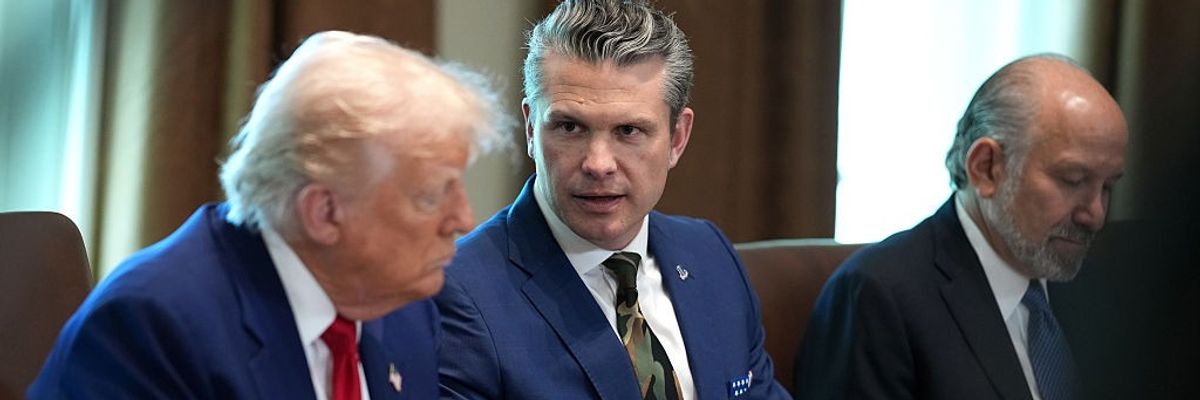
US Defense Secretary Pete Hegseth looks on as US President Donald Trump speaks during a Cabinet meeting at the White House on April 30, 2025 in Washington, DC.
(Photo by Andrew Harnik/Getty Images)
Oct 14, 2025 (CommonDreams.org)
President Donald Trump, who in recent days has been lobbying to receive a Nobel Peace Prize, announced on Tuesday afternoon that he had ordered a lethal US military strike against yet another boat off the coast of Venezuela.
In a post on his Truth Social network, Trump said that Defense Secretary Pete Hegseth on Tuesday morning “ordered a lethal kinetic strike on a vessel affiliated with a Designated Terrorist Organization (DTO) conducting narcotrafficking.”
RECOMMENDED…


Trump then claimed that “intelligence” had “confirmed” that the boat was engaged in illegal drug trafficking, although he provided no evidence to back up this claim.
Six passengers aboard the boat were killed in the attack, the president claimed.
Trump has now repeatedly ordered the American military to use deadly force against boats in international waters that are allegedly engaged in drug smuggling. Many legal scholars, including some right-wing experts who in the past have embraced expansive views of presidential powers, consider such strikes illegal.
Rep. Pramila Jayapal (D-Wash.) condemned Trump’s attack, which she noted was the fifth time the president had ordered a strike on a purported drug-trafficking vessel.
“Using the military to execute alleged criminals with no due process or input from Congress is brazenly unconstitutional and damaging to our democracy,” she wrote in a social media post.
Attorney George Conway, a former Republican who broke with the party over its support of Trump, said there was absolutely zero doubt that Trump’s strikes on the boats were acts of murder.
“That’s 27 flat-out murders,” he wrote in a post on X, referring to the total body count resulting from the president’s boat strikes. “That’s 27 lives taken without even a semblance of a legal justification under domestic or international law.”
Kenneth Roth, former director of Human Rights Watch, said that Trump could face criminal prosecution for attacking the boats.
“Trump keeps ordering the summary killing of people in boats off the coast of Venezuela,” Roth wrote. “Whether drug traffickers or not (we have no idea), these are murders. If on Venezuelan territory, the International Criminal Court could prosecute.”
Richard Painter, who was an ethics lawyer in former President George W. Bush’s White House, similarly described the strikes as “murder” and “a violation of US as well as international law.”
According to The Associated Press, the strikes against boats have unnerved the Venezuelan government, which believes the US is preparing to launch a regime-change war against it. Venezuelan Defense Minister Vladimir Padrino last week even went so far as to tell his citizens to be prepared for a potential invasion during a televised appearance.
“I want to warn the population: We have to prepare ourselves because the irrationality with which the US empire operates is not normal,” he said, according to the AP. “It’s anti-political, anti-human, warmongering, rude, and vulgar.”
Our work is licensed under Creative Commons (CC BY-NC-ND 3.0). Feel free to republish and share widely.
Brad Reed is a staff writer for Common Dreams.

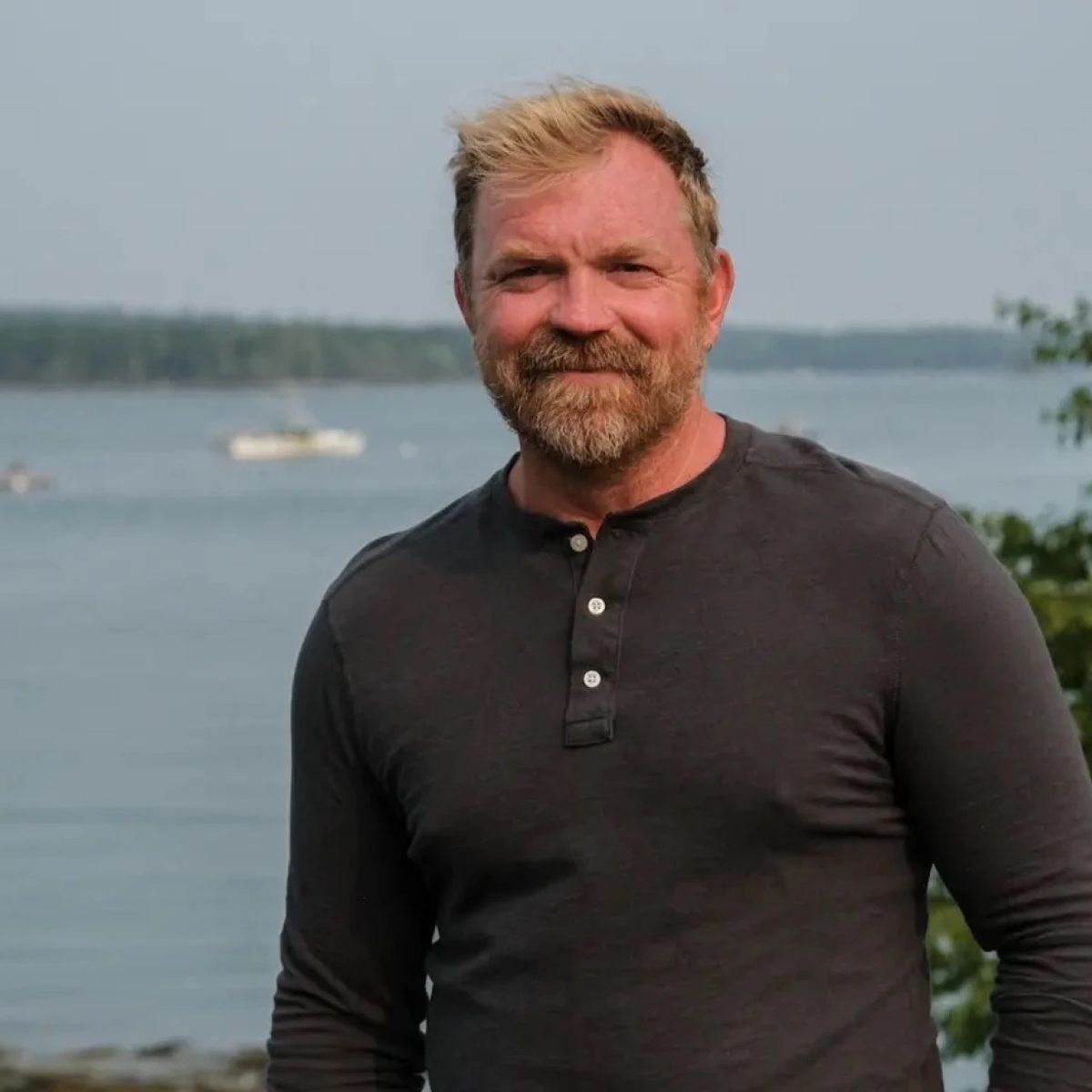
Graham Platner speaks to a crowd in a video released October 14, 2025.
(Photo: Graham Platner for Senate/screenshot)
Oct 14, 2025 (CommonDreams.org)
After weeks of speculation and reports that Democratic Senate Leader Chuck Schumer was privately calling on Maine Gov. Janet Mills to enter the race to unseat longtime Republican lawmaker Susan Collins—despite considerable energy surrounding the candidacy of progressive veteran and oyster farmer Graham Platner—Mills announced her primary run Tuesday.
Mills highlighted her public sparring with President Donald Trump earlier this year and positioned her run as one that would focus on standing up to “bullies” like Trump, who threatened to cut off Maine’s federal funding if it allowed transgender youths to play on team sports that correspond with their identities.
RECOMMENDED…
She also pledged to “fight back” against efforts by Trump and Republicans in Congress—including Collins, who has represented Maine since 1997—to slash healthcare for millions of Americans while handing out tax cuts to corporations and the richest Americans.
“This election is going to be a simple choice: Is Maine going to bow down, or stand up?” said Mills.
But before Mainers decide whether to stick with Collins or unseat her in favor of a Democratic senator, they are set to choose the Democratic nominee next June—and despite being a political novice, Platner has generated excitement across the state since announcing his candidacy in August.
Platner has centered his campaign on naming “the enemy” shared by Mainers and Americans from all walks of life: not immigrants, transgender people, or other frequent targets of the Trump administration, but the oligarchy. He’s also been unapologetically outspoken in his condemnation of the US-backed Israeli assault on Gaza and over the weekend said that should he win a Senate seat, “there will be consequences” for those who have led federal immigration agents’ violent incursion in US cities.
Platner has garnered endorsements and enthusiasm from lawmakers including Sens. Bernie Sanders (I-Vt.)—who recently criticized reports that Schumer was pushing for a Mills run—and Chris Murphy (D-Conn.), who called his campaign “pretty impressive” and “killer” recently.
He’s also proven to be a formidable fundraiser, pulling in more than $4 million since launching his campaign in August, and has spoken to overflow crowds in cities and towns across Maine.
Recent polling has shown Platner outperforming Mills by 21 points among Trump voters, 13 points among voters aged 18-44, and 10 points in rural parts of northern and western Maine.
On Tuesday, Platner released a statement welcoming Mills “into this race” and focusing on the fight to unseat Collins.
“I have held over 20 town halls in every corner of Maine, from Rumford to Madawaska to Portland,” he said. “Everywhere I hear the same thing: People are ready for change. They know the system is broken and they know that politicians who have been working in the system for years, like Susan Collins, are not going to fix it.”
But he also released his own ad, pledging to keep up the momentum in order to “retake our party and turn it back into the party of the working class.”
“We either organize and build power and fight, or we lose,” Platner told a crowd in the video.
Ryan Grim of Drop Site News posited that the entrance of Mills into the race could be “to Platner’s advantage” and may underscore his independent streak.
“By beating her (and Schumer) Platner can solidify the impression that he is independent of the party, whose brand is fatally toxic,” said Grim.
Our work is licensed under Creative Commons (CC BY-NC-ND 3.0). Feel free to republish and share widely.
Julia Conley is a staff writer for Common Dreams.