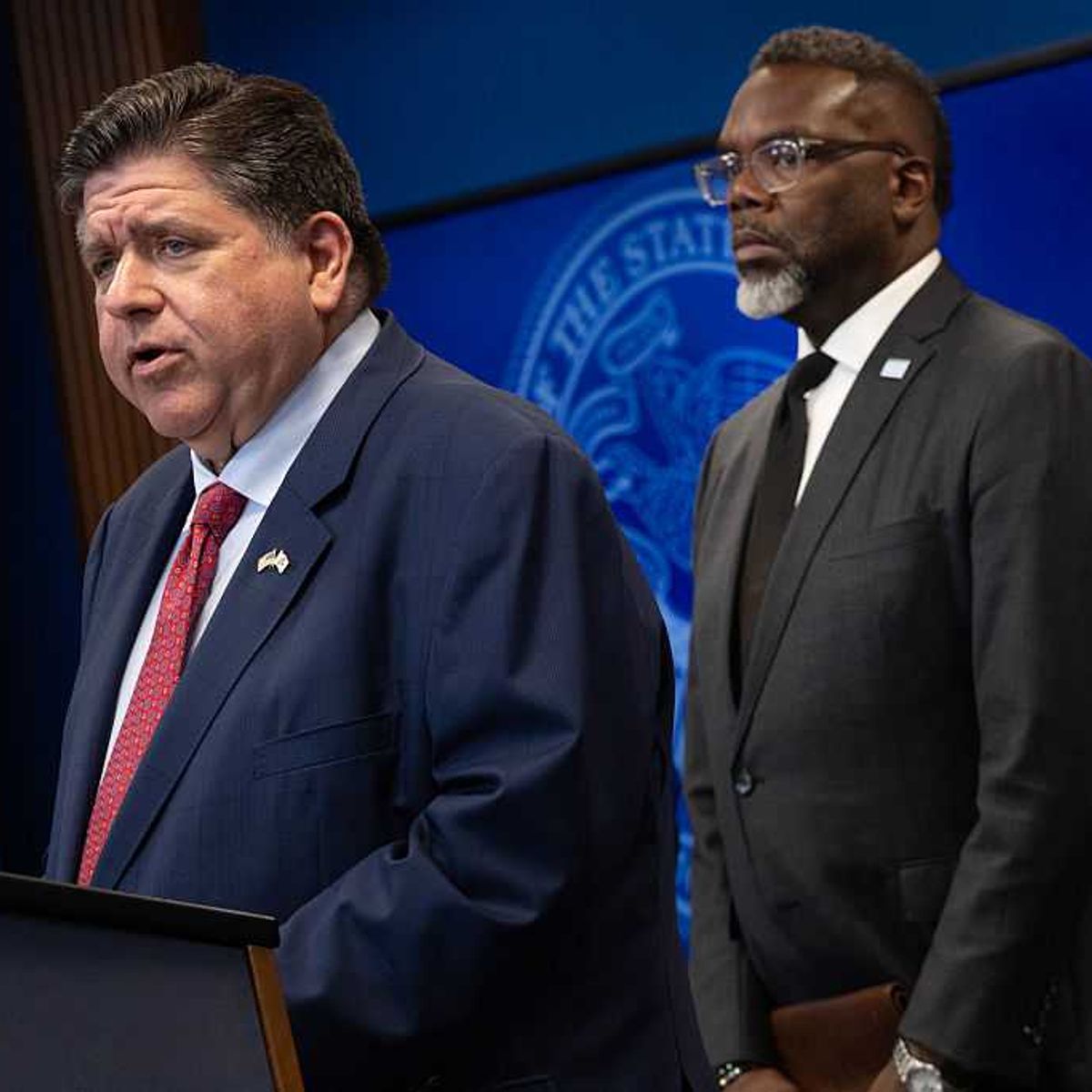
At its meeting this week, the DNC opposed a ban on U.S. provision of offensive weapons to Israel.
We’ve been here before: widespread Democratic opposition to an outrageous war, particularly among the young, while a good chunk of the party’s establishment remains unwilling to halt U.S. involvement in that conflict. In the ’60s, that was Vietnam. Today, it’s Gaza. Echoes of that rift were loud and clear at this week’s meeting of the Democratic National Committee in Minneapolis. There, on Tuesday, the party’s Resolutions Committee voted against bringing to the floor a motion to put the Democrats on record as opposing the continuing provision of arms to Israel to wage its war of extirpation. It did vote for a resolution essentially restating the Biden administration’s position on the war: calling for a two-state solution, for the release of hostages, for an end to the conflict. That resolution said nothing, however, about America’s ongoing provision of the arms with which the Netanyahu government is waging its war. The resolution that was adopted was authored by DNC Chair Ken Martin. The one that was squelched was authored by Allison Minnerly, a 26-year-old DNC member from Florida who’s a voter mobilization organizer. Her resolution was backed by most of the DNC’s young members, including the leaders of the College Democrats of America and the High School Democrats of America. During the committee’s Tuesday meeting, proponents of Minnerly’s resolution offered amendments that would have made it more acceptable to a majority of DNC members, in particular one that specified the weapons ban would apply only to offensive weapons (and not, therefore, to defensive weapons like Israel’s Iron Dome anti-missile deployments). That effectively would have conformed her resolution to the one that Bernie Sanders brought to the floor of the Senate last month, which failed in the face of unanimous Republican opposition, but which did win the support of a majority of Senate Democrats, who voted for it by a 27-to-17 margin. Yet supporters of Martin’s resolution also voted against that amendment, fearing that so amended, the Minnerly resolution then might prevail if it reached the floor in Wednesday’s general meeting. That the resolution’s supporters on the committee voted for the amendment showed their eagerness to amend their initial position, if by so doing they could bring the party establishment around to the position of the party base: A Gallup poll from late July showed just 8 percent of Democrats backed Israel’s war on Gaza, while a Quinnipiac poll released just yesterday showed that Democrats opposed, by a 75 percent to 18 percent margin, the U.S. sending more military aid to Israel for its war.
Martin apparently understood he was hurling the party into an abyss if he then brought his own resolution to the floor. Instead, he withdrew it, and had a five-minute impromptu meeting with Minnerly, in which he agreed to form a commission to devise a party stance that presumably reflects more of a consensus. Minnerly welcomed his proposal, hoping, as she told me, that the commission would come up with something more reflective of the view of the “everyday people” who fill the party’s ranks. If we go back 60 years, we can find the same generational dynamics playing out. It was in 1965 that Lyndon Johnson began deploying massive numbers of U.S. troops to Vietnam, a move that initially had the backing of the majority of Democrats. As nightly TV news reporting, however, began revealing the actual shape of our war there—the wanton destruction of villages, the cascading number of civilian casualties—young Americans turned against the conflict. Their ranks weren’t limited to the radicals of SDS (who, in 1965, weren’t really all that radical). That year also saw the first Democratic organization come out against the war: the California Young Democrats, headed at that time by two UCLA Law School students, Henry Waxman and Howard Berman, both later to become nationally important Democratic congressmen. Opposition to the war grew among the young to the point that it came to define their generation against their elders. Within the ranks of Democratic activists, it was the young who not only demonstrated against the war but also walked the precincts and worked the phone banks for anti-war Democratic presidential candidates Eugene McCarthy in 1968 and George McGovern in 1972. Not that Democratic opposition to that war was confined to the young, just as Democratic opposition to the Gaza war is also not limited to today’s Gen Zers. That said, opposition to U.S. support for Netanyahu’s war is becoming a defining issue for young Americans, with support for the war waning even among younger Republicans. With half a million Israelis now regularly taking to the streets to oppose Bibi’s drive to flatten Gaza completely, despite the insistence of Israel’s leading generals that Hamas has been defeated, and despite the threat his new offensive poses to the remaining Israeli hostages, the argument that continuing to supply offensive arms to Israel expresses our solidarity with that nation is increasingly belied by the Israeli people themselves, sick as they are by now of Bibi’s bloodfest. Today, our arms provisions have become an expression of solidarity only with the murderous ultra-nationalist right-wing Israeli cabinet members whose support Bibi dare not lose. The most politically sentient Democratic leaders—like those 27 Democratic senators—appear to have grasped both the moral obloquy of sending arms to these fanatics and the strategic idiocy of alienating their own party’s base, and most particularly of forcing young Democrats to define themselves in opposition to the party’s already embattled establishment. Whether such political sentience can be brought to the numbnuts on the Democratic National Committee is anybody’s guess.
We’ve already been leafleting at a few San Francisco farmers markets, and it’s been a ton of fun. But we really want to be leafleting at ALL the farmers markets, every week! Several hundred people have signed up to do this kind of volunteering for the campaign. In fact, I have received emails from many of you over the last few months castigating me for taking too long to put you to work. I appreciate the pressure — and now here is your chance!
Here are some upcoming dates and times we need help with:
Alemany, Saturday, August 30th, 10am-12pm
Clement Street, Sunday, August 31st, 10am-12pm
Heart of the City, Wednesday, September 3rd, 10am-12pm
Mission Community Market, Thursday, September 4th, 3pm-5pm
Heart of the City, Sunday, September 7th, 10am-12pm
Ferry Plaza, Tuesday, September 9th, 10am-12pm
Heart of the City, Wednesday, September 10th, 10am-12pm
Ferry Plaza, Thursday, September 11th, 10am-12pm
Sign up, and we’ll see you soon. Also, if you want more info before coming, you can join a virtual info session with our organizers.
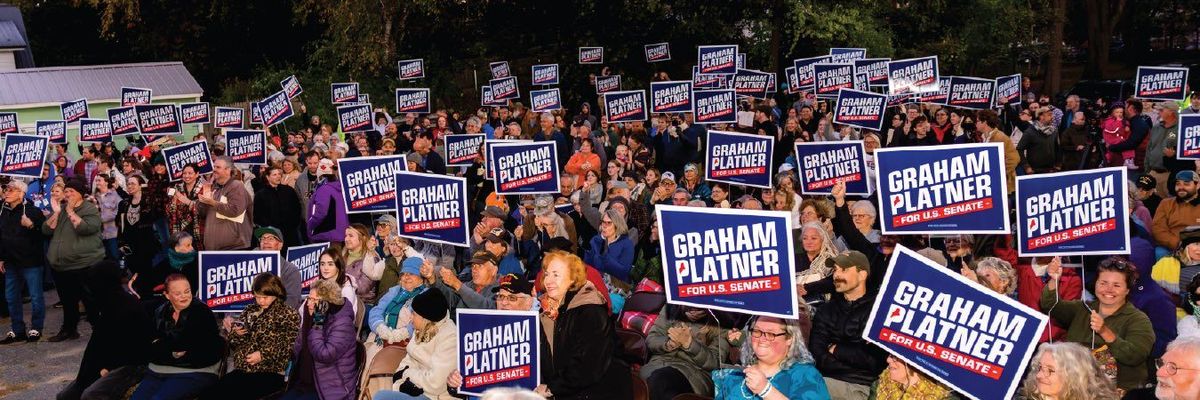
If leafleting a public market isn’t your thing, we’re also looking for volunteers to contact people in their apartment buildings and their blocks. We’ll provide training, assistance, and our organizers will go with you the first time. Neighbors talking to neighbors is the best way to connect with voters about Saikat’s campaign. If you’d like to participate in this pilot program, please sign up here.
And yes, don’t worry, we’re doing another Saturday canvass this weekend!
* Canvass Day Details Date: Saturday, August 30, 2025 Time: 11:00 AM – 2:00 PM Location: Saikat for Congress HQ — 800 Irving St, San Francisco, CA RSVP here — or just show up!
Here’s a video to show you what a good time we had last Saturday:
Based on feedback from the past three Saturdays, we’ve made a bunch of improvements that you’ll find this week:
Shorter, faster-paced training!
Experienced canvassers will get their turf and be out of the office after 5-10 mins!
Much shorter walks to the doors (sometimes VERY short!)
More doors — no chance of running out!
No more problems with overlapping turf!
Plenty of extra turf if you want to go out for a long time!
No more group debrief. Either come back with your feedback or just go home from your doors if you’re in a hurry.
This is the last week for a bit that we’ll be walking nearby the office in the Inner Sunset. Everything is just a few blocks from HQ. Starting next week, we’ll be branching out to many other neighborhoods and launching from different locations.
Again, if you came out with us last week, then we’ll send you right out and you can skip the training.
What to Bring:
A fully charged smartphone
The “MiniVAN app” downloaded from your phone’s app store (we’ll help if needed). If you have time, watch this video on how to use the app for canvassing.
Comfortable walking shoes
Water
What to Expect:
Meeting other passionate progressives
Learning to have impactful conversations with voters
Helping to shape a campaign that listens and leads with heart
Snacks!
This campaign only works because of people like you. Let’s knock those doors!
San Francisco police arrested 137 protesters Wednesday for trespassing, after a sit-in outside Senator Alex Padilla’s office on Bush Street. The protesters, who were part of a coordinated demonstration that also included a simultaneous sit-in at Senator Adam Schiff’s office in Burbank, object to the senators’ votes against a July resolution introduced by Bernie Sanders to stop sending weapons to Israel. [KTVU]
Oakland Mayor Barbara Lee faces a city with sky-high expectations.
Residents demand immediate solutions to crime, illegal dumping, homelessness, and a struggling local economy. They also want their new leader to make local government more transparent and accountable. And many hope to see the mayor unify a city that became deeply polarized during the 2024 recall elections.
Lee unveiled her political strategy right after the election. It was a 10-point plan for her first 100 days.
Lee’s list was light on metrics and milestones. Instead, it emphasized listening to local stakeholders, advocating for more resources, and stabilizing the city’s finances.
Her roadmap also didn’t account for all of the challenges that would emerge. Within weeks of Lee taking office, President Donald Trump deployed National Guard troops to Los Angeles as part of an aggressive immigration crackdown. Trump took a swipe at Oakland and hinted that it and other cities may face similar treatment in the future. Lee has increasingly pushed back on Trump’s threats.
When we sat down with Lee on Wednesday at City Hall, the mayor shared a lot of the same points she’s been making since she launched her campaign back in January. She is laser-focused on the meat-and-potatoes work of government, including maintaining funding for public safety programs and keeping streets clean. And she is optimistic that her many community listening sessions are helping heal a divided city.
But there are a lot of unanswered questions about how she will spend the next year in office, including whether she plans to run for a second term.
We’ve edited the following interview for clarity and length.
During your campaign and after your election, you hit on a theme of unity. We know from the election results that there’s a really stark divide in Oakland. What have you done so far to try to bridge this longstanding divide?
In Congress and the state legislature, I represented areas I did not win in the mayoral election, so people know me there — they just decided not to vote for me.
We’ve held Ceasefire teaching and listening sessions and have been present at events. One of our first listening sessions was at Italian Colors restaurant, and it was really good. Several people came up to me later. And they said, “We didn’t vote for you. But thank you for being here, and we’re glad you won.”
We’re doing our teach-ins because a lot of people don’t know how our public safety system works. We’ve been holding meetings above 580 and below 580. We’ve been to the Cypress Mandela Training Center and different churches — Montclair Presbyterian Church; we went up to the church off of Skyline. We’ve just been everywhere in the city to try to bring this city together — by my presence, listening, and taking advice and input from everybody.
What I said during the campaign has been validated: people have the same concerns wherever they are. I talked to one pastor after one of our sessions, and she says, “I’m just trying to figure out how we can get people here to understand what’s taking place in deep East Oakland, because they’re the same concerns that are being raised.” Everywhere I go, it’s the same issues.
Editor’s note: A 2025 survey conducted by the Oakland Budget Advisory Commission found that across almost all demographic groups, the biggest priorities for residents are safety, housing, and cleanliness. More specifically, many people asked for timely response by fire and police and the cleaning of graffiti and trash.
Never miss a story.Sign up for The Oaklandside’s free daily newsletter.Email
Another big topic on people’s minds is Trump deploying National Guard troops to major cities in recent months, for immigration enforcement and to fight crime. He’s hinted that Oakland could be another target. What are you and Police Chief Floyd Mitchell and other public safety leaders doing to prepare?
Lee speaks at a protest against immigration raids in Fruitvale in June. Credit: Callie Rhoades/The Oaklandside
We have our plans. They just have not been rolled out yet for obvious reasons.
Part of our plan is to make sure that we have suggested spaces for peaceful protests. We know that this federal intervention, if this happens, is to provoke chaos. And we’re trying with the police force, and also with our violence interrupters and others, to make sure that if this happens, the peace is kept, and to not let Donald Trump provoke a lot of chaos. That’s the big piece.
The other piece is making sure our immigrants [are supported]. This is really hard. I was talking to someone today about how some children need heart surgery, and they’re afraid to take the kids for the surgery, because they think that ICE might pick them up. They’re not going to work, they’re losing income, and they have no money for services. And so part of our strategy is protecting our immigrants and supporting our immigrant community. We’re raising money to do that, to help with legal services. But we’re setting out ways to operate and what the safety plan should be if, in fact, this happens.
So there are different legs of this, which require our City Attorney Ryan Richardson, he’s doing the legal strategy, what we can do with the attorney general — how we would respond legally, what we would do to make sure we keep the peace.
In some cities, there have been reports of masked ICE agents who sometimes don’t show identification while they’re detaining people. Have you talked to the police chief or other public safety leaders about how you would deal with a scenario where masked men started taking people off the street in Oakland?
We’re working on that. That’s one of the things we can’t talk about right now, because we don’t want them to know what our plans are. But we’re going to have to be able to protect immigrants from being unfairly snatched from their homes. We’re going to have to have people watching, witnesses, and a legal record. You know, a couple of people have already been arrested. So we kind of know how they’re operating and will operate based on other jurisdictions. It’s terrible what’s taking place, and it’s wrong.
You mentioned Ceasefire earlier, which you’ve emphasized is a proven way to reduce violent crime. You also promised to convene public safety and business leaders to develop other initiatives to address crime. Are there other concrete plans you’ve developed that you want to highlight?
One of the biggest pieces is trying to make sure that we get to 700 police officers, because we’re short-staffed. We funded five academies. We need more, but the budget crisis makes that difficult. And recruitment and retention are very difficult, so we’re layering on new ways to recruit police officers from Oakland.
There’s some organizations that want to help us recruit. I’ve talked with members of the NAACP. I’ve talked with members in the LGBTQ+ community, people who really believe that there are other people who would want to be police officers who we haven’t recruited.
Also, when you look at our non-sworn ambassadors, for example, they’re people who have that experience in public safety, who are eager to be recruited to go into policing. So I think one of the big pieces of public safety is recruiting and retention.
Editor’s note: According to the mayor’s office, the city plans to increase nighttime and weekend police and community safety ambassador presence downtown. Oakland is also building a seven-city regional partnership to prevent gun and gang violence, but officials did not immediately identify which cities will be a part of this strategy. A July 2025 OPD staffing report laid out some of the steps taken by city officials to recruit new police officers.
Why do you think historically Oakland has had trouble recruiting and retaining police? What do you think is the root problem? Also, are you taking any steps to improve the performance of the academies once you do get those folks in?
Oakland police staffing is at a record low. Credit: Florence Middleton for The Oaklandside
It’s multi-faceted. First of all, some cities or jurisdictions offer bonuses. For example, one offers a $75,000 signing bonus. The Oakland budget, you know, we balanced it. We still had to do a lot of cutting, but we increased funding for police, which OPOA won’t acknowledge, but we did increase funding.
Secondly, the cost of living. A lot of police officers have to commute from long distances. Many of them say they can’t afford to live in Oakland. Thirdly, we have a lot of overtime, and a lot of the police officers would like to not work overtime so much. So if there’s another jurisdiction that creates a better work schedule, then that looks more appealing.
Editor’s note: According to a July 2025 OPD staffing report, only 22% of Oakland police live in the city. Oakland’s new biennial budget allocates $72 million for police overtime. OPD routinely exceeds its overtime budget, which OPOA claims is a result of understaffing and high crime. But a recent analysis by some of the city’s unions found that when OPD’s sworn staffing levels increased, overtime spending continued to rise, and that overtime spending grew in years when crime dropped.
When you hold a police academy, you expect a percentage of cadets to drop out. Some have dropped out, but they weren’t for any reason that had to do with the police department or Oakland. But still, you have to take that into account.
So it’s a multi-faceted challenge that we have to address. And of course, when I was in Congress, I brought in a lot of money from the feds for community policing, for the Department of Violence Prevention. We still have some funding pending that I got appropriated from last year, that so far is still there. It hasn’t been clawed back.
OPD staffing appears to be at a record low. But as you’ve noted, the city’s crime rate has been dropping significantly for more than a year. Does that raise any questions for you about how much money Oakland should invest in the police department?
Yes, the crime rate is coming down, but we have to sustain that. Doing so requires resources, but it also requires us to address the comprehensive public safety strategy and keep this trajectory going. And that means we have to get to 700 police officers, which is going to take a couple of years. We have to fully fund the Department of Violence Prevention and Ceasefire and anti-human trafficking. All of that has to stay on track.
When you look at the cities that Donald Trump trashed, like Baltimore, the strategy they’re using is very similar. We have the same technical assistance organization helping us here in Oakland that’s helping Baltimore.
Crime is coming down, but people don’t feel it. I mean, you look at what’s taking place. The sideshows – sideshow prevention had not been funded in the prior year, but I made sure in this budget that we put back in resources for sideshow patrols. People don’t feel safe because we have all of this taking place in Oakland, like every other city has. So it’s a challenge, but we’re working every single day.
Even infrastructure is part of crime prevention. You know, in terms of making sure that cars can’t come in and out and do sideshows. It’s sort of like a whole-of-government approach.
Our colleague Jose Fermoso has really enlightened all of us on how sometimes, literally, just where the curve is in the road completely changes the level of activity that happens in one place versus another.
Right. Infrastructure is something that we’re putting forth as an additional add-on to policing.
Part of your 100-day plan was staffing blight reduction crews. You’ve mentioned partnering with the district attorney to prosecute illegal dumping. Under your administration, has the city yet referred any illegal dumping cases to the DA. If so, how many?
Illegal dumping on 75th Avenue. Credit: Natalie Orenstein/The Oaklandside
We established a working group with the DA. We’ve had a couple of meetings, and we’re developing that protocol now. But the DA’s office has to staff up now to address this problem. So we are working on it, but I don’t believe we’ve seen any real prosecutions.
But we are doing code enforcement and more camera monitoring, trying to identify the people in the vehicles doing illegal dumping.
Editor’s note: We asked Alameda County District Attorney Ursula Jones Dickson whether her office has prosecuted any cases for illegal dumping. In a statement, Dickson said her office shares community concerns about illegal dumping and will review all cases brought by local police agencies and “vigorously prosecute” the ones that can be proved beyond a reasonable doubt. According to Lee’s office, the city removed 30 tons of waste from areas by schools in Oakland over the past 100 days and cleared an unspecified amount of trash from 30 miles of Oakland streets. Oakland’s new budget includes $1 million in additional funding to pay for illegal dumping enforcement technology and officers. According to recent media reports, Oakland has issued nearly 3,000 illegal dumping citations totaling roughly $1.3 million since 2021, but only collected about $109,000 in penalties.
Another topic that was part of your 10-point plan was making sure the city audits contracts to ensure that public funds are being spent effectively by contractors and nonprofits. Have you asked the auditor to launch an investigation?
We’re in the process of organizing this forensic audit, which is going to tell us a lot about contracts.
Secondly, the data system here is really complicated, to just identify contracts and what their scope of work is. On my staff, I have a person [Erica Joy Astrella] who is doing data and technology transformation, who’s digging deep. So we’re getting there, but we haven’t done that yet. We’re in the process of it, but we have looked at the audit reports, and we’re looking at how to prioritize enacting recommendations of the past. Some of those haven’t even been addressed.
The data and tech role is a new one for this office. What else will that person be looking into?
The 311 system, for one. Systems aren’t communicating with each other.
Our data and technology leader, Erica, has identified our strengths and weaknesses and how we need to upgrade our technology and systems. They found that some spreadsheets are still being done by hand. They have identified a lot, and it’s gonna cost a lot of money. But we’re about ready to start talking to some companies to see if they can help us in terms of contributions, upgrades, and training. This is a big part of our public-private partnership, also — the data piece for the city.
We wanted to ask about homelessness, too. That was an interesting announcement this week on the new Office of Homelessness Solutions. We’re curious to see how that unfolds.
In the past, the homeless strategies have been disjointed, and people have come and gone. It hasn’t been a priority. So the bottom line is, we’re working to make sure that we have this office now that will be integrated into our overall housing construction. But we’re going to have a separate strategy, and that really is a big deal, because people have felt like it hasn’t been a priority for the city. It is. And it sends the message that these silos are being broken down.
What I know about the city — and I know this because I’ve worked with the city being a federal official — is that you have the city departments, you have the council, you have the mayor. There’s no alignment at all. And so we’ve been able to begin to break down these silos. That’s a big piece, like working with the council on the budget, working with the council on homeless solutions, we have to work consistently together.
On that note, one councilmember, Ken Houston, is going to propose a policy to more aggressively clear encampments and tow vehicle homes. Are you in favor of that sort of aggressive approach?
Whatever the council decides, I want to make sure we are aligned with what the county requires for funding. That’s the big piece that I’m focused on, making sure it’s aligned with Measure W funding and HHAP funding, and all of our state funding. That’s been my concern. So whatever happens in that context, we just have to make sure we’re eligible for the funding.
Editor’s note: County officials recently solidified a plan for Measure W, a nearly $2 billion sales tax. Most of the money will go toward homelessness services and housing, with Oakland receiving a significant chunk for projects and programs in the city that comply with the county’s plan. HHAP is the Homeless Housing Assistance Grant program, another source of funds the city receives.
More broadly, whether the policy complies with the funding requirements or not, there’s this existential question in homelessness right now: Do cities need to offer shelter to folks before clearing encampments? Two years ago, the Supreme Court said no.
Yeah, and that’s part of Measure W. We have to have transitional housing and supportive housing until we get to permanent housing. Even now, when encampments are closed, we don’t have enough places for people to go to. We’re looking at how to do that. So part of this — the global piece — is making sure that when encampments are closed, there are alternatives for people.
What was harder to achieve in 100 days than you expected, and did any new priorities emerge for you?
Barbara Lee at City Hall in August 2025. Credit: Estefany Gonzalez for The Oaklandside
The data systems, because I’m really into truth-telling. I’ve always been like that. I will compare numbers and drill down on numbers until I believe they’re accurate, because I believe people deserve the truth. So that’s why I hired Erica. But I had to drill down, way down, on that.
You’ve surrounded yourself with so many different advisors and people, both in and outside of your office. Is there one person, or maybe one piece of advice they gave you, that’s really helped guide you in this new job, if you had to pick one?
My mother passed away 10 years ago. I hear her voice every single day. She’s my best advisor.
I grew up in El Paso, Texas. Segregation was very difficult, being a Black girl. And she always said, in spite of all the challenges, “Can’t isn’t in the dictionary. Look it up.”
I would whine about it. “I can’t, because I’m the only Black person in the school, and they’re looking at me” — that kind of stuff. So that’s my mom. She’s an angel.
The mayoral election is only a year away. Do you plan to run in 2026?
The voters and residents of Oakland, that’s their decision. This is all-hands-on-deck for me right now, and we’re working hard, and we are delivering, and need to deliver more, and we’ll continue to do that.
Editor’s note: Lee has created a committee to raise money for a 2026 reelection campaign.
Eli Wolfe reports on City Hall for The Oaklandside. He was previously a senior reporter for San José Spotlight, where he had a beat covering Santa Clara County’s government and transportation. He also worked as an investigative reporter for the Pasadena-based newsroom FairWarning, where he covered labor, consumer protection and transportation issues. He started his journalism career as a freelancer based out of Berkeley. Eli’s stories have appeared in The Atlantic, NBCNews.com, Salon, the San Francisco Chronicle, and elsewhere. Eli graduated from UC Santa Cruz and grew up in San Francisco.More by Eli Wolfe
Natalie Orenstein is a senior reporter covering City Hall, housing and homelessness for The Oaklandside. Her reporting on a flood of eviction cases following the end of the Alameda County pandemic moratorium won recognition from the Society of Professional Reporters NorCal in 2024. Natalie was previously on staff at Berkeleyside, where she covered education, including extensive, award-winning reporting on the legacy of school desegregation in Berkeley Unified. Natalie lives in Oakland, grew up in Berkeley, and has only left her beloved East Bay once, to attend Pomona College.More by Natalie Orenstein
A Palestinian girl stands atop the rubble of the Al-Aimawi family home, which was destroyed by Israeli airstrikes in Al-Zawaideh, Gaza Strip, July 1, 2025. Credit: AP Photo/Abdel Kareem Hana
Help us tell the Oakland stories that matter to you and your fellow Oaklanders.
Hundreds of shipments of US armaments have departed for Israel from the Oakland International Airport this year, according to a report published today by the activist group Palestinian Youth Movement.
The authors of the report found that over 250 civilian cargo planes carrying weapons or military equipment have left OAK since January for the Nevatim Airbase, an Israeli military installation. The shipments have included “F-35 fighter jet components used to carry and release munitions, guide weapons, power surveillance and targeting systems, and support critical flight operations,” according to the report.
Never miss a story.Sign up for The Oaklandside’s free daily newsletter.Email
The findings, the report says, are based on an examination of a sample of 500 records of shipments routed through FedEx’s Global Superhub in Memphis, Tennessee, from April through June of this year. Lily Fahsi-Haskell, an organizer with the Arab Resource and Organizing Center, one of the groups launching a campaign around the new report, said the researchers could not immediately provide the underlying documents to The Oaklandside, but they were reviewed by KQED.
KQED reported that the shipping records “appear to include replacement parts for the U.S.-made F-35 fighter jets, which Israel has used in aerial bombardments of Gaza. Nearly all were bound for Nevatim Airbase, where Israel stations its F-35 fleet.” One of the most striking items in the shipping documents, confirmed by KQED, is the BRU-68, a unit that allows an F-35 to release a 2,000-pound bomb.
Documents reviewed by KQED show some of the cargo originated in Tracy, where a military equipment distribution center and logistics hub, operated by the Defense Logistics Agency, is based.
The new campaign, led by the Palestinian Youth Movement, the Arab Resource and Organizing Center Action, and the US Palestinian Community Network, seeks to halt all shipments of military cargo from Oakland to Israel.
“At the same airport we pick up and send off our loved ones, bomb droppers and surveillance systems for the lethal F-35 jet are being loaded and transported to Israel,” said Aisha Nizar of the Palestinian Youth Movement. “Oakland’s central role in the global F-35 supply chain was concealed from its union members, educators, city officials, and residents, and is now indisputable. Serving as a hub for military cargo to Israel is an attack on everything this city stands for.”
Kaley Skantz, a spokesperson for OAK, said the airport does not have information about the specific contents of shipments made by cargo carrier tenants. “FedEx is the largest cargo carrier that operates at OAK, and accounts for the majority of the 1.1 billion pounds of air cargo that passes through the airport annually,” Skantz said. “All of FedEx’s flight and loading operations are carried out by FedEx employees directly.”
The Oakland International Airport is owned and operated by the city of Oakland. Joan Walsh, a spokesperson for the city, did not immediately respond to a request for comment.
Israel launched its war on Gaza in October 2023 after an attack on Israel on October 7 of that year, in which Hamas fighters killed approximately 1,200 people and abducted 251, mostly civilians. Israeli forces have killed at least 62,000 Gazans since then, according to the Gaza Health Ministry, also mostly civilians. Huge swaths of Gaza have been destroyed by Israel’s bombing and more than 1.9 million Palestinians have been displaced from their homes.
Last week, the United Nations confirmed that Gaza was experiencing a famine, as the “direct result” of Israeli government actions.
In November 2023, early in the war, the Oakland City Council passed a resolution calling for a ceasefire in Gaza. The council resolution also called for the release of hostages taken by Hamas and the unrestricted entry of humanitarian aid into Gaza. Debra Israel, an aide to Carol Fife, who introduced the resolution, said the council member was not immediately available for comment.
The Port of Oakland has been the target of pro-Palestianian protests in the past. Two years ago, activists attempted to block and delay a cargo ship from moving military equipment to Israel.
In 2024, Oakland middle school students staged a walkout and rally in solidarity with Palestine, and before that hundreds of Jewish antiwar protesters occupied Oakland’s federal building in an act of civil disobedience to demand a cease fire.
Other protests calling attention to the humanitarian crisis in Gaza are planned for the East Bay. On Friday, a group called National Parents’ Solidarity Fast for Gaza is planning to hold a demonstration in front of Oakland’s Grand Lake Theatre to raise awareness about the famine in Gaza. Also tomorrow, activists with the East Bay Democratic Socialists of America and other groups say they plan to rally in Berkeley to urge people to boycott Chevron because of the company’s role in supplying fuel to the Israeli military.
Before joining The Oaklandside as News Editor, Darwin BondGraham was a freelance investigative reporter covering police and prosecutorial misconduct. He has reported on gun violence for The Guardian and was a staff writer for the East Bay Express. He holds a doctorate in sociology from UC Santa Barbara and was the co-recipient of the George Polk Award for local reporting in 2017. He is also the co-author of The Riders Come Out at Night, a book examining the Oakland Police Department’s history of corruption and reform.More by Darwin BondGraham
Esther Kaplan was most recently the investigations editor at Business Insider. Before that, she was executive editor at Reveal from The Center for Investigative Reporting, where she oversaw a reporting team that led investigations for a national podcast, and editor-in-chief at the New York City nonprofit Type Investigations. She launched the Ida B. Wells Fellowship, a program dedicated to diversifying the field of investigative reporting.More by Esther Kaplan
Residents gathered at Ruth Williams Bayview Opera House to weigh in on the San Francisco Democratic County Central Committee’s vote on its endorsement on the recall of Joel Engardio. Photo by Junyao Yang on Aug. 27, 2025.
The San Francisco Democratic Party deadlocked 11-11 and took no position on the recall of District 4 Supervisor Joel Engardio Wednesday night.
The tie and resultant “no position” came as a surprise to vote-counters on both the pro- and anti-recall side, who were anticipating the county Democratic Party, dominated by political moderates, would narrowly side with the moderate Engardio.
A key factor in tonight’s shock outcome: Four voting members were not only absent, but did not send proxies to vote in their stead.
Among the six progressives on the body, four abstained and Jane Kim was absent. Gordon Mar was the sole progressive to cast a vote, and he opted for “no endorsement.” Assemblymember Catherine Stefani and Michael Lai joined the progressive bloc in abstaining.
With progressives — John Avalos, Connie Chan, Peter Gallotta and Michael Trung Nguyen — largely abstaining as a bloc, it was expected that Engardio would narrowly prevail. Abstentions reduce the total number of votes, which reduces the number of votes required to reach a simple majority. But the vote still ended in a draw, with 11 votes against the recall and 11 votes for “no endorsement.”
“There is no majority for any position. The party remains in ‘no position,’” party chair Nancy Tung announced following the 9:38 p.m. vote. The remaining crowd at the Ruth Williams Bayview Opera House, almost all recall supporters, cheered.
Crucially, three party members who could’ve potentially voted to spurn the recall were absent from the meeting: Supervisor Bilal Mahmood, Michela Alioto-Pier and Assemblymember Matt Haney.
Nelson Zhao, Joshua Arce, Lanier Coles, Nancy Tung, Lily Ho, Michael Lai and Brian Quan, gather after the late vote for a drink on Aug. 27, 2025.
Late vote, surprising outcome
The Sept. 16 recall election is a little over two weeks away. But, as of Wednesday, more than 7,000 people have already cast their ballots in an election with between 18,000 to 20,000 expected voters.
This is notable, because tonight’s endorsement vote was originally scheduled for July 30, but was postponed for nearly an entire month — until weeks after voting was underway.
The month-long delay was a consequential decision, made by Tung. She sent out an email to party members on July 21, days before a scheduled July special meeting, pushing the vote until August.
On Wednesday evening, some 100 people packed the Bayview Opera House, far from the Sunset District, to witness tonight’s vote and have their say; public comment lasted some two hours and was dominated by recall proponents.
“Time and again, candidates in the city have come to the Chinese community when they need votes. They come when they need campaign volunteers. They come when they want to win,” said Wilson Chu with the Chinese American Democratic Club, which supports the recall. “But when it comes to policy, when it comes to listening to our concerns and our voices, too often we are ignored.”
The San Francisco Democratic County Central Committee, known as the DCCC, is the local branch of the Democratic Party. It has the power to grant the coveted status of “Endorsed by the Democratic Party” on local matters in a city where Democrats far outnumber Republicans.
In past elections, the party has spent heavily to send out campaign fliers, take out ads, and mobilize volunteers for its candidates and ballot measures. Less-informed voters often follow the party’s voting guide to cast their ballots.
And, while the DCCC is largely composed of moderate Democrats, like Engardio, who took over the majority on the committee last March, its base is fractured on the recall.
Westside homeowners and more conservative Chinese voters are anti-Joel; YIMBYs and younger white urbanists are anti-recall. Both make up the moderate voter bloc, and members risk alienating one side or the other.
“Voters in the Sunset are still very angry, and there’s still an anti-establishment bent in their reactions to elected officials,” said David Ho, a political consultant who lived in the Sunset for two decades. “These recalls demonstrate: You gotta pay attention to your constituents, no matter what the agenda is.”
Residents gathered at Ruth Williams Bayview Opera House to weigh in on the San Francisco Democratic County Central Committee’s vote on its endorsement on the recall of Joel Engardio. Photo by Junyao Yang on Aug. 27, 2025.
That was evident at Wednesday’s meeting: Dozens of Chinese American seniors sat in groups in the middle rows. A couple of them held signs supporting Engardio, but the majority of them boasted black-and-yellow recall signs. For almost every speaker who spoke in support of the recall — many spoke in Cantonese — the crowd let out a loud cheer.
Some of the same donors who spent handsomely to elect the new DCCC are supporting Engardio’s fight against the recall, like cryptocurrency billionaire Chris Larsen, venture capitalist Ron Conway, and the San Francisco Police Officers Association.
Too little, too late?
Even if the body decided to stand behind Engardio, it might not have affected the outcome after the month-long delay.
“It matters very little,” wrote political consultant Jim Ross of today’s vote. “With vote-by-mail, too many ballots have been cast, or [too many] people’s minds made up to make a difference.”
It is also not clear that the Democratic imprimatur means much to District 4 voters. In the last election, the local Democratic Party voted to endorse incumbent Mayor London Breed, but most District 4 voters ranked Daniel Lurie as their first choice.
It also endorsed Prop. K, which closed the Great Highway, but District 4 voters swung 64-36 against it. The party rejected Prop. C, which would create an inspector general, but Sunset voters greenlit it.
“I think the Democratic Party should just allow District 4 residents to decide on their own without further outside influence,” said DCCC member and former supervisor Mar, who lost his Board of Supervisors seat to Engardio in 2022. Mar stood alone among fellow progressives on the body to vote “no endorsement” instead of abstaining. In a tie vote, his decision loomed large.
Recall backers were pleasantly surprised by tonight’s outcome.
The DCCC is “obviously a more likely Joel crowd,” said Jamie Hughes, the recall’s campaign manager. “Even they decided to stay out of it. It just further diminishes Joel’s chance of surviving this recall.”
For Engardio, his plea to Sunset voters to do what the local Democratic Party would not do — reject the recall effort — continues.
“Recalls should be reserved for corruption or impropriety — not policy disagreements on a single issue,” Engardio said in a statement. “Voters should reject this unnecessary recall on Sept. 16 so I can keep focusing on what really matters.”
We’re a small, independent, nonprofit newsroom that works hard to bring you news you can’t get elsewhere.
In 2025, we have a lofty goal: 5,000 donors by the end of the year — more than double the number we had last year. We are 20 percent of the way there: Donate today and help us reach our goal!
I’m a California Local News Fellow, focusing on data and the Westside. I moved to the Inner Sunset in 2023, after receiving her Master’s degree from UC Berkeley Graduate School of Journalism. Sometimes I try too hard to get attention from cute dogs.More by Junyao Yang
The largest Muslim civil rights organization in the United States has declared UC Berkeley a “hostile campus” to pro-Palestine advocacy and Muslim students.Clarissa Arceo | Senior Staff
The largest Muslim civil rights organization in the United States has declared UC Berkeley a “hostile campus” to pro-Palestine advocacy and Muslim students.
Representatives from the San Francisco Bay Area chapter of the Council on American-Islamic Relations, or CAIR-SFBA, alleged in a press conference Tuesday that campus suppressed Palestinian, Muslim, Arab and Jewish students who speak out in support of Palestine and call for the end of the war on Gaza.
“This designation is long overdue, as the UC Berkeley campus has ostracized and demonized Palestinian, Muslim, Jewish, and pro-Palestine students and faculty on the very campus they call the home of the Free Speech Movement,” said Habiba Geweifal, a recent campus graduate, during the press conference.
Students recounted incidents such as campus administration tearing down a sukkah erected by Jewish Voice for Peace and a law school professor confronting former Muslim Student Association president Zaid Yousef for wearing a crewneck bearing the British Mandate for Palestine.
According to CAIR, the goal of the “hostile campus” designation is to drive UC Berkeley to take steps to support free speech, protect protesters, address discrimination, respect religious practices and foster dialogue.
As part of a larger campaign dubbed the “UnHostile Campus Campaign,” CAIR aims to create campus environments where Palestinian, Muslim, Arab, Jewish and other students and faculty can oppose Israel without experiencing retaliation or disciplinary action, according to CAIR-SFBA Civil Rights Managing Attorney Jeffrey Wang.
The designation would make UC Berkeley the third UC declared a “hostile campus,” after UC Irvine and UCLA. In California, CAIR has also designated Stanford University and Pomona College as “hostile” campuses.
In response to the designation, campus spokesperson Dan Mogulof said in a statement, “UC Berkeley has an unwavering commitment to free speech, and to effectively confronting harassment and discrimination of every sort.” He also stated that campus leadership works “closely” with the Chancellor’s Advisory Committee on Muslim and Palestinian Student Life.
However, student speakers felt that campus’ statements and actions were not enough. As an assistant director of the Muslim Student Association, Geweifal said students who wore hijabs confided in her that they were being followed home, and recalled an incident where someone tried to record and dox her for wearing a keffiyeh.
“These attacks have been met with superficial statements of understanding and assurance of our safety from the administration,” Geweifal said.
According to CAIR’s 2024 Campus Climate Report, which collected 31 responses from Muslim UC Berkeley students, 85% experienced harassment and/or discrimination, and 71% felt targeted by professors or instructors due to their religious identity.
Discrimination and harassment reports “related to the Middle East conflict, including at protests or speaker events on campus” comprised 69% of the 1,081 reports unrelated to sexual violence and harassment in the fiscal year 2024, according to the UC Berkeley Office for the Prevention of Discrimination and Harassment’s 2024 Civil Rights Report.
The report does not clarify how many of these reports were related to Islamophobia, antisemitism, or other forms of discrimination.
The report attributes the increase in discrimination instance reports to “the conflict in the Middle East” and an awareness of a new 2023 anti-discrimination policy.
“There’s a reason this campus has been so hostile,” Yousef said. “When the university sets the stage that says ‘it is okay to be complicit in genocide’ and amplifies the talking points of Zionist professors and faculty members, they’re also green-lighting, implicitly, the kind of harassment that Muslims and Palestinians have been facing.”
The Onion Jun 3, 2025 After decades in remission, the vice president abruptly began slurring his speech and blowing on a “hootin’ jug” during a Cabinet meeting this morning. Have a written record of society’s collapse. Become A Member. Get The Paper. https://membership.theonion.com/?camp…
“The modern conservative is engaged in one of man’s oldest exercises in moral philosophy, that is the search for a superior moral justification for selfishness. It is an exercise which always involves a certain number of internal contradictions and even a few absurdities. The conspicuously wealthy turn up urging the character-building value of privation for the poor.” [
–John Kenneth Galbraith speech to U.S. Senate on December 18, 1973
John Kenneth Galbraith OC, also known as Ken Galbraith (October 15, 1908 – April 29, 2006 ), was a Canadian-American economist, diplomat, public official, and intellectual. His books on economic topics were bestsellers from the 1950s through the 2000s. As an economist, he leaned toward post-Keynesian economics from an institutionalist perspective. Wikipedia
For the third straight day, Save America Movement trucks are driving through Washington, D.C. But I wanted to share a picture we took last night of Jeffrey Epstein’s face right in front of the White House.
That’s our ad exposing Trump’s relationship with Jeffrey Epstein, playing directly in front of the White House.
Trump wants America to forget about Jeffrey Epstein. He wants to bury the truth. He wants to distract, intimidate, and silence. But we are not afraid of him. We are putting the facts about Trump and Epstein exactly where he can’t ignore them — and making sure the country sees it, too.
Trump is escalating his authoritarian takeover of the capital. In fact, this morning, the AP reported that Trump is taking control of Union Station over from Amtrak.
We are meeting him with defiance, truth, and action.
Seven Days in D.C. (June 28 – July 4) Seven Days in D.C. About Schedule Support Donate Volunteer Merch Auction Washington, D.C. June 28 – July 4, 2026 View the ScheduleTicketsDonateVolunteer A Week of Democracy in Action From June 28 through July 4, organizers from across the country will gather... Continue reading →
“San Francisco Mime Troupe” Live Summer Musical in the Park (2026) SFMT The Tony Award-winning San Francisco Mime Troupe returns for its 2026 season with free and lively performances in park settings around the Bay Area. San Francisco Mime Troupe | 2026 Free political theater & music in parks around the Bay Area Various dates:... Continue reading →
Seven Days in D.C. (June 28 – July 4) Seven Days in D.C. About Schedule Support Donate Volunteer Merch Auction Washington, D.C. June 28 – July 4, 2026 View the ScheduleTicketsDonateVolunteer A Week of Democracy in Action From June 28 through July 4, organizers from across the country will gather... Continue reading →
Trump Regime Takedown: Every Saturday Saturday, March 7, 2026 12:00 PM 2:00 PM Tesla San Francisco999 Van Ness AvenueSan Francisco, CA, 94109United States (map) Google Calendar ICS Keep democracy alive every Saturday by showing up, taking a stand, and sticking together for the long haul. Standing together is better than standing alone. Let’s get together... Continue reading →
“San Francisco Mime Troupe” Live Summer Musical in the Park (2026) SFMT The Tony Award-winning San Francisco Mime Troupe returns for its 2026 season with free and lively performances in park settings around the Bay Area. San Francisco Mime Troupe | 2026 Free political theater & music in parks around the Bay Area Various dates:... Continue reading →
Seven Days in D.C. (June 28 – July 4) Seven Days in D.C. About Schedule Support Donate Volunteer Merch Auction Washington, D.C. June 28 – July 4, 2026 View the ScheduleTicketsDonateVolunteer A Week of Democracy in Action From June 28 through July 4, organizers from across the country will gather... Continue reading →
This Sunday’s Town Hall: Announcing This Week’s Progressive Town Hall: Every Sunday at 4pm ET/1pm PT RSVP HERE Join PDA activists online from across the country to discuss the importance of progressives reclaiming the American story from the MAGA right, an issue of heightened importance as we’re now within one... Continue reading →
“San Francisco Mime Troupe” Live Summer Musical in the Park (2026) SFMT The Tony Award-winning San Francisco Mime Troupe returns for its 2026 season with free and lively performances in park settings around the Bay Area. San Francisco Mime Troupe | 2026 Free political theater & music in parks around the Bay Area Various dates:... Continue reading →