US President Donald Trump, joined by Republican lawmakers, signs the One Big Beautiful Bill Act into law on July 4, 2025 in Washington, DC.
(Photo by Eric Lee/Getty Images)
“There is one point that should be very clear: It has been run up almost entirely due to Republican tax cuts and their inept management of the economy.”
But economists and policy analysts say Republican policy decisions—from massive tax cuts for the rich to disastrous wars of choice in the Middle East—are primarily responsible for the explosion of the national debt over the past quarter-century. President Donald Trump, who has repeatedly promised to eliminate the national debt, has so far overseen an $11.6 trillion debt surge across his two White House terms.
“I have never been a deficit hawk, and I’m not about to change my religious affiliation now,” Dean Baker, senior economist at the Center for Economic and Policy Research, wrote Thursday. “But whatever we think of debt and deficits, there is one point that should be very clear: It has been run up almost entirely due to Republican tax cuts and their inept management of the economy.”
Economist Paul Krugman similarly wrote that while the $40 trillion figure “has no special significance,” it underscores “the incredible irresponsibility of the Trump administration, with its unfunded tax cuts that overwhelmingly benefit the wealthy, billions in wasteful military spending—redesigning aircraft carriers because Trump doesn’t like the way they look!—and more.”
“As Jared Bernstein and Bobby Kogan have shown, our deficit would be far more manageable if first [George W.] Bush, then Trump, hadn’t rammed through tax cuts that hugely favored high-income Americans,” Krugman added.
Kogan, senior director of federal budget policy at the Center for American Progress, estimated in 2023 that tax cuts enacted during the Bush administration and Trump’s first term were “responsible for 57% of the increase in the debt ratio since 2001, and more than 90% of the increase in the debt ratio if the one-time costs of bills responding to Covid-19 and the Great Recession are excluded.”
“From now on, whenever you hear someone fret about how huge, horrible, and out-of-control the national debt is, explain to them that it’s largely because of tax cuts to the wealthy—who are also the major recipients of interest on that debt,” former US Labor Secretary Robert Reichwrote on Thursday.
The US national debt reached $40 trillion months earlier than forecasters expected, partially due to lost federal revenue from Trump’s court-invalidated tariffs.
“Before his second term is even over, Donald Trump is responsible for more than $10 trillion of this,” Rep. Chris Deluzio (D-Pa.) wrote on Thursday. “Just INTEREST on this debt is now sucking up more of our public money than even the military and Medicare. DC Republicans are leaving our kids a colossal mess to clean up.”
Our work is licensed under Creative Commons (CC BY-NC-ND 3.0). Feel free to republish and share widely.
San Francisco City Hall shot at Fulton and Pierce, near Alamo Square. Photo by Genesia Ting
The California Democratic Party narrowly voted in early August to support the upcoming billionaire wealth tax. San Francisco’s local party chapter appears poised to buck that choice: It is taking unprecedented action to independently consider whether to oppose the measure next Wednesday.
The tax, or Prop. 40, would impose a one-time 5 percent levy on roughly 200 billionaires in California. It would use the money raised to fund Medi-Cal, which will face an estimated $30 billion shortfall per year once federal tax cuts go into effect on Jan. 1.
In the past, the San Francisco Democratic County Central Committee (DCCC), the county Democratic Party, would not have been able to break from the state party’s endorsement on California ballot measures. “By our bylaw, we cannot endorse state propositions, it’s the role of the California Democratic Party,” read the party’s endorsement page in 2020.
But this year, on June 24, a week after Prop. 40 qualified for the ballot, the local party voted to change its bylaws. Now the San Francisco Democratic Party is able to diverge from the state Democratic Party on endorsements of state ballot measures.
The change gives the committee “the power to take a position” when a measure “really does not align with our values,” Mike Chen, a member who sponsored the amendment in June, said ahead of the vote. The Los Angeles County Democratic Party also has the power to make separate endorsements, Chen added.
At that meeting, Michael Nguyen, another DCCC member, asked if anything on the November ballot had prompted the change. Chen replied that he did not have a specific measure in mind when drafting the amendment.
As of Thursday, Prop. 40 is the only state ballot measure that the San Francisco DCCC is considering in its endorsement process, according to its agenda.
“The only reason to bring it up is that they object to it,” said Kim Tavaglione, the executive director of the San Francisco Labor Council. “Clearly they do.”
David Campos, the former Mission District supervisor and vice chair of the state Democratic Party, agreed. “If you’re happy with where the state is” on Prop. 40, he said, “then there’s no reason to put it on the agenda.”
Nancy Tung, the San Francisco democratic party chair who opposes the measure, said in a statement that the party is considering Prop. 40 locally “because the endorsement process at the state executive board meeting was very split, and because of the strong position against held by respected groups like Planned Parenthood and the California Professional Firefighters.”
Prop. 40 has picked up its fair share of opposition among Democrats. Gov. Gavin Newsom and his likely successor, Xavier Becerra both oppose the measure. So does Mayor Daniel Lurie, who told San Francisco Business Times in January that it would drive revenue out of California.
The San Francisco DCCC can spend funds promoting its preferred candidates and causes, and do so handsomely: It had $556,120 in the bank as of June 30.
The local DCCC has undergone a shift in recent years. The majority slate of its current elected members were supported in their 2024 election by tech-backed political action committees, and lean moderate and pro-business. They took over after eight years of progressive control of the party.
The DCCC also voted in March to oppose Prop. D, the San Francisco “Overpaid CEO tax” in the June election. Opposed by Lurie and a barrage of spending, it subsequently lost.
Party members and organizers say that while it is too early to say definitively, it is likely the DCCC will vote to oppose the billionaire tax. Progressives on the body are discussing their options, Nguyen said. “But we have no votes to stop it.”
Voting to oppose the tax would be “a complete change from the party’s practice,” said Peter Gallotta, a progressive member of the San Francisco DCCC since 2017. “It’s important that there is a one-voice rule where as Democrats we stand together and unite around the state party’s decision and its process around these decisions.”
Having the state party taking one position on the billionaire tax, and the local party potentially taking another, Gallotta argued, could be confusing to voters.
“People already find it hard to understand where the Democratic Party is on key issues that affect their lives,” he added. “This is not the time to create more confusion.”
Tung, the DCCC chair, disagreed. “I don’t think it will cause confusion any more than seeing opposing views play out during the election,” she wrote. “It’s important for us to have rigorous debate on issues of statewide significance.”
Local chapters are not breaking rules by having separate ballot measure positions, said Campos. The state party’s bylaws only prohibit local chapters from diverging on candidate endorsements.
But no other local party has taken up the issue, Campos added.
Much of the San Francisco DCCC’s power lies in its ability to make endorsements. Voters are “looking for information from a trusted source, and there’s no more trusted source in San Francisco politics than the Democratic Party,” said Jim Ross, a political consultant with decades of experience in local politics, during the 2024 election.
If the local party votes to oppose Prop. 40, it could unlock a war chest from wealthy donors — many of them billionaires — who are already giving millions of dollars to defeat the measure. Among them are tech titans who have already bankrolled candidates and ballot measures in recent San Francisco elections, like crypto billionaire Chris Larsen, venture capitalist Michael Moritz, Y Combinator CEO Garry Tan and tech financier Ron Conway.
Plus, taking a position against Prop. 40 could unlock vast sums from the state groups fighting the billionaire tax, which the local party could then spend on slate cards promoting other, unrelated candidates. Those groups have spent tens of millions to fight the measure already.
“The S.F. DCCC slate card and political program would have a shit ton of money from the ‘No on Prop. 40’ committees,” said Gordon Mar, a progressive member of the local party.
Meanwhile, the “No on Prop. 40” statewide campaign would also gain: It could advertise that the San Francisco Democratic Party, a supposed bastion of liberalism, has come out against the measure. “It’s an arrow in their bow that they can then utilize and put in the mail pieces across the state,” Gallotta said.
Prop. 40 has a narrow lead in a recent poll conducted by UC Berkeley’s IGS Poll, but is below the 50 percent threshold needed: 48 percent of likely voters supported it in the poll, and 41 percent opposed. Divisions were along party lines.
We won’t ignore your neighborhood
When a San Francisco neighborhood has a Mission Local reporter, it means someone is there. We’re following new housing projects proposed on your block, keeping tabs on what your district supervisor is up to at City Hall, and letting you know when longtime businesses close (and new ones open). When big news breaks, we already know the context.
Most neighborhoods don’t have that. Yours could.
That’s what Mission Local is building. Our reporters don’t parachute in — they write consistently on San Francisco, so you’re never reading about your neighborhood from someone who just looked it up.
So far we are in five of San Francisco’s neighborhoods. But we know all San Franciscans deserve our kind of coverage. Will you join us?
Junyao covers San Francisco’s Westside, from the Richmond to the Sunset. She joined Mission Local in 2023 as a California Local News Fellow, after receiving her Master’s degree from UC Berkeley Graduate School of Journalism. Junyao lives in the Inner Sunset. You can find her skating at Golden Gate Park or getting a scoop at Hometown Creamery.More by Junyao Yang
PACK THE COURT for the Sentencing Hearing of 7 defendants of the GG26 at 12:45PM on Friday, on the steps of the 850 Bryant Street
The hearing will address the 43 misdemeanor convictions out of 1144 charges initially levied against the GG26 defendants.
The jury hung on felony conspiracy and misdemeanor trespass, but Jenkins has refused to drop these charges, pushing this case toward a second costly trial funded by San Francisco’s tax payer dollars.
**Seating in the courtroom is limited so please only enter if invited by one of the seven defendants. We’ll send our comrades into the courtroom and continue our rally outside where we’ll hear from members of our community. We’ll also share updates live from inside the courtroom. We’ll have snacks and beverages to share.
4:00pm We’ll end the day’s court affairs with a press conference on the steps of 850 Bryant Street at 4PM, where we’ll hear from the defendants and their legal team.
Brief history:
Last month, in the felony trial of the GG26, a SF jury found 7 defendants guilty on false imprisonment, unlawful assembly, obstruction of a thoroughfare, and failure to disperse, for protesting the US taxpayer-funded genocide in Gaza. While the genocide in Gaza and Israel’s ethnic cleansing campaigns continue with the unwavering support of the US government, SF DA Jenkins brings Trump’s assault on dissent to San Francisco.
The jury hung on felony conspiracy and misdemeanor trespass, but Jenkins has refused to drop these charges, pushing this case toward a second costly trial funded by San Francisco’s tax payer dollars.
We’d also like to invite you to support a fundraiser for the seven felony defendants of the GG26 who continue to incur expenses while being away from work due to the demands of this ongoing prosecution. Please consider sharing and donating at chuffed.org/project/gg26fundraiser .
She states: “Every officer on the scene testified that the protesters were peaceful, non threatening, and polite.
The only violence on the bridge was when a motorist twice attacked protesters, nearly throwing one into a metal railing. He was moved back to his car by protesters using nonviolent, de-escalation techniques. The officer on the scene ordered him to stay in his car and away from the protesters. He was the only motorist ordered to stay in his car, the others were all moving around, going to the bathroom, talking to each other, accepting snacks and water from the protesters, and making calls. No one called 911 saying they were being falsely imprisoned.
One motorist helped 180 cars turn around and go backwards off the bridge, before handing the job off to another motorist and driving away himself. CHP stood around and watched but didn’t help
There are more sketches by Laurie Moorhead and testimonies of all 7 defendants at the instagram site below
2. Friday, 6:00pm – 7:00pm, Monthly Gathering at Alex Nieto’s Altar
Bernal Hill Site near where Alex was murdered SF
MUNI # 67
All are welcomed to join Alex’s parents Refugio and Elvira Nieto on the 21st of each month as they remember Alex. It’s been 12 years since Alex was killed.
On March 21, 2014, Alex was murdered by SFPD officers Jason Sawyer, Richard Schiff, Nathan Chew, and Roger Morse, with 59 bullets.DA Gacon (at the time) declined to file criminal charges against the officers. .
When Chesa Boudin was SF DA (short term) He had is staff to do an investigation in Alex’s and other victims of police brutality cases. When Brooke Jenkins became the DA she dropped the investigations and either re-assigned or let the staff working on cases go.
There is still no justice for SFPD’s execution of Alex nor of any other victims of SFPD’s executions.
This is held outdoors, please dress for the weather. We will have signs, candles, music, and snacks. We invite you to join us for 5 minutes, or for the whole two hours. This vigil is held on the the third Friday of the month. Pictures from our previous vigils can be seen here:
Join the San Francisco Bay View National Black Newspaper for a community discussion on the U.S.-backed blockade against Cuba and its impact on everyday people.
Cuba has been under a complete 8-month oil blockade, and a 67-year general blockade because the U.S. government does not want Cubans in Cuba to determine the island’s fate without their interference.
5. Sunday, 12:30pm – 2:30pm, Film Screening and Discussion: Children No More: Were and are Gone
The New Parkway 474 24th St Oakland
SF Bay Area Friends of Standing Together and Chochmaters for Collective Liberation present:
A special screening of Oscar nominated short documentary- CHILDREN NO MORE: “WERE AND ARE GONE”.
The screening will be followed by a Zoom discussion with the director Hilla Medalia about strategies of protest and hear from local organizers other ways we can show up and support the struggle for peace, justice and equality in Israel/Palestine.
CHILDREN NO MORE: “WERE AND ARE GONE” is an observational documentary short about a vigil that began in March 2025, when a handful of women stood silently in a public square in Tel Aviv, each holding a photograph of a child killed in Gaza. On every image: the child’s name, age, date of death, and the words “WAS AND IS NO MORE.” Their stillness is heavy, pressing against the rhythm of ordinary life. Some passersby look away; others respond with denial, sorrow, or rage. Yet week after week, new names are added, new photographs are printed and lifted high. And each week, more people step forward to join this quiet act of protest.
From Oscar®-nominated and Emmy® Award-winning filmmaker Poh Si Teng, American Doctor follows three American physicians— Palestinian, Jewish, and Zoroastrian—united by a single oath to save lives: Dr. Thaer Ahmad (Chicago, IL), Dr. Mark Perlmutter (Rocky Mount, North Carolina) and Dr. Feroze Sidhwa (trauma surgeon,California https://www.ferozesidhwa.org/).
After volunteering in besieged hospitals in Gaza, they return home determined to fight for the patients and colleagues they left behind, taking their battle from the front lines of war to the halls of Congress. FROM FIRSTSHOWING.net (by Alex Billington, July 15, 2026):
QUOTE: “American Doctor follows three American physicians – Palestinian, Jewish, and Zoroastrian – united by a single oath to save lives. After volunteering in besieged hospitals in Gaza, they return home determined to fight for the patients and colleagues they left behind. Dr. Thaer Ahmad is measured and strategic, Dr. Mark Perlmutter is blunt and wears his heart on his sleeve, and Dr. Feroze Sidhwa is media-savvy and prolific. Filmed in unfolding, on-the-ground scenes, the story follows the three of them from a Gazan hospital under siege, to the halls of Congress to continue the struggle where it matters most: the United States. American Doctor is directed by doc producer / filmmaker Poh Si Teng, directing her first feature film after producing many other docs including St. Louis Superman previously. Produced by Poh Si Teng, Kirstine Barfod, and Reem Haddad. This initially premiered at the 2026 Sundance Film Festival earlier this year, and it also played at True/False, SXSW, and CPH:DOX. Watermelon Pictures debuts American Doctor doc in select US + Canadian theaters starting August 14th, 2026 coming up this summer.”
7. Tuesday, 9:00am, Tell the Airport Commission to rein in ICE at SFO
SF City Hall – Room 400 1 Dr. Carleton B. Goodlett Pl (4th Floor) SF
Come out the SF Airport Commission meeting to tell SFO to stand up to ICE:
ven for domestic flights, airlines send reservation data to the TSA, which passes it on to ICE. Travelers are being targeted and abducted by ICE at check-in counters, gates, jetbridges, and baggage claim areas.
The City and County of San Francisco owns and operates SFO. But the Airport Commission has ignored our “sanctuary city” ordinance and capitulated prematurely to untested DHS claims of unlimited power.
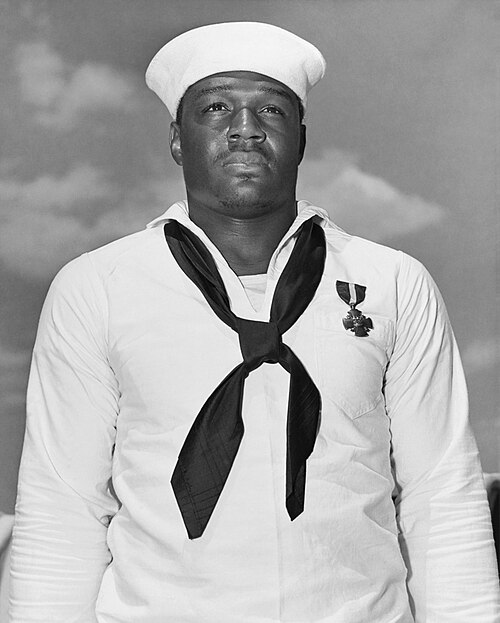
OSF Editor: Will a future aircraft carrier be named after Doris Miller or Trump?
Google AI: No final decision has been made, but the U.S. Navy is actively conducting internal discussions about renaming the future aircraft carrier (CVN-81) to honor President Donald Trump. [1, 2, 3]
The vessel was originally named the USS Doris Miller in 2020 during Trump’s first term. Recent internal documents have shifted to referring to the ship strictly by its hull number, CVN-81. [1, 2]
Key Details of the Potential Change
Unprecedented Move: Naming a supercarrier after a sitting president would be entirely unprecedented in modern U.S. Navy history.
Alternative Plans for Miller: Officials are considering moving Doris Miller’s name to a different warship (such as a destroyer). Concurrently, there is a push to posthumously award Miller the Medal of Honor, upgrading his current Navy Cross.
Decision Makers: The authority to finalize the ship’s name lies with Acting Navy Secretary Hung Cao and Defense Secretary Pete Hegseth. [1, 2, 3, 4, 5, 6, 7]
The proposed change has already generated significant public debate and backlash from veterans’ advocates and lawmakers. They emphasize that CVN-81 was intended to be the very first U.S. aircraft carrier named after an enlisted sailor and a Black American. [1, 2, 3]
Doris “Dorie” Miller was a U.S. Navy sailor who was the first black recipient of the Navy Cross and a nominee for the Medal of Honor. As a mess attendant second class aboard the battleship USS West Virginia, Miller helped carry wounded sailors to safety during the attack on Pearl Harbor. He then operated an anti-aircraft gun[3] and, despite no prior training in gunnery, officially shot down one plane (according to Navy Department records), but Miller and other eyewitnesses claimed a range of four to six.[4]Wikipedia
Jason Watson, the US service member who was arrested on the steps of the US Capitol last month after calling for the impeachment of President Donald Trump, has been detained once again — just days after he criticized the president in an exclusive CNN interview.
The US Air Force major was “ordered into pretrial confinement” Tuesday, a US Air Force spokesperson told CNN. As of Wednesday evening, he has not been formally charged, but the spokesperson said the case is still under investigation. Watson is currently being detained at a county facility in Maryland and is on a military hold, according to the public information officer for that detention center.
It is unclear what charges Watson might be facing.
Watson’s attorney Chris Mutimer said the airman was arrested while on duty the day after his interview on CNN earlier in the week. Mutimer said Watson was refusing to wear his uniform.
“While he was at work he, through counsel, informed his chain of command that he would no longer be wearing his uniform,” Mutimer said. “Shortly after that, he was told he needed to put his uniform on. Within about 20 minutes, and my understanding is around 330, he was then arrested and he was brought to a county jail.”
Mutimer said on CNN Wednesday evening they are “expecting charges related to Article 88, which is contempt towards an officer or Article 92, which is failure to obey, which would be related potentially to him not putting his uniform back on.”
“He expected this,” the attorney said. “He expected to be arrested.”
The Air Force spokesperson said in a statement, “Military members are required to comply with the Uniform Code of Military Justice and all applicable regulations.” The spokesperson added, “Based on probable cause to support allegations of continued misconduct, Maj. Watson was ordered into pretrial confinement on Aug. 18, 2026. Maj. Watson is presumed innocent and will be afforded all rights under Rule for Courts-Martial 305 as his pretrial confinement is reviewed.”
CNN has asked the Air Force for further details.
On Monday, Watson spoke with CNN’s Erin Burnett and criticized Trump, whose impeachment and removal he continues to call for.
“What is happening with President Trump is not normal. He has failed us,” Watson said. “And not only is he a failure as president, he is flagrantly violating the Constitution, breaking the law, engaged in rampant corruption and is killing Americans. And that is unacceptable to me and it should be unacceptable to all of us.”
Airman arrested after protesting Trump in uniform speaks out: Trump ‘has failed us’
Public dissent within active-duty military ranks is rare as service members are required to follow orders in accordance with the Uniform Code of Military Justice, which criminalizes contemptuous words against the president, vice president, Congress and other top officials under Article 88.
“Maj. Watson’s personal statements do not reflect the views or policies of the Department of the Air Force,” the agency spokesperson said in the statement Wednesday.
Watson was previously arrested on July 1 on the US Capitol steps after he gave a speech calling for the impeachment and removal of Trump and Vice President JD Vance.
US Capitol Police told CNN at the time that members of the public are not allowed to demonstrate on the steps of the House unless they are accompanied by a member of Congress. Watson was “escorted” to the steps by a member, who then “left the area,” according to police.
Watson was wearing his uniform during the demonstration. Military regulation bans wearing a uniform while participating in political activities, though to date Watson had not been charged with an infraction tied to the demonstration.
Watson told CNN earlier this week that he is willing to pay the price of speaking out against the administration.
“We just have to be willing to accept that we can change what is happening in our country if we’re just willing to pay a price for it,” Watson said. “So all that I could do was ask myself what’s the highest price that I’m willing to pay. And this is what I ultimately came up with.”
This story has been updated with additional details.
Davis Winkie and Piper Hudspeth Blackburn contributed to this story.
“As an adjudicated insurrectionist, Trump is an illegitimate president according to Section 3 of the 14th Amendment, and therefore every official act as president will be illegitimate.”
–Mike Zonta, co-editor of OccupySF.net
The 14th Amendment states: “No person shall be a Senator or Representative in Congress, or elector of President and Vice President, or hold any office, civil or military, under the United States, or under any state, who, having previously taken an oath, as a member of Congress, or as an officer of the United States, or as a member of any state legislature, or as an executive or judicial officer of any state, to support the Constitution of the United States, shall have engaged in insurrection or rebellion against the same, or given aid or comfort to the enemies thereof. But Congress may, by a vote of two-thirds of each House, remove such disability.”
Call your Congressperson and your U.S. Senators at (202) 224-3121
One of the surveys released by the group, Median Strategies, claimed that Francesca Hong was leading the Wisconsin Democratic primary for governor by more than 20 percentage points. Photo: LaShawnda Jones, CC BY-SA 4.0, via Wikimedia Commons
An organization that released public election polling in recent weeks withdrew the results of two surveys, revealing that it had fabricated the polls as part of a “short-term social experiment” meant to expose how quickly false information could spread.
One of the surveys released by the group, Median Strategies, claimed that Francesca Hong was leading the Wisconsin Democratic primary for governor by more than 20 percentage points. (She went on to lose by less than 1 percentage point.) Another, shared by Mayor Karen Bass on the social platform X in a since-deleted post, showed Bass leading Nithya Raman by nearly 12 percentage points in the Los Angeles mayoral runoff.
On Monday, Median Strategies withdrew those results, saying they “should not be treated as genuine polling data.”
In a statement posted to the organization’s website, Median Strategies said the fabricated results were intended to examine “how purported polling information could enter and spread through the political information ecosystem without independent verification.”
Median Strategies did not respond to a request for further comment on the incident.
The false polls, particularly the one from the California race, spread widely after being picked up by The California Post and various social media polling aggregators. The results, however, were not published by multiple major polling aggregators, and were not included in The New York Times’ poll trackers because the group did not respond to questions about its methodology.
The experiment came as the number of public pollsters has skyrocketed, with about 30 new pollsters cropping up so far this year. The large number of surveys coming from new, previously untested pollsters has made it increasingly difficult to judge survey quality. But while these new pollsters may be unproven, the vast majority appear to be real.
In Wisconsin, the Median Strategies results were largely in line with the other public polls, all of which greatly underestimated Hong’s opponent, David Crowley, igniting a wave of criticism of the value of primary polling.
What Median Strategies hoped to accomplish by adding false polls into a saturated marketplace was unclear, even to experts in the field.
SF claims for exemption from foreclosure-related transfer taxes hit $450 million in the past three fiscal years — more than claimed in the prior 15 years combined
This week, The City will preview San Francisco Opera’s upcoming season, host a stop on Herbie Hancock’s summer tour and throw a tea party at the zoo
“It doesn’t make sense as a social experiment; what are you measuring?” said Mia Costa, a government professor at Dartmouth College. “How do you know who was exposed and who wasn’t? This is just wreaking havoc in an election with real stakes and no real interest in understanding the effects of what you are doing.”
The revelation of such an experiment, and how easily the false results spread, exposed a challenge in a polling world where incentives are high to produce polls that attract attention, and the cost of a low-quality poll is relatively modest.
“The bar to doing a poll has gotten so low that it’s easy to get through without adhering to typical industry standards,” said Josh Pasek, a political science professor at the University of Michigan. “As a result, these bad actors can quickly manipulate our understanding of a race.”
The fake polls, which were first reported on by the Los Angeles Times, also drew attention to the increasing reliance on low-quality polls and betting markets to inform the public’s understanding in races where little information is otherwise available. Additionally, it calls into question how information of varying quality might move the needle in betting markets like Kalshi and Polymarket.
“The ability to manipulate even a marginal amount of information can have a disproportionate impact on the markets,” Pasek said.
Bass’ election odds showed slight improvement in the betting markets after the Median Strategies poll was reported, while no changes were seen in Wisconsin. In its statement, Median Strategies claimed that no one involved received any compensation or financial benefit from the project, and that none of those involved held or traded any position in the various prediction or betting mechanisms.
Without further explanation, the statement about the experiment ended with a message that stood in contrast to the confused reaction that followed from people throughout the polling world: “Thank you for your understanding.”
Invited, undefended, unpunished, and rewarded: what independent researchers can still measure has doubled in a year, and the instruments that would measure the rest no longer exist.
Christopher Armitage Aug 19, Christopher Armitage from The Existentialist Republic
(Photo by Scott Olson/Getty Images)
Publisher’s note on sources and standards
This report covers February 2025 through August 2026. Every factual claim is cited where it appears. Sources consist of federal indictments, court filings, agency memoranda, Congressional Research Service publications, Senate correspondence, published threat intelligence from named firms and university research groups, and news reporting. Filings from advocacy organizations are flagged and checked against the underlying documents.
The 2026 midterms will be the first federal election since Russia’s 2016 attack in which none of the defenses built in response are still functioning, and enforcement under the older laws has stopped as well.
Finding 3: Republicans have opened a working channel to the Kremlin and plan to continue using it through the election
When we look at the totality of the circumstances as we approach the midterm elections, we can see that the Trump administration and its allies in Congress have invited foreign interference in their favor, removed the guardrails built to stop it, and rewarded those who provide it. What that means for November is that the operations documented here will be at full operational scale from America’s enemies, and hyper-targeted to convince people to vote MAGA or not show up.
Suppressing turnout remains among the most effective tools these operations have, which is why researchers estimate 4.7 million Americans stayed home in 2016 because of ads aimed at them, and it is the tool that fails when people show up anyway.
Beyond November, the work is electing representatives at the city and state level who are prepared to fight back from a serious oppositional posture. The states retain authority over their own elections, and they can ban what the federal government now permits, fund what it has defunded, and prosecute what it declines to. That is achievable and within reach, so long as we arm ourselves with the knowledge and organize well enough to use it.
Let’s get after it.
Your state can stand up its own single payer healthcare system, arrest ICE agents who break the law, and even create New Deal style jobs programs. There are tremendous options available to us at the state level that are largely untapped.
Want to make that all reality and start winning some ground? Well it’s our job at the Existentialist Republic to address exactly the issue this article outlines and then hand people tools to make change because when the federal government and a large fraction of states have abandoned fairness, freedom, and democracy, we need to have a plan.
But just so you know, it’s 10 people like yourself, 10 activists per article who subscribe by clicking the button below, that fund all of this. All 3 free books, all 12 booklets, the 4 pieces of model legislation, and the 20-40 articles per month.
Don’t let this be the reason you miss a meal or are late on rent.
But if this helps you and you can become a subscriber, you’re one of the 10 that makes it all possible.
Mayor Daniel Lurie may well be undermining his own affordable housing bill by attacking another affordable housing measure—one that doesn’t conflict with his proposal.
The mayor has teamed up with Sup. Myrna Melgar to create an Affordable Housing Trust Fund that will ultimately set aside as much as $125 million a year for non-market units.
That measure, Prop. C, has widespread support at City Hall.
Lurie’s attack on Prop. I may backfire on his own housing measure
But the mayor is attacking another measure, Prop. I, which would mandate that the existing tax on high-end property sales go where the voters intended—for social housing.
Since that measure, also called Prop. I, passed in 2020, the city has collected hundreds of millions of dollars in transfer taxes on the sale of properties worth more than $10 million. But former Mayor London Breed, who opposed the measure in part because she disliked its sponsor, Sup. Dean Preston, who defeated her hand-picked candidate for supe in D5, refused to allocate the money the way the voters intended. Lurie has continued that pattern.
The 2026 Prop. I would simply say: The voters wanted that tax money to go for social housing, so that’s what the mayor and the supes have to do.
Lurie’s message, released last week: If we set aside money for affordable housing, we won’t have as much money to pay the cops. The SF Standard headline says it all: “Affordable housing measure would deprive cops of funding, Lurie says.”
In his statement, Lurie said Prop. I would
carve a massive, permanent hole in the city’s general fund — the same fund that pays the firefighters, paramedics, and police officers who respond when San Franciscans call 911.
(He also called Prop. I, the social housing measure, a “slush fund” with no accountability. As Joe Eskenazi points out in Mission Local, that’s really odd—since the Mayor’s Office would control and allocate the money. Is Lurie saying his own office lacks accountability?)
The problem here is that two affordable housing measures are on the ballot. They don’t conflict; if both pass, the mayor will have his trust fund, and he will also have to allocate the high-end transfer tax money to housing, as the voters intended.
That would add up to about $250 million a year for non-market housing, enough over ten years to make a huge dent in the city’s affordability gap. After Trump is gone, if a Democrat who cares about housing is in the White House to add federal matching funds, we could be talking about as many as 20,000 or more social housing units by 2036, enough to bring down prices across the city.
But the voters aren’t going to be paying that close attention to the differences between Prop. C (the trust fund) and Prop. I (the transfer tax for affordable housing). They’re just going to see “affordable housing.” And if the mayor is out there saying affordable housing money takes resources from the cops, he may be killing his own measure.
There’s a more important point here: The $125 million in revenue that comes into the city from Prop. I would not exist if the voters hadn’t believed it would fund affordable housing. A proposal for a “cop tax” went down in flames.
That’s the priority of the current mayor—at a time when rents have never been higher and the need for non-market housing has never been greater. And it may backfire on him.
48 Hills welcomes comments in the form of letters to the editor, which you can submit here. We also invite you to join the conversation on our Facebook, Twitter, and Instagram.
Tim Redmond has been a political and investigative reporter in San Francisco for more than 30 years. He spent much of that time as executive editor of the Bay Guardian. He is the founder of 48hills.
Credit: Andrew Rush/Pittsburgh Post-Gazette via AP
Harold Meyerson’s piece “Why Have Less Than One Percent of American Socialists Joined DSA?” tackles a question that those from supporters to opponents of socialism have pondered. If socialism now has millions of stated adherents, why have very few of them opted to join the most prominent socialist organization? Alternatively, how can groups such as the Democratic Socialists of America (DSA) mobilize and activate the millions sympathetic to their broad views?
One barrier, for Meyerson, is a “cocoon culture” where activists—DSA or not—begin to believe ideas in their immediate world are more popular than they truly are. Specifically, he fears the advocacy of policies such as defunding the police is alienating potential voters for DSA candidates. He notes, accurately, that many of the most successful democratic socialist politicians, such as Bernie Sanders and Zohran Mamdani, support police reform but have publicly distanced themselves from the defund movement. While Meyerson doesn’t explicitly say it, one can conclude such a “cocoon culture” may be an explanation for why nearly all socialists have not joined DSA.
For Meyerson, should DSA and leftists aligned with it shed this cocoon culture, they could make bigger inroads in places outside the heavily blue districts where they’re winning. His argument gained some support with Francesca Hong’s defeat in the Wisconsin Democratic gubernatorial primary. The DSAer and state assemblymember, despite being ahead in the polls for some time, eventually lost as the Democratic establishment coalesced around one candidate, much like how Joe Biden defeated Sanders in the 2020 presidential primary. Sure enough, Hong’s past comments rejecting Thanksgiving got more attention than her popular stance against AI data centers.
In my view, Meyerson is putting too much explanatory weight onto one candidate and her past tweets. At the very least, there is an overemphasis on democratic socialists’ unique takes explaining electoral defeats and seemingly low membership numbers.
It is more plausible that DSA’s membership numbers reflect the death of civic society in the United States much more than the group’s limitations. Perhaps Hong might have eked out a win if she had not been burdened by a history of inflammatory positions, but even if every DSA candidate were moderate-coded with a squeaky-clean social media history, it is highly unlikely that would cause a flood of sign-ups. If that were possible, more moderate social democratic membership organizations that reject DSA’s radicalism would be growing explosively, and they aren’t. On the contrary, the fact that DSA is full of outspoken radicals might be the reason it is as large as it is.
As Meyerson notes, DSA just hit 120,000 members. That makes it the largest socialist group in U.S. history, though without adjusting for population. Indeed, that figure is more impressive than it sounds, because DSA—almost uniquely among the current crop of nonprofit membership organizations, as well as the Democratic Party—requires members to pay dues, unless you apply for a waiver.
The Prospect in your inbox
Analysis that goes beyond the noise with in-depth, progressive reporting.Sign up
No paywall, no programmatic ads — just the reporting. Unsubscribe anytime. Submitting your email signs you up for The Daily Prospect, Today on TAP, Aftermath, and Weekend Reads.
Many other peer activist organizations allow people merely to sign up with an email and get a de facto lifetime membership. Unlike the member-funded DSA, many of those groups rely on big donors and foundations to sustain the financial health of the group. DSA, for obvious reasons, can have no truck with such funding tactics targeting the wealthy.
DSA almost certainly could have a million or more “members” even without rich backers if it just asked people to sign up with emails and never worry about renewal. But that’s not what DSA is building. It is attempting something much more difficult and ambitious: It is building a democratic model of political self-organization, for good and ill.
Danish sociologist Fabian Holt chronicled this energy rebuilding civic society in his new book, Organize or Burn (which I discussed on a recent Left Anchor podcast), which covers New York City DSA’s successful effort to pass environmental legislation at the state level in 2023. Holt studied the New York political scene and observed that young DSA activists were simply reviving the social function that party machines and other political actors have abandoned. This is a tremendous challenge in the age of smartphones and social media, but conversely, precisely because of our rotted civic society, organizations that can really build punch far above their weight. DSA is making the old new again—with policy and election wins to show for it.
While Holt is sympathetic to DSA, CNN commentator and erstwhile leftist Van Jones is not. But he agreed with Holt inasmuch as DSA’s strength is its social culture that builds community. Last June, he posted:
The DSA (Democratic Socialists of America) can beat moderates in a growing number of blue strongholds. Why? Because the DSA has patiently built an army of on-the-ground organizers—who go to meetings, help each other, study together and THEN work to turn out voters on Election Day. That army grows every day—election or no election. Their investment in real people grows (and compounds) with each election cycle. The DSA has a bigger army, every time, win or lose.
This culture change, Jones notes, cannot happen overnight.
We even have an example of moderation failing to attract a mass membership in DSA’s own history. As Meyerson notes: “DSA, which had just 6,000 or so members when [Sanders’s first presidential] campaign began, didn’t yet exist as a political force; it was his campaign that effectively rebirthed the organization.” That old DSA was much closer to the politics of Sanders today. But now a more radical version is 20 times larger.
One might respond that conditions are more favorable for socialism today. That’s true. But we have not seen groups like Our Revolution, founded in Sanders’s image along traditional nonprofit lines, outorganize DSA, not by a long shot. It isn’t getting as much press, or achieving mass membership either—certainly not by the dues-only standards.
People are joining DSA and voting for its candidates because they see it winning, an honest force for change, and standing up to a Democratic establishment that has failed to defeat Donald Trump twice. Electing radicals like Hong with a history of saying what they really think, even if that might be unpopular or unworkable, is a key part of its credibility, for good and ill. A movement whose leaders are perfectly airbrushed and poll-tested will sound phony to a cynical voting public and struggle to attract attention in a cacophonous media environment.
And on balance, it’s working. Hong’s loss aside, DSA looks to be sending nearly half a dozen comrades to Congress next year—many more than the Socialist Party or older versions of DSA ever did. That demonstrates mass support, dues-paying or not, from the millions of voters in this country who identify with democratic socialism.
Why the Prospect Deserves To Exist
We do things differently at the Prospect. We haven’t put up a paywall—we’re free for all readers regardless of their ability to pay—and we don’t run programmatic advertising.
Why? We believe that quality journalism should be available to everyone, even if they cannot afford a monthly subscription.
Everything we’re doing now and in the future at the Prospect centers around you, our readers. From the stories we write to the business model we use, we place you at the center of all our decision making.
To stay true to our values, we need you to support us. If you believe in our journalism and our independence, make a donation today.
David Duhalde is a democratic socialist organizer who has held positions in both the Democratic Socialists of America and its sister nonprofit, the DSA Fund. More by David Duhalde
Help Outreach Working Group lift the fog of corporate media. Donate to help us maintain this website and distribute literature on the street.
September PAC Meeting *We will be voting on November Election endorsement recommendations for state propositions!* Date: Tuesday, 8 September, 2026 (second Tuesday of month) Time: 7-9 PM *NEW* In-person Location: Women’s Building (3543 18th St), Audre Lorde Room Remote: Via Zoom Link Here
One Million Rising: Strategic Non-Cooperation to Fight Authoritarianism Virtual Event · Hosted by No Kings Time Wednesdays 8 – 9:30pm EDT Location Virtual event Join from anywhere About this event Across the country, authoritarian forces are getting bolder and more dangerous. Trump and his allies are not hiding their agenda: mass deportations,... Continue reading →
THURSDAY, JUNE 29, 2023 AT 2 AM – 4 AM PDT How to create trust in a group? Details Event by Extinction Rebellion Empathy Circles online EMPATHY CAFE Duration: 2 hr Public · Anyone on or off Facebook How to create trust in a group? This is the question that arose in our... Continue reading →
The San Francisco Democratic Party presents The San Francisco Democratic Party 2026 Gala Thursday, September 10th 6:00 – 10:00 PM Bimbo’s 365 Club 1025 Columbus Ave San Francisco, CA 94133 TICKETS https://www.sfdems.org/gala2026
Public Banking Coalition monthly meetings Next call: Nov 11 Excitement is building for public banking and once a month, PBI hosts an hour-long Public Banking Coalition online meeting to share the excitement and successes. Find out the latest updates on the advances being made all across the country from local advocates themselves... Continue reading →
Trump Regime Takedown: Every Saturday Saturday, March 7, 2026 12:00 PM 2:00 PM Tesla San Francisco999 Van Ness AvenueSan Francisco, CA, 94109United States (map) Google Calendar ICS Keep democracy alive every Saturday by showing up, taking a stand, and sticking together for the long haul. Standing together is better than standing alone. Let’s get together... Continue reading →
This Sunday’s Town Hall: Announcing This Week’s Progressive Town Hall: Every Sunday at 4pm ET/1pm PT RSVP HERE Join PDA activists online from across the country to discuss the importance of progressives reclaiming the American story from the MAGA right, an issue of heightened importance as we’re now within one... Continue reading →
We protest Heritage Foundation EVERY MONDAY (Join us!!!!) By admin | September 2, 2025 | Uncategorized Cliff Cash Comedy Premiered Jul 26, 2025 Every Monday at The Heritage Foundation 214 Massachusetts Ave. Washington D.C. 4pm protest 6pm pizza Every Friday at Fox News D.C. 400 N. Capitol St. Washington D.C. 4pm protest 6pm pizza We are... Continue reading →
There are less than 9 weeks until the critical November election, and what we do between now and then will shape the future of our health care. We started Nurses for Democracy to fight back against fascism and protect our democracy, but also to elect candidates in key races who are committed... Continue reading →
September General Membership Meeting *We will be voting on November Election endorsements for state propositions!* Date: Tuesday, 15 September, 2026 (third Tuesday of month) Time: 7-9 PM *NEW* In-person Location: Women’s Building (3543 18th St), Audre Lorde Room Remote: Via Zoom Link Here





 by
by 









 Invited, undefended, unpunished, and rewarded: what independent researchers can still measure has doubled in a year, and the instruments that would measure the rest no longer exist.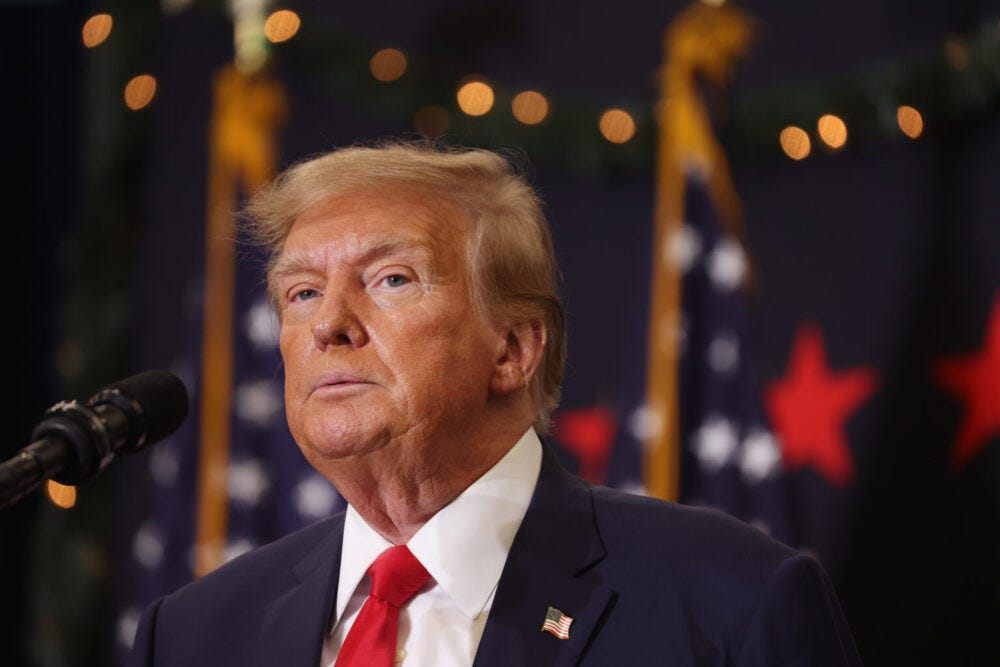
 by
by 


