Status Coup News Sep 2, 2026 Status Coup News tagged products below. Status Coup reporter JT Cestkowski breaks down the latest tragedy caused by ICE agents: this time, Pierre Damas Bel, a Haitian student who was forced to wear an ankle monitor like a criminal, took his own life in traffic in response to ICE treatment. JT tells you what you need to know and the incredible hypocrisy of this case compared to an actual murderer in the form of an ICE agent. Status Coup is the leading INDEPENDENT ON-THE-GROUND reporting outlet in America that covers what the corporate media COVERS UP. We are FUNDED BY THE PEOPLE FOR THE PEOPLE—and need your support to help us stay ON-THE-GROUND. Join us as a paying member for as low as $5 bucks a month: https://www.statuscoup.com/join
Americans need to prepare for these midterms as though someone is trying to deny them their right to vote. Here’s how.
With exactly two months to go until the election, a lot of news outlets will try to tell their audiences who to vote for. Not us. If you don’t know who to support at this point, then we honestly can’t help you.
What we can assist you with, however, is something that, depending on where you live, will be much more important than advice on whether to cast your ballot for a member of a weird cult headed by a mentally ill felon or for people trying to exert some kind of oversight over this person and his goon squad: Specifically, we can tell you what to do to ensure that your vote counts.
In a stable democracy, that would not be necessary.
However, the United States in the year of 2026 is not that.
For one thing, Donald Trump’s rhetoric has undermined confidence in US democracy. A mere 60 percent of Americans believe that votes cast in the midterms will be counted accurately.
More importantly (and troublingly), the administration’s actions justify these concerns.
For all of the president’s talk of any election he loses being “stolen,” he and his party are the ones who are continuously trying to manipulate the process to their advantage (as we have pointed out, there’s an important distinction to be made between administratively “rigging” an election, which is unfortunately legal in most cases, and “stealing” it through criminal actions).
Now, to be fair, both Democrats and Republicans are trying to write the rules in a way that benefits them. The difference is that Democrats try to gain an advantage by making it as easy as possible for eligible Americans to vote while the GOP has a long history of trying to suppress the votes of people they believe will not support them.
And that brings us to the point of this column.
If you are a member of one of the Democrats’ core constituencies — e.g., if you are part of a racial or ethnic minority group, a student, a holder of a college degree, or a woman — then there is a Republican out there somewhere who would love to disenfranchise you, make you jump through some extra hoops to cast your ballot, or ensure that your vote is as meaningless as possible.
We, on the other hand, want you to be aware of these strategies and to arm you with the knowledge you need to make as sure as possible that you get to vote if you want to (and you should really want to) and that your vote is counted.
Unfortunately, before the first ballots are cast in a couple weeks’ time, some outcomes have already been predetermined.
For example, by giving each state two senators, the Constitution ensures that Republicans are currently being overrepresented in the Senate. This isn’t part of the rigging of the process; it’s just the way the historical cookie crumbles, as they say.
And what it means is that, while Democratic senators represent many millions more Americans than Republicans, they find themselves in the minority because those GOP senators dominate in the elections of the more sparsely populated states.
Specifically, while eight of the 13* most populous states have two Democratic senators, only four have two Republican senators, and Pennsylvania has one of each. However, it is quite possible that, after the midterms, three more of these states (Texas, Ohio, and North Carolina) will have split representation, and Florida would then be the only state left on that list with two GOP senators — and Republicans could (theoretically) still maintain their Senate majority because they have two senators in eight of the 13 least populated states.
Over in the House, the election manipulation is in full effect because of actions taken by red state Republicans (with an assist from the Supreme Court’s right-wing majority, which gutted what was left of the Voting Rights Act). Officials in red states eagerly answered Trump’s call to engage in an unprecedented mid-decade redistricting spree that could net them about 10 seats while disenfranchising millions of Black voters.
While Black voters were the proximal targets for disenfranchisement in the Southern states we’re talking about here, of course the desired political outcome of all that hasty redistricting is the disenfranchisement of all Democrats, virtually eliminating any Democratic representation of states with millions of Democratic voters — the real prize being a far better prospect for GOP control of the House.
As a result of this redistricting campaign, Democrats are only favored to secure a House majority if they win the popular vote by at least 3 points, and there are some scenarios in which the GOP could maintain its control of the chamber even if Democrats win the popular vote by 6 points. Right now, looking at the nonpartisan Cook Political Report ratings, the GOP can maintain control of the House by winning fewer than half of the contests rated as tossups.
That’s what we mean by “rigging,” by the way. Thanks to the Supreme Court, all of this is technically legal (although we believe it constitutes a crime against democracy).
Now — and this is extremely important and we cannot stress it enough — none of the above should deter you from voting.
First of all, casting a ballot is not only your most important right as a citizen but, we believe, also your obligation.
But there are also many practical reasons to show up. If you live in one of those gerrymandered states, for example, you can teach those who drew the new maps a valuable lesson. In some cases, they may have overdone it and could actually lose seats; and in others, you can at least help make it a close election, forcing the lawmakers there (and elsewhere) to reconsider what they’ve wrought.
In addition, there are always down-ballot races for state offices, local representatives, school boards, etc., that often have a more immediate impact on your life than who represents you in Congress. Plus, you often get to vote on ballot initiatives that give citizens a direct say on issues ranging from reproductive rights and Medicaid expansions to minimum wage increases.
These measures have especially been a thorn in the side of Republicans running those smaller Midwestern states because, as it turns out, voters want all of the above.
Therefore, we urge you to inform yourself and others about the candidates and issues that will be on the ballot where you live. To do so, you can go here or here to view a sample ballot for your district.
Of course, all of this is contingent on whether you will actually be allowed to vote, which is not a given for anybody.
The administration is trying to restrict mail-in voting and also hopes to get its hands on voter rolls to check the eligibility of the names on the list using a database that usually results in the purging of American citizens.
What will come of these anti-democratic efforts is largely in the hands of a Supreme Court that has frequently ruled in favor of Trump and not the Constitution — the authors of which intentionally did not give the executive branch a role in administering elections.
You can find a list of the laws passed in 2025 here and those passed this year here.
So, what does all of this mean for you?
Well, first and foremost, while you may be able to show up at your polling place on November 3 and cast your vote without any problem, you should not assume that you will be able to do so.
That is why, with two months to go before Election Day, you need to start preparing now.
First of all, you should make sure that you are registered to vote in the state where you reside.
In light of all the voter roll purges, that’s not a given.
You can check your voter registration status by going here or here.
On one or both of those sites, you can also find information on registering to vote if you haven’t, locating your polling place, learning which form of ID you may need, getting details on early voting opportunities, tracking a mail-in ballot, and much more.
Speaking of voting by mail, while this is such a convenient way to vote that President Trump routinely avails himself of it, he does not want you to be able to use this method to cast your ballot.
Therefore, if you can use a drop box or vote in person, try to do it (we will share the pros and cons of the different ways to cast your ballot in a future column and keep permanent links to both on our website through the midterms).
We also advise you not to wait until the last minute to do either. If you can vote early, then do so to ensure that you won’t be disenfranchised by some 11th-hour stunt.
You can find out here or here when and how you can vote in your state ahead of Election Day. The vast majority of states provide this option, with some of them allowing you to cast your ballot as early as two weeks from now.
And once you have checked that you are (still) registered and made a plan for when and how you will vote, share this information with everyone you know and urge them to act as though someone is trying to take this most fundamental right away from them.
Because that’s exactly what is happening, and these midterms may be the last best chance to make your voice heard.
*Yes, we realize that 13 is an arbitrary number but we’re trying to make a point here. The same thing would still be true if we had chosen the top 20 states.
Klaus MarreKlaus Marre, a former congressional reporter, is a senior editor for US politics at WhoWhatWhy. He writes regularly here, and you can also follow him on Bluesky and Substack.
Posted on September 3, 2026 by Ellen Brown (ellenbrown.com)
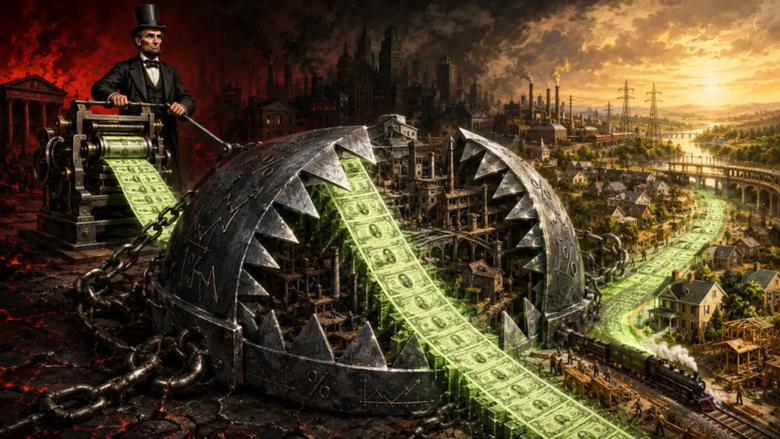
Lincoln Breaks the Interest Trap – image by ScheerPost
In August 2026, the U.S. debt reached a gravity-defying $40 trillion, with an estimated fiscal year 2026 deficit of $2.1 trillion. Interest on the debt hit a record $1.4 trillion over the last 12 months and now consumes more than any federal program except Social Security and Medicare, eclipsing defense spending for the first time in U.S. history. Paid with borrowed money, interest compounds exponentially, making it the fastest-growing part of the budget, far outpacing economic growth. By 2036, the Congressional Budget Office projects that interest costs will double to $2.1 trillion, with debt held by the public reaching 120 percent of GDP. The CBO director has declared the trajectory to be “not sustainable.”
Increasingly, prominent analysts are saying the United States will have to “print” its way out. But using whose printing press, printing what?
Today, “printing” normally means Federal Reserve monetization (Quantitative Easing or QE). The Treasury first issues debt – bills, bonds and notes – which are sold by primary dealers on the open market. If there are insufficient buyers, the Fed as “lender of last resort” may buy the securities with “reserves” created with accounting entries in bank reserve accounts. But Fed Chair Kevin Warsh is trying to reduce the Fed’s balance sheet by selling federal securities, not buy them. And even if the Fed did engage in QE, it would not work today to reduce the debt or the interest. The Fed is required to return its profits to the Treasury after deducting its costs, but ever since 2008 it has paid the banks interest on their reserve balances (IORB) as a policy tool to control inflation; and since 2022, the total sum the Fed has paid in IORB has been higher than the interest it received from the Treasury on its securities. The net result is that instead of the Fed remitting profits to the Treasury, the Treasury now owes the Fed money to cover the gap in IORB, increasing the federal debt and the interest bill. The Fed printing press is running, but it is running in the wrong direction.
Meanwhile, $4.1 trillion USD in marketable federal securities are maturing this year; and many are long-dated bonds yielding low interest, for which there are insufficient buyers. So the Treasury under Scott Bessent has had to take over the business of buying them, using funds raised by selling short-dated Treasuries for which there is a ready market. Some commentators are calling this “Treasury QE,” but the policy is not pumping new Treasury dollars into the market. Other commentators say the buyback expansion is more like the Fed’s earlier “Operation Twist” — just an asset swap, old debt for new.
Under quantitative easing, the Fed buys Treasury securities and pays for them by crediting the reserve accounts of banks.… Base money, the sum of currency and those reserve balances, expands one for one with the purchase.
Treasury has no such keystroke ability. It spends out of the Treasury General Account, its checking account at the Fed, and every dollar in that account got there through taxes or borrowing.
The Treasury’s Keystroke Power
So says conventional analysis, but the Treasury at the direction of Congress actually does have keystroke ability. It is a sovereign power that our forebears used to finance the American Revolution, the Civil War, and some of the most explosive periods of economic growth in U.S. history. From the “colonial scrip” that Benjamin Franklin credited with the prosperity of the colonies, to the Continentals that funded the Revolution, the power to create money was viewed as a public utility. The U.S. Constitution formalized that power in Article I, Section 8, granting Congress the power “to coin Money [and] regulate the Value thereof.”
After Lincoln’s Treasury printed enough U.S. Notes or “Greenbacks” to win the Civil War, the Supreme Court twice affirmed its authority to do so. But that power was captured and handed to a banking cartel that met in secret on Jekyll Island in 1910, where they designed a system in which every new dollar must be borrowed into existence from bankers who simply write deposits into their borrowers’ accounts. And thus was the government’s sovereign power to create its own currency captured by private profiteers.
The Lincoln Precedent
The greatest proof of concept for debt-free sovereign currency remains Abraham Lincoln’s Greenbacks. Facing a fractured nation and usurious interest rates from international bankers, Lincoln bypassed the private credit market. Through the Legal Tender Acts of the 1860s, the Treasury issued $450 million in United States Notes (Greenbacks), which funded the North’s victory in the Civil War and extensive national infrastructure development.
In 1871, the Supreme Court upheld the Legal Tender Acts in Knox v. Lee, ruling that the government’s power to issue currency that was not redeemable in specie (coins) was an inherent attribute of sovereignty. But in 1878, the Greenback supply was capped at less than half a million dollars, ensuring that as the economy grew, the sovereign dollar would be dwarfed by private bank credit backed by gold reserves. In Juilliard v. Greenman (1884), however, the Supreme Court confirmed that the power “of making the notes of the United States a legal tender in payment of private debts” was “included in the power to borrow money and to provide a national currency”.
The Populist Allegory: The Yellow Brick Road
By the late 19th century, the scarcity of credit caused by the bankers’ “Cross of Gold” led to a major depression and a grassroots uprising. In 1894, the march of “Coxey’s Army” on Washington—the first of its kind—would become the inspiration for The Wonderful Wizard of Oz (1889). In that classic American allegory, the “Yellow Brick Road” (the gold standard) leads to a deceptive Emerald City (Washington D.C.), where the Wizard (the President) pulls levers of illusion. William Jennings Bryan, the “Cowardly Lion” of the Greenback movement, had the roar of a great orator but ultimately lacked the courage to stick to the Greenback solution, instead pivoting to bimetallism (silver). [For more on that see E. Brown, Web of Debt.]
In 1912, Bryan was appointed Secretary of State by Pres. Woodrow Wilson. Bryan vigorously opposed the Aldrich Act, which would have handed the “money power” to the bankers; but the bankers won, and the Federal Reserve Act passed. Since that time, the United States has financed itself not with sovereign money but with interest-bearing debt, rolling it over year after year until the interest bill itself has become the fastest-growing federal expense.
That is how we got caught in a debt cyclone in which interest is compounding at a voracious rate. Congress will be coming up against the debt ceiling soon and will need to vote either to raise the ceiling, cut social services and the military, raise taxes, or authorize the Treasury to print its way out. Granted, Congress is unlikely to resort to the sovereign money alternative until it has no other option but to default, but that alternative is approved by both the Constitution and by statute, and it need not raise consumer prices – in fact it can lower them — if the new money is used to create new goods and services, keeping supply and demand in balance. (More on that shortly.)
The Statutory Keys
A statutory mechanism proposed to deal with earlier debt ceiling crises involves 31 U.S.C. § 5112(k), under which the Treasury Secretary is granted the discretion to mint platinum coins in any denomination. The proposal was to mint trillion dollar coins, which would represent a profit to the Mint (seigniorage) rather than loans, so their value does not count toward the statutory debt limit defined in 31 U.S.C. § 3101. See e.g. Paul Krugman’s whimsical endorsement here.
The “Treasury General Account” (TGA) is essentially the government’s only checking account and is held by the Federal Reserve. Fo the sovereign dollar to work, the Fed would need to credit the TGA with the face value of the coins on deposit, but that mandate is also statutory. Under 12 U.S.C. § 391, the Federal Reserve Banks must act as “fiscal agents” for the United States; and under 31 U.S.C. § 5103, all coins minted by the U.S. Treasury are “legal tender for all debts, public charges, taxes, and dues.”
Despite those mandates, when the trillion dollar coin was raised as a solution to an earlier debt ceiling deadline in 2013, then-Fed Chair Ben Bernanke called it “unworkable”; and in 2021, facing another debt ceiling, Janet Yellen called it a “gimmick.”
Perhaps, but the coin is no more a gimmick than the Fed’s own “Quantitative Easing,” which extends the use of a section of the Federal Reserve Act far beyond its intended purpose. Section 14 of the Act (12 USC Sec. 355), authorizing Open Market Operations, was intended only for small-scale adjustments to keep interest rates stead; but after the 2008-10 banking crisis, the Fed used that authority to create trillions of dollars in reserves to bail out bankrupt mega-banks.
If the Fed can create trillions in currency to save the banks, why can’t the Treasury do it to save the taxpayers? If trillion dollar coins seem too much like a gimmick, Congress can just lift the 1878 cap on Greenback issues and issue U.S. Notes directly. The GENIUS Act authorizes new forms of digital coins. Why not a digital Greenback coin backed by the full faith and credit of the United States?
Quelling Inflation Concerns
Combining the Legal Tender power (confirmed in Juilliard), the Minting discretion (31 U.S.C. §5112), and the Fiscal Agency mandate (12 U.S.C. §391), the tools are already in place for Congress to issue currency directly. So what is holding it back?
The standard objection is that Treasury‑issued money is more inflationary than borrowing, because borrowed money will eventually be paid back, extinguishing the newly created deposits. But the federal debt has not been paid off since Andrew Jackson did it nearly two centuries ago. The debt is just rolled over from year to year, and so is the interest. In fact the interest burden grows faster than the debt, because it is largely deficit‑financed. Interest paid on interest compounds exponentially.
Contrary to conventional theory, borrowing money into existence has been shown to be more inflationary than printing it directly. Both add new dollars to the money supply, since the debt-created dollars spent by the government are never paid back. But the interest burden on those dollars drives up taxes, and the Fed attempts to dampen inflation by raising interest rates, which raises the interest that producers must pay on their own debts. Producers then raise their prices to cover these additional costs, inflating consumer prices.
Supporting Data
The additional inflation risk from government-borrowed money is not just theory. In an excellent 2018 academic paper titled “Bringing the Helicopter to Ground,” monetary economists Josh Ryan‑Collins of University College London and Frank van Lerven of the New Economic Foundation examined government finance across 13 advanced economies from 1900 to 2011. For roughly 40 years, from the 1930s to the 1970s, 40 to 50 percent of government debt in the countries studied was funded by the creation of new money rather than by borrowing existing wealth from private savings or foreign investors. The new money was created as credit on the books of both central and commercial banks. The authors highlight that this period also had the lowest incidence of banking crises in modern history, and it coincided with the century’s longest sustained period of low government debt-to-GDP and highest GDP growth. Inflation remained manageable until the shocks of the early 1970s.
After the 1970s oil shock, Milton Friedman’s dictum that “inflation is always and everywhere a monetary phenomenon” became official dogma. But the historical record showed the opposite: price inflation rose in the 1970s, while new money creation fell. Prices were driven up by a shortage of supply rather than an excess of monetary demand.
Money Creation Needs to Be Productive
One particularly compelling experiment in publicly-issued money discussed by Ryan-Collins and van Lerven involved New Zealand. Today, nearly all U.S. states are dealing with housing crises. After the Reserve Bank of New Zealand was nationalized in the 1930s, the government solved its housing crisis by using central bank-issued funds to finance housing, infrastructure, public works and support for farmers. Over a four-year period, The Bank created NZ£30 million for the government, real GDP rose 30 percent, and price inflation remained stable.
Why? Because the new money was not bidding for a fixed stock of goods. It was putting unemployed people and idle resources to work to increase the supply of housing, food and other goods.
That is actually the key to avoiding the inflation trap (“too much money chasing too few goods”). If the money is spent on infrastructure and investments that produce new goods and services, supply and demand will rise together, keeping prices in balance.
In fact we may soon be facing the opposite problem – too little money chasing too many goods. Artificial intelligence and robotics promise large increases in productive capacity while threatening the wage income on which consumer demand depends. The solution in that case will be to add new debt-free money to the economy. See my earlier article series here.
The Hamiltonian Option: Grow Our Way Out
An alternative for dealing with the federal debt that is being advocated by the current Administration is the Hamiltonian approach: increase GDP and grow our way out of the debt, as the U.S. did after World War II. It’s a good idea, but financial commentators say it is not enough. Conditions are far different now than in the post-war period, and the numbers won’t work.
Before GDP can grow, funds must be available for labor and supplies; and the Treasury simply does not have them. Treasury-issued dollars could fill the breach and be sustainable, if the money were directed into infrastructure and development, increasing supply along with demand.
Contrary to the Friedman dictum, inflation is not “always and everywhere a monetary phenomenon.” The relevant question is not just how much money is circulating in the economy but where it is circulating and whether it is connecting productive capacity with human needs.
Today, U.S. factories are operating at only 76% capacity, and the American Society of Civil Engineers projects a shortage in infrastructure funding of $3.7 trillion, while trillions in liquid M2 capital are sitting idle in the stock market or circulating strictly within its walls. In fact corporations are now draining hundreds of billions of dollars out of their productive operations to buy back their own stock, further removing financial wealth from the real economy. If newly created dollars were invested in the economy’s industrial slack or the infrastructure gap, goods and services would be produced for the consumer market, raising supply to balance demand and keeping prices from rising.
The most dramatic modern illustration of this principle is China. In the last three decades, China’s M2 money supply has increased by a dramatic 5500%, yet prices have remained stable. Why? Because the money has been invested in infrastructure and development, increasing supply along with demand. For a detailed explanation and references, see my earlier article here.
What If Greenbacks Retired the Debt?
What if new Treasury money were used to gradually redeem some existing federal securities as they mature? This too would be unlikely to drive up consumer prices. Treasury securities are largely held by funds, banks, insurers, foreign institutions and wealthy investors, who are not likely to spend the money on consumer goods but will seek other investments paying interest. An institutional holder of a $1 million Treasury bond which receives $1 million in sovereign dollars has not suddenly gained $1 million in net wealth. One federal liability has just been exchanged for another: an interest-bearing security for non-interest-bearing money. What has changed is just that the government has been relieved of the obligation to keep paying interest on the retired debt.
Conclusion: The Government Has the Power to Bypass the Interest Trap
If our nation can issue a dollar bond, it can issue a dollar bill. The element that makes the bond good, makes the bill good, also. The difference between the bond and the bill is that the bond lets money brokers collect twice the amount of the bond and an additional 20%, whereas the currency pays nobody but those who contribute directly in some useful way.
It is absurd to say that our country can issue $30 million in bonds and not $30 million in currency. Both are promises to pay, but one promise fattens the usurers and the other helps the people.
Congress has the constitutional power to issue sovereign money directly – interest-free and debt-free – and viable precedents are available for implementing that policy without driving up consumer prices. The question is whether Congress will reclaim this hereditary power before the interest trap snaps shut completely.
Postscript: In October of this year, the Public Banking Institute will be holding a conference on these and related issues in Philadelphia, the city in which Pennsylvania’s “land bank” first proved the power of publicly-issued credit and Benjamin Franklin’s printing press supplied its currency. For more information, see http://PublicBankingInstitute.org.
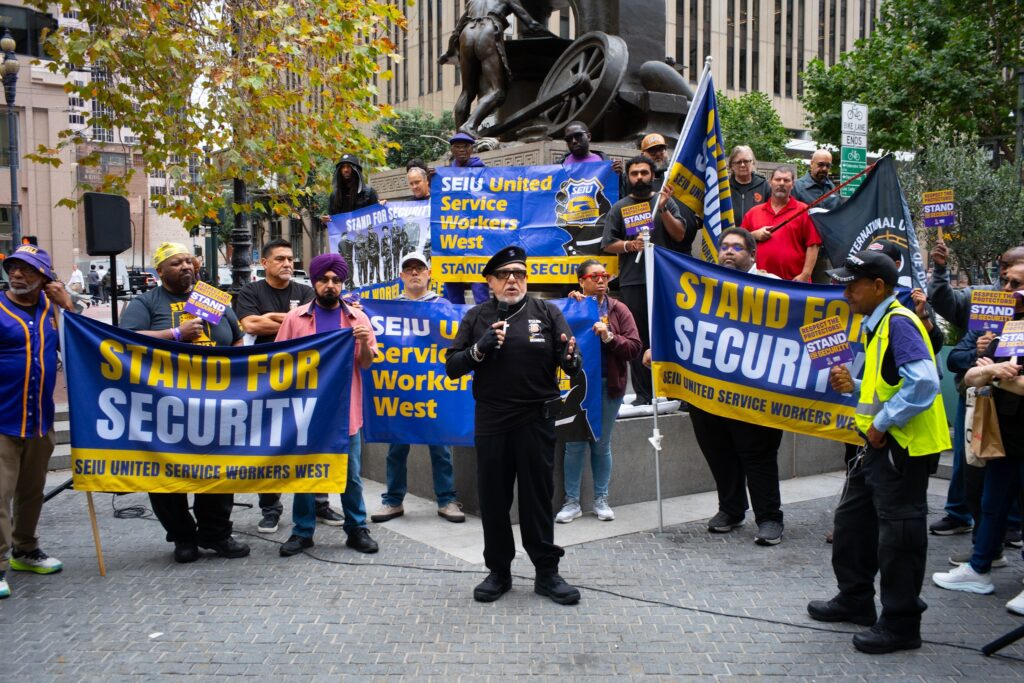
More than 100 people, unionized security guards and allies, gathered at Mechanics Monument Plaza Wednesday to rally against the unfair wages offered by billion-dollar companies.
Security guards from San Francisco to Silicon Valley, with the support of the Service Employees International Union United Service Workers West and allies, announced a strike authorization against companies like Allied Universal and Securitas, both huge national operations that contract with some of the richest companies in the world.
People at the rally chanted “protect the rich while we stay poor” and “hell no we won’t take it no more,” highlighting how employers treat the ones who protect and support their companies. Security officers say they are risking their lives to protect wealthy companies like Salesforce, OpenAI, Anthropic, Google, and Meta—which can easily afford to pay their contractors enough to provide a living wage for guards.
A vocal rally raised the issue of how little people get paid to protect exceptionally wealthy companies
According to UC Berkeley, security officers are mostly workers of color with 41 percent Latino and 23 percent Black. Security officers are paid a median of $20.09; California’s median wage is $28.16.
The 14,000 security guards represented by SEIU-USWW and have been negotiating with some of the nation’s security giants for a new contract since April. Security companies, the unions says, initially proposed a 25-cent hourly raise over the next four years. The latest offer is still not enough to make ends meet, the union says.
One of the security officers affected by the low wages is Jerry Longoria, a security guard of 25 years for Allied Universal. “We put our lives on the line. We guard and protect billion-dollar corporations,” said Longoria, who lives in an SRO. “I can barely afford my rent and for me to barely afford my rent and get this contract, how am I going to survive?”
Since 2003, Longoria has noted how he has only received a few 25-cent raises since he has been a security guard. “I can’t move forward,” said Longoria.
Speakers at the rally emphasized that the workers can’t afford to live where they work. “Security officers risk their lives every single day. This job is becoming more and more dangerous,” said Anton Farmby, secretary treasurer of SEIU-USWW.
“We cannot continue to live in such great wealth and live in poverty,” said David Huerta, president of SEIU-USWW.
Politicians came in support, including Board of Supervisors President Raphael Mandelman, Sup. (and Congressional candidate) Connie Chan, and state Assembly member Matt Haney. “Rain or shine, we will be with you,” said Chan.
Security officers are not only affected by bad wages. Only about half the security guards in California have access to health insurance, and have no access to health family care. They have no secure retirement.
Security officers have demanded as $30/hour, family healthcare, and to be able to have a secure retirement. “What we’re asking for is dignity, respect, and justice,” said Huerta.
A pair of Senate Democrats on Thursday launched an investigation into reports that the Trump administration is planning to weaponize the Internal Revenue Service against left-leaning nonprofits, targeting the tax-exempt status of groups seen as political enemies of the White House and potentially burying the organizations with huge penalties without adequate due process.
Sens. Ron Wyden (D-Ore.) and Raphael Warnock (D-Ga.) announced their inquiry in response to recent reporting by the right-wing New York Post, which reported late last month that US Treasury Secretary Scott Bessent and the IRS “could revoke the tax-free status of left-wing nonprofits such as George Soros’ Open Society Foundations, the Southern Poverty Law Center, and the Council on American-Islamic Relations.”
Wyden, the top Democrat on the Senate Finance Committee, and Warnock called the story “disturbing” and argued it suggests “political considerations—including the timing of the 2026 midterm elections—are influencing” the administration’s targeting of left-leaning nonprofits. The NY Post, which cited three unnamed sources familiar with the matter, reported that “Bessent’s inner circle is drafting a blueprint that could ultimately strip non-compliant organizations of their 501(c)(3) status.”
“The reviews could result in massive back payments and civil penalties,” the outlet added.
The Democratic senators noted in a letter to Bessent and Frank Bisignano, the chief executive of the IRS, that Section 7217 of the Internal Revenue Code prohibits senior executive branch officials from “directly or indirectly” requesting that the IRS conduct or terminate an investigation into any particular taxpayer.
“The New York Post’s reporting fits a wider pattern of the Trump administration actively using national security directives to weaponize the IRS against protected First Amendment speech,” Wyden and Warnock wrote, citing the presidential memorandum known as NSPM-7. “Rather than targeting actual violence, these directives explicitly conflate terrorism with subjective political viewpoints—such as ‘anti-capitalism,’ ‘anti-Christianity,’ and views on race, migration, and gender.”
Wyden and Warnock demanded that the Treasury Department and IRS turn over the reported “blueprint” crafted by Bessent’s inner circle as well as “all policies, directives, guidance, criteria, and other documents concerning Treasury and IRS implementation of NSPM-7 as it relates to tax-exempt organizations, including criteria for selecting organizations for examination or possible revocation.”
The senators also demanded to know whether any executive branch officials in the Trump administration have “identified or recommended” particular organizations—including any of those named in the Post report—for IRS investigation.
“Americans of every political persuasion must be able to trust that the IRS applies the tax code objectively under one set of rules,” Wyden and Warnock wrote. “Organizations that violate section 501(c)(3) should face appropriate enforcement regardless of their politics—and organizations should never face IRS scrutiny because political officials disapprove of their views.”
The senators launched their probe as two Democrats in the House of Representatives introduced legislation aimed at guaranteeing that the IRS can’t strip nonprofit organizations of their tax-exempt status “without evidence and without a fair process.”
Reps. Lloyd Doggett (D-Texas) and Terri Sewell (D-Ala.), the lead sponsors of the Protecting the Rights of Organizations Fairly (PROOF) Act, note that “under current law, many due process protections that are supposed to apply when the IRS examines most nonprofits exist only in the agency’s own internal manual—guidance the IRS can rewrite or suspend on its own authority through an internal memo with no public comment, no rulemaking, and no vote, and that carries no force of law.”
“The IRS should never be a weapon to punish a president’s political enemies,” Doggett said in a statement on Thursday. “No organization—left, right, or center—should lose its tax-exempt status on an accusation, without evidence, and without a fair chance to be heard.”
“The PROOF Act is simple,” he added. “If the government wants to take away a nonprofit’s status, it has to show its proof and follow the law. Today, it may be an organization to which the Trump regime objects. Tomorrow, it could be any of us.”
Our work is licensed under Creative Commons (CC BY-NC-ND 3.0). Feel free to republish and share widely.
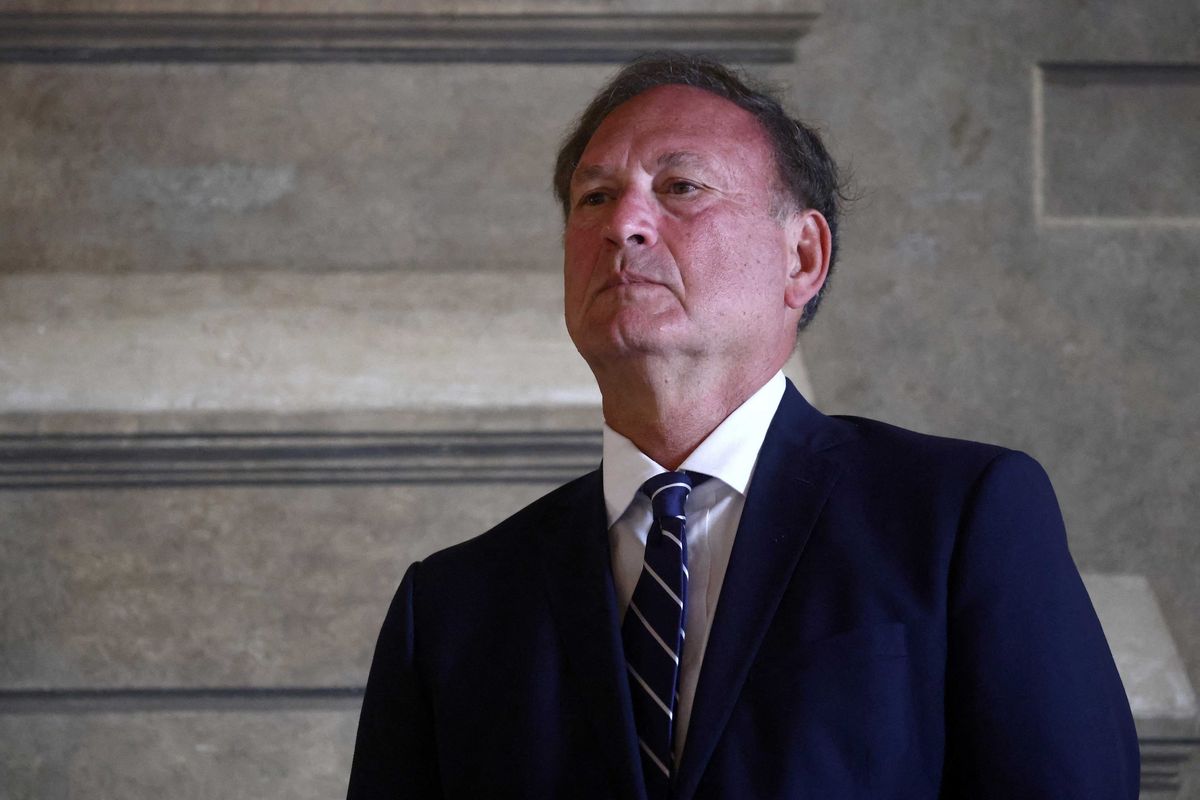
A long-delayed financial disclosure from Justice Samuel Alito shows he never sold the oil and gas holdings that watchdogs say disqualify him from a major climate case.
The report was posted on Monday by the Administrative Office of the United States Courts and covers Alito’s finances for calendar year 2025. It is the last disclosure the public will see before the Supreme Court hears the case in October. Alito signed the filing on Aug. 11, three weeks before it reached the public.
NBC News Supreme Court reporter Lawrence Hurley wrote on Bluesky that the filing confirms the justice is “still holding on to oil & gas stocks ahead of the big climate change case being heard in October.”
Two watchdog groups asked the Senate Judiciary Committee in May to investigate whether Alito violated the court’s ethics code by staying on the case, as reported by E&E News.
“Alito’s decision to reverse course and participate in granting the companies’ most recent petition — when a finding in favor of the companies could directly and indirectly benefit both himself and his billionaire friend — is an indefensible breach of ethical boundaries,” the groups wrote.
“As these parallel state climate deception cases are undeniably interlinked, and due to Justice Alito’s vested interests in the oil and gas industry … the only ethical option for Justice Alito is a blanket recusal from participating in any one of them,” the letter states.
The filing released Monday answers a question the May reporting left open. E&E News noted at the time that Alito might have sold the holdings, which would have resolved the conflict.
He did not, according to the new report.
Alito still holds shares in ConocoPhillips and Phillips 66, along with AES Corp., BHP Billiton, Black Hills Corp., OGE Energy and Woodside Energy, the financial disclosure report shows. Each of those positions appears at the same value range it carried the prior year, and none shows a sale.
The largest energy-related item is a mineral interest in Grady County, Oklahoma, which the report values at between $100,001 and $250,000.
No other justice holds oil and gas stock directly, E&E News reported. Chief Justice John Roberts owns shares in two companies, neither of them in energy.
Watchdogs are demanding Alito recuse himself from an energy case he agreed to hear in February. It began as a lawsuit by the city and county of Boulder, Colorado, seeking to make fossil fuel producers pay for the costs of climate change.
The companies, Suncor Energy and Exxon Mobil, are asking the justices to rule that federal law bars local governments from bringing those suits at all. A ruling for them would shield the industry from dozens of similar cases nationwide, according to E&E News.
Eight of the nine justices released their 2025 disclosures on June 29, Reuters reported. Alito was the only one granted a 90-day extension. That extension ran into late September, according to Reuters, which would have placed his disclosure within days of the argument.
Lisa Graves, a former senior Justice Department official who directs the watchdog group True North Research, called it “hugely problematic” that Alito holds investments that could be affected by the case, E&E News reported.
“Judges should not be ruling on cases where their ruling could benefit themselves financially,” Graves said. “That’s just a core principle of judicial ethics.”
In May, a court spokeswoman told NBC News that the justice is in the clear because he owns no stock in the two companies before the court.
“Justice Alito does not have a financial interest in any party” involved in the case, the spokeswoman said, adding that court lawyers advised him “his recusal is not required.”
The spokeswoman said Alito had been “inadvertently recused” from an earlier Colorado petition because the court considered it alongside other cases in which he held stock in the parties, NBC News reported. But Hannah Story Brown, deputy research director at the Revolving Door Project, rejected that account.
“The oil company petitioners in these cases have been explicit in court filings that they view the cases as linked; there is no reason for Justice Alito to view them otherwise,” she said.
The companies that Alito owns stock in made that argument themselves in 2022, telling the justices the Colorado suit was “uniquely positioned” and “less likely than those cases to present recusal issues,” E&E News reported.
The letter also raised Alito’s ties to Republican donor Paul Singer, who runs the hedge fund Elliott Investment Management.
Elliott owns more than 52 million shares of Suncor, worth more than $2.3 billion, the outlet reported. Alito acknowledged after a ProPublica report that he took a private jet to Alaska for a 2008 fishing trip paid for by Singer and left it off his disclosure form, E&E News noted.
The court adopted its first formal ethics code in 2023, after reports of undisclosed luxury travel by justices, a code that lets each justice decide his or her own recusals.
Graves told E&E News that the code is “toothless and basically meaningless since it’s not enforceable.”
Sen. Dick Durbin (D-IL), the Senate Judiciary Committee’s ranking member, said in a statement to E&E News that the letter “highlights the need for an enforceable code of conduct to ensure justices do the right thing when it comes to recusals and other ethics issues.”
Senate Judiciary Committee Chairman Chuck Grassley (R-IA) did not return a request for comment to the publication.
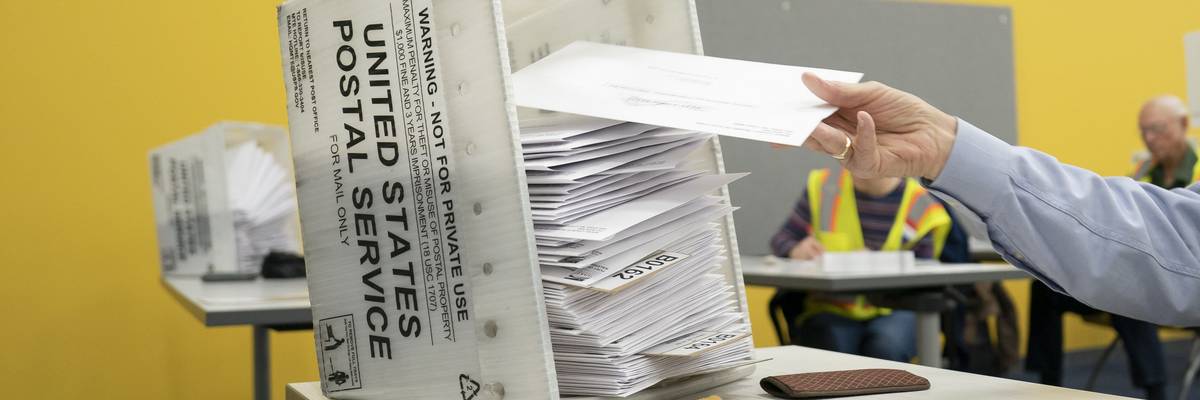
Absentee ballots are prepared to be mailed at the Wake County Board of Elections on September 17, 2024 in Raleigh, North Carolina.
(Photo by Allison Joyce/Getty Images)
An anonymous federal official warned of a “high likelihood that the new ballot mail verification processes will result in major disruptions in mail ballots ever getting delivered to voters.”
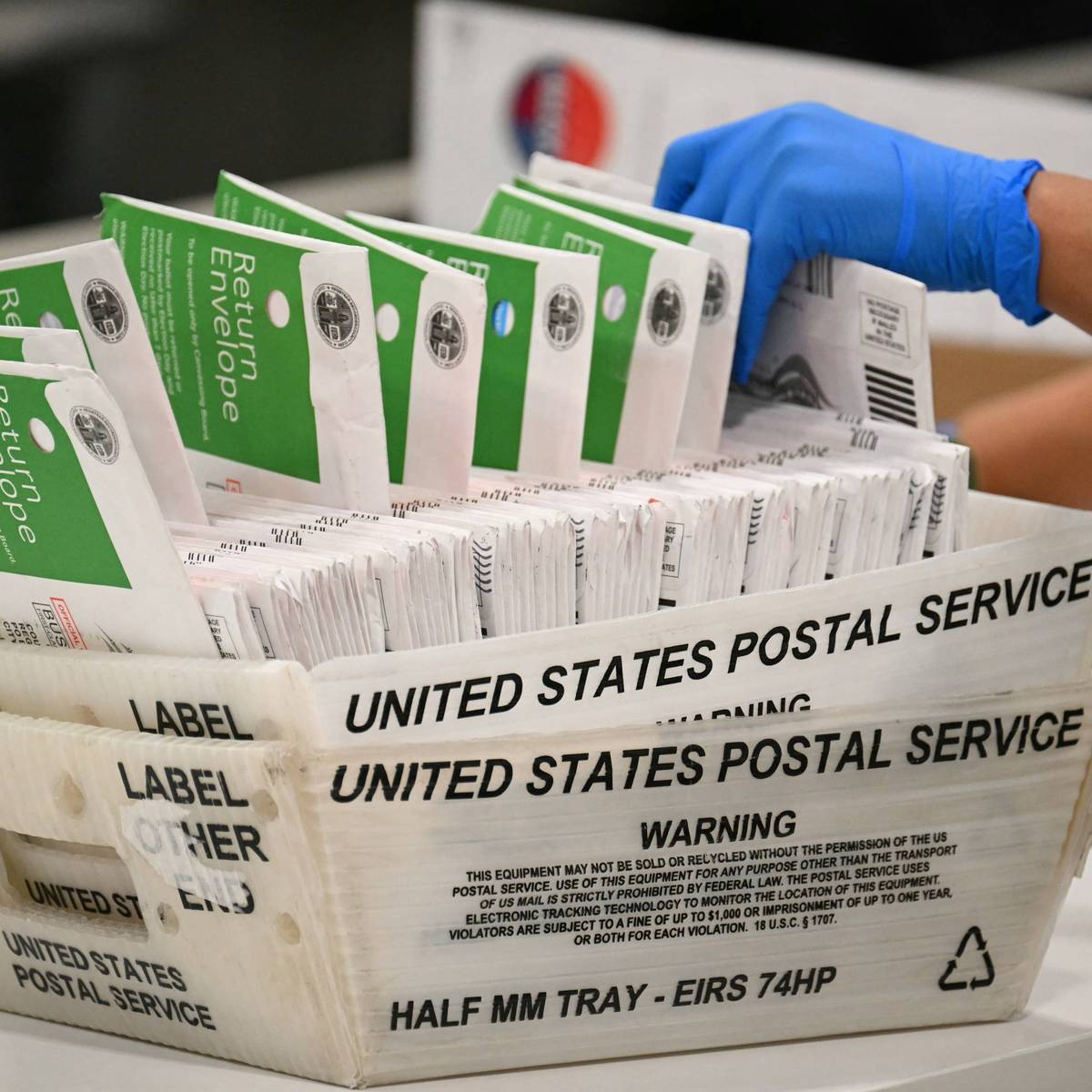
An anonymous federal official warned in a whistleblower disclosure submitted to members of the US Congress that the Postal Service’s haphazard implementation of President Donald Trump’s executive order on mail-in voting could “derail the midterm elections” by preventing potentially millions of American voters from receiving ballots.
The disclosure was released in full on Tuesday by Sen. Richard Blumenthal (D-Conn.), who included the document in a letter to Postmaster General David Steiner—Trump’s pick to lead USPS. Blumenthal said the whistleblower’s account provides “disturbing details about USPS’ seemingly illegal plot to interfere in November’s midterms.”
The new disclosure raises “significant concerns” about the Postal Service’s “secretive, rushed, chaotic, and fundamentally flawed process” for establishing “an entirely new and untested set of IT systems” in compliance with Trump’s March executive order, which is at the center of high-stakes legal fights just weeks before the November midterms.
Trump’s USPS directives have been blocked in federal court, but the administration is trying to get them reinstated ahead of the midterm contests—and the whistleblower complaint suggests the administration may be violating court orders by continuing to work on the new systems. Mail-in voting for the midterms is officially set to begin this week.
Described in the disclosure as the “Portal,” the new Postal Service IT systems “will govern the delivery of ballots to voters as soon as the 2026 mid-term federal elections and beyond.” The whistleblower raises “grave concerns” that the Trump administration has “hidden the high likelihood that the new ballot mail verification processes will result in major disruptions in mail ballots ever getting delivered to voters.”
“As presently designed, if even one bar code on one single ballot in a bulk-mailing of 10,000 ballots fails to properly scan during the verification process, the entire batch is rejected and sent back to the state—effectively stopping the ballots from being mailed to voters,” the disclosure states. “The whistleblower is particularly concerned that the Portal (where the bar codes are stored) will almost certainly have significant operating problems when released to the public, due to the rushed IT development; this will contribute to failures in the verification process.”
The whistleblower filing notes warnings that the Portal system could “completely crash” during rollout and quoted descriptions from IT workers at the Postal Service who described the entire process as “a shit show.”
Libby Liu, the CEO of Whistleblower Aid—a nonprofit representing the anonymous federal official—said in a statement that “the whistleblower’s service to our nation is warning the public that their ability to vote is in serious jeopardy.”
“We are crossing the Rubicon of American elections,” said Liu. “This dangerously defective mail-in ballot process could disenfranchise millions of voters, ensnaring ballots in red tape under the guise of solving a non-existent problem. People in states that rely heavily on vote-by-mail will have a more difficult time making their voices heard in our challenged democracy this November.”
The USPS whistleblower also provided their account to the House Oversight Committee. Rep. Robert Garcia (D-Calif.), the top Democrat on the committee, said in a statement Tuesday morning that the official’s account makes clear that “Trump’s attack on vote-by-mail for the 2026 election is more serious than previously understood.”
“This new secret tracking system at the US Postal Service is faulty, untested, and threatens to totally disrupt ballot delivery for millions of American citizens,” said Garcia. “We are fighting in court to protect the right to vote by mail for all and will continue to investigate. This unconstitutional and dangerous power grab must be permanently and immediately blocked.”
Our work is licensed under Creative Commons (CC BY-NC-ND 3.0). Feel free to republish and share widely.
A lounge inside SFO’s International Terminal is being used to detain immigrants, and 25 people were held there more than three days through July with limited access to medical care, legal representation, or beds.
San Francisco International Airport has had the second-highest number of airport detentions lasting more than three days this year, behind Miami, resulting in an ICE transfer, as the Chronicle reports. Twenty-five people were reportedly held at SFO for more than 72 hours through July of this year, with 19 of them holding green cards. Eighteen of those 25 people were eventually transferred to ICE detention.
Instead of being released from the airport with an appointment to resolve questions about their immigration status, as was more common before the Trump administration’s current deportation crackdown, some have reportedly spent days inside the SFO holding area before being transferred to ICE custody.
According to the Chronicle, some were not even originally headed to San Francisco. The US Customs and Border Patrol (CBP) reportedly transported immigrants to SFO after they landed at other California airports, including Fresno Yosemite International Airport more than 180 miles away. Attorneys representing several of those detained said their clients were separated from their luggage and phones and had little or no contact with family while officers waited for certified court records or otherwise reviewed their admissibility.
CBP’s national standards say detainees generally should not be held for longer than 72 hours and that agencies should make every effort to keep detention as short as possible. Federal data shows the agency has nevertheless held more than 400 people at international airports nationwide for longer than 72 hours since January, including 146 lawful permanent residents.
The change has alarmed immigration attorneys who say green-card holders previously were often released from the airport under a process known as deferred inspection, per the Chronicle. That reportedly gave them a few weeks to obtain court records and meet with immigration officers, often with an attorney present. Attorneys began noticing last year that those appointments were increasingly being replaced by direct transfers into ICE detention.
The room where immigrants are being held at SFO is reportedly in the newly renovated Dianne Feinstein International Terminal. Marissa Hatton, a civil rights attorney who represents green-card holders detained at the airport, described the holding area as an inhumane makeshift jail.
“People are not free to leave, which is a key marker of something being used as a detention facility,” she said, speaking to the Chronicle.
Officials said the federal government controls the CBP facility and SFO has no authority over immigration decisions or the detention of travelers.
According to the Chronicle, the conditions inside the holding area have also raised concerns. Attorneys said some detainees spent days sleeping upright in chairs, under lights that remained on around the clock, while others had no contact with family. Food was reportedly provided from airport concession stands, and some detainees were allowed supervised five-minute phone calls.
Medical access has been another concern, particularly for older detainees. The Chronicle reports that the median age of green-card holders detained for more than three days in San Francisco was 57, compared with 44 nationwide, and attorneys said some people in their 60s were not medically screened when they arrived.
Rep. Kevin Mullin, D-San Mateo, whose district includes SFO, sought to see the facility after learning about the prolonged detentions from the Chronicle. CBP initially turned him away when he attempted to visit on August 20, despite federal law allowing members of Congress to inspect detention facilities without advance notice. He tells the paper he was admitted six days later and saw five people inside.
Mullin said federal officers acknowledged that the practice of holding people rather than releasing them for deferred-inspection appointments began early last year. He also said officers told him weekend court closures can extend some detentions to five or six days.
“They were not hiding from the fact this is a definitive policy shift from the Trump administration,” Mullin told the Chronicle. “They would not suggest there was a quota being handed out, but there is clearly direction being given from up top.”
The prolonged airport holds come as immigration enforcement has expanded nationwide. ICE recorded roughly 4,300 arrests in California and about 50,000 nationally in July, as the Trump administration pursues a goal of deporting one million people annually.
SFist’s associate editor, loves learning about the people and places in the Bay Area. Enjoys connecting dots and spotlighting overlooked subjects. Contact: leanne.sfist@gmail.com
In March, the UC Board of Regents settled a lawsuit from the Brandeis Center alleging that UC Berkeley failed to respond to antisemitic harassment and discrimination. The settlement resulted in a policy that campus law student organizations cannot have bylaws restricting event speakers. Alison Yang | Senior Staff
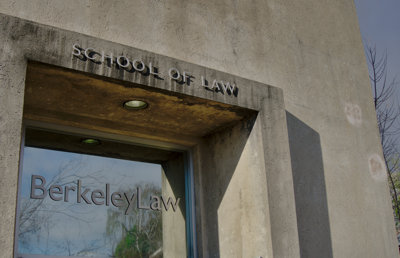
Law Students for Justice in Palestine at Berkeley Law said in an Instagram post last week that it was banned from tabling at UC Berkeley School of Law’s Student Activities Fair because of the group’s “longstanding” bylaw barring Zionist speakers.
In March, the UC Board of Regents settled a lawsuit from the Brandeis Center alleging that UC Berkeley failed to respond to antisemitic harassment and discrimination. The settlement resulted in a policy that campus law student organizations cannot have bylaws restricting event speakers.
Although LSJP is still a registered campus organization, according to campus law student and LSJP student organizer Asma Masude, its lack of registration with the law school means funding and tabling opportunities, as well as room bookings in the law building, are limited.
“LSJP was not assigned a table because only registered student organizations receive tables at the law school’s activities fair and LSJP has not yet fulfilled the requirements to be a registered student organization,” said campus spokesperson Dan Mogulof in an email.
Mogulof said LSJP’s bylaws include speaker policies that “exclude specific viewpoints,” which is prohibited by campus’s legally binding settlement with the Brandeis Center.
The lawsuit, filed in 2023, placed direct focus on LSJP’s bylaws; in the settlement, the university agreed that registered student organization constitutions at Berkeley Law could not include prohibitions on speakers.
“LSJP has a long-standing bylaw saying that we will not have any Zionist speakers at our events, just to be in line with our own beliefs and our dedication to Palestinian liberation,” Masude said. “We could not check that box honestly to confirm that we don’t have that policy.”
Masude said LSJP reached out to Berkeley Law Student Support Services and Dean Erwin Chemerinsky and was told that organizations with bylaws restricting speakers at events could not register with the law school, and therefore could not table at the law school’s Student Activities Fair. Berkeley Law administration also cited the Brandeis settlement in its restriction of organization bylaws.
LSJP tabled at the Student Activities Fair on Thursday, despite not being a registered campus law organization. Masude said the organization did not encounter any obstacles or backlash when tabling independently, and plans to “move forward with as much force as we can.”
“We don’t plan on slowing down our organizing at all, regardless of the law school’s attempts to stifle our efforts,” Masude said. “This isn’t a new thing, the law school trying to stifle Palestinian advocacy and liberation.”
Masude alleged other Berkeley Law student organizations previously included similar bylaws “in solidarity with Palestinian liberation,” but removed the bylaws under the law school’s new registration agreement.
Students for Justice in Palestine said in an email that it had not run into issues tabling this academic year. It is not affiliated with Berkeley Law.
Help Outreach Working Group lift the fog of corporate media. Donate to help us maintain this website and distribute literature on the street.
We protest Heritage Foundation EVERY MONDAY (Join us!!!!) By admin | September 2, 2025 | Uncategorized Cliff Cash Comedy Premiered Jul 26, 2025 Every Monday at The Heritage Foundation 214 Massachusetts Ave. Washington D.C. 4pm protest 6pm pizza Every Friday at Fox News D.C. 400 N. Capitol St. Washington D.C. 4pm protest 6pm pizza We are... Continue reading →
September PAC Meeting *We will be voting on November Election endorsement recommendations for state propositions!* Date: Tuesday, 8 September, 2026 (second Tuesday of month) Time: 7-9 PM *NEW* In-person Location: Women’s Building (3543 18th St), Audre Lorde Room Remote: Via Zoom Link Here
One Million Rising: Strategic Non-Cooperation to Fight Authoritarianism Virtual Event · Hosted by No Kings Time Wednesdays 8 – 9:30pm EDT Location Virtual event Join from anywhere About this event Across the country, authoritarian forces are getting bolder and more dangerous. Trump and his allies are not hiding their agenda: mass deportations,... Continue reading →
THURSDAY, JUNE 29, 2023 AT 2 AM – 4 AM PDT How to create trust in a group? Details Event by Extinction Rebellion Empathy Circles online EMPATHY CAFE Duration: 2 hr Public · Anyone on or off Facebook How to create trust in a group? This is the question that arose in our... Continue reading →
The San Francisco Democratic Party presents The San Francisco Democratic Party 2026 Gala Thursday, September 10th 6:00 – 10:00 PM Bimbo’s 365 Club 1025 Columbus Ave San Francisco, CA 94133 TICKETS https://www.sfdems.org/gala2026
Public Banking Coalition monthly meetings Next call: Nov 11 Excitement is building for public banking and once a month, PBI hosts an hour-long Public Banking Coalition online meeting to share the excitement and successes. Find out the latest updates on the advances being made all across the country from local advocates themselves... Continue reading →
Trump Regime Takedown: Every Saturday Saturday, March 7, 2026 12:00 PM 2:00 PM Tesla San Francisco999 Van Ness AvenueSan Francisco, CA, 94109United States (map) Google Calendar ICS Keep democracy alive every Saturday by showing up, taking a stand, and sticking together for the long haul. Standing together is better than standing alone. Let’s get together... Continue reading →
This Sunday’s Town Hall: Announcing This Week’s Progressive Town Hall: Every Sunday at 4pm ET/1pm PT RSVP HERE Join PDA activists online from across the country to discuss the importance of progressives reclaiming the American story from the MAGA right, an issue of heightened importance as we’re now within one... Continue reading →
We protest Heritage Foundation EVERY MONDAY (Join us!!!!) By admin | September 2, 2025 | Uncategorized Cliff Cash Comedy Premiered Jul 26, 2025 Every Monday at The Heritage Foundation 214 Massachusetts Ave. Washington D.C. 4pm protest 6pm pizza Every Friday at Fox News D.C. 400 N. Capitol St. Washington D.C. 4pm protest 6pm pizza We are... Continue reading →
There are less than 9 weeks until the critical November election, and what we do between now and then will shape the future of our health care. We started Nurses for Democracy to fight back against fascism and protect our democracy, but also to elect candidates in key races who are committed... Continue reading →







 September PAC Meeting *We will be voting on November Election endorsement recommendations for state propositions!* Date: Tuesday, 8 September, 2026 (second Tuesday of month) Time: 7-9 PM *NEW* In-person Location: Women’s Building (3543 18th St), Audre Lorde Room Remote: Via Zoom Link HereSep9Wed5:00 pm One Million Rising @ Virtual eventOne Million Rising @ Virtual eventSep 9 @ 5:00 pm – 6:30 pm
 One Million Rising: Strategic Non-Cooperation to Fight Authoritarianism Virtual Event · Hosted by No Kings Time Wednesdays 8 – 9:30pm EDT Location Virtual event Join from anywhere About this event Across the country, authoritarian forces are getting bolder and more dangerous. Trump and his allies are not hiding their agenda: mass deportations,... Continue readingSep10Thu10:00 am Extinction Rebellion Empathy Circle @ Online via ZoomExtinction Rebellion Empathy Circle @ Online via ZoomSep 10 @ 10:00 am – 12:00 pm
 THURSDAY, JUNE 29, 2023 AT 2 AM – 4 AM PDT How to create trust in a group? Details Event by Extinction Rebellion Empathy Circles online EMPATHY CAFE Duration: 2 hr Public · Anyone on or off Facebook How to create trust in a group? This is the question that arose in our... Continue reading6:00 pm S.F Democratic Party 2026 Gala @ Bimbo's 365 ClubS.F Democratic Party 2026 Gala @ Bimbo's 365 ClubSep 10 @ 6:00 pm – 10:00 pmThe San Francisco Democratic Party presents The San Francisco Democratic Party 2026 Gala Thursday, September 10th 6:00 – 10:00 PM Bimbo’s 365 Club 1025 Columbus Ave San Francisco, CA 94133 TICKETS https://www.sfdems.org/gala2026Sep11Fri9:00 am Public Banking Coalition monthly... @ RegisterPublic Banking Coalition monthly... @ RegisterSep 11 @ 9:00 am – 10:00 amPublic Banking Coalition monthly meetings Next call: Nov 11 Excitement is building for public banking and once a month, PBI hosts an hour-long Public Banking Coalition online meeting to share the excitement and successes. Find out the latest updates on the advances being made all across the country from local advocates themselves... Continue readingSep12Sat12:00 pm Trump Regime Takedown @ Tesla San FranciscoTrump Regime Takedown @ Tesla San FranciscoSep 12 @ 12:00 pm – 2:00 pmTrump Regime Takedown: Every Saturday Saturday, March 7, 2026 12:00 PM 2:00 PM Tesla San Francisco999 Van Ness AvenueSan Francisco, CA, 94109United States (map) Google Calendar ICS Keep democracy alive every Saturday by showing up, taking a stand, and sticking together for the long haul. Standing together is better than standing alone. Let’s get together... Continue readingSep13Sun1:00 pm PDA Progressive Democrats Meeting @ Online via ZoomPDA Progressive Democrats Meeting @ Online via ZoomSep 13 @ 1:00 pm – 3:00 pm
 This Sunday’s Town Hall: Announcing This Week’s Progressive Town Hall: Every Sunday at 4pm ET/1pm PT RSVP HERE Join PDA activists online from across the country to discuss the importance of progressives reclaiming the American story from the MAGA right, an issue of heightened importance as we’re now within one... Continue readingSep14Mon4:00 pm Protest Heritage Foundation @ The Heritage FoundationProtest Heritage Foundation @ The Heritage FoundationSep 14 @ 4:00 pm – 6:00 pmWe protest Heritage Foundation EVERY MONDAY (Join us!!!!) By admin | September 2, 2025 | Uncategorized Cliff Cash Comedy Premiered Jul 26, 2025 Every Monday at The Heritage Foundation 214 Massachusetts Ave. Washington D.C. 4pm protest 6pm pizza Every Friday at Fox News D.C. 400 N. Capitol St. Washington D.C. 4pm protest 6pm pizza We are... Continue readingSep15Tue5:00 pm Nurses for Democracy General Ele... @ RSVPNurses for Democracy General Ele... @ RSVPSep 15 @ 5:00 pm – 6:00 pm
 There are less than 9 weeks until the critical November election, and what we do between now and then will shape the future of our health care. We started Nurses for Democracy to fight back against fascism and protect our democracy, but also to elect candidates in key races who are committed... Continue reading