Democratic US Senate candidate James Talarico speaks during a “Talarico for Texas: Frontera Tour” campaign rally at Memo’s Restaurant on July 13, 2026 in Del Rio, Texas.
(Photo by Brandon Bell/Getty Images)
“The top 1% put the American Dream behind a paywall,” said the Texas Democrat as he unveiled a framework for his economic vision.
Politicians from both sides of the aisle have come to realize in recent years that “affordability” and “cost of living” are key issues voters want to hear about on the campaign trail, with nearly all respondents to a Harris Poll last month reporting they believe the US is currently in an affordability crisis.
But on Wednesday, before 1,300 Texans in the city of Arlington, state Rep. James Talarico (D-50), the Democratic US Senate candidate, contextualized the crisis for voters.
Talarico provided a history lesson that explained how—while his opponent, Attorney General Ken Paxton, has blamed the Biden administration for rising costs and the struggles of working Texans—“this affordability crisis isn’t something that happened over the last five years. This affordability crisis has been 50 years in the making.”
While introducing his economic platform, “The New American Dream,” Talarico held the audience’s attention as he explained the Powell Memo—a document formally titled “Attack on American Free Enterprise System,” which Virginia-based corporate lawyer Lewis Powell wrote in 1971 for his client, the US Chamber of Commerce.
The memo, said Talarico, provided “a blueprint for how corporations could amass political power, reverse the gains of the Great Society and the New Deal, and rig the system for themselves.”
“The Powell memo outlined a strategy. Unite corporate special interests, privilege corporate perspectives in the media, appoint sympathetic judges to the court, and buy politicians in both political parties,” continued Talarico. “And it worked. Republicans and some Democrats sold the false gospel of trickle-down economics.”
.@JamesTalarico: 50 years ago, a corporate lawyer named Lewis Powell circulated a memo around DC — a blueprint for how corporations could amass political power, reverse the gains of the Great Society and the New Deal, and rig the system for themselves.
In the memo, Powell—who was appointed to the US Supreme Court by President Richard Nixon just months after he delivered the blueprint to the powerful Chamber of Commerce—outlined how the interests of corporate America should be framed as “individual freedom” that the country must protect.
Private companies should use political influence “aggressively and with determination” to stop “the stampedes by politicians to support any legislation related to ‘consumerism’ or to the ‘environment,’” wrote Powell, and should show no “reluctance to penalize politically those who oppose” the corporate effort.
“Strength lies in organization, in careful long-range planning and implementation, in consistency of action over an indefinite period of years, in the scale of financing available only through joint effort, and in the political power available only through united action and national organizations,” the memo argued.
“Trickle-down economics is not a theory, it is theft.”
The result of that “long-range planning” and “consistency of action over an indefinite period of years,” said Talarico, is the current political system—in which corporate interests pour billions of dollars into elections to support favorable candidates, Congress passes massive tax breaks for billionaires, and working families are left struggling to afford healthcare, childcare, and other essentials.
“Trickle-down economics is not a theory, it is theft,” he said. “Since the late 1970s, megadonors and corporate special interests have been buying politicians in both political parties. And then those politicians turned around and rigged the economy to benefit their wealthy donors at our expense. We have an affordability crisis because we have a corruption crisis.”
He added that five decades after the Powell Memo, “the top 1% put the American Dream behind a paywall”—pointing to the extreme wealth of tech CEOs like Amazon founder Jeff Bezos and SpaceX CEO Elon Musk, while “one in five Texaschildren live in poverty.”
The American Dream has become an American Nightmare.
It’s too expensive to buy a home. It’s too expensive to get married and have kids. It’s too expensive to retire comfortably.
David Sirota of The Lever, whose team produced the award-winning 2024 podcast “Master Plan,“ which details the history and influence of the Powell Memo, applauded Talarico for speaking directly to voters about the long history behind today’s ”affordability crisis.“
“Talarico is recounting—and promising to fight—the master plan that we exposed. And he’s making that promise in one of America’s most high-profile Senate races,” said Sirota.
Talarico’s event in Arlington marked the beginning of a monthlong tour across Texas in which he plans to roll out his plans to begin reversing the decades of damage done by the Powell Memo and politicians from both major parties who have prioritized corporate interests over working Americans.
The candidate’s agenda includes raising the minimum wage; closing billionaire tax loopholes and ending tax breaks for the top 1% of earners in President Donald Trump’s One Big Beautiful Bill Act; passing universal childcare; permanently expanding the child tax credit; passing an anti-corruption package to ban super political action committees; and providing down payment assistance for first-time home buyers.
“People are working hard every day,” said Talarico. “They’re playing by the rules. But those rules of today weren’t written for us. They were written for billionaires.”
Our work is licensed under Creative Commons (CC BY-NC-ND 3.0). Feel free to republish and share widely.
The owner of the Krishna Hotel said he would be open to master leasing the building to the city if the city is interested. Photo by Nik Altenberg.
This is part of our ongoing coverage of 16th and Mission. Click here for a dashboard of crime statistics updated daily, and read an archive of past coverage here.
In the housing eco-system around 16th and Mission Streets, single room occupancy hotels show both the promise of empty rooms and the confounding obstacles that keep rooms out of reach for homeless residents.
Take the west side of Mission Street between 17th and 16th streets, where six SROs, most built more than a century ago, are situated.
In total, they offer 163 rooms, but over 50 percent of the rooms in half of these hotels have been reported empty for years. Three of the hotels — The Westman Hotel at 2056 Mission St., the Union Hotel at 2030 Mission St. and the Frances Hotel at 2084 Mission St. — have reported vacancy rates of more than 50 percent during the past two years, according to the annual usage reports the hotels submitted to the Department of Building Inspection.
The Westman and Union have reported such rates since 2020.
It would seem an easy fix to fill the rooms up, but city officials and housing advocates say a number of challenges prevent that from happening. From the city’s perspective: building size, access to private bathrooms, working elevators and a lack of funds. For hoteliers, the fear of attracting ‘problematic’ tenants, no real desire to have city inspectors too close and the cost of rehabilitating the units.
When asked why the city hasn’t taken advantage of the vacancies in privately run SROs, the Department of Homelessness and Supportive Housing said in a statement, “While the structure of each agreement may vary, our priorities remain consistent: ensuring that permanent supportive housing provides a healthy, dignified living environment for tenants, with features such as private bathrooms, elevators, community space, on-site case management, and access to public transportation.”
These are challenges not only for the SROs at 16th and Mission, but likely obstacles for many of the city’s 378 privately run SROs.
Those factors, industry insiders said, have kept many vacant rooms from becoming part of the city’s master leasing program, which primarily supplies permanent supportive housing. Currently, the city master-leases 46 single room occupancy hotels across the city, totaling 3,648 permanent supportive housing units, according to the Department of Homelessness and Supportive Housing.
The city master leases eight buildings while the remaining 38 are master leased through nonprofits using funds from the Department of Homelessness and Supportive Housing.
While the city now seems to prefer SROs with private bathrooms, many of the SROs it leases or helps master lease are without that feature.
Out of the 46 buildings, 10 have private bathrooms, 13 have shared bathrooms and 23 have a mix of shared and private facilities.
Unleash Your Creativity at Artillery Ceramics!
Discover pottery in a new light at Artillery Ceramics! Engage in pottery classes, workshops, and more. Dive into clay foraging, wheel throwing, and sculpting in San Francisco. Join today for an immersive artistic experience!Local • Creative • EngagingStart this week
However, Shaw said that the city is currently showing less interest in buildings with units that share bathrooms.
Maybe it shouldn’t be, some suggest.
Dr. Margot Kushel, the director at the University of California, San Francisco’s Benioff Homelessness and Housing Initiative, said that permanent supportive housing in single room occupancy hotels, even if these buildings are not in pristine condition, plays an important role in the city’s efforts to house people.
She understands that the cost of providing services in permanent housing can outstrip available financing, she says, and that not every SRO will have all the features the city considers ideal. But Kushel says that SROs are still key for preventing homelessness, and helping people recover from life on the streets.
“There’s no question that as flawed as it is, as imperfect as it is…having a place to call their own, and having the rights and responsibilities of tenancy, has been really transformational for a lot of people,” said Kushel.
Still the city appears to have no immediate plans to master lease new hotels.
Under the Lurie administration, the city received funds for the acquisition and rehabilitation of 1035 Van Ness Ave., a 124-unit permanent supportive housing complex near the Tenderloin, and for the rehabilitation of 835 Turk St., a 112-unit supportive housing complex near Hayes Valley, previously acquired in 2022.
Most of the buildings the city acquired since the pandemic have private bathrooms.
As for master leases, no new agreements have been made since Mayor Lurie took office – only two, one-year renewals in the Tenderloin: The Monarch Hotel at 1015 Geary St., a 96-unit building, and the Adante Hotel at 610 Geary St., a 85-unit building.
But there’s been little activity in the Mission since.
Sam Dodge, who served as the transitional director of the Department of Homelessness and Supportive Housing for four months in 2021, explained the slow pace by saying that the city usually is looking to lease buildings with dozens of units. In contrast, the Westman Hotel has 22 rooms, the Union Hotel has 37 rooms and the Frances Hotel has 50 rooms.
Dodge also doubled down on the importance of private bathrooms and reliable elevators as major factors the city considers.
“Old elevators are kind of a liability. The people that we’re trying to house have a lot of disabilities and are older,” said Dodge. “But private baths, oh, boy, that’s very popular.”
This reporter visited five out of the six single room occupancy hotels on Mission street between 16th and 17th street. While most of these were fairly clean, none had private bathrooms or elevators.
Vinay Patel, owner of the Union Hotel, pointed out that adding bathrooms would also diminish the number of rooms. He estimated that the Union, with 37 rooms, would end up with only half that number.
Private bathrooms aside, there are other reasons as well. Dodge said that in many cases hotel owners don’t want to enter master-leasing agreements with the city. For the most part, the city leaves private owners alone, aside from paying a yearly visit for inspection and requiring the hoteliers to submit an annual usage report.
“When the city’s up in your business every day, you’re going to have a lot of inspectors. You’re going to have a lot of people crawling all over it,” said Dodge. “A lot of owners don’t want all that.”
Whitney Jones, the deputy chief of community real estate at Chinatown Community Development Center, agreed. He said that in his 34 years at the nonprofit he’s seen many single room occupancy hotels near Chinatown with high vacancy rates because owners simply chose to keep them empty.
Many of these buildings are already paid off, he said, and owners don’t feel an incentive to lease all the units to the city for supportive housing, preferring instead to rent commercial units on the first floor. Jones pointed to owners’ worries about making improvements to infrastructure, hiring 24-hour front-desk employees, and the constant fear of attracting problematic tenants.
Three owners, plus a person representing the ownership of one of the buildings on the block, said they’d be willing to sit down with the city to talk about master leasing scenarios.
Albert Tam, co-owner of the residential complex at 2044-2046 Mission St. and the Radna Hotel at 2040-2042 Mission St., said he’s putting the properties on the market after nearly 20 years of ownership. Tam said street conditions and a desire to retire have prompted him to make this decision.
Tam said that he’s open to talking with city officials or a nonprofit if there’s interest in master leasing, or buying the two properties for $5 million. As an alternative, Tam said he’s exploring the possibility of building an eight-story building featuring 42 studios with private bathrooms.
The owner of the Krishna Hotel and the manager of the trust of another SRO on the block also said they would be open to selling to the city.
We won’t ignore your neighborhood
When a San Francisco neighborhood has a Mission Local reporter, it means someone is there. We’re following new housing projects proposed on your block, keeping tabs on what your district supervisor is up to at City Hall, and letting you know when longtime businesses close (and new ones open). When big news breaks, we already know the context.
Most neighborhoods don’t have that. Yours could.
That’s what Mission Local is building. Our reporters don’t parachute in — they write consistently on San Francisco, so you’re never reading about your neighborhood from someone who just looked it up.
So far we are in five of San Francisco’s neighborhoods. But we know all San Franciscans deserve our kind of coverage. Will you join us?
Reporting from the Mission District and other District 9 neighborhoods. Some of his personal interests are bicycles, film, and both Latin American literature and punk. Oscar’s work has previously appeared in KQED, The Frisc, El Tecolote, and Golden Gate Xpress.More by Oscar Palma
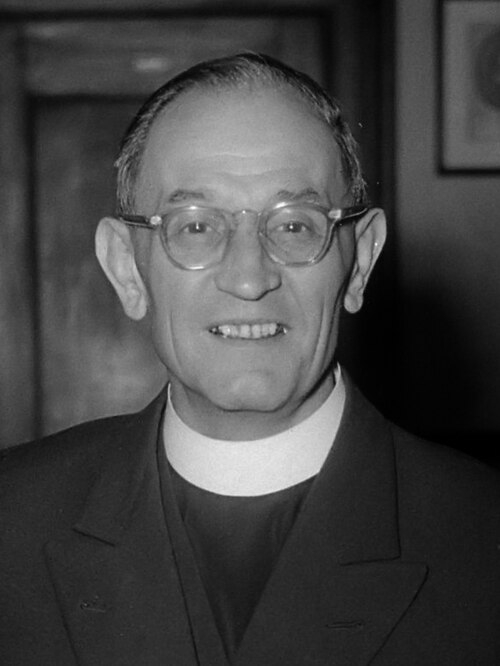
Friedrich Gustav Emil Martin Niemöller was a German theologian and Lutheran pastor. He opposed the Nazi regime during the late 1930s, and was sent to a concentration camp for his affiliation with the Confessing Church and his opposition to state involvement in Church. Wikipedia
The report shows how employees at Bank of America, Deutsche Bank, and JPMorgan helped to hide Epstein’s activities because he was a load-bearing part of their ‘wall of cash.’
Bankers only flagged transactions retroactively in 2019, after authorities arrested Jeffrey Epstein on federal sex trafficking charges. Credit: Jon Elswick/AP Photo
Key executives at Bank of America, Deutsche Bank, and JPMorgan Chase routinely ignored the suspicious activities of convicted child sex trafficker Jeffrey Epstein because he was among their most profitable clients, paying millions in fees and holding influence over other wealthy people, according to a new investigation released on Tuesday by Sen. Ron Wyden (D-OR).
The cover-up should prompt lawmakers to strengthen anti–money laundering laws and pass new legislation to hold individual bankers accountable, said Wyden, the ranking member on the Senate Finance Committee. The Oregon senator used his report on the multiyear investigation to put the financial services industry on notice that he’s preparing to do just that.
“My investigation showed conclusively that the bankers who served Jeffrey Epstein and his ultra-wealthy friends were far too motivated to protect their cash cow, and had far too little respect for the law,” Wyden told the Prospect via email.
The report looked at thousands of suspicious activity reports, or SARs. Those are confidential documents that banks and other financial institutions must file with the Financial Crimes Enforcement Network, or FinCEN, the U.S. Treasury’s financial intelligence division, when they identify unusual transactions. Executives have 30 days to file a SAR when they suspect things like money laundering or payments to terrorists.
According to Wyden’s report, Bank of America, Deutsche Bank, and JPMorgan Chase failed to do so for millions of dollars in cash withdrawals that had “no clear business purpose.” Instead, bankers let them ride, and together facilitated more than $1.4 billion worth of suspicious wire transfers over two decades—transactions they only flagged retroactively in 2019, after authorities arrested Epstein on federal sex trafficking charges.
The transactions they hid “included thousands of wire transfers, major withdrawals of cash, payments to women and girls.”
The report names specific bankers who worked for at least one of the three named banks: Paul Barrett, David Brigstocke, Mary Casey, Stephen Cutler, John Duffy, Mary Erdoes, Jane Heller, Jeff Matusow, Paul Morris, Justin Nelson, Stewart Oldfield, Jes Staley, and Karen Weiss.
Staley, a top JPMorgan executive at the time, is the only banker among the group who has faced any consequence for helping Epstein maintain his human trafficking ring; he was forced out as CEO of Barclays. “The rest of the bankers named in this list have faced no known financial consequences or regulatory discipline and remain employed in extraordinarily lucrative positions at JPMC, Bank of America and elsewhere,” the report states.
The transactions they hid “included thousands of wire transfers, major withdrawals of cash, payments to women and girls, and correspondent banking in high-risk foreign jurisdictions (including Russia),” the report states. “They also include tens of millions in payments to his conspirator and convicted sex trafficker Ghislaine Maxwell.”
Deutsche Bank and Bank of America both take their legal obligations seriously, spokespeople for both banks said. The Deutsche spokesperson added that the company regrets its past relationship with Epstein, has cooperated with investigations, and has been “transparent in addressing deficiencies and investing in strengthening our control environment in parallel.” Bank of America, meanwhile, “did not facilitate wrongdoing,” the spokesperson said.
A JPMorgan spokesperson failed to respond to a request for comment on the record.
WYDEN TOLD THE PROSPECT that he is “proposing a set of changes to put some teeth into the law so that elite bankers are held accountable for covering up for the Epstein class.” The forthcoming legislation will introduce a new level of accountability that banking executives would face for failing to report suspicious transaction activity, as the bankers who protected Epstein did. It would require senior managers to sign annual attestations confirming that accounts of high-net-worth clients comply with anti–money laundering laws; impose higher fines or prison sentences for individual bankers who fail to promptly report suspicious activity to the Treasury Department; and claw back bonuses paid to executives responsible for violating the Bank Secrecy Act (BSA). It would also require bank executives to disclose to the Treasury Department every time they fire a client for suspicious financial activity or restrict a client’s cash withdrawals or wire transfers.
The legislation will specifically target activity that suggests a bank’s client may be engaged in human trafficking. It would require banks to conduct a greater level of screening for bank accounts that individuals open for unrelated people younger than 25 years old, and require a client to submit to an interview when they want to open an account for a woman younger than 25 years old in another country. And it would encourage professional consequences for participating in human trafficking by giving federal agencies the authority to revoke certain registrations and licenses to accountants and attorneys.
This type of enforcement regime could have provided legitimate accountability in the Epstein case, Wyden believes. He argues that JPMorgan’s termination of Epstein as a client in 2013 illustrates that they knew something was wrong. But the fact that executives waited until 2019 to report more than 5,000 suspicious wire transfers worth well over $1 billion merits further attention. He notes a detail in a legal filing showing that between 2009 and 2014, JPMorgan gained $8.1 million from Epstein “in fees alone,” and was one of the bank’s largest clients.
Wyden’s report also details multiple instances in which powerful figures used their positions to obstruct his investigation. In one glaring example, he described CBS suppressing an interview he did with former 60 Minutes correspondent Sharyn Alfonsi in March. That was five months after David Ellison, a Trump ally and child of billionaire Larry Ellison, took over CBS through its parent company Paramount and appointed right-wing pundit Bari Weiss to run the network.
New legislation will specifically target activity that suggests a bank’s client may be engaged in human trafficking.
Wyden discussed his SARs investigation with Alfonsi, and possible consequences for banks, as part of a larger segment on the conduct of Wall Street bankers and the government of the U.S. Virgin Islands. But Weiss fired Alfonsi once Ellison took over. “David Ellison’s handpicked partisan lieutenant killed the segment and fired the lead reporter on the piece,” Wyden told the Prospect.
The experience gave Wyden “a first-hand view of how the far-right takeover of corporate media is protecting predators and standing in the way of justice … Blocking corporate media consolidation and supporting independent media is absolutely vital to defending our democracy and getting justice for ultra-wealthy criminals.”
A spokesperson for CBS did not respond to a request for comment.
MILLIONAIRE TREASURY SECRETARY Scott Bessent is likewise working to stymie Wyden’s SARs investigation, according to the report. Bessent rejected three requests from Wyden to give the Senate Finance Committee copies of Epstein’s bank records, while simultaneously making public statements that the records were “sitting there” and that Treasury’s only job was “simply to collect the reports,” which is a false representation of the department, given that it routinely investigates and fines financial institutions for failing to promptly report suspicious transactions.
Bessent’s fellow Republicans have joined in on undermining Wyden, including Sen. Marsha Blackburn (R-TN), who claimed Democrats were stonewalling “efforts to crack the Epstein trafficking ring wide open” while simultaneously rejecting Wyden’s request to support his subpoena of Epstein’s bank records.
Blackburn, who faces a primary election for governor of Tennessee tomorrow, did not respond to a request for comment.
In addition to proposing new legislation, Wyden recommends the Treasury Department, Federal Reserve, and Comptroller of the Currency open investigations into how banks handled Epstein’s accounts and that the Department of Justice open criminal investigations into banks and Epstein’s associates, including his lawyer Darren Indyke and his accountants Richard Kahn and Harry Beller. The current House Oversight Committee investigation should consider subpoenas for the individual bankers named in the report, Wyden argued. And Bessent should turn over all the SARs banks have filed in relation to Epstein.
“The pattern of transactions through Epstein’s accounts was well outside the ordinary course of business. All of the Wall Street banks financing Epstein’s activities knew, or should have known, that his transactions were suspicious,” the report states. “By failing to do exactly what the Bank Secrecy Act requires, these Wall Street bankers enabled unspeakable harm to hundreds of Epstein’s victims.”
Before you go.
I hope that you found this article interesting and thought-provoking. The reason we’re able to publish stories like this — free of programmatic ads and never behind a paywall — is because readers like you step up to support our work.
The Prospect doesn’t answer to advertisers or billionaire owners. We answer to you and to our commitment to pursuing the truth, wherever that leads us.
Independent, reader-supported journalism is critical at a time when the free press is under assault.
If you believe this kind of reporting should exist and remain free to read, we hope you’ll consider chipping in. Every contribution, however modest, makes a real difference.
Whitney Curry Wimbish is a staff writer at The American Prospect. She previously worked in the Financial Times newsletters division, The Cambodia Daily in Phnom Penh, and the Herald News in New Jersey. Her work has been published in multiple outlets, including The New York Times, The Baffler, Los Angeles Review of Books, Music & Literature, North American Review, Sentient, Semafor, and elsewhere. She is a coauthor of The Majority Report’s daily newsletter and publishes short fiction in a range of literary magazines. She can be reached on Signal at wwimbish.07. More by Whitney Curry Wimbish
Next Tuesday’s Senate primary in Minnesota pits another Indivisible-backed fighter, Lt. Governor Peggy Flanagan, against another establishment-backed moderate flush with outside cash. Let’s make sure people power wins out again.
This article appears in the August 2026 issue of The American Prospect magazine.If you’d like to receive our next issue in your mailbox, please subscribe here.
It wasn’t the job opportunities that brought him to Harlem. Had he been white, Asa Philip Randolph, then 21 years old, had the kind of background that would have ensured gainful employment when he moved north from Florida in 1911: a stellar academic record, parents who’d made sure he knew not just his Bible but Shakespeare and other classics, an orator’s voice, a quiet though commanding presence, Victorian manners, a moral seriousness.
Randolph understood this meant little to nothing in New York’s job market for Black Americans, where he got work—more accurately, gigs—as a janitor and occasional waiter. That’s not why he’d come to Gotham. He’d come to exercise his acting chops in Black amateur theater clubs; to study politics, economics, and public speaking at City College; and, soon after his arrival, to immerse himself in the socialist movement, then at its Debsian apogee. His minister father disapproved of his acting proclivities. But Randolph found an outlet for his talents on the street corners and soapboxes of Harlem, preaching socialist gospel to Harlem’s Black working class.
Randolph was to remain a socialist soapboxer for the next 60 years, during which he did more to advance the rights and interests of Black Americans than anyone else in the half-century between the heyday of W.E.B. Du Bois and the emergence of Martin Luther King. He also had more impact on America’s laws and social policies than any other avowed democratic socialist in the nation’s history, though we must hope, as Randolph surely would, that the wave of socialists who’ve emerged in the past decade will eclipse him.
Randolph used his ability to rally his supporters to make lasting change for Black America.
During his early soapboxing, Randolph met another young Black socialist, Chandler Owen. The two of them “took up residence in the New York Public Library,” says historian Eric Arnesen, where they read Marx, political economy, history, and sociology. In early 1917, they founded and co-edited The Messenger, a monthly magazine that in bold type proclaimed itself to be “The Only Radical Negro Magazine in America.” It vehemently opposed U.S. participation in World War I, pointing out that if democracy was truly at stake, that was a battle that needed to be fought at home. In 1919, U.S. Attorney General A. Mitchell Palmer labeled the magazine “the most dangerous of all the Negro publications.”
As if Randolph and Owen weren’t already in hot water, they embarked on a national anti-war speaking tour of Black communities. They were arrested in Cleveland and charged, like socialist leader Eugene V. Debs, with subversion. Amazingly, the presiding judge looked at the two twentysomethings and apparently concluded that they were some crazy Black kids who didn’t understand what they’d been talking about. He gave them a lecture and sent them home, not realizing that home was The Messenger’s Harlem office.
IT WASN’T JUST THE WAR against which The Messenger railed. It was capitalism; it was Tammany; it was the Republicans who campaigned in Harlem as Lincoln’s party while doing nothing for Black citizens; it was Black churches that preached submission or accommodation; it was Du Bois’s support for World War I; and in the 1920s, it was Marcus Garvey’s Back to Africa movement, which for many Harlemites combined an assertion of Black pride with a weakness for spectacle and a de facto surrender in the struggle for equality on American soil.
Besides writing and editing The Messenger, Randolph also organized fledgling unions of New York’s elevator operators (almost entirely Black) and Virginia’s Black shipyard workers. Both ventures failed, but in 1925, five Pullman porters called on him to talk about forming a union. In the decades following the Civil War, George Pullman had founded a company that both manufactured passenger railcars and staffed them with servants to meet the travelers’ many needs. That task, he decided, had to be performed with cheerful servility, to which end he employed an all-Black workforce, initially former slaves who’d worked in the homes, not the fields, of their enslavers. Few companies were hiring them at all, and Pullman quickly became the largest employer of Black people in the U.S., remaining so until the late 1930s.
By 1925, it was mostly a younger generation of Black workers who staffed the cars, but the same cheerful servility was required of them, which came complete with low pay and the requirement to work all hours depending on passengers’ needs or whims. (Many porters worked up to 400 hours per month.) Travel broadened the porters’ horizons, even with all the restrictions they encountered at every stop, but nothing broadened the porters’ rights or narrowed their hours or raised their wages. Pullman had established a company-controlled union which provided nothing to improve the porters’ lot. It also deployed a small army of spies to ensure that no real union would arise to challenge it.
A. Philip Randolph talks to newsmen at the Capitol after leaders of the March on Washington met with congressional leaders, August 28, 1963. Credit: AP Photo
Randolph accepted the challenge to head a real union, named the Brotherhood of Sleeping Car Porters, riding the rails himself to persuade prospective members with his eloquence and demonstrable commitment. The company’s main mode of union suppression was simple termination: The company fired roughly 800 porters who its spies reported were union supporters.
In 1926, however, the porters became the unintended beneficiary of federal legislation. That year, Congress passed the Railway Labor Act, giving collective-bargaining rights to railroad engineers, conductors, and brakemen—all of whom had all-white unions that avidly enforced their color lines. But the act failed to exclude porters; in 1926, hardly any congressmen even knew there was an effort to unionize them. That opened a door for Randolph and his members, though fear of company reprisal still made unionization a slog.
It took the New Deal for unions to start growing again. Still, few expected the porters to dislodge the company’s “union” with their own. But in 1935, the government conducted an election between the company union and the Brotherhood, and the Brotherhood won by a vote of 5,931 to 1,422. Not since Reconstruction had Black Americans won anything of comparable significance; the Black press rejoiced and hailed Randolph as the pre-eminent Black leader of the day. Even greater recognition followed in 1937, when the Pullman company, after two years of hoping the union could be dislodged, abruptly agreed to the union’s proposals for pay and hours and signed a contract.
By 1940, as the specter of war loomed over America, the government boosted funding for production of arms and aircraft (in which the U.S. was singularly lacking). Suddenly, the rather small corporations that built planes—Lockheed, Douglas, North American, Boeing—were growing exponentially. By January 1941, they employed 107,000 workers, of whom just 240 were Black. Randolph met with President Roosevelt, who said he’d encourage the companies to hire more Black workers, but committed himself to nothing further.
Joined by the union’s gruff vice president, Milton Webster, Randolph boarded a southbound train to meet with various porter locals. The two sat in silence as they contemplated how to persuade FDR to compel the companies to integrate. Finally, Randolph said, “I think we ought to get 10,000 Negroes and march down Pennsylvania Avenue and protest against the discriminatory practices” of the aircraft and other arms companies.
At the time, there’d been no mass protests in Washington since the “Bonus Army” of World War I veterans had demanded immediate payment of their veterans’ benefits in 1932—the pit of the Depression. (President Hoover had deployed the U.S. Army to dispel them.) Marches on Washington to promote lasting policy changes—much less Black marches on Washington, which practiced Jim Crow segregation in virtually all its public facilities—were unheard of. But Randolph and Webster’s visits to Northern state locals yielded so much enthusiastic support, far beyond the members of their union, that by late spring, more than 100,000 Black people had pledged to march, alarming the administration.
Two of Randolph’s most prominent and most liberal white allies—first lady Eleanor Roosevelt and New York Mayor Fiorello La Guardia—tried in vain to get him to stop the march, and then compelled him to hold another meeting with FDR. “What was your class at Harvard, Phil?” asked Roosevelt, turning on his fabled charm. Randolph responded by noting his regret that he wasn’t a Harvard man, and told FDR that the Black community had been galvanized and could not be dissuaded from marching, absent an executive order requiring defense contractors to cease racial discrimination in hiring and establishing a Fair Employment Practices Committee to enforce it. Roosevelt acceded, and Randolph then called off the march. Nonetheless, he led a series of mass rallies in major cities for several years thereafter to both mark and publicize this epochal change. And Black citizens, by the thousands and then the millions, moved from the South to Northern and Western cities for the jobs now open to them in defense plants—a demographic shift with huge implications for the nation and its politics.
BY THEN, RANDOLPH WAS RECOGNIZED as the pre-eminent champion of the Black American cause, with the Amsterdam News proclaiming him “ranked along with the great Frederick Douglass.” He used his ability to rally his supporters to make more lasting change for Black America.
As mentor to the emerging postwar generation of Black radicals, he presided over the conception and planning of the first Freedom Rides (integrated bus rides through the Jim Crow South) in 1946, alongside Bayard Rustin and future CORE leader James Farmer—though the plans weren’t carried out until 1961. In 1948, as Congress considered establishing a peacetime draft, he announced he’d counsel young Black men to resist the draft through a campaign of nonviolent civil disobedience unless the armed forces were desegregated. As he had with Roosevelt, he met with President Truman, who responded with indignation—before realizing that the movement of Black people to Northern and Western states in response to Randolph’s previous campaign meant that desegregating the armed forces could actually help him win some swing states in the upcoming 1948 election. Truman then signed the desegregating executive order, and in the final week of his come-from-behind re-election campaign became the first president ever to hold a campaign rally in Harlem.
The Messenger was an early, radical magazine that Randolph co-founded; by the 1960s, he graced newsweekly covers and met with presidents like JFK (below). Credit: Black Liberation History Archive/Marxists’ Internet Archive; Library of CongressCredit: UPI/Cecil Stoughton/White House/John F. Kennedy Library
Randolph not only incubated the careers of Rustin and Farmer, but helped hone the political talents of many members of the Brotherhood. One of them, E.D. Nixon, became the leader of the NAACP in Montgomery, Alabama, whose Jim Crow regime, he believed, was vulnerable to the kind of nonviolent confrontational tactics that Randolph had used. Several local Black citizens had provoked arrest by refusing to comply with a requirement on city buses to move to the back, but Nixon declined to call a boycott, until in 1955 he found and deployed a model resister named Rosa Parks. Nixon then dragooned the new minister at the city’s largest Black church—26-year-old Martin Luther King Jr.—to lead the campaign. Randolph’s tutelage continued to shape campaigns.
In late 1962, Randolph told Rustin it might be time to mount a March on Washington. Factory employment was dropping due to increased mechanization, causing Black unemployment to rise. The 1958 elections had greatly increased the number of liberals in Congress, and following the 1960 election, there was again a Democrat in the White House. Moreover, civil rights campaigns in Southern cities against pervasive segregation looked to be hitting a wall. So Randolph announced a march, focused on the provision of jobs that would arrest the urban Black descent into poverty, boosting the prospects of white workers as well.
Then King’s campaign for equal rights in Birmingham, Alabama, exploded as television news showed the local police turning dogs and fire hoses on teens and children who were demonstrating for a decent, desegregated life. President Kennedy was compelled to call for federal legislation striking down racial discrimination in public facilities. “It was a magnificent speech,” Randolph said, “but it was, unfortunately, made rather late.”
King and his organization, the Southern Christian Leadership Conference, then agreed to participate in Randolph’s march, and both the NAACP and the Urban League cautiously agreed to join as well, despite their general aversion to public demonstrations. (NAACP chief Roy Wilkins demanded that Rustin—a liability, he said, for having once been a communist, however briefly, and for still being gay—be removed as the march director. Randolph responded by proclaiming that he’d chair the march himself but keep Rustin as its organizer, to which the boxed-in Wilkins felt compelled to agree.) Kennedy called in the leaders to meet with him in June and, like Roosevelt and Truman before him, asked that they not hold the protest. For the third time, Randolph responded by telling a president that the forces were in motion and could not be deterred.
The march, of course, was a historic success, creating such momentum that the Civil Rights Act that passed the following year went beyond Kennedy’s proposal to include a prohibition on discrimination in hiring—a broader version of the policy Randolph had secured, temporarily, during World War II.
Still a dedicated socialist, Randolph welcomed the Great Society’s War on Poverty, while seeking to remedy its inadequacies by having progressive economists devise the “Freedom Budget” in 1966, which demonstrated how government-backed full-employment policies could truly eliminate American poverty. These policies, of course, have yet to be enacted.
Randolph died in 1979, until his final years still residing in a modest Harlem walk-up apartment. While his life and work have never been totally forgotten, they’ve fallen through the cracks of historical memory. A modest statue of him can be found in Washington’s Union Station, where porters once staffed the railcars. No monument truly reflects the impact of his work and the egalitarian decency it bestowed—provisionally, of course—on his country.
Herewith, then, a modest suggestion: The next time that Democrats control the federal government, they should rename Union Station—that majestic, Daniel Burnham greeting hall of all who come to Washington by rail—after the man who both championed rail workers and led those who flowed through it to march on Washington for justice. The A. Philip Randolph Station.
Before you go.
I hope that you found this article interesting and thought-provoking. The reason we’re able to publish stories like this — free of programmatic ads and never behind a paywall — is because readers like you step up to support our work.
The Prospect doesn’t answer to advertisers or billionaire owners. We answer to you and to our commitment to pursuing the truth, wherever that leads us.
Independent, reader-supported journalism is critical at a time when the free press is under assault.
If you believe this kind of reporting should exist and remain free to read, we hope you’ll consider chipping in. Every contribution, however modest, makes a real difference.
State Senator Scott Weiner proposed naming the Bay Bridge’s Yerba Buena Tunnel after local folk icon, the late Emperor Norton, who first conceived of the idea of connecting SF and Oakland more than half a century before the bridge came to be.
The proposal to officially name the Bay Bridge’s Yerba Buena Tunnel after the late Emperor Norton builds on years of efforts to honor the eccentric San Franciscan. As the Chronicle reports, state Senator Scott Wiener introduced a resolution Tuesday, with Assemblymember Catherine Stefani joining as a co-author. If approved by the Legislature, Caltrans would estimate the cost of new signage and install it after privately raised funds cover the expense.
Joshua Abraham Norton, who famously declared himself “Emperor of the United States” and “Protector of Mexico,” arrived in San Francisco during the Gold Rush era as a wealthy businessman, but lost his fortune after a failed attempt to corner the rice market. After falling from high society, he reinvented himself as Emperor Norton in 1859, issuing elaborate decrees that newspapers eagerly published and turning his fictional reign into a citywide phenomenon.
SFist’s Joe Kukura described Norton as “a Gold Rush-era bon vivant who combined the local-legend cult-following magic of Frank Chu, the crassly effective media manipulation of Donald Trump, and the inexplicable cultural staying power of a Kardashian to be the most talked-about San Francisco socialite of the [city’s] earliest years.”
According to the Chronicle, Norton’s declarations ranged from abolishing Congress and political parties to advocating for a bridge between San Francisco and Oakland, the latter of which came to fruition 56 years after his death. Despite the absurdity of his title, Norton became a beloved local figure known for speaking out against anti-Chinese discrimination and promoting ideas of peace and inclusion.
“Emperor Norton was a San Francisco original,” Wiener said in a statement. “At a time when Chinese Californians were being targeted with exclusion and harassment, he stood up against hate and preached inclusion. At a time of war, he stood against violence and hostility.”
The effort traces back more than a decade to the Emperor Norton Trust’s 2013 petition seeking to add “Emperor Norton Bridge” as an honorary name for the entire Bay Bridge, a campaign that drew roughly 7,000 signatures. About a year ago, the trust shifted its focus to the currently unnamed Yerba Buena Tunnel, which founder John Lumea told the Chronicle was a more practical proposal after years of building support from local organizations before approaching lawmakers and eventually securing Wiener’s backing.
The proposal has received endorsements from groups including the Imperial Council of San Francisco, the Chinese Historical Society of America, and the California Lodge No. 1 of Free and Accepted Masons. Under the resolution, the Legislature would have the authority to officially name the tunnel. Caltrans would then estimate the cost of new signage, with the Emperor Norton Trust expected to raise private funds to pay for and install the signs if the measure passes.
In 2023, former Supervisor Aaron Peskin renamed a Financial District alley after him. Peskin previously attempted in 2004 to rename the entire Bay Bridge in Norton’s honor.
Norton died in 1880, and his funeral was reportedly attended by 10,000 mourners, with an estimated 30,000 taking part in the procession. He was originally buried at the former Masonic Cemetery before his remains were moved to Woodlawn Memorial Park in Colma, when the city’s cemeteries were relocated in the early 1900s.
Note: The post was updated with clarifications regarding funding for the tunnel and Caltrans’s role in the official naming. Additionally, the Yerba Buena Tunnel does not currently have an “official” name, so the wording throughout has been changed from “renamed” to “named.”
Populist Abdul El-Sayed shocked the Democratic Party establishment by beating an incumbent Congresswoman for a Senate nominating contest, despite being outspent nine to one. What comes now?
There is a rebellion afoot in America. Last night, there was a Senate primary election in Michigan, and while there are frequent elections these days to choose candidates for political parties, this race was generally understood by political insiders as the most important contest in terms of setting the economic and political direction of the Democratic Party. And the anti-monopolist side narrowly won.
The candidates were a doctor and public health official named Abdul El-Sayed, and a Congresswoman named Haley Stevens, who had worked for Obama during the auto rescue. Stevens was the candidate of the establishment, endorsed by the Governor, the incumbent Senator (Gary Peters), and Senate Majority leader Chuck Schumer. She had $60 million of outside corporate or AIPAC spending, perhaps the largest amount ever spent in Michigan, a nine to one advantage. Her argument was that a moderate was best-equipped to oppose Trump, while pressing for incremental change and retaining traditional U.S. relationships in the Middle East.
El-Sayed, by contrast, ran on Medicare for All and getting money out of politics, as well as ending U.S. funding for Israel. He frequently used the slogan, “Money out of politics, money in your pocket.” And that platform was enough to overcome the immense wealth and prestige put on the line against him.
There were a number of similar outcomes in other races last night; two Democratic socialists won primaries in Michigan as well, one toppling the incumbent Congressman Shri Thanedar.
And these results, especially El-Sayed’s win, are quite shocking. One thing has always been true about the Democratic Party in my experience over the last twenty years, and that is that Democratic leaning voters have tended to support their Democratic leaders. They rarely vote out incumbents, and they usually pick the safe moderate choice endorsed by party leaders and establishment publications like the New York Times.
But since 2024, that dynamic has changed. Democratic voters are angry and want something different. So far this year, four incumbent Democratic House members have lost to challengers. It had been rare enough for even one to lose, and usually beating an incumbent required immense amounts of focus and money. This time, an incumbent Colorado Democratic Senator, John Hicklooper, almost lost to a challenger who barely ran a campaign. So this shift is a big deal.
The current framing of the political insider class is to characterize the wins as emanating from the Democratic Socialists of America, or DSA. And there’s a reason for that; Bernie Sanders is a DSA member, and he’s been endorsing a number of the challengers, including El-Sayed. But El-Sayed is not actually a socialist. He is, by his own words, an anti-monopolist. Here’s a response to a question in the New Yorker in which he was asked about his political philosophy, in which he says just that.
Abdul, your name has been connected quite often with the kind of left-leaning energy in the Party—Alexandria Ocasio-Cortez, Bernie Sanders, Zohran Mamdani. And yet you have not joined the Democratic Socialists—the D.S.A. Why not?
Too much of a scientist, I guess. I’m a capitalist who reads about capitalism. And when you read about capitalism, it is very clear, even to the originators who coined the idea, that the biggest risk to capitalism was not going to be government regulation, as much as the corporatists want you to think it is. It was always going to be monopoly. And we know that hyper-capitalism tends toward monopoly. We also understand that that happens in part because, when a corporation gets big enough, it has enough power to start “rent seeking,” which is a fancy way of saying influencing government action to protect its own interests. And that’s the place we are right now in capitalism. I think small business is amazing. I think it’s a really efficient way to move capital into the areas where it can be really efficient to create a lot of jobs. I’m just not a socialist. And so I want capitalism to work the way it was supposed to work, not the way that the corporations tell us it’s supposed to work.
Seven months ago, El-Sayed released a video about frozen food giant Sara Lee’s acquisition of Chef Pierre pies. Michigan grows about 70% of the country’s tart cherries, so the consolidation of food processing companies like Sara Lee hit the farmers. El-Sayed’s main point was that the underlying increases in groceries Americans are facing are a result of corporate power, the mergers that increase the pricing power of the processed food giants. The story he is telling, from money in politics to mergers, is about the excesses of corporate power.
And while a lot of his approach has been boiled down to “Medicare for All,” he has taken a broad position against hospital mergers, and supports Elizabeth Warren’s and Josh Hawley’s Break Up Big Medicine Act, to take apart companies like UnitedHealth Group, CVS and giant drug wholesalers. There is a real coherence here, at least on policy.
Part of his platform in the agricultural space is to cap subsidies to big farms, and to move Federal funding away from the corn/soy standard and towards specialty crops. He also supports a national right to repair law.
A touchstone issue, for El-Sayed and the insurgents across the board, is an intense focused on ending U.S. funding and military support for Israel, a parallel in some ways of how the right criticized Joe Biden as focused on Ukraine instead of problems at home. When El-Sayed, the son of Egyptian immigrants, was framed as hostile to American foreign policy interests, he took an America First approach, arguing that he wanted taxpayer money from people in Michigan spent in Michigan.
While there is a lot of commentary about this race, a year ago, very few people would have predicted that El-Sayed would have won the primary. But that was also true about Zohran Mamdani in New York City, and he had a shocking upset victory last summer against a similarly better funded and supported establishment candidate, Andrew Cuomo.
There’s still the general election, but political insiders on both sides of the aisle, whatever they might say publicly, think there’s a wave coming against the GOP. So these primary wins are more important than simple political contests. They show that the Democratic voting base wants a different political economy framework, and that means Democratic candidates next cycle, including Presidential candidates, will try to appeal to them using some of the same arguments that these insurgents used.
To put it differently, the Democrats are undergoing some of the same changes that happened to the GOP. Donald Trump in 2016 represented a break from the old Bush corporatist approach. But Democrats at the time did not do a rethink.
Joe Biden invited some populists into his administration, recognizing that Bernie Sanders and Elizabeth Warren had pull in the party. But Democrats by and large continued with the Obama-era attitude that big tech was mostly benign. And the important stuff, at Treasury, the Fed, and Commerce, was still run by Wall Street. For instance, the most important economic official, private equity baron Jay Powell, was appointed to run the Federal Reserve by Trump and then reappointed by Biden.
Moreover, populists had to clothe their agenda in technocratic garb, pretending that it was consistent with the social issue-focused Wall Street philosophy determining the big stuff. The health care antitrust work did not mesh with the lack of interest from Biden policymakers at the Health and Human Services Department. The industrial policy didn’t deliver the jobs and was at cross-purposes with high financing costs meant to tamp down on inflation.
The result was incoherence. Working people felt left behind. The number of billionaires in America doubled due to Biden’s Federal Reserve, while Wall Street and Silicon Valley elites were furious over antitrust policy and consumer protection choices
The cause of this incoherence was the politics. Primary voters, and thus the political leaders in Congress, did not consider economic questions meaningful. They were too in thrall to supporting their leaders funded by big business. And so the Democratic Party, from mayors to Congressional leaders to the White House, just did not prioritize the problem of corporate power.
But after the 2024 electoral fiasco, the primary voters themselves are in revolt. And so the question is whether this time, the politics and the voters will support an actual attempt to constrain corporate power. If the voters do care, then so will the politicians. What insurgent victories suggest is that the attitude of voters is changing. That is not just a result of anger at their own leaders, but also a result of changes in the economy. They are hostile to big tech and data centers, and feel cheated as the cost of living goes up.
Moreover, the transformation on the right, as it turns out, has not taken. Trump has made some changes from the Bush era, but he still prioritizes Wall Street and wars in the Middle East. The result is that he is running into the same buzzsaw of every incumbent presiding over a dislikable status quo. Change elections have become routine. In 2006, 2008, 2010, 2014, 2016, 2018, 2020, 2022, 2024, and likely 2026, one or both houses of Congress changed parties. That’s twenty solid years of “throw the bums out.” Trump broke a lot of norms, but he didn’t break that one.
At some point, someone will get elected and deliver. Perhaps it will be this set of populist Democrats. I can see the outlines of a new and much better society they might create, but I also have my doubts that they will be able to figure out what levers to pull. Regardless, what we learned last night is they will likely get their chance to try in the next few years.
Thanks for reading! Your tips make this newsletter what it is, so please send tips on weird monopolies, stories I’ve missed, or other thoughts. And if you liked this issue of BIG, you can sign up here for more issues, a newsletter on how to restore fair commerce, innovation, and democracy. Consider becoming a paying subscriber to support this work, or if you are a paying subscriber, giving a gift subscription to a friend, colleague, or family member. If you really liked it, read my book, Goliath: The 100-Year War Between Monopoly Power and Democracy.
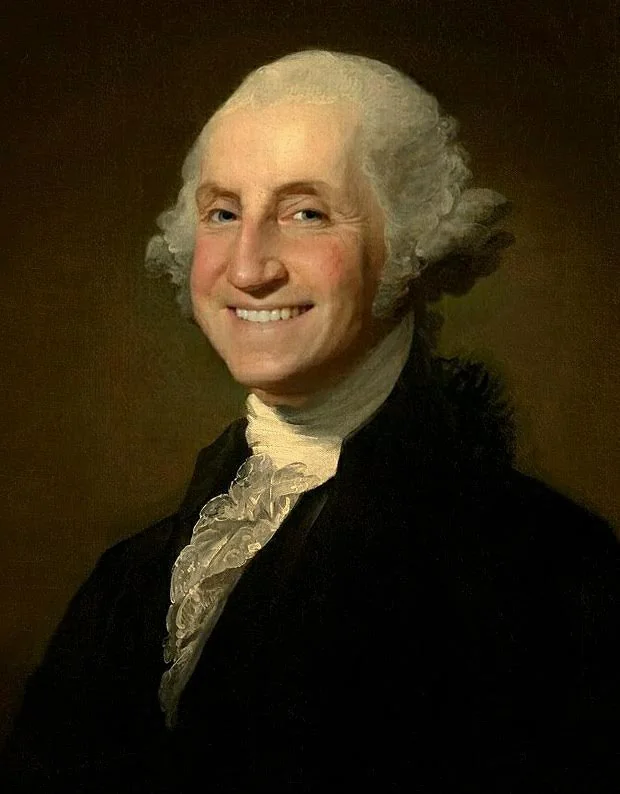
People always talk about how great it was that Washington only served two terms. I think he had to be convinced to run a second time.
ChatGPT:
Yes. By the end of his first term, George Washington was tired of politics and eager to retire to his home at Mount Vernon. He had intended to step down after four years.
Several factors persuaded him to seek a second term in 1792:
The young United States was deeply divided, especially between the supporters of Alexander Hamilton and Thomas Jefferson.
Many leaders feared that Washington’s retirement might destabilize the new government, which was still finding its footing under the Constitution.
Close advisers—including Hamilton and Jefferson, despite their disagreements—urged him to stay because they believed he was the one person trusted by nearly everyone.
Washington reluctantly agreed to run again and was unanimously reelected by the Electoral College.
By the end of his second term, however, he was determined to retire. In 1796 he declined to seek a third term and published his famous George Washington’s Farewell Address, in which he warned against excessive political partisanship and permanent foreign alliances.
So the short answer is yes: he had to be persuaded to run for a second term, and he did so more out of a sense of duty than personal ambition.
This Sunday’s Town Hall: Announcing This Week’s Progressive Town Hall: Every Sunday at 4pm ET/1pm PT RSVP HERE Join PDA activists online from across the country to discuss the importance of progressives reclaiming the American story from the MAGA right, an issue of heightened importance as we’re now within one... Continue reading →
We protest Heritage Foundation EVERY MONDAY (Join us!!!!) By admin | September 2, 2025 | Uncategorized Cliff Cash Comedy Premiered Jul 26, 2025 Every Monday at The Heritage Foundation 214 Massachusetts Ave. Washington D.C. 4pm protest 6pm pizza Every Friday at Fox News D.C. 400 N. Capitol St. Washington D.C. 4pm protest 6pm pizza We are... Continue reading →
There are less than 9 weeks until the critical November election, and what we do between now and then will shape the future of our health care. We started Nurses for Democracy to fight back against fascism and protect our democracy, but also to elect candidates in key races who are committed... Continue reading →
September General Membership Meeting *We will be voting on November Election endorsements for state propositions!* Date: Tuesday, 15 September, 2026 (third Tuesday of month) Time: 7-9 PM *NEW* In-person Location: Women’s Building (3543 18th St), Audre Lorde Room Remote: Via Zoom Link Here
Join us in person for a deep discussion on the upcoming November election. We’ll break down what’s on the ballot, why it matters, what you need to know before you vote. Featuring: Juliet Williams, CalMatters Ben Trefny, KALW Public Media Lila LaHood, San Francisco Public Press This election is pivotal.... Continue reading →
One Million Rising: Strategic Non-Cooperation to Fight Authoritarianism Virtual Event · Hosted by No Kings Time Wednesdays 8 – 9:30pm EDT Location Virtual event Join from anywhere About this event Across the country, authoritarian forces are getting bolder and more dangerous. Trump and his allies are not hiding their agenda: mass deportations,... Continue reading →
13th anniversary of Occupy Wall Street and Occupy San Francisco By admin | September 17, 2024 | Uncategorized Leave a comment (newlaborforum.cuny.edu) Occupy Wall Street (OWS) was a left-wing populist movement against economic inequality, corporate greed, big finance, and the influence of money in politics that began in Zuccotti Park, located in New York City’s... Continue reading →
Skip to content 15th Anniversary of Occupy Wall Street 15th Anniversary of Occupy Wall Street September 17 – September 20 We are organizing a celebration for the 15th anniversary of Occupy Wall Street, scheduled for September 17, 2026, at Zuccotti Park. The event aims to acknowledge past successes, pass the “torch” to contemporary... Continue reading →
THURSDAY, JUNE 29, 2023 AT 2 AM – 4 AM PDT How to create trust in a group? Details Event by Extinction Rebellion Empathy Circles online EMPATHY CAFE Duration: 2 hr Public · Anyone on or off Facebook How to create trust in a group? This is the question that arose in our... Continue reading →
Skip to content 15th Anniversary of Occupy Wall Street 15th Anniversary of Occupy Wall Street September 17 – September 20 We are organizing a celebration for the 15th anniversary of Occupy Wall Street, scheduled for September 17, 2026, at Zuccotti Park. The event aims to acknowledge past successes, pass the “torch” to contemporary... Continue reading →


 by
by 




 by
by 



 by
by